A beautiful snack pouch arriving inside a flimsy gray mailer looks cheap before the customer even sees the product. That is the problem. Custom Poly Mailer Bags for food brands are not food-contact packaging in most cases, but they do shape freshness perception, damage control, and trust.
These bags are printed polyethylene shipping mailers used as the outer layer for sealed food products, subscription orders, sample kits, merch bundles, and retail replenishment shipments. The mailer does not preserve the granola, protein bar, coffee pouch, spice packet, or supplement sachet. The inner retail packaging does that job. The poly mailer protects the finished product packaging during shipping and makes the order feel intentional instead of tossed together in the back room at 4:58 p.m.
Why Custom Poly Mailer Bags for Food Brands Are Not Just Shipping Bags
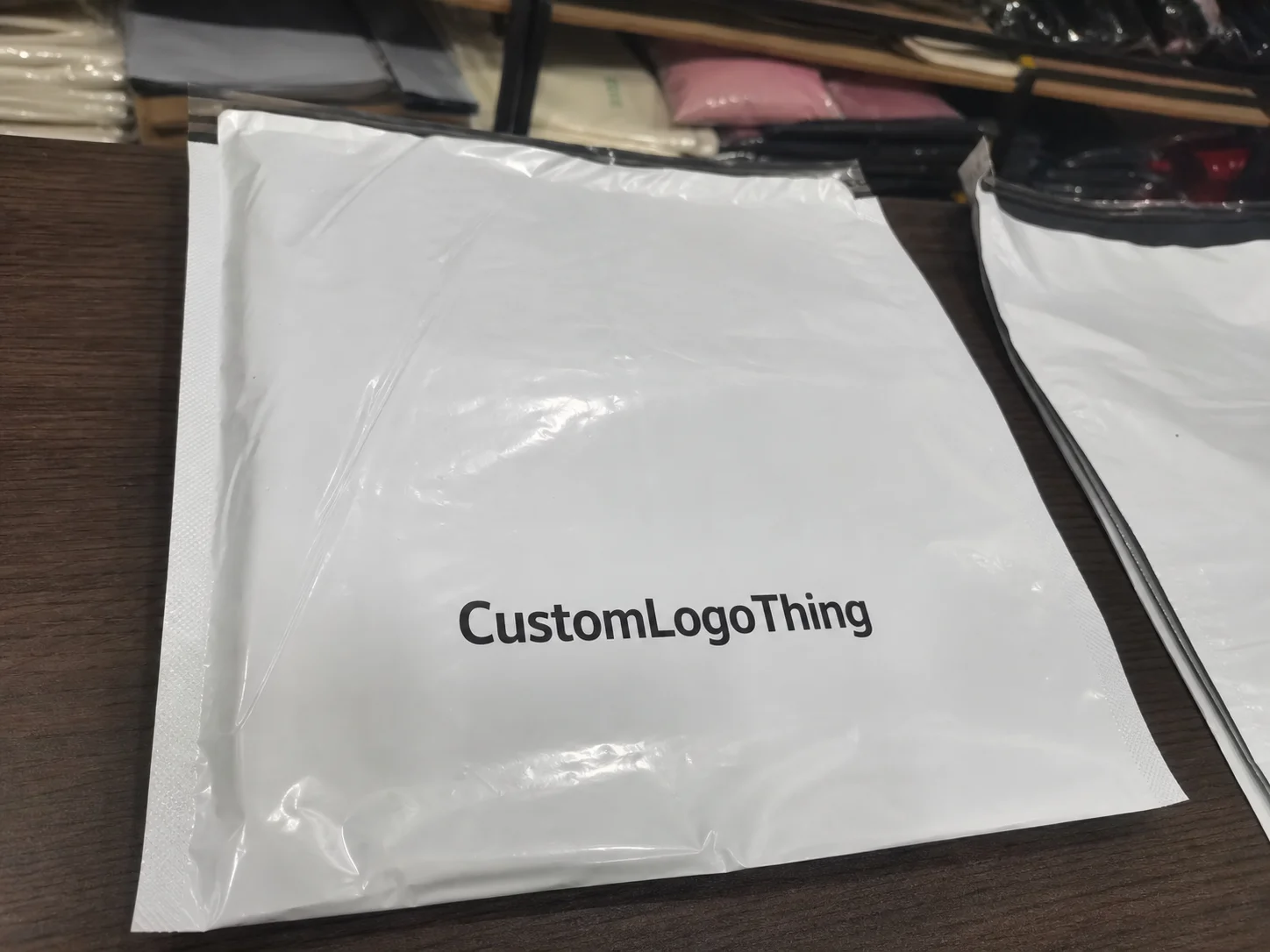
The line nobody should cross is simple: the mailer protects the retail food package, not the food itself. If loose cookies are going straight into a poly mailer, that is not a packaging strategy. That is a lawsuit wearing adhesive.
For sealed food products, though, a printed mailer can do useful work. It keeps dirt and incidental moisture off the retail package, reduces the need for bulky cartons, and gives the customer a branded first impression. If your primary packaging is already doing the hard job of protecting the food, the mailer can focus on shipping performance, privacy, and presentation.
From a buyer’s point of view, the decisions that matter are practical rather than mysterious. You need to define material thickness, closure style, print method, compliance language, sizing, minimum order quantity, Cost, and Timeline. Skip those details and suppliers will guess. Supplier guesses are rarely in your favor.
Poly mailers make the most sense for lightweight, non-fragile products: sealed snack pouches, bars, spice packets, supplements, coffee accessories, tea sachets, dry goods, and branded DTC orders. They are also useful for food brand swag, sample packs, launch kits, or small retail packaging refills where a box would create unnecessary dimensional weight.
Practical rule: if the item can be squeezed, crushed, cracked, melted, or shattered, a plain poly mailer is probably not enough. Add padding, use a rigid mailer, or move to corrugated packaging. Carriers are not gentle. They are carriers.
Branded packaging still has to stay honest. A polished printed mailer can improve perception, but it will not fix weak inner packaging, poor seals, loose powder residue, leaking oils, or fragile glass. Good shipping starts with the full packaging stack, not just the pretty outside layer.
How Printed Poly Mailers Work for Sealed Food Shipments
A standard poly mailer is built from polyethylene film with side seams, a top flap, and a pressure-sensitive adhesive strip. Better versions may include a perforated tear strip, dual adhesive strips for returns, or reinforced construction for heavier contents. The outside can be printed with a logo, pattern, instructions, QR code, or a full package branding system.
Think of the food packaging stack in three layers. The primary packaging touches or preserves the product, such as a sealed pouch, sachet, wrapper, bottle, or jar. The secondary packaging groups or displays products, such as a retail carton, sleeve, tray, or branded kit box. The poly mailer acts as the shipping layer. It moves the sealed product from warehouse to customer while keeping the outside clean and recognizable.
The benefits are real, but they are specific. Poly mailers provide water resistance, dirt protection, privacy, tamper evidence through adhesive closure, and lower dimensional weight compared with many boxes. A 10 x 13 inch mailer can often ship a few soft pouches or bars with less material and lower freight impact than a small corrugated carton.
The limitations are just as real. Poly mailers give poor crush protection, limited puncture resistance at lower gauges, no meaningful insulation, and no temperature control. Glass jars, brittle cookies, rigid tins, frosted bottles, or anything that turns into crumbs when a carrier sneezes should not be trusted to a thin bag and positive thinking.
Print method affects both cost and appearance. Flexographic printing is common for larger runs because plates and setup costs spread across thousands of units, making the unit cost lower at scale. Digital printing is useful for lower MOQs, seasonal designs, and variable artwork, though unit pricing can be higher. Spot-color printing works well for simple logos, return addresses, icons, and repeating brand patterns.
| Print Option | Best Fit | Typical Tradeoff |
|---|---|---|
| One-color spot print | Simple logos, budget-conscious DTC shipments, reorder programs | Lower cost, less visual impact than full artwork |
| Flexographic print | Several thousand pieces and repeat production runs | Plate fees and setup time, better economics at volume |
| Digital print | Low MOQ, seasonal packaging design, test launches | More flexible artwork, usually higher unit cost |
| Full-coverage flood print | Strong retail packaging look and bold brand presentation | Higher ink cost, more scuff visibility, longer proof review |
Common use cases include sample packs, protein bar bundles, coffee subscriptions with sealed inner bags, tea sachets, candy pouches, supplement packets, and food brand swag. For buyers comparing options, the Custom Poly Mailers category is the right starting point for size, material, and print direction.
Key Specs Food Brands Should Choose Before Requesting Samples
Start with sizing. Measure the packed product stack, not the flat retail pouch sitting politely on a desk. If three snack bags stack to 8.5 x 6 x 1.75 inches, do not quote a mailer based on the single pouch face size. Leave enough room for loading without making the finished order look like a sad oversized grocery sack.
As a practical range, many food brands use 6 x 9 inch mailers for small samples, 10 x 13 inch mailers for standard bundles, and 14.5 x 19 inch mailers for larger soft orders. Your product mix may need something different. Test it packed, sealed, shaken, and opened before locking the size.
Film thickness is the next big choice. 2.0 mil can work for lightweight samples and soft items. 2.5 mil is a good general ecommerce range for sealed snacks, tea, coffee accessories, supplement packets, and candy pouches. 3.0 mil or higher makes sense for heavier bundles, sharper inner cartons, zipper pouches, or rougher shipping routes.
Opacity and color matter more than people think. White gives a clean food-brand look and prints well for bright package branding. Black or dark mailers add privacy and may hide scuffs better. Custom tinting can help brand consistency, but it often requires higher minimums and longer lead time. If color accuracy matters, ask for Pantone references and printed samples, not a screenshot. Screens lie for a living.
Closure style should match the order type. Permanent adhesive is fine for one-way shipments. Dual adhesive strips help with returns or customer reuse, though many food shipments do not need return functionality. A perforated tear strip gives the customer a cleaner opening experience and reduces the chance of someone attacking the bag with kitchen scissors near the product.
- Permanent adhesive: lowest-complexity option for standard outbound shipments.
- Dual adhesive: useful for returnable kits, merch bundles, or sample programs with response components.
- Tear strip: better opening experience, usually a small added cost.
- Tamper-evident closure: helpful for customer confidence, but not a substitute for proper food seals.
Compliance language needs adult supervision. Confirm the material is appropriate for shipping packaged food products. Do not imply direct food contact unless the bag is specifically certified for that use. If the film, ink, adhesive, and production setup are not approved for direct food contact, keep the claim off the bag. Regulatory agencies are not impressed by “we meant food-adjacent.”
Sustainability adds another layer. Recyclable mono-material PE mailers may be available, and they can be a good fit if local recovery options exist. Heavy ink coverage, paper labels, mixed materials, metallic finishes, and some adhesives can complicate recycling. For general packaging recovery guidance, the EPA recycling resources are a useful reference, especially before printing broad claims on thousands of bags.
Cost, MOQ, and Pricing Factors That Actually Move the Quote
Unit cost is driven by quantity, size, film thickness, print coverage, number of colors, print method, closure features, and freight. Not vibes. Not how much the founder loves the brand story.
Small digital runs may start around a few hundred to 1,000 pieces, depending on supplier setup. Custom flexographic runs often make more sense from several thousand pieces upward, especially if the artwork repeats and the size is standard. For many buyers, 5,000 or 10,000 pieces can produce a much better unit cost than 1,000 pieces, but only if storage, cash flow, and forecast demand support it.
For rough planning, a simple one-color custom mailer in a common size might land around $0.18-$0.35 per unit at mid-volume, while smaller digital runs can push higher. Larger bags, 3.0 mil film, full-coverage print, dual adhesive, specialty finishes, or rush freight can move pricing into the $0.40-$0.90+ range. These are planning ranges, not universal quotes. Material markets, artwork, and freight can swing the number.
Size quietly eats money. A one-inch oversizing mistake repeated across 20,000 units means more film, heavier cartons, more warehouse space, and possibly higher shipping costs. Nobody throws a party for saving half an inch, but the invoice notices.
Print economics are straightforward. A one-color logo is usually the cheapest. A two-color brand pattern costs more. Full-coverage flood coats and photographic artwork cost more again, especially if color matching is tight. Flexographic plates can add setup fees, but they can also improve reorder economics once the plate cost is absorbed.
Film thickness has a real tradeoff. Moving from 2.0 mil to 2.5 mil or 3.0 mil raises material cost, but it may reduce torn bags, punctures, returns, damage complaints, and ugly unboxing photos. Many food brands under-spec the first order because the quote looks nicer. Then customer service pays for it.
| Quote Factor | Lower-Cost Direction | Higher-Cost Direction | Buyer Advice |
|---|---|---|---|
| Quantity | Higher volume per run | Short digital runs | Compare 1,000, 5,000, and 10,000 units if storage allows. |
| Film thickness | 2.0 mil | 3.0 mil+ | Do not save pennies if inner packs have sharp corners. |
| Print coverage | Small one-color logo | Full flood print | Use bold design where it matters; avoid ink for ego. |
| Closure | Single adhesive strip | Dual adhesive plus tear strip | Pay for the feature only if the customer experience needs it. |
| Freight | Ground shipment with lead time | Rush air freight | Late approvals are expensive. Very boring. Very true. |
For a clean quote, send the final flat size, quantity tiers, desired film thickness, closure type, print colors, artwork file, delivery ZIP code, and target in-hands date. If you are also comparing custom printed boxes or other product packaging formats, review Custom Packaging Products before narrowing the spec. A box may cost more per unit, but it can be cheaper than replacing crushed orders.
Process and Timeline from Artwork to Delivered Mailers
The production path is predictable when the buyer has clean information. First, specs are confirmed. Then artwork is reviewed, a dieline or layout proof is created, the digital proof is approved, plates are produced if needed, the mailers are printed, the film is converted into bags, quality checks are completed, cartons are packed, and the order ships.
Digital custom mailers can often move faster, especially for lower quantities and simpler artwork. Depending on capacity, proof speed, and shipping distance, a digital run may take roughly 7-15 business days after proof approval. Flexographic printed runs commonly require longer lead time because of plates, setup, curing, production scheduling, and freight. A realistic planning range is often 15-30 business days after proof approval, with longer timing for complex work or large quantities.
Delays usually come from predictable places: incomplete artwork, vague color expectations, late proof approvals, missing delivery details, and changing the bag size after production prep has started. If the artwork says “match our website green,” expect trouble. Send a Pantone reference or approved physical sample if color matters.
Samples are worth the time. Request blank size samples or previous printed samples before approving a full run of custom Poly Mailer Bags for food brands. Test fit, closure strength, opacity, scuff behavior, loading speed, and opening experience. If employees fight the bag during packing, customers will probably fight it too.
Artwork requirements are not exotic. Send vector logo files, usually AI, EPS, or clean PDF. Provide Pantone references if color matching matters. Use high-resolution raster assets only when necessary. Keep critical text, QR codes, URLs, icons, and recycling marks away from side seams, flap folds, and adhesive zones. Safe zones exist because machines move and film flexes. That is not a design opinion; it is production reality.
Quality checks should be plain and physical. Inspect print registration, color consistency, odor, opacity, seam strength, flap alignment, adhesive tack, tear-strip function if included, carton labeling, and count accuracy. For thicker or heavier mailers, check whether the bags block cleanly or stick together during packing. A beautiful mailer that slows fulfillment every afternoon is not a bargain.
Proof approval discipline: once proofs are approved, the bag is going to print. You are not proofreading ingredients on the outer mailer, but brand copy, QR codes, URLs, social handles, claim language, and recycling marks still need careful review.
If you need formal transit testing for a broader packaging system, standards from ISTA can help frame drop, vibration, and distribution testing. Not every small food brand needs a full lab program for poly mailers, but the logic is useful: test the real packed format, not the imaginary perfect version sitting on a conference table.
Common Buying Mistakes That Make Food Mailers Look Cheap
The first mistake is buying by lowest unit price only. The cheapest bag can become expensive when it tears, looks transparent, arrives late, or makes premium food look like discount-bin inventory. Saving $0.04 per bag does not help if customers post wrinkled, scuffed, half-open packages online.
Sizing mistakes are common. Too small causes loading problems, seam stress, and adhesive failure because the flap cannot close cleanly. Too large creates wrinkling, higher material cost, and a sloppy unboxing experience. The right size should let the packed product slide in without wrestling, then close flat without excess dead space.
Overprinting is another trap. Full-coverage dark ink can look sharp, especially for dramatic package branding, but it can raise cost, increase production complexity, show scuffs more clearly, and create sustainability tradeoffs. A smart white mailer with a strong logo and clear graphic system can outperform a heavy flood print that arrives looking rubbed and tired.
Ignoring the inner package is worse. Sharp pouch corners, zipper tops, tin ties, hang holes, rigid cartons, and sample tubes can puncture thin mailers if the film spec is too light. If you are shipping three stand-up pouches with firm zipper closures, 2.0 mil may be optimistic. Optimism is not a packaging spec.
Unsupported claims create legal and trust problems. Do not print “compostable,” “food safe,” “recyclable,” or “eco-friendly” unless the material, ink system, adhesive, and disposal reality support the statement. If the bag is recyclable only through store drop-off or specific local programs, say that clearly. Vague green claims are a great way to invite scrutiny from people with clipboards and no sense of humor.
Reorder chaos is painfully avoidable. Brands forget to document final specs, then every reorder becomes a scavenger hunt through old emails. Very glamorous. Very avoidable. Save the final flat size, film gauge, print method, ink colors, closure style, approved proof, supplier quote, carton count, and reorder SKU in one place. Future you will be less annoyed.
Food brands should also watch the gap between ecommerce packaging and retail packaging. A mailer can make a DTC order feel premium, but it should not fight the shelf identity of the inner pouch or carton. If the pouch uses soft neutrals and the mailer screams neon, that may be a strategy. Or it may be a branding meeting that got out of hand.
Next Steps: Build a Mailer Spec You Can Actually Order
The fastest way to buy smarter is to build a spec before asking for pricing. Pick the product set first. Are you shipping one coffee pouch, three protein bars, a tea sampler, or a mixed subscription bundle? Then measure the packed dimensions, not the retail pouch artwork file.
- Choose the exact product set or bundle being shipped.
- Measure packed dimensions, including stack height and corner pressure.
- Select the mailer size with practical loading room.
- Pick film thickness: 2.0 mil, 2.5 mil, or 3.0 mil+.
- Decide closure type: permanent adhesive, dual adhesive, or tear strip.
- Choose print method based on quantity, artwork, and reorder plans.
- Confirm quantity tiers, delivery ZIP code, and in-hands date.
Run a basic test before ordering. Pack the actual product. Shake it. Compress it lightly. Check opacity under bright light. Test the adhesive after the bag sits closed for a day. Open it like a real customer, not like someone trying to protect a prototype. Photograph the packed result from the front, back, and side. If it looks sloppy in photos, it will look sloppy on a doorstep.
Quote multiple quantity breaks whenever budget and storage allow. Compare 1,000, 5,000, and 10,000 units. Setup fees, plate costs, freight, and carton quantities can change the math dramatically. Sometimes 5,000 units cost only modestly more than 2,500. Sometimes they do not. Get the numbers instead of guessing.
Prepare artwork correctly. Send the final logo, color references, placement notes, barcode or QR code links if included, and required legal or recycling language. If your team has public launch claims, subscription messaging, or retail partner requirements, confirm those before proof approval. Packaging design is cheaper to fix on screen than on 12 cartons of printed mailers.
Use a box instead for glass jars, crushable baked goods, refrigerated items, heavy bundles, premium gifting, or anything with rigid corners that can damage a thin film bag. Corrugated packaging, padded mailers, molded inserts, or custom printed boxes may cost more, but they also protect the product and the customer experience. If you want to see how other brands approach format decisions, the Case Studies page can help frame the tradeoffs.
Before ordering, test the packed product, confirm the specs, then quote the exact bag you want instead of asking suppliers to guess. Good packaging buying is not magic. It is measurement, clear artwork, honest claims, and enough film thickness to survive the trip.
FAQs
Are custom poly mailer bags for food brands safe for direct food contact?
Usually no. Most Branded Poly Mailers are intended as outer shipping packaging for already sealed food products. If the bag will touch food directly, ask for specific food-contact material certification and confirm the exact use case with the supplier. Do not print direct food-contact claims unless the film, ink, adhesive, and production setup support them.
What thickness should food brands choose for printed poly mailers?
Use around 2.0 mil for light, soft items and samples. Use around 2.5 mil for most sealed snack, supplement, tea, coffee, or candy shipments. Use 3.0 mil or higher for heavier bundles, sharper inner packs, or rougher shipping conditions. The inner package shape matters as much as the weight.
How much do custom printed poly mailers cost for food packaging shipments?
Pricing depends on size, quantity, film thickness, print coverage, colors, closure type, setup, and freight. Simple one-color bags in higher quantities usually have the lowest unit cost. Full-coverage artwork, low quantities, thick film, specialty closures, and rush shipping push pricing higher.
How long does production take for custom food brand mailer bags?
Timeline depends on print method, proof approval speed, plate requirements, production schedule, and shipping distance. Digital runs can often move faster than flexographic runs, especially at lower quantities. Build in extra time for samples, artwork corrections, and freight if you have a launch date.
Can recyclable poly mailers work for food brands?
Yes, recyclable PE mailers can work well when the structure stays mono-material and local recycling options exist. Heavy ink coverage, labels, mixed materials, and certain finishes can reduce recyclability. Keep recycling language specific and accurate instead of printing vague green claims because regulators are not known for their sense of humor.


