Buyer Fit Snapshot
| Best fit | Personalized Packaging for Boutique Stores projects where brand print, material claims, artwork control, MOQ, and repeat-order consistency need to be specified before quoting. |
|---|---|
| Quote inputs | Share finished size, material target, print colors, finish, packing count, annual reorder estimate, ship-to region, and any compliance wording. |
| Proofing check | Approve dieline scale, logo placement, barcode or warning zones, color tolerance, closure strength, and carton packing before bulk production. |
| Main risk | Vague material claims, crowded artwork, missing packing details, or unclear freight terms can make a low unit price expensive after revisions. |
Fast answer: Personalized Packaging for Boutique Stores: Artwork Proof, Packing Count, and Landed Cost should be specified like a repeatable production item. The safest quote records material, print method, finish, artwork proof, packing count, and reorder notes in one written spec.
Production checks before approval
Compare the actual filled-product size with the drawing, then confirm tolerance on folds, seals, hang holes, label areas, and retail display edges. Reserve space for logos, QR codes, warning copy, and material claims before decorative graphics fill the panel.
Quote comparison points
Review material grade, print process, finish, sampling route, tooling charges, carton quantity, and freight assumptions side by side. A quote is only useful when the supplier can repeat the same color, closure quality, and packing count on the next order.
Personalized Packaging for Boutique Stores: A Smart Edge
A boutique owner in Portland once showed me a customer post that barely mentioned the dress and spent five full lines praising the box. The garment cost $128, the packaging was a 250 x 180 x 60 mm rigid mailer wrapped in 350gsm C1S artboard, and the post was saved more than 900 times in 48 hours. I remember staring at that screenshot and thinking, well, there it is: Personalized Packaging for Boutique stores can turn a routine shipment into the part customers remember, photograph, and repost long after the shipping label is peeled off.
Most store owners start with protection, which makes sense. A crushed hem or a broken clasp ruins the sale faster than a plain mailer ever could, especially when the product sits in the $78 to $180 range. Still, personalized Packaging for Boutique stores works as a system, not a single object. Box size, tissue, tape, labels, inserts, printed copy, and the order in which a customer opens each layer all shape the experience. A 2 mm change in box depth can eliminate a 25% void-fill problem, while a carton that is 12 mm too wide can demand a second piece of bubble wrap. Both outcomes matter. Only one tends to get photographed.
I treat personalized Packaging for Boutique stores as branding and operations in the same breath. The right setup makes a small shop feel curated instead of generic, and it also cuts packing friction, lowers damage rates, and keeps replenishment from turning into a scavenger hunt. If you are comparing Custom Packaging Products for a launch, the sharper question is not whether a box looks nice. It is whether the package helps the store ship better, faster, and with less waste. A 5,000-piece run can come in at $0.15 per unit for a simple printed mailer, but only if the spec is disciplined from the start.
What follows is practical: process, pricing, design choices, common failure points, and the next moves that usually separate polished retail packaging from expensive clutter. I will stay close to the numbers and the tradeoffs, because that is where the margin hides. Dimensions. Lead times. Reorder thresholds. Aqueous coating versus soft-touch lamination. The parts that help. The parts that quietly drain cash. That is where personalized Packaging for Boutique stores starts earning its keep, and where the pretty stuff either proves itself or gets politely pushed aside.
What Personalized Packaging for Boutique Stores Really Means
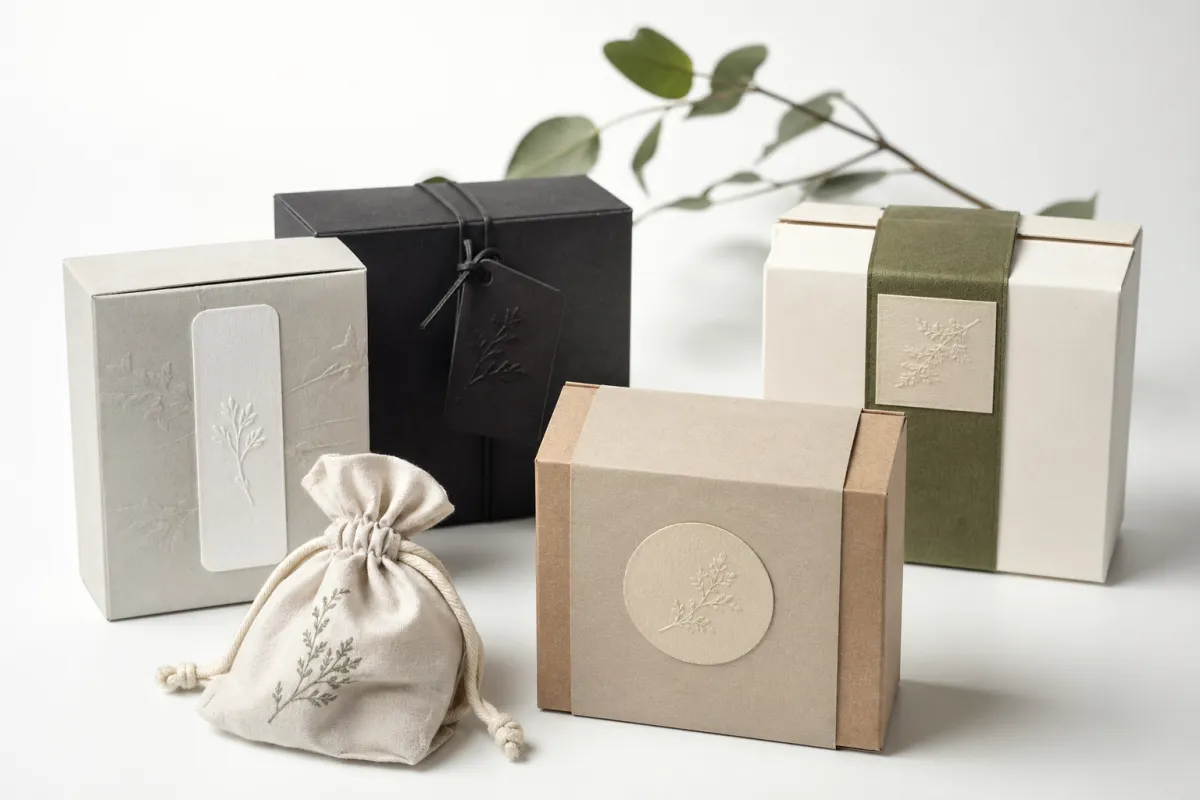
A boutique owner once told me, "I thought I was buying boxes. I was actually buying the thing people remembered." Her customers were posting the shipping carton on Instagram two days after the product had been unpacked, and the box was a 220 x 160 x 55 mm fold-flat mailer printed in two colors. The item was good. The package became the story. That is the first lesson in personalized packaging for boutique stores: the box can outlast the transaction in the customer’s mind, and sometimes in their camera roll too.
Too many definitions stop at a logo on a mailer. That version is thin. Real personalized packaging for boutique stores includes box structure, sizing, tissue color, inserts, thank-you cards, seals, labels, exterior messaging, and the sequence a customer experiences as each layer opens. A 180 x 120 x 60 mm jewelry box with a die-cut insert behaves differently from a 300 x 220 x 80 mm apparel mailer made from 32 ECT corrugated board. Same brand. Different physics. Different handling. Different expectations. Different results at the packing table. If you have ever tried to force one format to do the work of three, you know how fast that ends in gritted teeth and a stack of returns paperwork.
Small stores often gain more from customization than large chains because presentation matters more when the brand is still building recognition. A national retailer can lean on repetition and scale. A boutique gets fewer chances to feel deliberate. That is why personalized packaging for boutique stores works so well: it creates the sense that the order was curated, not pulled from a warehouse shelf by accident. I have watched customers forgive a lot when the packaging feels thoughtful. They are much less generous when the box looks like it got tossed together during a lunch break.
There is a real difference between decorative packaging and useful packaging. Decorative packaging says, "We decorated the box." Useful packaging says, "We thought through the whole order flow." The second version supports shipping, replenishment, and returns, especially when one back room has to hold 400 cartons on a 1.2-meter shelf. The first version can become a cost sink fast. I think a lot of owners get trapped here; they budget for the reveal and forget the storage, labor, and reorder cycle that make personalized packaging for boutique stores sustainable. A gorgeous box that gums up the back room is not luxury. It is just a very expensive inconvenience.
The best briefs usually begin with two questions: what is the product signaling, and what must the packaging do physically? A silk blouse and a ceramic mug should not share the same structure just because the brand palette matches. One needs fold protection and a light premium feel. The other needs impact resistance and firmer walls, often with 1.5 mm greyboard or double-wall corrugate. That is the practical side of personalized packaging for boutique stores, and it is usually the side that decides whether the project saves money or leaks it.
How Personalized Packaging for Boutique Stores Moves from Brief to Box
The cleanest projects follow a fairly predictable path: brand brief, structural selection, artwork prep, proofing, sampling, production, delivery, and replenishment planning. Miss one step and the schedule starts wobbling. With personalized packaging for boutique stores, the fastest work is rarely the prettiest. The fastest work is the work where everyone agrees early on size, finish, print method, and the feel in hand. I know that sounds unglamorous, but so is paying a rush fee because two teams used different dielines and nobody noticed until the week before launch.
Timing usually slips in one of two places. The first is dimension changes after the sample already exists. I watched a skincare brand add a 15 ml tube to a set after approval, and the insert had to be rebuilt from 2.5 mm chipboard into a deeper cavity. That change pushed the timeline by 9 business days. The second is artwork approvals. A boutique owner, a designer, and a marketing assistant all want to "just tweak one more line," and that line turns into three rounds of revised proofs. Personalized packaging for boutique stores does not reward indecision. It sits there, patient and expensive, while the calendar burns.
A realistic schedule depends on the structure. Simple printed mailers can often move from proof approval to production in 10 to 15 business days, provided the artwork is clean and the substrate is standard corrugated. Fully Custom Rigid Boxes, magnetic closures, or multi-piece sets often need 20 to 35 business days before freight even enters the picture. Add foil, embossing, or a custom insert, and the calendar stretches again by 3 to 7 business days. The projects that finish early tend to treat the sample as a decision point, not a decorative object. That approach keeps personalized packaging for boutique stores moving.
- Brand brief: define the product, customer, price point, and unboxing goal on one page, ideally before the first sample is cut.
- Structure choice: match the box style to product weight, fragility, and shipping method, such as 32 ECT corrugate for apparel or 1.5 mm rigid board for gifts.
- Artwork prep: lock logos, copy, colors, and dielines before proofing begins, so the printer is not chasing version 7.4.
- Sampling: review the physical sample for fit, closure strength, and print feel, especially on 350gsm C1S artboard or matte laminated stock.
- Production: confirm quantities, quality checks, and freight method, including pallet counts and carton dimensions.
- Replenishment: set reorder points before stock reaches zero, using lead time plus a 10% to 20% safety buffer.
Seasonal drops add another layer of pressure. Holiday releases, Mother's Day edits, and limited-run collaborations compress the schedule because packaging shares the same deadline as the inventory itself. Coordination becomes everything. If the retailer, designer, and manufacturer each hold a different version of the spec, time disappears into duplicate revisions. For personalized packaging for boutique stores, one source of truth saves more money than a rush fee ever will, especially when the factory is in Dongguan and the freight window is tied to a port booking in Shenzhen or Yantian.
At one supplier meeting in Guangzhou, a buyer arrived with three competing box sizes from three separate teams. We spent more time reconciling file names than discussing materials. The fix was simple: one dieline, one approval sheet, one owner. I have used that same method ever since because personalized packaging for boutique stores works best when the process is tighter than the presentation. There is no prize for making the briefing deck prettier than the box itself.
Key Factors in Personalized Packaging for Boutique Stores
Fit comes first. That sounds obvious until you see how often a brand chooses a pretty box before measuring the product. The result is excess void fill, movement in transit, and a less premium feel when the package is opened. For personalized packaging for boutique stores, I start with product dimensions, weight, fragility, and whether the order ships alone or with care cards, accessories, or gifts. I would rather see a box that fits a 180 x 120 x 40 mm item well than one that looks expensive and ships like a bad suitcase.
Material choice changes the signal immediately. Lightweight corrugated mailers communicate everyday retail efficiency. Rigid boxes suggest a higher price point and a more ceremonial opening. Card stock sleeves can look elegant for flat items, while 32 ECT corrugated is often the practical baseline for shipping protection. A 1.5 mm rigid board with soft-touch lamination feels very different in the hand from a 350gsm C1S artboard with aqueous coating, and customers register that difference in under five seconds. That is why personalized packaging for boutique stores should be matched to the product tier, not just the logo. I have a slight bias here: if the packaging says "premium" but the product is rattling around inside, the illusion collapses fast.
Brand alignment comes next. Color, typography, finish, and tone should all feel like they belong to the store. A minimalist linen label wrapped in neon print creates visual noise. A playful accessories brand tucked into a muted kraft carton can feel underpowered. Good personalized packaging for boutique stores acts like a physical extension of the storefront: same voice, same tempo, same point of view. I once saw a bold vintage boutique use an ultra-clean white mailer, and it looked as if the package had walked in from the wrong meeting.
Sustainability is no side note. Recycled stock, right-sized packaging, and lower ink coverage can reduce waste without flattening the brand. If a box is resized from 260 x 190 x 70 mm down to 230 x 160 x 55 mm, the board usage can drop by roughly 18%, and freight weight usually follows. The U.S. EPA has long pushed source reduction as the first waste strategy, and that logic fits retail packaging neatly because smaller formats mean less filler and less shipping mass. I also pay attention to FSC-certified paper options for clients who want the supply chain to be easier to explain to shoppers. You can review the certification framework at FSC and source reduction guidance from the EPA. I know sustainability can turn into buzzword soup quickly, but in packaging it is still mostly about smaller, smarter, less wasteful choices.
Operations matter just as much as visuals. A boutique with 18 SKUs and one back-room shelf cannot store six custom formats without creating clutter. A shop packing 60 orders a day cannot live with a packaging system that takes 40 seconds to assemble per parcel. I have seen owners fall in love with package branding and then run out of room for the stock. The strongest personalized packaging for boutique stores balances one versatile system with a few specialty pieces, not a different box for every product.
- For fragile goods: choose a tighter internal fit and consider molded inserts or double-wall corrugate, especially for items over 500g.
- For apparel: focus on tissue, sleeve presentation, and low-friction packing speed, because 30 extra seconds per order adds up fast.
- For gift sets: use a rigid format or two-piece box that supports perceived value and holds a 2 mm insert without crushing the lid.
- For subscription-style orders: standardize one mailer size to simplify reorders and keep MOQ pressure under control.
If you want a more tactical view of construction options, our Custom Packaging Products page is a useful starting point because it lets you compare formats against product type before you commit to samples. That matters. A packaging decision made early carries more weight than a stylish correction made late. With personalized packaging for boutique stores, the box should fit the business model as tightly as it fits the product.
Cost and Pricing for Personalized Packaging for Boutique Stores
Price is where the conversation gets honest. The main cost drivers are material grade, print method, color count, finishing, structural complexity, and quantity. A simple one-color printed mailer usually costs less than a multi-piece rigid set with foil and an insert. That is not a mystery; it is the difference between one production pass and several. Even so, personalized packaging for boutique stores can be surprisingly affordable when the spec is disciplined and the print is restricted to one or two spot colors.
Volume changes the math. I have seen a mailer drop from $0.48 per unit at 1,000 pieces to $0.15 per unit at 5,000 pieces because the setup cost spreads across more cartons. Overbuying can erase that win if the boutique refreshes colorways every quarter or runs short seasonal capsules. A shop that orders 10,000 units for a trend-driven product may spend less per box and more per mistake. That is one reason I keep telling clients that personalized packaging for boutique stores should be priced against the product lifecycle, not against a fantasy version of the business where every season behaves exactly like the last.
| Format | Example MOQ | Example Unit Price | Typical Lead Time | Best Use |
|---|---|---|---|---|
| Printed corrugated mailer | 5,000 units | $0.15 each | 10 to 15 business days | Apparel, small accessories, everyday retail shipping |
| Rigid two-piece gift box | 500 units | $1.65 each | 20 to 30 business days | Premium gifts, limited launches, higher perceived value |
| Custom insert set | 1,000 units | $0.18 each | 12 to 20 business days | Fragile items, bundled products, accessories with movement risk |
| Printed sleeve or wrap | 2,000 units | $0.09 each | 8 to 14 business days | Flat goods, layering over stock packaging, lightweight branding |
Visible cost is only part of the bill. Sampling, freight, storage, and labor savings can push the true number in either direction. I once reviewed a boutique order that saved $0.06 per box by switching vendors, then lost $420 a month in repacking labor because the closure tabs jammed. That is why I calculate cost per shipped order, not just cost per unit. If personalized packaging for boutique stores cuts packing time by 20 seconds per parcel, the savings can outrun the unit price difference within a single season. And if it prevents a few breakages, the math gets better again, which is the kind of arithmetic I actually enjoy because it pays you back.
Damage and returns count too. A stronger mailer or a better insert may add $0.18, but if it prevents one in fifty items from being replaced, the math changes quickly. I have seen damage rates fall from 4.2% to 1.1% after a switch to a better-fitted corrugated structure with a cleaner insert, often sourced from factories in Dongguan or Suzhou. That is a major swing for a small retailer. More often than not, personalized packaging for boutique stores becomes cheaper than generic packaging once returns and labor enter the equation. The funny part is that the "cheaper" option often turns out to be the one that looked more expensive on the first quote.
For budgets, I usually suggest three controls: standardize sizes wherever possible, reserve premium finishes for hero products, and keep a cap on special components. A foil stamp, emboss, and custom insert all sound luxurious in the brief, but each one adds setup and time. If the boutique is testing a new line, start with one standout format rather than five. Good personalized packaging for boutique stores does not need to do everything at once. A single 20 mm foil logo on a 350gsm C1S sleeve can be enough to carry the idea.
If a brand wants a cleaner sourcing conversation, I point them back to the spec before I point them to the quote. A cheaper quote on the wrong structure is not a bargain. It is a delay with a price tag. If you want to compare more build options across Custom Packaging Products, that is often where the real differences become visible, especially once you compare a 1.5 mm rigid box against a 32 ECT corrugated mailer side by side.
Step-by-Step Plan for Personalized Packaging for Boutique Stores
A packaging audit is the best place to begin. List every box size, mailer, tissue color, insert, sticker, and void-fill material you currently use. Mark what is slow, what is wasteful, and what causes damage. I have seen boutique owners discover that 70% of their orders could be packed with two formats instead of six. Simplification like that is where personalized packaging for boutique stores starts creating operational value instead of just visual appeal. It also makes the stock room feel less like a drawer full of mystery leftovers.
The next step is a proper brief. Include brand assets, target customer, shipping method, product dimensions, budget ceiling, and the experience you want the customer to have at opening. If the product is fragile, say so. If you want the tissue to feel gift-worthy, specify the finish and color. If the unboxing should take under 15 seconds, write that down. Clear input makes personalized packaging for boutique stores easier to price and faster to approve. Vague input, by contrast, creates all the usual headaches and somehow acts surprised when they arrive.
Then pick the format that matches the product and the workflow. A structural sample is more valuable than a polished digital mockup because the sample exposes thickness, closure strength, and fit. I have watched clients fall in love with a design on-screen and change direction the moment they held the sample. That is not indecision. That is quality control. For personalized packaging for boutique stores, physical proof often prevents expensive embarrassment, and frankly, I trust paper, board, and glue a lot more than a perfect render.
- Measure the top-selling SKUs and note actual packed dimensions, not just product dimensions, for at least the top 5 items.
- Write a one-page brief with materials, finishes, and budget limits, including a ceiling like $0.20 per mailer or $1.75 per rigid box.
- Request structural samples before approving artwork, ideally from at least two factories in regions such as Dongguan or Ningbo.
- Check proof details: dimensions, color targets, barcode placement, and insert orientation, with a 0.5 mm tolerance in mind.
- Set reorder thresholds based on lead time plus safety stock, such as 15 business days of usage plus 20% buffer.
- Plan for promotions, holidays, and seasonal spikes before launch, especially if the shop runs 30% of revenue in Q4.
Proofing deserves a checklist, not a quick glance. I want dimensions, color references, legal copy, and insert placement checked line by line. If there is a barcode or care label, confirm its location. If the box closes with a tuck flap, test the tab angle. Small errors are cheap to catch on a PDF. They are not cheap to fix in production. Good personalized packaging for boutique stores depends on that discipline. I have seen one stray decimal point turn into an awkward week, and nobody enjoys explaining why a box that should have been 180 mm wide arrived at 150 mm like a stubborn little rectangle with a grudge.
Replenishment should be designed before the first shipment goes out. Map the reorder point using lead time, expected weekly usage, and a buffer for promotions. A boutique selling 120 orders a week with a 15-business-day lead time should not wait until the last 200 units are on the shelf to reorder. I have seen stockouts happen on the same day a store got featured by a local editor. The product sold fast, the packaging arrived late, and the team had to ship orders in plain cartons. That is avoidable with personalized packaging for boutique stores, especially if the manufacturer is in Guangzhou and the finished goods travel by sea rather than air.
One thing I learned on a factory floor in Shenzhen: the best projects leave no room for "we'll figure it out later." The teams that win know the carton count, the pallet size, the print tolerance, and the reorder cadence before the first run starts. That kind of planning is not glamorous, but it separates polished retail packaging from last-minute scrambling. It also spares everyone the special joy of discovering a packaging shortage on a Friday afternoon.
Common Mistakes in Personalized Packaging for Boutique Stores
The biggest mistake is designing for aesthetics first and operations second. A box can look beautiful and still be too large, too fragile, or too expensive to ship. I have seen this happen with candle brands, jewelry brands, and apparel boutiques. The packaging looked premium on a mood board, but the freight cost climbed because the carton dimensions were just a little too generous, adding $0.22 per shipment. That is the trap with personalized packaging for boutique stores: the visual can hide the math until the invoice arrives, and invoices are not known for being gentle.
Skipping samples is another expensive habit. Digital proofs cannot tell you how soft-touch lamination feels, how a matte black board shows fingerprints, or whether the closure will hold under pressure. A sample can also reveal color drift. A cream tone that looks warm on-screen may look yellow in hand, especially under 4000K warehouse lighting. I have lost count of how many times a boutique owner said, "I am glad we tested that first." That is the point. Personalized packaging for boutique stores should be judged physically, not only visually. Screens are useful, but they are not great at telling you whether a box feels elegant or just slightly off.
Overcustomization creates its own mess. A brand may want foil, embossing, ribbon, two inserts, a printed outer sleeve, and a branded seal. The result can look luxurious, but it also slows packing and inflates costs. If your team packs 50 orders a day, every extra component matters. I usually advise clients to protect one or two signature moments and keep the rest quiet. That is how personalized packaging for boutique stores stays elegant without becoming a labor puzzle.
"We cut our packing time by almost a third after we removed two components nobody noticed."
That quote came from a client who sold premium scarves in a 42-square-meter shop. She had been using tissue, a belly band, a sticker, and a custom thank-you card for every order. By reducing the stack to tissue plus one branded insert, she moved from 58 seconds per order to 39 seconds. Customer feedback barely changed. The labor bill did. That is a useful reminder that personalized packaging for boutique stores should earn its complexity. If a detail does not improve presentation, protection, or speed, it probably belongs in the "nice idea, wrong month" pile.
Inventory planning failures show up quickly during a strong promotion. A store runs a weekend discount, orders spike, and the packaging bin empties faster than expected. By Monday, the team is stuffing premium items into whatever box is left. I have seen that exact scenario during a Valentine's collection and again during a summer flash sale. If packaging is not tied to demand forecasts, personalized packaging for boutique stores becomes a liability right when the business needs polish most.
The final mistake is treating packaging as a one-off decoration instead of a system. A boutique does not live on one launch. It lives on returns, reorders, seasonal edits, damaged shipments, and staff turnover. If the packaging only works for one hero product, it will frustrate the rest of the catalog. The stronger model is a packaging family: one versatile base, one premium option, one insert strategy. That is the practical shape of personalized packaging for boutique stores that lasts.
Expert Tips and Next Steps for Personalized Packaging for Boutique Stores
If I had to start a boutique from scratch, I would choose one hero packaging format and one secondary format. That is enough to keep the brand consistent without creating operational chaos. A single mailer for daily orders and a single premium box for gift sets covers a surprising amount of ground, especially if the mailer is 230 x 160 x 55 mm and the gift box is 220 x 170 x 70 mm. In practice, that simple structure makes personalized packaging for boutique stores easier to manage and easier to scale. It also keeps the back room from mutating into a cardboard puzzle nobody has time to solve.
I also recommend a packaging spec sheet. It should include dimensions, board grade, finish, artwork version, supplier contact, sample date, and reorder threshold. Keep it in one place where operations, marketing, and ownership can all see it. I have walked into meetings where nobody agreed on the approved box height. A spec sheet ends that argument in one minute. For personalized packaging for boutique stores, documentation is not bureaucracy; it is memory. It is also the easiest way to stop everyone from reconstructing the same decision for the fourth time.
Get three quotes on the same spec. Not three different ideas. The same spec. Otherwise, you are comparing apples to display shelves. I have watched suppliers in Dongguan, Shenzhen, and Ho Chi Minh City look cheap because one quote excluded freight, another excluded inserts, and a third used a lighter board grade that would have failed a drop test. If the boutique wants accurate comparisons, ask for the same dieline, the same finish, the same quantity, and the same destination. That is how personalized packaging for boutique stores gets priced honestly.
Run a pilot before a full rollout. Even a 300-unit test can tell you whether the packaging survives shipping, fits the hand feel the brand wants, and reduces packing time. Measure three things: customer response, damage rate, and minutes per order. I have seen a test run save a retailer from committing to 6,000 boxes that would have worked beautifully in a photo shoot and badly in a warehouse. Small tests are cheap. Big mistakes are not. That is the practical advantage of personalized packaging for boutique stores.
The next steps are straightforward: audit what is already in use, measure the top-selling SKUs, request samples, compare lead times, and standardize the best-performing format. If you want to narrow the search faster, look at structure first and decoration second. A strong carton with plain graphics often beats a fancy box that ships poorly. And if you are sourcing through Custom Packaging Products, use product fit, print method, and reorder rhythm as your filter, not just the lowest unit price.
Honestly, the shops that win with personalized packaging for boutique stores are not the ones spending the most. They are the ones making fewer mistakes. They Choose the Right board grade, the right size, the right finish, and the right amount of branding. That usually produces a package that feels thoughtful, holds up in transit, and keeps the team sane on busy days. That is a smart edge worth building.
Good packaging should make the customer feel that the store noticed the details before the customer even opened the box. That is the promise of personalized packaging for boutique stores, and it remains one of the most practical ways a small retailer can look larger, ship cleaner, and stay memorable without wasting material. I still think that is a pretty satisfying trade.
How Does Personalized Packaging for Boutique Stores Improve the Unboxing Experience?
Personalized packaging for boutique stores improves the unboxing experience by turning the opening sequence into part of the brand story. A right-sized mailer, Branded Tissue Paper, a custom insert, and a printed thank-you card create layers of expectation before the product is visible. That layered reveal matters because customers tend to remember contrast: a matte rigid box against glossy tissue, a precise die-cut insert holding the item still, or a simple printed sleeve that makes the package feel made for them rather than borrowed from a warehouse shelf.
The best versions do more than look good. They create a small ritual. The box opens cleanly, the product stays centered, the copy sounds like the store, and the materials feel chosen rather than random. That is where personalized packaging for boutique stores earns higher perceived value. It also helps social sharing, because the moment feels intentional enough to photograph. In other words, the package does part of the selling before the product ever gets worn, used, or gifted.
The key is balance. Too many components slow fulfillment, but too few make the experience forgettable. For most boutiques, the strongest combination is a branded mailer or rigid box, one protective insert, and one or two finishing touches such as tissue or a seal. That mix keeps personalized packaging for boutique stores memorable without adding clutter, which is exactly what a small retail operation needs when every second at the packing table matters.
Frequently Asked Questions
What is personalized packaging for boutique stores?
It is packaging tailored to a boutique's products, brand style, and fulfillment needs instead of a generic carton or mailer. In practice, personalized packaging for boutique stores can include custom sizing, printed surfaces, inserts, tissue, stickers, and care cards. A typical example might use a 350gsm C1S artboard sleeve over a 32 ECT corrugated mailer, with the goal of improving presentation while also making packing and shipping more efficient.
How much does personalized packaging for boutique stores cost?
Pricing depends on material, size, print complexity, finishing, and order volume. A simple printed mailer may come in around $0.15 per unit at 5,000 pieces, while a rigid gift box can move into the $1.65 range at 500 pieces. The sharpest comparison for personalized packaging for boutique stores is cost per shipped order, not just cost per box, because a $0.06 difference can disappear once labor or damage is added.
How long does personalized packaging for boutique stores take to produce?
Basic formats can move from proof to production faster than fully custom structures. For personalized packaging for boutique stores, a simple mailer may take 10 to 15 business days after proof approval, while rigid boxes or multi-piece sets can take 20 to 35 business days. Sampling, revisions, and seasonal demand are usually the biggest timeline variables, and a late artwork change can add 3 to 9 business days on its own.
Which materials work best for personalized packaging for boutique stores?
Lightweight corrugated works well for shipping and everyday retail orders, while rigid board creates a higher-end feel for gifts or premium launches. Recycled stock and right-sized structures are strong choices if sustainability matters. The best material for personalized packaging for boutique stores depends on the product's weight, fragility, and price point, but a common starting point is 32 ECT corrugate for apparel and 1.5 mm greyboard for gift sets.
How can boutique stores keep personalized packaging on budget?
Standardize sizes where possible, limit premium finishes to key products, and order around realistic demand so inventory does not sit unused. A small pilot run also helps before a full rollout. The most effective personalized packaging for boutique stores usually comes from disciplined specs, not from adding more decoration, and a 300-unit test is often enough to catch fit issues before they become a 3,000-unit mistake.


