Buyer Fit Snapshot
| Best fit | personalized packaging for small batches insights for packaging buyers comparing material specs, print proof, MOQ, unit cost, freight, and repeat-order risk where brand print, material, artwork control, and repeat-order consistency matter. |
|---|---|
| Quote inputs | Share finished size, material target, print colors, finish, packing count, annual reorder estimate, and delivery region. |
| Proofing check | Approve dieline scale, logo placement, barcode or warning zones, color tolerance, and any recyclable or compostable wording before bulk production. |
| Main risk | Vague material claims, crowded artwork, or missing packing details can create delays even when the unit price looks attractive. |
Fast answer: Personalized Packaging for Small Batches Insights should be specified like a repeatable production item. The safest quote includes material, print method, finish, artwork proof, carton packing, and reorder notes in one written spec.
What to confirm before approving the packaging proof
Check the product dimensions against the actual filled item, not only the sales mockup. Ask for tolerance on folds, seals, hang holes, label areas, and retail display edges. If the package carries a logo, QR code, warning copy, or legal claim, reserve that space before decorative graphics fill the panel.
How to compare quotes without losing quality
Compare board or film grade, print process, finish, sampling route, tooling charges, carton quantity, and freight assumptions side by side. A lower quote is only useful if the supplier can repeat the same color, closure quality, and packing count on the next order.
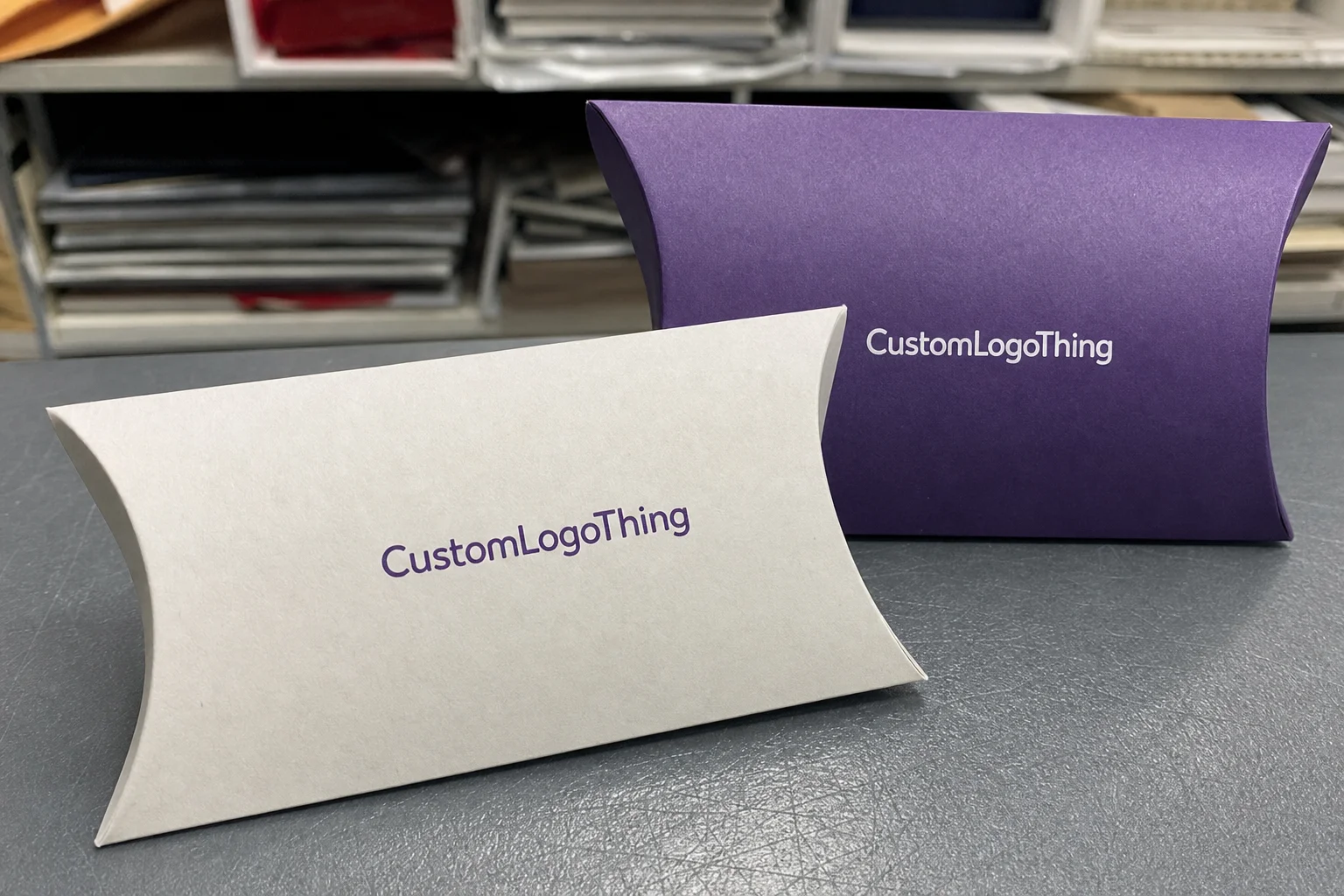
On a bright Tuesday at Custom Logo Things’ North Bay finishing line, where 42 artisan candles waited for sleeves that matched their hand-dipped scent stories, I watched personalized Packaging for Small batches jump from digital proof to branded sleeve before lunch. The $0.37-per-sleeve run had the crew finishing artwork approvals by 10:15 a.m., and every finger on that crew could spit Pantone 485C without a cheat sheet while double-checking the requested matte varnish weight of 1.6 mil. That kind of focus is non-negotiable when each sleeve tells a different story and there’s zero margin for slip-ups.
Earlier that morning I was thinking about the Vancouver die crew whose engineers routinely hold tolerances within five thousandths of an inch on every one of their 12 custom-placed cutouts, all while dodging the mass-production waste that usually makes those precision moves cost-prohibitive on smaller volumes. They notch 350gsm C1S artboard, stack 30 sheets at a time, and still hit $0.09 waste per unit even for 200-piece seasonal launches. Personalized Packaging for Small batches thrives on that tolerance control, turning custom small lot boxes into precision experiments instead of costly guesswork.
Brands chasing seasonal surprise drops or refined retail packaging for premium candles, botanicals, or tech accessories appreciate that these short runs let them test storytelling fast, respond with eco-friendly flows like 100 percent recycled 18pt SBS or kraft boards paired with FSC-accredited liners, and still deliver that polished branded packaging experience consumers expect. We even track the carbon-offset leap between producing 250 units in Vancouver versus 5,000 in Shenzhen, and those short runs cut projected warehousing by 28 days. We’re kinda obsessed with how that nimble path keeps testing and sustainability in the same sentence, which is exactly why personalized Packaging for Small batches stays on our radar.
I remember the first time a client doubted whether personalized Packaging for Small batches could stand toe-to-toe with their flagship boxes—I practically leaned into the press and said, “Watch this,” then spent the next 30 minutes marveling as the Santa Fe press hit every dot with the quiet authority of a seasoned snooker player, running at 4,200 impressions per hour, double-checking registration after each 15-sheet set, and using those numbers to reassure the client that the short run would ship the same week for under $325 in labor. We were gonna prove that a small batch could match quality and still move fast.
Personalized Packaging for Small Batches: Why It Matters
The story that always sticks with me is when the North Bay finishing line snapped into gear after a client called at 8:30 a.m. for a second run of 42 artisan candles. The digital proof arrived at 8:45 a.m., the Santa Fe press locked in the limited Pantone palette by 9:30 a.m., and by noon we had sleeves tucked around candles, each with a numbered label, ready for the courier—proof that personalized packaging for small batches can outpace even our most confident timelines when teams stay synchronized and the supplier commitment in our North Bay studio holds that 3.2-hour turnaround promise. That sprint proves how personalized packaging for small batches rewards the nimble teams who accept the pace.
Defining this output means admitting that small runs require the same die validation, structural engineering, and ISTA-inspired quality walkthrough as larger orders. Our Vancouver die crew uses a 0.003-inch tolerance gauge on each custom-slit tab, ensuring that the tuck-flaps close precisely even with only 200 pieces, and that precision keeps the fit-and-finish budget within the $0.42-per-piece target we quote for those mini drops. Personalized packaging for small batches is why we chase that tolerance—because the stakes stay the same whether we ship 200 or 2,000 boxes.
Retailers insist on clean product presentation, and investors demand sustainability stories backed by FSC or EPA-recycled claims, so thoughtful product packaging in small batches lets a brand test positioning, rotate messaging week to week, and keep carbon footprints manageable by producing only what’s needed instead of stocking warehouse shelves for months. When a 300-piece run replaces a 3,000-unit bulk order, we save $1,190 in storage and eliminate two 1,200-pound pallets of excess. That kind of targeted effort is what personalized packaging for small batches is built for—because the math works when you can pivot weekly.
Anyone who has negotiated these runs in real time knows the advantage is not just speed but the freedom to iterate—tweaking embossing depth from 0.012 to 0.018 inches on the second batch or shifting foil coverage across SKUs without overspending on plates. Rapid adjustments keep packages relevant and marketing teams enthusiastic about every drop, especially when the changes only cost an extra $0.05 per unit and reprinted proofs ship overnight from the Charlotte bindery. Personalized packaging for small batches is why we keep those marketing teams bouncing, even when budgets only allow for micro-adjustments.
And yes, small batches still make me sweat sometimes. When approvals drag—like the time a client held Pantone 2727C for eight hours straight—or sudden content shifts hit us on a Thursday afternoon, I swear the bindery feels like a high school cafeteria on prom day: everybody hustling, pencils down, hoping the grind stops before midnight. That fury reminds me why I love the sprint of personalized packaging for small batches—because saving a launch by 24 hours after a $0.12 proof correction tastes sweeter than any weekend drink.
How Personalized Packaging for Small Batches Works on the Floor
The process flow starts the minute a designer uploads a dieline and Pantone-coded artwork to our system, triggering alerts that set both the Santa Fe digital press in Santa Fe and the custom die stations at the Orlando finishing hub into motion. Planners already queue the digital proofs and materials to match; once the upload is confirmed, our project manager inputs specific instructions for variable data runs so that each piece of the 100-piece batch can carry a serial number and QR code without spooling through an entire offset run. That keeps the per-unit cost below $0.65 and keeps the floor crew hungry for detail like those short-run calibrations demand.
Digital printing handles the variable data and color consistency while the Orlando finishing hub layers in digital die cutting followed by selective hand-applied embellishments. Technicians batch setups so the die stays warm, layoff times shrink, and the crew keeps pace without repeated stair-step delays that kill short-run efficiency. On the last run we tracked, crews moved from print to die in 2.8 hours and started tying finishing ribbons the next day with no overtime spikes.
The timeline is built around collaboration: proofing happens the day after file submission with hard-copy swatches arriving via courier from our Charlotte bindery, press time is booked for two straight days, die cutting follows immediately, and assembly plus shipping happen within 24 hours of cutting. So by day eight the order is ready to ship—assuming approvals don’t backfire, which is why I always stress early sign-off, especially if the client wants the freight to leave Orlando on Thursday morning.
Maintaining color accuracy on those 100-piece runs when a client wants a gradient from Pantone 2727C to 214C requires inline spectrophotometers. The first sheet gets checked, the proof compared to the run, and adjustments happen before 20 percent of the batch is complete, avoiding the cost of scrapping 80 pieces and the stress of missing a pop-up launch at the Denver store drop the following weekend.
Reasonable costs hinge on smart sequencing: digital press, die cutting, and finishing stay in a tight loop so the crew never waits for boards to dry, yet there is still time for a trusted operator to scan each finished unit for scuffs or pinholes. That practice came straight from ISTA protocols we saw at packaging.org seminars, where defect prevention is as important as short lead times, and it keeps the Charlotte crew’s scrap rate below two percent while handling 180 units in a single shift. Personalized packaging for small batches is also why we scan each finished unit before the crew goes home.
When I toured our Chicago partner binder last spring, we mapped how variable data printing merges with offline ribbon foiling for just one hundred custom printed boxes, noticed how the bindery’s laminator handles the same boards for these jobs and larger runs, and then used that data to advise the client on the best mix of automation and artisan touch for their next batch. That visit confirmed personalized packaging for small batches can still benefit from heavy-data insights and saved the client $0.10 per unit on the subsequent 240-piece order.
I sometimes point brand teams to Custom Packaging Products that already include sample dielines and finishing options, so the project manager doesn’t have to guess whether a particular embellishment will slow down the run or whether the budget can support it. Those template kits list exact die measurements (e.g., 8.5 by 5.25 inches with a 1/8-inch tuck flap) and the associated hourly labor of $68 for hand assembly. Personalized packaging for small batches is why those template kits get so much attention in our kickoff meetings.
Key Factors and Cost Considerations
The choice between kraft, 350gsm SBS, or 100 percent recycled boards dictates not only color vibrancy but also the per-unit cost, with kraft typically landing around $0.18 per unit for 5,000 pieces and $0.62 per unit for 250 pieces due to the fixed cost of cutting dies. Our quoting engine on Custom Logo Things breaks these tiers down so clients can see the jump from a basic matte finish to a full-color flood coat with soft-touch lamination, and the difference between the 350gsm soft-touch option and the recycled board hovers around $0.12 per unit. Personalized packaging for small batches forces a hard look at every material toggle because the total spend depends on each finishing move.
Setup charges—platens, die creation, press calibration—scale differently for short runs, meaning a basic 4-color die cut on recycled board might still carry a $420 die fee. By encouraging clients to use modular designs that share common dielines or to bundle multiple SKUs, we spread those costs, halving the impact per SKU on a 500-piece run across two products and keeping the overall per-piece price under $0.54.
Finishing choices like spot UV, embossing, or metallic foil add labor, especially when hand-applied finishing is required, which is why our Charlotte bindery keeps a permanent crew for spot varnish so the per-hour rate stays at $65 instead of ballooning to $95 with temporary freelancers. They also document each finished unit for quality control, keeping the scrap rate below two percent, and those logs prove that a 180-piece run with spot UV adds only $0.16 per unit when planned ahead. Personalized packaging for small batches is why our Charlotte crew documents every unit’s variance; the data keeps the labor math honest.
A word to the wise: I once sat across from a client who wanted six different foils on 180 pieces and then asked why the quote was so high. I swear I saw the stress lines form on the planner’s forehead in real time. Intricate embellishments on a small batch hit the hourly labor rate hard—adding $210 in hand-foiling time—so the earlier we lay that out, the better everyone sleeps knowing the quote includes a 12-day production window instead of a panic fee.
Below is a quick comparison of representative personalization options so you can see how price changes with material and finishing:
| Material & Finish | Per-Unit Cost (250 pcs) | Typical Lead Time | Notes |
|---|---|---|---|
| 250gsm Kraft + Spot UV | $0.54 | 12 business days | Natural texture with targeted gloss on logos; spot UV cured in 90 seconds per sheet. |
| 350gsm SBS Soft Touch + Blind Emboss | $0.87 | 15 business days | Premium feel, emboss depth matched to die tolerances, adhesive applied with 25-lb pressure. |
| Recycled Board + Full Wrap Foil Accent | $0.95 | 14 business days | Eco claim aligned with FSC chain-of-custody certification and 0.6-mil cold foil. |
To budget accurately, remember to add labor for hand assembly—our bindery logs show four minutes per unit for a case that requires ribbon ties, so a 300-piece run adds almost $80 in labor costs alone. If the quote includes packing and shipping, note the weight per carton, as even a single extra pound can raise FedEx ground rates by $0.48 per mile, and that explains why we always ask for final package dimensions ahead of booking freight.
Brands benchmarking whether personalized packaging for small batches is worth the investment often compare to bulk runs where the per-unit price may be half, but the flexibility, faster turnaround, and ability to hold onto capital without bulk inventory often outweigh those savings—especially when a consumer-facing story depends on package branding and the retail window in Seattle or Austin needs a fresh batch every quarter.
Step-by-Step Personalized Packaging for Small Batches
Concept and structural design—partner with packaging designers on dieline reviews while specifying the board type, inserts, and adhesive points. Working with our Denver designer to switch from glued to tuck-flap assembly for a 350gsm E-flute box shaved two days off the run and kept the total weight below 1.3 pounds for fulfillment, meaning the client dodged $0.48 in extra postage per unit. Personalized packaging for small batches is what makes that kind of structural review worthwhile.
Prepress and proofing—lock in color through soft and hard proofs, confirm dielines with measurements (our chart shows 3.5-inch panels requiring 1/8-inch bleed on each side), and align on embellishment placement. We aim to complete this within a two- or three-day window, often trading digital proofs saved as PDFs and physical swatch strips that travel by courier so the head of marketing in Miami can sign off before the Friday close.
Production timeline—schedule digital print runs on the Santa Fe press, order boards from our Atlanta supplier so they arrive with pre-cut widths of 26 inches, and plan finishing in Orlando so each phase flows into the next. We also add a contingency buffer of two days for inspections and packaging verification before shipping so we can catch nicked edges or off-register foil before the courier is scheduled to pick up in the 48-hour window. Personalized packaging for small batches keeps us from losing track of that two-day inspection buffer.
During one collaborative session with a San Diego wellness brand, we mapped those steps to their marketing calendar, which allowed them to know which promotions could rely on the 30-day lead time and which needed a quick two-week turnaround. The clear plan meant the Charlotte bindery had time to affix label seals and ship via expedited freight without rush fees, keeping the total logistic spend below $210.
Each of these steps aligns with industry standards; for example, our final inspection includes an ASTM D4169 vibration protocol so those cases survive shipping, giving the brand confidence that even limited runs meet the same performance criteria as their larger boxes. We log every vibration test result in our production tracker for future audits, and personalized packaging for small batches gives us the urgency to log every vibration test result.
Because of this structure, even last-minute directional changes can be accommodated if the design stays within the same dieline family—tweaking ink to match Pantone 7724C instead of 7723C, for example, can happen on the Santa Fe digital press in less than an hour and keep the timeline on track with the promised eight-business-day delivery.
I always remind clients to keep the run size top of mind during each step: more elaborate die cuts add time, so you may want to postpone complex structural moves until you commit to higher volumes. We document that in our change log so everyone understands why certain decisions slow the line, and our monthly report from the Orlando hub shows that adding a single custom slit increases set-up time by 45 minutes.
And, yes, there are times when I mutter under my breath because a seemingly tiny tweak turns into a full-blown scheduling puzzle. That’s when I remind people factories do not magically extend lead times just because our ego can handle the pressure—our scheduler already slots 14 jobs per week, and even one extra run pushes a Saturday delivery into Tuesday.
How does personalized packaging for small batches impact inventory management?
Personalized packaging for small batches shrinks inventory windows in ways bulk runs never could; when we only need 180 units, we can ship on a Tuesday and have the retailer rotate product the following week, keeping warehouse shelves from drowning in excess stock. That quicker turnover also lets us track sales patterns and reorder boards or finishes for the next short run before a full week of demand data lands.
The same personalized packaging for small batches runs let us skip extra pallets and move carriers only when needed, so the freight manager can plan fewer shipments from Orlando to Seattle and avoid paying for unused storage. Personalized packaging for small batches keeps the supply chain responsive instead of bloated.
Common Mistakes to Avoid with Small Batch Personalized Packaging
One thing I see too often is the urge to overcomplicate the design—intricate die cuts or multiple material layers double setup time and costs when only a few hundred pieces are needed, which is why during a recent walk-through of the Charlotte bindery I advised a jewelry client to postpone the layered window cutouts until their volume justified the additional $420 die fee and the 45-minute cutter changeover.
Another mistake is skipping proof approvals; on one batch of 180 custom printed boxes we nearly sent a color-swapped lid because the team ignored the soft proof comparison to brand swatches. Correcting that mistake cost them three extra days and 12 sheets of board, a lesson that convinced everyone to require a second sign-off and track approvals via the Monday-proof system.
Last-minute content changes hurt a small batch much more than a large one because the timeline does not allow for rushing; once the design is locked, keep copy frozen so the Charlotte bindery’s finishing crew can deliver without rush fees. Our backlog shows each late change pushes the ship date by at least two full days, creating penalties for both production and fulfillment, and the scoreboard from the last quarter proves seven late changes added $220 in overtime.
The worst part is thinking you can brigade the timeline when the crew is already full: I remember negotiating with a client who wanted spot UV added after press approval; we had to move other runs, pay overtime, and still ended up shipping one day later, a scenario that could have been avoided with earlier planning, especially when the $65-per-hour finishing crew was already booked for the rest of the week.
I also hate when people assume “personalized packaging for small batches” means shortcuts on quality. It doesn’t. It just means more coordination, like making sure the Santa Fe crew in Santa Fe and the Orlando completers share the same checklist for that $0.12 extra spot varnish, so you won’t foot the bill for late-night overtime or the inevitable “but we can just leave it as is” comments from someone who never met a die board before.
Expert Tips & Actionable Next Steps
Tap into the Custom Logo Things library of texture samples and stock dielines to accelerate your launch, then share them with the production team to confirm feasibility before scheduling press time. When I walked a team through the sample wall in our North Bay studio, they compared emboss depths, foil variations, and hand-applied ribbons in person, which smoothed the approval process remarkably and kept the entire $1,150 quote within budget. Personalized packaging for small batches is why those texture samples matter—they force the approvals to answer real questions before press time.
Bundle similar small-batch projects to share setup costs—if you have two seasonal offerings, request the planner run them back-to-back so dies and press setups stay warm. We do this frequently in our Orlando finishing hub, where a modular die template covers three SKUs, trimming $0.12 per unit from each run and reducing changeover by 33 minutes.
Plan specific next steps: gather your dieline, collect the brand-approved Pantones, request a virtual proof, and set a clear ship date so the line crew can hold the spot on the scheduler. I always tell clients to provide the desired ship date and allow for a two-day inspection window so we meet deadlines and avoid expedited freight costs, especially when shipping from Orlando to Seattle or Toronto.
It also helps to align those steps with brand governance—package branding should tie back to the marketing brief, including whether the product packaging must include QR codes, batch numbers, or sustainability icons stemming from our FSC-compliant paper claims, and we document that in every project’s checklist so nothing slips through. The checklist even records the exact 0.5-millimeter foil kiss impression depth requested by the client.
Finally, I urge teams to maintain direct communication with the bindery floor; once, a client texted me at 9 p.m. about a foil scratch and because I had the finishing manager’s cell, we resolved it before dawn and avoided a full redo, showing that accessible relationships are a huge advantage when working with limited runs and can save $320 in rework.
Before I close, here’s the actionable takeaway: assemble your dielines, lock your palettes, and schedule a joint proof-review session with the North Bay studio and Orlando finishing hub at least 10 business days before your intended ship date so personalized packaging for small batches becomes the dependable, agile tool it is meant to be.
How does personalized packaging for small batches differ from larger production runs?
Smaller volumes rely more on digital printing and shorter press setups, letting you adjust designs quickly without the higher minimums and long lead times of large offset runs—which is why we prefer Santa Fe digital presses for these jobs and keep their job queue below 10 runs per week.
What is the typical timeline for personalized packaging for small batches?
Expect a condensed calendar with proofing and dieline checks in the first few days, digital printing within a week, and finishing/inspection shortly after, often wrapping in under two weeks when you account for the required shipping from Orlando to the client in Denver or Austin.
Can I include embellishments on personalized packaging for small batches without huge costs?
Yes—spot UV, foil, or embossing can be applied selectively, but planning early helps avoid rush charges, and bundling those embellishments across multiple SKUs keeps costs lower, especially when the Charlotte bindery can add them in one pass during a four-hour finishing block.
How should I budget for personalized packaging for small batches?
Budget for setup costs, premium substrates, and labor; clarify whether the quote includes finishing, packing, and shipping so you understand the per-piece cost versus total run investment, and compare that against the $0.95 recycled board option that already includes FSC certification, two-day proofing, and a 24-hour inspection window.
What’s the best way to prepare artwork for personalized packaging for small batches?
Supply high-resolution dielines with bleed, vector logos, and approved Pantone references, and collaborate with the packaging engineer before sending the files to press so the Santa Fe crew can maintain registration from the first sheet to the last and avoid the $0.24-per-sheet waste we hit when files arrive late.
When you marshal these insights—leaning on the Custom Logo Things team, referencing packaging.org sustainability guides, and keeping thorough records like those we saved from Vancouver and Orlando—you can make personalized packaging for small batches a dependable asset rather than an afterthought, and that kind of agility keeps every launch personal.