Buyer Fit Snapshot
| Best fit | Personalized Packaging for Small Batches projects where brand print, material claims, artwork control, MOQ, and repeat-order consistency need to be specified before quoting. |
|---|---|
| Quote inputs | Share finished size, material target, print colors, finish, packing count, annual reorder estimate, ship-to region, and any compliance wording. |
| Proofing check | Approve dieline scale, logo placement, barcode or warning zones, color tolerance, closure strength, and carton packing before bulk production. |
| Main risk | Vague material claims, crowded artwork, missing packing details, or unclear freight terms can make a low unit price expensive after revisions. |
Fast answer: Personalized Packaging for Small Batches: Artwork Proof, Packing Count, and Landed Cost should be specified like a repeatable production item. The safest quote records material, print method, finish, artwork proof, packing count, and reorder notes in one written spec.
Production checks before approval
Compare the actual filled-product size with the drawing, then confirm tolerance on folds, seals, hang holes, label areas, and retail display edges. Reserve space for logos, QR codes, warning copy, and material claims before decorative graphics fill the panel.
Quote comparison points
Review material grade, print process, finish, sampling route, tooling charges, carton quantity, and freight assumptions side by side. A quote is only useful when the supplier can repeat the same color, closure quality, and packing count on the next order.
Personalized Packaging for Small Batches: A Practical Guide
I still remember a 250-box run I checked on the floor in Shenzhen's Bao'an district, and the details are burned into my memory in that very specific factory way: the hum of the folder-gluer, the smell of fresh 350gsm C1S artboard, and a brand owner standing there with the sort of tense look people get when they realize the packaging is either going to make the product feel finished or make it look like a science project. He thought the order was too small to deserve a polished finish, but once we matched the 1.2 mm board thickness, cleaned up the dieline to hold a 0.5 mm tolerance, and ran a crisp one-color silver foil hit on a matte aqueous coat, those boxes looked like they belonged beside a $60 candle instead of a startup desk in a garage. That is the real story behind personalized Packaging for Small batches: you do not need 5,000 units to make the packaging feel deliberate. You need the right structure, the right print method, and a supplier in a place like Shenzhen, Dongguan, or Guangzhou who treats short runs like real work, not busywork.
Put simply, personalized Packaging for Small batches means custom boxes, labels, sleeves, wraps, or inserts made in limited quantities, usually 50 to 500 units for cartons and 100 to 1,000 units for labels, depending on the format and the supplier. I have seen brands use it for launch kits, seasonal drops, trial SKUs, and subscription boxes where ordering a pallet of inventory would tie up $3,000 to $12,000 in cash for no good reason. Short runs often make more sense than bulk orders when shelf life is short, demand is still shaky, or the product itself changes every few months. A startup in Austin may only need 200 folding cartons for a first launch, while a skincare line in Toronto might test 300 sleeve labels before committing to a 3,000-piece reorder from a plant in Suzhou. A lot of brands wait too long to admit that the "we'll just order more later" plan falls apart the second storage, cash flow, and product changes all show up at the same time.
That is why personalized packaging for small batches has become such a practical tool for newer brands and for established companies testing a new direction. You can run 100 units of custom printed boxes, listen to what customers say, then reorder with better information instead of guessing from a spreadsheet. I have watched clients save more money by avoiding dead stock than they ever would have saved by chasing the lowest unit price. Waste is expensive. Storage in a 100-square-foot room in Brooklyn or a 12-pallet rack in a warehouse outside Chicago is expensive. Regret is the cost nobody budgets for, which is funny in the worst possible way because regret always shows up right after the invoice is paid.
If you are trying to balance branded packaging, speed, and budget, personalized packaging for small batches gives you room to move without filling a warehouse with boxes you may never use. That is the practical angle. Not marketing theater. Not premium-experience fluff. Real packaging design choices that protect the product, support package branding, and keep a launch from turning into a guessing game. I have a soft spot for packaging that does its job without acting like it deserves a trophy for showing up, especially when it is made from a simple 350gsm SBS board or a 1.5 mm grayboard setup that holds up in transit without looking overdesigned.
What Is Personalized Packaging for Small Batches?
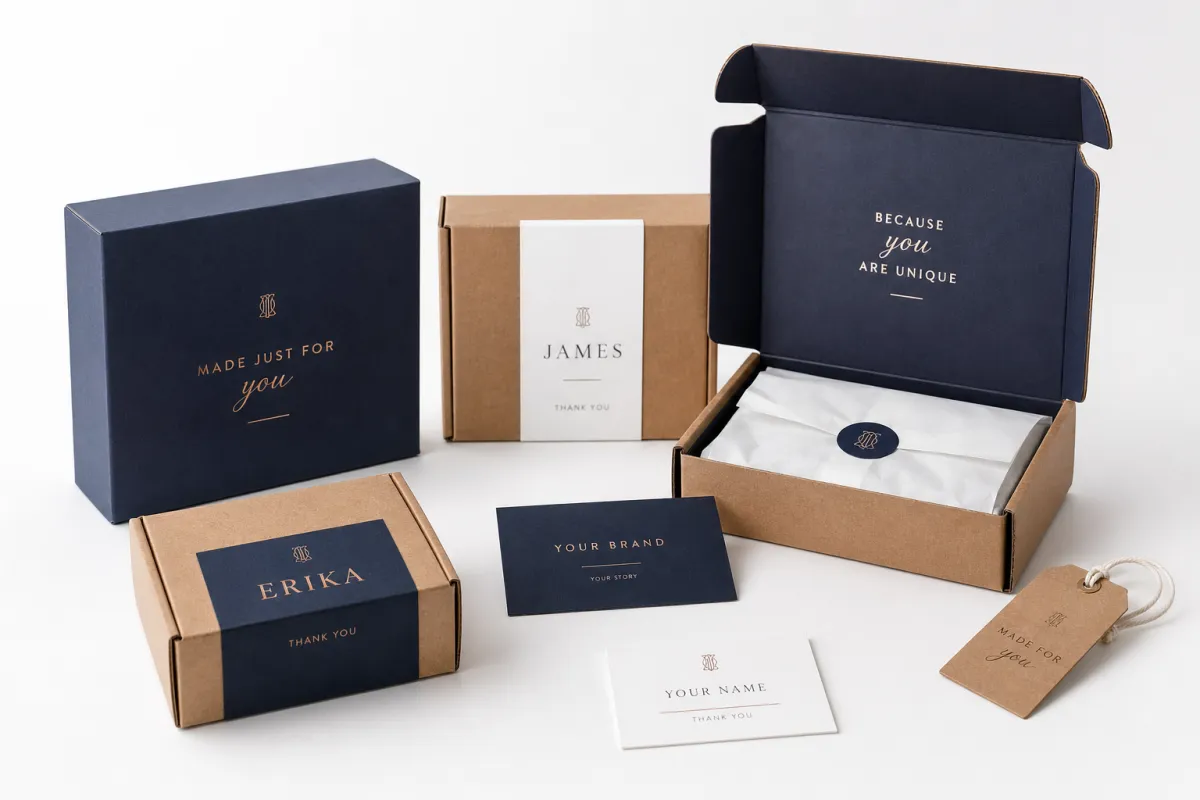
Personalized packaging for small batches is not some special category with a secret rulebook. It is custom packaging made at lower quantities, often 50 to 500 units for folding cartons, 100 to 300 units for rigid boxes, and 300 to 1,000 units for labels, depending on the format and the supplier. I have quoted everything from 100 folding cartons in Dongguan to 300 label rolls in Ningbo to 250 mailer boxes in Guangzhou, and the core idea never changes: you are paying for setup, materials, print, finishing, and handling, just spread across fewer pieces. That is why the details matter so much. A small run does not forgive sloppy planning; it just makes the mistake easier to spot.
The formats people usually start with are the ones that are easiest to control. Folding cartons fit retail packaging and usually run well on 300gsm to 350gsm C1S artboard. Corrugated mailers make sense for shipping, especially in E-flute with a 1.5 mm wall for products that need a little more crush resistance. Product labels give fast results when a bottle or jar already carries the structure, especially on 60 ml droppers, 250 ml bottles, or 4 oz jars. Branded inserts add a thoughtful touch without inflating the budget, particularly if the insert is die-cut from 500gsm chipboard instead of a custom molded tray. Personalized packaging for small batches works well here because each format can be tuned to the product instead of forcing the product into some stock box somebody found in a catalog. I have seen a plain bottle become shelf-ready with nothing more than a smart matte label and a well-cut insert, and I have also seen a fancy-looking box fail because the product had room to rattle around like loose bolts in a toolbox.
Short runs are not automatically small in effort. A 250-unit job can still need a proper dieline, print proof, material check, and quality review. When I visited a supplier in Dongguan's Houjie district, one operator told me the hardest jobs were not the big ones; they were the tiny runs with five artwork revisions and a client who changed the insert height after the proof came back. He was right, and I have thought about that conversation more times than I want to admit. Personalized packaging for small batches is only easy when the decisions stay easy, and a 2 mm change in insert depth can force a full rework if the board has already been cut.
Launches are messy. Seasonal products are temporary. Test SKUs do not deserve a warehouse of boxes. Brands with limited storage have the same problem in a different uniform. Four hundred boxes take up less room than four thousand, which sounds obvious until someone in finance asks why the back room looks like a cardboard canyon. I once walked into a small fulfillment space in Queens where the boxes had taken over half the aisle, and the owner said, with real defeat in his voice, "I thought inventory would feel more like progress." Personalized packaging for small batches lets you move with less risk and more clarity, especially if the first order is 150 units and the next order is a measured 300 after the sell-through data comes in.
Fast product turnover makes short runs even smarter. A cosmetics brand I worked with had a serum formula change twice in one year because the product was still being refined. If we had printed 10,000 cartons, half of them would have been obsolete before the last unit shipped. We used personalized packaging for small batches with a fixed base structure and changed only the artwork panel, keeping the outer carton at 65 mm by 65 mm by 145 mm while the insert stayed on a 350gsm offset sheet. The brand stayed consistent, and the waste stayed low. That kind of decision is not glamorous, but it saves people from staring at dead inventory six months later and wondering where the money went.
There is also a branding layer people underestimate. Good package branding does not depend on quantity alone. It depends on consistency, material choice, and the way the customer feels at opening. A 150-unit run can feel more premium than a 15,000-unit run if the stock is right, the print is clean, and the insert actually fits the product. I would take personalized packaging for small batches done well over a giant sloppy order any day. Small runs kinda force better taste because they make every decision visible, from the 1-color logo on the flap to the 0.3 mm registration on a silver foil mark.
How Personalized Packaging for Small Batches Actually Works
The production path for personalized packaging for small batches is straightforward once you stop pretending it is a mystery. The brief comes first: what product are you packing, what dimensions does it have, and how should the box perform in a 48-hour transit test or on a retail shelf? From there, the supplier confirms or builds the dieline. Artwork gets placed, a digital proof gets sent, a sample or pre-production mockup may be produced, and once the proof is approved, printing starts. After print, the work may include lamination, die-cutting, foil stamping, embossing, gluing, packing, and shipping. It is a chain of decisions, really, and each one has a way of reminding you whether the project was planned with care or with hope.
For most small brands, the first packaging formats are mailers, folding cartons, labels, and inserts. Mailers are common because they protect well in transit and do well with 1.5 mm E-flute or B-flute depending on the carrier route. Folding cartons are the classic retail choice, usually in 350gsm C1S artboard with a matte or gloss aqueous finish. Labels are the quickest path if you already have a bottle or jar and just want the branding to feel intentional. Inserts matter more than people think, especially when a product rattles around in the box like loose hardware in a toolbox. Personalized packaging for small batches is often about choosing the simplest format that still feels ownable. I have told more than one client, with some affection and a little impatience, that a quiet box done right beats a noisy box that falls apart.
Digital printing is usually the easiest fit for short runs because it avoids the heavy plate costs tied to offset. That does not make offset a bad choice. It simply means offset starts to make more sense once volume rises and the artwork is stable, especially for 3,000 to 10,000 pieces on a 5-color Heidelberg or Komori press in Guangdong or Zhejiang. For personalized packaging for small batches, digital printing often brings lower setup friction, faster approval, and less pain if one detail needs changing after the sample lands on your desk. That lesson gets expensive when it arrives the hard way, and I say that as someone who has watched a perfectly good schedule fall apart because somebody wanted one more shade of blue after proof approval.
The decisions that shape the result most are size, material, print method, finish, and assembly method. Choose the wrong size and you waste material or crush the product. Choose the wrong paperboard and the box feels flimsy. Choose too many finishes and the schedule slows down. Choose an assembly method that needs hand labor while the budget assumes machine folding, and the quote starts to fall apart. Personalized packaging for small batches rewards discipline more than decoration. I know that is not the most thrilling thing to hear, but the packaging floor is not a place where wishful thinking gets very far, especially in a factory in Guangzhou where the line is set up for 500 units per hour and not 500 hand-folds by a studio intern.
If you want a reality check on production standards, I always tell clients to look at packaging and shipping test resources, not just polished mockups. The Packaging Machinery Manufacturers Institute has useful baseline information at packaging.org, and ISTA shipping test guidance at ista.org is worth reading if the box needs to survive transit from Shenzhen to Los Angeles or from Ningbo to Rotterdam. That is the boring part. It is also the part that keeps returns down. I have seen a beautiful box fail a drop test from 76 cm and then watched the room go quiet like someone had just announced the printer was out of ink forever.
One more thing: personalized packaging for small batches works best when the product size is locked. If you are still deciding whether the candle jar is 8 oz or 9 oz, or whether the bottle cap will be 24 mm or 28 mm, stop and finish that first. Packaging should fit the product, not the other way around. I have watched brands lose three weeks because they were almost done finalizing a bottle spec. Almost is not a production standard. It is also not a category that makes anybody on the factory side feel relaxed, especially when the insert has already been cut for a 72 mm diameter jar and the final jar turns out to be 78 mm.
What Drives the Cost of Personalized Packaging for Small Batches
The price of personalized packaging for small batches breaks into a few buckets: setup fees, dielines, materials, printing, finishing, inserts, assembly, and freight. When a quote looks suspiciously cheap, I start by checking what is missing. Is the dieline included or not? Is the insert priced separately? Is freight a real door-to-door number, or just a carton price that still has to cross an ocean from Shenzhen, Hong Kong, or Xiamen? That is where the surprises hide, and the surprises are rarely the fun kind. More often they are the kind that make a launch manager sigh into a cold coffee.
Unit price usually drops as volume rises, but the smarter question is whether the bigger order traps your cash in inventory. A 5,000-piece run might bring a simple folding carton down to $0.15 per unit at a plant in Guangzhou, but if you only move 700 units per quarter, you have just bought a storage problem in addition to the packaging. Personalized packaging for small batches can look more expensive on paper and still be cheaper in real life because it reduces waste, overbuying, and obsolete stock. I have seen brands celebrate a lower unit price and then quietly pay for storage long after the excitement wore off.
Here is a simple example I have used with clients. A small folding carton might price like this: 100 units at $1.85 each, 250 units at $1.15 each, 500 units at $0.78 each, and 5,000 units at $0.15 each for a plain carton with one-color print, with a one-time setup fee of $120 and basic shipping added on top. A matte aqueous coating, a 350gsm C1S board, or a silver foil line can push the price up by 8 to 25 cents per unit, depending on the factory and the city. The numbers will change by material and finish, but the pattern stays the same. Personalized packaging for small batches gets cheaper per unit as quantity rises, while the total commitment rises too. That tradeoff is the whole conversation, even if people sometimes try to pretend there is a secret fourth option hidden in the spreadsheet.
| Run Size | Example Unit Price | Setup Fee | Estimated Total Before Freight | Best Fit |
|---|---|---|---|---|
| 100 units | $1.85 | $120 | $305 | Testing, samples, micro-launches |
| 250 units | $1.15 | $120 | $407.50 | Small launch, seasonal drop |
| 500 units | $0.78 | $120 | $510 | Growing SKU with stable demand |
If you want to keep costs under control without making the packaging look cheap, start with a standard size, one color system, and fewer finishes. A matte aqueous coat can look clean without the premium price of soft-touch lamination plus foil plus embossing. One well-placed brand mark often beats three flashy details. Personalized packaging for small batches should be memorable, not overdesigned. Restraint often looks more expensive than decoration, which is frustrating if you are the person who spent three afternoons debating whether a second foil line was "too much."
Hidden costs are where people get hurt. Proof revisions can add time and labor. Custom inserts can trigger tooling or extra die-cut charges. Rush fees show up when a launch date was invented in a meeting and nobody checked the calendar. Split shipments cost more than one full shipment, obviously, but I still see brands act surprised when freight is charged twice because half the cartons are going by air and the rest by sea from Yantian. Personalized packaging for small batches is manageable when you ask for all-in pricing, not just the print number that looks tidy in an email. I have learned to ask boring questions early, because boring questions are cheaper than emergency corrections.
The cheapest route is not always the smartest. I once had a client try to save six cents per unit by switching from a snug paperboard insert to a loose generic one. The product moved in transit, the label scuffed, and they spent more on replacements than the better insert would have cost in the first place. That is the kind of math people learn after the fact. Personalized packaging for small batches is about protecting margin, not chasing the lowest quote like it is a trophy. Honestly, the trophy usually ends up being a box of damaged goods and a very awkward team call.
For brands that care about sustainability claims, material choice matters too. FSC-certified paperboard can support responsible sourcing language when the chain of custody is in place, and that documentation should be real, not decorative. A 350gsm FSC C1S board from a supplier in Zhejiang can be a sensible place to start if you need a clean retail finish without moving to a heavier rigid setup. If you want to check the standards side, fsc.org is a sensible place to start. I have seen too many eco claims printed on packaging that would not survive a basic audit. That kind of shortcut invites trouble, and frankly it annoys me because it gives the rest of the industry a headache it did not ask for.
Timeline: From Quote to Delivery
A realistic timeline for personalized packaging for small batches starts with the quote and ends with delivery, but the clock does not run evenly. The fast part is usually the quote itself, which may take 1 to 3 business days if the product details are complete and the supplier is already working in Shenzhen, Dongguan, or Ningbo. The slower part is artwork and approval. If the brand keeps changing the copy, finish, or box style, the schedule slips. That is not manufacturing magic. That is indecision with a tracking number. I say that with affection, but not much of it.
After the quote, artwork prep and proofing usually take another 2 to 5 business days if the dieline is ready. Sampling can add a few more days, especially if a structural mockup is needed. Production then begins, which for many short runs lands at 12 to 15 business days from proof approval for a simple folding carton with one foil stamp, or 15 to 20 business days if the job includes a custom insert, window patching, or rigid setup. Personalized packaging for small batches moves quickly when the file is clean and the approvals are final. The fastest projects I have seen were the ones where the brand already knew what they wanted and had the discipline to stop fiddling with it.
Final dielines, print-ready artwork, one decision on finish, and a supplier who knows the production method before quoting will speed everything up. Resize requests, color debates, structural changes after proof, and the classic can-we-make-the-logo-slightly-bigger conversation slow everything down. I have sat through that meeting in a factory office in Dongguan with a fluorescent light buzzing overhead. It ages a person. It also ages the person doing the quoting, which is probably fair.
For launch planning, I tell brands to leave a buffer of at least 10 business days between packaging approval and the date they actually need the boxes in hand. Freight delays happen. Sample sign-off gets delayed. One missing barcode can turn a pallet into a problem. Personalized packaging for small batches is not slow, but it is only as fast as the weakest approval step. That is the part people miss when they assume the box itself is the only thing on the schedule, especially if the cartons have to travel from a factory in Guangzhou to a fulfillment center in Dallas or Frankfurt.
There is one rule I repeat constantly: the fastest projects are the ones where the brand knows exactly what product goes inside the package. If you are packing a 60 ml bottle, say 60 ml. If the insert must hold a 4 oz jar plus a 12 mm spatula, say that too. Ambiguity adds days. Personalized packaging for small batches rewards specificity because every millimeter matters once the die is cut. I have seen a project gain a full week simply because someone finally sent the actual product dimensions instead of "roughly this size," which is not a measurement anyone can cut a board against.
Key Factors That Make Small-Batch Packaging Work
Protection comes first. A package can look beautiful and still fail if the corners crush or the insert lets the product slide around. I have seen gorgeous branded packaging arrive with a cracked corner because the wall thickness was too light for a courier route that handled parcels like sacks of tiles. For personalized packaging for small batches, protection is not optional. It is the starting point, the thing you build around before you get distracted by ink colors and fancy finishes. A 1.5 mm grayboard mailer or a double-wall corrugated shipper can be the difference between a clean unboxing and a replacement order.
Material choice should match the use case. Corrugated board makes sense for shipping-heavy products. Paperboard works well for retail packaging and lighter items. Labels are a smart option when speed matters and the container already carries most of the structure. Specialty stocks can create a premium feel, but I would rather use a smart 400gsm board with a clean print than a fancy stock that bends like wet cereal. Personalized packaging for small batches should earn its keep. If the material looks beautiful but behaves badly in transit, the beauty is mostly theoretical.
Brand consistency matters across the whole unboxing experience, not just the box face. The tape, the insert, the thank-you card, the outer label, and the printed inside flap all shape the customer's memory. One client of mine used a simple kraft mailer, but the insert and seal label were designed carefully, and customers kept posting the unboxing because the system felt intentional. That is package branding doing its job. Personalized packaging for small batches can create that feeling without a giant spend. I still think that project worked because the team cared about the parts nobody would notice separately, like the 80 mm by 120 mm insert card and the 2-inch paper tape that held the lid closed.
Supplier capability matters more than a glossy mockup. A printer can promise spot varnish, foil, or a tight tolerance, but if the equipment is not set up for it, the pain shows up later. Ask what machine they run, how they handle QC, and whether they can hold registration on a small print area. Some factories do beautiful work on simple structures and struggle the moment the project gets too clever. Personalized packaging for small batches needs a supplier that matches the format, not just the mood board. I have been burned by pretty samples that hid ugly production limits, and once you see that trick, you never forget it.
Storage and reorder strategy are easy to ignore and then impossible to fix. If the packaging arrives six weeks before the launch, where does it go? If the reorder is approved, who keeps the artwork file and the finish notes? I recommend one clean file folder with the dieline, approved art, material spec, and photos of the sample. That sounds dull because it is dull. It also saves money. Personalized packaging for small batches becomes much easier to manage when the next order is not treated like a brand-new mystery. I have watched teams spend an afternoon trying to reconstruct a box spec from old email threads, and nobody leaves that meeting feeling heroic.
For sustainability and waste reduction, think about the whole package system, not just the headline material. The EPA has useful guidance around packaging and waste reduction at epa.gov, and even if you are not trying to write a white paper, the basics are common sense: less excess, better fit, and smarter material use. That usually makes the package cheaper too, which is a nice bonus. Fancy. I do like it when responsible decisions happen to save money, because then nobody has to pretend the spreadsheet is being noble.
Common Mistakes With Personalized Packaging for Small Batches
The biggest mistake is designing before confirming dimensions. I have seen brands build the artwork first, then discover the bottle neck is 6 mm taller than the insert pocket. That means rework. Rework means money. Money means someone in operations starts giving you the look. Personalized packaging for small batches works best when the product spec comes first and the design follows it. I know that sounds basic, but a surprising number of expensive problems start with somebody saying, "We can figure out the measurements later," and then trying to force a 28 mm cap into a 24 mm cutout.
Another mistake is making the art too complicated for the budget. Too many finishes, too many colors, too many special effects, too many structural changes. It reads like ambition and prices like chaos. A clean two-color layout with one foil accent can look more elegant than a crowded box with four inks and three embellishments. Personalized packaging for small batches does not need every trick in the drawer to feel premium. In fact, I often think restraint makes a brand look more certain of itself, especially on a 350gsm C1S carton running through a short-run digital press in Guangzhou.
Labor gets forgotten all the time. A quote for a flat carton may look fine until you discover the insert has to be hand-folded, the label applied manually, and each unit packed in a separate sleeve. Suddenly the quote is not the quote. It is a fantasy with a spreadsheet attached. I once watched a small team spend almost 9 hours assembling 300 units because the design assumed machine folding that the supplier did not even have. Personalized packaging for small batches should always be checked against assembly reality. If someone has to stand there and fold a flap 300 times by hand, that person will remember your project forever, and not fondly.
Skipping tests causes avoidable damage. Drop protection matters. Moisture matters. Shelf wear matters. If your product will sit in a warm fulfillment center in Texas or Singapore for three weeks, the coating and adhesive need to survive that environment. One of my clients sent a label job to market without checking humidity behavior, and the corners lifted on the first warm shipment wave. Not glamorous. Very expensive. Personalized packaging for small batches deserves a small sample test before the full run. A half-day spent testing is a lot kinder than a warehouse full of peeling labels.
The reorder plan gets ignored, then the first batch sells through and someone realizes the artwork file lives in an inbox nobody monitors. Or the new order needs the same box, but nobody recorded the board grade. That kind of mess is avoidable. Keep the approved spec sheet, the supplier contact, the unit price, and the lead time in one place. Personalized packaging for small batches only saves time if you can repeat it. Otherwise the "small batch" part becomes a recurring scavenger hunt.
Here is the blunt version: many brands think they are buying packaging, but they are really buying decisions. The better those decisions are up front, the less painful the order becomes later. I have been on the factory floor when a manager pulled a bad dieline from production at the last minute and said, "We are not shipping that." He was right. It saved the client from a box that would have failed every time. Personalized packaging for small batches is unforgiving in the right way. It tells the truth early, which is annoying in the moment and very useful afterward.
Expert Tips and What to Do Next
Start with one hero SKU and one packaging format. That is the cleanest way to test personalized packaging for small batches without turning the project into a three-headed budget problem. If your candle line has three scents, do not create three different box structures unless there is a real reason. Use one base format and change the artwork. That keeps setup easier, inventory cleaner, and reorder timing less painful. I know everyone likes variety until the invoice shows up, especially when the reorder lands at 250 pieces and the packaging spec has to be stable enough for a second run.
Ask for all-in pricing. Not just the print price. I mean the real number: materials, setup, finishing, inserts, assembly, freight, and any packaging-related handling fee. I have had clients compare two quotes where the cheaper one turned out to be more expensive once they added export packing, pallet wrap, and split shipping from Shenzhen to a West Coast warehouse. Personalized packaging for small batches is only economical when the quote reflects the full landed cost. A tidy number in an email is nice, but a complete number is what actually keeps the launch on budget.
Build a small sample kit and put it in front of actual customers or staff who are not already sold on the idea. Ask them what they notice first, what feels premium, and what feels awkward. That is much more useful than a room full of founders congratulating each other on a foil logo. I learned this the hard way in a client meeting where the team loved a black-on-black box until a warehouse supervisor pointed out that the barcode was nearly impossible to scan at 8:00 a.m. on a low-light packing line. Practical people save launches. Personalized packaging for small batches needs that kind of feedback, even if it bruises somebody's favorite design choice.
Keep a reorder file with approved artwork, measurements, stock, finish notes, and a photo of the final sample. Add the supplier name, quote date, and the exact box count you received. If you use Custom Packaging Products, it helps to keep the spec sheet close so the next order does not begin with detective work. In my experience, the second order is where the money gets saved, because all the mistakes from the first run are already documented. Personalized packaging for small batches becomes far more efficient once the file is clean. That file does not need to be exciting; it just needs to exist and be accurate.
If you are unsure where to start, pick the format that protects the product best and keeps the customer experience intact. Sometimes that is a printed mailer. Sometimes it is a simple folding carton with one insert. Sometimes it is just a premium label and a carefully designed outer shipper. The point is not to make everything custom for the sake of it. The point is to make the packaging fit the product, the margin, and the launch window. Personalized packaging for small batches should solve a business problem, not decorate one. That distinction saves a lot of time and a fair amount of ego.
My honest advice? Do not wait for the perfect packaging concept. Perfect is a procrastination tool dressed up as standards. Move with one product, one format, and one clear reorder plan. Get the sample right. Check the fit. Check the freight from the factory in Guangdong to your receiving dock. Then launch. Personalized packaging for small batches works best when you treat it like a working system, not a branding exercise with no deadline. I have seen too many good ideas get trapped in "almost ready" limbo, and that limbo is where good launches go to nap.
What is the minimum order for personalized packaging for small batches?
Most suppliers set a minimum somewhere between 50 and 500 units, depending on the packaging type and print method. Labels and sleeves often allow lower minimums than rigid boxes or complex inserts, and a factory in Dongguan may quote 100 units while a rigid-box plant in Guangzhou asks for 300. Ask for the MOQ by format, because one supplier may quote a low box minimum but a much higher insert minimum. I always tell clients not to assume the lowest number in the email is the whole story.
Is personalized packaging for small batches more expensive per unit?
Usually yes, because setup costs get spread across fewer units. A 250-piece carton run can cost more per unit than a 5,000-piece order that lands at $0.15 each, but the real question is total cost versus inventory risk, storage, and product turnover. A slightly higher unit price can still be the cheaper choice if it keeps you from overordering. I have seen people obsess over cents per unit and forget the much larger cost of boxes sitting unloved in storage.
How long does personalized packaging for small batches usually take?
A simple short-run order can move in roughly 12 to 15 business days from proof approval, depending on the supplier and material. Add 3 to 5 business days for proofing, and custom structures, inserts, or special finishes usually add more time. Fast approvals and final dielines are the easiest way to protect the schedule. If the artwork keeps changing, the calendar gets cranky very quickly.
Can I use personalized packaging for small batches across multiple SKUs?
Yes, but it is smarter to standardize the box size or structure so only the artwork changes. A single 65 mm by 65 mm by 145 mm carton can work for multiple scents or flavors if the internal fit stays stable. Too many SKU variations increase setup time, proofing work, and the chance of a mix-up. One flexible base format keeps small-batch packaging manageable and cheaper. I like that approach because it keeps the process sane, which is a nice thing to say about packaging operations for once.
What should I ask a supplier before ordering personalized packaging for small batches?
Ask for MOQ, per-unit cost, setup fees, lead time, and whether shipping is included. Confirm the dieline, material thickness, finishing options, and sample policy before approving artwork. Also ask who checks quality and what happens if the printed run does not match the approved proof. A supplier in Shenzhen, Dongguan, or Ningbo should be able to answer those questions in plain language. That list may feel long, but it is still shorter than dealing with a wrong order after the fact.
If you keep the product spec tight, choose one base structure, and ask for an all-in quote before artwork approval, personalized packaging for small batches stays practical instead of painful. Lock the dimensions, test one sample on the actual product, and only then confirm the run size. That is the move that keeps the first order clean and makes the second order easier, which is really the whole point.


