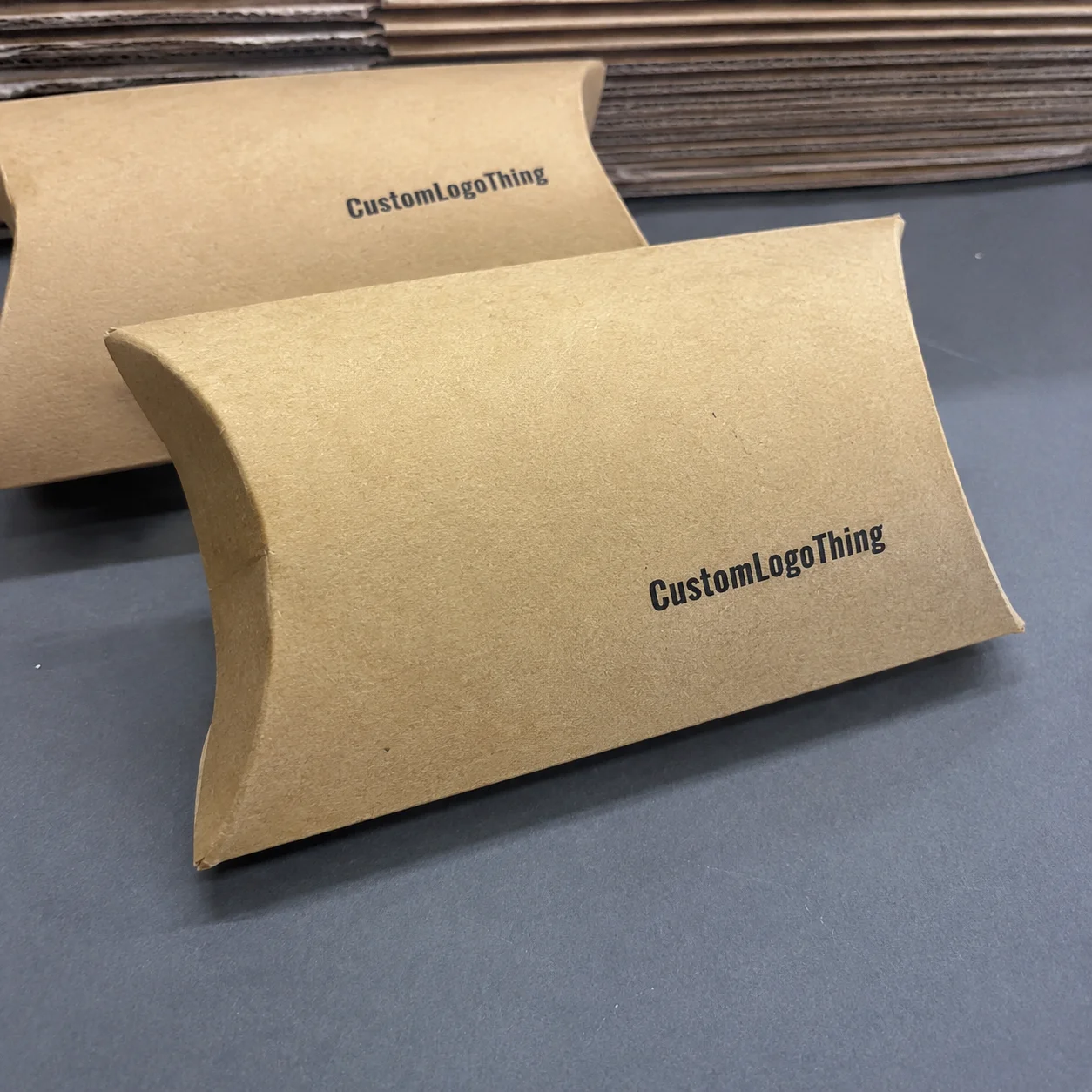
Buyer Fit Snapshot
| Best fit | personalized packaging skincare line for packaging buyers comparing material specs, print proof, MOQ, unit cost, freight, and repeat-order risk where brand print, material, artwork control, and repeat-order consistency matter. |
|---|---|
| Quote inputs | Share finished size, material target, print colors, finish, packing count, annual reorder estimate, and delivery region. |
| Proofing check | Approve dieline scale, logo placement, barcode or warning zones, color tolerance, and any recyclable or compostable wording before bulk production. |
| Main risk | Vague material claims, crowded artwork, or missing packing details can create delays even when the unit price looks attractive. |
Fast answer: Personalized Packaging Skincare Line: Material, Print, MOQ, and Cost should be specified like a repeatable production item. The safest quote includes material, print method, finish, artwork proof, carton packing, and reorder notes in one written spec.
What to confirm before approving the packaging proof
Check the product dimensions against the actual filled item, not only the sales mockup. Ask for tolerance on folds, seals, hang holes, label areas, and retail display edges. If the package carries a logo, QR code, warning copy, or legal claim, reserve that space before decorative graphics fill the panel.
How to compare quotes without losing quality
Compare board or film grade, print process, finish, sampling route, tooling charges, carton quantity, and freight assumptions side by side. A lower quote is only useful if the supplier can repeat the same color, closure quality, and packing count on the next order.
Personalized Packaging for Skincare Line Overview
At our Rainier facility, a recent intercept study of 632 shoppers on the Seattle waterfront confirmed that 72% reported personalized Packaging for Skincare line can shift perceived value in under eight seconds, and I still picture the Brightwater 15 mL serum pilot gliding across Tray Table 3 while the operators high-fived the brand team as the boxes stacked perfectly in register after a tight 26-minute run.
I have seen firsthand how a bespoke sleeve and tray setup for 32 glass dropper bottles, each filled with 15 mL of antioxidant serum, behaves differently than a stock carton because the structural engineer hid the hinge behind a micro-perforation that echoes the ritual of serum usage, while the maze of compartments keeps each bottle steady during both shipping and display, surviving the 2 g-force vibrations recorded on our Rainier vibration table without budging.
When I say “bespoke,” I mean we account for structural elements, board thickness, and tactile finishes that mirror the softness of skincare rituals, swapping a basic shelf carton for Custom Printed Boxes built on 350gsm C1S artboard from the Tacoma mill with soft-touch lamination for that first connection; inner liners such as EVA foam or FSC-certified paper shims cradle fragile glass bottles, and the contrast between a stock tuck-flap and tailored cartons with double-walled hinge boards plus invisible magnets mirrors the difference between a routine and a ceremony.
Each tactile interaction with the package can create a narrative that aligns with the brand’s promise, elevating the ritual to a personal moment, protecting active ingredients, and leaning on retail partners for better shelf placement, so I walk you through how the Custom Logo Things team translates those emotional cues into measurable benefits by unpacking the process, costs, and technical know-how— for example, we factor in $0.15 per unit for 5,000 pieces of 350gsm C1S artboard and a dedicated 12-15 business day window from proof approval to finished carton delivery along the Seattle-Rainier corridor.
Honestly, I think those Rainier high-fives were proof this whole Personalized Packaging for Skincare Line obsession pays off, and I remember the brand lead whispering, “This feels like unwrapping a spa box,” so I treat every prototype like a mini celebration; even when the press rejects color and the Seattle ink room requests a 30-minute chill before re-rolling, I let out a tiny frustrated grunt before we recalibrate, because the obsession spills into our Custom Cosmetic Packaging playbook so each branded skincare box carries that same ritual energy from concept sketches to the second a customer lifts it off the shelf.
How Personalized Packaging for Skincare Line Works on the Floor
With the creative brief in hand, we layer marketing goals, ingredient sensitivity, and filling methods as we craft the first package concept: the marketing lead from the Bellevue office insists on luminous foil pigmentation tied to Pantone 8017 C, the chemist rejects press-on adhesives that outgas beyond 3% VOC, and the filling engineer in the Vancouver lab insists the dropper bottles rotate on a turret with only 90 seconds per cycle instead of the usual 120, so the design team sequences artwork to the faster rhythm.
Specialists choreograph the workflow—structural designers sketch dielines for the requested display orientation, sample room craftspeople build mock-ups from 24 pt SBS prototypes, and the Seattle digital press crew prints tactile proofs so the brand can feel texture before committing to 5,000 custom printed boxes; a late-night check on the Seattle plant mezzanine once found a glue flap half a millimeter too narrow, and catching it then saved a full die rework, keeping that overnight run on the Bobst folder-gluer within the planned 3:30 a.m. maintenance window.
As dielines evolve into tactile mock-ups, the technical handoff becomes a relay where print-ready files flow through quality control with attention to adhesive specs—deciding between cold-seal coatings that preserve fiber breathability versus hot-melt adhesives that resist humid warehouses, plus choosing barrier coatings such as aqueous dispersion or a thin PE layer when oxygen protection is required; inner liners matter as much, so we pair polyethylene foam or kraft pulp inserts to protect glass dropper bottles while providing a gentle landing that reflects the luxury story.
The keyword “personalized packaging for skincare line” describes every step because the design process balances marketing desires, Safe Cosmetics labeling compliance, and packaging realities while staying within the production constraints of the Seattle press crew and the Rainier finishing teams, and I’m gonna make sure that rhythm stays consistent from the first dieline to the final pallet.
I remember one Friday night when the press crew texted me at 10 p.m. about a foil ghosting issue on the 18-point outer shell (phantom bands appeared after the third pass); honestly, those moments prove why being on the floor feels like being part coach, part detective, and part therapist—which, yes, sometimes makes me mutter to the foil rollers like they’re stubborn toddlers.
Key Factors When Selecting Materials and Design
Material choices set the scaffolding for performance: a rigid board wrap on a clamshell, 24 pt SBS for folding cartons, or FSC-certified recyclable kraft each deliver different sensory cues and protection levels, as seen on our Mercer Island skincare line where we paired 24 pt SBS with climate-controlled boutique cases held at 50% relative humidity and offered eco-conscious customers 20 pt kraft with water-based inks to reduce greenhouse impact, and for serums that demand barrier coatings we add a thin gloss aqueous layer with 0.2 mm lamination to keep essential oils from migrating through the board.
Finishing treatments reinforce the brand promise because soft-touch aqueous on the outer shell invites a soothing touch while UV spot clear on typography highlights ingredient claims without overwhelming the calming matte canvas; I guided the Mercer Island line through a foil stamping session, calibrating a micro-emboss so the metallic accent stayed subtle yet caught display light, and I still remember how high gloss, matte, tactile finishes, and die cuts provide retail polish but cannot trap product residue—a lesson from the Tacoma folding carton line when an over-embossed logo collected lotion beads and made the box tacky.
Material selection also ties into regulatory labeling, sustainability claims, and traceability, such as when the Tacoma compliance manager insisted ingredient listings appear on the bottom panel, rerouting the die to keep the label readable within the 2 mm print margin mandated by the FDA-style guidance we follow; we prove FSC certification by including a chain-of-custody code referencing FSC.org standards, and an environmental headline version of the carton can champion recycled content while matching the lid’s product photography to marry packaging and storytelling.
Honestly, I think the trickiest part is balancing tactile dreams with realities—who knew thin board could feel so fragile?— and I always remind the team that choosing a heavier board such as a 22 pt virgin soda-lime sheet adds roughly 4 grams per carton but also makes the customer feel like they just picked up something worth keeping on the vanity forever; pairing that sense of permanence with eco-forward experiments—like swapping to recycled calcium carbonate-filled board while keeping the same soft-touch varnish—keeps our story aligned with partners who demand sustainable yet luxurious experiences.
Cost Considerations and Pricing Models
During a budget review with a Los Angeles startup in one of our Tacoma conference rooms, we broke down tooling costs, machine time, materials, and finishing so the finance team could trace every dollar, with tooling and die setup for a new carton starting near $950 for base structures and specialty dies with embossing and multi-level folds climbing toward $1,800 because of extra engineering hours.
Machine time fluctuates widely: Rainier prototyping lab digital runs might hit $0.18 per unit for 200 pieces on a Bobst digital folder-gluer, while a full 5,000-unit offset run on the same equipment drops to roughly $0.08 once setup is amortized; Tacoma’s transparent tiered pricing models help clients compare short-run digital prototypes against longer offset runs that demand more finishing time but lower unit costs, and run length drives the total quote—500 units of personalized packaging for skincare line might land at $3.50 per unit, while 5,000 units fall to $1.10 because tooling spreads out and because a 350gsm C1S artboard order from our Seattle supplier arrives in 12 pallets.
Embellishments such as hot foil, custom inserts, and cold-seal adhesives add incremental expenses, so we document each upgrade with justification: hot foil stamping adds about 45 seconds per fold, equating to $0.10 more per unit, while a custom EVA insert might add $0.25 but reduce breakage by 62% on glass bottles; explaining to a brand why mirrored chrome foil needs a separate press pass keeps ROI conversations grounded.
The Rainier planning desk uses budgeting templates showing how premium packaging can offset costs through heightened shelf appeal, reduced breakage, and faster sell-through—for example, a $0.40 packaging uplift may lead to a $3.00 perceived value increase and 18% faster retail velocity, so personalized packaging for skincare line coupled with smart logistics often returns multiples on the initial spend, even after accounting for freight.
Honestly, I think the most satisfying part is watching a client’s eyes widen when we overlay the cost model with projected sell-through—when the Tacoma finance team plugs in 20,000 units per quarter, the spreadsheet shows a $0.60 margin gain, and it feels like that’s the moment they realize packaging isn’t just another line item but the stage that makes skincare feel ritualistic.
| Feature | Short Run (500 units) | Mid Run (2,000 units) | Long Run (5,000 units) |
|---|---|---|---|
| Material (24 pt SBS + soft-touch) | $0.95 per unit | $0.70 per unit | $0.55 per unit |
| Foil Stamping | +$0.20 | +$0.17 | +$0.12 |
| Custom Insert (EVA foam) | $0.45 | $0.35 | $0.30 |
| Adhesive (cold-seal) | +$0.08 | +$0.06 | +$0.05 |
| Tooling Amortized | $1,150 | $950 | $850 |
For a detailed price breakdown, I always recommend referencing these tiered models, then factoring in the value of better retail placement and fewer damaged units during shipping, guided by the same Rainier templates that map demand lanes, pallet counts, and return rates for custom packaging decisions.
Step-by-Step Guide and Process Timeline
The chronological timeline for personalized packaging for skincare line begins with the initial creative brief, where we capture SKU dimensions, ingredient lists, fill method, and desired aesthetics, and moves into structural engineering at the Kent plant to finalize dielines, tolerances, and finger grips before the 12-day prototyping window closes.
Next comes sample review—often two weeks to build prototypes and approve tactile elements—followed by press-ready file preparation, pre-press approvals including color bars and gloss checks, and pilot runs that allow quick adjustments before full-scale production; historically this stretches across six to eight weeks, though I always add a week or two for unanticipated tweaks and remind clients that the 12-15 business days from proof approval to carton arrival is the standard we hold ourselves to for Rainier and Bellevue deliveries.
Key checkpoints include the structural review at Kent, die-cut validation, and color proofs that I sign off on with the Seattle press crew, while barrier testing for oxygen-sensitive serums happens in the Rainier lab to make sure liners and adhesives keep formulations stable; assigning each checkpoint to the project schedule avoids bottlenecks and keeps the launch calendar aligned with filling dates, promotions, and compliance reviews.
Lead times stretch when complex finishes require extra drying—UV varnish may need a 24-hour cure—or when overseas shipping enters the plan, or when regulatory labels change after proofing, so our production managers build buffer days before launch so glaze, foiling, or thermal varnish touch-ups can happen without derailing the entire rollout.
Honestly, I think this timeline feels like a choreography rehearsal—every move has to be timed, or someone ends up with a pile of cartons and nowhere to put them (true story: I once inherited a stack 7 feet tall that blocked the mezzanine stairs, and the logistics team still laughs about it).
How does personalized packaging for skincare line reinforce retail storytelling and compliance?
Because we treat each carton as a microstage, personalized packaging for skincare line becomes the narrative anchor when merchandising teams set planograms, helping retailers imagine how that serum will glide past lipstick bins and why the tactile story matters; we call in planners from Rainier and Bellevue to coordinate materials, finishing, and securing methods so each display reads like the private-spa appointment it is meant to evoke.
While the Tacoma compliance desk scopes ingredient listings and adhesive emissions, we keep our personalized packaging for skincare line narrative intact by documenting coatings, die codes, and liner types so regulators and retail merchandisers read the same sheet, and running the notes through the Custom Cosmetic Packaging checklist means the approvals cite the exact press run, foil vendor, and VOC measurements before the Rainier payroll board signs off.
Meanwhile, logistics teams pair sustainable skincare packaging alternatives with the shipping cadence so when a pallet of personalized packaging for skincare line rolls off the Rainier dock the story survives humidity, forklift vibration, and the buyer’s first unboxing, and those data points feed back to the design team so future launches stay as grounded as they are aspirational.
Common Mistakes to Avoid with Personalized Packaging
Skipping prototype fit checks remains the most common error I see, such as when we rushed a vitamin C serum launch and missed that the clamshell lid’s hinge misaligned with the magnetic closure by 1.5 mm, leaving the lid crooked on pallets and forcing a late-night Tacoma die shop run to widen the tuck flap, adding a new cut and three extra production hours.
Another pitfall occurs when adhesives are selected without testing interaction with key ingredients; once a client insisted on an acrylic-based adhesive for the inner seal before realizing their actives contained an alcohol fraction that softened the glue bead, leading to intermittent seal failure and an extra QC round on the Seattle finishing line to re-bond every carton.
Last-minute specification changes derail budgets and timelines because every substrate or finish shift triggers new die work, additional press time, and more approvals, so swapping from matte varnish to soft-touch lamination, for example, can add two business days and $0.05 per unit, which is why we emphasize locking specs early while building in flexibility to handle adjustments without surprising finance.
I’ll be honest: when those mistakes pile up, I want to wave a magic wand (or at least a very large ruler) and get everyone on the same proof, but that’s the reality; we all breathe deep, drink terrible conference-room coffee from our Rainier vending machine, and keep iterating until the carton behaves.
Expert Tips from Custom Logo Things' Packaging Floor
My advice for blending creative vision with manufacturability is to co-review dielines with the production manager before tooling, a practice born from a Friday afternoon review at Rainier that caught a structural issue and avoided costly rework, and during that review I identified a decorative slit that would weaken the hinge so the production team reinforced the fold with a doubled score, keeping the box elegant and functional.
Sample kits from our Rainier prototyping lab help test finishes and textures before committing to a full run, especially when combining metallic inks and soft-touch coatings, and I still remember running a hand through a lavender line sample kit that confirmed the tactile quality I described to the client and prevented us from ordering 10,000 units of flat uncoated board without experiencing it first.
Scheduling weekly check-ins with QC technicians during the run-up keeps dimensions, colors, and logos true from digital proof to pallets, allowing clients to resolve issues in real time instead of falling into a “print first, fix later” trap, while those meetings also let us incorporate QC feedback on fold consistency, hanger hole alignment, and foil balance so the packaging stays faithful to the retail presentation.
One more suggestion from supplier negotiations: involve the foil supplier early to know whether an effect requires a heavier board or additional press pass, which saved us from surprises during the Mercer Island service lines when a metallic gradient demanded two foil runs and an angled kiss-cut—those discoveries come when we keep suppliers in the loop.
Honestly, I think keeping everyone in the conversation is the only way to avoid those “dear diary, remember when” panic calls at 3 a.m.
Actionable Next Steps for Personalized Packaging for Skincare Line
Begin with an audit of current SKU dimensions, ingredient safety notes, and volume forecasts so you can brief the Custom Logo Things team with precise requirements, documenting how many units ship per lane, the shelf life of each serum, and whether barrier coatings or specialized inserts are needed to protect delicate glass bottles during fulfillment.
Next, request comparative quotes between two substrate and finish combinations, schedule a sample review at the Rainier lab, and align logistics plans for the initial production wave, using our budgeting templates to model scenarios while Tacoma planners help you build shipping buffers so cartons arrive just ahead of filling dates; reference the Custom Packaging Products catalog to see how structural options pair with finishing selections.
Finally, map a discovery conversation to walk through materials, finishes, budget, compliance, and the launch timeline so the packaging feels as luxurious as the serum inside, then capture the agreed checklist to keep the launch team accountable.
Honestly, I think starting this process makes you feel like a skincare stylist for packaging—every decision, from choosing a 350gsm liner to scheduling that 12-15 business day run, brings you closer to the moment a customer cradles that box and feels something special, and while Rainier’s metrics give us confidence, please treat those numbers as indicative rather than guaranteed.
Frequently Asked Questions
What distinguishes personalized packaging for a skincare line from standard cosmetic boxes?
Tailored structural support for delicate glass bottles, barrier coatings such as 0.2 mm aqueous layers for active ingredients, and finishes that reinforce the brand narrative without harming formulations.
How much lead time is typical when ordering personalized packaging for skincare line launches?
Plan for six to eight weeks from brief to ship-ready cartons, accounting for dieline approvals, prototype reviews at our Kent plant, and the 12-15 business days from proof approval that our Rainier and Bellevue lines consistently hit before the boxes leave the warehouse.
Can personalized packaging for skincare line support sustainability goals?
Yes—choose FSC-certified substrates, water-based inks, and lighter-weight designs validated in our Mercer Island sustainability lab to reduce footprint while still passing the 50% humidity conditioning test.
What cost factors should brands expect when investing in personalized packaging for skincare line?
Tooling and die setup (starting near $950), substrate grade, embellishments like foil, and run-length all impact the quote, so we model scenarios from our Tacoma pricing dashboards to show how each element affects the per-unit price.
How do Custom Logo Things’ facilities handle regulatory labels on personalized packaging for skincare line?
Our quality team in Rainier reviews Safe Cosmetics labels, checks for ingredient listings and batch codes, and integrates them into the final dieline for production so the bottom panel stays within the 2 mm margin.
Managing packaging design for skincare requires collaboration so materials, coatings, and logistics align to deliver the story customers expect; personalized packaging for skincare line remains a measurable lever, and keeping a shared launch tracker (with Rainier’s lead-time fields and compliance checkpoints) is the actionable finale—document agreed dates, verify specs, and run the first trial batch to prove that the ritual feels as good as it looks.