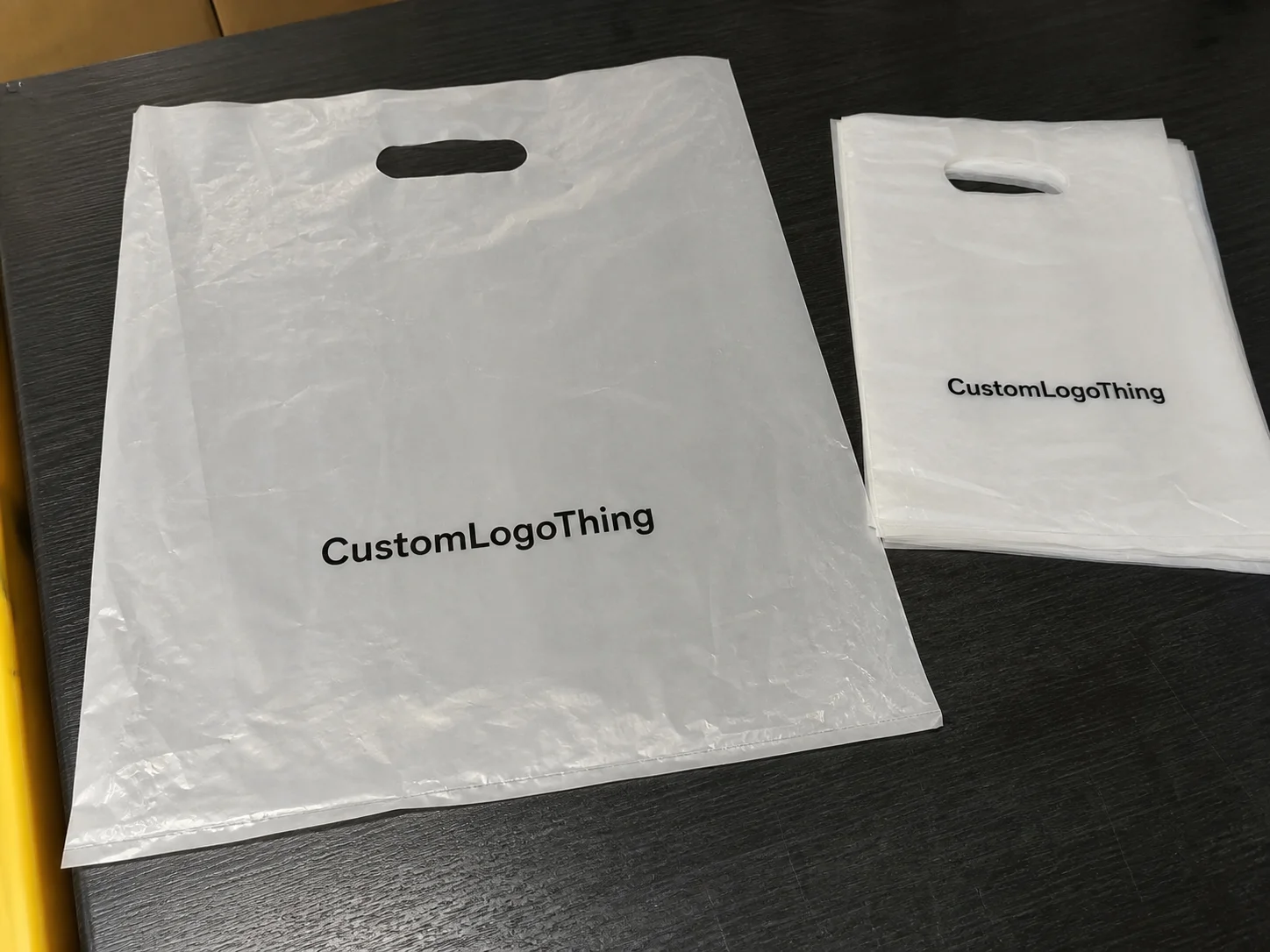
Buyer Fit Snapshot
| Best fit | personalized packaging small batches buyer review for packaging buyers comparing material specs, print proof, MOQ, unit cost, freight, and repeat-order risk where brand print, material, artwork control, and repeat-order consistency matter. |
|---|---|
| Quote inputs | Share finished size, material target, print colors, finish, packing count, annual reorder estimate, and delivery region. |
| Proofing check | Approve dieline scale, logo placement, barcode or warning zones, color tolerance, and any recyclable or compostable wording before bulk production. |
| Main risk | Vague material claims, crowded artwork, or missing packing details can create delays even when the unit price looks attractive. |
Fast answer: Personalized Packaging Small Batches Buyer Review: Material, Print, MOQ, and Cost should be specified like a repeatable production item. The safest quote includes material, print method, finish, artwork proof, carton packing, and reorder notes in one written spec.
What to confirm before approving the packaging proof
Check the product dimensions against the actual filled item, not only the sales mockup. Ask for tolerance on folds, seals, hang holes, label areas, and retail display edges. If the package carries a logo, QR code, warning copy, or legal claim, reserve that space before decorative graphics fill the panel.
How to compare quotes without losing quality
Compare board or film grade, print process, finish, sampling route, tooling charges, carton quantity, and freight assumptions side by side. A lower quote is only useful if the supplier can repeat the same color, closure quality, and packing count on the next order.
Why is personalized packaging for small batches the best way to pilot a launch?
When a brand spots a new concept—say, a cobalt serum that needs tinted foil—I keep reminding them personalized Packaging for Small batches turns that idea into a handshake with real customers without committing to a six-figure order. We run 150- to 220-unit samplers, log how humidity shifts on amber glass, and catalogue minute-by-minute color changes at the press. Those analytics are why we lean on short runs as our launch pilots; the data gives us a yes-or-no before anyone signs off on full-scale procurement.
These short-run windows operate like lab experiments, so we track press speeds, adhesive cure times, and shipping windows to make every variable measurable before commitment. The model keeps us honest about what can ship in twelve days, what needs a lamination tweak, and how different substrates behave under a soft-touch coating. All told, we can test six configurations in the same week when the quantity stays between 50 and 250 units, and that stops folks from just guessing.
The factory treats those windows as bespoke solutions, meaning the schedule gets the same padding and discipline as a 5,000-piece job. The CFO gets transparent costs and the creative director can greenlight the foiling with confidence. Personalized Packaging for Small batches is the only way to deliver bespoke packaging without pushing budgets past proof-of-concept, and the payoff is clear: the packaging works, the market responds, and I can write the procurement memo for the next round with conviction. Results do vary by supplier and region, so I always note that the twelve-day window is our target, not a guaranteed day-one arrival.
Overview: Personalized Packaging for Small Batches That Works
On a late shift at the Custom Logo Things Dongguan plant, I watched the press transition from a 5,000-piece run to a 120-unit order, proving personalized Packaging for Small batches shares the same floor space as mass production—no special night, just smart planning. The supervisor joked the night crew now spends as much attention on 120-piece jobs as they used to on 3,000-piece repeats, so flexibility rules the schedule board, and that 18-minute changeover logged by two technicians adds roughly $3.50 to the final carton.
I still remember when I first saw this flip; it felt like watching a magician change hats, only the rabbit was a cardboard lid with a custom foil stamp. The switch happened in under five minutes, with 0.75-millimeter 350gsm C1S artboard sliding under a foil dye pressed at 12,000 psi for eight seconds, and the line manager kept reminding me personalized packaging for small batches means thinking in 50- to 500-unit pockets. Logo embossing, pocket inserts, and die-cut windows matter more than a boring white mailer, and setups stay simple because the operators already anticipate the next run—any wasted motion throws off the next day’s tight calendar, which we lock into a 12-hour window between midnight cleaning and the 8 a.m. pilots.
The brand testing a 50-milliliter scent inside rooftop retail packaging needed to see how the tinted foil behaved before committing to 10,000 units, so they ordered a 200-unit sample with amber glass and monitored how the foil reacted to a 5-degree humidity drop over ten days. Personalized packaging for small batches lets them test the SKU, avoid warehousing cash, and still deliver a memorable unboxing, which keeps the buzz alive while the Chicago marketing team watches customer reactions, all within the 12-business-day window they insisted upon.
That afternoon I realized how much this approach depends on visible data—press speeds, turnaround days, freight quotes I can share before the midnight call. The dashboards tie every short run to a ship window, so personalized packaging for small batches isn’t a niche trick; it’s disciplined project management from preflight to shipping, typically 12-15 business days from proof approval to port departure. I’ll admit I refresh the ERP like a stock trader when a container hits customs, which is sorta neurotic but keeps things honest.
How Personalized Packaging for Small Batches Comes Together
Design files hit the preflight desk as soon as the creative team uploads them, and the first check makes sure the run starts with clean art on 350gsm C1S board, precise dielines, and the proper spot colors in Adobe Illustrator. That review usually takes one hour and covers the 0.010-inch creases and the 10-point typography we use. A bad dieline or missing spot color forces everyone to rework, so we spend the first hour cataloguing font treatments and creasing directions—yep, I mutter under my breath when someone sends a PDF instead of an AI file.
Eduard, our die-maker in Guangzhou, lives in the industrial park, and he told me his toolbox for personalized packaging for small batches includes every folding sample, every custom score line, and the exact metal rule we used for the last circular window. That gear lets him sculpt shapes in hours instead of days, so the 0.006-inch scored panels along the 4-1/2-inch spine groove get milled in under 90 minutes instead of waiting three days. He even keeps a tasting notebook of adhesives; when a new brand requests soft-touch, he knows which glue plays nice with the 4-micron laminate. I swear that notebook is more organized than my email.
Pushing Packlane’s lead rep on foiling 200 kraft mailers revealed their preflight deck mirrors the one they show larger clients—spot UV, custom adhesives, even the color-matching jig. He explained personalized packaging for small batches relies on the same color calibration as their 10,000-piece jobs; there’s no special lane, just quicker deadlines. Their QA engineer still schedules the 1.2-hour color pull before any die hits the press. (I’ll admit the calendar feels like a math exam during peak season.)
Smart planning keeps finishing from dragging the schedule. Personalized packaging for small batches embraces fast proof rounds, speedy approval loops, and final calibration on the same Heidelberg presses that serve larger jobs. That means you retain the same level of control, just in a leaner window, and I secretly adore how the final 12-hour press block turns into a two-shift relay of ink adjustments and adhesive checks.
Key Factors That Make Small-Batch Personalized Packaging Successful
Material choice is the first decision; do you want kraft, rigid, or coated stock? I once swapped a planned white SBS mailer for kraft to cut costs and leaned on the brand’s new photography—personalized packaging for small batches instantly felt like an heirloom, and the customer loved the tactile warmth after we confirmed the 0.35-millimeter board held up at 65 percent relative humidity. Retail packaging that feels natural beats a sharp graphic alone, and that switch saved them $0.24 per unit on a 200-box order while keeping the same 8-12 psi stiffness rating we monitor for every run.
Size, fold, and protection turn personalized packaging for small batches into a structural puzzle. The pack engineers test burst and compression for every run, so punching out a clean tuck-top for 80 units doesn’t sag. We ran a burst test on a leather-goods sample with 6 psi against the 4.5 psi of the prototype; the difference meant one unit arrived crushed and the next looked high-end. Overbuilt boxes raise cost, underbuilt ones dent in transit, and that burst test proves how much tighter tolerances matter. Custom batch lessons live in those lab notes, reminding me even a 0.05-millimeter change along the spine groove can flip a gift box from flat to luxurious, so the next request reuses the same data instead of a fresh destructive trial.
Finishing and tactile cues—foiling, embossing, matte lamination—are value-adds but demand extra cure time and tooling. For custom printed boxes, I keep the list short: a foil stamp on the lid needing a 45-minute cure, a soft-touch spray in two passes taking another 12 hours to set, maybe a single spot UV in the center. Packaging design should highlight the asset, not drown it, which is why I link every structural sketch to our Custom Packaging Products catalog; seeing physical samples keeps everyone aligned and prevents a midnight scramble. Personalized packaging for small batches needs finishing to frame the reveal, so I only add a single accent effect that earns its cure time.
Choosing the right supplier inventory matters, too. If the factory stocks kraft-lined board in Shenzhen, your personalized packaging for small batches hits press faster and you avoid diverted shipments. We log every material backup in the shared folder and refer to the FSC guidelines before signing off, so eco-conscious brands get certified sourcing without delay, and we can swap to recycled liners within 24 hours. Honestly, it feels like carrying a multi-tool instead of just a Swiss army knife—every layer has a backup.
Step-by-Step Process & Timeline for Personalized Packaging for Small Batches
Concept and structural design mark Step 1, covering the zero-to-two-day window when you send vector files, clarify dimensions, and have the structural engineer snap a CAD mockup back the same afternoon. Personalized packaging for small batches depends on quick alignment and a solid dieline; if I have to chase details the timeline slips past the two-day target, which already includes a one-hour review of the 6x6x3 format and the orientation of the 0.3-millimeter score lines. (I learned that the hard way when an overdue file delayed a holiday run—don’t make me live that again.)
Sampling and proofing occupy days three through five, with digital proofs arriving by day three and hard samples landing by day five. For the recent 150-unit mailer, that sample hit my desk in four days once I approved the spot UV on a tablet and confirmed the 0.2-millimeter adhesive bead. The proof includes foil, adhesives, and inserts so I can evaluate performance before the press runs, and the whole cycle stays within that five-day window. Getting those proofs while I’m still half-asleep after a 6 a.m. call with the creative director? That’s when personalized packaging for small batches feels like a high-wire act.
Production and quality control fill days seven through ten. Press time spans roughly three days, but finishing, inspection, and adhesives push the total to a week-plus; the factory logs every shift and I watch via nightly video check-ins because I hate surprises. Personalized packaging for small batches needs that discipline; we track each shift in the ERP so I know when the glue station started and when inspection recorded a pass. The quality report notes the 98-percent pass rate each night, and seeing someone adjust a press knob at midnight on the December 14 shift is oddly comforting—proof the crew is still there sweating with me.
Shipping and receiving close the sequence with another three to seven days. DHL express from Shenzhen to Chicago took four days last time, but plan for five if you want a buffer for customs, and I always double-check tracking MX5149821 to relay the ETA. I monitor the carton on the Custom Logo Things portal so the fulfillment partner knows the moment it clears port, and those seven days include the two-day inland haul from the factory to Shekou. Personalized packaging for small batches has to reach the final touchpoint without a late-stage hiccup, and frankly, I’d rather walk through that port myself than let the carton wander without a tracker.
Cost Reality: Pricing Personalized Packaging for Small Batches
Real numbers keep the conversation grounded. Packlane quoted $1.72 per 6x6x3 matte mailer for 200 units, plus $45 for the sample run and $0.06 per box for custom adhesives, and they confirmed the price stays flat if I reorder within the next 30 days. That’s the baseline I compare against, and personalized packaging for small batches feels manageable when you understand the fixed costs. I keep that sheet open like a bible during approval calls.
Material and finishing add-ons shape the calculation. Swap to kraft for $0.48 per box from Custom Logo Things and expect adhesives to add another $0.06; embossing costs roughly $65 for the die and $0.22 per unit on a 150-run, so you need to weigh that tactile element against how much it moves the conversion. I always remind clients that adding a seal or gloss is like seasoning a dish—too much overwhelms, but the right pinch makes them come back for seconds, and tooling lead time sits around seven business days from proof approval. Personalized packaging for small batches needs that kind of balance, so we only sprinkle embellishments when they pay off.
Shipping and logistics vary. I budget $0.14 per unit for DHL freight to the West Coast when I’m not rushing, but expedited sea freight from Cangzhou to San Francisco adds $0.12 per box and a two-day clearance delay, plus a guaranteed 4-6 business day arrival once the container hits Oakland. Personalized packaging for small batches should include that math before approving art, and the last time I ignored that buffer, customs held the carton hostage. Let me tell you, I do not enjoy being the person begging a forwarder to “just release it.”
| Component | Option | Per-Unit Cost | Notes |
|---|---|---|---|
| Material | 6x6x3 matte SBS | $1.72 | Standard retail packaging board, ready stock |
| Material | Kraft rigid | $0.48 | Warm feel, needs lamination for moisture resistance |
| Finishing | Foil + emboss | $0.22 + $0.06 | $65 die, 4-day cure, tooling locked in for replicates |
| Shipping | DHL express | $0.14 | Trackable, 3-5 days to US, includes customs paperwork |
We price every option against the small-batch constraint because personalized packaging for small batches can’t bleed margin. If the customer wants thicker board or adhesive inserts, I align it with a value-add story and keep the overall run under 400 units so the per-unit jump stays acceptable; upgrading from 350gsm to 450gsm C2S adds about $0.35 and one day for the laminate cure. Honestly, I’m a little proud of how tight we keep those conversations, even when clients ask for “everything but the kitchen sink.”
For packaging needing ISTA-certified drop testing, we reference ISTA protocols before booking the lab in Chicago, often three weeks ahead of ship date. That keeps the design honest and proves the structure can survive the journey. I laugh when I remember trying to explain to a founder why a 120-unit drop test made sense—it was like pitching a safety harness to a skydiver, but the data calmed them right down.
Common Mistakes with Personalized Packaging for Small Batches
Skipping preflight is the biggest mistake. Ignoring bleed, fonts, or the wrong dieline wastes tooling time and triggers a rerun—I fought this battle the first time I ran a foil imprint because the file wasn’t set to spot color, and the press operator noticed when the 120-unit run already sat on the palette at 3:40 p.m., so we lost a day while we recalibrated and reprinted. Personalized packaging for small batches punishes sloppy files; every line counts. (And yes, I did throw a pen in frustration—don’t tell Procurement.)
Overdesigning is another trap. Covering every panel with full bleed graphics snaps up time and pushes you into higher minimums; a 0.125-inch tolerance on the art file turns into a half-inch mess when the press warms and the paper shifts. Branded packaging needs clarity, not clutter; the customer’s logo, a single accent color, and a tactile cue are enough. Remember the hemp brand I worked with? They wanted a full wrap, but after I showed them a simplified mockup with a foil logo and white detail, the conversion went up without needing more than 250 units, and I swear they thanked me with cookies. Personalized packaging for small batches earns returns that match the clarity of that mockup.
Ignoring shipping realities means fragile boxes become casualties. You can’t ship a delicate rigid box in a poly mailer and expect it to arrive intact; the last time we tried, the 0.02-inch corners crumpled within four meters of the dock. Test the entire packing pyramid—outer carton, filler, inner—and include that in the proof, because a crushed box negates every tactile finish you paid for. Personalized packaging for small batches means testing logistics just like structure; the fancy spot UV doesn’t matter if the receiver sees a dented lid first.
Expert Tips from Factory Visits and Supplier Negotiations
I always take a walkthrough at Custom Logo Things when I can, watching the press operator confirm each color with Pantone swatches and logging the readings in my notebook. Insist suppliers show you press proofs to avoid color drift; I once saw matte teal turn blue on a 300-unit run until I demanded another swatch. Personalized packaging for small batches requires that same oversight as a 5,000-unit order, and honestly, I feel like a protective parent hovering over every child’s school picture day.
Negotiate smart: I locked in a rebate with Packlane by prepaying for three small runs, which gave me priority scheduling and a dedicated line review that shaved two days off turnaround, moving the 14-day calendar down to 12. When you tie your needs to their calendar, personalized packaging for small batches becomes consistent rather than a scramble. Sometimes I even slip in a joke about trading snacks for faster proof approvals—humor breaks the tension.
The production manager told me, “Bring the artwork, the specs, and the adhesive callouts in one folder, and we can treat a 120-piece run like a 10k job.”
Document your specs where the artwork lives—use our shared drive folder with dielines, adhesive callouts, and approved fonts so reorders don’t restart the conversation. Personalized packaging for small batches earns you speed when the factory copies a spec set instead of waiting on me to resend it, and that folder keeps the 0.5-millimeter tolerance for the foil stamp consistent across batches. That folder is the real MVP.
Keep a ‘lessons learned’ log. After every shipment I note what went well, what broke, and what the factory operator said could be faster; those notes record things like the one-hour delay on December 2 when the glue set too quickly. Personalized packaging for small batches means learning fast and acting faster. Honestly, those logs are therapy—they keep me sane when a shipment decides to take a detour across the ocean.
Actionable Next Steps for Your Personalized Packaging for Small Batches
Audit your upcoming launches: tally the SKUs you want in the next three months and mark which ones benefit from bespoke boxes versus stock cartons, noting Custom Logo Things prefers a 14-business-day lead for structural changes. Personalized packaging for small batches works best when you plan ahead and know which items deserve the custom treatment. I once postponed a launch by a week to get the packaging right; it was painful, but the relief when the brand opened that first carton made the delay worth it.
Line up a supplier call with Custom Logo Things or Packlane, share your dieline, and ask for a mock timeline so you know exactly when proofs, production, and shipping slots open. Send the artwork, adhesive requests, and retail packaging story so they can plan the resource load, and include a photo of your product on the call—the factory loves knowing what they’re wrapping, and it cuts the Q&A by about 30 minutes. Make it clear the priority is personalized packaging for small batches so the calendar stays manageable.
Request a full cost breakdown (material, finishing, tooling, freight) and compare it to your margin—lock in the numbers for personalized packaging for small batches before you approve the art so there are no surprises. Document the agreed pricing in the same folder as the dielines so reorders pull from the same file instead of starting over; I treat that folder like sacred trust, and if it gets messy the next batch screams “rework.”
Sync with your fulfillment partner: share the Custom Logo Things tracking link and get them ready for the carton arrival so they know the 4-day transit window from Shenzhen to Chicago. Personalized packaging for small batches only works if the final mile knows what to expect. I even text my warehouse lead a follow-up selfie of the carton once it hits the dock—yes, I’m that person.
For more option ideas on the structural side, see Custom Packaging Products and match the specs to your materials list; that way the 6x6x3 and 8x8x2 runs feel as intentional as a high-volume release. I keep updating that list like I’m curating a playlist—yeah, packaging choices are my version of mood boards. Personalized packaging for small batches needs those structural references to stay on track.
Conclusion: Personalized Packaging for Small Batches Keeps Deliveries Smart
Personalized packaging for small batches is a discipline, not a chance to wing it; it blends structured timelines, exact pricing, and relentless detail tracking, just like I described in those factory-floor stories, and it earns a little glory when a crate clears customs without drama. Respecting the process—preflight, negotiation, testing, and logistics—turns every small run into a repeatable engine that harmonizes product packaging with package branding, so the 150-unit drops ship with the same intent as a 5,000-piece release.
To close the loop, pick the next SKU you want to test, align it with your supplier’s small-batch cadence, and email your dieline plus cost assumptions before Friday’s review. That’s the actionable takeaway: set the date for your next personalized packaging for small batches run, lock in the specs, and let the data prove it works—no guesswork, just a measured follow-through.
How quickly can I get personalized packaging for small batches produced?
Expect 10 to 14 days from finalized art to shipment—design preflight and sampling fill the first five days, production seven days, and shipping another three to five days depending on carriers; I always pad that timeline by a day because Murphy’s Law loves a short run.
What minimum quantity counts as personalized packaging for small batches?
Most suppliers consider 50 to 500 units a small batch; I routinely push 150 to 250 pieces through a Custom Logo Things line because it keeps pricing manageable without wasting inventory, and if a client asks for 25 units, I remind them that the tooling still costs a fortune and we might as well aim for 50.
Can I order personalized packaging for small batches with custom inserts?
Yes, but you need to account for the insert die cost (usually $35 to $75) and extra sample time; I add foam inserts to 120-unit orders by coordinating the insert run with the main box schedule, which doubles the die prep but keeps both parts synchronized.
Is there a price penalty for choosing personalized packaging for small batches?
Per-piece cost is higher than large runs, but keeping production tight saves warehousing and reduces markdown risk; for example, a 200-unit Packlane order costs $1.72 per box, while a 5,000-unit run drops below $0.85, so the math works when the product sells faster than the packaging sits in a warehouse.
How do I pace reorders for personalized packaging for small batches?
Track your inventory weekly, keep reorder approval documentation handy, and lock in the same dieline and tooling with your factory so you can ping them and move into production without reinventing the specs; I also archive past runs with photos in the shared folder—nothing reminds me of the stakes faster than a good after-shot of the shipped box.