Cosmetics Refill Plastic Bags Shrink Wrap Guide: What Buyers Often Miss
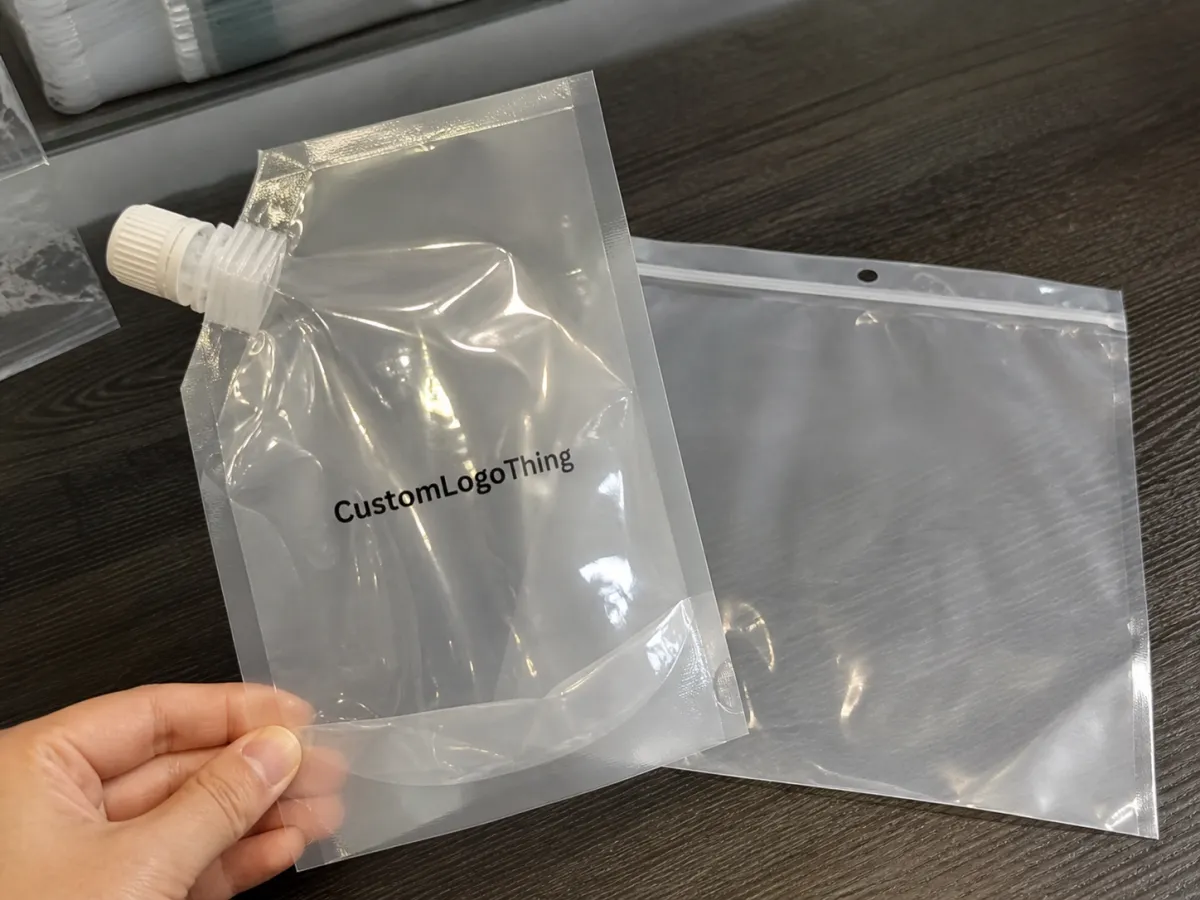
A shampoo refill pouch can look polished in a render, then arrive with cloudy film, trapped air, and a barcode folded into the back seam. The product did not fail. The packaging specification did. A practical cosmetics Refill Plastic Bags shrink wrap guide has to address that gap between a flat approval file and a soft, filled pack moving through heat, cartons, and parcel handling.
Refill bags are judged on three things at once: leak resistance, retail appearance, and ease of use. Miss one and customers notice. A pouch that survives transit but looks crushed feels cheap. A beautiful pouch that seeps around the spout is worse. A refill that takes scissors, hand strength, and patience may not earn a second order.
Shrink wrap is often described as a thin tamper-evident outer layer. That undersells it. The right film can stabilize two-packs or three-packs, reduce scuffing on printed pouch surfaces, keep lightweight packs easier to pick in fulfillment, and make a flexible object behave more like a retail unit.
Here is the contradiction: refill packaging is marketed as minimal, but the production choices are not minimal at all. Film gauge, seal width, venting, bundle count, carton fit, tunnel temperature, dwell time, and heat exposure all change the result. A 250 ml hand wash refill and a 1 liter shampoo pouch may both be plastic refill bags. They will not behave the same way under the same shrink film.
Packaging buyer reality: a shrink wrap quote is only as accurate as the pouch information behind it. Dimensions alone rarely tell the full story because gussets, spouts, fill weight, and formula movement affect how the film grips the bag.
This guide covers refill bag formats, shrink film choices, formula compatibility, cost drivers, timeline expectations, common mistakes, and the information buyers should prepare before asking a supplier for a useful quote.
How Shrink Wrap Works Around Cosmetic Refill Bags
The process sounds simple. Filled or empty refill bags are grouped, sleeved or wrapped in shrink film, sealed, then passed through controlled heat. The film contracts around the pouch or bundle. The hard part is the behavior of the pack itself: flexible refill bags compress, bulge, wrinkle, and shift.
Three formats show up often. One, an individual refill bag is shrink wrapped for surface protection and a visible tamper cue. Two, multiple refill packs are bundled into a value pack. Three, a refill bag sits inside a retail kit with a bottle, pump, scoop, card, carton, or outer mailer. Each format changes the film, heat setting, seal location, and appearance target.
Film selection usually starts with polyolefin, polyethylene, or PVC alternatives. Beauty brands tend to prioritize clarity, low odor, seal strength, machine performance, and documentation behind recyclability claims. Polyolefin often gives a crisp retail look. Polyethylene can suit heavier bundles or transport packaging. PVC is less favored by many cosmetics brands because of sustainability perception, odor concerns, and retailer restrictions, though availability and acceptance vary by market.
Heat sensitivity needs early attention. Lotions, oils, serums, gels, surfactant concentrates, fragrance-heavy formulas, and alcohol-based products can react differently in a warm shrink tunnel. If the refill bags are empty during wrapping, the risk profile is lower. If they are filled, heat can soften the pouch structure, alter internal pressure, or expose weak seals. Not every product is fragile. Enough are that sampling is not optional.
Tamper evidence also needs precise wording. Shrink wrap can show interference because torn or removed film is visible. It is not the same as a certified child-resistant closure, a leakproof primary seal, or a regulatory safety feature. If a product carries compliance requirements, the refill bag closure and primary seal must do that work.
Logistics adds a less glamorous variable. Tight shrink can reduce movement inside cartons, which may lower scuffing during parcel shipping. Over-tight shrink can distort flexible pouches, crease labels, or create pressure points near spouts, zipper tracks, and side seals. ISTA transit testing protocols, available through the International Safe Transit Association, are useful reference points for brands selling through ecommerce, retail distribution, or subscription programs.
Key Specs That Decide Film Fit, Seal Strength, and Shelf Appeal
Before production, define the physical package instead of only the marketing concept. List pouch width, height, gusset depth, fill volume, filled weight, spout or zipper location, pouch material, artwork coverage, barcode location, carton packout, and whether the bag ships empty or filled. A 180 mm by 260 mm flat pouch and a 180 mm by 260 mm stand-up pouch with a 60 mm bottom gusset are not equivalent on a shrink line.
Film gauge is one of the first cost and performance decisions. A thinner film may look cleaner, use less material, and reduce unit cost, but it can tear during handling or create weak seals on sharp pouch corners. A heavier film may improve durability, yet form bulky “ears” around soft refill bags. For many cosmetic refill bundles, buyers compare films in the rough range of 45 to 100 gauge. The right choice still depends on pouch shape, bundle weight, and machinery.
Shrink percentage and memory matter as much as thickness. A film that shrinks aggressively can pull refill bags out of shape. Low-shrink film may look loose, especially on underfilled pouches. The target is controlled tension, not maximum tightness.
Seal placement is visual and operational. A seal across the front panel can interrupt branding, cover ingredient text, or run through a QR code. A back or side seal usually looks cleaner, but it requires more precise setup. If the pouch has a corner spout, the film may pull unevenly unless the wrap direction is chosen carefully.
Venting is easy to forget. Flexible bags trap air differently from rigid containers, so tiny vent holes or adjusted tunnel settings may be needed to prevent ballooning. Too much venting can weaken film strength or leave the pack looking less polished. Too little can create puffy units that do not stack well in cartons.
Print and barcode risks are not theoretical. Glossy shrink can reflect scanners. Seams can distort QR codes. Clear film can change the look of metallic ink, matte varnish, soft-touch laminate, or transparent pouch windows under store lighting. If the barcode must scan at checkout, test it after wrapping, not only on the flat proof.
| Specification | Typical Buyer Choice | Risk If Ignored |
|---|---|---|
| Film gauge | Roughly 45-100 gauge depending on pouch size and bundle weight | Tearing, bulky corners, or poor shrink appearance |
| Seal location | Back or side seam for cleaner retail presentation | Hidden barcodes, interrupted branding, unreadable lot codes |
| Bundle count | Single pack, two-pack, three-pack, or kit format | Carton misfit, pouch distortion, higher labor cost |
| Filled status | Empty bag wrapping or filled product wrapping | Heat sensitivity, pressure changes, leak discovery too late |
| Carton packout | Defined inner count and shipping carton size | Movement in transit or excessive secondary packaging |
Process, Timeline, and Lead Time From Sample to Shipment
A clean project usually follows a predictable sequence: brief review, material recommendation, size confirmation, sample wrapping, production approval, mass wrapping, quality check, carton packing, and shipment. Skip sampling and the risk moves downstream. Downstream is always more expensive.
Timelines depend heavily on the state of the refill bag. If bags are already made, in hand, and consistent in size, clear stock shrink film can often move faster. If shrink wrap is part of a larger kitting job, or if the film is custom printed, the schedule needs more room for artwork checks, registration, tooling, and approval. Filled cosmetics add another review point because heat and pressure can affect the primary pack.
As a planning range, simple clear shrink wrapping may be reviewed and sampled within several business days after physical samples arrive, then scheduled based on material availability and line capacity. Custom printed film, unusual pouch shapes, mixed-SKU bundles, or filled products can add one to several weeks. That is a guardrail, not a guarantee.
Buyer-side delays are common. Missing filled weights, incomplete pouch dimensions, late artwork revisions, unclear bundle counts, and last-minute switches from individual wraps to multipacks can stretch turnaround. A quote request that says “refill pouch, clear shrink, need pricing” will usually trigger questions. A request with dimensions, fill volume, pouch material, closure style, order quantity, and carton target can move faster.
Sample-first approval is especially important for new refill formats. A physical sample reveals distortion, corner bunching, scuffing, barcode readability, seam placement, and how the final unit feels in the hand. Photos help, but they do not replace a wrapped sample.
For scaling brands, lock the approved sample. Photograph the wrap standard from the front, back, side, and packed-carton view. Document acceptable wrinkle tolerance, seal side, film type, bundle count, and carton quantity. Reorders drift when the target is described only as “same as last time.”
Cost, Pricing, MOQ, and Quote Variables Buyers Should Know
Shrink wrap pricing is rarely just a film price. A quote usually reflects film type, film thickness, labor or machine setup, bundle configuration, inspection level, packing method, and total order quantity. A small run of trial-size refill sachets may cost more per unit than a larger 500 ml pouch run because handling time dominates the job.
Clear stock film is usually simpler and faster than printed shrink film. Printed film adds artwork review, plate or setup costs, registration control, waste allowance, and minimum-order considerations. For brands testing a refill program, clear film plus strong pouch artwork may be the smarter first move. For retail multipacks, printed film can add shelf blocking and promotional messaging, but it needs tighter control.
MOQ depends on material availability and setup complexity. Small cosmetic refill launches often carry higher unit costs because setup time is spread across fewer pieces. Larger runs usually reduce unit cost, but only if the packaging specification stays stable. Change the bundle count, change the film, or add SKU mixing, and the economics shift.
The cost drivers most likely to surprise buyers are irregular pouch shapes, spouts that push against film, very small sachets, mixed-SKU bundles, barcode orientation requirements, extra carton labeling, lot segregation, and added inspection for filled products. A project with four fragrances in equal bundles is not the same as one SKU in straight-count cartons.
Quote multiple scenarios before choosing. Compare individual wrap versus two-pack bundle. Clear film versus printed sleeve. Empty-bag wrapping versus filled-bag wrapping. A low unit price can hide extra carton cost, added labor, or higher damage risk. A higher unit price may reduce returns if it protects the product better.
Flexible refill packaging can reduce shipping weight compared with rigid containers. That is one reason beauty brands like it. The savings can disappear if secondary packaging is overbuilt, cartons ship too much air, or damage rates rise. The U.S. Environmental Protection Agency’s materials management resources at epa.gov/smm are useful for thinking about packaging reduction beyond the first layer.
| Option | Typical Cost Behavior | Best Fit | Watchout |
|---|---|---|---|
| Clear stock shrink film | Lower setup cost and faster sourcing in many cases | Launch tests, ecommerce refills, simple bundles | Less promotional space than printed film |
| Printed shrink film | Higher setup cost, higher MOQ, registration checks | Retail multipacks and campaign packaging | Artwork changes can delay production |
| Individual wrap | More handling per selling unit | Single refill sales and tamper cues | May add material without improving carton efficiency |
| Two-pack or three-pack bundle | Better labor efficiency at scale | Value packs, subscription refills, club-style offers | Can distort soft pouches if over-tightened |
Common Mistakes With Cosmetic Refill Shrink Packaging
The most common error is treating the refill bag and shrink wrap as separate decisions. They interact. Pouch material, ink system, closure, filled weight, and shrink film all meet under pressure and heat. A change to one layer can create a problem in another.
Another mistake is choosing film only for clarity. Clear matters, especially in cosmetics. But a beautiful film that tears at corners, clouds after heat exposure, or carries odor will damage the customer experience faster than a slightly less glossy option with better toughness. Beauty buyers notice smell. They notice touch. They notice crooked seams.
Over-shrinking is a quiet offender. Buyers often assume tighter is better. Not with soft refill packaging. Aggressive shrink can warp spouts, crease pouch faces, stress side seals, and make refill bags look dented rather than premium. A little controlled looseness may be more attractive than a strangled pouch.
Filled-product testing is another weak point. Oils, alcohol-based formulas, fragrance components, and surfactants can expose weak seals or create compatibility concerns if packaging is stored warm. A refill pouch that looks fine immediately after wrapping may behave differently after seven days in a hot warehouse or delivery van.
Retail compliance mistakes also creep in: hidden ingredient panels, covered lot codes, unreadable barcodes, no obvious tamper cue, or bundles that do not fit peg hooks, trays, shelf-ready cartons, or subscription mailers. If the refill pack needs to sit upright, hang, scan, and survive parcel sorting, test all four conditions.
Returns data can be more revealing than factory inspection sheets. If refill bags arrive wrinkled, leaking, or difficult to open, the issue may appear first in customer service tickets. Ten complaints on a 1,000-unit test run is not just noise. It may signal a packaging interaction that a standard visual check missed.
Expert Tips for Better Refill Bag Presentation and Protection
Design the pouch and shrink plan together. Leave clean zones for seams, barcodes, lot codes, hang holes, spouts, tear notches, and customer opening points before artwork is finalized. A strong pouch layout can be ruined by a seam crossing the hero panel.
Test three sample conditions: empty bags, filled bags at expected weight, and filled bags after warm storage. This shows whether shrink tension, product weight, or formula migration changes the final pack. For many cosmetics, a 24- to 72-hour observation window after sample wrapping is useful before approval.
Specify appearance standards in plain language. “Retail-ready” is too vague. Better: back seam only, barcode must scan after wrapping, no film tear at spout, front panel wrinkles limited to light edge distortion, corners may show minor ears under 10 mm. Measurable language prevents arguments later.
Consider alternatives or hybrids if full shrink wrap does not fit the brand goal. A belly band, printed sleeve, carton, header card, recyclable mailer, or paperboard carrier may outperform full shrink depending on the retail channel and sustainability position. A refill pouch sold online may need carton protection more than glossy film. A retail multipack may need the opposite.
Check sustainability claims carefully. Recyclable, PCR, compostable, and reduced-plastic claims require material documentation and should match the recovery options available to the customer. A mono-material pouch, a polyolefin film, and a paper label may each have a claim, but the combined pack can still be confusing for disposal.
The best packaging decision is not always the lowest material weight. It is the combination that survives filling, shipping, shelf handling, and customer use with the fewest failures. A lightweight pack that leaks, wrinkles badly, or triggers returns has a cost that will not appear on the first quote.
Build a Refill Bag Shrink Wrap Spec That Can Be Quoted
A quotable spec does not need to be complicated. It does need to be complete. Prepare the pouch size, pouch material, fill volume, formula type, closure style, artwork file, barcode location, bundle count, shipping carton size, target quantity, and desired launch window. If the pouch is filled, include filled weight and any storage concerns.
Send physical samples if possible. Flexible refill bags are hard to judge from dimensions alone because gussets, spouts, zipper tracks, fill behavior, and pouch stiffness change how shrink film grips the package. A flat photo cannot show how a pouch bulges after filling or how a bottom gusset behaves in a bundle.
If the route is unclear, ask for two quote options. One can be optimized for lowest unit cost. The other can be optimized for retail presentation. The comparison usually exposes the trade-offs faster than a single price request. Sometimes the cheaper version saves fractions of a dollar but creates a less stable carton packout.
Document the approved sample before production. Include photos of the front, back, side seam, carton count, wrap direction, seal side, film type, and visual tolerances. Keep that record with the purchase order. Reorders become easier because the supplier is matching a defined standard rather than a memory.
Use this cosmetics Refill Plastic Bags shrink wrap guide to turn a vague packaging idea into a testable, quotable specification. Good refill packaging is not just lighter. It is controlled, scannable, shippable, refill-ready, and honest about the limits of each material layer.
FAQ
What is the best shrink wrap for cosmetics refill plastic bags?
Polyolefin and polyethylene shrink films are common because they can offer good clarity, durability, and clean presentation. The best choice depends on pouch material, fill weight, heat sensitivity, recyclability claims, and whether bags are wrapped individually or bundled. Physical sampling is recommended because flexible refill bags can wrinkle, balloon, or distort differently than rigid cosmetic containers.
Can shrink wrap make cosmetic refill bags leakproof?
No. Shrink wrap can add tamper evidence, surface protection, and bundle stability, but the refill bag’s own seals and closure system determine leak resistance. For liquids, gels, oils, and concentrates, test filled samples under storage, shipping, and temperature conditions before approving production. If leaks appear, review pouch seal width, spout fitment, cap torque, formula compatibility, and carton pressure rather than blaming shrink film alone.
How much do custom cosmetics refill bags with shrink wrap cost?
Pricing depends on bag size, film type, film gauge, order quantity, wrapping method, bundle configuration, labor, inspection, and packing requirements. Clear stock shrink film usually costs less than printed shrink film, while small runs often carry higher unit costs because setup is spread over fewer pieces. To get a useful quote, provide pouch dimensions, target quantity, filled or empty status, artwork needs, bundle count, and shipping requirements.
What MOQ should I expect for shrink wrapped refill pouches?
MOQ varies by material availability, whether the film is stock or custom printed, and whether the project requires special setup or kitting. Clear shrink wrap around standard-size pouches may allow lower minimums than printed film or complex multipack formats. Ask suppliers to quote two or three quantity tiers so you can see where the unit cost begins to improve.
How long does the shrink wrap production timeline take for refill bags?
Lead time depends on sample approval, material availability, artwork status, custom film requirements, order size, and whether bags are filled before wrapping. The fastest projects usually use approved pouch specs, stock clear film, simple bundle counts, and no artwork changes. Build in time for sampling because heat, pressure, and pouch flexibility can affect final appearance and should be checked before mass production.

