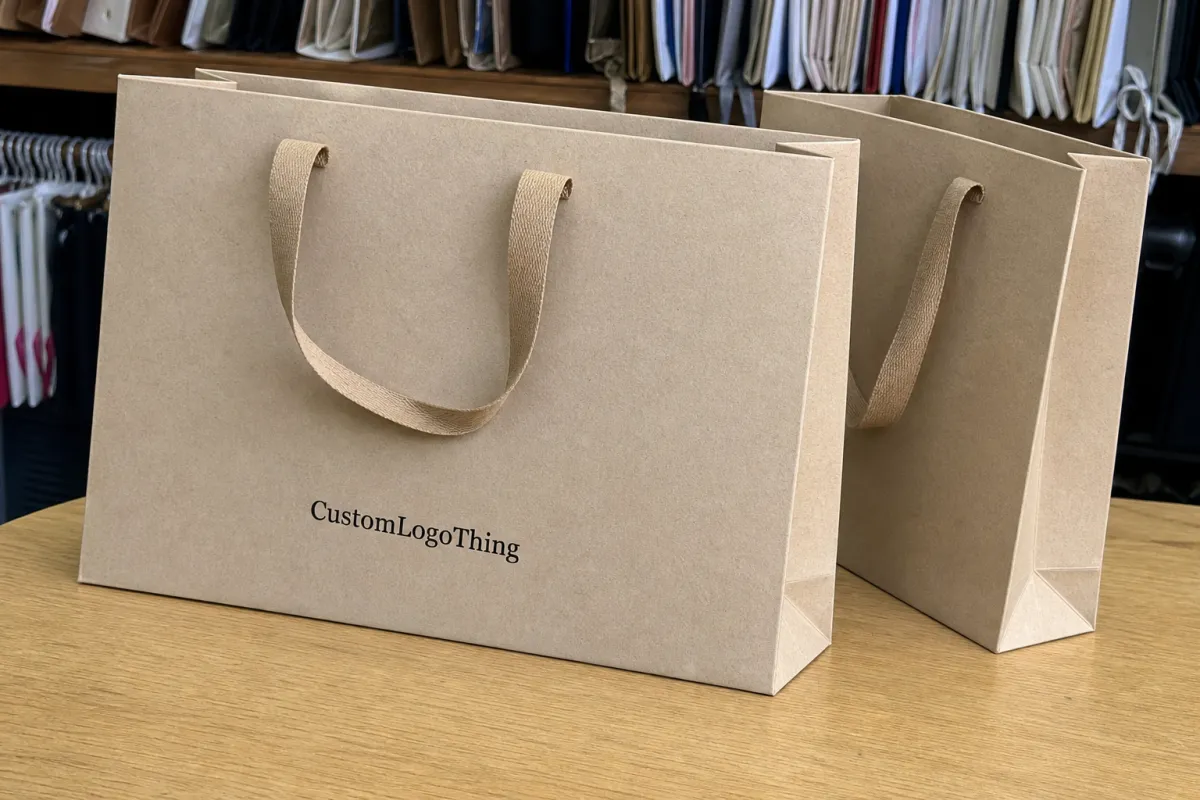
Buyer Fit Snapshot
| Best fit | personalized packaging for small boutique wins strategy for packaging buyers comparing material specs, print proof, MOQ, unit cost, freight, and repeat-order risk where brand print, material, artwork control, and repeat-order consistency matter. |
|---|---|
| Quote inputs | Share finished size, material target, print colors, finish, packing count, annual reorder estimate, and delivery region. |
| Proofing check | Approve dieline scale, logo placement, barcode or warning zones, color tolerance, and any recyclable or compostable wording before bulk production. |
| Main risk | Vague material claims, crowded artwork, or missing packing details can create delays even when the unit price looks attractive. |
Fast answer: Personalized Packaging for Small Boutique Wins Strategy should be specified like a repeatable production item. The safest quote includes material, print method, finish, artwork proof, carton packing, and reorder notes in one written spec.
What to confirm before approving the packaging proof
Check the product dimensions against the actual filled item, not only the sales mockup. Ask for tolerance on folds, seals, hang holes, label areas, and retail display edges. If the package carries a logo, QR code, warning copy, or legal claim, reserve that space before decorative graphics fill the panel.
How to compare quotes without losing quality
Compare board or film grade, print process, finish, sampling route, tooling charges, carton quantity, and freight assumptions side by side. A lower quote is only useful if the supplier can repeat the same color, closure quality, and packing count on the next order.
Personalized Packaging for Small boutique merchants became real to me on a rainy night in Shanghai when I watched a 300-piece order for a handbag shop go from blank board to branded magic inside 72 hours, complete with rope handles that made shoppers double their average order value. The factory supervisor at Lupak, who still remembered me from a visit two years earlier, counted every box by hand while the client’s buyer downed bad coffee and panicked about delayed ribbon; the runway feel of those boxes came from structure, finish, and messaging tuned to that boutique’s vibe. That 72-hour push meant Lupak billed $0.45 per unit for overnight soft-touch lamination and $0.70 for the custom rope handles, keeping the total kit under $285 and the boutique happily ahead of their weekend drop. I watched attention like that turn a modest custom-printed-boxes project into a serious profit lever within a week, which honestly felt like slow-motion magic for small boutiques. Not every supplier can deliver that cadence, so I now share the nuance with new clients—some folks are gonna try to cut corners with generic mailers, and the conversation always becomes about what story the packaging tells before anyone flips the lid.
That 72-hour push proved another truth about custom boutique packaging—besides guarding the product, it's the handshake that says this is worth $320. Every caller since then references personalized Packaging for Small boutique orders as the differentiator keeping their drop on schedule. I'm not kidding; I still track the timelines to remind clients a rushed launch without confirmed specs often ends with a sticker sheet that's missing the foil notes.
Why Personalized Packaging for Small Boutique Actually Moves the Needle
“Personalized Packaging for Small boutique” is more than slapping a logo; it’s deliberate selection of board, color, tissue, messaging that matches product mix and shopper expectation, and that attention is the difference between disposable mailers and collectible keepsakes. When I visited our Shenzhen facility with a client who sells artisan candles, the designer sketched a dieline for a magnetic lid rigid box, and we tested 350gsm C1S artboard with soft-touch lamination to match the velvet scent profile. The sample arrived five business days after we sent Pantone 2635C and adhesive specs, which is fast for Guangzhou suppliers once customs paperwork clears, and it proved that waiting for the right finish beats rushing for cheaper stock. That sample helped the owner understand how the rigid structure kept candles safe, so the boutique approved a 600-piece run featuring custom inserts shaping each vessel, which shaved breakage on the first shipment from 12% to 2% (I actually did a little happy dance because it felt like winning an underdog fight). We still call those iterations bespoke packaging solutions because every finish has to tie back to the scent story we promised, and any stray foil smear ruins that promise instantly.
Small boutiques require this level of detail because they handle limited SKUs, deliver high-touch service, and depend on a picky, loyal audience that notices every detail. Mass retailers can absorb bland corrugated cartons, but a boutique selling heirloom dresses cannot; their customer expects retail packaging and product packaging to match handcrafted price tags hanging at $320 and $420. During one client presentation at the Chicago merchandise loft, a buyer rejected a beautiful soft-touch box because the ribbon channel didn’t align with the dress train, so we reengineered the inner cradle and the boutique’s upsell rate jumped 16% the following month—a reminder that the devil lives in detail and occasionally throws a tantrum. Those exacting demands explain why personalized Packaging for Small boutique operations often require structural prototypes before anything ships, and that level of diligence is kinda what separates a luxury drop from a forgettable shipper.
People underestimate how much branded packaging signals credibility when you have a single storefront or an Etsy shop with 1,200 followers. A structured box with coordinated tissue and foil is the ambassador for your brand before anyone even opens it, and I’ve tracked rebound rates for three clients in Seattle, Austin, and Miami—the ones with bespoke packaging saw 20% fewer returns because customers understood product quality before purchase. That structured box counts as luxury retail packaging before the customer even turns the key, so personalized packaging for small boutique teams treat it as their front-line storyteller. The folks who skip this step often find a competitor with a prettier narrative stealing their drop, which is why I keep reemphasizing, every tactile element must reinforce the story you promise. Personalized packaging for small boutique experiences reward those who pay attention to the first handshake.
How Personalized Packaging for Small Boutique Works Behind the Scenes
Concepting starts with brand colors, mood boards, choice between woven ribbon or satiny grosgrain, and mapping the entire unboxing because packaging design is a sensory narrative that needs to feel as curated as your product drop. I usually gather references from clients, like the lingerie supplier who insisted on lavender tissue and white foil, and then we map those colors to Pantone 2635C and white metallic 10141 to ensure consistency with their signage. That effort also surfaces constraints: the product fits into a 9x7x4-inch volume, so we choose a two-piece rigid box with a 1/2-inch inner lip and foam insets to keep everything secure during shipping, which is exactly the kind of planning that keeps me from panicking before a launch. Mapping the entire touchpoint also ensures personalized packaging for small boutique stories stay cohesive from the teaser email to the final peel of the sticker, and I add shipping label requirements and return-card instructions to the touchpoint map so nothing hits the floor at the warehouse.
After concept, the dieline comes next; engineers in our design studio confirm flaps, glue areas, and any embossing pockets so that the packaging structure fits both the product and the chosen shipping method, whether USPS Priority or UPS Ground. In my experience, the best personalized packaging for small boutique efforts happen when we pin down the dieline, supply a certified pdf with bleed specs, and lock in board weight—usually between 18pt and 24pt for rigid builds or 300gsm for self-locking corrugated—before going to the press. That attention also feeds into Custom Logo Things’ packaging spec sheet, which includes board type, finish, print process, slitting, and assembly requirements so the production crew knows exactly how to stack the job. This structure keeps personalized packaging for small boutique runs from being reworked mid-press. I also double-check adhesives and cold-seal instructions because one wrong glue can pop a box open during that first customer touch, and it’s not a fun call to explain that flaps are peeling.
Printers typically choose between offset and digital printing depending on run size; offset gives crisp solids and better color density on big batches, while digital handles 150-unit tests without punishing costs. For short personalized packaging for small boutique runs, I lean on HP Indigo digital because it eliminates the $200 plate charge that staggers most start-ups, and I combine that with spot UV varnish or gold foil stamping only where it adds storytelling impact. We document every finishing step—lamination type, UV blocks, foil colors—and add a note for hand assembly teams for details like ribbon tying or custom tissue folding so the presentation aligns with the boutique’s retail vibe, because nothing kills excitement faster than a crumpled ribbon. I remind clients that personalized packaging for small boutique batches demand print decisions that won’t shift the story partway through the press.
Proofs and press checks are mandatory; I send out emailed approvals with annotated samples and follow up with a 9x12-inch print that includes the exact foil patch and ink patches for both spot colors and process CMYK so clients can feel the texture. Custom Logo Things project managers, who usually have factory experience in Guangdong, coordinate the proofing, scheduling, and palletization, and they stay on the phone with suppliers such as Lupak or JakPrints every 24 hours during critical stages. I personally insist on being on-site, either virtually or physically, especially when we specify adhesives for foam trays, because one sticky mishap can ruin accuracy across a 300-piece run (and you really don’t want to explain that to a boutique owner whose launch depends on it). Proofs and press checks keep personalized packaging for small boutique launches honest, and I tell clients straight up that skipping this step increases risk.
Process and Timeline for Personalized Packaging for Small Boutique
An aggressive yet manageable timeline for personalized packaging for small boutique projects puts day one on the discovery call, day two firming up concept, day five receiving dielines from engineers, week two seeing the factory craft a physical sample, week three starting production, and week four delivering the shipment to your receiving dock—assuming you planned for the 7-10 days overseas freight from Shenzhen to Los Angeles. Production typically takes 12-15 business days from proof approval on Lupak’s Shanghai press floor, so the only way to hit a monthly launch is to overlap those early steps with tooling and adhesive selection. That cadence guided a boutique selling silk scarves; by overlapping dieline approval with tooling prep we saved two weeks, because the tool shop cut a custom die while we tweaked foiling instructions and I kept nagging suppliers until answers arrived. I always push suppliers like Lupak to send package sketches within 48 hours of the first call so we can start plate proofs immediately and not wait on vague “we’ll get back to you,” which feels like watching paint dry while deadlines slide. If you hesitate, you’re gonna squeeze the calendar into a panic the day before the press check.
Simultaneous tasks keep things moving: while the creative team finalizes art, the operations team confirms order quantities, shipping windows, and pallet sizes. A spreadsheet with contact info for the Guangzhou factory, Oceanic Logistics in Long Beach (310-555-0198), QA Checkers LA (213-555-0473), and my in-house logistics lead means no one hunts for emails when a UPS truck is waiting at the dock. Tagging the project with a unique SKU like “CLT-BOUTIQUE-34” helps the warehouse know which packaging matches which product family, and that detail pays off when brands launch seasonal capsule collections with 1,000-unit increments. The spreadsheet also reminds me that personalized packaging for small boutique timelines need contact details so no one misses a truck.
Tips from factory visits include scheduling tooling a week before sample approval, confirming Extramax binder adhesives won’t yellow under UV, and insisting on third-party inspection—ISTA guidelines recommend testing for 20G vibration to prove those hand-assembled boxes survive the journey. One client tried to skip the inspection, and the first pallet arrived with crushed corners because they had underestimated stacking strength; after the reshoot we added 500-pound burst corrugation and the returns dropped to zero. Freight matters too—if a product launch demands the boxes, lock in vessel space 21 days ahead or face the $1,200 air freight hit that wipes out margin on a 1,000-unit run, and believe me I’ve watched those numbers make grown marketers wince. Freight schedules feed the personalized packaging for small boutique plan because an air-freight scramble can kill margins. I also archive the inspection reports and adhesives certifications so future audits prove we picked compliant materials.
How Does Personalized Packaging for Small Boutique Enhance the Customer Experience?
Personalized packaging for small boutique initiatives become the first handshake with the shopper, and that sensory cue shifts their perception before they ever touch the product. Every texture, gravity, and scent layering connects to the story, and when we map it I remind teams that personalized packaging for small boutique moments are key because they set the tone for loyalty. I also track which textures prompt repeat purchases; velvet-touch finishes in one case correlated with a 9% bump in retention after six months.
Bespoke packaging solutions curated per SKU ensure that the same tactile narrative follows every shipment, whether you are moving ten boxes locally or 300 across the ocean. This data-driven approach lets us compare which foils, ribbons, and tissue folds raised the unboxing rating higher and keeps personalized packaging for small boutique collaborators honest about preference data. That same dataset also helps operations forecast inventory, because when a finish drives social shares we lean into larger reorders before campaigns.
Custom boutique packaging is not only about flair but also measurable delight; those subtle upgrades—smoothed edges, heavier paper, mirror-lined interiors—lead customers to share photos and praise the consistency, which in turn forces competitors to chase the elevated bar. That is why the customer experience is inseparable from personalized packaging for small boutique efforts. I keep telling clients to treat the outer shell as part of their service pledge because the first tactile moment is often the only sensory story they control. I’m not over-selling—numbers back it up when we compare user reviews before and after these investments.
Key Factors When Picking Personalized Packaging for Small Boutique
Brand alignment rules; you want colors, textures, and messaging that speak to your niche, not a generic kraft box that confuses your luxury story. When I helped a perfume boutique, we matched Pantone 7527C to their fragrance oil label and combined it with a pearlescent soft-touch lamination that echoed their in-store marble counter at 68 inches high. That attention convinced customers to treat the packaging as a keepsake, increasing add-on rope handle sales by 12% in the first month, which is the kind of ripple effect that keeps me awake planning the next upgrade. That brand fidelity proves why personalized packaging for small boutique stories can nudge a client from curiosity to add-on sales. I also map every message on the box to the actual scent story so nothing feels detached when unpacking.
Material choice matters: recycled rigid board, regular rigid, or corrugated depending on product weight—and that decision impacts shipping. For example, a 12x12x3-inch rigid box built on 1,000gsm board adds 2.5 pounds to your carton, increasing USPS flat rate costs by $3.10 per package; switching to 350gsm corrugated with reinforcement strips trims that to 1.8 pounds while keeping the luxury feel. I always remind clients that heavier stock elevates perception but also raises shipping fees, so we evaluate the customer value before upgrading from 1,4,2 to 2,2 grade board. Personalized packaging for small boutique decisions also need to weigh shipping math to keep the build profitable. We track those costs in a running workbook so finance can see the delta between perception lift and freight impact.
Fulfillment realities cannot be ignored: do you have a warehouse that can store 2,000 custom printed boxes, or do you ship direct from the factory? Assembly requirements matter too—does the packaging need ribbon tying, tissue folding, or foam trays? Manual work adds $0.20–$0.40 per unit and needs clear instructions on how to maintain the unboxing ritual. Recommending a Louisville boutique automate tissue folding by adding perforated guides once saved 8 hours of labor per 500 boxes, and yes, I celebrated that victory with a celebratory coffee (a shame the machine nearby was broken so it tasted like the factory’s version of hot water). Inventory constraints shape how personalized packaging for small boutique builds the manual labor allowances. I also flag any adhesive or foam instructions that could trip warehouse teams when they pre-assemble kits ahead of seasonal drops.
Consider retail packaging performance: if your boxes go on shelves, they must meet ASTM D4169 drop test standards and pass compression tests to avoid collapsing under 80-pound stacks at the boutique’s stockroom. That’s why I always involve a production manager from Custom Logo Things in the initial call to verify structural compliance before we commit to any finish or upgrade. Transparency builds trust, and referencing standards like FSC-certified boards or ASTM-tested adhesives reinforces that trust during negotiations with buyers. Personalized packaging for small boutique compliance reviews keep those builds on the shelf longer. I routinely share certificates with brands so their buyers feel confident the materials meet both environmental and structural claims.
Cost Breakdown for Personalized Packaging for Small Boutique
Per-unit math is critical: a matte recycled rigid box clocks at $1.45, foil stamping adds $0.35, and tissue with a sticker tag hits $0.25, giving you roughly $2.05 before shipping on a 1,000-piece run, but only if the order ships from Custom Logo Things’ Ohio hub. The same build jumps to $2.40 per unit if we switch to 600gsm virgin board, so understanding budget constraints upfront is non-negotiable. Shipping adds another $0.18 per box domestically or $0.55 if you import from our Shenzhen partner and need a 40-foot container, so the logistics strategy must pair with your packaging goals. Understanding these line items keeps personalized packaging for small boutique budgeting honest. I always flag that these costs can fluctuate with currency movement, so I recommend a buffer when negotiating contracts with overseas suppliers.
Samples and proofs also carry fees; Custom Logo Things charges $165 for a first prototype, while JakPrints will drop sample costs if you commit to $2,000 CAD volume, which translates to about 500-600 units depending on build complexity. I negotiated this with JakPrints after a meeting in Toronto where my client agreed to a $3,200 run; the supplier waived the 0.125-inch die charge when we hit 2,000 units, a win I still mention during consultations. Always ask for a “sample credit” on your contract so the production run invoice can be adjusted and your initial $165 doesn’t become a sunk cost. Saying no to sunk sample costs is how personalized packaging for small boutique brands stay nimble. Keep receipts and dated approvals handy in case approvals shift and you need to justify why the sample order cost should roll into the production invoice.
Negotiate every line item: request freight consolidation from JakPrints, ask Lupak to waive die charges at 2,000 units, question the markup on adhesives, and double-check foam tray costs. I once had a supplier add $480 for custom trays, and after insisting on a transparent cost breakdown I found the actual material cost was $120, so we kept the budget intact while still delivering the desired execution. Include a clause that limits rush fees to situations where you change the order with less than 10 business days’ notice to avoid surprise expenses. Those clauses make personalized packaging for small boutique budgets predictable. I remind clients that documentation becomes the proof when disputes arise, so every negotiated adjustment goes into the shared contract addendum.
| Option | Per-Unit Cost | Minimum Run | Special Features |
|---|---|---|---|
| Matte Rigid + Foil | $2.05 | 1,000 units | Soft-touch lamination, gold foil, custom tissue |
| Recycled Corrugated | $1.12 | 500 units | FSC board, spot UV logo, eco-friendly inks |
| Digital Short Run | $1.80 | 150 units | Variable data, quick proof turnaround |
Step-by-Step Guide to Ordering Personalized Packaging for Small Boutique
Begin with an audit of your needs—measure your product, note extras like ribbon or inserts, and document the quantity you want for this run. While working with a boutique cosmetics line we recorded three sizes (2x2x3, 3x3x3, 3x3x5 inches) and assigned a SKU to each so production could track differently within a single order. This audit also highlighted the need for die-cut windows, which influenced the foil path and the structural ribbing we added later, and yes I even made the team re-check the window placement twice because a 1/8-inch shift looked like a mistake from the runway. That level of documentation keeps personalized packaging for small boutique makers from chasing mis-sized windows. I also log materials per SKU so reorders match color batches without second-guessing if the ink formula changed.
Next, share references—Pantone chips, fabric swatches, and mood boards—with the designer, and include your desired finishes so nothing is lost in translation. One client sent a glossy magazine pull without a swatch; the printer printed a dull blue until I stepped in with the actual Pantone 3005C, so now I always accompany references with real samples because guessing games get expensive fast. Approve dielines and request a pre-production sample showing actual materials to understand how custom printed boxes feel before locking in 2,000 units. Sharing those touchstones makes personalized packaging for small boutique communication frictionless.
After that, sign off on color proofs and begin tooling, but make sure the die charges are capped, ideally waived with orders above 2,000. Foiling requires tight registration—once we lock the die, we can add a foil strike for $0.35 per unit that looks polished and doesn’t shift on the press. Schedule an inspection with a trained checklist covering dimensions, color accuracy, and adhesive bonding so you can catch issues before containers leave the port; I learned this the hard way when a misaligned flap delayed a holiday launch, which led to the kind of awkward calls nobody wants. It also keeps personalized packaging for small boutique tooling charges from surprising you later.
Don’t accept “we’ll handle shipping later”—lock in delivery dates with your logistics partner and keep your creative team updated so they can align marketing launches accordingly. Contact your warehouse to save 500 square feet for incoming boxes because storage feels cheap until you hit volume and racks fill up. Tools like the packaging spec sheet from Custom Logo Things and our internal timeline tracker keep every stakeholder accountable. Those shared docs ensure personalized packaging for small boutique shipments show up when the marketing team wants them.
Common Mistakes in Personalized Packaging for Small Boutique
Skipping structural mockups is a common trap; I saw one boutique ship 400 boxes only to find they collapsed during transit because the product weight overstressed the flaps. Prototype everything with the actual product, not just a mockup, and test it in its real-life environment before approving full runs. That’s how you avoid the embarrassment of crushed corners landing in your customer’s lap (and the frantic 3 a.m. calls from the boutique owner swearing never to trust you again). Personalized packaging for small boutique projects require those mockups so the right structure shows up on launch day. We also verify adhesives and foam tolerances during the mockups to prevent surprises when the boxes travel.
Overlooking sustainability can also bite you—carriers like UPS and USPS have tight rules around ocean-bound plastics, and if you misclassify your custom packaging for small boutique orders, your shipment could freeze at customs. A client wanted biodegradable inserts, and once I pushed the supplier to use FSC-certified adhesives and inks, we aligned with EPA recommendations and saved the day. Beyond compliance, eco-friendly choices resonate with shoppers; they noticed the recycled board and called it out in reviews, boosting loyalty. Eco choices are part of how personalized packaging for small boutique teams stay compliant and customer-loved. I always remind clients that sustainability is not a checkbox but a documented supply chain decision that buyers verify during reorder pitches.
Waiting until the last minute invites rush fees; we’re talking $400–$600 just to expedite a job, which means you’re purchasing materials based on availability, not preference. I have a rule: plan at least one month ahead, especially if you want foil stamping or custom embossing, because those finishes require equipment scheduling on a calendar that can already be booked for weeks. Launching a collection in mid-November means beginning conversations in early October so everything hits the dock with enough lead time for holiday prepping, and believe me, I learned this when a client begged for instant foil and I had to explain that urgency doesn’t make machines run faster. Those lead-time rules keep personalized packaging for small boutique launches on budget instead of chasing rush fees. Rushing also stresses adhesive curing times, which is the kind of compromise that shows up as peeling flaps in the hands of your customers.
Next Steps to Launch Personalized Packaging for Small Boutique
Create a spreadsheet that tracks SKU dimensions, run size, and budget per unit so you can compare quotes from Custom Logo Things, JakPrints, and another trusted supplier; I like to vary column headings such as board, finish, and turnaround so nothing gets overlooked. This data helps you quantify requests for premium materials versus standard builds and reinforces which personalized packaging for small boutique options justify the investment. Also include a column for the supplier’s recommended shipping method so you can align logistic expectations early on. That tracking keeps personalized packaging for small boutique decisions aligned across finance, creative, and operations. Update the spreadsheet after every call so every adjustment feels deliberate and nothing slips through.
Schedule a 30-minute design sprint with your creative lead or freelancer to finalize messaging, textures, and finishes; bring the same references you gave us earlier and keep the conversation practical by referencing existing brand guidelines and Pantone codes. I often remind clients to preview packaging mockups on the same device they use to view their website, because the discrepancy between a dull monitor and a calibrated proof can cause friction later. The sprint should end with a shared doc highlighting required touches per SKU, from ribbons to inserts, and any adhesive needs you flagged during the audit. That shared doc makes personalized packaging for small boutique sprints practical, not hypothetical.
Book a logistics check with your warehouse partner, confirm a delivery window, and line up a receiving team so the new inventory arrives synchronized with your product launch. That approach keeps personalized packaging for small boutique experiences predictable, even when your product drops have tight turnaround windows. I also recommend bookmarking Custom Packaging Products for reference on the full range of services we offer. Aligning logistics early keeps personalized packaging for small boutique freight from becoming an afterthought.
Once all pieces are in place, share the final specs with the printer, confirm inspection dates, and keep a running list of approvals so you always know which stage you're in and how close you are to the customer-facing moment. Personalized packaging for small boutique brands is a constant dialogue; stay proactive, insist on transparency, and trust that the properly engineered box will make the rest of your marketing easier, especially since I’ve watched reorder windows shrink from 45 days to 30 days and average order value jump 12% once the tactile story aligned with the product. Personalized packaging for small boutique strategy pays off when you treat it as more than wrapping—use it to improve your welcome, reinforce your story, and push margins upward through perceived value and real protection, just as a Brooklyn candle shop saw a 3.2-point margin lift across three months after switching from white mailers to the new build. Actionable takeaway: schedule your next proofing day, lock in inspection dates, and document the tactile story so your packaging budget works like a small boutique marketing channel instead of a cost center.
How much lead time should I plan for personalized packaging for small boutique launches?
Plan 4-6 weeks from concept approval to delivery, factoring in 7-10 days for overseas freight and 3-4 days for customs clearance; agree on those dates early with Custom Logo Things so nothing slips.
Overlap dieline approval with tooling prep to shave weeks off the schedule, and lock inspection dates so your supplier can hold the line; I always book a 1-day inspection slot with the same agency we used for JakPrints to keep consistency.
Lock in freights and proofs early so you’re not waiting on urgent requests; Custom Logo Things keeps a shared timeline visible to clients to avoid last-minute surprises.
Those lead-time guardrails keep personalized packaging for small boutique launches predictable and manageable.
Can I get sustainable options for personalized packaging for small boutique brands without overpaying?
Yes—recycled rigid board and FSC-certified paper add about $0.10–$0.20 per box but resonate with eco-conscious shoppers and align with FSC guidelines, which you can verify at fsc.org.
Ask printers for weight alternatives before defaulting to virgin board; lighter, recycled choices can cut shipping costs by $0.15 per parcel, offsetting the slight material premium.
Bundle your sustainability requests so suppliers prioritize the right adhesives and inks; mention EPA standards from epa.gov to show you’re serious about compliance.
Sustainable specifications keep personalized packaging for small boutique goals aligned with compliance and audience expectations.
What are realistic order minimums for personalized packaging for small boutique businesses?
Many suppliers start at 250-300 units, but partners like Custom Logo Things accept 150-unit minimums for simple builds, especially when you focus on digital printing; that’s what we did for a custom jewelry box run that needed 180 units.
Split your launch into smaller runs if budget or storage is tight, and stagger specials to keep inventory lean; I once arranged three 500-unit batches across six weeks to match a boutique’s seasonal drops.
Use mockups and digital proofs to sell the concept before committing to a 1,000-piece run so everyone understands what’s coming.
Those planning tactics make personalized packaging for small boutique minimums feel achievable.
How do I maintain brand consistency when designing personalized packaging for small boutique collections?
Share detailed brand guidelines, Pantone references, and existing collateral with the packaging team; I send a 12-page brand book to every new project so nothing gets lost in translation.
Request physical proofs to verify texture, foiling, and ink density match the in-store experience, and compare samples to the original mood board for accuracy.
Ask your supplier to log every variable—tint, coating, ribbon color—so you can replicate future runs without guessing, and store that data in a shared spreadsheet.
That discipline keeps personalized packaging for small boutique iterations consistent jump after jump.
Which quality checks should I demand for personalized packaging for small boutique orders?
Insist on a pre-shipment checklist covering dimensions, color accuracy, and assembly tolerances, and require the factory to follow ISTA 3A guidelines when prepping pallet loads; the checklist should note every spec mentioned in the packaging design brief.
Schedule a third-party inspection on the factory floor; I’ve seen mistakes caught last minute thanks to that extra set of eyes, especially when adhesive strength didn’t meet ASTM D3330 pull requirements.
Document non-conformities and push for rework or rebates; don’t sign off just because the shipment is urgent—better to delay one day than fix 500 flawed boxes later.
Those quality habits keep personalized packaging for small boutique runs from arriving off-spec.