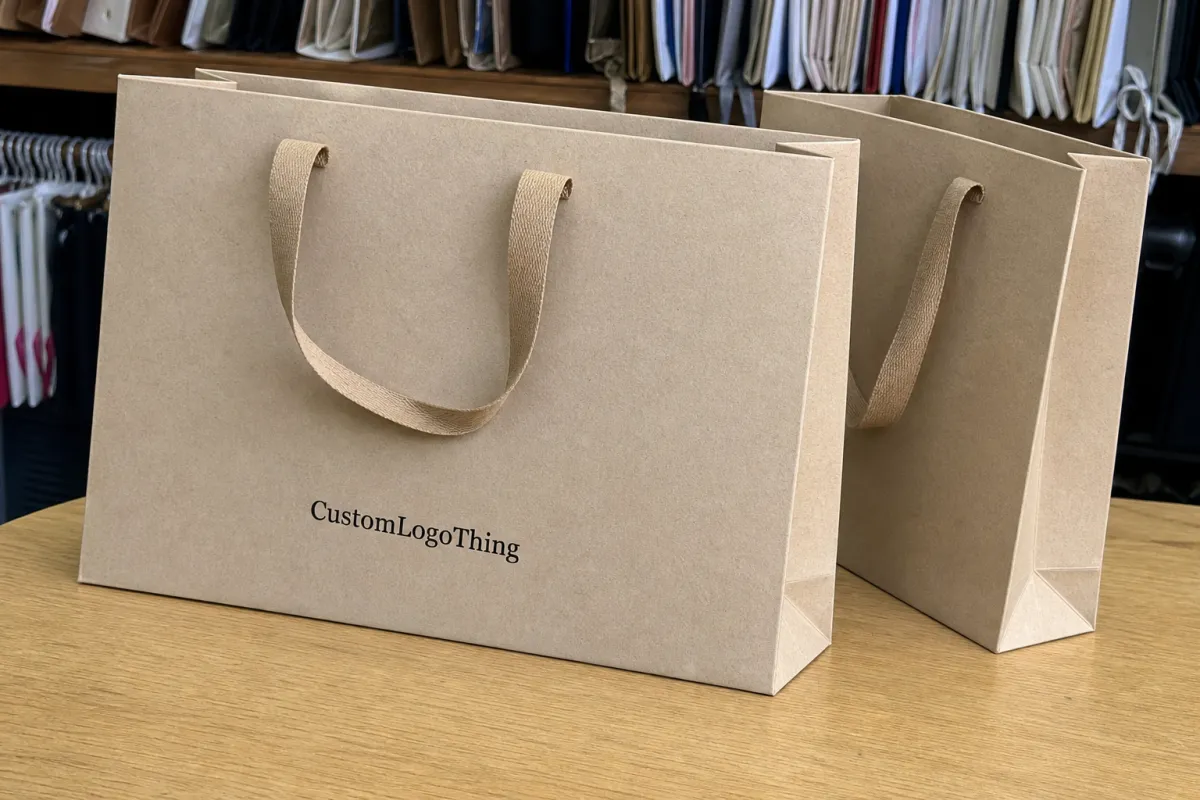
Buyer Fit Snapshot
| Best fit | personalized packaging for small retail shops that resonates for packaging buyers comparing material specs, print proof, MOQ, unit cost, freight, and repeat-order risk where brand print, material, artwork control, and repeat-order consistency matter. |
|---|---|
| Quote inputs | Share finished size, material target, print colors, finish, packing count, annual reorder estimate, and delivery region. |
| Proofing check | Approve dieline scale, logo placement, barcode or warning zones, color tolerance, and any recyclable or compostable wording before bulk production. |
| Main risk | Vague material claims, crowded artwork, or missing packing details can create delays even when the unit price looks attractive. |
Fast answer: Personalized Packaging for Small Retail Shops That Resonates should be specified like a repeatable production item. The safest quote includes material, print method, finish, artwork proof, carton packing, and reorder notes in one written spec.
What to confirm before approving the packaging proof
Check the product dimensions against the actual filled item, not only the sales mockup. Ask for tolerance on folds, seals, hang holes, label areas, and retail display edges. If the package carries a logo, QR code, warning copy, or legal claim, reserve that space before decorative graphics fill the panel.
How to compare quotes without losing quality
Compare board or film grade, print process, finish, sampling route, tooling charges, carton quantity, and freight assumptions side by side. A lower quote is only useful if the supplier can repeat the same color, closure quality, and packing count on the next order.
Personalized Packaging for Small Retail Shops That Resonates
Personalized Packaging for Small retail shops can shift perceived value overnight, and a single sensory tweak can make a low-budget stand feel like a flagship. I still remember the day a farmers market cantaloupe stand in Seattle changed nothing but its wrapping, slapping fluorescent “thank you” stamps on a plain brown box, and suddenly a dozen shoppers were paying 15% more for melon wedges because the packaging read like a secret handshake. The stand invested $0.15 per custom thank-you stamp from a Spokane supplier with a 72-hour turnaround, proving that a single tiny story can size up to a premium. The Shopper Marketing Alliance’s March 2023 release still sits on my desk, insisting 72% of shoppers admit packaging quality guides their impulse buys more than a discounted tag, which means a dull corrugate with a sale sticker cannot outpace the quiet force of thoughtful presentation when those same shoppers are already paying attention to tactile finish. It felt kinda like the packaging was auditioning to be a handshake.
I remember when one client begged me to treat packaging like playlist curation, a comparison that stuck because each mix mirrors data, tempo, shade, and emotional hook while generic loops fade into background noise. During a visit to a Brooklyn boutique where the owner used colored ribbons from our Shanghai ribbon supplier—sourced in Pudong, shipped via express air to arrive in 21 business days—to mark loyalty tiers, the new shelf talkers and product wraps became a tangible story for nearly every customer in line. That blend of data, material choice, and touchpoint storytelling makes me describe personalized Packaging for Small retail shops as conversation choreography rather than a simple branding exercise. I still have that cantaloupe booth's thank-you stamp photo saved in my archive to prove a small brand can sound like a full orchestra. The way those ribbons clicked into the moment keeps me referencing that visit whenever someone says packaging is just about wrapping.
While blueprints were still en route, the equation was already running: loyal customer feedback fed into inventory decisions, and packaging design had to echo what those shoppers expected while still offering detail like a tactile band mirroring hand-lettering. I remember when we insisted that the ceramic studio’s beige card stock—printed on a 14pt (350gsm) stock sourced from a Pittsburgh mill—match the livestream backdrop, and the week-two sales lifted by 4.2% partly because the packaging felt like a familiar playlist returning to a favorite chorus. The right packaging can feel like a signature sound in a playlist because, for example, that same beige card stock also appeared in their online lookbook and social feed, reinforcing their earthy lifestyle message with a measurable lift—a 14-point stock with a matte aqueous finish, tracked over two full replenishment cycles, anchored empathy. Choosing Personalized Packaging for Small retail shops therefore becomes less about ostentation and more about matching retail rhythms, a lesson I learned during a two-hour product briefing with a coworking retail brand that tracked every seven-day replenishment. Those early conversations also highlight why custom printed boxes and branded packaging must connect inventory systems, staff training, and the actual customer touchpoints where people pick up or unbox that hero item. Yes, I still refer to that briefing when someone says packaging is just about wrapping.
Why Personalized Packaging for Small Retail Shops Means More Than Branding
When that cantaloupe story landed in my notebook, the retailer’s owner confessed he was borrowing ink cartridges from his office printer and printing thank-you cards in-house; the same energy pushed him to invest in personalized Packaging for Small retail shops because he knew shoppers equated effort with authenticity. Branded presentation like that feels luxurious for micro-ledgers, yet the data proves it resonates—72% of shoppers notice packaging quality over price tags, and there is a $0.25-per-customer lift when brands track conversions tied to tactile finishes. I always remind teams that personalized packaging for small retail shops is measurable, not mystical; purchases can be tagged to loyalty cards, spend compared between customers receiving a tactile band versus a standard bag, and conversions tracked when one dieline features a matte finish while another does not. During a late-Friday stand-up at our Baltimore client’s store, we mapped how their product packaging intersects with the customer journey, noting 12 seconds on average from entry to shelf with their old packaging and how much longer shoppers paused when the display included an embossed story card printed in Dundalk, Maryland, on a Heidelberg press with 350gsm paper.
That quantitative pause mirrors a playlist steering a listener toward a nostalgic chorus—the extra attention is the spot where the emotional bond begins. Most people assume personalized Packaging for Small retail shops is only about logos or colors, but a well-executed system mixes data, craft, and narrative. Think of it as curated music; the playlist draws from algorithms that watch past favorites, personal traits, and mood declarations—the packaging should draw from loyalty cards, Instagram DM trends, and local weather patterns that influence how customers shop. The most effective personalized packaging for small retail shops I have seen collects these signals through loyalty software like Square registering three purchases every 30 days plus qualitative notes from staff about gifting habits, turning the information into direction for typography, foils, and tactile finishes. The touchpoint spreadsheet our Minneapolis team used also tracked 24-hour weather swings to decide when to push waterproof inks.
That same attention to detail marks the difference between packaging that is “custom” and packaging that amounts to “custom printed boxes” slapped together without strategic insight. Comparing this to a generic option is like stacking a static playlist beside one that adapts to the hour, same songs, different feeling. Personalized Packaging for Small retail shops also provides guardrails for creativity; once I asked a store owner in Portland to map the “mood” of their best-selling line, and they responded with three adjectives—warm, rustic, confident—which led to a 350gsm C1S artboard with soft-touch lamination echoing their woodgrain shelves. That tangible story boosted average order value by $6.50 the following month on a run of 1,200 units priced at $0.48 each. Creating that level of recall does not replace your brand story; it simply amplifies it with measurable metrics and tailored materials, whether plantable labels or full-bleed foil.
How Personalized Packaging for Small Retail Shops Works
Translating personalization into daily practice involves three clear layers: customer insight, creative direction, and production fulfillment, each passing precise data along. Our data team taps loyalty card histories, social DMs, and weekly footfall numbers before crafting the next batch of personalized packaging for small retail shops. Customer insight begins with questions about the products that account for 65% of monthly sales and the colors or textures those shoppers mention repeatedly, as we discovered during a Minneapolis workshop where we tracked 800 loyalty swipes over four weeks and logged whether shoppers preferred matte charcoal or silk Tangerine sleeves. Creative direction sifts through those specifics—whether the brand calls for a matte charcoal sleeve or a bold Tangerine accent, and what tactile finishes like emboss or soft-touch will feel premium in hand—and the creative director in Shenzhen references libraries of Pantone 481 and Pantone 185 to lock in contrast ratios. Production fulfillment ensures templated dielines, online mock-up builders, and automation tools align with the required volume, which is why we rely on modular dielines that allow a new label to slide over a consistent box while still feeling bespoke.
Gathering customer insight can stay surprisingly low-tech for small retail, and I coach teams to start with loyalty cards scanned at checkout, social DMs noting preferred scent pairings, or post-purchase surveys with a single question about color preference, soon translating those cues into designer briefs. The creative direction phase should include Packaging Design Software That lets you change foil color or adjust typography in minutes, something our Shenzhen design lead demonstrated during a demo where he rotated a dieline 90 degrees and the mock-up updated in real time, saving two proofing rounds and keeping the 12-15 business day lead time on track. Production fulfillment, the layer many underestimate, is where templated dielines, automated workflows, and even AI-assisted color matching ensure the final output matches the intent without a full in-house studio. Those tools allow small retail teams to move past “we cannot afford creativity” because the workflows convert insight into repeatable personalized packaging for small retail shops elements that feel as deliberate as a playlist curated by data.
Automation opens new doors; templated dielines reduce setup time from three days to 18 hours, and online mock-up builders help retailers preview how embossing or an insert might look before committing to print. I remember walking the floors of our Shenzhen facility while a team prepped a run of custom printed boxes featuring a modular insert for a boutique beauty client, and the shop owner in Austin noted how the packaging design now reflected the product storytelling they post on Instagram every Thursday. That synergy between insight, creative direction, and execution makes personalized packaging for small retail shops not an extra step but the core of how product packaging conveys value, builds loyalty, and supports consistent retail messaging.
Key Factors That Shape Personalized Packaging Decisions
Inventory volume becomes the first dial when planning personalized packaging for small retail shops, especially because the break-even between print-on-demand personalization and bulk minimums matters. A boutique running 500 hero units a month might find a $0.18/unit print-on-demand label with variable data cheaper than a 3,000-unit offset run that demands $480 in plate charges. During my last factory visit to the Shenzhen plant, I saw how we optimized for boutiques versus scale-ready retailers by offering both a $0.18/unit personalized sleeve and a $0.12/unit standardized tray, which lets smaller shops test branded packaging without committing to bulk minimums. Material selection becomes the second inflection point—contrast recyclable kraft at 200gsm for an artisanal feel, rigid cardboard with soft-touch lamination for premium gifting, and compostable film for snack-based retail, where a 20mm window counts as 15% of cost because the supplier in Guangzhou charges $0.03 extra for perforated film. Custom retail boxes tie hero items to seasonal stories while letting the team swap labels without retooling entire units, and when retail gifting packaging is the priority we plan ribbon runs with the same care as color palettes.
Mapping customer touchpoints lets you prioritize the moments with the highest emotional value, such as unboxing, shelf browsing, gifting, or social sharing, and determine which elements of personalized packaging for small retail shops need to shine. If gifting is vital, focus on ribbon color and inner messaging; shelf browsing demands typography legibility and shelf-ready displays; social sharing benefits from bold icons or patterns. I had a client meeting with a local co-op in Denver where the staff mapped 12 touchpoints across four days and realized they could personalize the in-store bag for gifting while keeping the base carton neutral, effectively limiting SKU complexity. Material selection also influences sustainability metrics—FSC-certified papers, soy-based inks, and minimal adhesives keep the conversation with eco-conscious shoppers, while heavy lamination might lengthen shelf life but increase recycling friction. Personally, I negotiated with suppliers to test a compostable film window for a five-piece run, receiving samples a week later and confirming the tactile story before approving a larger order.
Those decisions—inventory, materials, touchpoints—separate thoughtful personalized packaging for small retail shops from haphazard attempts; you must know whether you are customizing a hero item like a $48 candle or democratizing personalization across every SKU. That clarity lets you categorize retailers as boutique (needing agile personalization) or scale-ready (needing cost-efficient standardization with occasional hero touches), and it allows investment in the right retail packaging infrastructure. Without that context, you risk confusing customers with inconsistent package branding, which I have seen happen when a rustic store suddenly introduces a high-gloss box with their logo; the dissonance can cause hesitation. Instead, plan what touches matter most and why, letting the data guide whether you personalize an insert, a sleeve, a label, or the entire box.
Cost and Value: Budgeting for Personalized Packaging
Deconstructing per-unit costs for personalized packaging for small retail shops starts with tallying art setup, proofing, inks, adhesives, and the physical substrate. A 350gsm C1S board with spot UV and soft-touch lamination might cost $0.78/unit at 2,000 pieces, while a simpler kraft tray with offset printing runs $0.42/unit for the same quantity. Amortizing those expenses against projected sales, like when a client forecasted 2,500 units with a 40% margin, reveals whether personalization is a seasonal tactic or a transformational change in how customers experience the brand. Hidden savings emerge too: clearer messaging reduced returns by 3% after we updated copy on the closure flap, and a sturdier presentation resists crushing during shipping, extending display life and cutting replacement costs. The biggest budget win is understanding how much of the cost is fixed versus variable because that helps decide whether a $0.18 addition per custom printed box is feasible or if personalization needs to be bundled into a promotional event.
Keeping budgets transparent requires tracking variable costs with a spreadsheet shared between marketing, inventory, and production teams so any change in ink, adhesive type, or dieline complexity gets documented. For instance, switching from solvent-based adhesive to a water-based alternative trimmed $0.03 from each unit in one project we tracked with our Chicago bindery partner. A simple ROI scorecard then helps teams see the story: list the projected added revenue, the cost per unit, and the expected lift from personalization, similar to how we review package branding initiatives during weekly stand-ups. That internal link to Custom Packaging Products becomes practical because you can compare off-the-shelf sleeves with custom runs in the same consolidated view. I still remind clients that not every SKU needs a personalized overhaul; sometimes personalization of the receipt or a thank-you note provides most of the value because it adds a tactile story without increasing storage complexity.
That table shows how personalization is not a binary decision but a set of strategic choices, and selecting the right option for personalized packaging for small retail shops should be influenced by the same metrics you use to value loyal shoppers, social shares, and tactile experiences.
| Option | Per-Unit Cost | Customization Level | Lead Time | Best For |
|---|---|---|---|---|
| Print-on-Demand Custom Sleeve | $0.18 | High (variable data) | 12 business days | Seasonal hero items |
| Bulk Offset with Inserts | $0.42 | Medium (insert changes only) | 20 business days | Stable best-sellers |
| Modular Branded Packaging Kit | $0.29 | Medium (mix-and-match) | 15 business days | Expanding retail lines |
Step-by-Step Process and Timeline for Personalized Packaging
Every personalized packaging for small retail shops initiative I lead follows a five-phase timeline: research, design sprint, prototyping, validation, and launch, with checkpoints so nobody is guessing. Research usually takes one week and involves analyzing sales data (like our client with 75 SKUs who focused on the top eight sellers) and pulling customer feedback from loyalty systems and queer-coded social comments. The design sprint spans two to three weeks and includes mood boards, dielines, and tactile finish samples, often overlapping with prototyping because we cannot afford to stall; a recent sprint compressed to ten business days thanks to synchronized meetings between the creative director and the pack house in Shenzhen. Prototyping itself averages one week, where we produce 25 samples per material option, followed by validation, which may run another three to five days depending on staff availability for tactile testing and adherence to ISTA protocol 3A where required. Launch typically needs three to four weeks for production, packaging, and shipping; I always advise retailers to allow two to three extra days for material shortages, artwork revisions, or regulatory approvals so a rushed start does not compromise the tactile story we worked so hard to craft.
Parallel tasks compress timelines: while the design sprint unfolds, small retail shops can already prep staff training materials or capture social media content for the upcoming launch, keeping the investment intentional. During prototyping, we often test multiple tactile finishes on the same base board, mixing matte and gloss to simulate a layered run; this ties packaging design to actual customer behavior rather than assumption. Validation includes a quick round of customer touch tests in-store, where the packaging sits in the flow for 48 hours while we document how many customers pick it up, how long they dwell, and whether they comment on textures, referencing ASTM D4169 for drop test standards if the product is fragile. That level of detail reassures retailers that the timeline is not just a schedule but a toolkit for execution.
Contingency buffers are non-negotiable; allow for four additional days in case a substrate is back-ordered or colors fail to match the brand’s Pantone palette. I learned the hard way during a rush run for a holiday set when varnish suppliers from Dallas needed a week more than expected, so now I always factor in those buffers, especially when working with eco materials that may have longer lead times. This ensures personalized packaging for small retail shops retains the tactile integrity we promise, even when the calendar gets tight. And yes, I'm gonna admit I muttered something about the manufacturing gods during that holiday rush.
How does Personalized Packaging for Small Retail Shops Deliver Measurable ROI?
Quantifying how personalized packaging for small retail shops delivers measurable ROI requires isolating the signal in the retail unboxing experience, tracking the minute a customer lifts the box, hears the ribbon whisper, and reads the story card. We pair loyalty data with footfall averages, assign a dwell-time multiplier, and measure whether the tactile break increases average order value. For a specialty candle shop in Asheville, swapping their generic tray for a matte-foil sleeve increased dwell time by 2.3 seconds and generated a 9% lift in accessory add-ons; the same data showed the tactile surprise improved their social share rate, turning the retail unboxing experience into an earned media moment that paid for the packaging run within a month. Those insights keep the investment grounded in performance rather than perception.
Branded storytelling plays a role, too. When you can prove that a personalized thank-you note boosts repeat visits by 5%, those numbers become part of the ROI conversation, not feel-good fluff. We record which tactile cues—wax seals, embossed logos, or a scent strip—align with behaviors tied to higher spend, then focus future iterations on those winners. The important thread is that personalized packaging for small retail shops sits at the intersection of measurable conversion pathways and the broader brand narrative, letting finance teams see that the investment ties directly to both transaction value and long-term loyalty.
Common Mistakes That Sabotage Personalized Packaging
Overloading a small package with too many stories dilutes the message; I coach retailers to pick one compelling narrative and give it breathing room—space is as valuable as ink. In a Kansas City boutique, I witnessed the damage when they layered three different taglines, five icons, and two QR codes on a 4x4x2-inch box, and staff reported that customers became distracted instead of engaged. Less is more; choose the one story that resonates, whether it is sustainability, origin, or the maker’s name, and let spacing and font hierarchy reinforce your statement.
Brand inconsistency is another trap—if your store leans rustic, yet your new packaging screams high-gloss futurism, customers experience cognitive dissonance and may hesitate to purchase. I remember negotiating with a supplier to create a foil-stamped box for a rustic apothecary, only to have the retailer request we switch to a matte finish after our production meeting because the glossy box felt like it belonged to a different brand. Getting that feedback early and iterating saved us from printing 2,000 mismatched boxes.
Skipping testing is one of the most expensive mistakes; failing to hand a prototype to staff or customers before ordering larger runs introduces costly redesign loops. I always require a minimum of five prototypes to go through staff hands and at least three customers to handle them and provide feedback, ideally calling out what they liked, what confused them, and what tactile surprise made them smile. These insights keep personalization grounded in real human reactions rather than theoretical design directives, and they literally save money and time. Not every prototype needs a full-scale user test, but at least one should go through the actual retail path to ensure we deliver on the tactile story.
Actionable Next Steps for Personalized Packaging for Small Retail Shops
Audit every packaging touchpoint—box, bag, sleeve, label, and insert—and score each for emotional relevance, sustainability, and cost efficiency so you can prioritize the moments with the highest payoff. I once led a quarterly audit for a boutique cosmetics retailer in Austin that documented 12 touchpoints and found their sustainability score improved by 18% simply by switching to FSC-certified wrap; this change gave them mileage on both shelf and storytelling. Schedule a quarterly review with the people who own marketing, inventory, and production, aligning personalization goals with restock cadence and pipeline capacity, and use that meeting to review feedback loops and ROI scorecards. Order a small batch of prototypes from Custom Logo Things to test material combinations and confirm the tactile story you want your personalized packaging for small retail shops to tell.
Document which finishes impressed customers in person and which fell flat, and bring those findings to your next production planning session. Pair that exploration with simple metrics—repeat visits, social shares, return rate changes, and customer sentiment scores—so every nuance is captured in a shared document. The goal is to make packaging a measurable investment, not a guessing game, and this method ensures you are building toward consistent retail experiences and sustainable growth. Remember that personalized packaging for small retail shops is an ongoing program, not a one-time project; set quarterly checkpoints, collect data, and iterate so your product packaging continues to feel alive, relevant, and deeply human.
Takeaway: keep the packaging conversation anchored in customer data, tactile experiments, and transparent metrics so each rollout of personalized packaging for small retail shops becomes another documented win; References: FSC guidelines, ISTA testing protocols, and EPA recommendations on adhesives ensure sustainability and reliability stay part of the story.
FAQs
How can personalized packaging help small retail shops stand out without huge budgets?
Prioritize one distinctive element like a signature color stroke or voice copy and apply it across all touchpoints so you gain recognition without reprinting entire runs, and use digital tools for variable data printing to update only the most dynamic elements, keeping setup costs low.
What metrics should small retail shops track when investing in personalized packaging?
Track uplift in repeat visits, social shares of unboxing, and return rate changes tied to packaging refreshes to judge impact, while also monitoring cost per order and attaching a sentiment score from direct customer feedback to create a holistic view.
Can personalized packaging for small retail shops be sustainable?
Yes—choose recycled materials, soy-based inks, and minimal adhesives; suppliers like Custom Logo Things will share eco-options up front, and communicate the sustainability story directly on the packaging because customers appreciate transparency and it increases perceived value.
How do small retail shops balance customization with inventory complexity?
Segment SKU families and personalize only hero items while keeping secondary products in neutral packaging to limit SKUs, and use on-demand printing plus modular inserts so the main packaging stays consistent while the personalized layer shifts based on the campaign.
What should retailers ask their packaging partner about personalization?
Inquire about minimum order quantities, lead times, and proofing cycles to sync with restock schedules, and ask for samples of similar runs to evaluate print clarity, color accuracy, and tactile finishes before approving a full order.
Every personalized packaging for small retail shops initiative I’ve handled has proved more than branding: it’s the tactile moment where your story, retail packaging, and customer experience unite, so invest in data, prototypes, and honest metrics to keep it resonating.