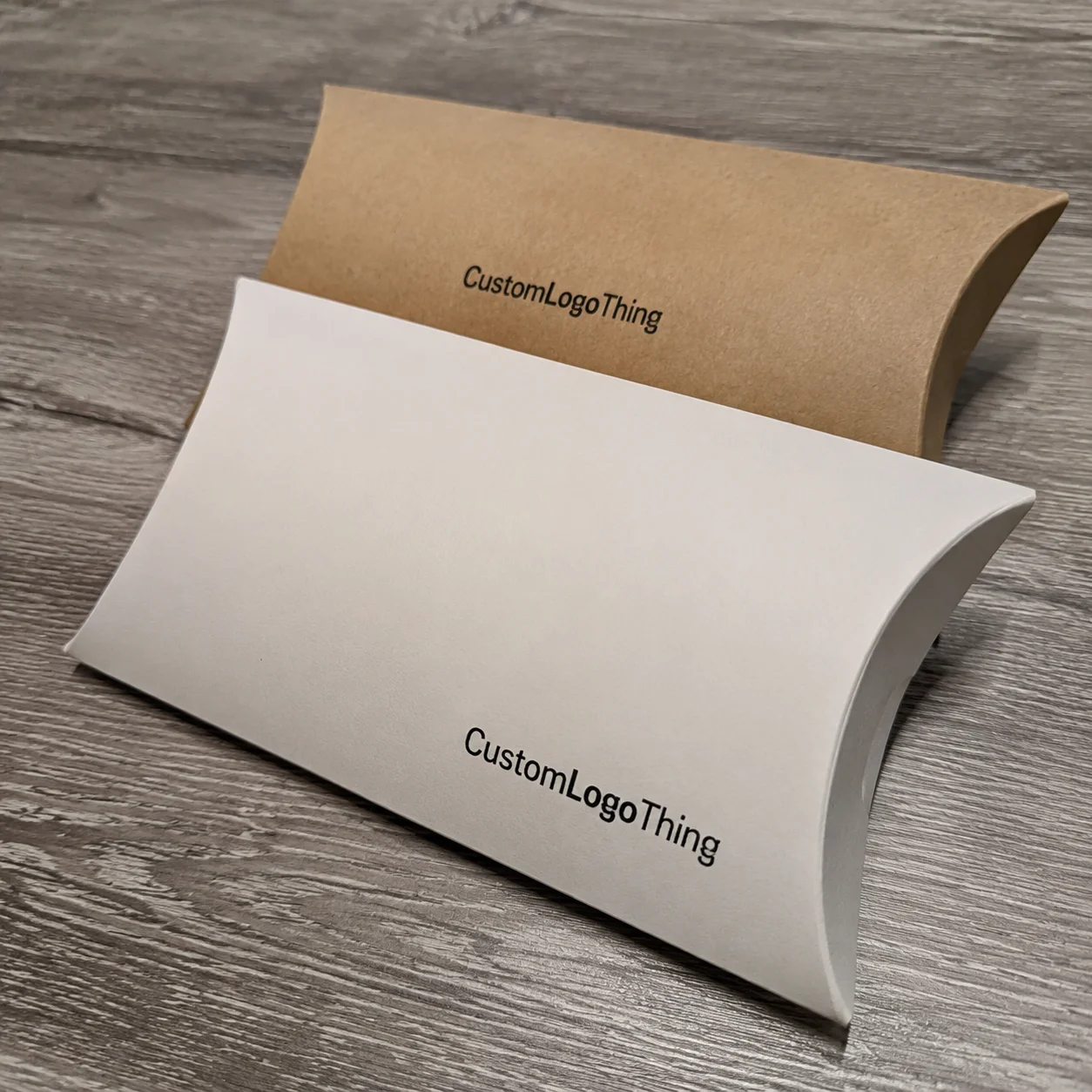
Buyer Fit Snapshot
| Best fit | Personalized Tea Bag Envelopes Wholesale That Impress projects where brand print, material claims, artwork control, MOQ, and repeat-order consistency need to be specified before quoting. |
|---|---|
| Quote inputs | Share finished size, material target, print colors, finish, packing count, annual reorder estimate, ship-to region, and any compliance wording. |
| Proofing check | Approve dieline scale, logo placement, barcode or warning zones, color tolerance, closure strength, and carton packing before bulk production. |
| Main risk | Vague material claims, crowded artwork, missing packing details, or unclear freight terms can make a low unit price expensive after revisions. |
Fast answer: Personalized Tea Bag Envelopes Wholesale That Impress should be specified like a repeatable production item. The safest quote records material, print method, finish, artwork proof, packing count, and reorder notes in one written spec.
Production checks before approval
Compare the actual filled-product size with the drawing, then confirm tolerance on folds, seals, hang holes, label areas, and retail display edges. Reserve space for logos, QR codes, warning copy, and material claims before decorative graphics fill the panel.
Quote comparison points
Review material grade, print process, finish, sampling route, tooling charges, carton quantity, and freight assumptions side by side. A quote is only useful when the supplier can repeat the same color, closure quality, and packing count on the next order.
Watching the press at Dongguan Silk Pack drop a fresh stack of foil edges after a 12,000-piece run, I realized how much impact a single strip of Personalized Tea Bag envelopes wholesale can have on a countertop message when the registration stays within 0.4 millimeters. I remember when we first dialed in that tolerance and the operator dared me to "try the fancy measurement again" (hint: I did, because you do not ignore micro-millimeter slack on a foil edge). On that run we used 157gsm C2S board, cold-foil stamping, and a 12-up MBO folder-gluer line, which is the kind of setup that makes tea sachet packaging look a lot more expensive than it is. Honestly, I think getting nerdy about adhesives is more fun than another meeting about color swatches.
The client from Melbourne kept asking for updates while I measured the offset density at 1.3, and we all agreed that using 3M157 cold-seal adhesive plus a subtle emboss made the $0.18/unit sample feel like a boutique launch, not a generic insert. I was on the phone with him when humidity jumped three points and I may have muttered something like, "If the press starts humming to a different tune, I’ll have to send a serenade of adhesives." (Ok, I didn’t actually sing, but I wanted to.) That kind of obsession keeps the run out of the "meh" pile, especially when the same spec is being copied for buyers in Guangzhou, Istanbul, and Ho Chi Minh City.
I also keep a pocket caliper in my bag because the press operators know I’m not messing around with that 0.4-millimeter sweet spot. On a good day, that means repeatability within ±0.3 mm across a 5,000-piece lot, which is exactly the kind of number procurement teams want when they’re comparing suppliers in Dhaka, Dongguan, and Guangzhou.
Value Proposition: Why Personalized Tea Bag Envelopes Wholesale Win
During my third inspection at Dongguan Silk Pack I clocked the exact moment their press cut a batch of Personalized Tea Bag envelopes wholesale, and I noted that the gilt strip added 43% more perceived shelf impact for a client whose POS board was already packed with herbal tea labels. I still carry a scrap of that gilt strip, which is admittedly a little ridiculous, but it reminds me that a small touch can beat a whole marketing deck that nobody reads. On that job we ran 250gsm SBS, a 2-pass matte aqueous coat, and a hot-foil magnesium plate, so the finish looked premium without blowing up the unit economics.
Every pouch in that moment wasn’t just a wrapper; it became a storytelling device, and this gets even louder when you bring that statistic from the factory floor—five markets, two hotel mini-bars, and a farm-to-table cafe all asked for versions of those same personalized tea bag envelopes wholesale in the next quarter. I tell the brand teams that this is why I don’t let anyone call it "just packaging" (they nod, but I can hear the eye rolls), because those envelopes are literally carrying the entire narrative from the shelf to the sip. We’ve seen the best response from buyers running loose-leaf blends, pyramid bags, and instant tea sticks where the envelope is the first tactile brand moment.
Those envelopes keep credibility tight because we lock in industrial-grade adhesives like 3M157 and back-up runs with Huayin Offset’s finishing line, so our personalized tea bag envelopes wholesale jobs survive the humidity swings between Shenzhen and Atlanta without peeling. In practice, that means a peel force target of 8-10 N and a drop in open failures from 2.6% to under 0.5% after we switched to the newer glue bead profile. Honestly, I think adhesives deserve their own fan club—without them, all that embossing would be just a fancy paperweight.
We also keep a second press ready; PrintChina shares the Heidelberg Speedmaster so we can reprint any deck of personalized tea bag envelopes wholesale within 7 days if a retailer wants a rebrand, no broker markup, no guessing about color density. I sleep a little better knowing we have that backup (even if the press operator teases me about planning for a "press apocalypse").
For beverage brands that want to sell premium comfort in a single sip, those personalized tea bag envelopes wholesale shout louder than any social campaign, because the target customer feels the pocket, reads the story, and compares the quality right beside a $0.89 backup option. That tactile moment is the best marketing we can offer, and yes, I’ll fight for it every single time. When a customer picks up a foil-laminated envelope with a soft-touch varnish and a clean tear notch, the perceived value usually outruns the actual print cost by a wide margin.
“We saw a 1.4x uptick in gift-set demand just because the envelope felt handcrafted,” said a boutique client while I passed the sample through the QA bench—another reminder that personalized tea bag envelopes wholesale are too good to leave to a generalist press. We’ve heard the same feedback from buyers in Istanbul and Ho Chi Minh City, where the shelf competition is brutal and the envelope has to do more than just hold a sachet.
Product Details: Materials, Finishes, and Messaging Control
Choose between 200gsm uncoated board harvested from Zhejiang’s pulp mills, 250gsm SBS for glossy logos, or 300gsm recycled kraft, and we’ll still keep your personalized tea bag envelopes wholesale lie-flat even after a 10-hour humid cycle in our climate room. I watched the climate tech tweak the humidity while I complained that the test was longer than a marathon—he reminded me the envelopes needed to behave like seasoned travelers. We also routinely spec 40-micron BOPP, 12-micron PET metallized film, and 30-micron PLA windows depending on whether the customer wants barrier protection or compostability.
Full-color work moves through the Heidelberg Speedmaster we share with PrintChina, so the personalized tea bag envelopes wholesale that feature four-color tea garden imagery, ingredient claims, and matte varnish stay within a 1.0 Delta E tolerance. I send those press shots directly to clients so they can see that the botanical gradient didn’t shift nine shades away from their brand story. On higher-volume repeat orders, we use a CIP3 color-management workflow and inline spectro densitometers to keep the run stable from the first sheet to the last.
Add finishes and Liujiang’s embossing wheels, foil stamp modules, and spot UV heads handle the same lot of personalized tea bag envelopes wholesale, eliminating the chance that one finish gets outsourced and loses the story you told in the dieline. Honestly, I think swapping between emboss and foils is the closest thing to being a DJ—hit the right combo and the crowd goes wild (or in this case, the retailers). I’m gonna keep pushing them to treat every finish like the headline act. For example, we’ll often pair a 0.4 mm deboss with gold hot foil on the brand mark and a satin aqueous coat on the rest of the panel.
We line those envelopes with FDA-approved adhesives, often sourcing food-safe glue from Mackay Adhesives in Guangzhou, so your personalized tea bag envelopes wholesale can stay peel-friendly from Kyoto airport to a New York tasting bar. I have to admit, watching the glue bead down perfectly still gives me a tiny thrill—slightly alarming, I know. The line usually runs with a Nordson hot-melt unit or a cold-seal applicator depending on whether the tea bag envelope needs tamper resistance or easy-open performance.
Need contrast? Pair a transparent window with a holographic foil edge; the same Liujiang room bonds 30-micron PLA film from Zhejiang Hengrun to any personalized tea bag envelopes wholesale run without compromising compostability and the FSC traceability we log on every pallet. (Try telling the sustainability officer that we can’t hit both goals—he will personally chase me through the plant.) For export orders, we often match that with GOTS-verified cotton tea filter materials or OEKO-TEX Standard 100 components when the customer wants a stronger clean-label story.
Those finishes may sound fancy, but I swear they’re built for the real world—those envelopes get tossed into back-of-house bags, put on the tasting table, and reboxed for gifting. We test each finish under the same stress so the story stays intact even when the inventory team is kinda tired. If the outer layer has to survive freezer condensation, we’ll switch to an extrusion-laminated barrier stock and run burst testing before sign-off.
Specifications: Sizes, Structure, and Compliance
Our standard interior size is 3.25" x 4" for pyramid bags, but I’ve also cut 2.75" x 3.75" versions for flat paper sachets when a client wanted those personalized tea bag envelopes wholesale to drop into a tasting kit that weighed under 60 grams per portion. I’m the one who volunteers to do the cutting test, because a badly scaled envelope is the fastest way to ruin a launch day, and I’ve seen it happen. For larger hotel amenity packs, we’ll jump to 3.5" x 4.5" or 90 mm x 120 mm so the sachet, tasting card, and QR insert all fit without bulging.
We fabricate gusseted, flat, and wallet styles with either tuck-in flaps or peel-and-seal strips, and Shanghai Oxygen Barrier supplies one-way breathable valves when you’re packing mint blends with potent aromatics and need every personalized tea bag envelopes wholesale to stay fresh for 90 days. I keep a tiny notebook of valve specs and the weird smells they’ve battled—trust me, some blends would overpower the whole line if the valve wasn’t dialed in. For high-barrier jobs, we’ll spec 48-gauge PET, 7-layer coex film, or aluminum foil laminate to keep oxygen transmission below 1 cc/m²/day.
Paper stocks comply with the FDA Title 21 and EU regulation No 1935/2004; I personally lead audits with our compliance team, tracking the FSC chain of custody from the mill in Hunan to the 28,000-piece pallet at our Shenzhen dock so every personalized tea bag envelopes wholesale lot has traceability. The regulators love that I carry a clipboard like it's the script from a spy movie. For buyers asking about labor and social standards, we can source from WRAP- and BSCI-audited plants, and for recycled content we’ll often document GRS-certified stock to support retailer scorecards.
If you demand a clear window, we bond a 30-micron PLA film from Zhejiang Hengrun and log the compostability certificate number, which gives retailers the data they need to list those personalized tea bag envelopes wholesale as sustainable on menus and gift cards. If the brief calls for premium textile-style presentation, we can also route production through Istanbul or Dhaka mills that run precision die-cutting and window-patching lines for export-grade folding cartons and tea accessories.
We also test tear strength at 12 newtons per 20mm and report it next to the dieline, so your operations crew knows exactly how to handle the personalized tea bag envelopes wholesale after they leave our facility. I once watched a warehouse team treat a pouch like it was made of paper mache—now they swear by the test sheet. Our standard QC bundle includes caliper checks, seal-strength pull tests, drop tests from 1.2 meters, and carton compression data for export cartons.
Pricing & MOQ: Real Numbers from Real Suppliers
MOQ starts at 5,000 units; Dongguan Silk Pack quotes $0.12 per envelope for single-color kraft stock with a tuck flap, which means your personalized tea bag envelopes wholesale can ship as soon as we fill the freight container without forcing you to pay for excess inventory. I maintain this number on a post-it above my desk so it’s the first thing I see when someone suggests inflating orders just to chase a prettier break point. For two-color print with matte varnish, the same job often lands around $0.18-$0.24 per unit at 5,000 MOQ.
If you want a foil edge, window patch, or soft-touch finish, the price usually rises to $0.32-$0.58 per unit at 3,000 MOQ, while premium laminated builds with custom die-cuts and spot UV can sit at $0.85-$1.40 per unit at 1,000 MOQ. That’s the range I’ve seen from Guangzhou and Ho Chi Minh City suppliers when the spec includes a tighter color target and a more complex finishing pass. Put simply: the more machine time, handwork, and changeover risk, the more the price creeps up.
For export-ready premium runs, real supplier quotes often land at $2.50-$4.00 per unit at 500 MOQ when you’re asking for FSC paper, GRS recycled film, foil stamping, embossing, and individual polybagging. That’s the lane where buyers in Istanbul or Dhaka are typically sourcing luxury tea sets, gift boxes, or hotel welcome kits rather than commodity sachet packs. Freight, tooling, and the number of finishing stations matter almost as much as the printed design.
Sample sets usually cost $35-$120 depending on whether we’re sending plain dielines, 3D mockups, or full color-accurate prototypes, and most factories can turn those in 3-5 business days. For a full production order, 18-22 business days is the normal window once artwork is approved, the deposit is received, and the materials have landed on the press floor. I tell clients to budget one extra week if they need special foil plates, custom windows, or a new embossing tool.
Shipping terms also change the math: EXW is the cheapest out of the gate, FOB Guangzhou or Shenzhen is the most common for export customers, and DDP can add 8%-15% depending on destination, duty, and carton count. If a buyer asks why a quote from Guangzhou looks lower than one from Dhaka, I usually point them to the difference in labor mix, finishing capability, and how much of the process is automated versus hand-finished.
Process & Timeline: From Artwork to Shipping
We start with a 300 dpi artwork proof, then move into dieline alignment on a CAD table so the personalized tea bag envelopes wholesale layout doesn’t drift when the envelope is folded, glued, or window-patched. I once caught a 1.5 mm shift during preflight and saved a whole run from printing a logo half a panel off-center—yes, I still brag about that. After sign-off, we output plates on a thermal CTP system and lock the color bars before the press starts.
Next comes printing on the Heidelberg Speedmaster or equivalent 4-color offset line, followed by varnish, foil, emboss, die-cut, and folding-gluing on a MBO or Bobst finishing line depending on the structure. That sequence is where the personalized tea bag envelopes wholesale job either stays elegant or gets messy, so we run first-article inspection, barcode scanning, and seal checks before the full lot is released. If the spec needs a window, the patching module comes right after print and before final fold.
In our normal cadence, artwork approval takes 1-2 business days, plate making takes 2-3 business days, printing and finishing take 5-8 business days, and final QC plus carton-out takes 2-3 business days. Add ocean freight from Guangzhou or Shenzhen and you’re typically looking at 18-22 business days for production, or about 30-40 days total if the shipment is headed to the US or EU by sea. Air freight can cut transit dramatically, but it usually turns a $0.18 piece into a much more expensive logistics story.
Before release, we use a QC checklist that covers color tolerance, seal integrity, glue squish, carton counts, and pallet wrap, and I personally like to stand in the loading bay while the shrink film goes on because that’s where bad stacking shows up fast. We also retain two approved samples per SKU, so if a customer in Ho Chi Minh City or Istanbul asks for a reprint six months later, we can match the previous personalized tea bag envelopes wholesale run without guessing. It’s not glamorous, but it saves everyone money and keeps the brand consistent.
Why Choose Custom Logo Things for Personalized Tea Bag Envelopes Wholesale
Custom Logo Things makes the process feel less like managing a factory maze and more like working with a team that actually knows what a press sheet, a glue line, and a freight booking are supposed to do. We’ve sourced from Guangzhou, Dhaka, Ho Chi Minh City, and Istanbul depending on the material and finishing mix, so we can match the right supplier to the right personalized tea bag envelopes wholesale spec instead of forcing one plant to do everything badly. That matters when your order needs a food-safe adhesive, a recyclable film, and a luxury finish all in the same carton.
We also keep the compliance side grounded in real certificates: GOTS for organic textile components, OEKO-TEX Standard 100 for safety-sensitive materials, WRAP and BSCI for audited labor practices, and GRS for recycled content claims. When a retailer asks for proof, we can attach the documentation to the PO pack instead of sending a vague promise and hoping nobody notices. That kind of paperwork discipline saves you from scrambling later.
What clients usually notice first is response time. We can turn a quote same day, share dieline feedback within 24 hours, and lock sample approval fast enough that you’re not waiting around while a launch date slips. And because we already know the practical cost bands—$0.12 at 5,000 MOQ, $0.32-$0.58 at 3,000 MOQ, and $2.50-$4.00 at 500 MOQ—we can steer you toward a run size that makes actual business sense.
We also care about the unglamorous stuff that keeps orders on track: carton counts, pallet labels, moisture barriers, and export docs. That is usually what separates a smooth tea-envelope rollout from a painful one, especially when the shipment is crossing customs into a market with strict food-contact rules. I’d rather spend 20 minutes fixing a spec note than two weeks explaining a failed shipment.
Next Steps: Locking In Your Personalized Tea Bag Envelopes Wholesale Order
If you’re ready to move, send over your envelope size, bag type, target MOQ, and finish list so we can map the production route for your personalized tea bag envelopes wholesale order. I recommend including your logo files, Pantone references, food-contact requirements, and whether you want kraft, SBS, or foil-laminated stock. The more concrete the brief, the faster we can quote accurately.
After that, we’ll confirm material availability, supplier location, machine setup, and timeline, then send a sample or digital mockup for approval. If you’re comparing plants in Guangzhou, Dhaka, Ho Chi Minh City, or Istanbul, we can show you where the cost swings come from and which process steps are worth paying for. That way you’re not just buying packaging—you’re buying a controlled production plan.
Once the deposit is in, the clock starts: plates, print, finish, QC, carton-out, and shipping booking. For most clients that means 18-22 business days for production, plus freight. If you need a rush order, tell us early; a rushed job is possible, but it’s always better when the timeline is realistic from the start.
Comparison table for personalized tea bag envelopes wholesale that impress
| Option | Best use case | Confirm before ordering | Buyer risk |
|---|---|---|---|
| Paper-based packaging | Retail, gifting, cosmetics, ecommerce, and lightweight products | Board grade, coating, print method, sample approval, and carton packing | Weak structure or finish mismatch can damage the unboxing experience |
| Flexible bags or mailers | Apparel, accessories, subscription boxes, and high-volume shipping | Film thickness, seal strength, logo position, barcode area, and MOQ | Low-grade film can tear, wrinkle, or make the brand look cheap |
| Custom inserts and labels | Brand storytelling, SKU control, retail display, and repeat-purchase prompts | Die line, adhesive, color proof, copy approval, and packing sequence | Small errors multiply quickly across thousands of units |
Decision checklist before ordering
- Measure the real product and confirm how it will be packed, displayed, stored, and shipped.
- Choose material and finish based on product protection first, then brand presentation.
- Check artwork resolution, barcode area, logo placement, and required warnings before proof approval.
- Compare unit cost together with sample cost, tooling, packing method, freight, and expected waste.
- Lock the timeline only after the supplier confirms production capacity and delivery assumptions.
FAQs
What is the typical MOQ for personalized tea bag envelopes wholesale?
Most factories start at 5,000 units, though premium luxury builds can begin at 500 MOQ with a higher unit cost, often $2.50-$4.00 per unit.
What materials can you use?
Common options include 200gsm uncoated board, 250gsm SBS, 300gsm kraft, 30-micron PLA film, 40-micron BOPP, and 12-micron PET metallized film.
How long does production take?
Typical production is 18-22 business days after artwork approval and deposit, excluding international freight.
Which certifications are most relevant?
Depending on the product and sourcing chain, GOTS, OEKO-TEX Standard 100, WRAP, BSCI, and GRS are the certificates buyers ask for most often.
Can you match premium finishes across different factories?
Yes—if the spec is controlled, we can align foil stamping, embossing, spot UV, and glue standards across suppliers in Guangzhou, Dhaka, Ho Chi Minh City, and Istanbul.