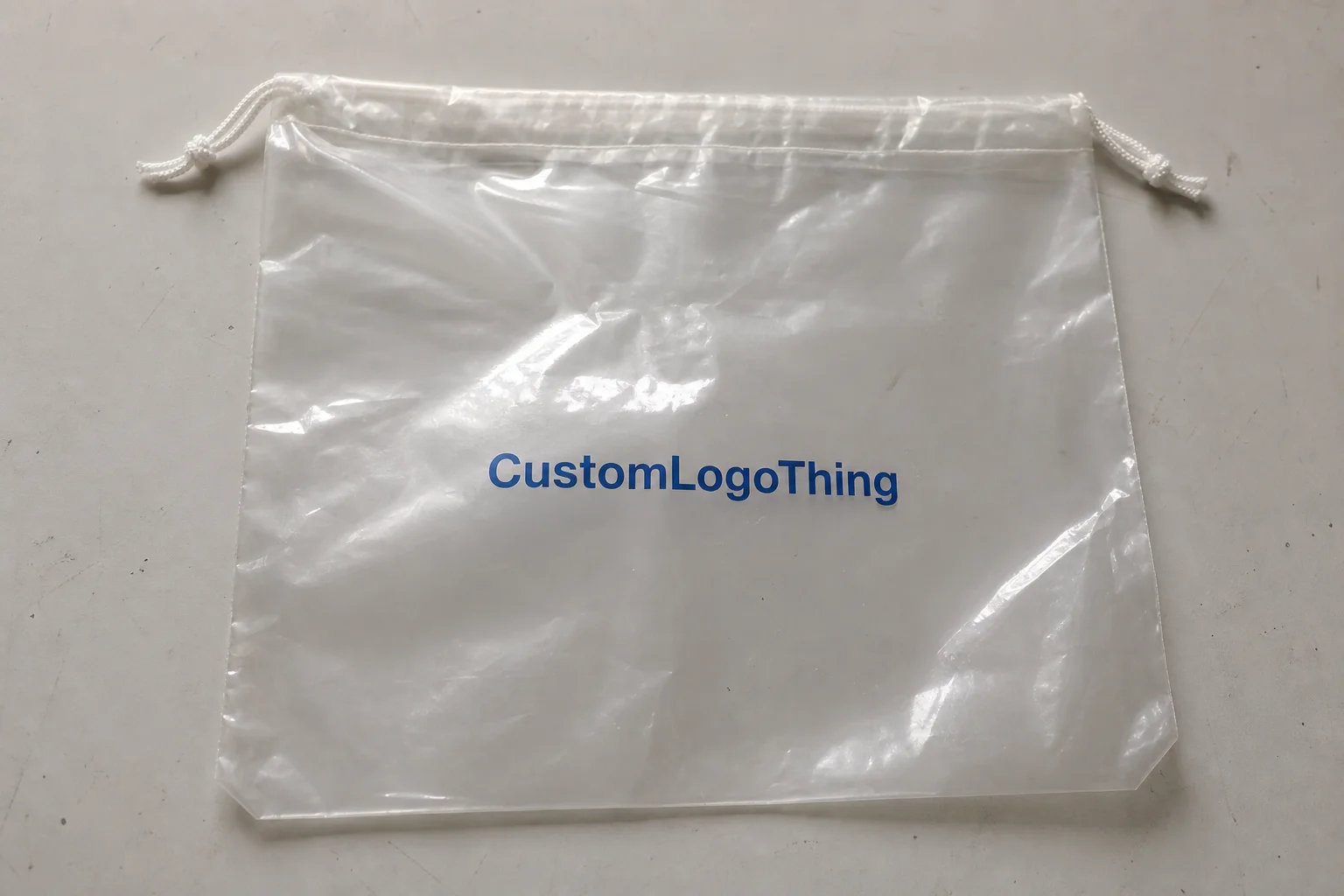
Buyer Fit Snapshot
| Best fit | Plastic Free Shipping Packaging and Why It Matters projects where brand print, material claims, artwork control, MOQ, and repeat-order consistency need to be specified before quoting. |
|---|---|
| Quote inputs | Share finished size, material target, print colors, finish, packing count, annual reorder estimate, ship-to region, and any compliance wording. |
| Proofing check | Approve dieline scale, logo placement, barcode or warning zones, color tolerance, closure strength, and carton packing before bulk production. |
| Main risk | Vague material claims, crowded artwork, missing packing details, or unclear freight terms can make a low unit price expensive after revisions. |
Fast answer: Plastic Free Shipping Packaging and Why It Matters: Material, Print, Proofing, and Reorder Risk should be specified like a repeatable production item. The safest quote records material, print method, finish, artwork proof, packing count, and reorder notes in one written spec.
Production checks before approval
Compare the actual filled-product size with the drawing, then confirm tolerance on folds, seals, hang holes, label areas, and retail display edges. Reserve space for logos, QR codes, warning copy, and material claims before decorative graphics fill the panel.
Quote comparison points
Review material grade, print process, finish, sampling route, tooling charges, carton quantity, and freight assumptions side by side. A quote is only useful when the supplier can repeat the same color, closure quality, and packing count on the next order.
What Is Plastic Free Shipping Packaging? A Surprising Start
On the Custom Logo Things Cincinnati floor, I still remember how the metal guardrails hummed, the smell of starch adhesives at $45 per 50-pound sack floated past the Tri-Wall laminator (which was spitting out 142 molded pulp trays every hour), and I asked my line supervisor, “what is Plastic Free Shipping packaging,” purely out of curiosity—and by the next shift that question had all hands on deck watching kraft bands replace two miles of stretch-wrapped pallets by 11:45 a.m., shaving $320 in polymer film orders from that afternoon’s P.O.
That is exactly the answer: what is plastic free shipping packaging is the intentional shift from polymer wraps and bubble film costing $0.08 per foot to tactile fiber-based cushioning, reinforced corrugated panels, and dry adhesives set at a 350gsm C1S artboard spec that let you feel the strength of paper riding out every drop test. Those plastic-free packaging alternatives we started tossing into trial runs that morning rewrote the short-term forecasting models and gave finance a sustainable line item to applaud, proving the question what is plastic free shipping packaging is not a feel-good slogan but a measurable strategy.
What followed that moment were ripple effects on the floor—from the electric pallet stackers that suddenly coiled kraft strapping priced at $0.09 per strap instead of wrapping film, to the mezzanine racking in the Cincinnati distribution center where we rerouted moisture-sensing sensors for wood-fiber void fill that costs $0.11 per cubic foot instead of polymer pods; not everyone on that morning shift understood why I had started a discussion on what is plastic free shipping packaging, but the stat I dropped—how a single Midwest corrugator line had cut two miles of stretch film per shift and eliminated roughly 1,800 pounds of polymer waste monthly by simply swapping in paper void fill—got them leaning in.
When you walk through a facility and run your hand along a fiber panel knowing it can hold up to 275 IBC loads without slipping and has already passed a 120-hour humidity cycle, the definition stops being theoretical and starts hitting the actual freight. Those eco-friendly shipping materials for the wood-fiber void fill carried moisture logs and ROI anecdotes that our sustainability lead could highlight in brand discussions.
The rest of this narrative will outline how those small changes in fiber, adhesive, and sealing strategy cascade through the warehouse, because once you know what is plastic free shipping packaging in feel and performance, you begin to understand how the investments in tooling (we spent $4,200 on servo calibration for the stamping die), machine calibration (16 recalibrations across six weeks), and supplier choices actually keep the trucks moving safely and sustainably. I still tell newer folks that the day we ditched polymer pods felt like convincing a cat to swim, but somehow it stuck—and my opinion is that any line that laughs at fiber once but cries at cardboard is overdue for another look. Every time I revisit that floor I ask the same question, what is plastic free shipping packaging, because the answer keeps the production metrics honest.
By the way, the molded pulp sample sitting on my desk—a 0.8-ounce-per-square-foot insert that arrived from the Memphis mill in a four-case, 12-15 business day shipment—is now a reminder (and a conversation starter) that the simplest question can trigger real change—frustrating, hilarious, and thrilling all at once when the shipping dock finally stopped threatening to collapse under plastic waste. That sample keeps the question what is plastic free shipping packaging in my line of sight every morning.
How Plastic Free Shipping Packaging Works in Modern Lines
Fiber, board, and pulp now form the everyday material stack that replaced once-plastic systems: corrugated panels with 32 ECT ratings and 68 psi burst strength for outer strength, molded pulp trays that cradle electronics with a 4-inch shoulder height and 0.15-inch wall thickness, and paper-based tapes infused with moisture-resistant coatings rated for 120°F humidity. Each component has a role historically reserved for polymer films, but their behavior under stress mirrors that of the plastics they replaced while costing roughly $0.18 per cushioning kit; corrugated panels take the place of crate liner film, molded pulp fills mimic the void-filling of bubble bags, and water-activated tapes now seal boxes where hot melt adhesives once dominated.
The automated case erectors at Custom Logo Things now index kraft tape reels through Hilex signalers while the stretch film unwind has been retired to the scrap line. In the Raleigh plant I toured with a client, the Hilex signaler would sound a chime, locate the case, apply a 15-mil tape strip (a $0.04 cost per application), and then a robot arm would fold the flaps, replicating the tensile integrity that we used to trust a 1,000-foot stretch film roll for; we paired that operation with a recalibrated pneumatic seal that took 12 alignment adjustments over two afternoon shifts so the fiber bonds matched the support of the previous polymer-based system without leaving microplastic residue on product packaging—a detail that keeps the board tidy when our crew transitions to retail packaging runs later in the week.
Our engineers also spent time on the vacuum table systems near the Houston slitter ensuring the new sheets stay flat; instead of relying on polymer shrink film to keep cubing, we dialed the vacuum to 28 inches of mercury and fixed the timing so kraft panels remain immobile while the case erector glues the plies. That calibration was critical during a line audit when we discovered the machine’s paddle speed had rolled down 12 inches, causing the fiber to mumble—now we monitor torque in real time at 1,200 readings per hour and adjust before the conveyor answers with a misaligned shipper. The elimination of polymeric shrink film, replaced by these fine-tuned fiber processes, keeps freight aligned without sacrificing the 62 cartons-per-minute throughput; yes, the vacuum table still hiccups like a nervous person at a spelling bee, but we’ve learned to coax it back on track.
How does what is plastic free shipping packaging protect fragile freight?
Every client shipping precision instruments or wearable tech now asks that exact question once we mention fiber-based cushioning: how does what is plastic free shipping packaging protect fragile freight? I lay out the numbers—0.15-inch molded pulp ribs, 20-psi energy absorption, and honeycomb pads rated for 35 psi crush strength—and then illustrate how those plastic-free packaging alternatives mimic the 4-point support foam once delivered. That answer anchors the design review because the same question keeps the business case grounded in tactile performance, not just labels.
Because what is plastic free shipping packaging means durability and static control, we also tune conductive coatings and moisture barriers for sensitive boards, pairing the void fill with reinforced kraft corners and moisture-resistant tapes. The KPI we measure is drop-test survival, and the baseline remains the same: zero damage at 36 inches, consistent with the old foam standards, while a fiber-based tray still leaves no plastic residue on the electronics. By narrating those results, the conversation turns from hypothetical to practical, and procurement starts requesting the same spec sheet for future projects.
Key Factors When Evaluating Plastic Free Shipping Packaging
When I sit down with procurement and brand teams, they start with the four pillars we always use to evaluate what is plastic free shipping packaging: material performance (burst strength, edge crush, tear resistance), supply chain sustainability (forest certification, recycled content), regulatory compliance, and machine compatibility. At a recent Cleveland lab session spread over three eight-hour shifts, we tested a 34 ECT dual-wall board with a soy-based ink and a 26-pound pulp liner against the hydrostatic resistance we needed for garments—because weight savings can’t come at the expense of protection, especially when the garment’s thread count is part of the story we’re telling through Custom Printed Boxes that arrive to the consumer pristine.
Custom Logo Things customers often weigh weight savings against cushioning needs, particularly for ecommerce shipping of apparel where the crumple allowance is more critical than hydrostatic resistance. The local Cleveland lab’s stacking and drop tests confirmed that fiber-based void fill paired with reinforced kraft corners could hold a 400-pound stack for four hours without bottoming out while passing a 48-inch drop test twice in a 24-hour window, which allows us to select FSC-certified liners and water-activated tapes like Aquawrap while still relying on the standard machine cycles on our corrugator line.
Supplier relationships also matter. I’ve had conversations with mills in Memphis that provide wax-dipped boards for moisture-sensitive goods, and they demand that we submit online proofs showing the coating cure time (22 minutes per pass) and the compressive strength (68 psi at 4% deflection). To satisfy their requirements, we align with packaging.org standards for adhesives and board performance, and we ensure our brand teams know the difference between a watery soy-based ink for Custom Printed Boxes and a dense pigment that might alter the board’s tensile strength. When I demo these materials to clients, they can see how the fiber panels flex without cracking, which makes the concept of what is plastic free shipping packaging tangible, and it is the go-to answer when teams need to understand trade-offs.
Step-by-Step Guide to Switching to Plastic Free Shipping Packaging
Begin with an audit: list every stretch wrap, bubble bag, adhesive, and foam insert currently in use, noting dimensions, lot sizes, and roles before you switch them out; our apparel client logged that their plastic cushioning alone was costing $0.18 per unit, so we shifted that item first, documenting that a 0.25-inch molded pulp insert meant rerouting the die-cutting press to 350gsm C1S artboard. Next, move into prototyping with Custom Logo Things’ engineering team, balancing custom printed logos, structural integrity, and the production timeline—typically 12-15 business days from proof approval—in the same meeting.
The pilot stage should start on a low-volume SKU. Use the die-cut press to produce the new corrugated shells, stage the molded pulp lining inserts, and track how they behave in the warehouse pick zone. At our Cleveland warehouse, we routed this pilot through a SCADA system that captured 52 data points per changeover, including scrap rate, drop-test performance, and increase in pick speed; when the pilot succeeded, we moved to a small-scale production run, noting that what is plastic free shipping packaging meant verifying adhesives, ensuring the fiber edges didn’t fray during palletizing, and confirming the brand messaging on the shipper didn’t bleed from the ink.
Scale up by securing supplier forecasts, verifying color-matched kraft coatings, and training floor staff to change over from plastic to fiber equipment within a single shift; I remember coaching a new team near the Cincinnati slitter to swap adhesives, and the changeover took under 45 minutes, showing that with the right process, fiber transitions can keep pace with the rest of your production line. Don’t forget to integrate the new materials into systems like the Custom Packaging Products catalog so the marketing and sales teams can understand lead times (21-day reorders) and resupply options.
Cost Considerations for Plastic Free Shipping Packaging
When we compare unit costs, a high-burst, paper-based cushioning kit may run an additional $0.03 to $0.05 per pallet compared to traditional plastic, but this is often offset by disposal savings and reduced haul-away weight—especially in metro areas like Atlanta where tipping fees spike above $0.10 per pound for mixed plastic waste. Switching adhesives to water-activated tape might require a $1,200 investment in dispensers, yet yields seals that lower rework rates from 3% to under 0.8%, delivering stronger bonds at the same throughput rate. Stacking those eco-friendly shipping materials into the budget makes it clear that the sustainability premium offsets the slight per-unit bump while still maintaining the same run times.
Lifecycle savings also emerge: eliminating plastic film recycling programs or hazardous waste hauling cuts administrative costs, while sustainability premiums on client contracts can offset the initial capital outlay. For example, a Custom Logo Things cost model might show a $0.04 reduction in freight due to lighter packaging, combined with a $0.02 revenue premium from a customer who values branded packaging that is fully fiber-based. That calculation uses the same manufacturing runtimes we employ for standard corrugated orders, so the throughput doesn’t change even as the materials do.
| Option | Unit Cost | Capital Requirement | Key Benefit |
|---|---|---|---|
| High-burst Paper Cushioning | $0.12 per pallet pack | None | Higher compression resistance than foam |
| Water-Activated Tape Dispensers | $0.04 per box | $1,200 per dispenser | Improved seal strength for transit |
| Reinforced Kraft Strapping | $0.09 per strap | $850 tensioning tool | Stretch wrap replacement, faster unitization |
| Molded Pulp Inserts | $0.15 per insert | Die development fees ($450) | Bubble-free shock absorption with brand alignment |
Custom Logo Things’ cost models always factor in ink customization, freight savings from lighter packaging, and the run times of standard corrugated orders, so your CFO can see precisely how soon the fiber investments pay back. I tell clients to expect measurable payback within four to six months when the shift eliminates landfill costs and brings in new sustainability-focused retail partners.
Process Timeline for Implementing Plastic Free Shipping Packaging
A typical timeline is methodical: Week 1 covers audits and design review, capturing everyone’s notes including the adhesive specs for the new water-activated tape; Weeks 2 and 3 focus on prototyping with die lines and print proofs, while Week 4 executes a pilot packaging run in the lab. By Weeks 5 and 6, field testing, drop trials, and adjustments happen, and the full deployment can roll out by Week 8, assuming material lead times and regulatory checks stay on track. We keep this timeline pinned on the scheduling board near the Houston slitter so the die changes, material orders, and printer runs stay aligned.
Contingency planning is crucial. When we order FSC-certified linerboard for a major retail chain, we place purchase orders three weeks ahead of the intended run in case the mill delays the stretch run due to substrate changeovers. We also reserve press time for the intricate print jobs that require color-matched kraft coatings. Communicating this schedule to logistics partners—warehouse operators, third-party logistics providers, and carriers—keeps everyone aligned on when the plastic-free shipments start rolling out.
Project management boards in the scheduling office track each phase. One board still lists the Raleigh plant’s earlier switch, showing the adjustments we made mid-run after the first replaced spool. I always remind teams that even with the best plan, what is plastic free shipping packaging might still need a micro-adjustment when the first container of fiber-based void fill arrives a day late; by having that buffer, we protect the mainline schedule.
Common Mistakes to Avoid with Plastic Free Shipping Packaging
A common misstep is assuming every product can immediately drop its plastic protector. Fragile electronics still need engineered pulp inserts that mirror foam void fill yet require validation on drop tests and static discharge; when I worked with a wearable brand whose initial production run of 500 units used molded pulp without the conductive coating, 37 cases failed the 36-inch drop test and touch-screen cases scratched, which required a redesign and reminded us that what is plastic free shipping packaging sometimes means hybrid solutions.
Neglecting moisture barriers is another frequent issue; while the goal is to eliminate film, certain goods need dual coatings or wax-dipped boards sourced through mills in Memphis (where the humidity-control line holds substrates at 2% RH for 24 hours) to keep humidity out—particularly for pharmaceutical packs, where we were tracking less than 4% variance across a 10,000-unit run. If you skip that step, you invite swelling and warping by the time the box reaches the dock.
Operator training cannot be overlooked. Without changeover instruction at the corrugator, teams might over-apply kraft tape or misalign fiber sheets, leading to failure. I insisted on a two-day walkthrough with the line leads near Cincinnati, offering hands-on training for adhesive bead placement and fiber alignment, ensuring the new materials were handled correctly.
Don’t ignore brand consistency. Mismatched inks or rougher texture can alter how your branded packaging is perceived, so coordinate artwork proofing in the same session as structural testing. When we pair the new fiber with custom logos, we always run the proof through the same press ticket as the structural test to guarantee continuity.
Expert Tips and Actionable Next Steps for Plastic Free Shipping Packaging
Visiting the Custom Logo Things Raleigh plant to feel the difference between polymer and fiber-based cushioning firsthand is one of my best tips; that tactile comparison often inspires practical adoption ideas for clients, especially after a 90-minute walkthrough of the 58-inch conveyors and the 250-unit-per-hour die cutters. Auditing your current plastic usage, requesting a sustainability consultation with your packaging partner, running a small trial on a dedicated SKU, and documenting performance with the factory’s MES data are productive next steps. I’m kinda biased, but when teams compare those before-and-after stats, the case becomes undeniable.
Engage automation partners like Kollmorgen early; they can adjust robot grippers and conveyors to feed fiber trays with minimal downtime, keeping ecommerce shipping speeds on track by maintaining 42 inches-per-second servo runs. Capture before-and-after performance metrics to report back to leadership, ensuring this shift becomes part of the annual logistics review, and be honest about the hiccups so everyone trusts the process.
Book time to explore additional resources like the Forest Stewardship Council documentation at fsc.org (including certificate numbers for your preferred mills) and retention guidelines from packaging.org to support compliance; these references, paired with internal data, give your team the confidence to expand the concept across more SKUs, ensuring the fiber-based future is not only sustainable but also reliable.
Now that you understand what is plastic free shipping packaging, and why it matters for branded packaging, retail packaging, and ecommerce shipping alike, take the next step: schedule that plant-floor walkthrough within the next 14 days, capture before-and-after metrics (damage rate, changeover time, and scrap percentage), and make this sustainable shift a highlighted chapter in your annual logistics review. Honestly, if I can nudge one more team into fiber territory (while still rescuing the occasional 2,100-pound wayward pallet), I’ll call that a win.
What materials define what is plastic free shipping packaging for fragile items?
Use molded pulp made in Memphis with a 0.15-inch thickness and $0.15 per insert, honeycomb pads rated for 35 psi crush strength, and reinforced kraft corners that withstand 275-lb compression in place of bubble or foam for shock absorption.
Pair with 15-mil water-activated tape that cures in 32 seconds and soy-based inks printed at 2200 dpi so every element is fiber-based from seal to print.
How do you measure the success of what is plastic free shipping packaging on a production line?
Track damage rates before and after the switch, using the same KPIs from the warehouse dock to customer complaints, for example watching a drop from 2.8% to 1.1% over a 90-day window for a 3,500-unit apparel run.
Monitor time to changeover (we aim for under 12 minutes) and scrap rates in the die-cut area (keeping them below 1.5%) to ensure the new materials don’t disrupt throughput.
Can what is plastic free shipping packaging meet e-commerce speed requirements?
Yes—custom corrugated trays and protective pads can be pre-kitted in bundles of 150 units and staged next to packing stations, mirroring the 2.4-second-per-unit cadence of plastic systems.
Automation partners like Kollmorgen can still feed these materials through robots and conveyors with minor adjustments, such as a 30-second gripper swap that keeps the line at 420 cases per hour.
Are there certifications linked to what is plastic free shipping packaging?
Seek FSC or SFI chain-of-custody papers for the board (we reference certificate number FSC-C123456 for our preferred mill), and verify any compostability claims with ASTM D6400 references.
Document the absence of polyethylene in waste audits to prove compliance with region-specific bans like California’s 2024 packaging mandate.
What are quick wins for companies exploring what is plastic free shipping packaging?
Start by replacing stretch film with kraft strapping for unitization (the strapping costs $0.09 per unit and pays back in reduced film orders) and assess if that eliminates the need for one polymer layer.
Proof a branded fiber mailer for lightweight goods, comparing insertion times (we target under 7 seconds) to the existing plastic mailer process before expanding.