Buyer Fit Snapshot
| Best fit | Poly Mailer Price for Small Orders projects where brand print, material claims, artwork control, MOQ, and repeat-order consistency need to be specified before quoting. |
|---|---|
| Quote inputs | Share finished size, material target, print colors, finish, packing count, annual reorder estimate, ship-to region, and any compliance wording. |
| Proofing check | Approve dieline scale, logo placement, barcode or warning zones, color tolerance, closure strength, and carton packing before bulk production. |
| Main risk | Vague material claims, crowded artwork, missing packing details, or unclear freight terms can make a low unit price expensive after revisions. |
Fast answer: Poly Mailer Price for Small Orders: Film, Print, MOQ, and Carton Packing should be specified like a repeatable production item. The safest quote records material, print method, finish, artwork proof, packing count, and reorder notes in one written spec.
Production checks before approval
Compare the actual filled-product size with the drawing, then confirm tolerance on folds, seals, hang holes, label areas, and retail display edges. Reserve space for logos, QR codes, warning copy, and material claims before decorative graphics fill the panel.
Quote comparison points
Review material grade, print process, finish, sampling route, tooling charges, carton quantity, and freight assumptions side by side. A quote is only useful when the supplier can repeat the same color, closure quality, and packing count on the next order.
A buyer asks for 300 mailers, the artwork is simple, and the quote still feels higher than expected. That is the poly mailer price for small orders problem in one sentence: the bag itself is only part of the bill, while setup, freight, and minimums usually do the real damage. For brands watching every dollar, the poly mailer price for small orders can be the difference between a clean launch and a budget overrun.
From a packaging buyer's point of view, the smarter move is not chasing the lowest sticker price. It is understanding which variables move the poly mailer price for small orders and which ones barely matter. A small run can look expensive on paper, yet still be the better buy once you factor in protection, presentation, and the cost of avoiding mistakes. I have seen more than one brand try to save a few cents per bag and then spend that savings twice over fixing a bad fit or a weak seal.
Custom Logo Things works in that space every day: short runs, specific requirements, and quotes that need to make sense without a lot of back-and-forth. If you want a clear read on poly mailer price for small orders, the rest of this article breaks down what drives cost, which specs matter, and how to request a quote that reflects the real landed price rather than an optimistic estimate.
Poly Mailer Price for Small Orders: What Changes the Most?
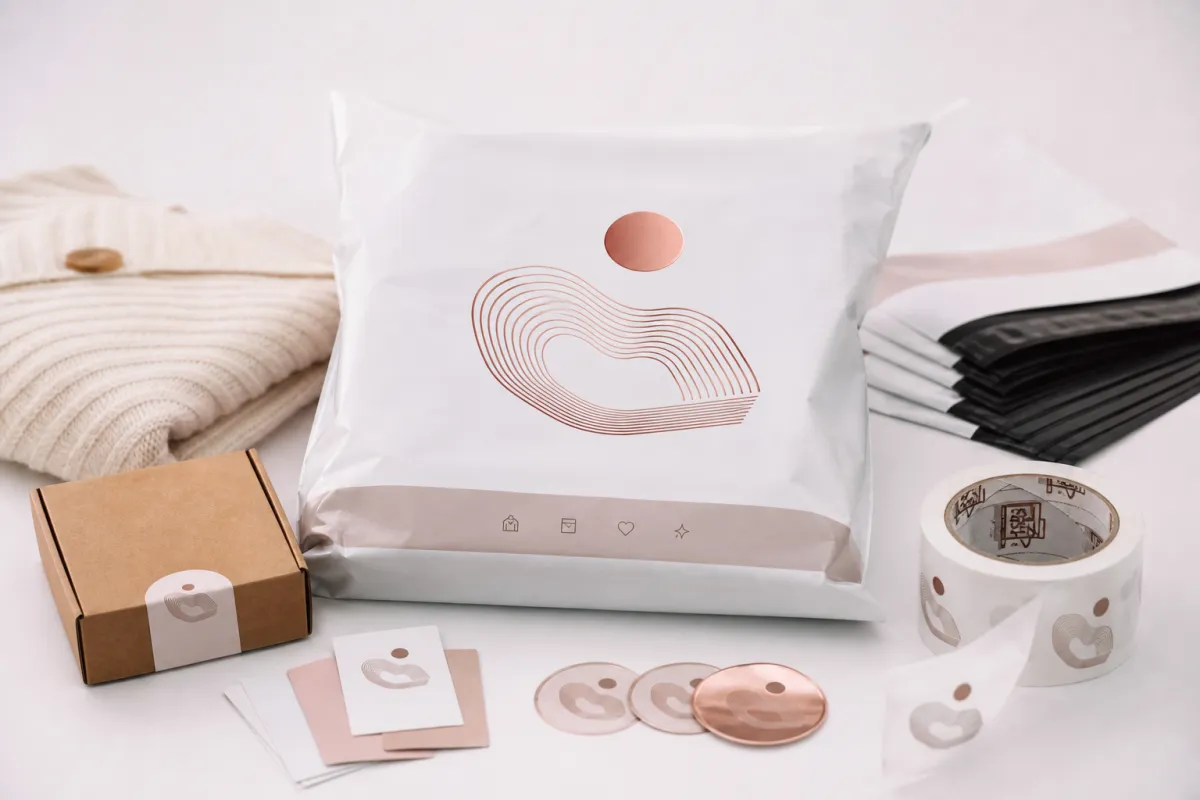
A common scenario looks like this: a boutique brand needs 200 to 500 mailers for a product drop, not 20,000. The bag is light. The print is simple. The order should feel inexpensive. Then the quote lands, and the buyer realizes the poly mailer price for small orders is being shaped more by setup and freight than by raw film cost. That is normal. It is also why the first quote can feel disconnected from the numbers people expect.
In practice, the poly mailer price for small orders is driven by production logic. A press still has to be set up. A proof still has to be checked. Artwork still has to be prepared. Whether the run is 250 pieces or 25,000, some fixed costs do not shrink much. So the smaller the quantity, the more those fixed costs are spread across each bag. That is why the unit price rises faster than many first-time buyers anticipate.
The cheapest quote is not always the least expensive purchase. If freight is high, if the size is wrong, or if the printed area is bigger than it needs to be, the original savings disappear quickly. A buyer comparing the poly mailer price for small orders should look at landed cost, not just factory price. That means product cost, packaging, shipping, and any extras such as proof changes or special finishes.
"A low unit price is useful only if the bag arrives on time, fits the product, and does not force you into hidden charges later."
There are a few levers buyers can control immediately. Size is the first one. Print coverage is the second. Stock versus fully custom is the third. If you need the poly mailer price for small orders to stay under control, choose the smallest practical size, keep the artwork clean, and decide early whether a stock mailer with a branded label will do the job as well as a fully printed bag. That last part sounds obvious, but it is where a lot of projects kind of drift off course.
The best way to think about the poly mailer price for small orders is as a tradeoff between flexibility and fixed costs. A custom size with full-bleed printing gives you the most control over branding, but it also carries more setup overhead. A stock size with a one-color logo usually lands lower because the supplier can move faster and use existing production parameters.
That framework helps you ask better questions before you request pricing. What size do I really need? Do I need printing on one side or both? Is matte worth paying extra for? Do I need the bags delivered to one warehouse or split across multiple locations? Once those answers are clear, the poly mailer price for small orders becomes easier to compare across quotes, and much harder for vague estimates to hide behind.
Poly Mailer Price for Small Orders: Cost, MOQ, and Quote Basics
The simplest way to understand poly mailer price for small orders is to break it into parts. There is the film itself, which is the raw material. There is print setup, which covers plates, screens, or digital preparation depending on the method. There is bag size, because larger mailers use more material. There is closure style, because a self-seal adhesive strip costs more than an open-top sleeve. And then there is freight, which can swing the final total more than buyers expect.
MOQ means minimum order quantity. In plain language, it is the smallest run a supplier is willing to produce or sell at a stated price. With poly mailer price for small orders, MOQ matters because lower quantities usually push unit cost up. Sometimes the increase is modest. Other times it is dramatic. A 500-piece order might carry almost the same setup burden as a 2,000-piece order, so the per-unit math changes fast.
There are three broad buying paths. Stock mailers are the lowest-complexity option. Semi-custom mailers usually start with a standard bag and add a logo, label, or light print. Fully custom mailers are built around your size, your color palette, and your artwork. For small runs, each step toward more customization can move the poly mailer price for small orders upward, but it also improves brand presentation and reduces the chance of the package looking generic.
| Option | Typical MOQ | Approx. unit price for small runs | Best for | Cost note |
|---|---|---|---|---|
| Stock mailers | 50-100 pieces | $0.12-$0.30 | Fast replenishment, low-risk launches | Lowest poly mailer price for small orders, but no brand control beyond labeling |
| Semi-custom mailers | 250-500 pieces | $0.28-$0.65 | Basic branding with manageable setup | Good balance of speed and identity; print area is usually limited |
| Fully custom mailers | 500-1,000+ pieces | $0.55-$1.20 | Retail presentation, exact sizing, stronger brand impact | Highest upfront cost, but often the best fit for repeat programs |
Those ranges are illustrative, not a promise. A thick white mailer with two-color print and a custom size will not price like a plain gray stock bag. Still, the table gives buyers a useful starting point. If a quote falls far outside a range like this, ask what is included. The answer often reveals whether the poly mailer price for small orders is high because of legitimate production choices or because the quote has been padded with vague assumptions.
A practical quote framework helps prevent that. Ask for the price by quantity, then ask what changes if you move from 250 to 500 pieces, or from one color to two. The shift in poly mailer price for small orders tells you more than a single number does. It shows where the supplier's real cost inflection points are, and whether a slightly larger run would save enough to justify the extra inventory. In small-order work, that break point can be a little sneaky, so it is worth pinning down early.
One more point: freight can distort small-order pricing faster than any material upgrade. If the product is moving by air or if the shipment is small enough to trigger higher handling costs, the landed price may jump by more than the bag itself. That is why two quotes with similar unit prices can still produce very different totals. The buyer who focuses on the full landed cost usually makes the better call.
For buyers comparing suppliers, the most useful question is not "What is your lowest price?" It is "What does this quote include?" A transparent quote should list size, thickness, print method, quantity, packaging format, and destination ZIP code. Without those details, the poly mailer price for small orders is just a guess with a dollar sign in front of it.
Product Details: Sizes, Materials, and Print Options
Size is the first thing to get right, because the wrong bag wastes money in several ways. Too large, and you pay for extra film, extra shipping weight, and a package that looks loose or unfinished. Too small, and you risk split seams, crushed corners, or product returns. That is one reason the poly mailer price for small orders should never be judged apart from fit. A properly sized bag often lowers the true cost even if the unit price is slightly higher.
Common sizes include small apparel mailers around 10 x 13 inches, mid-size options in the 14 x 19 inch range, and larger e-commerce mailers for bulkier items. The exact selection depends on the folded dimensions of the product inside, not on the marketing guess. A folded hoodie, a stack of tees, and a rigid insert all behave differently. Buyers who match the bag to the product usually get a better poly mailer price for small orders because they avoid oversizing, rework, and shipping penalties.
Material choice matters more than most people realize. Standard polyethylene is economical and widely used. Co-extruded film can improve tear resistance and give you better opacity. Recycled-content film may carry a premium, but it can support sustainability goals and buyer expectations. The point is not that one material is always superior. The point is that the poly mailer price for small orders should reflect the actual performance you need, not a generic "best" spec that might be overkill for light shipments.
Printing options also change the economics. A one-color logo on one side is usually the most efficient custom path. Two-color artwork adds complexity. Full-bleed graphics, gradients, or dense coverage typically push costs higher because the printer uses more ink, more setup time, and more control checks. If you are trying to keep the poly mailer price for small orders under control, simplify the artwork before you ask for a quote. Clean branding often performs better than crowded artwork anyway.
Finish details affect how customers perceive the package. Matte feels more premium and can soften the look of bold graphics. Gloss reflects light and often looks brighter on shelf or in transit photos. A tear strip can improve opening experience. A strong self-seal adhesive helps the bag stay closed under handling. Each of those features changes the poly mailer price for small orders a little, and sometimes a lot if the order is tiny.
For a practical buyer, the right question is: what feature is doing real work? If the mailer only needs to protect a lightweight garment, a simple co-extruded bag may be enough. If it is going into a brand drop, the visual finish may matter more. The poly mailer price for small orders should be weighed against the customer experience you actually want to create, not against a perfect spec sheet no one asked for.
There is a smart middle ground that often works well. Use a standard size, choose a durable but not excessive film thickness, and keep the design to one strong color plus a logo. That combination usually gives buyers the strongest value on poly mailer price for small orders because it limits setup cost while still delivering a package that looks intentional.
- Standard sizes reduce waste and make pricing easier to compare.
- Co-extruded film can improve toughness without going to a heavy gauge.
- Simple print layouts usually keep the poly mailer price for small orders more predictable.
- Self-seal closures improve speed in fulfillment and reduce handling errors.
Specifications That Affect Performance and Unit Cost
Specs tell you whether a mailer is built for light retail use or for repeated handling through a rough supply chain. The main ones are thickness, dimensions, opacity, seal strength, and load capacity. Thickness is usually listed in mils or microns. Higher numbers mean more material, but that does not automatically mean better value. For poly mailer price for small orders, the right thickness is the one that protects the product without adding unnecessary cost.
A common mistake is ordering thicker film simply because it sounds stronger. If the item inside is lightweight, that extra material may be wasted. If the product is sharp-edged or high-value, thicker film may be justified. The point is to match the spec to the risk. That is how buyers keep the poly mailer price for small orders in line while still reducing damage in transit.
Load capacity should also be checked. A bag that handles two pounds comfortably may not be the best choice for a three-pound packout with a box inside. Opacity matters too, especially if the customer should not see the product or label information through the bag. Strong opacity can improve presentation and privacy, but it can also influence the poly mailer price for small orders because more pigment or layered film is usually involved.
Performance questions are usually practical, not theoretical. Will labels stick to the surface? Will the seam split if the parcel is compressed? Will the adhesive hold through temperature swings? Will the bag pass common distribution abuse without puncturing? Buyers do not need a lab report for every order, but they do need enough specification to avoid bad surprises. For transit testing, the packaging industry often looks at ISTA test protocols and, for broader material benchmarking, standards such as ASTM D882 or ASTM D1709. Those references do not replace real-world testing, but they do give buyers a better yardstick than guesswork.
Another useful benchmark is how the bag behaves in your own warehouse. If fulfillment teams are packing 500 orders a day, a slightly better seal can save time and reduce rework. That operational gain may matter more than a few cents on the poly mailer price for small orders. A package that speeds packing lines is not just a bag. It is a labor decision, and labor costs tend to show up faster than people expect.
There is also a sustainability angle, and it should be handled carefully. Recycled-content film can reduce virgin resin use, but buyers should confirm actual performance and compatibility with their products. For end-of-life guidance and waste reduction principles, the U.S. EPA offers useful public resources. The lesson is simple: if sustainability is part of the brief, fold it into the quote instead of adding it later and hoping the price stays the same.
In short, specifications are where cost and risk meet. A buyer who compares thickness, opacity, seal strength, and size side by side usually gets a more defensible poly mailer price for small orders. A buyer who skips those details often ends up paying for uncertainty somewhere else.
Process and Timeline: From Quote to Delivery
The ordering process is straightforward, but it punishes incomplete information. First, the buyer sends specs. Next, the supplier reviews artwork and confirms the structure. Then comes proofing. After that, production begins. Finally, the order ships. Each step can affect the poly mailer price for small orders, especially if the buyer changes requirements midway or leaves out the shipping destination.
The most common delay is not manufacturing. It is decision churn. The size changes. The color count changes. The artwork file is not print-ready. A proof comes back and the buyer wants another revision. Small orders are especially sensitive to this because the setup cost is already spread across fewer units. Every extra round of back-and-forth makes the poly mailer price for small orders feel less attractive, even if the base quote was fair.
Typical lead times vary by product type and print complexity, but a realistic expectation for custom work is often 12 to 15 business days from proof approval, plus transit time. Stock inventory can move faster. More complex print or specialty film can take longer. The key is to treat the quote and the production clock as two different things. A low poly mailer price for small orders does little good if the bags miss the launch date.
Proofing is where many avoidable problems get caught. The proof should confirm size, artwork placement, color callouts, and copy. It should also confirm whether the bag is printed on one side or both. Buyers often rush this step because the design looks simple. That is a mistake. On small runs, one missed detail can distort the whole order economics. A careful proof protects the poly mailer price for small orders by avoiding reprints and relabeling.
There is a practical scheduling pattern that works well for most brands:
- Confirm the product size and target quantity.
- Decide whether stock, semi-custom, or fully custom is the right fit.
- Send final artwork and a shipping ZIP code with the request.
- Review the proof line by line, not just visually.
- Approve production only after the quote and specs match the plan.
That sequence sounds basic, but it keeps the poly mailer price for small orders from drifting upward because of avoidable corrections. It also gives the supplier enough information to price freight correctly, which matters more than many buyers realize. If the destination is remote, residential, or split across multiple addresses, the freight line can move enough to change the buying decision.
A simple launch example makes the point. Suppose a brand needs 400 printed mailers for a seasonal drop. The artwork is final. The size is standard. The proof is approved the same day. In that case, the order may move smoothly and the poly mailer price for small orders stays close to the original estimate. If the same brand changes the artwork after proof and adds a custom size, the schedule and cost both move. Nothing unusual happened. The order simply became more complex.
For buyers under deadline, the best policy is to give the supplier complete information on day one. The more precise the brief, the more precise the quote. That is how the poly mailer price for small orders stays useful as a planning tool instead of turning into a moving target.
Why Choose Us for Small-Order Poly Mailers
Custom Logo Things is built for the kind of order that does not fit an off-the-shelf box: small runs, brand-specific artwork, and buyers who want a straight answer on price. That matters because the poly mailer price for small orders is often distorted by vague quotes and assumptions. A clear process and a clear breakdown make it easier to compare options without guessing what is hidden in the numbers.
What do buyers usually need most? Not a flashy pitch. They need consistency. They need the print to match the proof. They need the seal to hold. They need the size to fit the product. And they need the quote to explain why one option costs more than another. In a small order, those details matter more, because there is less room to absorb mistakes. A better-managed order often improves the poly mailer price for small orders by preventing waste.
If you are still comparing formats, start with Custom Poly Mailers and review the wider range of FAQ answers before you commit. That combination usually helps a buyer narrow the spec fast. If your business is scaling and you want to understand how volume changes the math, the Wholesale Programs page is a useful next stop. The point is not to oversell volume. It is to show how the poly mailer price for small orders compares with the next pricing tier.
Quality control also matters more than people expect. A small order can still be a serious brand touchpoint. If the print is off-center, the adhesive is inconsistent, or the dimensions are wrong, the package looks careless before the customer even opens it. That is why the better suppliers talk about control checks, not just unit cost. A reliable process protects the poly mailer price for small orders from turning into a hidden loss after the fact.
Advisory support is another difference-maker. First-time buyers often over-spec the mailer because they assume thicker and larger must be safer. Sometimes that is true. Often it is not. A good packaging partner will explain where the real risk lies and where the cost can be trimmed without hurting performance. That guidance can improve the poly mailer price for small orders without touching the brand identity at all.
Transparent quoting is where trust is built. A useful quote should separate product cost, setup, print method, and freight. It should show how the price changes if the quantity shifts. It should also explain any premium for specialty finishes or tighter tolerances. Buyers do not mind paying more when the reason is clear. They do mind paying more because the supplier was vague. Clarity keeps the poly mailer price for small orders defensible.
From a buyer's point of view, that is the real value proposition: fewer surprises, fewer corrections, and less time spent trying to decode the quote. If the order is small, every hidden cost hurts more. If the order is well specified, the same budget buys more real value. That is the standard we aim for at Custom Logo Things.
Next Steps: Get an Accurate Small-Order Quote
If you want the poly mailer price for small orders to come back accurately the first time, gather the basics before you request a quote. Have the bag size, quantity, artwork file, color count, thickness target, and shipping ZIP code ready. If you already know whether the order needs stock, semi-custom, or fully custom packaging, include that too. The more complete the brief, the less likely the quote is to drift later.
It also helps to compare two scenarios instead of one. Ask for a stock option and a printed option. Ask for one color and two colors if branding flexibility exists. Ask for 250 and 500 pieces if you are unsure where your break point is. Those comparisons make the poly mailer price for small orders much easier to interpret, because you can see what each upgrade actually costs instead of guessing at the value of a feature.
A simple decision path usually works best: define quantity, choose material, confirm print needs, then request the formal quote. After that, review the proof carefully and check the fine print. Small mistakes become expensive on low-volume runs. That is not fear talking. It is the reality of how fixed production costs behave when they are spread over fewer pieces. The buyer who checks the details protects the poly mailer price for small orders from surprise charges later.
If you need a practical benchmark, compare your quote against other small orders in the same spec class. Similar size, similar film, similar print coverage. Not a different product disguised as a comparison. That is the only way to judge whether the poly mailer price for small orders is competitive. A low number on a different build is not a useful benchmark.
For brands that order repeatedly, it is worth planning the next run while the current one is still in production. Reordering from a validated spec saves time and reduces quote noise. It also gives you a cleaner read on season-to-season changes in film, freight, and print cost. In other words, the poly mailer price for small orders becomes more predictable when the spec stays stable.
If you are ready to move, request a tailored quote with the details above and ask for the landed cost, not just the bag cost. That is the clearest way to understand your poly mailer price for small orders and make a decision that fits both your budget and your timeline. The best takeaway is simple: get the fit, print, and freight right before you compare numbers, because that is where the real savings live.
What is the typical poly mailer price for small orders?
Pricing usually depends more on quantity, print setup, and shipping than on the film itself. Stock mailers are generally the lowest-cost option, while custom printed runs carry a higher unit price because setup is spread over fewer pieces. A formal quote is the only reliable way to compare true landed cost, especially if your poly mailer price for small orders includes freight to a specific destination.
How many bags count as a small order for poly mailers?
Small orders often start in the low hundreds, but the exact MOQ depends on the supplier and the print method. Some suppliers can support lower quantities for stock or lightly customized mailers, while others require a larger minimum to cover setup. The smaller the run, the more important it is to confirm setup fees, freight, and whether the quoted poly mailer price for small orders includes proofing.
Do printed poly mailers cost much more on small orders?
Yes, print setup can add a noticeable amount to the unit price when quantities are low. One-color logos are usually the most economical custom option, because they keep artwork preparation and press time simpler. More colors, larger print coverage, and premium finishes increase cost fastest, so the poly mailer price for small orders rises as branding complexity rises.
How fast can a small-order poly mailer quote be approved and produced?
Quotes can often be turned around quickly if the buyer provides size, quantity, artwork, and shipping details up front. Production timing depends on proof approval, material availability, and print complexity. Small orders move fastest when artwork is final and specifications are already clear, which is why the poly mailer price for small orders is easier to manage when the brief is complete from the start.
Can I lower the poly mailer price for small orders without changing my branding?
Yes, you can often reduce cost by simplifying print coverage, choosing a standard size, or using fewer colors. Comparing stock and custom options can also reveal savings without changing the core look. Clear specs and accurate quantities help prevent avoidable quote inflation, so the poly mailer price for small orders stays closer to the real production cost.

