A boutique hotel, resort spa, or lobby shop that wants to ship robes, amenities, gifts, or e-commerce orders in branded mailers usually discovers one thing quickly: a hotel retail custom poly mailer Bags Print Method Comparison is not just a design decision, it affects color accuracy, durability, minimum order quantity, and the total landed cost of every bag. The artwork that looks polished on a screen can behave very differently on polyethylene film, so the print method deserves attention before the order is locked in.
In practice, the print choice can matter more than bag thickness once the mailer is fit for the job. If the film is strong enough for the product, a weak print decision can make premium merchandise feel generic, while the right combination of film, ink, and finish helps the package read as part of the hotel experience rather than just another shipping pouch.
Why Hotel Retail Mailers Need a Print Method Decision Early
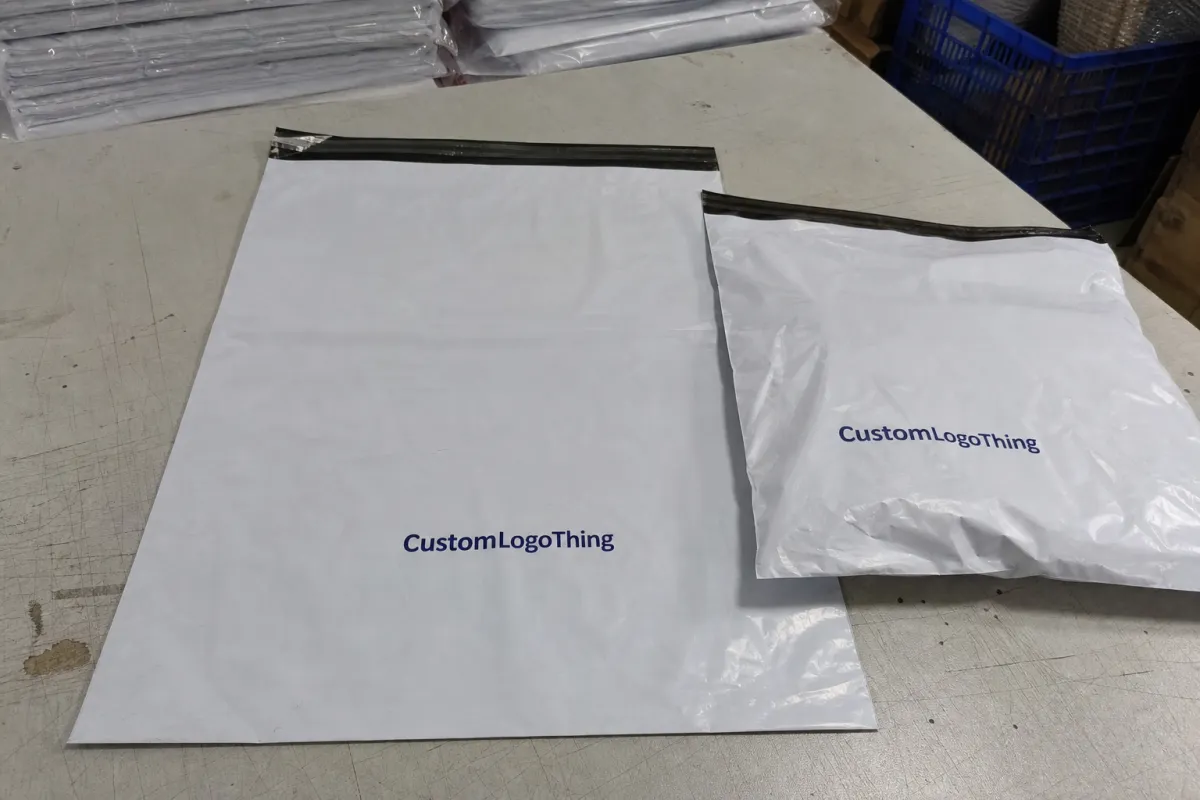
Custom Poly Mailer Bags for hotel retail are usually lightweight LDPE or co-extruded polyethylene shipping bags with an adhesive closure, sometimes a tear strip, and branding printed on one or both sides. They are common for product packaging because they are simple to store, inexpensive to ship, and easy to use at the front desk, in a spa boutique, or in a back-of-house fulfillment area. That convenience is exactly why the print method should be chosen early, not after artwork is already approved.
A hotel retail custom poly mailer Bags Print Method Comparison is most useful at the planning stage, before anyone assumes that the cheapest sample run is the best long-term answer. The right method depends on artwork complexity, repeat order plans, color standards, volume, and how the package will be handled after it leaves the property. A mailer for a one-time seasonal gift set can justify a different method than a year-round e-commerce program for branded robes and skincare.
A mailer is part of package branding. If the bag looks washed out, pixelated, or off-color, the guest notices it before they even open the box or bag.
That is why buyers often compare these mailers the same way they compare Custom Poly Mailers against other retail packaging options. The bag is not just a shipping container; it is a moving piece of branded packaging that reinforces the property identity from the moment it lands on the front desk, in a guest room, or at the customer’s home.
Print Method Comparison for Hotel Retail Custom Poly Mailer Bags
Four approaches come up most often in a hotel retail custom Poly Mailer Bags print method comparison: flexographic printing, digital printing, rotogravure printing, and the choice between surface print and reverse print construction. Each has a different mix of setup cost, color control, and practical limits, so the best option depends on how the bags will be used and how often they will be reordered.
Flexographic printing is the everyday workhorse for poly mailers. It uses custom plates, runs at high speed, and tends to deliver strong economics once quantity rises. For hotel groups with a standard logo, a limited spot-color palette, and repeat orders, flexo usually gives the best balance of price and consistency. It handles solid logos, bold type, and clean brand marks very well, though very fine gradients, tiny details, or photo-style artwork can be harder to control.
Digital printing is the flexible choice for lower quantities, seasonal campaigns, trial runs, or designs with many colors. It skips plate making, which helps when a hotel wants to launch a new retail item, test different property-specific artwork, or print multiple versions for different locations. The tradeoff is that unit cost often stays higher as volume rises, so digital printing is not always the lowest-cost answer for a large recurring program.
Rotogravure printing uses engraved cylinders and can produce very consistent results with excellent tonal control. It makes sense when the order size is high enough to justify the cylinder investment and when the program will repeat often enough to spread out the setup cost. For very large hotel chains or high-volume gift programs, gravure can be worth discussing, especially if the artwork includes smooth blends or detail-heavy graphics.
Surface print places the ink on the outside of the film and is common for mailers. Reverse print puts the ink under a protective layer, which can improve scuff resistance and give a cleaner finished look, but it may require a different film structure and different cost expectations. Not every mailer construction supports reverse printing, so this needs to be confirmed with the supplier rather than assumed.
| Print Method | Best Use | Typical Setup Profile | Practical Notes |
|---|---|---|---|
| Flexographic | Medium to high-volume repeat hotel retail programs | Moderate plate cost, low unit cost at scale | Strong for spot colors, clean logos, and fast production |
| Digital | Small launches, seasonal runs, multi-design orders | Low setup, higher unit cost at larger volumes | Good for speed and flexibility, less ideal for long repeat programs |
| Rotogravure | Very large recurring programs | High cylinder investment, low running variation | Excellent consistency, best justified by volume |
| Surface or reverse print | Branding that needs either standard exterior print or added scuff protection | Depends on film structure and finishing | Reverse print can improve durability, but it is not universal |
If the hotel brand leans toward simple logo placement, flexo usually behaves like the safest commercial choice. If the team is still refining artwork, digital printing gives more room to move. If the program is large, stable, and highly standardized, gravure can earn its place. For some buyers, the decision looks similar to choosing between offset printing for paper cartons and digital printing for small custom printed boxes: the format, volume, and artwork style all shape the economics.
For broader retail packaging programs, it also helps to compare the mailers against other items in the same order pool, such as Custom Packaging Products, because the best print method is often the one that fits the whole packaging system rather than one SKU in isolation.
Film, Ink, Color, and Finish Factors That Change the Result
The film itself changes how the print looks. White film makes color stand out. Gray or black film can mute ink unless an opaque white base is used first. Recycled-content films can show slight variation from roll to roll, and that is normal enough that buyers should not treat a small shift as a defect unless it falls outside the agreed standard.
Common film choices for hotel retail mailers include LDPE, co-extruded polyethylene, matte film, glossy film, and opaque privacy film. Thickness is often specified as 2.5 mil, 3 mil, or heavier gauges. Thickness affects puncture resistance and hand feel, but it does not automatically improve print sharpness. A thicker bag with poor artwork prep can still look muddy, while a well-managed 2.5 mil bag can print cleanly and still hold up in fulfillment.
Ink coverage deserves real attention. Large solid backgrounds, reverse-out logos, tiny type, QR codes, gradients, and metallic-look artwork each create different demands on plates, registration, drying, and film tension. A simple one-color logo with generous white space is easy to keep sharp. A full-bleed pattern with thin serif type is a different conversation entirely.
Color control should be handled with real references, not vague language. If the hotel already has brand standards, supply Pantone targets, vector artwork, and any approved swatches. A screen file in RGB is only a starting point. On film, under warehouse lighting, the same blue can look calmer, darker, or slightly greener depending on opacity and finish.
Finish matters too. Matte film softens the appearance and can feel more refined for spa goods or premium guest retail. Gloss adds more shine and gives brighter contrast. Some suppliers can offer soft-touch style effects or special surface treatments, but those should be treated as a premium option, not a default. The guest’s first impression is often based on shine, opacity, and how the bag sits in the hand before the product is even revealed.
For buyers who want to see the standards behind packaging performance and material selection, the ISTA testing framework is useful for shipment durability, and the FSC system is relevant when recycled or responsibly sourced content matters in the overall product packaging story.
Cost, MOQ, and Unit Cost Tradeoffs by Print Method
Pricing for Printed Poly Mailers usually comes from a stack of variables: film material, bag size, film thickness, print method, number of colors, plate or cylinder charges, setup time, packing format, and freight. In a hotel retail custom poly mailer bags print method comparison, the method itself can change the quote a lot, but it is only one piece of the budget.
Flexographic printing often has a higher setup cost than digital, yet it commonly wins on unit cost once the quantity rises. That matters for hotel retail programs that repeat the same logo and color system across properties. Digital printing can be attractive for smaller batches or promotions, especially when the buyer wants to test a seasonal design before committing to a bigger production run.
Gravure generally requires a larger commitment because the engraved cylinders are expensive to make, but the tradeoff is strong repeatability on high-volume runs. For a chain that ships from a central warehouse and uses the same artwork for a long time, gravure may be worth the extra front-end investment.
Here is a practical way to think about rough pricing. A simple digital run might land around $0.30-$0.70 per unit at lower quantities, depending on size and coverage. Flexo often starts higher on the setup side but can move into roughly $0.12-$0.30 per unit at medium to higher quantities. Gravure can be very competitive on large repeat runs, sometimes around $0.08-$0.20 per unit, but only after the cylinder cost is absorbed and the program is big enough to support it. These are broad ranges, not fixed quotes, because bag dimensions, ink count, and freight can shift the final number quickly.
MOQ deserves a direct question. Minimums may be set per design, per size, per colorway, or per total order. A supplier might quote 1,000 pieces for a simple digital order, 3,000 to 5,000 for flexo, and much more for gravure. That does not mean those are universal rules; it means the buyer should ask how the minimum is calculated before comparing offers.
To get a clean quote, send the finished bag dimensions, quantity range, artwork, number of colors, closure preference, and shipping destination. If the order will repeat, say so. If it is a one-time launch, say that too. Suppliers usually price recurring programs differently from a single trial run because they can spread tooling and setup costs across future orders.
Production Steps and Timeline From Artwork to Finished Mailers
The production path is straightforward, but small misses create delays. A normal sequence looks like this: specification review, artwork check, print method recommendation, formal quote, proofing, plate or file preparation, film printing, bag converting, inspection, packing, and shipping. For hotel retail teams managing a store refresh or a new e-commerce launch, that sequence should be built backward from the launch date, not guessed at on the fly.
Artwork review is where many problems are caught early. The file should be checked for logo resolution, vector format, color callouts, bleed, safe zones, barcode readability, and whether small text will survive on film. If the design uses heavy ink coverage, the supplier may suggest adjusting the layout to avoid issues with drying, registration, or banding. That is normal, and it is far better to adjust a file early than to discover a problem after the press is already running.
Proofing is its own discipline. A PDF proof confirms layout, placement, and copy, but it does not guarantee exact ink-on-film color. For color-sensitive projects, ask about drawdowns, digital mockups, or physical samples when appropriate. If the mailer is going into a premium room-drop program or a giftable boutique line, a physical sample can save a lot of stress later.
Lead time changes with plate making, film availability, press scheduling, order quantity, number of SKUs, special closures, and freight distance. A simple repeat flexo order might move in roughly 12-15 business days after proof approval, while a more complex first-time job with multiple revisions can take longer. Digital can be faster on the setup side, but rush orders still depend on artwork readiness and how busy the press schedule is. Gravure usually needs more lead time because the cylinders and setup work are heavier.
The practical rule is simple: if the mailers have to arrive before a seasonal gift launch, a property opening, or a holiday retail reset, start earlier than feels necessary. Packaging timelines rarely forgive late artwork. They only reveal the problem when the merchandise is already packed and waiting.
Common Mistakes When Specifying Printed Poly Mailers
The first mistake is choosing a print method before quantity is confirmed. A low-cost sample run may not be the best answer for a recurring program, and the cheapest high-volume method may be too rigid for a test launch. Buyer behavior often shifts between those two extremes, which is why the first conversation should include both launch quantity and reorder quantity.
The second mistake is using web images or low-resolution logos. On a screen, a slightly soft file can seem acceptable. On film, the same file can make a luxury hotel logo look jagged, blurry, or inconsistent. If the brand matters, start with vector artwork or a press-ready PDF whenever possible.
Color language causes another round of avoidable trouble. “Make it navy” is not enough. A Pantone reference, approved brand guide, or physical swatch gives the supplier something real to match against. Without that, each side of the job may be imagining a different shade of blue.
Fine details can fail on textured, recycled, or dark films. Thin line art, tiny serif type, delicate patterns, and small QR codes need high contrast and enough size to reproduce cleanly. Dark substrates are especially unforgiving unless there is an opaque white underprint or a film structure designed for strong contrast.
Fulfillment conditions matter too. Sharp product corners, heavy textile items, humid storage, conveyor handling, and adhesive performance during shipping all affect how the mailer behaves once it is actually in use. A pretty bag that opens in transit is not a good package.
- Do not ignore carton count and warehouse storage space.
- Do not assume every property can use the same ship-to plan.
- Do not forget SKUs if different hotels need different bag artwork.
- Do not approve a design without checking how the bag folds, seals, and stacks.
These errors are easy to avoid when the packaging team treats mailers as part of the full retail packaging system, not as a last-minute add-on to the order.
Actionable Next Steps Before You Request Samples or a Quote
Before you ask for samples, gather the basics: bag size, product weight, product dimensions, shipping method, desired film color, film thickness, print coverage, order quantity, and number of designs. A supplier can work from a rough idea, but a clean quote comes faster when the specs are already clear.
Bring your brand assets too. Vector logo files, Pantone colors, brand guidelines, approved taglines, placement preferences, and any required legal or sustainability language all help speed the process. If the hotel is also buying Custom Packaging Products for another line, it helps to align the visual language so the guest sees one consistent package branding system across the property.
Ask for two realistic quantity tiers in the quote. One can represent the launch order, and the other can represent the reorder. That side-by-side comparison often shows where digital printing makes sense, where flexo becomes more economical, and where a larger recurring run may justify gravure. It also exposes hidden cost jumps that a single quantity would not reveal.
Be direct about print limits. If the design relies on gradients, photographic effects, metallic looks, small QR codes, or heavy ink coverage, ask how those elements will behave on the chosen film. A supplier should be able to tell you whether the design needs simplification, a different substrate, or a different print method altogether.
Finally, request a written specification sheet. It should list film type, gauge, finished size, flap size, adhesive style, print method, ink colors, packing quantity, and estimated production timing. That document becomes the reference point if someone in operations, purchasing, or marketing needs to check the order later.
A hotel retail custom poly mailer bags print method comparison is the fastest way to choose packaging that looks polished, ships reliably, and fits the budget before production begins. If you line up the artwork, quantity, film, and print method early, the final bag does what it should: protect the product and make the hotel brand feel intentional.
Frequently Asked Questions
What is the best print method for hotel retail custom poly mailer bags?
For many medium to larger hotel retail orders, flexographic printing is the practical choice because it balances color control, press speed, and unit cost. For small launches, seasonal artwork, or multiple versions, digital printing may be the better fit because it reduces setup complexity. For very large repeat programs with demanding color consistency, gravure is worth discussing, although the upfront cylinder cost is higher.
How does a custom poly mailer print method comparison affect pricing?
Pricing changes because each method carries different setup costs, production speeds, ink requirements, and minimum quantity expectations. Digital printing can reduce upfront expense for smaller runs, while flexographic printing often lowers the unit cost as quantity increases. The number of colors, the amount of ink coverage, bag size, film thickness, and freight destination can matter as much as the print method itself.
Can hotel retail poly mailers match exact brand colors?
They can usually get very close when the buyer provides Pantone references, vector artwork, and clear brand guidelines. Exact appearance still depends on film color, ink opacity, finish, lighting, and whether the print is on white, clear, recycled, or dark material. For color-critical programs, ask about drawdowns, physical samples, or approved production standards before the full run.
What artwork files are needed for printed hotel retail mailer bags?
Vector files such as AI, EPS, or press-ready PDF are preferred for logos, line art, and typography because they stay sharp at production size. Raster images should be high resolution and used carefully, especially if the design includes photography, gradients, or fine texture. Artwork should include color callouts, print placement, bleed if needed, and notes for front, back, flap, or side-specific printing.
How long does production take for custom printed poly mailer bags?
Lead time depends on artwork readiness, proof approval, print method, plate or cylinder preparation, film availability, order quantity, and shipping distance. Simple repeat flexographic orders usually move faster than brand-new designs with multiple revisions or specialty materials. The best way to protect the schedule is to approve specifications early, provide clean artwork, and confirm whether the quoted timeline starts after proof approval or after payment.


