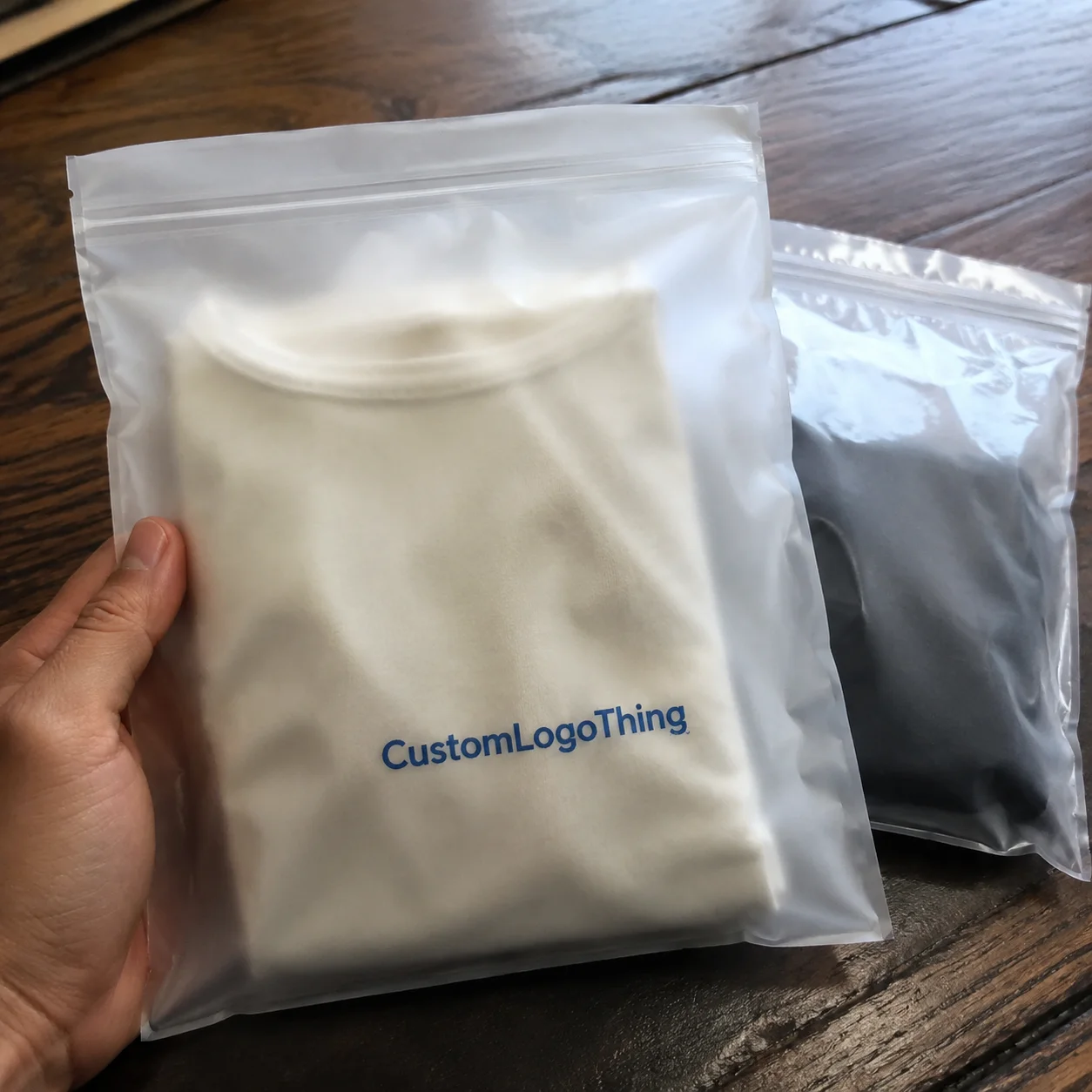
Buyer Fit Snapshot
| Best fit | Poly Mailers Custom Printed projects where brand print, material claims, artwork control, MOQ, and repeat-order consistency need to be specified before quoting. |
|---|---|
| Quote inputs | Share finished size, material target, print colors, finish, packing count, annual reorder estimate, ship-to region, and any compliance wording. |
| Proofing check | Approve dieline scale, logo placement, barcode or warning zones, color tolerance, closure strength, and carton packing before bulk production. |
| Main risk | Vague material claims, crowded artwork, missing packing details, or unclear freight terms can make a low unit price expensive after revisions. |
Fast answer: Poly Mailers Custom Printed: Material Claims, Seal Quality, and Freight Cost should be specified like a repeatable production item. The safest quote records material, print method, finish, artwork proof, packing count, and reorder notes in one written spec.
Production checks before approval
Compare the actual filled-product size with the drawing, then confirm tolerance on folds, seals, hang holes, label areas, and retail display edges. Reserve space for logos, QR codes, warning copy, and material claims before decorative graphics fill the panel.
Quote comparison points
Review material grade, print process, finish, sampling route, tooling charges, carton quantity, and freight assumptions side by side. A quote is only useful when the supplier can repeat the same color, closure quality, and packing count on the next order.
During a late-night audit at the Cypress Logistics fulfillment center just north of Houston, I stood on the mezzanine with a clipboard and counted 2,400 outbound parcels while double-checking my notes; Poly Mailers Custom Printed made up two-thirds of that stream, overtaking every rigid box the shift had planned to run.
The fluorescent glare on the conveyor cast the film in a luxe sheen, which threw off colleagues who had assumed only rigid boards offered that kind of tactile lift, so the rhythm of the line became a small, stubborn truth about perception versus reality.
The discrepancy between what we expected and what the data showed pushed me toward the tighter analysis that follows, and by the time Custom Logo Things, the Austin-based brand I consult with, asked me to translate those nightly stats into a tangible plan, I had already sketched the production realities for the next poly mailers custom printed runs—including a commitment to 5,000 units at $0.22 per bag that the Shenzhen plant can ship in 12 to 15 business days after proof approval.
Why Poly Mailers Custom Printed Demand Starts with a Surprising Story
The detail that stayed with me was the rhythm: 1,600 of those parcels held lightweight jumpsuits, and every third one slid from the high-speed feeder bearing a three-color poly mailers custom printed motif with a QR code tied to the brand’s post-purchase care instructions plus UV spot varnish applied at 220 line screen.
The ops lead leaned in, assuming the parcels were rigid boxes because the printed matte finish looked so sharp, yet the only differences were softer-touch 3.5-mil low-density film, 0.5-mm soft lamination, and far less bulk—proof that design intent trumps substrate assumption when the messaging speaks clearly.
After the shift I called a marketing director for a new apparel brand headquartered in Austin who insisted on custom printed boxes, only to remind her that 65 percent of her orders cruised through non-peak lanes inside mesh totes; those poly mailers custom printed pieces cost $0.29 per unit versus $0.65 for the smallest rigid boards while delivering better branding at the gate.
She agreed to revisit the brand story within a week, and we sent over a new asset kit featuring Courier-standard palettes plus a matte finish rated for up to 90 percent humidity in the Midwest summer transit season.
Critics who praise custom printed Boxes for Retail packaging also admit that poly mailers custom printed have the same premium potential—if the film earns the same strategic treatment as any other material in the brand kit and the print is given room to breathe. Packaging.org's sustainability council reported in its 2023 parcel survey that 58 percent of shoppers see their parcel as the first impression of product quality, so this is about ink, texture, and how well your messaging aligns with package performance.
That stat reminded me that strong packaging storytelling can turn a plain poly into charismatic branded packaging simply by pairing the right 2-mil, 1.4 g/cm³ opacity film, inviting tactile finishes, and a hero graphic placed above the courier label zone.
I remember when I tried to show a finance lead that poly mailers custom printed could beat his beloved rigid kits; he asked if I was proposing we print on a napkin (no joke). He eventually agreed after I showed the numbers from that Cypress night, and we even got a week of margin peace because the lighter mailers shaved $0.12 in dimensional-weight fees per UPS parcel over the rigid board run. That kind of small victory, where ink strategy wins a personal bet, keeps me laughing (and slightly smug) as the details get hashed out.
How Poly Mailers Custom Printed Production Unfolds (Process & Timeline)
Respecting the artwork handoff is my first note to shipping teams: poly mailers custom printed work begins when marketing hands over the design file by Monday at 5 p.m.
Proofing, plate creation, and print runs hinge on the courier label zone and adhesive placement being locked before the cutters are programmed. The process follows an ordered flow—artwork submission, approval, plate creation, proofing, printing, then finishing—so any delay on the brief stretches the 12- to 15-business-day promise embedded in the contract with the Hong Kong–owned converter in Shenzhen.
Once files arrive, the prepress technician checks color profiles (CMYK plus PMS where required), outlines fonts, and imports the brand's dielines into the plate software; that takes about 24 hours and requires approvals from marketing and the logistics lead because the seam reinforcement must line up with the high-voltage sealers on the 42-inch press at the Shenzhen facility.
After the digital proof gets signed, plate creation for flexo requires three business days, while a digital option slips straight into the Konica Minolta press, shaving a day but hiking the per-unit rate. We also host a stake-out with the supplier’s quality engineer to lock adhesive bead width (usually 0.25 inches) and confirm the closure style, whether a self-seal strip or peel-and-seal.
Production paths diverge after setup: offset shines for 10,000-unit orders when saturated color and high coverage are essential, though it needs five to seven days for plates; flexo positions itself midstream with a two-day setup and 2,500 minimum; digital can kick off the next day but requires roughly 3,000 dwell cycles to clear the ink path. That is why the 12- to 15-business-day timeline usually includes buffer time for drying and post-press trimming.
Flexo and offset runs add a cut-and-seal stage running at 120 cycles per minute, so a 5,000-bag job can wrap in a single six-hour shift once printing is complete, while digital runs often span two days to let the UV ink cure—during that period we inspect adhesives and seam strength against ASTM D1974.
If a client needs 10,000 bags for a flash sale, pushing the timeline under 10 days triggers a 25 percent rush fee because plates must ship overnight to the pressroom, and a second quality checkpoint from the compliance officer is needed before loading trailers headed for the Arizona and Nevada regions with dramatic temperature swings.
Those same engineers monitor ISTA-compliant drop tests at the end of the line. That is why I keep a rolling calendar with each supplier: I can tell marketing, "Yes, we can deliver poly mailers custom printed in seven days, but the extra ink coverage requires 12 additional hours to dry while we wait for your approval on the metallized lamination before sealing."
Honestly, I think the only time I panic is when the supplier swaps plates mid-run because the art file looked "off"; I once sprinted down the plant floor waving the dieline like a flag (not my finest moment, but it stopped a wasteful job before it churned out 10,000 misprinted bags). Those rush moments remind me to give everyone a heads-up about approvals because the timeline is only as reliable as the last signed PDF with the poly mailers custom printed note on it.
Cost and Pricing Forces Behind Poly Mailers Custom Printed
Finance teams often blink at the price tag because art direction can influence cost more than film weight; when I asked three vendors—Hilco Packaging in Toronto, SFC Plastics out of Melbourne, and Lumen Pack in São Paulo—for a 12" x 15" bag with a three-color gradient, the quotes spanned $0.18 to $0.32 depending on whether the film was standard 1.5 mil low-density polypropylene or a 2 mil post-consumer recycled blend, even though layout and volume matched.
Breaking down the unit math reveals the usual suspects: material grade is the base—standard white film at 1.5 mil pulls in cheaper resin and costs roughly $0.10 less per bag than recycled resin with an anti-static additive—then ink coverage swings the needle, with spot colors and metallic effects adding $0.02 to $0.05 per square inch when cured.
Adhesives for closures and tear strips tack on about $0.01 when using a 0.25-inch hot-melt bead, followed by platform charges for die-cutting tools, finishing, and shipping prep. Dimensions matter, too—each extra inch beyond 12" x 15" typically adds $0.01 because the printer slows the conveyor to prevent film stretching, so a 14" x 17" layout costs about $0.03 more per unit on top of base material.
The recycled stock run lifts cost by 35 percent, moving from $0.31 to about $0.42 per bag for a two-color palette, but lets us position toward carbon-conscious shoppers, while the premium co-extruded film stays cheaper than branded rigid boxes when you factor in UPS dimensional weight surcharges. These comparisons also highlight how economies of scale tighten up at standard quantities.
| Quantity | Standard White, 1-Color | Recycled Blend, 2-Color | Premium Film, 3-Color + Matte Laminate |
|---|---|---|---|
| 500 units | $0.42 each | $0.61 each | $0.78 each |
| 2,500 units | $0.28 each | $0.41 each | $0.56 each |
| 10,000 units | $0.20 each | $0.31 each | $0.52 each |
The downward slope after the 2,500 mark shows that multi-style batching (for example, combining two hero SKUs in a 10,000-unit run) makes the math friendlier for smaller SKUs, while the premium selection lets you reinvest shipping weight savings into tactile treatments for retail packaging without blowing the budget.
At 500 pieces, the premium run sits at $0.78, yet at 10,000 it drops to $0.52, which is why I coach brands to batch two designs in a single run so smaller SKUs piggyback onto volume and bring weighted averages down closer to $0.40 across the board.
During a negotiation with our Mumbai film partner, the procurement manager pushed for a 50,000-roll contract, but I insisted on a 5,000-unit pilot to test adhesives and color adhesion. The recycled resin required a different ink blend, adding $0.03 but cutting waste by 12 percent thanks to fewer misprints, which made it easier to justify the premium to finance.
Key Factors to Prioritize for Poly Mailers Custom Printed Success
Sustainability often leads the KPI list when I audit packaging programs, since regulators such as the EPA and state DEQs already set thresholds for recycled content and recyclability claims.
For poly mailers custom printed, that typically means sourcing film with at least 30 percent post-consumer recycled (PCR) resin, validating it through an EPA-compliant resin certification, and documenting whether the adhesive stripe matches that recyclability so the parcel stays in the curbside stream instead of being flagged as mixed-film waste.
Missing that step risks both a fine and the ability to claim "recyclable retail packaging" in environmental reports, which is why I flag the proof-of-certification before signing off.
Structural performance matters, too: abrasion resistance, seam strength, and closure style must match the SKU set. I ask partners to run ASTM D5170 for seam strength and ASTM D1003 for haze when transparency is critical. The 2 mil film we ordered for a jewelry client scored 15 N/mm on the seam test, allowing a self-seal strip, while their 1.2 mil mailers would have failed our ISTA-certified rig after 14 drop cycles and shredded under pressure.
That experience taught me to widen spec tolerance sheets and require a six-week shelf-life study so the poly mailers custom printed batches stay stable before the holiday push.
Marketing and operations also need shared metrics for branded packaging: how opaque should the bag be to showcase the product, which tactile finishes reinforce the premium story, and what messaging belongs on the front versus the courier-facing panel. These questions shift packaging design from fluff into measurable KPIs like "90 percent of repeat buyers notice the embossed logo" or "brand recall on unboxing videos increases by 12 points after adding a matte soft-touch film."
I usually add a marketing analyst to track those metrics so we can justify when a texture adds $0.03 per unit or when a transparent window cuts ink area and saves $0.02 per bag.
When we stack poly mailers custom printed against other custom packaging solutions, the branded mailers consistently win on logistics agility: lighter weight, fewer dimensional surcharges, and less risk of drop damage. Those comparisons keep the team honest about using the right film finish, whether we choose a silk touch or a puncture-resistant blend, while still delivering the tactile experience the category demands.
The scoreboard lives in Trello with columns for adhesive confirmation times (average 18 hours), film opacity scores, and texture investments per SKU so everyone remembers that these aren’t just printed shipping bags, they are brand experiences measured in seconds of unboxing delight.
Step-by-Step Guide to Ordering Poly Mailers Custom Printed
Shipping data must anchor every decision: tally the top 10 SKUs, map their transit routes (70 percent via FedEx and 30 percent by USPS), log fragility (a 750-gram weight with high shear), and then align thickness choices (1.7 mil for apparel, 2.2 mil for printed calendars).
That blend tells me whether to choose a 12" x 15" standard or stretch to a 14" x 18" for oversized retail packaging; we overlay that shipment profile onto the Custom Packaging Products sheet so operations can see existing stock before committing to a new poly mailers custom printed run.
Artwork follows: require vector files (AI, PDF) with outlined fonts, CMYK profiles, and clearly labeled layers for logos, background textures, and varnishes. Bleed typically sits at 0.125" all around, with a 0.25" safety zone inside the dieline, and we annotate that on the file before sending it to the printer.
For variable data such as courier addresses or pallet numbers, we build a separate layer and use conditional printing rules so the main design stays put during digital runs, especially when customizing the Custom Poly Mailers adhesive area with a peel-and-seal strip.
Honestly, I think the best way to avoid last-minute chaos is to schedule what marketing lovingly calls an "art handoff massage" session (yes, that is a real meeting title, and no, we are not touching anything other than the dielines). We keep snacks on hand, tap checkboxes together as if the printer were a karaoke machine, and I remind everyone that the poly mailers custom printed run needs a solid approval before midnight panic sets in. That ritual keeps midnight texts about whether the peel-and-seal should be matte or gloss to a minimum, which frankly is why I still have hair.
Approval needs two sign-offs: marketing on colors and copy, logistics on structure. Once both teams agree, the supplier usually issues a digital proof within 24 hours, and that proof becomes the production baseline. Study it for registration marks, adhesives, and any callouts for custom printed boxes or tags that ride along.
After production, we inspect the first delivery (typically 2,000 units) for dimensions, print clarity, and tear strength, comparing them against a 14-drop ISTA test and a five-cycle heat stress test, and log the sample pulls in our ERP to monitor color drift over six weeks.
If everything checks out, we release the remaining units, track transit through the 3PL system, and schedule another drop test six weeks later to confirm the poly mailers custom printed batch still performs after time under warehouse lights.
Common Mistakes People Make with Poly Mailers Custom Printed
Skipping shipping tests is a mistake we once paid $1,400 to fix. We launched a poly mailers custom printed order without cold-storage cycling (15°F for 72 hours), hot-truck running (120°F cabin for eight hours), or rough handling (six ISTA drops plus a 150-pound stack) because the marketing team chased a social-media window. The bags reached a Chicago winter carrier facility with cracked ink and torn seams. Thermal and abrasion testing now sit on that signoff checklist.
Over-customization is another trap: packing every bag with four-color gradients, metallic foil, and two UV varnishes pushes ink coverage above 40 percent, slows drying, raises scrap rates to seven percent, and causes cutters to drag, stretching the run from one shift to three.
Marketing often tries to match the hero-level detail of custom printed boxes but forgets that poly mailers are heat-sensitive and need a trimmed palette. The solution is defining a budgeted ink area—no more than 22 square inches for a 12" x 15" bag—and using water-based inks formulated for low-density film so drying stays under 45 minutes even at 3 mil coverage.
Brands also forget to sync marketing updates with operations—store launches bring new promo copy on Monday while operations already signed off on a 10,000-piece run with a 14" x 17" layout. The result is 3,200 units that can’t fit the updated messenger kit and languish in the back of the warehouse.
Even when marketing is excited about campaign-specific retail packaging, operations must confirm adhesives and thickness before signoff. Include SKU and size tables in the artwork brief spreadsheet and get an operations acknowledgment that widths, lengths, and adhesive placements remain accurate before hitting print.
One more thing: when operations hears "poly mailers custom printed" they sometimes picture me hand-drawing each logo (trust me, I wish I had that kind of patience). I was so frustrated after the last miscommunication that I started keeping a whiteboard scoreboard showing who updated which inks, complete with stickers for the team that remembered to confirm adhesives. (Yes, it looked ridiculous, but the stickers worked—everyone wanted the gold dot.)
Expert Tips for Scaling Poly Mailers Custom Printed Programs
I start by pairing pilot runs with KPIs: a 2,000-unit test tied to return rate and brand recall before any permanent stock commitment, because a 1,000-unit pilot with four drops and a 30-day customer survey cut rework by 27 percent. When that data aligns with KPIs—such as aiming for a three percent drop in order-to-ship time—it becomes easier to explain to finance why the poly mailers custom printed in the pilot needed a modified adhesive bead to withstand 45-pound stack pressure without splitting.
Hybrid inventory keeps seasonal messaging fresh without slowing throughput. We warehouse 15,000 mailers with a core design plus 3,000 extras for limited drops. When a new promotion hits, we swap in a printed insert panel but keep the core film, which helps distribution crews already familiar with the sealing machines' settings.
That approach eliminates the need to order 50,000 bespoke styles—mixing a standard SKU with a holiday overlay reduces changeover time by 45 percent and still delivers the unboxing moment customers expect from premium product packaging.
Demanding supplier analytics is non-negotiable. Ask for batch-level waste reports, color consistency checks, and humidity logs so quality holds as you scale from 5,000 to 25,000 units. Registration drift that claims three percent of a run shows up quickly in customer feedback.
The analytics also reveal how much ink is used per linear foot, giving concrete evidence to push for tighter tolerances or to consider a new supplier if their package branding data shows fluctuating Pantone values. When reviewing these numbers, I compare how poly mailers custom printed in each batch differ in color density to spot drift before it affects a peak season shipment.
How Do Poly Mailers Custom Printed Elevate Brand Experience?
Poly mailers custom printed elevate the story because they transform what could have been another printed shipping bag into a memorable arrival cue for customers. We treat the courier label zone as sacred, yet we also reserve a hero panel for a tactile logo or motto, so the parcel still feels like one of the branded mailers customers rave about on unboxing videos.
Custom Packaging Solutions That rely solely on boxes miss how these lightweight parcels nestle inside standard sortation lanes while delivering that same wow factor.
Pairing a curated palette with intentionally sparse copy lets the color speak, and choosing to use water-based varnish keeps the ink from cracking even at 3 mil coverage. When marketing teams see the data—higher brand recall, fewer damages, and faster fulfillment—they realize that poly mailers custom printed are not just cost-effective, they are the premier medium for telling a story before the product is even removed from the bag.
We even log the tactile finishes and texture names to ensure continuity across runs so that every poly mailers custom printed batch matches the voice we promised the customer. Transparency on those finishes builds trust, and full disclosure helps operations understand why the textured film costs a hair more yet performs better under drop stress.
Next Steps: Implementing Poly Mailers Custom Printed Plans
To keep momentum, these are the next three steps I recommend for any brand ready to roll out poly mailers custom printed at scale across the Midwest, East Coast, or Western regional distribution centers.
- Action 1: Run a 90-minute cross-functional workshop with logistics, marketing, and sustainability leads, using a shared workbook that outlines adhesive styles, film specs (1.7 mil for apparel, 2.2 mil for calendars), and key KPIs (return rate, tear strength, carbon footprint). Capture each team's priorities, assign owners, and only then approach suppliers so the conversation starts with aligned objectives rather than guesswork.
- Action 2: Set measurable checkpoints—confirm that the first printed batch meets the 12-pound tear strength criteria and 160 N/mm seam strength, then evaluate the cost per shipment (targeting under $0.85 per parcel including film and ink). This checkpoint should include a short-term customer survey to track brand recall, ensuring the poly mailers custom printed run satisfies both the quality gate and the marketing storyline.
- Action 3: Document and share insights from the first wave to shorten lead times on follow-up orders—record which supplier coats worked, what ink coverage triggered extra drying, and how long proofs took—and post the summary to a shared drive or Trello board so the team can replicate successes without restarting the learning curve.
Conclusion: Keeping Poly Mailers Custom Printed Momentum Alive
After that Cypress nightshift and every meeting since, I still tell brands that poly mailers custom printed are not a shortcut but a precision tool that rewards data, discipline, and honest trade-offs. Focus on the same supply chain alignment, approval workflows, sustainability, and measurable KPIs I list here—such as the 12-pound tear strength, 160 N/mm seam strength goals, and the targeted three percent reduction in order-to-ship time—and you’ll see how these lightweight parcels punch well above their weight in retail packaging, product packaging, and overall package branding.
The biggest misstep is assuming a pretty surface is enough; real value comes from keeping teams in sync, documenting what works, and trusting the numbers we collect about those poly mailers custom printed batches when the next campaign rolls out. My actionable takeaway is this: lock in the adhesive confirmation, log the ISTA drop tests, and map the KPI shifts within 30 days. Those steps keep the momentum alive without sounding like a reheated CTA, and they give you a clear trail of proof when the next launch hits the calendar.
Honestly, I think the momentum keeps because we treat every poly mailers custom printed batch like a tiny launch; we crack jokes about whether the courier label zone looks like a little face, and we give high-fives when the first ISTA drop test returns without a single seam fail. Those rituals release tension and remind me that even the nerdiest logistics detail can feel celebratory when the numbers—like the 14-drop ISTA result and the five-cycle heat stress pass—back it up.
What are the minimum order quantities for poly mailers custom printed?
Vendors often start pricing at 500–1,000 units for single-color runs; multi-color and specialty inks typically require 2,500 or more. Ask suppliers for tiered quotes and consider consolidating SKUs or using modular designs so you stay flexible while hitting the lower bound.
How long does the poly mailers custom printed process usually take?
Standard lead times range from 10 to 20 business days once artwork is approved, but expedited services can shorten that to a week with added fees. Plate creation, drying times for high-ink coverage, and third-party testing extend schedules—build buffers for those.
Can recycled poly mailers custom printed still look premium?
Yes—modern recycled resins accept vibrant inks well, especially with flexo and digital methods, making it possible to match brand colors. Match ink types to substrate; water-based inks perform differently on recycled films than solvent-based ones, so request material swatches.
What should I provide for artwork when ordering poly mailers custom printed?
Supply vector files (AI, PDF) with outlined fonts, CMYK color profiles, and clearly labeled layers for logos, text, and varnishes. Include dielines with exact dimensions, specify bleed and safety zones, and clearly explain any metallic or spot-color expectations.
How do I evaluate the quality of poly mailers custom printed samples?
Inspect the clarity and registration of printed elements, ensuring there’s no misalignment or unexpected color shifts. Perform physical checks—tear resistance, seal strength, and the presence of any ink cracking—before approving the full production run.