Buyer Fit Snapshot
| Best fit | Poly Mailers Custom Printed projects where brand print, material claims, artwork control, MOQ, and repeat-order consistency need to be specified before quoting. |
|---|---|
| Quote inputs | Share finished size, material target, print colors, finish, packing count, annual reorder estimate, ship-to region, and any compliance wording. |
| Proofing check | Approve dieline scale, logo placement, barcode or warning zones, color tolerance, closure strength, and carton packing before bulk production. |
| Main risk | Vague material claims, crowded artwork, missing packing details, or unclear freight terms can make a low unit price expensive after revisions. |
Fast answer: Poly Mailers Custom Printed: Artwork Proof, Packing Count, and Landed Cost should be specified like a repeatable production item. The safest quote records material, print method, finish, artwork proof, packing count, and reorder notes in one written spec.
Production checks before approval
Compare the actual filled-product size with the drawing, then confirm tolerance on folds, seals, hang holes, label areas, and retail display edges. Reserve space for logos, QR codes, warning copy, and material claims before decorative graphics fill the panel.
Quote comparison points
Review material grade, print process, finish, sampling route, tooling charges, carton quantity, and freight assumptions side by side. A quote is only useful when the supplier can repeat the same color, closure quality, and packing count on the next order.
Poly Mailers Custom printed often do more work than the product inside, and I mean that very literally. I remember standing in a packing room in New Jersey while a buyer opened a shipment of $18 athleisure leggings and grinned at the mailer before they even touched the fabric. That reaction matters more than people think. The outer bag is the first physical brand touchpoint, and in plenty of cases it lands before the customer sees a hangtag, tissue wrap, or invoice, especially when the order ships from a fulfillment center in Secaucus, NJ or Edison, NJ.
I think a lot of brands underestimate how much branding happens in transit. A plain gray bag says, “We shipped something.” Poly Mailers Custom printed say, “We thought about this order.” That difference shows up in apparel, beauty samples, accessories, printed materials, and soft goods that don’t need the crush protection of a carton. Packaging design can influence repeat purchase behavior, and the shipping envelope is doing quiet but real marketing work, particularly when the bag is a 2.5 mil LDPE mailer printed in a 1-color flexographic run out of Shenzhen, Guangdong or a short-run digital job in Los Angeles, CA.
I’ve seen this play out in supplier meetings too. A small DTC brand I advised moved from unbranded mailers to poly mailers custom printed with a simple two-color logo and return message. Their customer service team later told me return-related confusion dropped because people recognized the parcel immediately. No miracle. Just clearer package branding, fewer “what is this?” messages, and a cleaner retail packaging feel from the moment the package hit the porch, whether that porch was in Brooklyn, NY or Austin, TX.
There’s also a practical side that gets overlooked because it isn’t as photogenic as the branding work. If your mailer size fits the product well, your packing bench runs faster, your freight bill behaves better, and your warehouse crew isn’t fighting with overstuffed bags. That part is less glamorous, but it’s what keeps a packaging program honest.
Poly Mailers Custom Printed: What They Are and Why They Matter
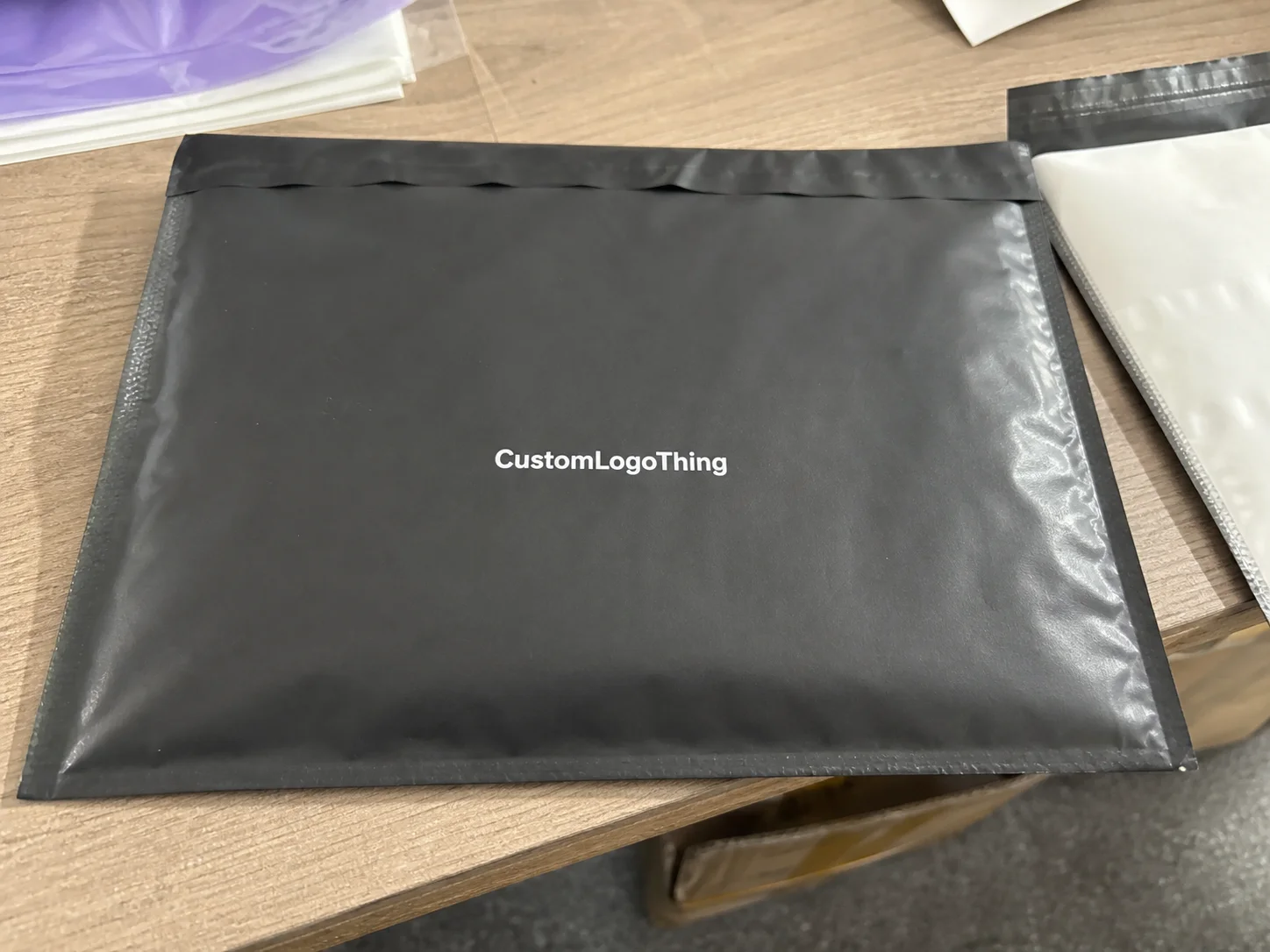
Poly mailers custom printed are lightweight plastic shipping envelopes made from polyethylene film, usually LDPE or co-extruded blends, with artwork printed directly onto the surface. That artwork can be a logo, a repeating pattern, a slogan, a compliance panel, or full-coverage graphics. The format is simple. The branding potential is not. In practice, many of these bags are produced on 2.0 mil to 4.0 mil film, with 10 x 13, 14 x 19, and 19 x 24 sizes covering a large share of apparel and accessory orders.
They matter because they sit at the intersection of product packaging and logistics. You need enough film strength to survive sorting belts, enough seal integrity to stay shut, and enough visual polish to support the brand. In other words, poly mailers custom printed have to ship well and sell well at the same time, which is why buyers often specify a 3.0 mil co-extruded film when the route includes regional hubs like Memphis, TN or Harrisburg, PA.
Where do they fit best? Apparel is the obvious one. I’ve also seen them work for socks, swimwear, cosmetics kits, supplements, catalogs, stickers, craft supplies, and subscription items under about 2 to 5 pounds. If the item is soft, flat, and not easily crushed, poly mailers custom printed usually make more sense than corrugated boxes or padded envelopes, especially when the warehouse is packing 800 to 1,500 units a day and labor minutes are closely watched.
Here’s the distinction buyers often blur:
- Plain mailers: cheapest, fastest, least branded.
- Padded mailers: better for minor impact protection, but heavier and often less recyclable depending on construction.
- Boxes: best for rigid or fragile products, but more material, more freight, and more dimensional weight.
- Poly mailers custom printed: best for light, non-fragile products where branding and shipping efficiency both matter.
I visited a fulfillment operation in southern California where the manager showed me three lanes: cartons, padded mailers, and poly mailers custom printed. He pointed out that the poly lane moved faster because there was no void fill, no tape pass, and no box folding. His labor math was blunt. Saving 12 to 18 seconds per order sounds small until you multiply it across 20,000 units a month. That is the kind of “small” that gets very expensive very quickly if you ignore it, especially in a facility paying $19 to $24 per hour for pick-and-pack labor in Orange County.
For buyers comparing Custom Poly Mailers against other Custom Packaging Products, the real question is not “Which package looks nicest?” It is “Which package protects the shipment, fits the shipping rate, and reinforces the brand without creating avoidable waste?” In many cases, that answer becomes clearer after one sample round and a landed-cost quote that includes freight from a port such as Long Beach, CA or Savannah, GA.
“The outer mailer is the first brand impression most customers actually hold in their hands. If that impression feels sloppy, the rest of the experience starts on the wrong foot.”
That quote came from a fashion client in a packing room that was loud enough to make every sentence feel more expensive. And she was right, especially after we compared a plain white mailer to a matte black 4.0 mil bag with a two-color logo and a 1-inch peel-and-seal flap.
How Poly Mailers Custom Printed Actually Work
At the construction level, poly mailers custom printed are usually made from one or more layers of polyethylene film. Single-layer mailers are cheaper, but co-extruded film gives you more control over puncture resistance, opacity, and print surface. Typical thicknesses range from 2.0 mil to 4.0 mil, though heavier-duty runs can go above that for added tear resistance. The closure is usually a pressure-sensitive adhesive strip. Some designs add a second adhesive strip for returns, and others include a tear strip for easier opening, with many converters in Dongguan, Guangdong and Ho Chi Minh City, Vietnam offering both options as standard upgrades.
The print method changes almost everything about the result. Flexographic printing is the workhorse for large runs. It uses plates, runs efficiently, and handles solid areas well. Digital printing is better for short runs, frequent design changes, or highly detailed full-color art. Neither is “best” in every case. The right choice depends on quantity, color count, and how sensitive your design is to slight shifts in registration, with plate costs often starting around $60 to $150 per color and digital setups priced more like a proofing charge than a tooling expense.
In a print review I did with a buyer of gym apparel, the first sample looked great on screen and disappointing on film. The white logo was too close to a light silver background, so it vanished under warehouse lighting. We changed the background to matte black and pushed the logo to 90% white coverage. The order went through on the second proof. That kind of adjustment is normal with poly mailers custom printed; flexible film behaves differently than paperboard, and colors often read differently once they hit a glossy or semi-gloss substrate from a factory floor in Yiwu, Zhejiang or a converting line in Dallas, TX.
Artwork prep starts with a dieline. You Need to Know where the seams, adhesive flap, and seal zones sit before anyone places a logo. A printer will usually ask for vector files, often AI, EPS, or PDF, with outlined fonts and correct bleed. If the design includes photos or gradients, the printer may request high-resolution raster images at 300 dpi at final size. Skip this step and you invite fuzzy text, cropped elements, or a logo sitting right across a seam. For a standard 10 x 13 mailer, I like to see at least 0.125 inch bleed and a 0.25 inch safe zone, because those margins save real headaches in production.
Poly mailers custom printed are not just printed plastics; they are production-controlled items. That means proofing matters. A digital proof can show layout, but it will not fully predict how a bright red or metallic blue will behave on film. For that reason, I prefer physical samples when the brand is color-sensitive. Packaging standards such as ISTA test methods also matter if your product is traveling through rough parcel networks, because the mailer is only one part of the shipping system. A mailer built for a 2-pound shipment from Atlanta, GA to Chicago, IL may need different seal behavior than one moving from a factory in Ningbo, China to a warehouse in Ontario, CA.
Printed Mailers Versus Labels on Blank Mailers
Labels on blank mailers can work for tiny brands, seasonal runs, or quick-turn promotional campaigns. They are also useful when you want to test multiple messages without committing to a 5,000-unit print run. But they have limits. Labels can wrinkle, peel, or sit off-center by a few millimeters, and those small defects become more visible on a flexible envelope than on a rigid box, especially when a fulfillment team is applying them by hand at 300 to 500 parcels per hour.
Poly mailers custom printed look more integrated because the art is part of the bag itself. That tends to feel more professional in customer-facing shipping, especially for fashion and beauty. The tradeoff is lead time and setup cost. A label system is faster. A printed bag is cleaner. Buyers need to decide which problem matters more, and in many cases the answer depends on whether the order volume is 250 units or 25,000 units.
There’s a middle ground too, and I’ve used it with brands that were still finding their visual identity. You can test a simple one-color bag first, then move to a more elaborate layout once the design language settles. That keeps the first order from becoming a forever commitment to artwork you may outgrow in six months.
Key Factors That Shape Design, Durability, and Cost
Material choice is the first cost driver. LDPE is common because it’s flexible, economical, and easy to seal. Co-extruded film can improve strength and print performance. Recycled-content film may support sustainability goals, but you need to confirm the percentage, the source, and whether the bag still meets your shipping performance needs. Compostable alternatives exist, yet they are not automatically the right answer for every program. Disposal claims should align with the actual local waste stream, not just a nice sales pitch. The EPA recycling guidance is a good sanity check if a supplier’s environmental language starts sounding too vague, especially if the converter is quoting post-consumer recycled content from a plant in Kuala Lumpur, Malaysia or Monterrey, Mexico.
Size selection can quietly wreck a budget. I’ve seen buyers order an 18 x 24 mailer for garments that fit neatly in a 10 x 13. The oversized bag inflated material cost, added bulk, and created a less efficient parcel profile. Worse, the carrier billed on a higher dimensional weight threshold in some lanes. That is how “safe” sizing turns into avoidable freight expense. Poly mailers custom printed should match the packed product with just enough room for a secure seal and a neat presentation, and in many apparel programs that means testing 12 x 15.5 and 14 x 19 options before placing a 5,000-piece run.
Print complexity is the next lever. A one-color logo on one side is very different from full-coverage art with gradients, white underlay, and two-side printing. Each added color increases setup and registration demands. If your design uses a dark background with white type, ask whether the printer needs a white ink underprint to keep the art legible. On film, especially glossy film, contrast is your friend. Tiny copy at 6-point size is not, and neither is a fine-line typeface that disappears once the bag is folded and stacked in a carton of 250.
Below is a practical pricing comparison I’ve used in buyer conversations. These numbers vary by supplier, film thickness, and freight lane, but they give a realistic range. A quote from a factory in Shenzhen, Guangdong will not read exactly the same as one from a domestic converter in Georgia or Ohio, yet the structure below gives you a solid benchmark.
| Option | Typical MOQ | Approx. Unit Cost | Best For | Tradeoff |
|---|---|---|---|---|
| One-color flexo print on standard film | 5,000 pcs | $0.12–$0.22/unit | Apparel, accessories, stable SKUs | Plate/setup fees apply |
| Two-to-three color flexo print | 5,000–10,000 pcs | $0.16–$0.30/unit | Stronger package branding | More color matching complexity |
| Digital print for short runs | 500–2,000 pcs | $0.28–$0.65/unit | Tests, seasonal drops, small brands | Higher per-piece cost |
| Recycled-content film with custom print | 5,000 pcs | $0.15–$0.34/unit | Brands with sustainability goals | Material availability can vary |
Unit price is only one slice of the bill. A good quote for poly mailers custom printed should also list setup fees, plate costs if applicable, freight, carton pack counts, and any tooling for special closures or return strips. I always ask for total landed cost, because a bag that looks cheaper by 2 cents can end up costing more once shipping and setup are added. That little math trap gets people all the time, and honestly, it’s annoying how often the “cheap” option turns out to be the expensive one, especially when ocean freight from Yantian or Nhava Sheva gets rolled into the final invoice.
Finish matters too. Matte gives a softer, more premium feel and usually hides scuffs better. Glossy boosts color intensity and can make bright branding pop, but it also shows scratches and handling marks more easily. If your team wants the bag to photograph well for social media, test both. A warehouse floor under fluorescent lights can make a glossy bag look louder than it does on a screen, and a sample approval in Minneapolis, MN can feel very different from the same bag under the lighting in a Miami, FL fulfillment center.
Another detail people miss: scan-friendly space. Barcodes, carrier labels, and warning messages need contrast and clean placement. If your branding covers every square inch, you may create problems for the shipping label application process. The most effective poly mailers custom printed usually leave a designated white or light panel for operational data, even when the rest of the bag carries strong visuals. I like to reserve at least a 2 x 4 inch clear zone near the top right for the label, because that keeps scanners and packers happy.
Step-by-Step: From Idea to Finished Poly Mailers Custom Printed
Step 1 is defining the shipment. What are you packing, how heavy is it, and how often do you ship it? A 7-ounce T-shirt does not need the same film strength as a boxed cosmetic kit with glass vials. I’ve seen brands start with aesthetics and work backward, which is usually the wrong order. Start with the product first, then choose the mailer construction, whether that means a 2.5 mil bag for a 12-ounce garment or a 4.0 mil bag for a heavier multi-item order moving out of Nashville, TN.
Step 2 is gathering artwork. Build the file in the actual mailer dimensions, not in a generic square document. Include bleed, safe zones, Pantone references if the supplier accepts them, and any required legal text. If your logo exists only as a JPG from a website footer, pause and get a vector file from the designer. That one step can save days. For poly mailers custom printed, vector art is the difference between crisp and muddy, and a clean AI or EPS file will usually cut proof revisions from three rounds to one.
Step 3 is sample review or proof approval. I prefer both when the order is significant. The proof checks layout. The sample checks feel, seal strength, and print appearance on film. In one supplier negotiation, a buyer wanted to skip samples to save a week. I pushed back because the return strip on the first test bag didn’t peel cleanly. That tiny defect would have become a customer complaint at scale. A one-piece sample shipped by courier from Chicago, IL can save a 5,000-piece mistake that would otherwise sit in inventory for months.
Step 4 is timeline confirmation. A typical project might look like this: 2 to 4 business days for artwork and proofing, 10 to 18 business days for production, and 3 to 7 business days for transit depending on the lane. If your design has multiple revisions or the supplier is waiting on plate approval, add time. I tell clients to treat rush fees as a warning sign, not a strategy. Good poly mailers custom printed programs are built on lead-time discipline, and many experienced buyers plan around 12 to 15 business days from proof approval when the artwork is locked and the factory is in a packaging district such as Foshan, Guangdong or Suzhou, Jiangsu.
Step 5 is receiving and inspecting the shipment. Don’t just sign the freight receipt and move on. Open one case, check registration, verify the count, inspect seal quality, and make sure the print matches the approved proof. If you find an issue, document it with photos immediately. Waiting three days makes claims harder. Keep a simple receiving checklist and a reorder trigger so you don’t hit stockout territory during a promo or holiday spike. A basic count sheet, a ruler, and a camera can protect an order worth $4,000 or more.
What a Good Reorder Process Looks Like
A strong reorder process is boring in the best way. You know the exact SKU, size, film gauge, print version, and carton count. You also know your inventory threshold. Many brands set a reorder trigger at 30% remaining stock, which gives enough time for proof confirmation and freight. That buffer becomes even more valuable when poly mailers custom printed are part of a broader packaging system alongside tissue, inserts, and shipping labels, especially if the replenishment lead time is 14 business days from a factory in Dongguan, China.
I worked with a subscription brand that ran out of printed mailers on the week they launched a referral campaign. They had to switch to plain bags for nine days. The customer response was not catastrophic, but the visual consistency broke. That’s a package branding lesson you only need to learn once, preferably the easy way and not the “why is everyone emailing support?” way. Even a short run of 1,000 backup units stored in New Jersey can prevent that kind of scramble.
One more thing that saves headaches: keep the approved proof, the final artwork file, and the reorder specification in the same folder or shared system. If the person who placed the first order leaves the company, you do not want the next buyer reinventing the wheel from memory. That kind of history is worth more than people realize.
Common Mistakes That Lead to Waste, Delays, or Weak Branding
The biggest mistake I see is designing for Instagram and forgetting logistics. A bag that looks stunning in a mockup might fail on a packing bench if the adhesive strip is weak or the size is too tight for folded garments. Poly mailers custom printed have to survive real use, not just render well in a PDF, and that means checking seal strength, film thickness, and shelf stacking behavior in the actual warehouse in Philadelphia, PA or Phoenix, AZ where the work gets done.
Low-resolution art is another repeat offender. Flexible film reveals blur fast. A 72 dpi logo that looked fine in a desktop mockup will look cheap once enlarged across a 10 x 13 mailer. Use clean vector files, and check contrast at a distance of one arm’s length. If the logo disappears when you step back, so will it in a customer’s hallway or mail room. I usually recommend final artwork at 300 dpi for any raster image and a line weight no thinner than 0.25 pt for small text.
Underestimating lead time causes its own mess. I’ve sat in meetings where a launch date was locked before artwork was even approved. That leads to rush freight, compromised proofs, and sometimes abbreviated quality checks. If the supplier says 12 to 15 business days after approval, believe the approval part. Poly mailers custom printed are not stocked like generic envelopes; they are produced to order, and production queues can stretch quickly during peak periods, especially in Q4 when factories in Guangzhou or Wenzhou are booked weeks ahead.
Wrong size hurts twice. First, you waste film. Second, you may increase carrier costs by crossing a dimensional threshold or creating a bulky pack-out. If a product needs folding, test the fold. If it needs a return label, test that too. A mailer that fits the product but not the workflow is still a bad choice. A 14 x 19 bag that leaves 6 inches of excess space can add more freight pain than a carefully sized 10 x 13 bag with a 1-inch seal margin.
Skipping proof approval is a shortcut that usually gets expensive. Even a one-mm shift can move a logo onto a seam. Even a tiny typo can get printed across thousands of bags. I’ve seen a brand print “Thank you for your order” with a missing apostrophe across 10,000 units. It was fixable, but only after a reprint. Proofing is not bureaucracy. It is the last cheap chance to catch a mistake. And yes, that missing apostrophe still bothers me, especially because the reprint cost landed at roughly $1,200 before freight.
There is also a subtle branding mistake: trying to say too much. If your poly mailers custom printed carry a logo, three slogans, a QR code, a social handle, a sustainability claim, and a discount code, the package starts to read like a flyer. Strong packaging design usually needs one focal point and one supporting message. Anything else should earn its place, and a 10 x 13 bag rarely has room for more than one strong visual and a clean operational panel.
And honestly, a little restraint usually looks more expensive. A clean front, a useful back panel, and a print finish that matches your product line will carry farther than throwing every idea at the bag and hoping it all sticks.
Expert Tips for Better Results and Smarter Ordering
Start with contrast. A light logo on a dark mailer, or a dark logo on a light mailer, survives handling better than a subtle tone-on-tone scheme. In practice, packages get scuffed, dragged, stacked, and rubbed against labels. High contrast keeps poly mailers custom printed legible after that abuse, whether the bags are moving through a FedEx hub in Indianapolis, IN or an Amazon sort center in Ontario, CA.
Test with real products before you commit. A sample pack of 25 to 50 units can save you from a 5,000-piece mistake. Put actual garments, brochures, or accessories inside, seal the bag, and hand it to your fulfillment team. Watch how long it takes to pack. Check whether the adhesive strip grips cleanly. Try a drop test if the contents are brittle. If your brand ships sensitive items, reference the relevant ISTA protocol before you approve a construction. A 3-pound apparel order and a 1-pound beauty kit will not stress the same film the same way.
Compare total landed cost, not just unit price. I’ve seen a $0.17 bag beat a $0.14 bag once freight, plates, and customs clearance were added. That’s the kind of math buyers need to run before they sign. The cheapest quote on paper is not always the cheapest quote in the receiving dock, especially if one supplier ships from Ho Chi Minh City on a 40-foot container while another is quoting domestic truck freight from Tennessee.
Plan inventory around volume and campaign timing. If your biggest promo falls in November or around a product drop, order earlier than you think you need to. A lot of brands use 60- to 90-day supply windows for fast-moving mailers and longer windows for stable programs. Poly mailers custom printed are easy to forget until the pallet count drops to one. That is usually too late, and in my experience, the panic order almost always costs more than the planned reorder by at least 8% to 15%.
Sustainability choices should be specific. Recycled-content film can reduce virgin plastic use, but it may change clarity, seal feel, or print finish. Compostable options may fit a brand promise, but only if the disposal pathway makes sense for your customers. Misleading environmental claims create trust problems fast. If your packaging uses recycled content, spell out the percentage and the test basis. If it is recyclable, say so only when the local collection system supports it, whether the shipment is landing in Portland, OR or Toronto, Ontario.
Consider customer experience after delivery. Adding a printed return instruction panel or a QR code to a support page can reduce friction by a noticeable margin. That’s especially helpful for apparel brands with high exchange rates. Poly mailers custom printed can do more than carry a logo; they can reduce service tickets, direct customers to the right next step, and make returns feel less painful, which is why I often recommend a simple 1.5 x 2 inch instruction block on the back side.
I also recommend checking how the mailer behaves in your actual warehouse light. I once stood with a client under LED bays where a metallic silver logo looked elegant on the sample table and nearly invisible on the packing line. We changed to a cleaner black-and-white layout and the legibility improved instantly. Small change. Big difference. The revised artwork went to print on a Monday, and by the following Friday the team in Dallas, TX was packing 900 orders a day without slowing down.
If you want a rule of thumb, use this: the bag should make the product easier to ship and easier to recognize, not harder. That keeps the branding useful, which is the whole point.
Next Steps for Ordering Poly Mailers Custom Printed
If you’re ready to order poly mailers custom printed, keep the decision path simple. Choose the material based on performance, pick a size that matches the packed product, select a print method that fits your volume, and confirm a quantity that aligns with your sales forecast. That order of operations prevents most expensive mistakes before they start, and it gives the supplier enough detail to quote accurately for a 5,000-piece or 10,000-piece run.
Use this checklist before requesting quotes:
- Final product dimensions and packed weight
- Target mailer size and film thickness
- Artwork files in vector format
- Color targets or Pantone references
- Desired quantity and reorder cadence
- Turnaround expectations and launch date
- Sample or proof approval requirements
- Shipping destination and freight assumptions
Then compare at least two quotes using identical specs. If one supplier is quoting 2,000 pieces and another is quoting 5,000, the prices are not directly comparable. Same for 2.5 mil versus 4.0 mil film. Same for flexo versus digital. Ask for the same size, same gauge, same closure style, and same artwork count. Only then do the numbers tell you something useful, and only then can you judge whether a quote from a factory in Zhejiang or a converter in North Carolina is actually better.
Before approving, verify proof accuracy, production timeline, and reorder terms. Ask whether the supplier retains plates or digital files for repeat runs. Ask how they handle color variation between batches. Ask whether the MOQ changes if you switch from one design to another. Good suppliers will answer clearly. If a quote feels vague, that vagueness usually shows up later in the process, and vague answers rarely help once the order is already in transit from a port like Ningbo or Los Angeles.
For brands building a wider packaging program, poly mailers custom printed can work alongside inserts, tissue, tape, and even Custom Packaging Products for seasonal promotions. The goal is consistency, not decoration for its own sake, and that consistency becomes easier to manage when your mailer spec, insert size, and outer carton count all live in the same reorder sheet.
My practical advice? Map your top three shipped products, identify the best mailer size for each, and request sample options before placing a full run. That one exercise reveals whether your branding, fulfillment flow, and freight assumptions actually fit together. If they do, poly mailers custom printed can become one of the most efficient branding tools in your packaging mix, especially when the program is built around clear specs like 3.0 mil film, 1-color print, and a 12 to 15 business day production window after proof approval.
One final reality check: the “best” mailer isn’t the prettiest sample on the table. It’s the one that holds up in transit, prints cleanly, fits your product without wasted air, and can be reordered without drama. If you keep those four things aligned, you’re in good shape.
FAQ
Are poly mailers custom printed better than labels on plain mailers?
For most brands, yes, if consistency and presentation matter. Poly mailers custom printed look integrated rather than patched on, and that usually reads as more polished. Labels can work for very small runs, test programs, or urgent turns, but they may peel, wrinkle, or sit slightly crooked. If you ship 500 units a month, labels may be fine. If you ship 25,000, printed mailers usually make more sense, especially when you are packing in a warehouse with hand-applied labels and a 300-label-per-hour target.
How much do poly mailers custom printed usually cost?
Pricing depends on size, film thickness, print method, color count, quantity, and setup or plate fees. In my experience, small runs can land in the $0.28 to $0.65 per unit range, while larger flexographic orders may fall closer to $0.12 to $0.30 per unit. For a concrete benchmark, a 5,000-piece order of 2.5 mil mailers with a one-color logo might price at $0.15 per unit from one supplier and $0.19 per unit from another once freight is included. The most useful number is total landed cost, including freight, sampling, and any tooling. That’s the figure that tells you whether poly mailers custom printed are actually economical for your program.
What is the typical turnaround time for custom printed poly mailers?
A common timeline is 2 to 4 business days for artwork setup and proofing, 10 to 18 business days for production, and 3 to 7 business days for transit. Many buyers should plan on 12 to 15 business days from proof approval when the artwork is final and the factory is running a standard schedule. Complex artwork, revisions, or peak season backlogs can add time. I always tell buyers to build a buffer, because reprints and freight delays are far more expensive than planning a week early. That advice holds even more strongly for poly mailers custom printed tied to a launch date in Q4 or a product drop in summer.
What file format works best for poly mailers custom printed artwork?
Vector files are best for logos because they stay sharp at any size. Printers often prefer AI, EPS, or print-ready PDF files with outlined fonts, correct bleed, and accurate color specs. A clean dieline is also useful because it keeps art away from seams and adhesive strips. If you only have a low-resolution JPG, ask your designer for a proper production file before moving forward with poly mailers custom printed. For raster art, 300 dpi at final size is the minimum I’d recommend, especially for small type or fine line work.
Can poly mailers custom printed be made from recycled or eco-friendly materials?
Yes, many suppliers offer recycled-content or alternative-material options. The key is verifying the claim carefully. Recycled content, recyclability, and compostability are not interchangeable, and each one depends on the actual material and disposal system. If sustainability is part of your brand story, ask for documentation. Then match the material to your shipment profile so performance doesn’t suffer just to check a marketing box. That is the most honest way to approach poly mailers custom printed, whether the bags are being produced in Jiangsu, Mexico, or a domestic plant in Ohio.