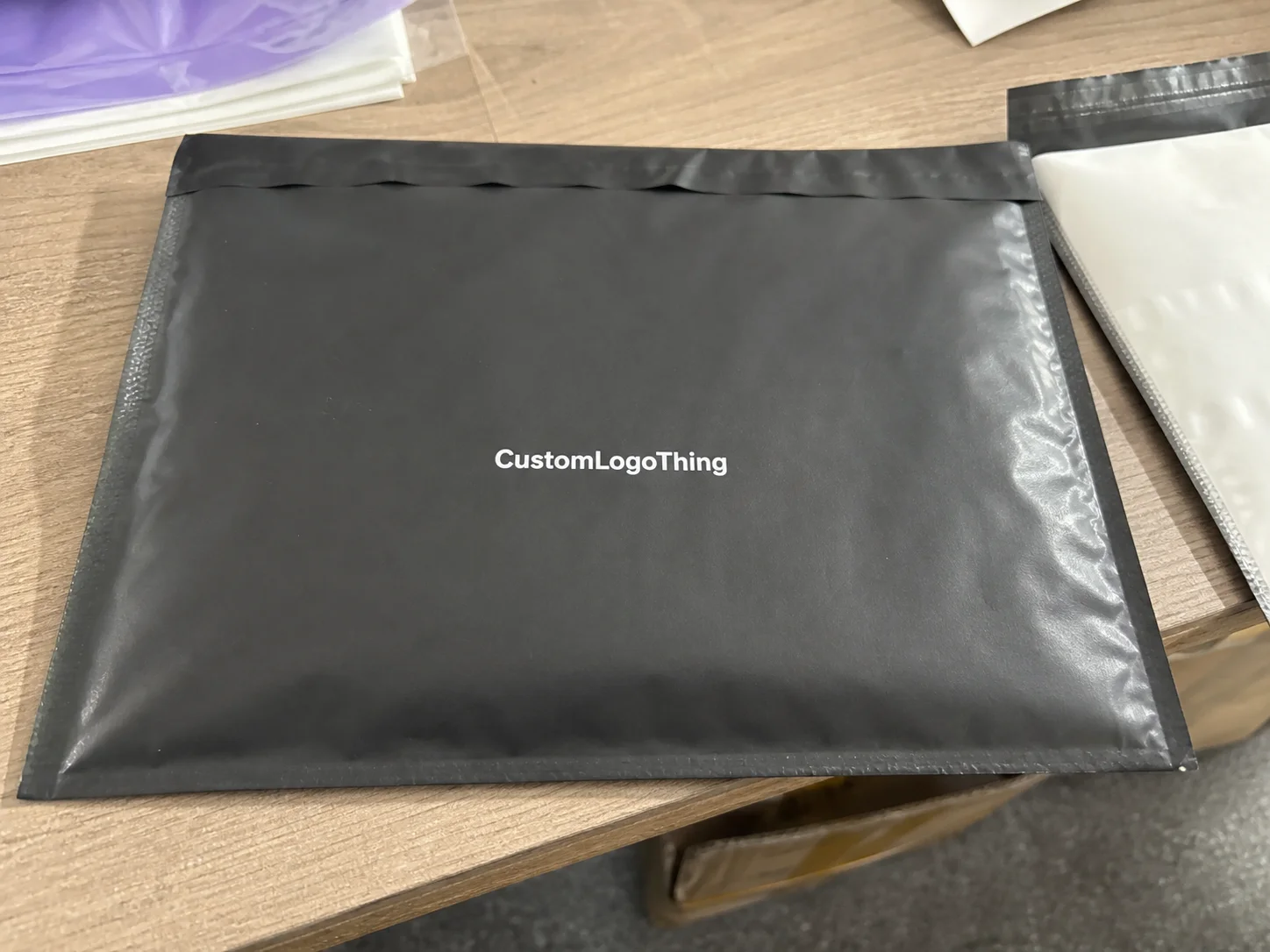
Buyer Fit Snapshot
| Best fit | Poly Mailers Custom Printed projects where brand print, material claims, artwork control, MOQ, and repeat-order consistency need to be specified before quoting. |
|---|---|
| Quote inputs | Share finished size, material target, print colors, finish, packing count, annual reorder estimate, ship-to region, and any compliance wording. |
| Proofing check | Approve dieline scale, logo placement, barcode or warning zones, color tolerance, closure strength, and carton packing before bulk production. |
| Main risk | Vague material claims, crowded artwork, missing packing details, or unclear freight terms can make a low unit price expensive after revisions. |
Fast answer: Poly Mailers Custom Printed: Material, Print, Proofing, and Reorder Risk should be specified like a repeatable production item. The safest quote records material, print method, finish, artwork proof, packing count, and reorder notes in one written spec.
Production checks before approval
Compare the actual filled-product size with the drawing, then confirm tolerance on folds, seals, hang holes, label areas, and retail display edges. Reserve space for logos, QR codes, warning copy, and material claims before decorative graphics fill the panel.
Quote comparison points
Review material grade, print process, finish, sampling route, tooling charges, carton quantity, and freight assumptions side by side. A quote is only useful when the supplier can repeat the same color, closure quality, and packing count on the next order.
I still remember standing in a Shenzhen film-printing shop in Longhua District, holding a plain bag that cost about $0.12 and watching the owner turn it into branded packaging that looked like it came from a much bigger company. That was my first real “oh, so Poly Mailers Custom printed matter” moment. A tiny piece of film, a clean logo, the right seal, and suddenly the boxless shipment looked intentional instead of random. Honestly, I was a little annoyed too, because it made all the plain bags I’d approved before look like I’d given up halfway through the job.
That’s the whole appeal of poly mailers custom printed. They’re lightweight shipping mailers made from plastic film, usually LDPE or a co-extruded blend, printed with your logo, pattern, tagline, or a simple brand message. For e-commerce stores, apparel brands, beauty labels, and subscription businesses, they’re one of the cheapest ways to improve package branding without jumping straight to custom printed boxes. A standard 2 mil film might run through a factory in Dongguan or Shenzhen with a 1-color logo and still land at a price that makes finance stop complaining. And yes, people notice. More than some brands want to admit. I’ve watched buyers pretend they don’t care about the mailer, then suddenly care a lot once they see their logo sitting cleanly on the front.
In my experience, most buyers are trying to solve one of two problems: reduce shipping cost or improve the unboxing experience. Sometimes both. A mailer doesn’t need to be fancy to do its job. But poly mailers custom printed can make a $6 T-shirt order feel more polished, which matters if your customer is deciding whether to reorder or just shrug and move on. I’ve sat through enough supplier meetings in Guangzhou and Ningbo to know this part is less “nice to have” and more “please stop making the brand look like a rush job.”
Poly mailers custom printed: what they are and why brands use them
Let me keep this plain. Poly mailers custom printed are shipping envelopes made from flexible plastic film with your artwork printed on the surface. They usually come with an adhesive strip, and some versions add a second seal for returns. They’re different from plain poly mailers because they carry your logo, colors, or even a full repeat pattern. That changes how the package feels before the customer even opens it. It’s a tiny detail, sure. Tiny details are exactly what customers remember when the order lands on a doorstep in Dallas, Sydney, or Berlin.
I visited a small apparel factory in Dongguan’s Houjie area a few years back where the owner kept a stack of plain gray mailers next to a stack of poly mailers custom printed. Same product. Same shipping lane. Different perception. The plain bags looked like a discount warehouse. The printed ones looked like a real brand with some discipline. That’s not magic. It’s packaging design doing its job. I remember the owner laughing and saying, “People pay more for the same shirt if the bag behaves properly.” He wasn’t wrong, and the quote he gave me for 10,000 bags was barely $0.15 per unit more than the plain version.
Brands use them for e-commerce shipping, subscription kits, beauty samples, and light apparel because they’re inexpensive and easy to pack. You’ll also see them in retail packaging workflows where a brand wants a consistent look across every outgoing order, even if the product itself ships separately. If you want a middle ground between a naked shipping bag and expensive custom printed boxes, this is usually it. And if your warehouse team is moving fast in a 20,000-square-foot facility in Atlanta or Shenzhen, they’ll thank you for a bag that doesn’t require a whole ceremony to seal.
Here’s the tradeoff: poly mailers custom printed are great for savings and brand recognition, but they are not right for everything. Fragile items, sharp-edged products, and premium SKUs may still need rigid protection. I’ve seen brands try to save $0.06 per unit and end up spending $14 per return on replacement labor and customer service. Cheap packaging can get expensive fast. Funny how that works. The spreadsheet always looks brilliant right up until customers start emailing photos of damaged product corners from a warehouse in Ohio.
“The best mailer is the one that keeps the product safe, prints cleanly, and doesn’t make your shipping team hate your life.”
If you’re comparing packaging options, the decision usually comes down to what you care about most: shipping weight, visual presentation, or cost. Poly mailers custom printed win on weight and price. Mailer boxes win on structure. Paper mailers win on sustainability optics for some brands, though the real answer depends on your product and how it travels. I’ve seen brands use all three across different SKUs and survive just fine. The problem isn’t choice. The problem is pretending one package can solve every shipping issue known to mankind.
For shoppers who want a broader view of packaging options, I’d also point them to Custom Packaging Products and the dedicated Custom Poly Mailers page. It helps to compare the whole packaging stack before locking in one choice. Saves you from the classic “we ordered the cute thing first and the practical thing later” mess.
How poly mailers custom printed actually work
Poly mailers custom printed are usually produced using one of four print methods: flexographic printing, gravure printing, digital printing, or occasionally screen-style applications for special runs. The method matters because it affects setup cost, print quality, and minimum quantity. Factories in Shenzhen, Ningbo, and Ho Chi Minh City love talking about “options.” What they really mean is, “How much money are you willing to spend to make this print process worth it?” I’ve had more than one supplier explain this with a smile like they were doing me a favor.
Flexographic printing is the common choice for larger runs. It uses plates, which means there’s a setup fee, but the per-unit cost gets friendlier as volume rises. This is why a 5,000-piece order often looks much better than a 500-piece order. Gravure is used when brands want extremely consistent print and high volume, but the tooling cost can be higher. Digital printing can work well for smaller runs or when you need more flexibility with artwork changes, though the unit price is often higher. If someone tells you all three are basically the same, they are either confused or trying to move the conversation along very quickly.
The artwork process is not mysterious. It gets converted into print files, separated by color, and then matched to the production method. Solid colors are easier. Clean logos are easier. Heavy gradients, tiny text, and detailed photos are where things get messy. On film, the ink behaves differently than on paper. I’ve had clients bring in beautiful packaging design files that looked amazing on a monitor and turned soft and muddy on film. The printer wasn’t the villain. The file was just built for a different surface. I remember one brand sending over a logo with five gradients, two shadows, and a font so delicate it practically needed a magnifying glass. We fixed it, but not before everyone had a very long meeting about “brand intent.”
The material structure matters too. Most poly mailers custom printed use LDPE or a co-extruded film structure. LDPE is flexible, lightweight, and cheap to produce. Co-extruded mailers often have multiple layers, which can improve strength, opacity, and tear resistance. Thickness is typically measured in microns or mils depending on the supplier. A thinner mailer can save money, but if the product is heavy or has sharp corners, you’re just buying a prettier failure. For example, a 60-micron mailer might be fine for a cotton tee, while a 90- to 120-micron build is more realistic for bulkier apparel or boxed accessories.
Seal strength is a big deal. A strong adhesive strip keeps the package closed in transit. Some mailers add tamper evidence so the customer can tell if the bag was opened. For heavier items, I always check puncture resistance and tear behavior, not just the print. A good-looking bag that splits at the corner is basically expensive confetti. I’ve literally watched a stack of overstuffed mailers fail one by one during a test in a warehouse outside Shanghai, and the room got very quiet very fast.
Print placement also matters. Most poly mailers custom printed are one-sided, usually on the front face. Some can be printed on both sides, but that increases complexity and cost. Edge limitations are real. If your logo sits too close to the seal, the fold, or the side gusset, expect distortion. Registration on flexible film is not identical to paper stock. A 2 mm drift can be visible, especially on high-contrast designs. That’s the sort of tiny thing that somehow becomes the only thing anyone talks about after delivery.
Factories care deeply about minimum order quantities because setup takes labor, plates, and machine time. If a supplier charges $180 in plate/setup fees, they need enough units to spread that cost around. That’s why poly mailers custom printed often have a pain point at low volume. Not because the supplier is being dramatic. Because the math is real. And because nobody wants to run a custom job for the price of a lunch special in Shenzhen.
Poly mailers custom printed pricing factors
Pricing for poly mailers custom printed is driven by a handful of variables, and if anyone tells you otherwise, they’re probably quoting from a napkin. The biggest ones are size, film thickness, number of print colors, number of sides printed, and quantity. Order more, pay less per unit. Use thicker film, pay more. Add more colors, pay more. Ask for both sides, pay more. Packaging economics are rude like that, whether the factory is in Guangzhou, Jakarta, or Mexico City.
Quantity is the easiest place to see the difference. A run of 500 pieces might come out to $0.28 to $0.42 per unit, while 5,000 pieces may drop to $0.10 to $0.18 per unit, depending on size and print method. Then add setup fees, shipping, and maybe cartons if the supplier doesn’t include them. That’s why a buyer who budgets off a low per-unit quote and ignores freight ends up staring at the final invoice like it betrayed them personally. I’ve seen that exact expression enough times to recognize it instantly.
Here’s a simple example I’ve seen in real quoting conversations for poly mailers custom printed:
| Order Size | Estimated Unit Cost | Setup / Plate Fee | Freight Impact | Notes |
|---|---|---|---|---|
| 500 pieces | $0.34 | $120 | $80-$160 | Higher unit cost, best for testing |
| 2,000 pieces | $0.18 | $120 | $180-$320 | Better balance for small brands |
| 5,000 pieces | $0.11 | $120 | $280-$520 | Most efficient for repeat orders |
That table is not a quote. It’s a reality check. Your final number depends on size, film spec, ink coverage, destination, and whether the supplier is local or overseas. But it shows how quickly poly mailers custom printed improve on cost once volume rises. If you buy once a year, your math looks different than if you reorder every month. Funny how math keeps insisting on being involved.
There are hidden costs too. Artwork prep can add a few hundred dollars if your file needs cleanup. Custom sizing can raise tooling or film waste. Special finishes, like matte texture or metallic ink, can change the quote. Rush production costs more because the factory has to stop pretending your job was on the schedule all along. Freight is another wild card. Ocean shipping from Shenzhen to Los Angeles might be reasonable on paper, but air freight can blow apart a carefully planned budget in one ugly line item.
Supplier location also matters. A factory in Shenzhen, one in Vietnam’s Binh Duong Province, and one in the U.S. may all quote the same poly mailers custom printed job differently because labor, resin, packaging, and freight are not the same. Tariffs and import duties can swing the landed cost too. I’ve seen a quote that looked cheaper by 8% turn into the expensive option after freight and duty were added. The quote was real. The total was the truth. I wish more procurement teams would tattoo that onto their spreadsheets.
For brands that care about sustainability claims, you should check the material specs and any certifications carefully. If a supplier mentions recycled content or FSC-related claims, verify the documentation. For general guidance on materials and environmental claims, I point people to the EPA and to packaging standards resources at Packaging Council sites. Claims without proof are just marketing with a louder voice.
Poly mailers custom printed: step-by-step ordering process and timeline
The ordering process for poly mailers custom printed is straightforward if you keep your specs organized. It gets painful when someone says, “I just want something cute,” and expects the factory to read their mind in three languages. Start with the size. Measure the product, then measure the packed product, not just the product alone. A folded sweatshirt, for example, may need a mailer that looks oversized on a flat table but fits perfectly once the garment is compressed. I’ve had buyers swear a size “should work,” then discover the actual folded item had a mind of its own.
Step 1: choose the size. I always recommend packing one unit of the product exactly how it will ship. Add enough space for the adhesive flap and a little tolerance for film stretch. For apparel, common mailer sizes often include something like 10 x 13 inches, 12 x 15 inches, or 14 x 19 inches. For beauty or smaller accessories, you can go lighter. The goal is snug, not strangled. Poly mailers custom printed that are too large look lazy. Too small looks cheap and often fails in packing.
Step 2: select the film and security features. Thickness, seal type, and tamper resistance matter more than most first-time buyers expect. A dual adhesive strip is handy if you want returns to be easy. For heavier products, I’d rather see a stronger co-extruded film than a thin bag with a giant logo. The bag needs to survive the carrier network, not your mood board. Pretty packaging that falls apart in transit is just expensive regret.
Step 3: submit artwork correctly. Send vector artwork when possible. PDF, AI, or EPS files are usually preferred. Ask for the supplier’s dieline or placement guide so your logo isn’t floating into the seal area. Keep colors simple if cost matters. One or two brand colors can be enough. If your print partner uses CMYK or Pantone matching, confirm that in writing. Poly mailers custom printed can look great with a bold logo and a repeat pattern. They can also look like a bad night if the file is sloppy.
Step 4: review proof or sample. A digital proof shows placement and layout. A pre-production sample or production sample shows actual material and ink behavior. I’ve sat in proof meetings where a client insisted the blue was “slightly off” by eye under warehouse lights, then approved it immediately in daylight. Lighting changes everything. So does expectation. If color accuracy is non-negotiable, ask for a physical sample before the full order. That can save you from burning through 5,000 pieces of disappointment. And yes, the warehouse fluorescents will absolutely betray you.
Step 5: confirm production and freight. For many poly mailers custom printed orders, production can take about 12 to 15 business days from proof approval, depending on quantity and factory workload. Sampling can add 5 to 10 business days. Ocean freight might add another 18 to 35 days, while air freight can be much faster but usually much more expensive. If you’re buying for a seasonal launch, build the timeline backward from launch day, not from the date you feel ready to order. The calendar does not care about your optimism.
Here’s a realistic sequence I’ve used in supplier negotiation:
- Receive quote and confirm MOQ.
- Approve artwork layout and print colors.
- Receive digital proof within 1 to 3 business days.
- Approve sample or proof.
- Production starts after deposit.
- Inspection and packing follow.
- Freight booking happens last, because shipping is never emotionally available when you need it.
One more practical note: some factories want a deposit before plate making, and others will not start until the artwork is locked. That’s normal. What is not normal is vague timing. Ask for a written schedule with proof approval date, production window, inspection date, and shipping method. Poly mailers custom printed are easy to manage when the timeline is clear. They become chaos when everyone assumes “around two weeks” means the same thing. It never does.
If your brand also uses Custom Packaging Products like inserts, labels, or tape, it’s smart to align those orders around the same launch calendar. One factory visit taught me that a brand can make a $1.80 box look polished with good inserts and a well-printed mailer, but it can also make the whole shipment feel sloppy if the pieces don’t match. Packaging is a system, not a random collection of things you found in procurement.
Common mistakes buyers make with poly mailers custom printed
The first mistake is ordering the wrong size. I’ve seen brands stuff a product into a mailer that was technically “close enough,” then wonder why the bag looked wrinkled and cheap. A too-small bag strains at the seal and corners. A too-large bag makes the contents slide around and arrive with that underwhelming, empty-space look nobody wants. Poly mailers custom printed should fit the product the way a good shirt fits a client meeting: not tight enough to scream, not loose enough to look careless.
The second mistake is chasing the thinnest material possible just to shave off $0.01 or $0.02 per unit. That sounds sensible until damage rates jump. Then returns, replacements, and customer complaints eat the savings. For light apparel, a thinner film can be fine. For heavier items, I’d rather spend a little more than play shipping roulette. A factory supervisor in Dongguan once showed me a stack of split mailers from a failed test run. The client had insisted on reducing thickness. They saved pennies and lost weeks. I’ve never forgotten that little horror show.
The third mistake is trusting screen color too much. Your laptop display is not a printing press. Poly mailers custom printed on film can look darker, flatter, or more muted than what you approved on screen. Gloss level changes the appearance too. If your brand color has to be exact, ask for a physical sample or Pantone reference and make sure the supplier can actually hit it. If they hedge, believe them. That hesitation is there for a reason. No one needs a 400-box order that looks “sort of brand-adjacent.”
The fourth mistake is ignoring adhesive strength. If the seal is weak, the bag opens in transit and the carrier gets blamed for your packaging problem. Not fair. Not accurate. I’ve handled client complaints where the seal failed on heavier products, and the issue was simply that the wrong mailer spec was chosen. Test the adhesive with the final packed weight. Don’t assume all seals are equal because the supplier said “strong glue.” Strong compared to what, exactly? A toddler’s sticker collection?
The fifth mistake is skipping sample approval. I know, everyone is busy. But a sample can reveal logo distortion, print shift, or unexpected opacity issues before you buy poly mailers custom printed in volume. One client approved a proof with a white logo on a dark gray film, then panicked when the final sample looked too small. It wasn’t too small. The visual balance was just different on a real surface. The sample saved them from ordering the wrong thing at scale.
The sixth mistake is underestimating freight. A low ex-factory quote can look amazing until the shipping line adds cartons, fuel surcharge, and last-mile delivery. Then your budget is toast. I always ask buyers to estimate landed cost, not just unit cost. That includes freight, duties if applicable, and any receiving charges. Poly mailers custom printed are low-cost only if the total path from factory to warehouse is low-cost.
If you want standards-based thinking, keep an eye on transit testing expectations too. For some products, especially if you’re shipping fragile items or building stronger retail packaging systems, references like ISTA matter because shipping abuse is predictable. Packaging doesn’t fail in a vacuum. It fails when it meets a conveyor, a drop, or a bad corner on a carton.
Expert tips for better poly mailers custom printed results
My first tip is simple: keep the design bold. Thin serif text, tiny social handles, and cluttered art all get fuzzy on film. Poly mailers custom printed look best when the logo is clean, contrast is strong, and the message is easy to read from three feet away. A mailer is not a billboard. It’s a moving shipping surface that gets handled by tired people in gloves. Those people are not studying typography.
Second, use one or two brand colors if you can. That keeps cost under control and usually improves consistency from run to run. I’ve seen brands try to print six colors on a flexible surface and wonder why registration drift made the package look noisy. If the goal is premium brand packaging, restraint usually beats overcomplication. I’d rather see one sharp logo than a chaotic rainbow trying to impress me. Honestly, the rainbow almost never looks as expensive as the brand thinks it does.
Third, ask for a production sample before a full run if color is non-negotiable. This is especially useful for fashion, beauty, or any brand with strict package branding guidelines. Your art file may be perfect. The ink on the film may still need tweaking. A sample lets you catch that before you’ve ordered 10,000 pieces and committed to staring at them for six months. In my last Shenzhen visit, a buyer caught a Pantone shift on a sample that would have been invisible in a PDF and very obvious on a shelf in Los Angeles.
Fourth, choose thickness based on weight, not guesswork. A 60-micron mailer may be fine for tees. A heavier hoodie, box of supplements, or small hardware item might need something thicker or a more durable film structure. Poly mailers custom printed should match the product, the carrier route, and the customer expectation. Your warehouse team can feel the difference immediately. So can the package when it hits the floor. I learned that after a test batch of “lightweight” bags turned into a very expensive pile of corner tears.
Fifth, test with real products. Not paper mockups. Real products. I learned this the hard way with a cosmetics client whose jars fit beautifully in mockup but shifted badly once the fill weight changed by a few grams. The difference was enough to alter how the bag sealed and how the front logo appeared when packed. Real testing beats hopeful assumptions every time. The mockup is only there to make you feel good for a minute.
Sixth, plan inventory with reorder lead times in mind. If your lead time is 3 to 5 weeks all-in, and you’re burning through mailers at 1,500 units a week, then you do not have a lot of breathing room. Brands get caught out here constantly. They treat packaging like office supplies until it disappears mid-campaign. Then everyone is urgent and the freight quote magically doubles. Nothing wakes people up like running out of packaging on a Friday afternoon.
For buyers comparing poly mailers custom printed with other product packaging approaches, I usually suggest a quick decision grid:
- Choose poly mailers if cost and shipping weight matter most.
- Choose mailer boxes if protection and premium structure matter more.
- Choose paper mailers if you need a certain eco positioning and your product allows it.
- Choose custom printed boxes if the unboxing moment is central to your retail packaging strategy.
That’s the part people miss. Packaging is not one product. It’s a chain of choices. The mailer, the insert, the label, the tape, the dunnage. They all shape the customer’s impression. Poly mailers custom printed often win because they sit in a sweet spot: low cost, fast packing, and enough visual polish to matter. That sweet spot is why so many brands end up there after a few expensive packaging experiments.
What to do next before you order poly mailers custom printed
Before you place an order, build a one-page spec sheet. Put the size, quantity, print colors, film thickness, seal type, and target delivery date on it. Keep it boring. Boring specs save money. Fancy language just confuses suppliers and slows down quotes for poly mailers custom printed. I know “premium vibe” sounds lovely in a meeting, but factories cannot price vibes, even in Shenzhen or Guangzhou.
Then measure your top-selling products and pack one sample of each SKU. If your best seller is a folded hoodie, test the fit with the actual folded hoodie. If your beauty line ships a boxed item, test that exact box in the mailer. I’ve seen brands build a packaging plan around the average product and then discover their best seller was 18 mm too thick. That’s not a tiny issue. That’s a production issue.
After that, gather two or three quotes and compare the real numbers: unit price, setup fees, sample policy, and freight. A quote with a lower unit price may still lose once shipping and setup are added. I always tell clients to compare landed cost, not headline cost. Poly mailers custom printed are cheap only when the full cost picture stays under control. If the quote looks too good, ask what’s missing. It usually isn’t nothing.
Ask every supplier to give you the schedule in writing. Proof approval time. Production window. Packing count per carton. Shipping method. If they won’t commit to a timeline, that’s useful information too. It means you should plan for more risk than they’re admitting. I’ve negotiated with enough factories to know that the vague supplier is usually the one with the most “surprises.” And surprises are adorable only when they’re birthday cakes.
Finally, check the practical stuff. Do you have storage space for 5,000 or 10,000 mailers? Are your artwork files ready? Is the seal type right for your fulfillment team? Does the mailer work with your other branded packaging materials? If you’re also ordering Custom Poly Mailers in multiple sizes, label them clearly so your warehouse doesn’t ship the wrong SKU in the wrong bag and create a self-inflicted customer service mess. I’ve seen that happen. It is not a cute day.
If you get those basics right, poly mailers custom printed become one of the easiest packaging purchases you’ll ever make. Not glamorous. Not dramatic. Just efficient, branded, and surprisingly effective when the specs are tight and the supplier is honest. That’s usually how good packaging works anyway. No fireworks. Just fewer complaints and better-looking outbound orders from a warehouse in Shenzhen, Dallas, or Manchester.
FAQs
How much do poly mailers custom printed usually cost?
Pricing usually depends on quantity, size, film thickness, and how many colors you print. For smaller runs, I often see $0.28 to $0.42 per unit, while higher-volume orders can drop into the $0.10 to $0.18 range. Setup or plate fees may add another $80 to $180, and freight can move the total a lot more than buyers expect. A 5,000-piece order in Shenzhen or Dongguan may land near $0.15 per unit before shipping, but the landed cost is what matters.
What is the minimum order for poly mailers custom printed?
Minimums vary by supplier and print method. Digital printing can sometimes handle lower quantities, while flexographic runs usually need higher volume to make setup worthwhile. I’d ask whether the MOQ applies per size, per artwork, or per color version. That detail changes the quote more than most people realize. One supplier in Guangzhou quoted 3,000 pieces per design, while another in Ho Chi Minh City wanted 5,000 pieces per size. Same bag category. Very different math.
How long do poly mailers custom printed take to produce?
Timeline depends on artwork approval, print method, and factory schedule. A typical production window is about 12 to 15 business days from proof approval, but sampling can add 5 to 10 business days before that starts. International shipping often takes the longest, especially if you’re using ocean freight from Shenzhen to Los Angeles or Rotterdam. Plan backward from your launch date, not from when you wish the mailers would arrive.
Are custom printed poly mailers good for heavy products?
They can work for heavier items if the film thickness and seal strength are appropriate. For products with sharp edges or extra weight, I’d test a packed sample first and check the adhesive, tear resistance, and puncture behavior. If the item is borderline heavy, adding an inner protective layer is often smarter than gambling on a thin mailer. A 90- to 120-micron build is usually a safer starting point than a bargain-thin film.
What files do I need for poly mailers custom printed artwork?
Vector files are usually best for logos and clean text. Most suppliers will ask for PDF, AI, or EPS, plus a placement guide or dieline. Confirm bleed, color mode, and whether the supplier wants Pantone references or CMYK values. And yes, printed film can look different from your screen. That part never stops being annoying. If you want the cleanest result, send the factory a file that already includes a 2 mm bleed and a 3 mm safety margin.
Poly mailers custom printed are not complicated once you know what drives price, quality, and timing. Pick the right size, match the film thickness to the product, keep the artwork clean, and verify the sample before you order at scale. That’s how you get branded Packaging That Works in the real world instead of just looking nice in a mockup. If you treat poly mailers custom printed like a spec-driven purchase instead of a guess, you save money, reduce mistakes, and end up with Packaging That Actually supports the brand. Start with one packed sample, one clear spec sheet, and one honest quote comparison. That’s the move.