Buyer Fit Snapshot
| Best fit | Poly Mailers for Pet Product Orders projects where brand print, material claims, artwork control, MOQ, and repeat-order consistency need to be specified before quoting. |
|---|---|
| Quote inputs | Share finished size, material target, print colors, finish, packing count, annual reorder estimate, ship-to region, and any compliance wording. |
| Proofing check | Approve dieline scale, logo placement, barcode or warning zones, color tolerance, closure strength, and carton packing before bulk production. |
| Main risk | Vague material claims, crowded artwork, missing packing details, or unclear freight terms can make a low unit price expensive after revisions. |
Fast answer: Poly Mailers for Pet Product Orders: Fit, Cost, Speed should be specified like a repeatable production item. The safest quote records material, print method, finish, artwork proof, packing count, and reorder notes in one written spec.
Production checks before approval
Compare the actual filled-product size with the drawing, then confirm tolerance on folds, seals, hang holes, label areas, and retail display edges. Reserve space for logos, QR codes, warning copy, and material claims before decorative graphics fill the panel.
Quote comparison points
Review material grade, print process, finish, sampling route, tooling charges, carton quantity, and freight assumptions side by side. A quote is only useful when the supplier can repeat the same color, closure quality, and packing count on the next order.
Poly Mailers for Pet Product Orders: Fit, Cost, Speed
Poly mailers for pet product orders are not a trendy detour. They are a practical way to cut shipping weight, shorten pack-out time, and protect the pet SKUs that are soft, sealed, flexible, or just plain awkward in a box. From a packaging buyer's point of view, the real question is not whether a carton feels more traditional. The real question is whether poly mailers for pet product orders lower total cost per shipment without creating avoidable damage, returns, or labor drag.
That difference matters. A collar does not need a corrugated carton. A folded bandana does not need void fill. A sealed grooming accessory, a leash, a light apparel item, or a boxed treat often ships more efficiently in poly mailers for pet product orders than in mixed-size cartons that burn space before they protect anything better. For brands working with Custom Logo Things, the best packaging decision is usually the one that balances fit, cost, and speed in the same conversation.
Why Poly Mailers for Pet Product Orders Beat Boxes
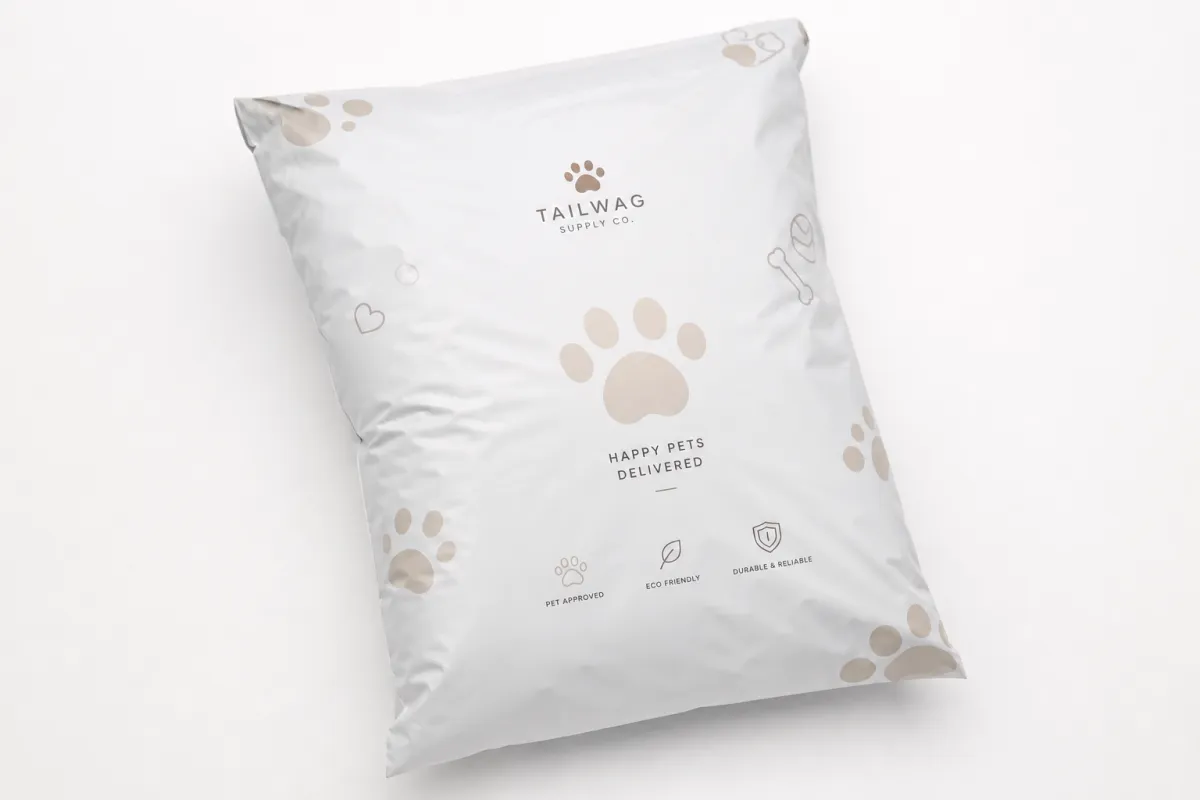
Many pet SKUs are not fragile. They are bulky, soft, sealed, or oddly shaped, which means the box often adds cost before it adds meaningful protection. That is exactly where poly mailers for pet product orders start to make sense. A mailer is lighter than a carton, takes less shelf space, and cuts out two common sources of waste: oversized packaging and excess void fill. For brands shipping high volumes of low-to-mid-risk items, that difference shows up fast in postage, labor, and warehouse storage.
Think about the categories that usually fit the model. Lightweight apparel, leashes, collars, bandanas, grooming accessories, training pads, and sealed consumables in secondary packaging are all strong candidates for poly mailers for pet product orders. If the item already has a retail box, pouch, hang tag, or inner wrapper, the outer shipper often just needs to survive handling and keep the order clean and branded. In practice, that means less dimensional weight, faster pack-out, fewer filler steps, and fewer carton sizes sitting on the rack waiting for the "right" order.
Here is the operational difference most teams notice first: a box program tends to multiply exceptions. One SKU needs a small carton, another needs a medium carton, and a third needs extra dunnage because the fit is loose. Poly mailers for pet product orders can cut that complexity. A single optimized mailer size may cover most orders with simple insertion, a printed label, and a seal. Fewer decisions at the station usually means fewer packing errors. Not glamorous. Definitely measurable.
"The cheapest shipper on paper is not always the cheapest at the pack station."
That sentence hits especially hard for pet brands. A box that costs a few cents less can still lose money if it adds one more motion, one more inventory slot, or one more ounce of billable weight. Poly mailers for pet product orders are strongest when the business cares about the full shipment cost, not just the unit price of the packaging itself. One mid-sized pet brand moving from mixed carton sizes to a single mailer profile often finds that the change reduces filler use, shortens pack time, and lowers the number of orders that get reworked because the box choice was off by half an inch. I have seen that kind of cleanup save more money than anyone expected, mostly because the warehouse stopped making four different decisions to ship one accessory. The packaging did not just get simpler. The whole fulfillment path did.
There is also a brand side to this. Customers notice when the outer package feels deliberate. A clean branded mailer creates a clear, compact first impression. It says the team understands the product and did not overpackage it. That matters more than people admit, especially for subscription boxes, direct-to-consumer accessories, and repeat purchases where the outer shipper becomes part of the customer's memory of the brand.
Poly Mailers for Pet Product Orders: Product Details
Poly mailers for pet product orders are usually made from co-extruded polyethylene film. That construction gives the package a useful mix of tear strength, puncture resistance, and water resistance. For standard retail use, brands commonly choose gauges in the 2.5 mil to 4 mil range, though the right thickness depends on product shape, shipping distance, and how much abuse the parcel is likely to see in transit. A lighter film may work for folded apparel. A thicker one may be smarter for sharp-edged accessories or multi-item bundles with harder corners.
Material options matter as much as thickness. Some buyers want opaque white or black films for privacy and brand presentation. Others prefer recycled-content films where the spec sheet clearly states the percentage and the test method. Clear or translucent formats can work for internal fulfillment or specialty programs, but most retail-facing pet brands prefer opacity because it hides the product mix and makes the package look more controlled. Poly mailers for pet product orders should match the product's visual role as much as its physical role.
Seal performance is another detail that separates a workable program from a frustrating one. A good closure needs a pressure-sensitive adhesive strip with enough tack to hold under normal handling, but not so aggressive that the team wastes time fighting the liner. For returns or reuse workflows, dual-seal construction can make sense. That gives the mailer a second adhesive strip so the customer can reseal the pack after opening. It is not always necessary, but for subscription refills, apparel, or multi-item pet kits, it can improve the return experience and reduce the chance of crushed contents on the way back.
Print choices shape both cost and customer perception. One-color logos are usually the most economical. Full-bleed graphics, strong brand blocks, or repeat patterns raise the visual impact, but they also increase setup complexity and can add to the first-order spend. Poly mailers for pet product orders do not need to look expensive to feel intentional. A sharp logo, a strong color field, and a readable message often do more than a crowded design. If your artwork is too busy, the package can start to look louder than the product inside. That is a good way to spend money and still miss the point.
- Co-extruded polyethylene: common for strength, moisture resistance, and a smooth print surface.
- Recycled-content film: useful when the brand needs a lower-material-footprint story backed by documentation.
- Opaque finish: best for privacy, shipping consistency, and a cleaner retail feel.
- Dual-seal or return-strip option: helpful for select apparel and subscription programs.
- Print coverage: from small logos to full-coverage branding, depending on budget and launch goals.
Fit still wins the conversation. Poly mailers for pet product orders should allow enough room for a folded garment, a tag, a pouch, or a small box without forcing the contents into a curved shape that stresses the seal. If the product has sharp corners, the film gauge should be chosen with that in mind. I have seen a 3 mil mailer work perfectly for a soft bandana and then fail the first time someone tried to shove a leash kit with a metal clasp into the same size. A 4 mil option may be the safer call for that kind of order. The point is not to overbuild every shipment. The point is to avoid guessing.
Specifications That Prevent Returns and Waste
Good packaging specs start with the packed product, not the retail product. That sounds obvious, but it is where a lot of programs go wrong. A sweater, for example, may measure one way on the shelf and another way once it is folded, tagged, bagged, and stacked with a barcode insert. Poly mailers for pet product orders should be sized against the final packed form, including the extra millimeters created by inner wraps, labels, closures, and any rigid element in the order.
Gauge should be selected as a decision tied to shape and handling, not as a blanket upgrade. A thicker film is not automatically better. It can add cost and make insertion a little stiffer at the pack line. Too-thin film can split at the corner, especially if the order contains a box with a hard edge or a grooming tool with an angled tip. The right answer often sits in the middle: enough thickness to survive handling, not so much that the mailer becomes hard to work with. Poly mailers for pet product orders need to pass the practical test first, then the pretty one.
Width and length are where brands can save the most waste. A mailer that is too large encourages product movement, which can make the package look sloppy and increase the chance of a torn seal after the box or mailer gets tossed around. Too small, and the operator has to force the product inside, which slows the station and risks damage. The best size allows the product to slide in cleanly, leaves room for a secure closure, and keeps the label area flat. If the label wrinkles, scanning can suffer. If the seal lands too close to the edge, the package may not hold in transit.
Opacity deserves attention, especially for subscription refills, supplements, and pet care items that should not be visible in transit. Poly mailers for pet product orders can protect privacy as well as product finish. That is useful for brands that do not want powders, treatment bottles, or specialty items showing through a translucent film. It also helps with presentation. A customer opening a neat opaque mailer tends to see a controlled brand experience rather than a random assortment of shadows and shapes.
Before ordering, confirm the specs below so there is less back-and-forth and fewer surprises after approval:
- Final packed dimensions: measure the product after folding, boxing, wrapping, or kitting.
- Film gauge: choose a thickness that matches the product's edges and shipping route.
- Closure type: standard seal, tamper-evident closure, or dual-seal for returns.
- Print area: front, back, bleed, and safe zone for logo placement.
- Carton count and pack configuration: needed for warehouse storage and receiving.
- Lead time and freight method: plan around proofing, production, and transit separately.
- Any recycled-content or sustainability claims: ask for documentation before the PO goes out.
For teams that care about shipment durability, distribution testing standards can help prevent expensive guesswork. ISTA methods and similar protocols are useful references when you want to validate the outer shipper under realistic handling conditions; see ISTA test standards for a starting point. If your operation is also trying to reduce material waste, the EPA's recycling guidance is a useful cross-check on how the package fits into your broader material strategy: EPA recycling guidance. Poly mailers for pet product orders do not need to be over-engineered, but they should be tested against how your parcels actually move. That is the part people skip, then wonder why a package that looked fine in the conference room fails in the real world.
Poly Mailers for Pet Product Orders: Pricing and MOQ
Pricing for poly mailers for pet product orders is driven by more than the film cost. Gauge, size, print coverage, custom sizing, special finishes, and quantity all affect the quote. Stock options usually cost less up front, but they can limit branding and create a mismatch with the product. Custom runs bring the design control pet brands want, yet they often require a higher minimum order quantity and more setup on the front end.
For a first custom run, many buyers see some combination of artwork prep, proofing, and print setup. Depending on the print method and artwork complexity, that can add roughly $150 to $500 in first-order costs before unit pricing is even considered. That is normal. It is also why the landed cost matters more than the quoted unit price. Poly mailers for pet product orders that save one ounce of postage or remove a step from pack-out can outperform a cheaper mailer that slows the whole line.
MOQ changes the math. Larger quantities usually lower the unit cost, but they also increase inventory exposure if demand is still being tested. The safest way to buy is to start with forecasted shipments plus a modest buffer, then reevaluate after the first replenishment cycle. If the SKU is still in launch mode, it may be smarter to order fewer custom mailers and keep a backup stock format on hand. That is not hesitation. It is smart inventory control.
Below is a simple comparison buyers can use as a working reference. These are common market-style ranges, not promises, because exact pricing depends on specs, freight, and print coverage.
| Option | Typical MOQ | Typical Unit Cost | Best For | Main Tradeoff |
|---|---|---|---|---|
| Stock opaque mailer | 500-1,000 units | $0.08-$0.14 | Testing, short runs, non-branded shipping | Limited sizing and little brand presence |
| Custom one-color mailer | 5,000 units | $0.12-$0.22 | Stable pet SKUs with repeat demand | Higher setup cost than stock |
| Custom full-coverage mailer | 5,000-10,000 units | $0.18-$0.32 | Premium unboxing and strong brand visibility | More artwork and print complexity |
| Recycled-content custom mailer | 5,000 units | $0.16-$0.30 | Brands with sustainability reporting needs | Availability and documentation can vary |
That table hides a key truth: the lowest-priced option is not always the lowest-cost option. Poly mailers for pet product orders can cut packing labor enough to make a slightly higher unit cost worthwhile. If one mailer size replaces three carton sizes, the business may also reduce storage, purchasing complexity, and picking errors. Those savings are easy to overlook because they do not show up on the first line of the quote.
For buyers comparing suppliers, ask for quote clarity. You want the cost of the mailer, the print setup, the lead time, the carton pack count, and the freight assumption spelled out in plain language. Wholesale programs should make it simple to compare landed cost across reorder quantities, not force you to reverse-engineer the numbers. If you need a broader packaging quote alongside mailers, the Custom Packaging Products catalog and our Wholesale Programs page are useful places to start. For a focused mailer program, review our Custom Poly Mailers options as well.
Ordering Poly Mailers for Pet Product Orders Without Delays
Ordering should be a straight line, not a scavenger hunt. The cleanest process starts with the product mix, the final packed dimensions, and the monthly shipment volume for each SKU. Once those details are set, poly mailers for pet product orders can move from idea to proof to production without the kind of back-and-forth that delays launches. A good supplier will ask for the same things a production team needs: dimensions, artwork, closure preference, target lead time, and whether the mailer will carry one SKU or several.
Here is the sequence that usually works best. First, confirm the products and their packed form. Second, choose the film gauge and closure style. Third, submit artwork in the proper file format. Fourth, review the proof with real attention to size, bleed, and print placement. Fifth, approve production only after the sample or mockup looks right. Finally, plan freight or parcel shipment so the cartons arrive before the launch date. Poly mailers for pet product orders move faster when each step is locked before the next one begins.
- Brief the project: list SKUs, monthly volume, and the pack-out process.
- Confirm dimensions: use the final packed size, not the shelf size.
- Approve artwork: check logo placement, safe area, and print colors.
- Review proofing: catch issues before production starts.
- Schedule delivery: allow time for transit and receiving at the warehouse.
What slows a job down? Usually the same four things: incomplete dimensions, low-resolution artwork, late proof changes, or a size choice that does not match the actual packed product. A mailer that is even slightly too short can turn into a production bottleneck. A file that needs redrawing can add days. A customer launch built on an optimistic assumption can miss its window. That is why poly mailers for pet product orders should be specified from real data, not a rough estimate from the last carton order.
Timing should be broken into parts. Proofing may take a day or two if the artwork is ready. Manufacturing for a straightforward custom run often falls in the 12-15 business day range after proof approval, though that varies by factory schedule and print complexity. Transit adds its own clock. Domestic parcel shipments might take a few days. Freight can take longer. If the order is traveling farther, or if you need consolidation, the calendar stretches again. Poly mailers for pet product orders are easy to launch on paper; the real schedule is proof plus production plus transit.
Sample approval is worth the effort. A sample pack or pre-production proof helps the team confirm fit, seal feel, and print layout before the full run starts. That matters most if several pet SKUs will share one mailer. One size can work for a folded shirt and a bandana, but not always for a boxed treat and a grooming tool. Receiving and storage should be planned too. Label cartons clearly, stage by size, and verify counts against the purchase order as soon as the shipment lands. That prevents the classic warehouse problem: the product arrives, but nobody can find the right box because the pallet staging was vague.
Why Choose Us for Custom Pet Packaging
Pet brands do not just need a supplier. They need consistency. That is where the value of poly mailers for pet product orders becomes clearer. A good program delivers predictable sizing, stable print quality, and repeatable color matching across reorders. If the logo shifts, the seal fails, or the box count is off, the packaging problem grows into a customer service problem. Reliability is not a luxury here. It is the baseline.
At Custom Logo Things, the best support is practical. That means fast spec confirmation, honest feedback when a size is wrong, and quote clarity that separates mailer cost from setup, freight, and proofing. Poly mailers for pet product orders should be selected with the same discipline as any other production item. If the product needs more protection than a mailer can provide, the right answer is to say so. If a slimmer film or a different width will save money without adding risk, that should be stated plainly too. Buyers rarely need a sales pitch. They need a clean recommendation.
There is also a systems advantage. When one mailer profile can handle a broader share of SKUs, inventory becomes easier to manage. Reordering is simpler. The warehouse has fewer exceptions. Seasonal spikes are less disruptive. Poly mailers for pet product orders can become the default outer shipper for accessories, grooming items, apparel, and select sealed consumables, which helps the packaging team spend less time solving one-off problems. That is the sort of operational gain that compounds quietly over a year.
Quality control matters in production, and it should be checked at every stage. Ask about seal integrity, print registration, film consistency, and carton accuracy. If color is important, ask how the artwork will be matched on reorders. If sustainability claims matter, ask for the supporting paperwork rather than a vague statement. If shipping durability is a concern, tie the mailer choice back to ISTA or ASTM-style testing. Poly mailers for pet product orders are not an art project. They are a working component of the supply chain, and they should behave like one.
For buyers comparing packaging partners, the strongest signal is not who says yes fastest. It is who can explain the tradeoffs. Poly mailers for pet product orders may be the right move for a compact apparel line, while a sharp-edged accessory may need a thicker film or a different format. A supplier that understands both packaging economics and retail presentation can help you avoid both overpacking and underprotecting. That balance is where margin lives.
If you need broader support beyond the mailer itself, the Custom Packaging Products page is a useful starting point, and the FAQ can answer common setup questions before you send files. For buyers moving from trial quantities to repeat purchasing, the Wholesale Programs page helps frame how volume changes the pricing structure. That structure matters because poly mailers for pet product orders are only valuable when the program scales cleanly.
Next Steps for Poly Mailers for Pet Product Orders
The best launch plan is simple. Start by listing your top pet SKUs, measuring the final packed size of each one, and noting the monthly shipment volume. That data tells you more than a rough guess ever will. Poly mailers for pet product orders work best when the recommendation is built around actual pack-out conditions, not an optimistic estimate from the product page.
Then request samples or a quote using those real dimensions. If you ship multiple SKUs, test two or three mailer sizes against the heaviest and most common products before locking in a full order. That test can reveal whether the seal is comfortable, whether the product slides in cleanly, and whether the package still looks neat after insertion. Poly mailers for pet product orders should feel easy at the bench. If they fight the packer, the program is too tight.
It also helps to line up artwork, forecast data, and internal approval before you place the order. That saves days later. A brand launch that depends on revised logos or a late size change can miss production windows for no good reason. Use the time now to verify specs, ask for a proof, and confirm the reorder path. Poly mailers for pet product orders are a lot more efficient once the system is set, but the first order should still be treated like a production project.
One final practical point: do not let a single metric decide the package. Poly mailers for pet product orders should be judged on fit, cost, and fulfillment speed together. If the mailer lowers postage but creates pack errors, it is not a win. If it looks good but slows the line, it is not a win. If it ships fast but arrives oversized and wasteful, it is not a win either. The right choice is the one that supports the product, the warehouse, and the customer at the same time.
That is the real test. Poly mailers for pet product orders can cut material waste, improve pack station flow, and keep the brand presentation tight, but only when the spec is right. For pet brands that want a cleaner shipping process and a sharper bottom line, the next step is to measure the packed product, request a sample, and build the program around the numbers. Pick one primary size for the bulk of orders, keep one fallback size for the outliers, and approve the sample before the full run starts. That is the move that keeps the whole thing from turning into expensive guesswork.
Are poly mailers for pet product orders safe for treats or supplements?
Yes, if the product is already sealed in an inner pouch, bottle, box, or barrier package. Do not rely on poly mailers for pet product orders as the only food-contact layer unless the packaging is specifically approved for that use. For powdered or moisture-sensitive items, use the mailer as the outer shipper and keep the product in compliant inner packaging.
What size poly mailers work best for pet product orders?
Measure the product in its final packed form, including folds, tags, inserts, and any rigid inner box. The Best Poly Mailers for pet product orders are the smallest size that still allows easy insertion and a secure seal without bending or crushing the product. If you ship multiple SKUs, choose one primary size for the most common order and a second size for outliers.
Can custom poly mailers for pet orders include my logo and colors?
Yes. Most custom programs can print logos, brand colors, and simple messages across the front and back panels. Print complexity affects pricing, so one- to two-color branding is usually more economical than full-coverage graphics. Ask for a proof that shows artwork placement, bleed, and the final print area before production starts.
How much do poly mailers for pet product orders cost at wholesale?
Cost depends on size, gauge, print coverage, and quantity, so unit price can vary widely across programs. Higher volumes usually lower unit cost, but custom sizing and detailed printing can raise the first-order total. Compare the landed cost per shipment, not just the mailer price, because labor and postage savings can change the math.
How long does it take to produce custom poly mailers for pet orders?
Timing usually includes proof approval, production, and transit, so the total schedule depends on how fast artwork and specs are finalized. Simple repeat orders move faster than new custom projects that need artwork setup or size validation. If you have a launch date, build in buffer time for revisions, sample review, and freight delays.