Buyer Fit Snapshot
| Best fit | Poly Mailers for Snack Subscriptions That Ship Better projects where brand print, material claims, artwork control, MOQ, and repeat-order consistency need to be specified before quoting. |
|---|---|
| Quote inputs | Share finished size, material target, print colors, finish, packing count, annual reorder estimate, ship-to region, and any compliance wording. |
| Proofing check | Approve dieline scale, logo placement, barcode or warning zones, color tolerance, closure strength, and carton packing before bulk production. |
| Main risk | Vague material claims, crowded artwork, missing packing details, or unclear freight terms can make a low unit price expensive after revisions. |
Fast answer: Poly Mailers for Snack Subscriptions That Ship Better should be specified like a repeatable production item. The safest quote records material, print method, finish, artwork proof, packing count, and reorder notes in one written spec.
Production checks before approval
Compare the actual filled-product size with the drawing, then confirm tolerance on folds, seals, hang holes, label areas, and retail display edges. Reserve space for logos, QR codes, warning copy, and material claims before decorative graphics fill the panel.
Quote comparison points
Review material grade, print process, finish, sampling route, tooling charges, carton quantity, and freight assumptions side by side. A quote is only useful when the supplier can repeat the same color, closure quality, and packing count on the next order.
Poly Mailers for Snack Subscriptions That Ship Better start with a plain business truth: if your snack assortment is light, sealed, and not built like a brick, a slim mailer can cost less to ship than a rigid carton and still look polished. For a lot of brands, poly mailers for snack subscriptions are the difference between shipping costs that behave and shipping costs that chew through margin like they pay rent.
That does not mean every snack box should get shoved into plastic and left to fend for itself. It means the best outer shipper is the one that protects the product, fits the order mix, packs fast, and does not turn profit into confetti. That is the real decision with poly mailers for snack subscriptions.
Poly Mailers for Snack Subscriptions: Why They Win Attention
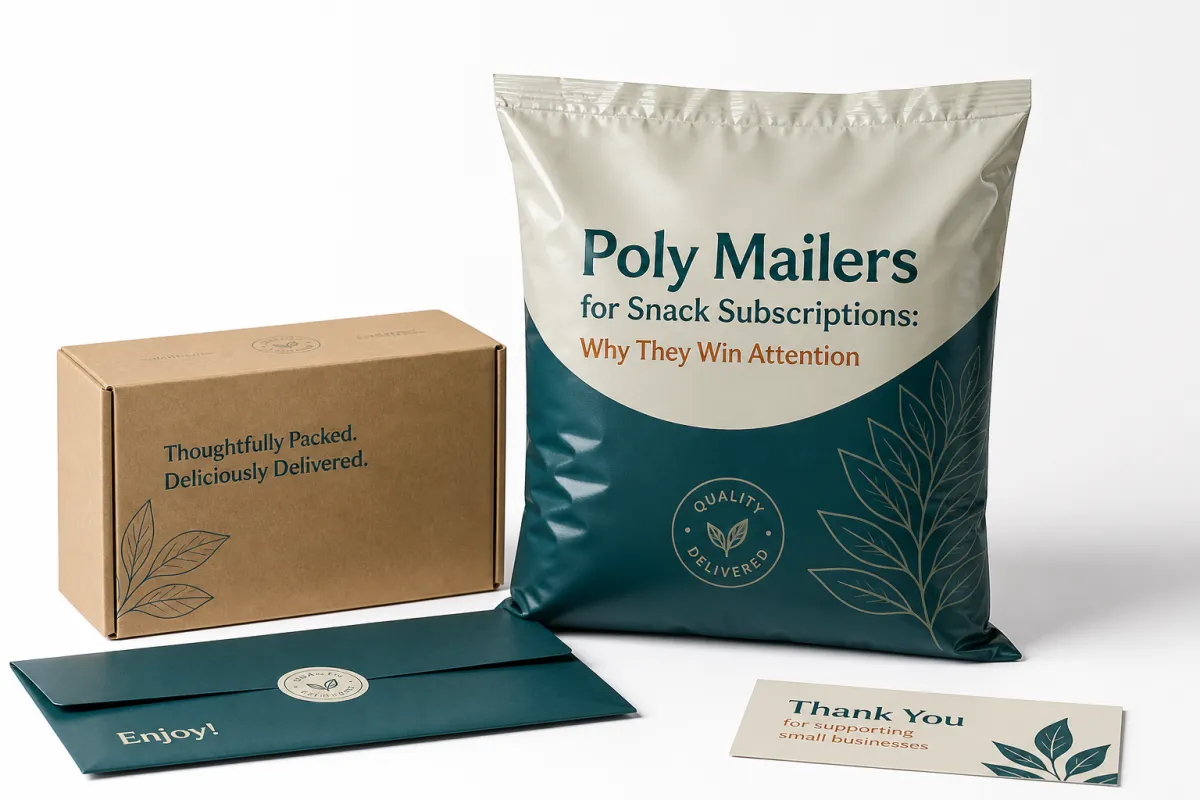
Picture a four-pack snack bundle: sealed trail mix, a cookie pouch, a jerky packet, and a small branded insert. In a rigid carton, you pay for paperboard, fill material, assembly time, and more dimensional weight than anybody asked for. In poly mailers for snack subscriptions, the same pack can often ship in a flatter, lighter format that costs less to move and takes up less room in your packing area. That matters quickly once monthly shipment volume climbs from a few hundred to a few thousand.
Poly mailers are simple, which is exactly why they work. They are lightweight shipping bags made from plastic film, usually with a peel-and-seal adhesive strip. No hidden structure. No corrugated walls pretending they are heroes. Just a flexible outer shipper that does one job well if you spec it correctly.
Snack brands lean on poly mailers for snack subscriptions because the economics line up. They reduce storage space, cut down carton waste, and speed up packing. A stack of mailers takes up a fraction of the room folded boxes do. That sounds boring until you are running a launch and the packing table looks like a warehouse had a bad week.
The branding side matters too. A Custom Printed Mailer gives you a visible surface before the customer even opens the package. That first impression is not a small detail. It is the difference between “nice” and “this brand has its act together.” A plain exterior can work, but if the snack subscription lives or dies on perceived value, the outside needs to earn its keep.
That said, the smartest choice is rarely the prettiest one. Poly mailers for snack subscriptions should be judged on three things: protection, fit, and margin. If one of those fails, the cute mailer turns into expensive decoration.
The best mailer is not the one with the loudest print. It is the one that survives shipping, packs fast, and still leaves enough margin to keep the subscription profitable.
For brands building a broader packaging system, it helps to compare outer shippers with Custom Packaging Products and see where a mailer beats a box, or where a box still makes more sense. If you already know a flexible shipper is the right direction, our Custom Poly Mailers category is the place to start.
How Poly Mailers for Snack Subscriptions Work
Here is the basic flow. Snacks go into their own sealed primary packaging first. Then those inner packs go into the outer mailer. That outer layer is the shipping skin. It keeps dust, scuffs, and moisture away from the contents during handling. It is not a mini shipping container with magical crush resistance. That expectation is how people end up annoyed.
In practice, poly mailers for snack subscriptions work best for products that are already stable in their own packaging. Think heat-sealed snack pouches, resealable bags, single-serve packs, and lightweight assortments that do not need rigid walls. They fit DTC subscription kits that are assembled in a simple sequence: fill, verify, seal, label, ship. Less friction at the packing table is not glamorous, but it saves real labor.
What do they protect against? Mostly the small abuses that happen in distribution: abrasion, dust, minor moisture exposure, and handling wear. A mailer keeps the outside of the shipment cleaner than a naked bundle or a flimsy sleeve would. That is enough for many snack programs. What they do not do well is prevent crushing from heavy stacked boxes or sharp impacts on fragile contents. If your assortment includes brittle cookies, heavily decorated treats, or pouches that collapse easily, the inner packaging needs to do more of the heavy lifting.
That is why brands sometimes get the outer and inner layers mixed up. The mailer is the outer shield. The food packaging is the actual product guard. Once you separate those roles, the buying decision gets easier. Poly mailers for snack subscriptions are not a substitute for good primary packaging. They are the outer layer that makes shipping cheaper and cleaner.
The branding effect is real, too. A printed mailer can be more visible than a printed carton because the design sits on the exterior surface from the moment the package arrives. That matters for unboxing videos, apartment deliveries, and office mailrooms where the package sits in plain view before opening. The customer sees the brand before they touch the snacks. That is valuable real estate.
On the operational side, a mailer can also speed up fulfillment. You are not folding, taping, and stacking cartons. You are inserting, sealing, and moving. For subscription businesses with tight recurring schedules, that small time savings repeats every month. Multiply it by thousands of orders and the difference stops being theoretical.
One practical caution: if your subscription has variable item sizes, test the widest bundle, not the average bundle. Average-sized packs make everyone feel clever until the larger month arrives and the seal line gets ugly. With poly mailers for snack subscriptions, the worst version of your pack should drive the spec.
Key Factors to Choose the Right Mailer
Size comes first. Not catalog size. Not guess size. Actual packed size. Measure the full subscription bundle as it ships, then add just enough room for a snug fit. If the mailer is too large, the contents slide around and the package looks sloppy. If it is too small, seams strain and packing gets annoying. Neither outcome is expensive in a dramatic way; both are expensive in the boring, cumulative way that kills efficiency.
Thickness matters next. Thinner film usually costs less, but thicker film resists puncture and tear better. For poly mailers for snack subscriptions, a common practical range is around 1.5 mil to 3 mil depending on product weight, handling risk, and whether you want a sturdier premium feel. If you are shipping soft, sealed snack packs, 2 mil is often enough. If the contents are heavier or the route is rougher, stepping up can be worth it. Recycled content blends can help with sustainability messaging, but not all recycled film performs the same. Test it.
Seal quality is another place where brands quietly lose money. A weak adhesive strip can cause returns, damaged deliveries, and customer complaints that show up as “my package arrived opened” even when the snacks inside are fine. Strong peel-and-seal closure matters more than people think because the mailer’s job is to stay shut after the pack leaves your hands. If the seal is questionable, you do not have a shipping solution. You have a customer service problem with a logo.
Print choice affects both cost and brand impact. Some brands only need a logo and a clean color field. Others want full coverage art with seasonal graphics or multiple SKU variations. The more print coverage you add, the more your unit price tends to climb. The right print strategy can also do branding work that would otherwise require inserts, stickers, or extra packaging steps. That is a tradeoff, not a moral issue.
Food safety basics are simple. The mailer is an outer shipper, not a food-contact package. Snacks should stay in their own sealed inner packaging. That keeps the compliance story cleaner and makes the mailer easier to specify. If you are designing a system for poly mailers for snack subscriptions, the outer shipper should never be asked to do the food-packaging job.
Testing matters more than opinions. If you can, check transit performance against a recognized distribution test such as ISTA methods, especially for route simulation and drop concerns. A test stack does not need to be fancy. It needs to be honest. I have seen a neat-looking mailer fail because the adhesive softened in a hot truck, and I have seen a plain one hold up just fine. The sample run tells the truth pretty quickly.
What to compare before you order
- Finished packed dimensions: Measure the actual monthly assortment, not one pouch.
- Film thickness: Match tear resistance to product weight and handling risk.
- Seal strength: Ask how the adhesive performs after compression and temperature swings.
- Print area: Decide whether the outside needs branding, instructions, or both.
- Material story: Check recycled content, source claims, and any certification needs.
Cost and Pricing for Poly Mailers for Snack Subscriptions
Let’s talk money, because this is where a lot of packaging decisions turn into nonsense. The price of poly mailers for snack subscriptions depends on size, thickness, print coverage, quantity, adhesive type, and extras like tear strips or gussets. If someone gives you a quote without those details, they are not quoting a mailer. They are quoting a mood.
Plain stock mailers are the cheapest option. They usually make sense for early-stage brands that are still proving retention and are not ready to commit to a custom print run. Custom Printed Mailers cost more upfront, but they can lower the cost per impression over time because the package itself does some of the marketing work. That can be a very fair exchange if the design is used well.
Volume changes the math fast. Smaller subscription brands often pay more per unit because they cannot spread setup, freight, and tooling across a big run. Larger runs improve unit pricing and can reduce inbound freight per mailer because you are buying in better case or pallet quantities. That does not mean “buy huge” is automatically right. It means your pricing should be checked at several quantity tiers before you decide.
There are also hidden costs that people forget until they are irritated. Artwork setup, print plates or digital setup, sample charges, freight on bulky cartons of mailers, overage waste, and reorders with changed artwork all matter. I have seen brands chase a lower unit price only to spend more overall because the freight and labor went the wrong direction. Cheap on paper is not the same thing as cheap in the invoice stack.
The smartest way to compare poly mailers for snack subscriptions is against the total landed shipment cost. That means mailer cost, freight, packing time, damage risk, and the cost of any extra outer packaging you no longer need. A slightly pricier mailer can still save money if it removes a carton, speeds up packing, or cuts a return rate. That is real savings, not marketing math.
| Mailer Option | Typical Unit Range | Best For | Tradeoff |
|---|---|---|---|
| Stock plain poly mailer | $0.06-$0.14 | Early-stage subscriptions, low decoration needs | Lowest cost, weakest branding |
| Custom printed 1-2 color mailer | $0.12-$0.22 | Mid-volume snack brands that want a branded outer shipper | Moderate setup cost, good brand impact |
| Full-color custom mailer | $0.18-$0.32 | Premium subscriptions, campaign-driven packaging | Higher print cost, stronger shelf-to-porch presence |
| Recycled-content custom mailer | $0.15-$0.30 | Brands with sustainability messaging and verified sourcing | Material performance can vary by blend |
Those ranges are practical starting points, not a promise. Material markets move, print method changes pricing, and freight can swing a quote by a surprising amount. If you are comparing vendors, use the same size, thickness, print coverage, and quantity in every request. Otherwise, you are not comparing offers. You are comparing confusion.
If sustainability is part of your brand story, get specific. A recycled-content claim should be backed by supplier documentation, and any paper insert or accessory component should be checked against chain-of-custody needs. For paper-based elements, FSC certification can matter when the brand wants documented forest stewardship. That does not make the mailer itself greener by magic. Packaging still needs to be honest about what it is and what it is not.
For snack subscriptions, the best pricing question is simple: does the mailer lower your total cost per shipped order? If the answer is yes, poly mailers for snack subscriptions are doing their job. If the answer is no, the fancy print is just a prettier way to lose money.
Ordering Process and Timeline for Poly Mailers
The ordering process should be boring. Boring is good. Start with a clear brief: packed dimensions, target quantity, thickness, print needs, seal preference, and whether you need special handling like tear notches or extra-strong adhesive. Once that spec is clean, the quote conversation gets a lot less foggy.
After the brief comes the proof stage. Most vendors will send a digital mockup first. That is useful for layout, copy, logo placement, and general artwork balance. If color match, film feel, or fit matters, ask for physical samples too. The sample is where poly mailers for snack subscriptions stop being a spreadsheet and start becoming a real shipping decision.
Lead times vary by order type. Stock mailers can move quickly, sometimes in just a few business days if inventory is on hand. Custom printed orders usually take longer because proofing, setup, production, and freight all need to happen in sequence. In many cases, 12-20 business days after proof approval is a more realistic planning window for a custom job, and longer if you have multiple SKUs or special finishes.
Complexity stretches the schedule. More print colors, different sizes, upgraded film, recycled blends, or multiple artwork versions can all slow the schedule down. That is not a supplier problem. That is production. The more variables you add, the more touches the order needs.
For subscription brands, the main rule is simple: build buffer time before the next shipment cycle. A missed mailer delivery can stall a whole send. That is a painful way to learn packaging is not “just packaging.” It is the thing standing between you and late orders.
A clean reorder system helps too. Keep the final approved spec in one place, not five tabs and somebody’s memory. Document size, film thickness, closure type, print artwork, and tolerance notes. If you have multiple poly mailers for snack subscriptions in rotation, name them clearly so the next person does not accidentally reorder the wrong color or the wrong size. Reordering by guesswork is a great way to create a very avoidable mess.
A simple order checklist
- Measure the full packed snack bundle and record the dimensions.
- Choose the mailer size with enough room for a snug but easy seal.
- Set thickness based on route risk and product weight.
- Approve artwork after checking readability and contrast.
- Confirm quantity, freight method, and delivery window.
- Save the final spec for the next reorder.
Common Mistakes That Hurt Snack Subscription Mailers
The first mistake is ordering by guesswork. People do this all the time. They eyeball the snack assortment, add a little “just in case,” and then wonder why the mailer looks bloated or why the seal has to be forced shut. Oversized poly mailers for snack subscriptions create sloppy packs and a weaker unboxing experience. Too small, and the seams suffer. Both outcomes are preventable.
The second mistake is asking the mailer to do too much. A mailer is not a crate. It is not a crush-proof shell. It is not a repair solution for fragile cookies or brittle snacks that already need careful handling. If your product breaks easily, the inner packaging or the outer format needs to change. Pretending otherwise just delays the damage until the customer opens the bag.
The third mistake is bad print design. Overcrowded graphics, too much text, low contrast, or tiny logos can make a branded mailer look cheap even when the material is decent. A clean layout usually ages better than a busy one. The point of poly mailers for snack subscriptions is not to cram every brand message onto the outside. The point is to make the shipment look intentional.
The fourth mistake is focusing only on unit price. Freight, storage, damage, and packing labor matter just as much. A mailer that saves two seconds per pack can be worth more than a slightly cheaper unit. A stronger adhesive can reduce replacement shipments. A better fit can improve packing speed. All of that shows up in the margin sooner or later.
The fifth mistake is not documenting the spec after the first order works. This one is especially irritating because it is so avoidable. Size drift, artwork drift, and seal drift happen when nobody keeps the approved details together. Then reorder time comes around and everyone pretends the previous success will repeat by instinct. It will not.
If you want to reduce risk, test against real contents and real handling. Compare your packaged subscription against basic distribution testing logic, and if your product is especially sensitive, ask whether an ISTA test profile makes sense for the route. A little testing now is cheaper than replacing a pile of damaged snack boxes later. That is just math.
In short, poly mailers for snack subscriptions work very well when the packaging system is disciplined. They go sideways when brands use them as a shortcut instead of a deliberate outer shipper. Those are not the same thing, even if they look similar in a warehouse photo.
Next Steps: Build a Better Poly Mailer Spec
If you are serious about poly mailers for snack subscriptions, do not start by asking for a random quote. Start by building a one-page spec sheet. Include the full packed dimensions, the heaviest monthly bundle, target quantity, material thickness, print area, seal type, and any extras like tear strips or gussets. That one page does more work than a vague phone call ever will.
Then ask for two or three samples and test them with actual subscription contents, not empty filler packs. Empty packs lie. Real product tells the truth. You want to see how the seal feels, whether the pack slides comfortably, and whether the final appearance still looks clean after the contents settle. A mailer that looks great in a render and miserable on the table is not a winning choice.
Next, compare at least three quotes using the same spec. Same size. Same thickness. Same print setup. Same quantity. Otherwise the numbers are not comparable and you are just entertaining yourself with spreadsheets. If you need a broader packaging lineup, compare the mailer against other formats in our Custom Packaging Products range, then narrow back down to the best outer shipper for the subscription mix.
After that, set a reorder checklist. Save approved artwork files, measured dimensions, lead time targets, and backup quantity thresholds. If you are planning a launch month or a seasonal promo, hold extra inventory so the shipment schedule does not depend on perfect timing. Perfect timing is a nice fantasy. Extra buffer is a real operating plan.
The practical takeaway is not complicated. Poly mailers for snack subscriptions work best when the spec is tight, the contents are properly sealed, and the next order is already planned. Get those three things right and the mailer becomes a quiet profit tool instead of a packaging headache.
For brands ready to make the call, poly mailers for snack subscriptions should be chosen with the actual bundle, the actual route, and the actual margin target in front of you. If the largest pack fits, the adhesive holds, and the landed cost beats a box, you have your answer. If not, you are probably buying decoration and calling it logistics.
What size poly mailers for snack subscriptions should I use?
Measure the full packed stack, not the individual snack pouch, because the whole monthly bundle is what has to slide in cleanly. Leave enough room for a snug fit without forcing the seal. Oversized mailers look sloppy, and undersized ones can split. If your snack mix changes by month, test the largest version before you lock the spec for poly mailers for snack subscriptions.
Are poly mailers for snack subscriptions good for fragile snacks?
They work well for sealed snacks that are not easily crushed, but they are not a substitute for real structural protection. For chips, brittle cookies, or layered items, use inner padding or move to a box if breakage matters more than postage savings. The outer mailer should handle scuffs and moisture, while the inner pack handles product integrity. That split keeps poly mailers for snack subscriptions in the right job.
How much do poly mailers for snack subscriptions cost?
Plain stock mailers are the cheapest option, while custom printed versions cost more because of setup and decoration. Unit price usually drops as quantity rises, so quote the same spec at several volume levels before you decide. Always compare total landed cost, including freight and setup, because the cheapest unit is not always the cheapest shipment when you are buying poly mailers for snack subscriptions.
How long does it take to produce custom poly mailers for snack subscriptions?
Stock mailers can ship quickly, but custom printed orders need time for proofing, production, and freight. Artwork changes, special finishes, or multiple sizes usually extend the timeline. A realistic custom window is often a couple of weeks after proof approval, and more if the order is complicated. Build a buffer so your poly mailers for snack subscriptions do not become the reason a launch gets delayed.
Should I use poly mailers or boxes for snack subscriptions?
Use poly mailers when the snacks are sealed, lightweight, and not fragile enough to need rigid walls. Use boxes when you need crush resistance, inserts, or a mixed assortment that shifts in transit. The right answer usually comes down to margin, product fragility, and how much unboxing theater you want. For many brands, poly mailers for snack subscriptions are the better economic choice, while boxes win on protection and structure.

