Buyer Fit Snapshot
| Best fit | Poly Mailers for Wholesale Clubs projects where brand print, material claims, artwork control, MOQ, and repeat-order consistency need to be specified before quoting. |
|---|---|
| Quote inputs | Share finished size, material target, print colors, finish, packing count, annual reorder estimate, ship-to region, and any compliance wording. |
| Proofing check | Approve dieline scale, logo placement, barcode or warning zones, color tolerance, closure strength, and carton packing before bulk production. |
| Main risk | Vague material claims, crowded artwork, missing packing details, or unclear freight terms can make a low unit price expensive after revisions. |
Fast answer: Poly Mailers for Wholesale Clubs: Specs, Pricing & MOQ should be specified like a repeatable production item. The safest quote records material, print method, finish, artwork proof, packing count, and reorder notes in one written spec.
Production checks before approval
Compare the actual filled-product size with the drawing, then confirm tolerance on folds, seals, hang holes, label areas, and retail display edges. Reserve space for logos, QR codes, warning copy, and material claims before decorative graphics fill the panel.
Quote comparison points
Review material grade, print process, finish, sampling route, tooling charges, carton quantity, and freight assumptions side by side. A quote is only useful when the supplier can repeat the same color, closure quality, and packing count on the next order.
For club programs, poly mailers for wholesale clubs are not just a packaging choice. They are an operations choice. That sounds less sexy than a glossy carton sample, I know. But a mailer that fits the product, survives the route, and keeps the pack line moving is doing real work.
Wholesale clubs live on speed, repeatability, and clean presentation. Buyers compare options all day long, but the format that usually wins is the one that removes a touch point, keeps receiving simple, and does not force the warehouse to babysit a weird new spec every time a reorder lands. Poly mailers for wholesale clubs earn their place when they make the process easier without making the product look cheap or slapped together.
If you are planning a replenishment program, a private-label apparel launch, or a club-ready fulfillment format, start with the packaging job itself. Not the artwork. Not the sales pitch. The job. That is how poly mailers for wholesale clubs stay useful instead of becoming one more thing for the team to argue about in a meeting nobody needed.
Why Poly Mailers for Wholesale Clubs Cut Handling Time
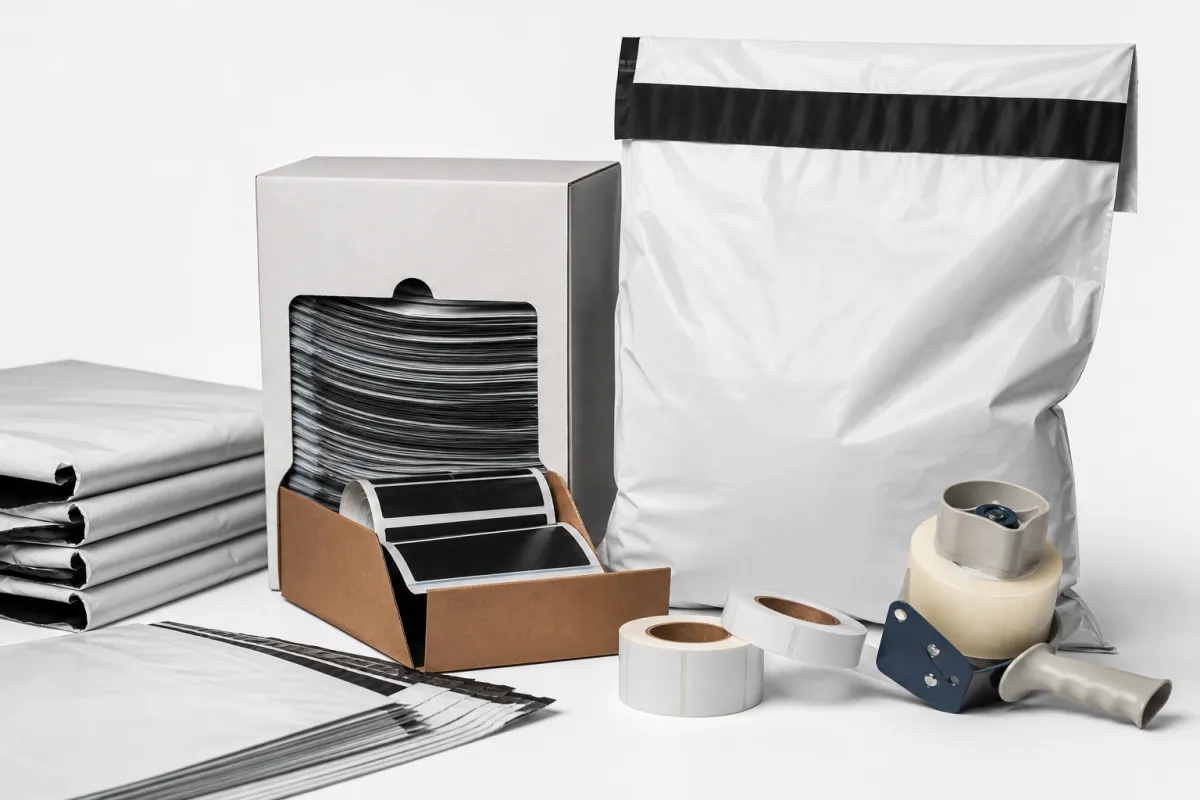
Standardization saves time in a wholesale club environment. Not glamorous. Just true. It shows up in receiving, staging, packing, storage, and reorder management. One solid spec can replace several box styles for flexible goods, which means fewer SKUs to manage, fewer mis-picks, and fewer decisions at the table. Poly mailers for wholesale clubs work especially well because they are light, stackable, and easy to dispense.
I have watched club programs slow down for no good reason because the packaging changed every few months. Different carton sizes. Different closures. Different labels. Every tiny variation adds friction. A stable mailer spec avoids that mess and gives procurement something they can actually defend. That matters more than a pretty render. With poly mailers for wholesale clubs, repeatability is the real advantage.
Think about a typical club assortment: tees, socks, underwear, scarves, small bedding items, or bundled promos. A mailer that fits most of those SKUs can shrink the need for multiple carton sizes. That saves space in the warehouse and cuts dead weight in the shipping lane. For poly mailers for wholesale clubs, the operational payoff is obvious. Less void fill. Fewer carton pulls. Fewer closure steps. More predictable output per hour.
From the buyer side, the logic is simple. Lower freight weight than corrugated. Cleaner retail presentation for soft goods. Fewer damage-related returns for items that do not need a rigid container. If the product is flexible, compressible, and not easily crushed, poly mailers for wholesale clubs often beat more complicated formats on total cost of ownership. Boxes can be fine. They are just not always necessary, despite what people who love boxes try to imply.
Receiving teams care too. Clubs and fulfillment partners prefer repeat shipments that arrive in the same format every time. Consistency cuts inspection time and keeps storage from turning into a scavenger hunt. A stable mailer spec gives procurement teams something they can trust, and trust is a rare little commodity in packaging. With poly mailers for wholesale clubs, the win is usually boring. Boring is good.
Most buyers start with these points. The ones that really move the decision later are a little different:
- Size: usable interior dimensions need to match folded product depth, not just the outer footprint.
- Film gauge: thickness should fit the handling environment and the weight of the contents.
- Print: branding helps, but not if it slows pack stations or makes proofing a headache.
- Minimums: MOQ affects entry price, stocking strategy, and whether a new format can be tested at all.
- Reorder consistency: color and film repeatability matter more than novelty in club programs.
That is why poly mailers for wholesale clubs perform best when the buyer starts with the pack process, not the artwork. The right spec solves a handling problem first. The branding problem can come second. Honestly, it usually should.
Poly Mailers for Wholesale Clubs: Product Options and Uses
There are a few practical variants to compare before placing an order for poly mailers for wholesale clubs. Opaque mailers are common for apparel because they protect privacy and create a cleaner shelf or parcel look. Clear mailers can work when product identification matters at a glance, but they are less forgiving if the contents look messy. Printed mailers add branding and support private-label positioning. Co-extruded structures balance strength and appearance by combining layers that improve puncture resistance and seal performance.
Recycled-content options show up often now, but the claim needs to be handled with care. If the material structure and paperwork support it, recycled-content mailers can fit a procurement policy or sustainability target. If not, the claim should stay off the table. That matters with poly mailers for wholesale clubs, since procurement teams usually want documentation, not slogans. For paper-based components and chain-of-custody language, review FSC guidance. For plastic-material claims, use the supplier’s spec sheet and test reports, not guesswork.
Tamper-evident closures and dual adhesive strips are worth paying attention to. A return-friendly format can reduce friction for club apparel programs, especially when the item may be shipped, opened, and sent back through a customer-facing workflow. For poly mailers for wholesale clubs, those closure features are not decoration. They reduce repackaging problems and improve the end-user experience, which is not a small deal in a high-velocity environment.
One practical note from the field: not every soft good belongs in a poly mailer. If the item has sharp corners, fragile trims, or anything that likes to punch through film after a rough ride, a box or reinforced pack may still be the smarter call. No sense pretending otherwise. Poly mailers for wholesale clubs shine when the product is flexible, low-crush-risk, and built to fold cleanly.
No single mailer fits every club SKU. The right format depends on shipping method, handling frequency, and whether the buying team cares more about presentation or efficiency. In most cases, poly mailers for wholesale clubs fit best for:
- Apparel such as T-shirts, shorts, loungewear, and basics
- Socks, undergarments, and small textile bundles
- Linens, pillowcases, and lightweight bedding accessories
- Subscription-style club packs and promo kits
- Other non-fragile goods that benefit from low tare weight
Buyers sometimes overestimate the need for a box. Understandable. Boxes feel safer. But for flexible merchandise, the practical answer is often a mailer with enough film strength and seal integrity to survive the route without hauling extra weight around. Poly mailers for wholesale clubs are especially effective when the product has a low crush-risk profile and folds cleanly.
If you are comparing formats, define the job first. Is the priority shelf presentation, machine-speed packing, return handling, or freight savings? Once that is clear, poly mailers for wholesale clubs get a lot easier to specify and a lot easier to quote.
Specifications That Matter Before You Place an Order
For poly mailers for wholesale clubs, the first spec to confirm is usable interior size. Nominal size can mislead because seal widths, gussets, and folded seams eat into real packing room. A 10 x 13 mailer may look fine on paper, then fail the second a folded garment set gets a little thicker than expected. Buyers should verify usable dimensions against folded product size, closure area, and label placement.
Film thickness comes next, and the right answer depends on handling. Standard soft goods may do fine in a lighter gauge. Bundled items or long-haul shipments often justify heavier film. The better spec is the one that references puncture resistance, seal integrity, and real transit conditions instead of just tossing around a thick-sounding number. For poly mailers for wholesale clubs, a stronger film can be worth the slightly higher unit cost if it keeps tear-through from showing up during bulk handling.
Print details matter more than many buyers expect. If the design uses multiple colors, the quote should state whether the price assumes one-sided or two-sided printing, mirrored panels, bleed, and safe zones. Barcode visibility matters too. A club pack may need a clear scannable label area even when the graphic is bold. If artwork repeats across panels, set that before proofing. A good supplier will confirm those details before press time on poly mailers for wholesale clubs.
Testing language helps as well. Packaging teams often use ISTA methods for distribution testing, and film properties may be evaluated against ASTM-style measures for tensile strength or dart impact depending on the supplier’s documentation. That does not mean every order needs a lab report stack. It does mean the buyer should ask for data, not a polished sales line. The more a project looks like a recurring club replenishment, the more useful that paperwork becomes for poly mailers for wholesale clubs.
| Mailer Type | Typical Use | Common MOQ | Indicative Unit Price | Notes |
|---|---|---|---|---|
| Standard opaque unprinted | Basic apparel and soft goods | 5,000-10,000 | $0.11-$0.18 | Fastest to quote; easiest to reorder |
| 1-color printed | Private-label basics and club-branded packs | 10,000-20,000 | $0.16-$0.26 | Good balance of branding and efficiency |
| Dual adhesive, return-ready | Apparel with possible returns | 10,000-25,000 | $0.20-$0.34 | Higher converting cost, stronger end-user utility |
| Recycled-content build | Programs with sustainability targets | 10,000-30,000 | $0.17-$0.29 | Requires exact material documentation |
| Specialty heavy-gauge format | Bundled or higher-handling products | 20,000+ | $0.24-$0.40 | Better puncture resistance, higher material cost |
The table is directional, not universal. Final pricing for poly mailers for wholesale clubs depends on print coverage, film structure, closure style, supplier capacity, and total order volume. Still, the pattern holds. Standard sizes and simpler print setups usually give the cleanest entry pricing. Specialty features push the ticket higher, but they can still earn their keep if they cut returns, rework, or packing labor.
One more spec deserves a hard look: sustainability claims. Recycled content, recyclability, and compostability should only be used when the structure and documentation support them. For plastic packaging and related waste guidance, the EPA’s materials-management resources are useful: EPA plastics guidance. For poly mailers for wholesale clubs, the safer move is to match the claim to the material, not the marketing brief. Otherwise the paperwork gets weird fast, and nobody enjoys that sort of cleanup.
Pricing, MOQ, and What Really Drives Unit Cost
Pricing for poly mailers for wholesale clubs depends on more variables than most buyers expect. Size is one. Larger formats use more film and often need broader print surfaces. Gauge matters too. Heavier film adds material cost, but it may reduce damage risk in transit. Print method is another major lever. Simple one- or two-color printing usually keeps costs under control, while full-coverage graphics, tight registration, and repeated artwork changes increase prepress work and press time.
The biggest mistake is comparing only the unit price. Landed cost is a better view. That includes freight, warehousing, sampling, and the cost of reorders. A quote that looks a little higher can still be the better business decision if it reduces spoilage, speeds pack-out, or lowers handling labor. That is especially true for poly mailers for wholesale clubs, where the packaging gets touched a lot between production and final delivery.
MOQ usually moves with customization. Standard sizes with modest print coverage often allow lower entry quantities than a fully custom build. If demand is uncertain, ask for tiered pricing and a pilot quantity. That gives you a much clearer picture of how the unit price drops as volume rises. For poly mailers for wholesale clubs, tiered quotes often separate a cautious test from a program that actually pencils out.
Ask the useful question: how much is the packaging saving you downstream? If a mailer cuts packing time, simplifies inventory, and keeps returns cleaner, the unit price can look very different in context. Procurement teams should ask for a quote that splits product cost, print cost, and freight. A transparent quote makes poly mailers for wholesale clubs easier to compare against corrugated alternatives or unbranded stock options.
To make the comparison more honest, ask for at least two volume tiers and one alternate spec. For example:
- Standard size, one-color print, baseline film gauge
- Same size, heavier film, dual adhesive closure
- Higher-volume run with the same artwork for reorder planning
That format shows where cost bends and where it holds steady. It also makes forecasting easier if the club program grows. Poly mailers for wholesale clubs are easier to budget when the supplier shows the price curve instead of one isolated number.
Internal planning matters too. If the program sits inside a broader sourcing effort, review the full packaging mix in your Custom Packaging Products portfolio and compare it with your existing Custom Poly Mailers options. If the order needs to move through an approved buying structure, your Wholesale Programs page should help align commercial terms with the forecast.
Process and Timeline: From Quote to Delivery
The process for poly mailers for wholesale clubs is usually straightforward. The timeline is another story if the inputs are sloppy. The cleanest workflow starts with inquiry, then spec review, then artwork prep, proof approval, sampling, production, quality check, and freight booking. Each step matters. If one is vague, the rest slow down. Buyers who send folded dimensions, quantity targets, and print expectations up front usually get a faster, cleaner answer.
Artwork issues cause most delays. Missing source files, low-resolution logos, unclear color standards, and last-minute copy changes can turn a routine job into a long one. Compliance language causes trouble too. If a club program needs a specific claim, barcode location, or print disclaimer, that should be settled before proof approval. For poly mailers for wholesale clubs, a proof is not just a picture. It is a production control document.
Timeline expectations should stay realistic. Standard-size runs with limited print colors move faster than fully custom builds. More color changes, more proof rounds, and specialty closure formats usually extend the calendar. As a planning rule, buyers move faster when they stick to an existing size structure and keep the print layout simple. That is often the shortest path for poly mailers for wholesale clubs when replenishment is the goal.
If the need is urgent, a few choices protect timing without wrecking the job. Narrow the print count. Choose a standard size. Approve a sample before full production. Simplify the artwork to one panel. Those choices reduce setup complexity and usually shorten the path to shipment. For poly mailers for wholesale clubs, speed comes from discipline, not from throwing the process into a blender.
Common timing risks include:
- Incomplete artwork or mismatched file formats
- Unclear interior size requirements
- Extra proof revisions after color feedback
- Last-minute changes to label placement or compliance copy
- Freight booking delays during peak shipping periods
From the buyer’s side, the smartest move is to lock the functional spec early. Once the dimensions, thickness, and print layout are settled, the order gets much easier to manage. That is one reason poly mailers for wholesale clubs work best in programs where SKUs stay stable and reorder cycles are predictable.
Do not ignore the value of a short pilot run. A small production lot can reveal whether the mailer fits cleanly, seals reliably, and stacks the way the warehouse expects. That is a modest expense compared with the cost of fixing a bad spec across a larger run. For poly mailers for wholesale clubs, pilot validation often saves more than it costs.
Why Choose Us for Poly Mailers for Wholesale Clubs
Consistency is the real selling point. In club programs, repeatable print quality, stable film specs, and reorder matching matter more than flashy promises. If the mailer needs to be reordered next quarter or next season, the buyer wants the same size, the same closure behavior, and the same color results. That is where poly mailers for wholesale clubs turn into a sourcing discipline, not just a product purchase.
We focus on the controls that reduce variation. That includes spec confirmation before quoting, artwork checks before proofing, sample retention, and inspection during production. Those are not the sexy parts. They are the parts that keep a large replenishment order from drifting off target. For poly mailers for wholesale clubs, control matters more than a long list of buzzwords.
Wholesale club buyers also need clear communication. They want direct answers on dimensions, film gauges, print coverage, and minimums without decoding sales language. They need to know whether a format works for soft goods, whether a dual adhesive strip is worth the extra cost, and whether a new size will slow packing. That is the kind of support that makes poly mailers for wholesale clubs easier to source and easier to repeat.
“The best packaging spec is the one the team can use the same way every time.” That sounds simple because it is. It is also the difference between a tidy replenishment program and a recurring operational headache.
For buyers comparing vendors, look for process, not hype. Ask how samples are handled, how reorders are matched, and what happens if the print needs a small correction. Ask whether the supplier can support volume forecasting and provide documentation for procurement review. A strong supplier of poly mailers for wholesale clubs should answer those questions directly.
There is a commercial upside to working with a partner that understands club buying. A club-ready order usually has tighter coordination, clearer target dates, and a stronger need for repeatability than a one-off ecommerce run. That is why poly mailers for wholesale clubs benefit from a supplier who can quote clearly, react quickly, and protect the spec across the life of the program.
In practice, the benefit is not just that the mailer looks good. It is that the packaging holds the line on cost, output, and presentation while keeping the procurement path manageable. That is the kind of result buyers can defend internally, and it is why poly mailers for wholesale clubs keep showing up in efficient packaging strategies.
Next Steps for a Fast Wholesale Order
If you want a fast quote for poly mailers for wholesale clubs, gather the essentials before asking for pricing. The most useful starting set is simple: SKU list, folded product dimensions, target quantity, artwork files, color preferences, and any sustainability or compliance requirements. Without those details, the quote gets slower and less reliable.
Next, request at least two volume tiers. That makes the quote more useful because you can see where the pricing breaks and whether a larger run makes sense. It also helps with planning if the program grows. For poly mailers for wholesale clubs, tiered pricing is often the fastest way to tell whether the spec is commercially sound.
Then ask for a spec sheet and a clear proof-and-production timeline. A good supplier should spell out what happens first, what needs approval, and what can delay shipment. If the order will be used across multiple locations or fulfillment paths, validate the format with a sample or short run before scaling. That is a practical safeguard for poly mailers for wholesale clubs because it catches fit or handling issues before they get expensive.
One last point: do not choose the mailer only by price. Choose it by the total effect on packing speed, freight weight, damage risk, and reorder consistency. That is the real calculation. If you are mapping a club program, send the folded dimensions, target volume, artwork, and closure preference together so the spec can be checked against the workflow before anyone commits to a number that looks good and behaves badly.
Poly mailers for wholesale clubs work best when the buyer treats them as a repeatable operating tool: the right size, the right film, the right print, and the right minimum. Get those four pieces aligned, and the packaging becomes easier to buy, easier to pack, and easier to reorder. That is the whole point.
Frequently Asked Questions
What sizes work best for poly mailers for wholesale clubs?
Choose the size from the folded product dimensions, not just the box or retail pack footprint. Common apparel-friendly sizes include 9 x 12, 10 x 13, 12 x 15.5, and 14.5 x 19, but the right choice depends on the SKU mix and the seal allowance. For poly mailers for wholesale clubs, asking for usable interior dimensions is the safest way to avoid a fit problem.
How thick should poly mailers for wholesale clubs be?
That depends on the handling environment and the weight of the contents. Light soft goods may work with a standard gauge, while bundled items or longer distribution paths often need a heavier film for better puncture resistance. For poly mailers for wholesale clubs, request burst or puncture data so the thickness decision is tied to performance, not just a generic label.
What is a typical MOQ for custom poly mailers for wholesale clubs?
MOQ depends on the print method, color count, and film structure. Standard sizes with simpler print setups usually support lower minimums than highly customized builds. If demand is uncertain, ask for tiered pricing and a pilot run before committing. That approach is common for poly mailers for wholesale clubs because it limits risk while preserving a path to scale.
How long does production take for poly mailers for wholesale clubs?
The timeline usually includes proofing, prepress, production, inspection, and freight booking. Artwork approval and sample sign-off are the most common reasons schedules slip. Standard sizes and limited print colors generally move faster than fully custom configurations, which is why poly mailers for wholesale clubs should be planned with a clear approval chain from the start.
Can poly mailers for wholesale clubs be made with recycled content?
Yes, if the material structure and seal performance support the claim and the supplier can document it. Confirm the exact recycled-content percentage and any club compliance requirements before ordering. Ask for documentation so the sustainability language matches the real product spec. For poly mailers for wholesale clubs, documentation is the difference between a useful claim and a risky one.


