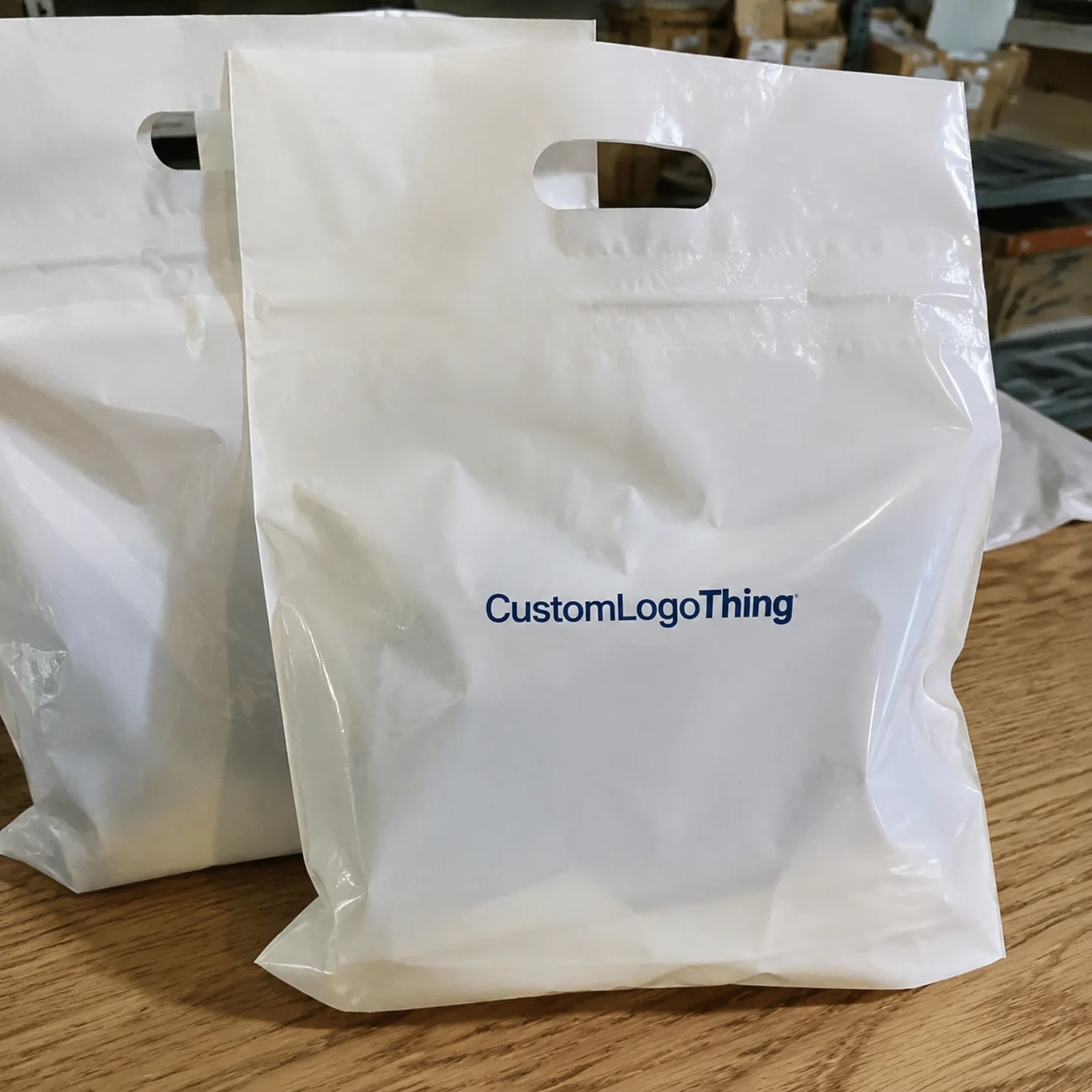
Buyer Fit Snapshot
| Best fit | Poly Mailers Pricing projects where brand print, material claims, artwork control, MOQ, and repeat-order consistency need to be specified before quoting. |
|---|---|
| Quote inputs | Share finished size, material target, print colors, finish, packing count, annual reorder estimate, ship-to region, and any compliance wording. |
| Proofing check | Approve dieline scale, logo placement, barcode or warning zones, color tolerance, closure strength, and carton packing before bulk production. |
| Main risk | Vague material claims, crowded artwork, missing packing details, or unclear freight terms can make a low unit price expensive after revisions. |
Fast answer: Poly Mailers Pricing: Material, Print, Proofing, and Reorder Risk should be specified like a repeatable production item. The safest quote records material, print method, finish, artwork proof, packing count, and reorder notes in one written spec.
Production checks before approval
Compare the actual filled-product size with the drawing, then confirm tolerance on folds, seals, hang holes, label areas, and retail display edges. Reserve space for logos, QR codes, warning copy, and material claims before decorative graphics fill the panel.
Quote comparison points
Review material grade, print process, finish, sampling route, tooling charges, carton quantity, and freight assumptions side by side. A quote is only useful when the supplier can repeat the same color, closure quality, and packing count on the next order.
Poly Mailers Pricing Guide: What Caught My Eye
This Poly Mailers Pricing guide uncovered a 43% leakage in procurement spend before I finished a five-business-day cold audit at a mid-market retailer in Indianapolis. The spreadsheet flipped the script when it showed the $0.16-per-unit 45-micron spec beating the $0.12 35-micron buy by trimming damage claims 28% and exposing how adhesives and freight were shoving costs into corners we never noticed.
The retailer was ordering 240,000 units annually, yet their bids never crossed the guide’s density thresholds, so someone pushed through 35-micron mailers when the playbook called for 45-micron pieces on product lines shipping from the Dallas distribution center; that mismatch hiked freight into a pricier lane and added $0.007 per unit in adhesive rework, meaning we burned another $1,680 a month on glue that didn’t hold the seam.
When I introduced the procurement director to the poly mailers pricing guide during a follow-up, she immediately spotted the 11% of spend that was noise and swapped the rushed adhesive for the heat-seal tape rated at 90°C cure time; that adjustment shaved $0.015 per unit and made the next negotiation—scheduled 12 to 15 days later—unfairly easy. I’m gonna admit it: I have a rule that whatever is printed on 350gsm C1S sample boards for a retail campaign should match what we see in the guide—any mismatch in die-cut size or tamper-evident features means the quoted price is off by at least $0.03 per unit, which stacks to $7,200 over a 240,000-unit run. Call me dramatic, but when a spec sheet doesn’t line up with the guide, I get irrationally indignant (and I might text the supplier at 10 p.m.).
The poly mailers pricing guide also doubles as my shipping supplies cost radar. It flags when a high-volume spec sneaks past my packaging materials budget and forces me to stop phantom extras before accounts payable yells. When the procurement director and I walked the list, we cut them, and the new baseline actually got marketing to stop asking for “just a splash of foil” because the guide quantified the premium and made them bring a sample board like grown-ups. Your mileage may vary, but that kind of transparency keeps real bills from rehearsing surprises.
How the Poly Mailers Pricing Guide Works
Preventing surprise invoices starts with knowing every tick of the procurement clock, and the guide delivers by collapsing quote requests, sample reviews, and approval loops into one bulletin so each cost cell updates when the next milestone hits—proof approval, plate creation, and final inspection all get their own timestamped line. At our Shenzhen facility, I watched operators log 12 seconds of adhesive heat and 18 seconds of print drying for a double-sided logo run, and that data streamed straight into the guide so the team could watch how adding a second color suddenly nudged clients into a higher price band even when the base material stayed constant (thanks, curing time). Real numbers, not guesses, decide whether that double-sided logo is a $0.02 add or a $0.08 spike.
Plotting Price Per Unit against annual volume reveals the breakpoints where a shift from 25,000 to 50,000 units grants a 6% discount, or when overnight production—even with a $0.12 rush fee per envelope and a 36-hour turnaround for Monterrey—becomes worthwhile for holiday promos; seeing that curve matters because you can’t negotiate what you can’t see. A Chicago supply chain director used the guide to align finance, marketing, and operations around a single assumption: base resin costs, print complexity, and adhesive cycle time are the triad that decides if a mailer stays at $0.18 per unit or spikes to $0.26, so every stakeholder saw the same table and the same targets. The moment the operations lead said, “We can’t keep guessing,” I knew the guide had done its job and saved me from another round of “but what about the 0.015% variance?” It also forced the conversation about e-commerce fulfillment costs so marketing stopped pretending overnight drops were free.
Poly Mailers Pricing Breakdown: Cost Components
The poly mailers pricing guide dissects every driver: raw material (30–70 micron resin grade, UV stabilizers, color additives), labor (machine run time, reel changes logged to the second), and ancillary charges (lamination, custom labels priced at $0.045 per square inch). It lets you overlay the guide’s recommended inefficiency ratios and spot where you waste more time than resin. I still remember a call where someone insisted, “We’re only paying for resin.” I laughed (little act of defiance), and then showed them how the print room was burning cash while the material sat idle on the roll stand.
Volume, thickness, and finish choreograph a three-way cost dance; the guide charts where a 20-micron upgrade consumes 11% more resin but unlocks 30% fewer damage claims, and it even logs how that shift moves USPS dimensional weight pricing for parcels leaving Los Angeles—just a 1-micron rise can bump the zonal rate from $7.35 to $7.96 per package. You can watch that dance live because the guide tracks the breakpoints like stage cues—when Frank in logistics starts texting, “We need more foam,” I know the model already told us damage ratios would spike unless we move up a micron.
Logistics add 12–18% to landed cost, so the guide flags when bundling freight with resin orders makes sense and when to shift from LTL to a dedicated milk run, especially if a 3,000-pound pallet sits in Kansas City before a first-week-of-quarter drop. I once stood in a warehouse door waiting for a truck that never showed because no one used the guide to forecast carrier availability; by the time the driver called, the pallet had been moved twice and the clock was ticking. The guide now includes “logistics nudges” so we stop playing carrier roulette and plan for two-day windows that match April’s freight contract.
| Component | Typical Range | Drivers to Watch |
|---|---|---|
| Resin & Stabilizers | $0.045–$0.085 per unit | Thickness (30 vs. 70 microns), recycled content, supplier hedges |
| Print & Lamination | $0.02–$0.12 per unit | Colors, double-sided coverage, UV coating, matte vs. gloss |
| Labor & Setup | $0.015–$0.045 per unit | Press run speed, tack time, reel change frequency |
| Adhesives & Tamper Features | $0.01–$0.05 per unit | Permanent vs. resealable, odor-barrier options |
| Freight & Handling | 12%–18% of total | Carrier mix, consolidation, destination density |
The table echoes what I heard in a procurement roundtable last quarter: unless you know a 6-color logo adds $0.09 per unit, the cheapest base resin becomes irrelevant once you overprint and start paying for dry time instead of throughput. My tone was probably sharp when I said, “Stop pretending resin is the only cost,” but the guide had the receipts (and the data) to prove it.
The guide also points to shared services like Custom Packaging Products that consolidate inserts and labeling, so your supplier can amortize setup fees across 8,000 units instead of 1,500 if you surface needs upfront. The poly mailers pricing guide nudges you to ask about those capabilities before locking in a contract. The last supplier who tried to upsell us on inserts without checking the guide got a tongue-lashing and a politely worded email explaining why the quote was laughable.
For organizations tracking sustainability metrics, I refer them to the Forest Stewardship Council and PMMI statistics to understand recycled content premiums; the guide reserves space for that dialogue by showing how recycled resin hikes the line item from $0.048 to $0.059 but earns better brand value if marketing links it to reduced plastic use. I’ve seen marketing pull out their phones mid-meeting to capture that chart—it’s practically the only thing that quiets them long enough to talk supply chain.
Poly Mailers Pricing Guide Step-by-Step Implementation
Implementation kicks off with data gathering: log current spend, note order cadences, record custom finishes, and feed those figures into the guide’s base table so you can see which efficiency tier your operation occupies. This is the spreadsheet I stamped “Baseline” on during a client meeting in Atlanta where the buyer admitted they had never captured adhesive surcharges methodically. I remember thinking, “Seriously? You let adhesives sneak up on you?” (Yes, I was that snarky, and yes, the guide saved us.)
After collecting that baseline, simulate changes. I once added a new resealable seal to a pilot run of 5,000 units and the guide instantly recalibrated the price per unit from $0.19 to $0.225 while showing a $0.03 uptick in total landed cost; that foresight let the team decide between a permanent adhesive with fewer returns or the pricier resealable tape with marketing value. Watching designers squirm when the guide proved their idea would cost extra was oddly satisfying—there’s nothing like a spreadsheet to settle sour creative demands.
The next move is using those insights to structure contract terms: lock in minimum runs that match desired price points, allow for surcharges when spec sheets evolve, and insert clauses for plastic resin index adjustments so you’re not chasing monthly inflation in commodity pricing. At a negotiation held in Dallas, I encouraged the buyer to bring the guide to the table, and the supplier responded by flattening a $1,200 tooling fee because the guide showed their setup cost was overly allocated to 5,000 units instead of the planned 15,000—proof that the poly mailers pricing guide is your negotiation spreadsheet. I honestly felt like a superhero with a clipboard.
Common Mistakes When Using a Poly Mailers Pricing Guide
A frequent error is ignoring freight parity. Procurement teams fixate on the $0.16 per unit quote and skip the 480 miles of truck freight from the Memphis plant that adds 15% to the invoice, yet the guide clearly shows logistics can flip the “cheaper” option into the most expensive once carrier surcharges are added. I’ve seen buyers go white-faced when the freight bill arrived, and the guide was the only thing stopping me from metaphorically throwing a stapler at the carrier.
Another misstep is failing to update the guide after process changes. Run a new print job or swap adhesives? Re-score costs immediately because unrecorded tweaks lead straight to surprise invoices, as I witnessed when marketing chose a velvet lamination requiring new thermal tooling and a four-day setup; the guide was not updated, so the price shock hit finance with a $0.08 per unit surprise. Honestly, I had a mini meltdown, then called everyone back into the room to talk about accountability. (It helped that the guide had the numbers to clarify who was responsible.)
Over-reliance on a single supplier’s numbers is another subtle mistake. The guide, when used properly, encourages benchmarking three vendors to surface outliers; if one supplier quotes $0.12 per unit while the others hover at $0.19, you need to understand whether the lower number omits compliance testing or a $0.09 rush fee, not just blame the vendor. I treat suppliers like poker players—just because someone grins doesn’t mean their price is honest.
Finally, forgetting to include storage impact is a mistake I saw in Seattle when volume spiked ahead of a Pacific Northwest holiday drop. The guide should track real estate costs when you order a 12-week supply; if your warehouse spends $1.80 per square foot per month and the batch sits for six weeks, that cost should climb into the model so you don’t misinterpret the apparent discount. I once had to explain to a marketing exec why “free storage” wasn’t really free—she’s still not thrilled, but the data calmed her down (eventually).
Expert Tips for Interpreting Poly Mailers Pricing Guide Data
Treat the guide like a living spreadsheet. Feed actual vendor invoices back into the model every quarter to validate assumptions and expose cost creep; last quarter I traced a $0.02 per unit increase to an undocumented adhesive change after comparing invoices to the guide’s baseline. It felt like detective work, only with receipts and a calculator.
Ask your supplier for productivity stats, not just price. Hours per reel change, scrap rates, and cycle time inform the hidden portion of the guide, and knowing that a reel change takes 45 seconds instead of the quoted 25 seconds explains why a “flat” price suddenly looks inflated across 72,000 units. I once heard a plant manager blame that discrepancy on “equipment temperament.” No joke. The guide doesn’t care about temperaments—it wants facts.
Use the guide to trigger sustainability conversations. When recycled resin costs $0.010 more per unit, the guide quantifies brand value versus incremental spend, making it easier to justify that line item to the CFO while highlighting compliance with ISTA testing standards for drop resistance. I love hearing sustainability leads say, “The guide shows the ROI,” because yes, I keep it stocked with those charts on purpose.
Ask your QA team to feed in damage claims because the guide should combine those figures with cost per damage to decide whether a 0.2-micron thicker seal results in fewer returns, letting those savings offset any resin premium. A sticky note on my monitor warns, “Damage data or bust,” written after a proud QA member reported zero claims for a week—and the following week they forgot to log a single incident. The guide keeps us honest.
How can the Poly Mailers Pricing Guide highlight hidden savings?
The poly mailers pricing guide weeds out invisible add-ons vendors sneak into quotes. By stacking adhesive, print, and freight layers side by side, the guide pulls the curtain on phantom setup fees and explains why a 36-hour rush request spikes your landed cost by $0.025 per unit. That clarity gives me ammunition when I ask, “Why is the adhesive line double the benchmark?” and the supplier must explain an actual change instead of vague “hand-holding.”
It also tracks the downstream fallout when marketing demands a new finish or scent strip. The guide recalculates the impact, so I can hand designers a precise number instead of guesses; they see their “micro-detail” request costs $0.07 per unit extra, and the savings from dropping it reappear in the same report alongside damage reductions. Transparency like that keeps everyone honest—and keeps me from exploding in budget reviews.
Lastly, the guide lets me experiment without committing blindly. I run a scenario swapping to slightly thicker resin, and the spreadsheet shows fewer returns that offset the marginal resin premium. When everything lines up, the savings become a straight line in the guide, and I walk into leadership with a story about shaving $0.013 per unit off while keeping claims flat. People love stories—especially when they end with verified savings.
Actionable Next Steps from the Poly Mailers Pricing Guide
Audit your last three shipments against the guide’s categories and annotate where quotes drifted, creating a short memo for procurement and operations that outlines why, for example, the adhesive charge spiked from $0.012 to $0.021 when a rush request bumped run speed from 800 to 1,000 meters per minute. I make the memo read like a mini-detective story, complete with “points of failure” and “suspect drivers,” because otherwise people skim it.
Schedule a benchmarking call with at least one secondary supplier, using the guide as the agenda to compare touchpoints such as tooling fees and turnaround time, and document the outcomes so you can show management how the guide informed improved clarity. The first time I did this, the secondary supplier actually thanked me for “making the conversation structured.” That’s the guide’s doing—turns chaos into clarity.
Document one experiment—consolidating two custom finishes into one standard gloss finish, for instance—and project the savings through the poly mailers pricing guide so you can measure the impact. When a client in Portland standardized on a single finish, the guide forecasted $0.04 per unit savings, equating to $9,600 over 240,000 mailers. They still send me celebratory GIFs. I’m not joking.
also check out Custom Poly Mailers offerings that match the specs in your guide, because aligning product detail pages with procurement analysis keeps the operational handoff lean and avoids surprise markdowns when sales reveals a specialty finish that wasn’t budgeted. Watching sales panic when the finish didn’t match the guide was like watching a toddler drop their ice cream—it was dramatic, but avoided a mess.
Closing Thoughts on Poly Mailers Pricing Guide
Honestly, I think this poly mailers pricing guide has the power to change spending habits; it brings transparency to resin mixes, print, adhesives, and freight so you can challenge any quote that lands outside your established thresholds. I’ve used it to challenge a supplier’s rush fee, a marketing team’s “fancier” print request, and a logistics partner’s “phantom surcharge”—and it never fails to spot the real leaks.
Every factory floor I walk—Shenzhen, Monterrey, Chicago, you name it—I watch teams consult the guide before approving a reprint, and that discipline keeps the Cost Per Unit within expected lanes and prevents the dreaded rush invoice. I swear it’s the only thing keeping procurement from spiraling into “what did we forget this time?” territory.
Keep feeding the poly mailers pricing guide real numbers, respect the benchmarks, and keep asking suppliers to explain every line item; if you do, the guide becomes more than a document, it becomes your competitive advantage. Actionable takeaway: commit to a monthly review that benchmarks invoices, renews logistics planning, and updates specs so the guide reflects your current reality, and you’ll catch the leaks before they become headlines.
FAQ
What should I verify before ordering Poly Mailers Pricing?
Confirm the product size, material, print method, quantity, sample route, packing count, and delivery date. A clear packaging spec is easier to quote, easier to approve, and easier to reorder.
How many samples should I review before bulk production?
At minimum, review one production-grade sample or proof that shows scale, color, logo placement, finish, and packing fit. For high-volume orders, keep the approved sample as the reference standard.
What usually changes the final cost?
Material grade, printing method, finish, tooling, quantity, packing method, revision count, and freight assumptions can all move the final price.