Buying poly mailers wholesale for apparel startups looks straightforward until a bad packaging choice eats the margin you thought you saved. A low unit price helps. A bag that splits on a hoodie, looks flimsy on camera, or forces a reship because the adhesive failed does the opposite.
For launch brands, the real question is not, “What is the cheapest mailer?” It is, “Which mailer protects the garment, fits the pack-out, and keeps freight under control?” That is the difference between a clean first drop and a stack of avoidable complaints.
The best packaging decisions usually feel a little unglamorous. They are measured, not flashy. They rely on dimensions, film gauge, closure strength, and order timing rather than mood-board logic. That is exactly why they work.
Why the Cheapest Mailer Often Becomes the Costliest Problem
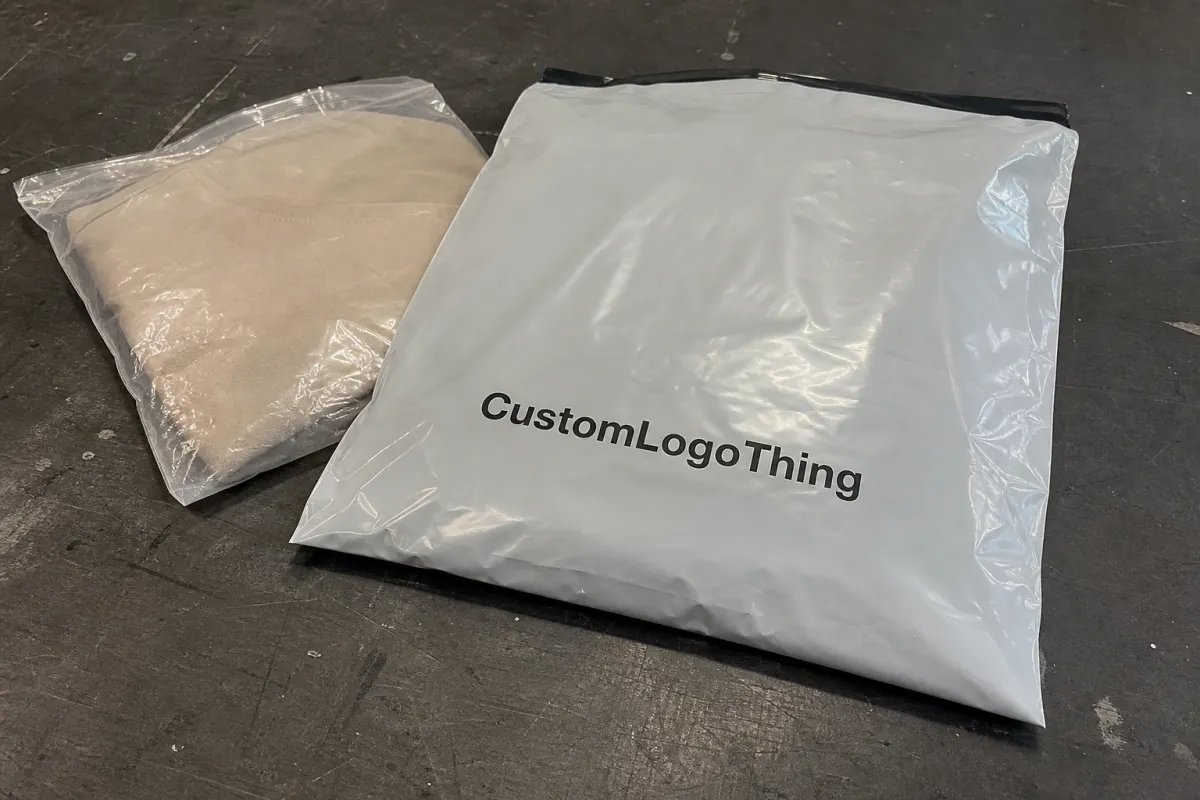
Startups tend to compare only the quoted unit price. That is the first trap. A mailer that saves two cents can cost much more once you include damaged presentation, extra packing time, or a second shipment because the closure failed. From a packaging buyer’s perspective, the relevant figure is total landed cost: unit price, print setup, freight, overages, sample cost, and the cost of preventable mistakes.
Apparel is forgiving in some ways and unforgiving in others. A folded tee can survive a lot. A hoodie, heavyweight sweatshirt, or two-piece set can expose weak seams, thin film, or a bag that is simply too small. If the mailer bulges, the parcel looks sloppy. If it is oversized, you pay to move air. Carriers do not discount the mistake because the brand is early.
For that reason, the cheapest option is often the one that creates the most hidden work. Packing teams spend longer forcing garments into bags that do not fit. Customer service starts answering questions about torn seals and damaged presentation. Replacements add cost on the back end, where startup budgets are usually thinnest.
In practice, the best choice is usually a mid-gauge poly mailer matched to the product and the shipping method. That keeps weight down, resists moisture, and gives you a clean front face for branding. If you want a more premium unboxing feel, custom printed outer mailers can make sense, but only after the pack-out itself is stable. Packaging should support the product, not compensate for a messy fold or a rushed size plan.
For early orders, think in ranges rather than absolutes. A tee-focused program may work with a lighter bag, while a fleece line needs more tear resistance and a wider format. If a supplier cannot explain that tradeoff clearly, keep moving. You are not buying a generic sack. You are buying a shipping component that has to survive the courier network and still represent the brand well when it arrives.
Mailer Styles That Fit Tees, Hoodies, and Flat-Pack Bundles
There are a few standard options for Custom Poly Mailers, and each one fits a different use case. Standard opaque mailers are the workhorse choice. They hide the product, keep the pack tidy, and usually deliver the lowest price per unit. Clear mailers can work for samples or retail-ready bundles, but they are a poor fit if privacy or a stronger branded look matters.
Padded versions are useful only when the shipment needs extra scuff protection. For most apparel, padding adds material and freight without adding much value. A soft garment does not need bubble protection unless the pack includes fragile accessories or a hard-edged insert. Printed mailers, by contrast, are a branding tool. They make sense when the outer package is part of the customer experience and the order volume justifies setup costs.
Closure style matters more than many new buyers expect. Self-seal closures are standard and efficient for launch orders. Double adhesive strips are smart if returns are likely, because the customer can reseal the package cleanly. Tamper-evident designs help when product integrity or brand protection matters. None of these features is magic. They just solve different operational problems.
For bulkier sweatshirts or flat-packed bundles, a little more width and depth saves more headaches than a “premium” finish ever will. For lightweight tees, a smaller format reduces wasted space and can shave freight. The right size should be based on the folded stack, not on what another brand ordered last season. Their pack-out may have nothing to do with yours.
If you need a starting point, compare the garment dimensions against the bag, then leave enough room for a clean slide-in without forcing the seal. A tight but workable fit is usually better than a roomy bag that shifts around in transit. For reference, our Custom Poly Mailers page shows the kind of size variation that matters more than a catalog image ever will.
Simple rule: choose the mailer by the garment, not by the photograph. Catalog images are styled to sell. Freight invoices are not.
| Mailer style | Best for | Typical cost impact | Notes |
|---|---|---|---|
| Standard opaque poly mailer | T-shirts, light apparel, simple orders | Lowest | Strong baseline for most launch brands |
| Custom printed poly mailer | Branded drops, DTC unboxing | Moderate | Setup fees matter more at low quantities |
| Double-adhesive mailer | Returns-heavy programs | Moderate | Useful when resealability improves customer experience |
| Padded mailer | Apparel with fragile add-ons | Higher | Overkill for most clothing shipments |
Specs That Actually Protect Apparel in Transit
The spec sheet should tell you more than a glossy sales page ever will. For apparel, three things matter first: thickness, seam strength, and seal quality. Thickness is usually measured in mil or micron, depending on the supplier. Thicker is not automatically better, but too thin is a cheap mistake that shows up as torn corners and split seams.
Seam strength is where many mailers fail quietly. A bag can look fine in hand and still fail once a folded hoodie presses against the edge. Tear resistance matters for cartons that are tossed, stacked, or dragged through a courier network that does not treat parcels gently. Water resistance matters too, especially for outer transit bags that may sit on a wet dock or on a porch for a few hours.
Opacity is more than a privacy detail. It affects brand perception. If the garment shows through, the package reads as utilitarian instead of polished. For online apparel brands, that visual impression matters. A clean opaque bag gives you a more controlled first touch, even before the customer opens it.
Size choice should be based on the folded garment stack. Measure the tee, hoodie, or bundle after packing, then leave enough room for a clean insertion. Too much slack creates extra freight weight and a sloppy presentation. Too little creates crushed edges and a seal line that has to work harder than it should. That is why many brands use two or three sizes rather than trying to force every SKU into one bag.
For packaging tests, standards are useful because they replace guesswork with repeatable results. ISTA test methods help evaluate transit durability, while ASTM material testing gives you a more objective way to compare film and seam performance. If your sourcing team cares about sustainability claims, FSC certification applies to paper-based components, not plastic mailer film, so the claim should match the material. Buyers confuse those details more often than they should.
Print coverage and finish are the last layer. Full-coverage printing can look excellent, but it raises ink and setup costs. A restrained logo panel, a one-color mark, or a clean two-tone layout often gives you most of the brand effect at a lower cost. The practical goal is not maximum decoration. It is a package that reads clearly, prints cleanly, and ships without friction.
Film construction also affects performance more than many product pages admit. LDPE and co-extruded films are common because they balance flexibility, tear resistance, and weight. A recycled-content film can be a sensible upgrade, but only if it still seals properly and survives the route you actually use. A sustainability claim that weakens the bag is not an improvement; it is a tradeoff disguised as progress.
Before approving production, ask for the actual film gauge, seal width, and closure type. If the supplier cannot state those plainly, they probably do not control enough of the process to help when something goes wrong. That is the difference between a buyer and a guesser.
Cost, MOQ, and Unit Pricing for Launch Orders
For poly mailers wholesale for apparel startups, pricing moves in predictable ways. Size, film gauge, print complexity, quantity, and freight all affect the quote. Bigger mailers use more material. More colors increase setup and press time. Lower quantities almost always raise the unit price because fixed costs get spread across fewer pieces. That is not a supplier trick. That is production math.
Here is the practical range I would use when comparing launch options: plain stock mailers usually sit at the low end of the market, custom printed versions land higher, and specialty finishes or high-coverage print push the price up again. For a first run around 5,000 pieces, many apparel buyers see a spread wide enough to matter but not wide enough to justify the wrong bag. By the time you reach larger reorders, the unit cost typically drops enough to make print and size upgrades easier to justify.
MOQ is where brands make strategic mistakes. A lower MOQ helps test a new drop without overcommitting cash. A higher MOQ can lower unit pricing and reduce future reorders, but only if the style is already proven. If you are still testing fit, demand, or seasonal colorways, do not lock yourself into a volume that turns inventory into a storage problem.
Compare quotes the right way. Ask whether the price includes setup, plates or screens, sampling, overrun tolerance, freight to your zip code, and any reprint allowance if the proof misses the mark. A quote that looks lower by 10% can disappear fast once those line items appear. Freight is especially easy to underestimate because a light item in a large carton can still move through pricing bands you did not expect.
Buyers also overlook carton configuration. A 10,000-piece order packed efficiently can land differently from the same quantity packed in smaller inner cases. That affects warehouse handling, inbound labor, and storage. Those costs do not show up on the product line, but they still hit the budget.
| Order path | Approx. MOQ | Typical unit price behavior | Best use |
|---|---|---|---|
| Stock poly mailers | Low | Lowest unit cost | Testing, filler inventory, fast launches |
| Custom printed mailers | Medium | Higher at low volume, better at scale | Brand launches and repeat SKUs |
| Special finish or full coverage | Medium to high | Highest setup and print cost | Premium positioning, stronger shelf presence |
If you are building a repeat program, a wholesale structure usually beats one-off buying once the packaging spec settles. Wholesale Programs becomes useful only after the dimensions, print plan, and reorder cadence stop changing every week.
Production Steps and Lead Time From Art Approval to Delivery
Production moves in a standard sequence: artwork cleanup, proofing, sample review if needed, production, packing, and freight booking. The order only moves as fast as the slowest approval. That is why good suppliers spend time fixing the file before it reaches press. A bad logo file can add days. A messy dieline can add more.
Simple stock mailer orders can move quickly, especially when artwork is already ready and the supplier has inventory on hand. Custom printed orders take longer because they need proofing and setup. Add special finishes, multiple print colors, or a custom size, and the timeline stretches again. Build in a buffer rather than gambling on a perfect schedule. Launch dates rarely respect optimism.
For a clean run, expect the proof stage to take a day or two if the artwork is solid. Production time often lands in the low double-digit business-day range after approval, but that depends on quantity, print method, and factory load. Freight can add another few days for domestic delivery and longer for cross-border shipments. If the vendor is vague about transit time, ask for an actual ship window and an actual delivery estimate. Vague answers are how launch dates become apologies.
The most common delay points are avoidable: missing bleed, low-resolution logos, color mismatches, undecided proof notes, and payment delays. If you are preparing a seasonal drop, approve your artwork before you ask for a quote. That habit saves more time than a dozen rushed emails later.
Here is the practical path: confirm dimensions, approve the dieline, verify print colors, sign off on the proof, then release production. Nothing glamorous. Just fewer mistakes.
One more practical wrinkle: color accuracy can drift between screen and print, especially on matte black or heavily pigmented films. A small delta is normal. A large one usually means the proof process was too loose. If brand color matters, ask for a physical sample or a print-standard reference instead of trusting a monitor.
What a Supplier Should Do Before You Place a Reorder
A serious supplier does more than collect an order and send a file. Before a reorder, they should review your past specs, confirm whether the garment mix changed, and flag any risk if you are moving from tees to heavier fleece. They should also recommend whether the size range still fits, because many brands outgrow the first bag they bought. That is normal.
Good support looks like this: dieline guidance without drama, artwork checks that catch obvious issues, proof revisions that do not drag on forever, and honest feedback on whether your design will print cleanly on the chosen surface. Transparent specs are a must. If the vendor cannot tell you the film gauge, closure type, or overrun policy, you are buying blind.
“The best supplier is the one that stops you from making a dumb second-order mistake.”
That sounds blunt because it is true. A dependable partner makes reorders boring. Boring is good. Boring means the size still fits, the color still matches, and the lead time still makes sense when sales volume moves up. If a supplier changes the product every time your order grows, that is not growth support. That is friction with better marketing.
Watch for the practical signs: clear communication, stable reorders, sample consistency, and a willingness to say no when a spec is a bad fit. You want a vendor who can support scale without forcing a new packaging decision every quarter. The goal is repeatability, not novelty.
Good reorder discipline also includes quality-control records. Batch numbers, press dates, film spec, and closure type should be traceable. If a later order performs differently, that paper trail helps isolate whether the problem came from film, sealing, artwork placement, or a change in pack-out. Without that record, every issue turns into a debate.
How to Order the Right Mailers on the First Try
The fastest way to avoid a bad order is to decide the basics before requesting quotes. Start with the garment type: tee, hoodie, jogger set, accessory bundle, or mixed line. Then measure the folded pack size after the item is packed the way it will actually ship. That one measurement is more useful than a dozen guesses from a catalog.
Next, choose the shipping method. If you are mainly shipping lightweight tees, a slimmer bag may be enough. If the mix includes fleece or multi-item bundles, choose a larger and stronger option. After that, decide whether the mailer needs print or whether a plain stock bag plus label is enough for launch. There is no prize for overcomplicating the first drop.
For many new brands, the smartest move is to request sample packs or run a short test order before locking a larger custom print order. That lets you check closure feel, print visibility, and how the mailer behaves with real garments. It also catches small issues that a spec sheet will never reveal, like static cling, awkward pack insertion, or a closure strip that slows down packing.
Use this buyer checklist:
- Final folded dimensions for each garment type
- Expected monthly volume and reorder timing
- Print colors, logo placement, and finish preference
- Target ship date and delivery zip code
- Return policy and reseal requirement, if any
- Need for samples before mass production
If you keep those six items tight, the quote process gets much cleaner. If you do not, the quote will be a guess with fancy formatting.
One operational detail worth checking early is pack speed. A mailer that saves half a cent but slows packing by a few seconds per unit can erase the savings quickly once orders scale. That tradeoff rarely shows up in product photos, but it shows up in labor cost every single day.
What to Send for a Faster Quote and a Cleaner Launch
When you are ready to request pricing for poly mailers wholesale for apparel startups, send the supplier the details that actually affect production. That means dimensions, quantity, print colors, artwork file, target ship date, and delivery zip code. If you have a rough budget, share that too. A good supplier can usually narrow the options faster when they know whether you are optimizing for cost, presentation, or turnaround.
Then compare samples against the real product, not against the mood board. Put a tee, hoodie, and bundle into the sample sizes you are considering. Check how the closure feels, whether the pack sits flat, and whether the print lines up with your brand look. If the sample is hard to pack, the team will hate it by week two. That is not a theoretical problem. It is an operations problem.
Approvals should be short and decisive. Confirm the proof, verify the artwork, and release production once the specs match your needs. If the supplier offers a clearer route through Custom Packaging Products and a wholesale buying path that fits your forecast, use the one that reduces back-and-forth rather than adding it. The right setup keeps the launch lean and lowers the odds of a reorder that nobody wants to explain.
In practical terms, poly mailers wholesale for apparel startups works best when the bag is sized to the garment, priced by total landed cost, and approved before the clock starts running. That is how you get a cleaner launch and fewer expensive surprises. In packaging, that already counts as a win.
What size poly mailers wholesale for apparel startups should I buy for T-shirts and hoodies?
Measure the folded garment stack first; a tee usually needs a smaller bag than a hoodie or a multi-item bundle. Most brands do better with two or three mailer sizes so they are not paying for extra void space. Ask for sample sizing before ordering custom print so you are not guessing from a spec sheet.
What is the usual MOQ for custom poly mailers for apparel brands?
Stock mailers often have low minimums, while custom printed orders usually require a higher quantity. Smaller MOQs can work for launches, but the unit price is typically higher. If you are testing a design, start with a low-volume run or plain stock mailers plus labels.
How thick should wholesale poly mailers be for clothing shipments?
Lightweight apparel often works with thinner mailers, while heavier pieces need more gauge for tear resistance. A stronger bag is worth it when you ship hoodies, sets, or long-distance orders. Check seam strength and seal quality, not thickness alone.
How long does production take after artwork approval?
Simple stock orders move faster than custom printed mailers. Custom work adds proofing, press setup, production time, and freight transit. Build a buffer before launch so a delay does not hit your first drop.
Can I use one poly mailer size for every apparel order?
You can, but it usually costs more in void space and shipping waste. Most brands do better with a small size range matched to tees, hoodies, and bundles. Two or three sizes are usually enough to keep packing efficient without overcomplicating inventory.


