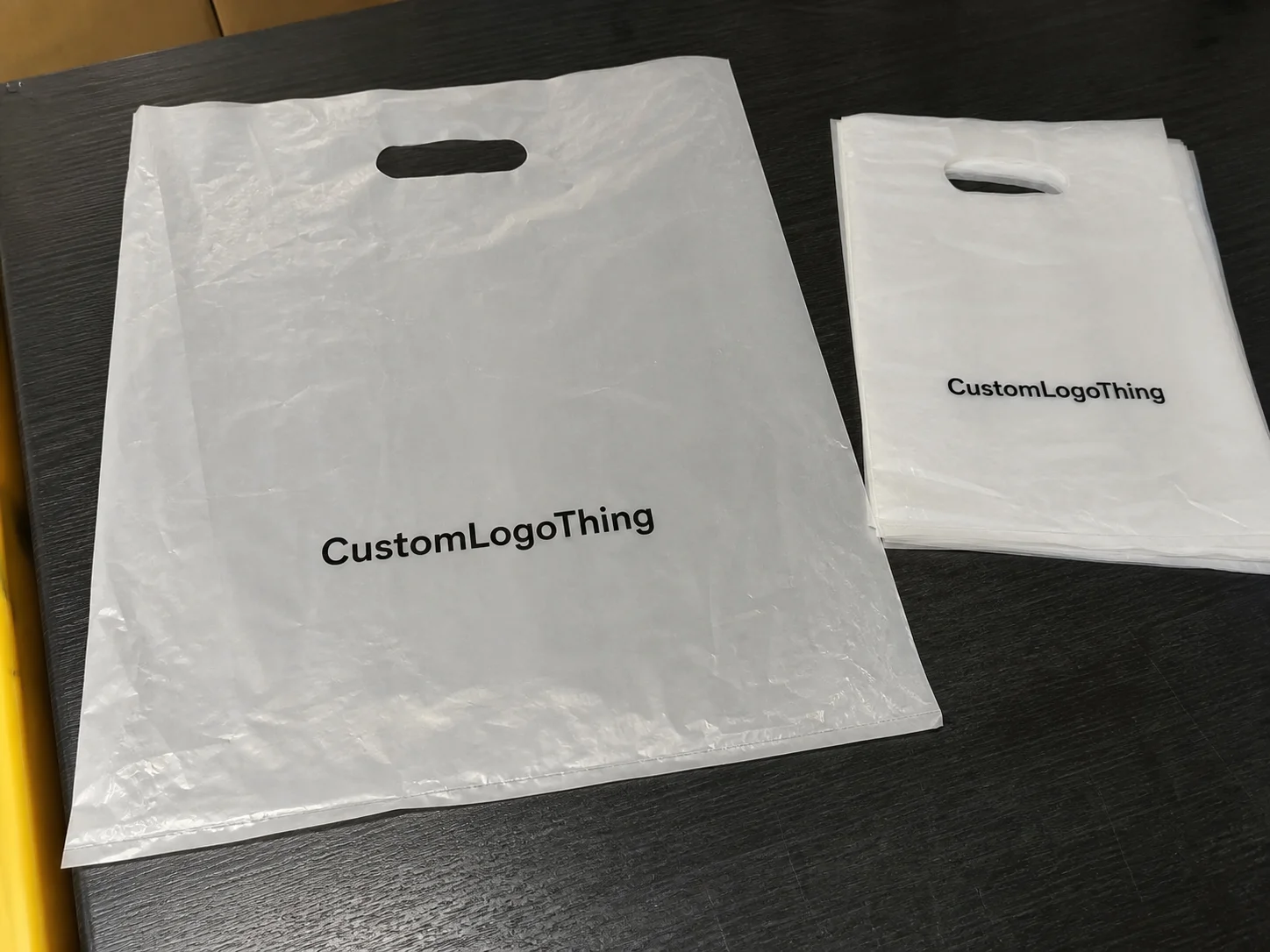
Two buyers can ask for the same poly mailers wholesale price list, request 10,000 pieces, and still receive quotes that are nowhere near each other. Usually the difference is not markup. It is specification. A 10" x 13" apparel mailer in plain 2.5 mil white film is a very different product from a 14.5" x 19" co-ex bag with two-sided print, a second adhesive strip for returns, and export packing.
That gap matters because the lowest unit price often turns into a higher landed cost. Oversized bags burn resin and freight space. Film that is too light can split at the side weld or bottom seal once it hits conveyors and courier bins. Cartons packed inefficiently push up shipping cost. Even print placement matters; if the shipping label covers the main logo panel, branded printing loses much of its value.
A useful price sheet should help answer four practical questions quickly:
- What size actually fits the packed product?
- What film structure gives enough protection without overspending?
- What print method suits the artwork and the budget?
- What MOQ fits both purchasing plans and storage capacity?
Wholesale pricing usually comes down to size, film thickness, material type, print colors, order volume, pack count, and destination. That is normal. A supplier offering a “starting at” number before any of those details are clear is not providing a working quote. It is a placeholder.
For teams reviewing Custom Poly Mailers or comparing broader Wholesale Programs, the safest sequence is simple: lock the specification first, then compare pricing on matched terms. Getting that order wrong is how buyers approve the wrong bag and spend the next reorder cycle fixing it.
Poly mailers can cut shipping cost in a very direct way. They store flat, pack quickly, reduce parcel weight, and often cost less than cartons for soft goods and other non-fragile items. They can also be a poor choice if the bag is underbuilt, oversized, or used for products that really need rigid protection. The savings are real, but only when the specification is honest about the job.
What buyers miss when they ask for a poly mailers wholesale price list

Many quote requests start too early. Buyers ask for pricing before size, gauge, print, and packing assumptions are settled, then try to compare numbers that were never aligned in the first place.
A good poly mailers wholesale price list is not just a grid of sizes with sample prices beside them. It should function as a buying document. If one supplier lists outer dimensions while another lists usable inner dimensions, the quote comparison is already distorted. The same thing happens when one offer is based on 3.0 mil film and another on 2.25 mil, or when one supplier packs 500 per carton and another packs 1,000.
A solid price sheet should make a few choices easier:
- Best-fit size by product type
- Film thickness based on weight, abrasion, and handling risk
- Plain stock versus custom print
- Single seal versus return mailer construction
- MOQ and quantity breaks that make operational sense
For apparel, textiles, compact accessories, and other non-breakable shipments, poly mailers often outperform cartons on both cost and speed. The bag still needs to fit the order profile. A 12" x 15.5" mailer may be ideal for a folded sweater, then feel wasteful for a single T-shirt and too tight for a two-piece bundle with an insert card.
From a procurement standpoint, the quote should reduce uncertainty, not add to it. If the document does not spell out construction, thickness tolerance, print method, closure style, pack count, and freight assumptions, it leaves too much room for mismatch later.
Where poly mailers save money compared with boxes and padded packs
Poly mailers usually save money in four places: material cost, warehouse space, packing labor, and outbound parcel weight. That combination explains why growing e-commerce operations often move soft goods out of cartons once order volume is high enough to expose every extra ounce and extra second on the line.
A standard Custom Poly Mailer generally costs less than a printed folding carton or corrugated shipper at the same quantity tier. For common apparel sizes, plain wholesale mailers often fall around $0.05-$0.12 each at 10,000 units. Custom printed versions commonly land in the $0.09-$0.24 each range, depending on size, gauge, print coverage, and whether the bag includes added features such as a second adhesive strip.
Boxes usually cost more before tape, void fill, and assembly time are added. They also occupy more storage space. Thousands of flat mailers can sit on a small pallet footprint, while the same order volume in cartons consumes far more room and handling time.
Shipping weight is another quiet cost driver. For soft products that do not need rigid walls, a mailer removes excess packaging weight without sacrificing basic weather resistance or privacy. That matters on parcel programs where small changes in packed weight or dimensions affect the total freight bill across thousands of shipments.
Poly mailers are commonly used for:
- Apparel basics and folded garments
- Accessories and soft textiles
- Small boxed beauty items
- Printed materials
- Replacement parts without sharp edges
- Subscription kits with flexible contents
Padded mailers sit in the middle. They add cushioning, but they also add weight, material cost, and bulk. A rigid box still makes more sense for fragile, sharp, or awkwardly shaped items. Shipping ceramics, glass, or exposed metal parts in a standard poly bag is not a cost-saving measure. It is a returns problem waiting to happen.
Sharp truth: poly mailers perform well right up to the point where they are asked to protect products they were never designed to handle.
On the packing line, they are quick to label, easy to seal, and visibly tamper-evident once the permanent adhesive sets. For many retail and subscription shipments, custom printing adds a branding surface at a lower cost than rigid packaging. If your shipping mix includes both mailers and cartons, it helps to review the broader range of Custom Packaging Products rather than forcing one format to do every job.
Material, thickness, and print options that change the quote
Material specifications are where pricing starts to move quickly.
Most poly mailers are made from LDPE or co-extruded polyethylene film. Co-ex film is widely used because it can pair a smoother printable exterior with a tougher interior layer and better opacity. Buyers may also specify virgin resin, recycled-content blends, or mixed structures depending on performance targets, brand requirements, and local rules around environmental claims.
Common material choices
- Virgin LDPE: clean appearance, consistent opacity, reliable print surface
- Recycled-content film: useful for sustainability programs, though print sharpness, feel, and color consistency can vary by recycled percentage
- Co-ex opaque film: strong privacy, good puncture resistance, common for e-commerce shipments
- Colored film: stronger brand presence, usually priced above standard white or grey
Thickness is usually quoted in mil or microns. For many apparel orders, 2.25-2.5 mil is a practical starting range. Bulkier garments, heavier bundles, or rougher parcel routes may need 2.75-3.5 mil. Going lighter can reduce cost for a while, then suddenly create problems: split seals, more scuffing, a noisier hand feel, and a package that feels cheap before it is even opened.
Closure style changes both cost and customer experience:
- Permanent peel-and-seal
- Double adhesive strip for returns
- Tear strip for easier opening
- Tamper-evident constructions
Print is another major cost driver. Plain stock is the lowest-cost route. One-color flexo works well for simple logos and handling marks. Multi-color flexo fits larger runs with moderate artwork complexity. For buyers who need sharper graphics, tighter color control, and fuller coverage, print quality closer to gravure output may be more appropriate, though it usually carries higher setup expectations.
Coverage matters. A single logo panel is a much simpler job than full exterior print with dense color blocks, inside print, and tight registration. Ink usage, setup time, and waste allowance all change with the design.
Other details that can move the quote include suffocation warning text, vent holes, barcodes, recycled-content claims, custom carton pack counts, and carry handles. Some are minor additions. Others create extra converting steps or compliance review.
The best build is rarely the most feature-heavy one. Premium print on a plain replenishment bag is wasted money, and an ultra-light film on a long parcel route is false economy.
Size chart, load fit, and technical specifications buyers should confirm
Size selection should be measured, not guessed. Yet many orders still begin with “match this sample,” even when the sample was oversized, underfilled, or approved years ago for a different SKU mix.
Start with the product’s width, length, and packed thickness. Then add room for insertion, film flex, and flap closure. Copying a competitor’s mailer or choosing the nearest stock size often leads to excess film use and a sloppy fit.
| Typical Mailer Size | Common Use | Suggested Film Range | Notes |
|---|---|---|---|
| 6" x 9" | Small accessories, beauty items, documents | 2.25-2.5 mil | Suitable for light, compact items |
| 10" x 13" | T-shirts, leggings, small apparel | 2.25-2.75 mil | One of the most common DTC sizes |
| 12" x 15.5" | Sweaters, dresses, light multi-item orders | 2.5-3.0 mil | Useful all-around apparel format |
| 14.5" x 19" | Hoodies, jackets, larger garment sets | 2.75-3.5 mil | Watch freight and wasted film on smaller orders |
| 19" x 24" | Oversized apparel, textiles, bulk packs | 3.0-3.5 mil | Use only when product volume requires it |
Before approving production, confirm these technical points in writing:
- Outer dimensions and usable inner dimensions
- Thickness tolerance and how it is measured
- Color target for branded print runs
- Seal strength and bottom weld integrity
- Adhesive closure performance
- Carton pack quantity and carton dimensions
- Shipping label adhesion on the selected film surface
Sample fit testing is time well spent, especially for bulky garments, mixed-SKU orders, or shipments that include inserts. A bag that works for one folded knit can fail once the order changes to two units and a promotional card. Tolerance is normal in film production. What matters is that tolerance is defined early rather than argued over after delivery.
Compliance deserves a separate check. Warning text, recycled-content claims, and disposal language should match the market where the package is sold. If environmental messaging is part of the program, review guidance from the EPA. If your packaging mix also includes paper-based components, chain-of-custody standards from organizations such as the FSC may also be relevant.
Poly mailer pricing, MOQ, and unit cost: how wholesale rates are built
Most buyers want pricing first. That is understandable. Without a working specification, though, pricing is just noise dressed up as certainty.
A proper poly mailers wholesale price list is built from a short set of cost drivers: resin cost, bag size, film thickness, print method, color count, order quantity, packing configuration, and freight destination. Add dual strips, special color film, or recycled-content requirements, and the numbers move again.
Typical wholesale pricing ranges
| Specification | 5,000 units | 10,000 units | 25,000 units | 50,000+ units |
|---|---|---|---|---|
| Stock plain mailer, small-medium size | $0.07-$0.14 | $0.05-$0.12 | $0.04-$0.09 | $0.03-$0.08 |
| Custom size, plain color film | $0.10-$0.18 | $0.08-$0.15 | $0.06-$0.12 | $0.05-$0.10 |
| Custom printed, 1-2 color flexo | $0.12-$0.22 | $0.09-$0.19 | $0.07-$0.15 | $0.06-$0.13 |
| Custom printed, multi-color/full coverage | $0.18-$0.32 | $0.14-$0.28 | $0.11-$0.23 | $0.09-$0.20 |
These are comparison ranges, not fixed promises. Resin prices move with the market. Freight changes. Print complexity changes. A quote that looked reasonable one quarter may need adjustment on the next reorder if material and transport costs shift.
MOQ depends heavily on whether the bag is stock, custom size, or custom printed. Stock sizes are often available in lower minimums. Custom sizes and printed runs usually require more volume so setup cost does not dominate the unit price. Plate charges, proofing, and color separations are much easier to absorb at 25,000 pieces than at 5,000.
The tradeoff is straightforward:
- Stock: faster turnaround, lower MOQ, fewer setup costs, less control over fit and branding
- Custom: tighter fit, stronger presentation, better long-run economics, higher setup commitment
Ask every supplier whether the quote includes cartons, export packing, expected overrun or underrun allowance, delivery terms, freight inclusion or exclusion, and lead time measured from proof approval rather than first inquiry. Those details change the real number.
Landed cost matters more than factory price. A low unit quote loses its appeal quickly if slow freight, poor carton density, customs delays, or repacking costs show up later. That is why a useful price sheet should be requested in quantity tiers with shipping assumptions attached.
For accurate pricing, send these details at the start:
- Bag dimensions
- Target thickness
- Material preference or recycled-content target
- Plain or printed format
- Artwork file and color count
- Quantity tiers such as 5,000 / 10,000 / 25,000 / 50,000
- Delivery destination
- Required in-hands date
Production process and lead time from artwork approval to delivery
Lead time often sounds simple at the quoting stage and much less simple once artwork starts moving. Buyers ask for “fast.” Suppliers answer with “about two weeks.” Then a proof changes, plates take longer, freight slips, or recycled-content film needs an extra sourcing check.
The normal production flow looks like this:
- Requirement review
- Size or dieline confirmation
- Material selection
- Artwork check
- Digital proof approval
- Plate or cylinder making if required
- Film production
- Printing
- Bag converting and sealing
- Packing and carton labeling
- QC inspection
- Dispatch and transit
Stock printed bags may move in roughly 7-12 business days after final confirmation if no special conversion is needed. Fully Custom Printed Mailers often run closer to 12-20 business days from proof approval, and sometimes longer for large volumes, tighter print registration, or added construction features.
Transit time comes after manufacturing. Domestic delivery may be only a few days. International freight can vary widely by mode, route, customs processing, and destination warehouse schedules. If the order supports a campaign launch or seasonal spike, the safe schedule is never the best-case schedule.
Quality checkpoints worth confirming in writing include approved color reference, dimension tolerance, seal strength standard, adhesive strip performance, and carton labeling format. If the bag is part of a broader parcel validation program, transit-testing guidance from the International Safe Transit Association is useful context.
Many delays start on the artwork side rather than the production floor. Missing fonts, low-resolution logos, incorrect dielines, or color changes after approval can easily burn more time than printing itself. Ask for milestone dates in writing: proof date, production start, production finish, dispatch date, and estimated arrival.
How to compare suppliers without getting trapped by a cheap quote
Cheap quotes are easy to issue. Consistent supply is harder.
If you are comparing vendors for a poly mailers wholesale price list, set the headline number aside for a moment and look at the discipline behind it. Can the supplier explain the film structure clearly? Are tolerances documented? Do they identify artwork risks before approval? Will they recommend a lower-cost alternative if the original spec is heavier or more complex than necessary?
Useful comparison criteria include:
- Print consistency: especially on repeat orders
- Film strength: whether the gauge suits the actual use case
- MOQ flexibility: stock and custom options both matter
- Quote clarity: dimensions, mil, print colors, pack count, freight terms
- Revision speed: not just the first reply, but how quickly changes are handled
- Spec accuracy: whether the sample matches the quoted build
Red flags are usually obvious once you know where to look:
- Descriptions such as “heavy duty” with no actual thickness stated
- No tolerance data
- No proof approval process
- Freight terms that keep changing
- No clear answer on carton counts, overruns, or delivery assumptions
A strong supplier should be able to guide the specification, flag likely failure points, give realistic lead times, and suggest fallback options if the target budget and target build do not match. That is not sales polish. It is basic packaging competence.
Repeat buyers rarely make decisions on a one-time unit price alone. They look at consistency, export packing, reorder planning, and enough range to cover multiple packaging formats over time. That is why reviewing a supplier’s broader Wholesale Programs often tells you more than comparing isolated numbers in a spreadsheet.
Next steps: request the right quote, test samples, and lock your reorder plan
If you are ready to request pricing, keep the brief tight. Send the details that actually shape the quote:
- Bag dimensions
- Target film thickness
- Material preference or recycled-content target
- Plain, one-color, or multi-color print
- Artwork file type
- Color count and print coverage notes
- Quantity tiers
- Shipping destination
- Required delivery date
Then request samples. Physical testing beats assumptions every time. Check product fit, seal performance, label adhesion, print quality, and actual packing speed. If your order profile varies, compare two or three options side by side: stock versus custom size, or 2.5 mil versus 3.0 mil. Sometimes a heavier bag reduces reshipment cost enough to justify the spend. Sometimes it is simply extra plastic with no operational benefit.
Set a reorder trigger early. If usage runs at 8,000 bags per month and your true replenishment window is five to seven weeks including approvals and transit, waiting until only 10,000 remain is not planning. It is a rush order disguised as normal purchasing.
The strongest buying decisions come from comparing specs, samples, quantity tiers, and landed cost before the PO is issued. A good poly mailers wholesale price list should make that comparison easier by laying out size, gauge, print, MOQ, and shipping assumptions clearly enough to support a confident decision. Get the specification right first. The price will make more sense after that.
What affects a poly mailers wholesale price list the most?
The biggest cost drivers are size, film thickness, material type, print method, color count, order volume, and freight destination. Custom sizes, recycled-content requirements, and multi-color printing usually raise cost because they add setup time, material variation, or production complexity. The useful comparison is total landed cost, not the lowest unit price by itself.
What is the typical MOQ for custom poly mailers wholesale orders?
MOQ depends on whether the mailer is stock, custom size, or custom printed. Stock bags often allow lower minimums. Custom printed work usually needs more volume so plate cost, proofing, and setup do not push the unit price too high. Asking for tiered pricing at several quantities makes the break point easier to see.
How do I choose the right size from a poly mailers price list?
Measure the packed product width, length, and thickness, then allow enough room for insertion and flap closure. Avoid choosing a bag that is larger than necessary just because it is readily available. Extra film adds cost and can create a loose, untidy parcel. A real product-fit sample is the safest check before production.
How long does custom poly mailer production and delivery take?
The timeline depends on stock versus custom construction, artwork approval speed, print complexity, production queue, and shipping mode. A complete schedule should include proof approval, manufacturing, QC, packing, and transit. Buyers with launch-sensitive orders should ask for milestone dates in writing and leave buffer time for revisions or freight delays.
Can I get a quote for recycled or branded poly mailers at wholesale pricing?
Yes. Recycled content, custom color, and branded printing are all common, though they may affect MOQ, lead time, and unit cost. A proper quote should state the recycled-content level, thickness, print coverage, and delivery assumptions so the buyer can compare options accurately.