Buyer Fit Snapshot
| Best fit | Poly Mailers with Brand Colors projects where brand print, material claims, artwork control, MOQ, and repeat-order consistency need to be specified before quoting. |
|---|---|
| Quote inputs | Share finished size, material target, print colors, finish, packing count, annual reorder estimate, ship-to region, and any compliance wording. |
| Proofing check | Approve dieline scale, logo placement, barcode or warning zones, color tolerance, closure strength, and carton packing before bulk production. |
| Main risk | Vague material claims, crowded artwork, missing packing details, or unclear freight terms can make a low unit price expensive after revisions. |
Fast answer: Poly Mailers with Brand Colors: Film, Print, MOQ, and Carton Packing should be specified like a repeatable production item. The safest quote records material, print method, finish, artwork proof, packing count, and reorder notes in one written spec.
Production checks before approval
Compare the actual filled-product size with the drawing, then confirm tolerance on folds, seals, hang holes, label areas, and retail display edges. Reserve space for logos, QR codes, warning copy, and material claims before decorative graphics fill the panel.
Quote comparison points
Review material grade, print process, finish, sampling route, tooling charges, carton quantity, and freight assumptions side by side. A quote is only useful when the supplier can repeat the same color, closure quality, and packing count on the next order.
Poly Mailers with Brand Colors: Smarter Custom Packaging
Poly mailers with brand colors are not just shipping sleeves. They are often the first branded surface a customer touches, and that first touch sets the tone for the whole order. If the color looks off, the brand looks off. If it looks sharp, the package feels intentional before the box cutter even comes out.
That is why poly mailers with brand colors matter so much for brand recognition, customer perception, and visual branding. They show up on a doorstep, in a lobby, on a desk, or in a stack of inbound inventory where a buyer is comparing vendors side by side. A mailer with the right color read can do a lot of quiet selling. A bad one can make a solid product look cheap. Packaging is rude like that.
Poly Mailers with Brand Colors: Why They Work
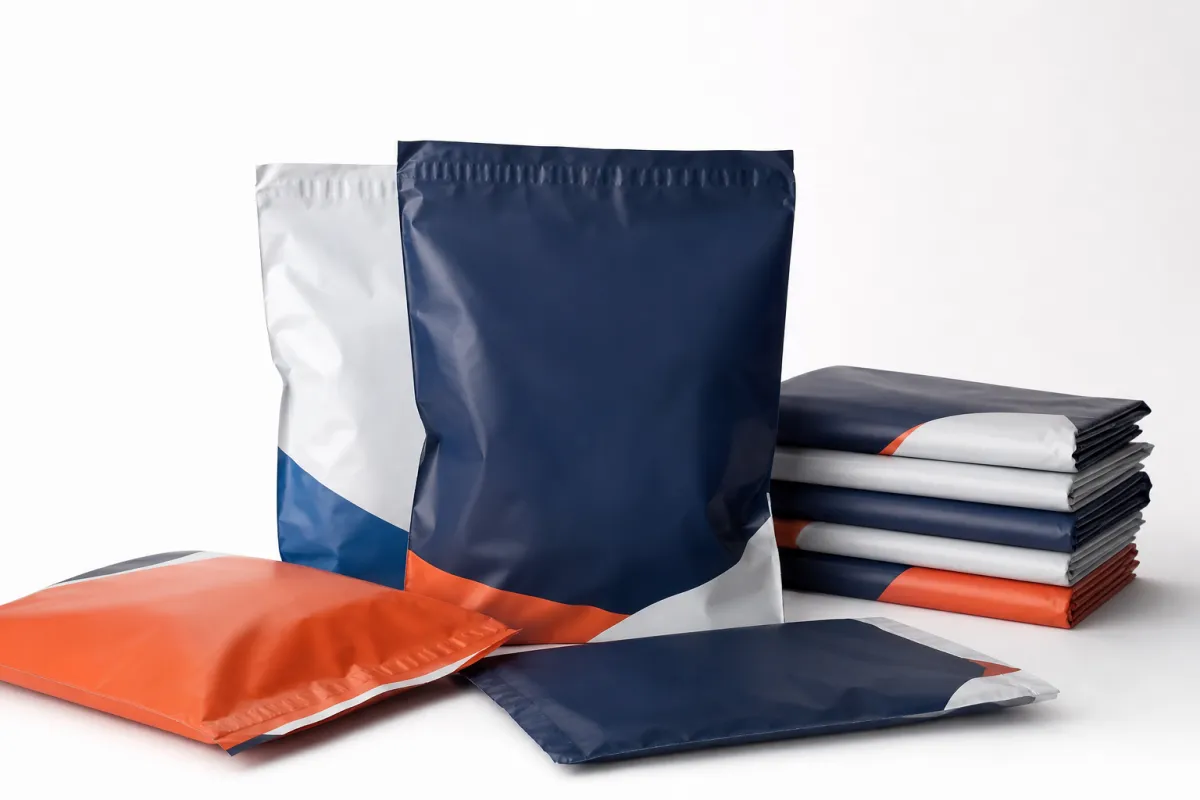
Poly mailers with brand colors work because they make a basic shipping item do a branding job. The mailer is not a fancy insert. It is not a ribbon tied by hand. It is the package that actually survives the carrier network, gets tossed on a counter, and lands in the customer’s line of sight. That makes it valuable real estate.
The blunt truth is this: most customers see the outer package before they see anything else. With poly mailers with brand colors, that first view can reinforce your brand identity in two seconds or less. Consistent color does more than decorate. It makes the shipment feel like it came from a real business with a point of view, not a random fulfillment batch that wandered out of a warehouse.
There is a practical side too. In a crowded shipping environment, a strong color can improve recognition fast. A deep teal, a clean black, a vivid red, or a specific brand green stands out in transit and at delivery. That helps customers remember the brand and helps staff spot the right parcel faster. Not glamorous. Useful.
For a DTC apparel brand, the value is easy to see. Say the company ships tees, hoodies, and socks in three different SKU groups, but all of them use poly mailers with brand colors that match the same design system. The customer receives one consistent visual experience across the entire assortment. That kind of brand consistency matters more than people think, especially when orders are repeated monthly or weekly.
Poly mailers with brand colors also support the unboxing experience without forcing you into heavy packaging. If the product itself is light and flexible, a poly mailer is usually cheaper and more efficient than a box. The trick is to make that efficiency look intentional. Color does the heavy lifting there.
From a packaging buyer’s point of view, a colored mailer is not a luxury item. It is a low-cost brand signal that ships with every order.
There is another benefit people ignore until they reorder. Poly mailers with brand colors are easy to standardize across multiple SKUs and warehouses. Once the color spec, logo placement, and size are locked, the packaging stops being a moving target. That reduces headaches for operations teams and makes reorders much easier to manage. It also makes life easier for anyone who has ever had to explain why the “same” bag looks different three months later.
I have seen this play out with brands that assumed “close enough” was fine. It usually is not. One customer may not care if the teal is a touch warmer, but the warehouse team, the brand team, and the marketing team all will. By the second reorder, that little shift starts looking like drift, and drift is how brand systems get sloppy.
If you want to compare the packaging options before committing, start with our Custom Packaging Products page or review our Case Studies to see how different brands handle packaging consistency at scale.
For businesses that want a dedicated packaging line, our Custom Poly Mailers page is a practical place to start. Poly mailers with brand colors are simple on paper. In production, the details decide whether they look sharp or merely expensive.
How Poly Mailers with Brand Colors Are Printed
Poly mailers with brand colors are usually printed on polyethylene film using flexographic or gravure-style production methods, depending on volume and supplier setup. In plain English, the design is transferred onto a plastic film that has already been selected for thickness, opacity, and surface finish. The base material matters because it changes how the color behaves once it is on the bag.
A white or opaque film gives color the cleanest foundation. A translucent or tinted film can shift the final look a little, especially with lighter brand shades. A glossy surface makes colors look brighter and a bit sharper. A matte surface softens the visual impact. Same ink. Different result. That is why poly mailers with brand colors need a real proof process, not a guess from a monitor.
Exact brand-color matching depends on three things more than most buyers realize: artwork setup, ink limits, and film color. If your brand uses a Pantone target, the printer can build around a defined reference. If the artwork only shows an RGB logo pulled from a website, the printer has less to work with and the result can drift. Screen colors are not print colors. They never were, and they never will be.
Here is the usual production flow for poly mailers with brand colors:
- Artwork is checked for size, bleed, and line thickness.
- A digital mockup is produced to show layout and placement.
- Color references are compared against the chosen film.
- A proof or sample run is approved before full production.
- Production begins once the artwork and color direction are locked.
That proofing step is where good packaging gets saved from avoidable embarrassment. A monitor can make a muted blue look electric. A phone screen can make a warm neutral look cooler than it really is. With poly mailers with brand colors, the only approval that matters is the one tied to actual film and actual ink behavior.
There is also a tradeoff between saturated branding and budget-friendly branding. A bold design with full-coverage color, a second ink hit, and strong edge bleed will usually cost more than a simple one-color logo on a white mailer. That does not mean the simpler version is worse. Sometimes it is smarter. If the product margin is tight, a clean logo and one strong brand color are usually enough to get the job done.
For honest context, not every supplier can hit every color equally well on every film. That is not a moral failure. It is how materials behave. Ask for a sample, ask what stock they are using, and ask whether the print method is better suited to solid shapes or fine details. Those three questions will save you a lot of nonsense later.
If your brand needs tighter packaging controls, it helps to compare the material and finish options before you approve anything. For shipping and package test references, the International Safe Transit Association offers useful standards guidance at ISTA. If you are also using paper-based packaging in the same program, FSC guidance at FSC can help keep the broader packaging mix aligned.
Choosing Brand Colors, Film, and Finish
Picking the right look for poly mailers with brand colors is not about chasing the loudest option. It is about choosing a color and surface combination that still reads cleanly once the mailer is folded, sealed, scratched, stacked, and dragged through shipping. That is a much harsher environment than a design board on a laptop.
The first decision is the brand color itself. Strong, high-contrast colors work better on plastic films than delicate tones that rely on tiny shifts in shade. If the brand palette includes a pale beige, a soft lilac, or a muted sage, test it before ordering 10,000 units. These shades can flatten fast on glossy film. Deeper tones tend to hold up better, which is why poly mailers with brand colors often look strongest in navy, black, red, hunter green, and saturated custom tones.
The second decision is the film. A few common options show up again and again:
- Opaque white film - best for crisp color and strong logo contrast.
- Colored film - useful when the brand wants the base material to do part of the design work.
- Matte film - softer, more premium looking, but sometimes less vibrant.
- Gloss film - sharper and brighter, though fingerprints and scuffs can show more easily.
- Translucent film - cost-effective in some cases, but not ideal if the design needs full opacity.
The third decision is finish and coverage. Large color blocks are easier to control than thin outlines or tiny type. White ink underbases can help a logo stand out on darker or tinted film. Edge bleed gives the mailer a more complete brand wrap, but it can raise ink coverage and setup complexity. Fine-line details are where many designs go to die. If the line is too thin, the printer is not being difficult; the plastic film simply has less forgiveness than paper.
For poly mailers with brand colors, contrast is everything. Dark logo on light film? Good. Light logo on dark film? Also good, if the ink system supports it. Pale logo on slightly tinted film with no underbase? That is where clarity starts to wobble. Buyers often approve a beautiful mockup and then wonder why the finished bag looks flatter. The answer is usually contrast, not intent.
How to Keep Brand Colors Readable
Use one primary brand color, one support color, and one backup neutral if the design needs it. That is usually enough. More colors do not automatically make poly mailers with brand colors better. They often make them busier and more expensive.
A simple selection process works best:
- Choose the primary brand color first.
- Test it on the intended film color.
- Pick a support color that does not fight the primary shade.
- Check the logo at the actual print size, not just the artwork file.
- Approve a physical sample before final production.
If your brand sells athletic wear, brighter colors may make sense because they read as energetic and direct. If the product is skincare or premium home goods, a softer matte finish may fit the customer expectation better. Poly mailers with brand colors should support the product category, not just the marketing mood board.
There is no prize for overcomplicating the design. A clean, readable bag that matches the brand system will usually outperform a crowded one. The market rewards clarity more than enthusiasm.
One more thing: I have watched teams obsess over a very specific shade while ignoring the seal area, the bag width, and whether the logo gets folded in half once the product goes in. That is backwards. The best color in the world cannot rescue a badly sized mailer. Make the packaging fit the product first. Then polish the color. Otherwise you are just decorating a problem.
Cost and Pricing for Poly Mailers with Brand Colors
Pricing for poly mailers with brand colors depends on a handful of variables, and none of them are mysterious. Size, thickness, print coverage, color count, order quantity, and whether the design is printed on one side or both sides will move the number. So will film choice and any custom finishing. If someone gives you a single blanket price without asking about those details, they are probably guessing.
For typical production, smaller runs may land around $0.18-$0.35 per unit for simpler builds, while larger runs with more print coverage, custom film, or multiple colors can move into the $0.28-$0.60 per unit range. Those numbers change with market conditions, artwork complexity, and freight, but they give a realistic starting point. Poly mailers with brand colors are not expensive in the abstract. They become expensive when the spec keeps changing.
Minimum order quantities matter as well. A low minimum may be easier for a newer brand, but it usually carries a higher per-unit cost. Larger runs reduce unit cost because setup is spread over more pieces. That tradeoff is normal in packaging. The question is not whether the MOQ is high. The question is whether the math still works once the packaging is tied to product margin.
There are also hidden costs that buyers forget to budget:
- Plate or setup charges for the print run.
- Proofing fees if samples or color checks are required.
- Rush charges if the timeline gets compressed.
- Sample shipping for physical approvals.
- Freight or carton handling on the finished order.
Those costs are not always large, but they can turn a seemingly cheap quote into an average one. That is why poly mailers with brand colors should be evaluated as a packaging system, not just as a unit price. A mailer that costs a little more but reduces damage, improves recognition, and supports repeat orders is usually the better business move.
Here is a practical comparison of common options:
| Option | Best Use | Typical Cost Impact | Main Tradeoff |
|---|---|---|---|
| One-color logo on white film | Starter brands, budget-sensitive orders | Lower | Simple look, less visual impact |
| One strong brand color with logo | Most DTC shipments, strong recognition | Moderate | Good balance of cost and branding |
| Full-wrap print with multiple colors | Premium launches, retail-facing shipping | Higher | More setup, stronger shelf-like presence |
| Matte or specialty finish | Premium positioning, softer visual language | Moderate to higher | May reduce brightness of color |
My practical advice is simple: spend more where the color supports margin and repeat visibility, and spend less where the package is just doing transportation duty. Poly mailers with brand colors should make the brand feel intentional, not drain the shipping budget because the design team wanted three extra gradients nobody asked for. Yes, that happens. Too often.
If you are comparing options, our Custom Poly Mailers page is a good place to review the core formats. If you need broader packaging choices too, our Custom Packaging Products catalog can help you compare mailers against other formats before you commit.
Step-by-Step Ordering Timeline for Poly Mailers with Brand Colors
A good order for poly mailers with brand colors follows a fairly standard path. The more complete the artwork and specs are at the start, the less time the order spends in revision hell. That is the boring truth. It also happens to save money.
- Quote request - share size, thickness, quantity, print sides, and color references.
- Artwork review - the file is checked for vector quality, bleed, and legibility.
- Digital proof - layout and placement are shown for approval.
- Color confirmation - the supplier checks the intended brand color against the film.
- Sample approval - a physical sample or pre-production check is reviewed if needed.
- Production - the order goes into the print queue.
- Shipping - finished cartons move to the destination.
For a standard order with clean artwork, poly mailers with brand colors often move through proofing and production in roughly 12-20 business days after approval, depending on supplier queue and quantity. Larger runs or more complex print coverage can take longer. If the design needs multiple revisions or a custom color match, add time. A rush order can shorten the calendar, but it usually raises the price. Speed is never free. It just looks that way until the invoice arrives.
Timing also depends on where the delay happens. Artwork revisions can eat three to five days if the file is not prepared correctly. Color matching can add time if the brand references are unclear. Production queue backlog is the part nobody likes because it is outside the buyer’s control. The best way to protect the timeline is to send clean files and make decisions quickly.
In practice, the smoothest projects are the ones where everyone already knows the decision rules. No hunting for the logo file. No debating whether the mailer should be 2 inches wider. No surprise changes after proof approval. That kind of discipline sounds dull. It is also the reason the order ships on time.
A Fast-Track Checklist
If the goal is to move poly mailers with brand colors through the process without drama, this is the list I would use:
- Send vector artwork, not a flattened screenshot.
- Include Pantone values or a locked brand spec sheet.
- Confirm the mailer size against the heaviest product.
- Decide on matte, gloss, opaque, or translucent film early.
- Approve proof rounds within one business day if possible.
- Ask for a physical sample if the order is large or color-critical.
For brands with tight fulfillment calendars, it helps to test the packaging against real shipping conditions. ISTA guidance is useful here because shipping performance is not the same thing as looking good on a screen. A package can be visually perfect and still fail in transit if the seal or film spec is wrong. That is why packaging testing matters. Pretty is not a drop-test standard.
Strong packaging teams treat poly mailers with brand colors as a repeatable system. They keep a spec sheet, save the approved artwork, and lock the finish so future reorders do not drift. That discipline matters more as order volume rises. The first order sets the reference. The second order proves whether the process is actually controlled.
Common Mistakes With Brand Colors on Poly Mailers
The biggest mistake with poly mailers with brand colors is assuming a digital mockup equals a finished package. It does not. A mockup is a planning tool. The real mailer has film texture, ink behavior, sealing pressure, and light reflection working against perfect color accuracy. Ignore that, and disappointment arrives right on schedule.
Another common mistake is building the design from RGB web colors. Those are fine for screens. They are weak guidance for print. If the artwork needs a specific color, send Pantone references or a locked brand guide. Better yet, include both. Poly mailers with brand colors are much easier to get right when the supplier is not forced to interpret a screenshot from a homepage banner.
Thin strokes are another problem. Small text, hairline borders, and delicate icons can disappear or blur on plastic film, especially on glossy or tinted stock. If the logo has a script font or a fine outline, test it at actual size. What looks refined in Illustrator can look timid on a production bag. That is not the printer being difficult. That is material reality.
Low contrast also causes problems. A light gray logo on a pearl-toned mailer may feel elegant in a design file, but the final package can read like a printing mistake from six feet away. Strong visual branding depends on readability first. Decoration comes second.
Another trap is approving the digital proof without asking how the color will behave on the chosen film stock. A proof that looks perfect on white paper may shift once the ink sits on a glossy poly surface. If the mailer is part of a larger launch, ask for a sample or at least a material-specific proof. That small step can save a lot of rework.
Then there is consistency. Mixing suppliers for a single packaging program can create subtle but noticeable differences in shade, opacity, and finish. Even switching one finish for another without rechecking color can change the final result. Poly mailers with brand colors work best when the team keeps the same material spec across reorders. If the packaging plan changes, the color should be rechecked. Every time.
I once saw a team approve a gorgeous deep green, then switch to a slightly different matte stock on reorder because the original bag was backordered. On paper, the difference sounded tiny. In person, it looked like two related but not identical brands. Nobody wants that kind of surprise. Trust the sample, not the hope.
What Usually Breaks Brand Consistency
- Using website RGB values instead of print references.
- Changing film finish without a new sample review.
- Adding too much detail to a small print area.
- Switching suppliers mid-program without a color check.
- Approving artwork before confirming bag size and placement.
For buyers who want a more organized rollout, the best move is to build a packaging spec sheet and stick to it. Keep the same size, film type, print count, logo placement, and color references. That kind of control makes poly mailers with brand colors easier to reorder and easier to scale.
It also helps with training. When a warehouse team can follow a fixed spec without guessing, mistakes drop. Rework drops too. That is the boring part nobody puts in the brand deck, but it saves money and keeps the shipment looking like it came from one company instead of five different moods.
Next Steps: Turn Approved Poly Mailers into a Repeatable System
Once poly mailers with brand colors are approved, the job is not done. The real value comes from turning that first order into a repeatable system. That means saving the exact brand color references, locking the artwork file, noting the approved finish, and writing down the size and seal specs. Nothing glamorous. Very useful.
Start with the basics: confirm the color standard, collect the vector files, and request a physical sample before placing the full order. If the product line includes different weights or shapes, test the mailer with the heaviest item first. Seal strength, fit, and handling all matter. A mailer that looks good but tears at the seal is a packaging failure, not a branding win.
It also helps to think about daylight and indoor lighting separately. Poly mailers with brand colors can look richer under warm warehouse lights and slightly flatter in bright daylight. That is normal. The point is not to chase perfection under every light source. The point is to choose a color and finish that stay recognizable across the most common shipping and receiving conditions.
Build a short spec sheet that includes:
- Mailer size and gusset if applicable.
- Film type and thickness.
- Primary brand color references.
- Logo placement and print area.
- Approved finish: matte, gloss, opaque, or translucent.
- Quantity, reorder notes, and supplier contact details.
That document becomes the backbone of brand consistency. It keeps future orders from wandering. It also makes it easier for operations, marketing, and procurement to stay on the same page, which is rare enough to be worth protecting.
If you want to see how this plays out in real packaging programs, our Case Studies page shows how different brands approach packaging decisions without turning the process into a guessing game. The basic lesson is consistent: poly mailers with brand colors work best when they are treated like a system, not a one-off purchase.
One more practical point. Use the first production run as the baseline, then make notes after real shipping conditions reveal how the package performs. If the color reads too dark in transit photos, if the seal needs adjusting, or if the material feels too glossy for the brand, revise the next order. That is how better packaging gets built. Not by brainstorming harder. By learning from the first run.
Poly mailers with brand colors are a smart buy when they help the customer recognize the brand, improve the unboxing experience, and hold the line on cost. Keep the spec clean, keep the color consistent, and keep the design readable. Do that, and poly mailers with brand colors stop being a shipping accessory and start doing real brand work.
The cleanest takeaway is simple: lock the color on real film, approve a physical sample, and save the spec before you reorder. That one habit protects the brand look and keeps the packaging from drifting into “close enough,” which is how good systems get muddy.
FAQ
How many brand colors can I print on poly mailers?
Most orders work best with 1-3 strong colors because each added color can raise cost and complicate matching. If the design needs photographic detail or gradients, ask whether the supplier can handle it cleanly on the chosen film. For poly mailers with brand colors, simpler usually prints better.
What affects the price of poly mailers with brand colors?
The biggest drivers are size, thickness, print coverage, color count, and order quantity. Setup, proofs, sample shipping, and rush production can change the final number more than people expect. If the artwork is complex, poly mailers with brand colors will usually cost more than a basic one-color mailer.
How do I make sure my brand colors print accurately?
Send vector artwork with clear color references, ideally Pantone values or a locked brand spec sheet. Always review a proof or physical sample on the actual film stock before approving production. That is the safest path for poly mailers with brand colors.
How long does it take to order custom poly mailers with brand colors?
Standard orders usually move through proofing and production faster if the artwork is already clean and final. Revisions, sampling, and rush queue changes are the usual reasons a timeline gets stretched. For poly mailers with brand colors, clean files save time. Messy files cost it.
Can poly mailers with brand colors be used for different product types?
Yes, but the mailer size and seal strength need to fit the product, not just the branding goal. A good setup should work for your heaviest item, your common item, and the shipping method you use most. That is the practical way to keep poly mailers with brand colors useful across a product line.

