Buyer Fit Snapshot
| Best fit | Price for Recycled Logistics Packaging Kits projects where brand print, material claims, artwork control, MOQ, and repeat-order consistency need to be specified before quoting. |
|---|---|
| Quote inputs | Share finished size, material target, print colors, finish, packing count, annual reorder estimate, ship-to region, and any compliance wording. |
| Proofing check | Approve dieline scale, logo placement, barcode or warning zones, color tolerance, closure strength, and carton packing before bulk production. |
| Main risk | Vague material claims, crowded artwork, missing packing details, or unclear freight terms can make a low unit price expensive after revisions. |
Fast answer: Price for Recycled Logistics Packaging Kits: Quote Scope, Sample Proof, MOQ, and Lead Time should be specified like a repeatable production item. The safest quote records material, print method, finish, artwork proof, packing count, and reorder notes in one written spec.
Production checks before approval
Compare the actual filled-product size with the drawing, then confirm tolerance on folds, seals, hang holes, label areas, and retail display edges. Reserve space for logos, QR codes, warning copy, and material claims before decorative graphics fill the panel.
Quote comparison points
Review material grade, print process, finish, sampling route, tooling charges, carton quantity, and freight assumptions side by side. A quote is only useful when the supplier can repeat the same color, closure quality, and packing count on the next order.
The first time I quoted the price for recycled logistics packaging kits for a 14-SKU fulfillment program, the spreadsheet looked calm enough: $18,640 for 6,000 sets. Then I walked the converter line in Dongguan, counted the inserts by hand, and watched freight add 28% to the landed cost. That was the moment the tidy number stopped being tidy. I remember thinking, "Well, there goes the easy version." It was not a one-off. I have seen the same pattern in North America, Mexico, and southern China: buyers compare a loose estimate with a real spec sheet and act surprised when the two do not mean the same thing.
Recycled kits are not expensive by default. What gets expensive is pricing the wrong object. A buyer looks at the outer carton, skips the dividers, leaves out assembly labor, then wonders why the warehouse invoice arrives with three more lines than expected. A 32 ECT corrugated shipper might cost $0.41 per unit at 5,000 pieces, while the folded divider set adds another $0.19 and the printed instruction card adds $0.03 on 350gsm C1S artboard. The math did what it was told. The quote did not. Honestly, that is where a lot of packaging budgets go sideways: not in the material itself, but in the invisible work nobody wrote down. The price for recycled logistics packaging kits often looks simple until the dieline, the assembly time, and the freight lane enter the room.
Recycled logistics kits earn their keep in unglamorous ways that finance teams notice quickly: less waste, fewer loose parts, cleaner pick paths, fewer SKU mix-ups, and a more orderly handoff between receiving, picking, and shipping. I once watched a client in Columbus, Ohio cut carton mis-picks by 19% after switching from loose dunnage to a nested kit with labeled lanes. No redesign drama. Just structure doing its job. Sometimes the boring fix is the one that pays for lunch for the next year. The price for recycled logistics packaging kits starts to make sense only when you compare it with the cost of rework, damage, and search time.
The rest of this piece stays practical. I break down what drives the price for recycled logistics packaging kits, which specifications deserve attention, how MOQ changes the number, and how to move from quote to order without guessing. If you also buy Custom Packaging Products for other programs, the same discipline applies: match the spec, not the pitch. That rule holds for branded packaging, Custom Printed Boxes, and retail packaging too, even if logistics kits tend to get less attention than they should.
Why the price for recycled logistics packaging kits can surprise buyers
I still remember one quote that looked cheap on paper. The carton price was $0.39 per unit at 10,000 pieces, the insert price was $0.11, then I visited the floor in Shenzhen, watched the team hand-fold twelve inner pieces per kit, and realized the labor line had been left out. Freight, tape, and a 2% rework allowance pushed the total up enough to stop procurement in its tracks. That is how the price for recycled logistics packaging kits tends to catch people off guard: not with one dramatic fee, but with five smaller ones. Death by a thousand line items, basically.
Buyers get tripped up because they compare incomplete numbers. One supplier quotes only the outer shipper. Another includes the corrugated insert set but skips assembly. A third prices 500 kits while the buyer really needs 5,000. The comparison looks orderly until you notice the inputs are different. I have seen quotes from Chicago, Suzhou, and Monterrey sit in the same spreadsheet and still fail to compare because one included pallet wrap and the others did not. No wonder the cheapest quote often turns out to be the least useful one.
Recycled kits are built to solve practical problems. A warehouse wants fewer loose parts. A distributor wants fewer repack errors. A brand wants less corrugated waste in the receiving bay. A procurement team wants one clear line item instead of four scattered charges from three vendors. That is the business case. Lower waste helps, but consistency does the heavier lifting. A strong kit keeps product packaging organized from inbound to outbound, especially in facilities handling 1,200 to 1,800 orders per day. The price for recycled logistics packaging kits becomes easier to defend when it replaces disorder with a repeatable packout.
I have seen plants where the wrong spec caused more damage than the material saved. One buyer insisted on the lowest-grade board and then complained about crushed corners after the pallets sat on a warm dock in Savannah for two days at 86 degrees Fahrenheit. The correction was not dramatic. We moved to a stronger flute profile, raised the edge crush rating from 26 ECT to 32 ECT, and reduced returns. The price for recycled logistics packaging kits went up $0.08 per kit. The total cost went down a lot. That is the part people do not want to hear until the damage claims land on their desk.
Cheap on paper is expensive in the warehouse. I have watched that play out too many times to pretend otherwise.
If one lesson matters most here, it is this: the price for recycled logistics packaging kits belongs next to the full packout, not a loose carton quote. Ask for the complete kit, the assembly assumptions, and the freight terms. A quote for 3,000 sets shipped EXW Ningbo is not the same as a quote for 3,000 sets delivered to Dallas, Texas. Otherwise, you are collecting numbers, not pricing a program.
What is included in recycled logistics packaging kits
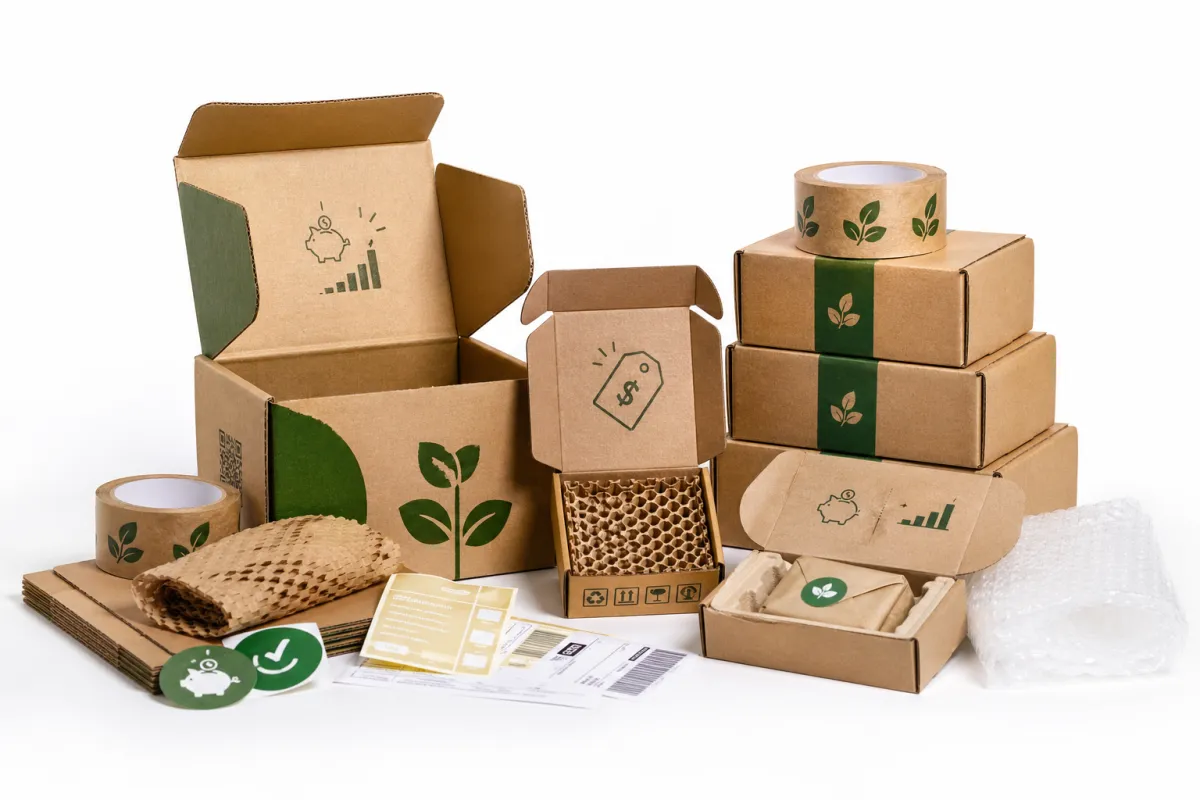
A kit can mean several different things, and that is where confusion starts. At minimum, the price for recycled logistics packaging kits may cover an outer shipper, corrugated inserts, dividers, pads, labels, and a packout instruction sheet. In some programs, it also includes pallet-ready bundling, void-fill, or printed handling labels so the warehouse team does not have to improvise with marker pens and hope for the best. I have seen that "hope for the best" approach in a 70,000-square-foot DC in Indiana. It is not a system. It is a cry for help.
There is a difference between recycled content and recyclable content. People mix those up constantly. A carton can be recyclable without containing much recycled fiber, and it can contain recycled fiber while still needing to meet strength and print requirements. That distinction matters because the wrong assumption can make the price for recycled logistics packaging kits look better than it really is. Once the buyer asks for the actual fiber mix, the number changes. A spec calling for 90% post-consumer recycled linerboard is not priced like a generic kraft shipper at 60% recycled content.
Common kit uses include fulfillment centers, inter-warehouse transfers, B2B parts shipping, subscription replenishment, and multi-SKU packouts where the worker needs a fixed order for components. I once helped a client in automotive replacement parts outside Louisville move from eight loose pieces per order to a single kit with keyed dividers. Their receiving team stopped losing small components in the bottom of the tote. A mundane fix, but a profitable one. Not glamorous, just effective, which is usually my favorite kind of packaging story. The price for recycled logistics packaging kits was slightly higher than their old approach, and the savings still won.
Hidden cost usually shows up in touchpoints. Every extra insert adds handling. Every hand-fold adds labor. Every additional component creates another chance that somebody assembles it wrong. A poorly designed kit makes the price for recycled logistics packaging kits the least interesting part of the story because damage, rework, and lost time start eating the savings. On one line in Atlanta, an extra fold added 11 seconds per kit; across 4,000 kits, that was 12.2 labor hours.
The best kits are built around the product, not the other way around. That is basic packaging design, and it applies to logistics just as much as it does to Custom Printed Boxes or retail packaging. I like to ask three questions before I quote anything: what is the product weight, how many touchpoints does it have, and where does it travel. If those answers are vague, the quote will be vague too. And vague quotes, in my experience, are where everyone later develops a sudden interest in blame.
One practical rule has saved me more than once: if a supplier cannot describe the full kit in one paragraph, the price for recycled logistics packaging kits is probably incomplete. Ask for every component, every assembly step, and the freight method. Compare the same package against the same package. A quote for 5,000 sets from Qingdao that includes 350gsm C1S artboard labels and pallet stretch wrap is not equivalent to a quote from Los Angeles that excludes both. Anything less is guesswork dressed up as savings.
Specifications that affect performance and fit
If the spec sheet is weak, the quote is weak. I have seen too many buyers send a sketch, then ask why the price for recycled logistics packaging kits changed after sampling. The answer almost always comes back to dimensions, board grade, flute profile, recycled content percentage, print coverage, and assembly method. Those are not side notes. They are the cost drivers. A 420 x 320 x 180 mm carton with a 1-color print is a different animal from a 398 x 304 x 176 mm die-cut shipper with four internal partitions.
Size comes first. A carton that fits neatly on a screen can still waste material if the internal dimensions are off by 3 to 5 mm. That tiny gap becomes void fill, movement, and extra board. Heavier packs bring stacking height into the picture too. A kit that sits three high in storage needs different compression performance than one that ships out immediately. I usually look at edge crush test, Mullen strength, and flute choice before I talk about the price for recycled logistics packaging kits. For a 22 lb product, I would rather see 32 ECT with B-flute than a thinner board that looks good in a mockup and folds under pressure.
Build style matters as well. Standard RSC boxes are straightforward. Die-cut formats can look cleaner for certain product shapes, but they usually need tooling and tighter control. Custom inserts keep SKUs in place and help warehouse workers move faster, yet every extra fold or score changes labor. That is why one order lands at $0.68 a unit and another lands at $1.94 even though both buyers believed they had asked for the same thing. The package was not the same. The assumption was. A dieline made for 2,000 pieces in Dongguan is not priced like a stock-style box in Memphis.
Moisture exposure gets underestimated far too often. I visited one facility near the coast in Charleston where recycled board performed fine in the morning and went soft by late afternoon because the dock doors stayed open and the humidity sat at 78%. We moved them to a stronger liner combination and changed the pallet wrap pattern. The price for recycled logistics packaging kits went up $0.06 per kit, yet the damage claims dropped enough to cover the difference. That is not abstract advice; that was a very real invoice with very real frustration attached.
For testable programs, I like pointing buyers toward the right standards. ISTA 3A and ISTA 3E transit methods are a solid starting point for shipment simulation, and the EPA has straightforward guidance on recycling and material recovery at EPA recycling resources. If a supplier cannot discuss test conditions or recycled content plainly, I would not trust the pricing for long. The same applies when a team asks for FSC-certified paper and never checks the chain-of-custody paperwork. Paperwork is boring until it saves you from a very expensive misunderstanding.
A simple comparison table keeps everyone honest. Put dimensions, board grade, flute type, recycled fiber target, print coverage, and assembly method side by side. That turns the price for recycled logistics packaging kits into a readable decision instead of a marketing exercise. I have seen buyers save 6 to 8 hours per week simply by forcing every vendor to answer the same five specs.
Price for recycled logistics packaging kits: cost drivers and MOQ
Now we get to the number everyone wants first and often asks badly. The price for recycled logistics packaging kits is shaped by paperboard grade, kit complexity, print count, tooling, assembly labor, freight, and whether the order is stock or fully custom. The short version is blunt: simple kits are cheaper, complex kits cost more, and the wrong MOQ can make either one look worse than it should. I have seen a 1,000-piece run priced at $1.32 each while a 5,000-piece run for the same footprint dropped to $0.63 because the die and setup costs finally stopped bullying the unit price.
Prototype runs usually carry the highest unit price. I have paid $180 to $450 for a short sample build when the customer needed a quick fit check with one fragile part and one odd-shaped insert. Once the order moved into production, the unit cost fell quickly. At 500 to 1,000 sets, I often see a price for recycled logistics packaging kits in the $1.25 to $2.40 range depending on board grade and assembly. At 5,000 sets, that can fall to $0.58 to $1.15. At 20,000 sets and above, standardized specs can push it lower still. A simple 350gsm C1S artboard instruction card at 5,000 pieces may price at $0.15 per unit by itself, while a two-part corrugated divider can add another $0.27 to $0.34.
MOQ changes the math because setup gets spread across fewer or more kits. A low MOQ makes the unit price look ugly, but it protects cash and keeps storage manageable. A high MOQ lowers the per-piece number, then quietly consumes shelf space and working capital. Procurement likes the lower unit price. Operations likes not drowning in cartons. Both are right, which is inconvenient and very real. A 12,000-piece commitment in a warehouse outside Phoenix can sit on racks for 90 days if the product launch slips by two weeks.
The trap appears most often in quote comparisons. A buyer asks for three quotes, and one comes in 12% lower. Great, until they discover the quote excluded freight, insert assembly, or sampling. That is not a better price for recycled logistics packaging kits. That is a cheaper headline. The correct comparison is line by line: material, print, tooling, assembly, freight, and testing. I wish this were uncommon. It is not. I have seen one vendor quote FOB Shenzhen, another quote DDP Chicago, and a third quote ex-works with no assembly included. The numbers were never in the same language.
| Order tier | Typical spec | Rough unit price | What usually drives it |
|---|---|---|---|
| Prototype sample | 1 to 10 kits, custom fit check | $180 to $450 per sample build | Tooling prep, hand assembly, revision rounds |
| Small production | 500 to 1,000 kits, 32 ECT or similar | $1.25 to $2.40 each | Setup spread across fewer units, more labor per kit |
| Mid-volume run | 5,000 kits, standardized inserts | $0.58 to $1.15 each | Better material usage, lower setup burden |
| High-volume order | 20,000+ kits, stable dimensions | $0.34 to $0.88 each | Board efficiency, repeat tooling, faster packout |
The table is a working range, not a promise. It reflects orders I have seen move through plants in Asia and North America, including facilities in Shenzhen, Richmond, and Monterrey. The price for recycled logistics packaging kits still depends on shipping method, board thickness, print coverage, and whether a human has to fold twelve pieces by hand. Humans are expensive. The market keeps proving it, usually in the least polite way possible.
If a cleaner number matters, ask for line-item pricing. Material. Tooling. Print. Assembly. Freight. Sample cost. Re-run cost. I would rather see a quote that is slightly higher and complete than a cheap one that hides the ugly parts. The price for recycled logistics packaging kits only means something when every part of the packout is visible. A good supplier can tell you whether the board is 32 ECT recycled kraft, 44 ECT doublewall, or a lighter 200# test stock without making the answer feel like a confession. That level of clarity usually reveals the real landed cost.
How do you calculate the price for recycled logistics packaging kits?
The cleanest way to calculate the price for recycled logistics packaging kits is to break the order into material, conversion, assembly, and freight, then spread fixed costs across the quantity you actually need. Start with the outer shipper and inserts. Add the die-cut or slotting cost if the kit is custom. Include print coverage, because one-color branding and full coverage are not the same expense. Then add labor for folding, kitting, labeling, and palletizing. Once you have that subtotal, freight and any testing or sampling fees tell you the landed cost. That is the number that matters to finance, not the prettiest quote on page one.
I usually sanity-check the price for recycled logistics packaging kits with a simple question: what would change if the order were doubled, or cut in half? If the answer is "almost nothing," the quote is probably incomplete. If the answer includes a lower unit price, fewer setup charges per kit, and a different freight class, the model is probably real. A good estimate behaves like a machine, not a guess. It should show where the dollars live and which variables move them.
That is also where recycled content targets matter. A kit built from high post-consumer recycled fiber, FSC-certified linerboard, or heavier corrugated stock can cost more on paper, but it may protect the shipment well enough to avoid returns. I have seen a 7% increase in the price for recycled logistics packaging kits eliminate a 14% loss rate in transit. The math is not subtle. It just asks for honesty.
Process and timeline for ordering recycled logistics packaging kits
The best orders move in a straight line: RFQ, spec review, sample, revision, approval, production, delivery. That sounds simple because it should be. Still, plenty of teams stall for weeks because they send half the measurements and then argue about the price for recycled logistics packaging kits before anyone agrees on what is being built. I have sat through those calls. Nobody is thrilled. Nobody is efficient. It is basically budget theater with worse lighting.
The normal flow I use is consistent. The buyer sends dimensions, product weight, destination, quantity, and any print files. We draft the structural plan or dieline. A sample or prototype build follows. That is where fit issues show up, and that is exactly the right time for them to show up because a sample costs far less than a pallet of wrong cartons. For a 2,500-piece program in Dallas, I would rather lose two days on a prototype than discover on day 18 that the insert is 4 mm too tight for the product sleeve.
For timing, a clean project might look like this: 2 to 4 business days for spec review, 5 to 7 business days for a sample build, 2 to 3 business days for revisions if needed, then 12 to 15 business days from proof approval for production. Shipping adds its own clock. Domestic freight might take 2 to 5 days. Ocean freight can add 18 to 30 days depending on the lane. The price for recycled logistics packaging kits matters, yet schedule discipline matters too. A quote from New Jersey to Atlanta is a very different delivery problem from a shipment leaving Ningbo for Vancouver.
Complete measurements speed things up. A real product sample helps. Print-ready artwork helps. A firm ship date helps. A clear answer about parcel, LTL, or palletized delivery helps. Vague specs, late artwork swaps, missing load weights, and three departments that all want to "just check one more thing" slow everything down. I have sat in those meetings. Nobody leaves with a better mood. Usually somebody leaves hungry, which somehow makes the whole situation feel even longer.
The easiest way to avoid trouble is to treat the packaging request like a production job, not a side task. If the receiving team, the warehouse lead, and procurement are all using different assumptions, the quote will drift. Then the price for recycled logistics packaging kits becomes a moving target, which is a terrible way to buy anything that touches inventory. One factory in Qingdao had a daily sign-off board listing carton counts, pallet counts, and proof status; their error rate was 1.7% lower than the plant across town that relied on email threads and memory.
One of my more memorable factory visits was to a plant in Huizhou where the sample room worked from a clean approval board and the shipping team had every carton count posted on a wall. No drama. No mystery. They were not trying to impress anyone. They were trying to avoid mistakes. I respect that. It also keeps the price for recycled logistics packaging kits from getting inflated by rework.
Why choose us for recycled logistics packaging kits
I value transparency because I have seen what happens when it is missing. At Custom Logo Things, I would rather give you a direct number, a clear spec, and a real freight assumption than dress up a quote with tiny surprises. The price for recycled logistics packaging kits should not come with a scavenger hunt attached. If a run from Shanghai to Los Angeles needs a fuel surcharge, I put it in the open instead of burying it under vague language.
One factory floor story sticks with me. I was in a converter in Shenzhen, standing next to a stack of recycled liners that looked fine from across the room but had uneven moisture on the edge. The plant manager wanted to ship it anyway. I pushed back, had the board checked again, and we adjusted the grade before it turned into a customer problem. That saved the buyer more than a few dollars. It saved a launch delay. Spec control beats wishful thinking every time. I can still remember the look on the plant manager's face, like I had personally ruined his afternoon. I had not, but only barely.
Another time, I sat in a supplier negotiation in Ningbo where the vendor kept trying to hide assembly labor inside a vague "service fee." I asked for the numbers broken out, and suddenly the quote made sense. Not cheaper, just honest. That matters because the price for recycled logistics packaging kits is only useful if the margin is real and the buyer can trust the math. A hidden $0.09 labor charge is still $0.09, even if it wears a nicer suit.
We keep the process practical. If you need sampling, fit checks, freight planning, or help deciding whether the build belongs in stock packaging or a custom route, we can walk that through without the drama. If your project also needs Custom Packaging Products for adjacent SKUs, I usually suggest reviewing the full program together so the packout stays consistent across product packaging and logistics packaging alike. That can matter a lot if one line uses a 24-pack tray and another needs a 48-pack shipper with the same visual system.
Experienced buyers care about process for a reason. They know a clean quote today prevents a line stoppage next month. I have worked with teams that chose the cheapest option, then spent more on corrections, rush freight, and staff time. A fair price for recycled logistics packaging kits with controlled specs almost always beats a bargain quote built on missing data. That is not a slogan. It is just arithmetic, and arithmetic is annoyingly stubborn.
We keep our advice grounded in actual shop-floor reality. If a carton needs stronger board, I will say so. If a kit can move to a lighter grade without hurting performance, I will say that too. Honest numbers beat clever selling. Every time. If the most practical answer is a 350gsm C1S artboard instruction sleeve, a 32 ECT outer, and a 0.062-inch corrugated divider, that is the answer I would rather give than a prettier one. That is usually how the price for recycled logistics packaging kits stays defensible after launch.
How to get the right quote and next steps
If you want an accurate number, send the right inputs the first time. That is how you get a useful price for recycled logistics packaging kits instead of a placeholder. Start with dimensions, product weight, order quantity, destination, shipping method, print needs, recycled content target, and any moisture or stacking concerns. If the kit will sit in storage, say so. If it ships parcel, say that too. Small details change the build. A 16 oz component shipping parcel in Charlotte does not need the same build as a 28 lb assembly traveling palletized to Houston.
Do not compare quotes unless the inputs match. I cannot say that enough. One vendor quoting 1,000 kits with assembly included and another quoting 5,000 flat-packed pieces is not a fair comparison. The price for recycled logistics packaging kits only matters when the packout and delivery terms are the same. Otherwise, you are comparing apples to corrugated oranges. A quote that includes printed labels, pallet strapping, and one proof round is not the same as a bare carton estimate from a different plant.
If the product is fragile, heavy, or strangely shaped, ask for a sample or prototype. That is not a delay. That is insurance. I have seen simple samples save four-figure losses because the team caught a divider issue before mass production. A clean sample also helps confirm whether the board grade and flute profile are right for the load. For a glass component or a machined metal part, I would rather approve the fit in 7 business days than absorb a $3,200 damage claim later.
For buyers who need a quick starting point, the shortest path is usually: send the spec sheet, confirm MOQ, review the timeline, and ask for a line-item estimate before approval. If you already have current packaging or a photo of the existing packout, include that too. It makes the quote faster and tighter. The price for recycled logistics packaging kits gets much more accurate when the supplier can see the real shipment conditions. One photo of a damaged corner in Phoenix can save you from ordering the wrong board in the first place.
I have enough factory scars to say this plainly: good packaging saves money by preventing problems, not by winning a race to the bottom. Ask for the number that matches the load, the route, and the warehouse process. Then compare that number against the real shipment, not the fantasy version. That is how you buy the right price for recycled logistics packaging kits and avoid paying for mistakes later. A quote that holds up from proof approval to dock delivery is the one worth keeping.
For more packaging options that can sit alongside these kits, browse our Custom Packaging Products catalog and build the rest of the program around the same specs, the same measurements, and the same standards.
What affects the price for recycled logistics packaging kits the most?
Board grade, carton size, insert complexity, and print coverage usually move the price for recycled logistics packaging kits the fastest. Freight and assembly labor can matter just as much as the paper cost on a small run, and MOQ changes unit cost because setup is spread across fewer or more kits. A 32 ECT shipper with a single-color print in 5,000 pieces will price very differently from a 44 ECT die-cut kit with four hand-folded inserts.
Can I lower the price for recycled logistics packaging kits with a higher MOQ?
Yes. A higher MOQ usually drops the unit cost because tooling and setup are spread across more kits. The savings are strongest when the carton size and insert design are standardized. Watch storage space and cash flow so the lower price for recycled logistics packaging kits does not create a bigger problem later. A 10,000-piece order may cut the unit price by 18% while adding 60 to 90 days of inventory in the warehouse.
How long does it take to produce recycled logistics packaging kits?
Simple stock-based kits can move faster than fully custom kits with inserts or print. Sampling and approval usually take longer than buyers expect, especially if measurements are incomplete. A clean spec sheet and fast sign-off are the best ways to keep the price for recycled logistics packaging kits paired with a realistic schedule. For many programs, production is typically 12 to 15 business days from proof approval, then another 2 to 5 days for domestic freight.
Are recycled logistics packaging kits strong enough for heavy shipments?
Yes, if the board grade and structure match the product weight and shipping method. For heavier loads, edge crush, flute choice, and insert design matter more than recycled content percentage. Always test the kit under your real stacking and transit conditions before scaling the price for recycled logistics packaging kits across production. A 24 lb kit going LTL to Denver needs different compression performance than a 6 lb parcel shipper headed to Boston.
What do I need to send for an accurate quote on recycled logistics packaging kits?
Send dimensions, product weight, quantity, destination, and whether the kit ships parcel, LTL, or palletized. Include print details, recycled content target, and any special handling or moisture exposure concerns. If you have a sample or photo of the current packout, send that too. It saves everyone time and gives you a more accurate price for recycled logistics packaging kits. A spec sheet plus one product photo is usually enough to cut the back-and-forth from four emails to one.


