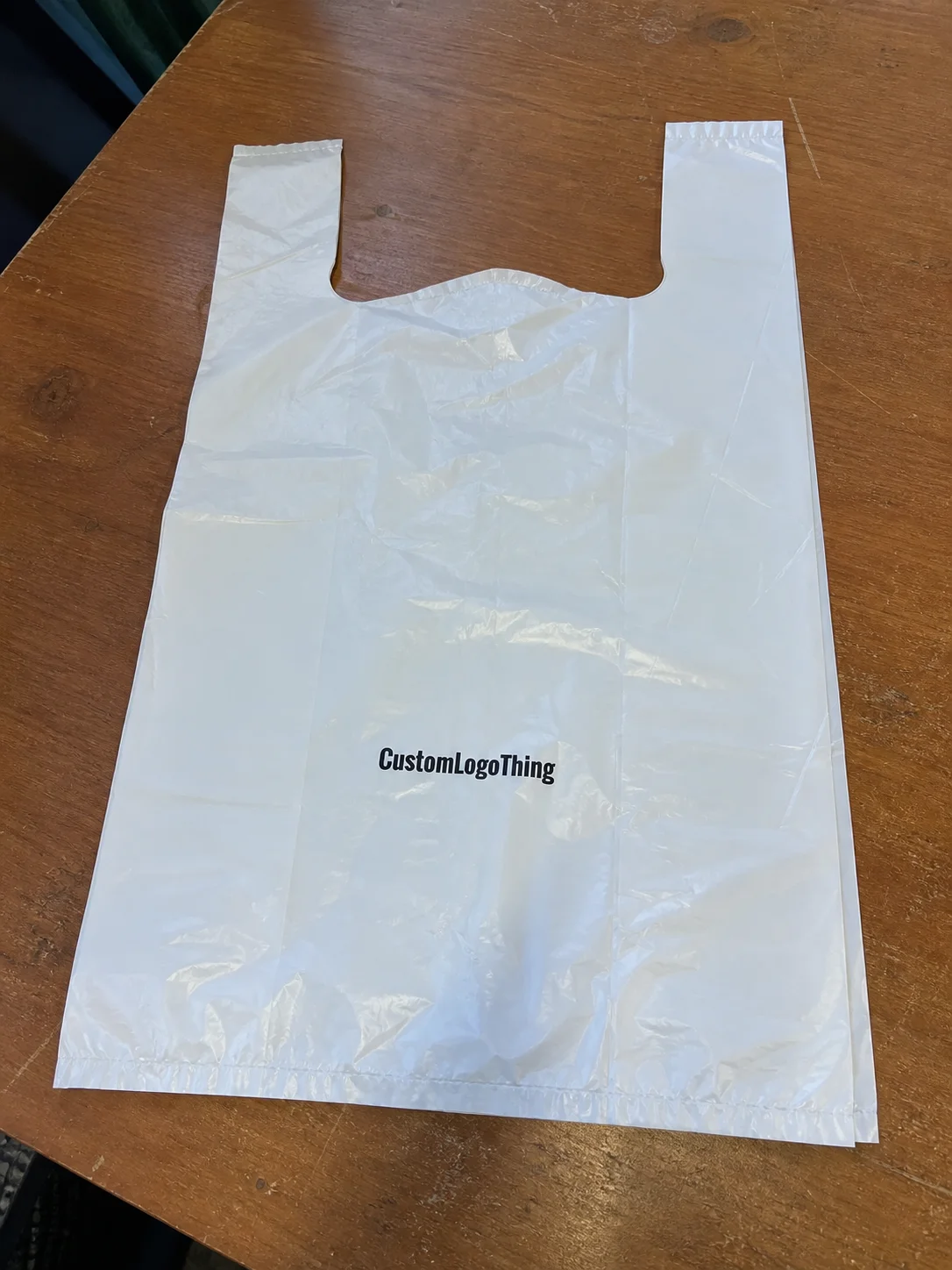
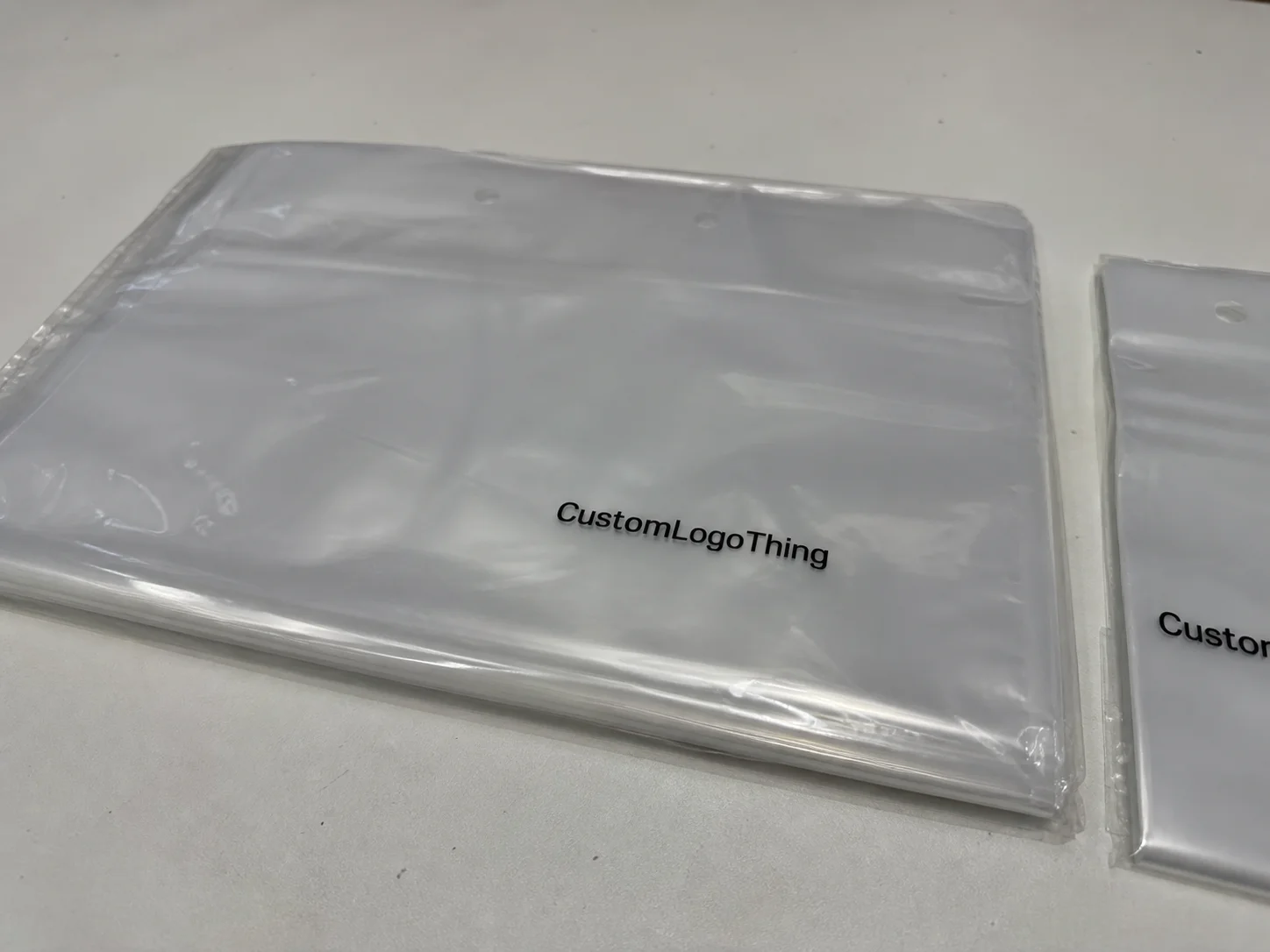
Buyer Fit Snapshot
| Best fit | Price for Branded Mailers projects where brand print, material claims, artwork control, MOQ, and repeat-order consistency need to be specified before quoting. |
|---|---|
| Quote inputs | Share finished size, material target, print colors, finish, packing count, annual reorder estimate, ship-to region, and any compliance wording. |
| Proofing check | Approve dieline scale, logo placement, barcode or warning zones, color tolerance, closure strength, and carton packing before bulk production. |
| Main risk | Vague material claims, crowded artwork, missing packing details, or unclear freight terms can make a low unit price expensive after revisions. |
Fast answer: Price for Branded Mailers: Film, Print, MOQ, and Carton Packing should be specified like a repeatable production item. The safest quote records material, print method, finish, artwork proof, packing count, and reorder notes in one written spec.
Production checks before approval
Compare the actual filled-product size with the drawing, then confirm tolerance on folds, seals, hang holes, label areas, and retail display edges. Reserve space for logos, QR codes, warning copy, and material claims before decorative graphics fill the panel.
Quote comparison points
Review material grade, print process, finish, sampling route, tooling charges, carton quantity, and freight assumptions side by side. A quote is only useful when the supplier can repeat the same color, closure quality, and packing count on the next order.
Price Guide for Branded Mailers: Costs, Specs, and MOQ
Two mailers can look nearly identical in a render and still come back with very different pricing. I have seen that happen more than once, usually right after a brand says, "These are basically the same, right?" They are not. Film gauge, board grade, print coverage, closure style, case pack, and shipping format all pull the price in different directions. That is why a price guide for branded mailers has to do more than list a few sample numbers. It needs to show the mechanics behind the quote.
A useful price guide for branded mailers compares like with like. One supplier may quote a thinner substrate, another may tuck freight into the unit price, and a third may spread setup across a larger run. In a 5,000-piece order, even a two-cent difference per unit changes the total by $100 before freight, duty, or receiving labor enters the picture. That is not pocket change for a launch team trying to defend margin.
This guide is built for ecommerce shipments, subscription kits, retail replenishment, and promotional drops that need a clean branded finish. If you are comparing packaging formats across a larger assortment, our Custom Packaging Products page is a practical place to see how mailers sit alongside cartons, inserts, and other branded pack-out options.
Price Guide for Branded Mailers: Why the First Quote Can Mislead You
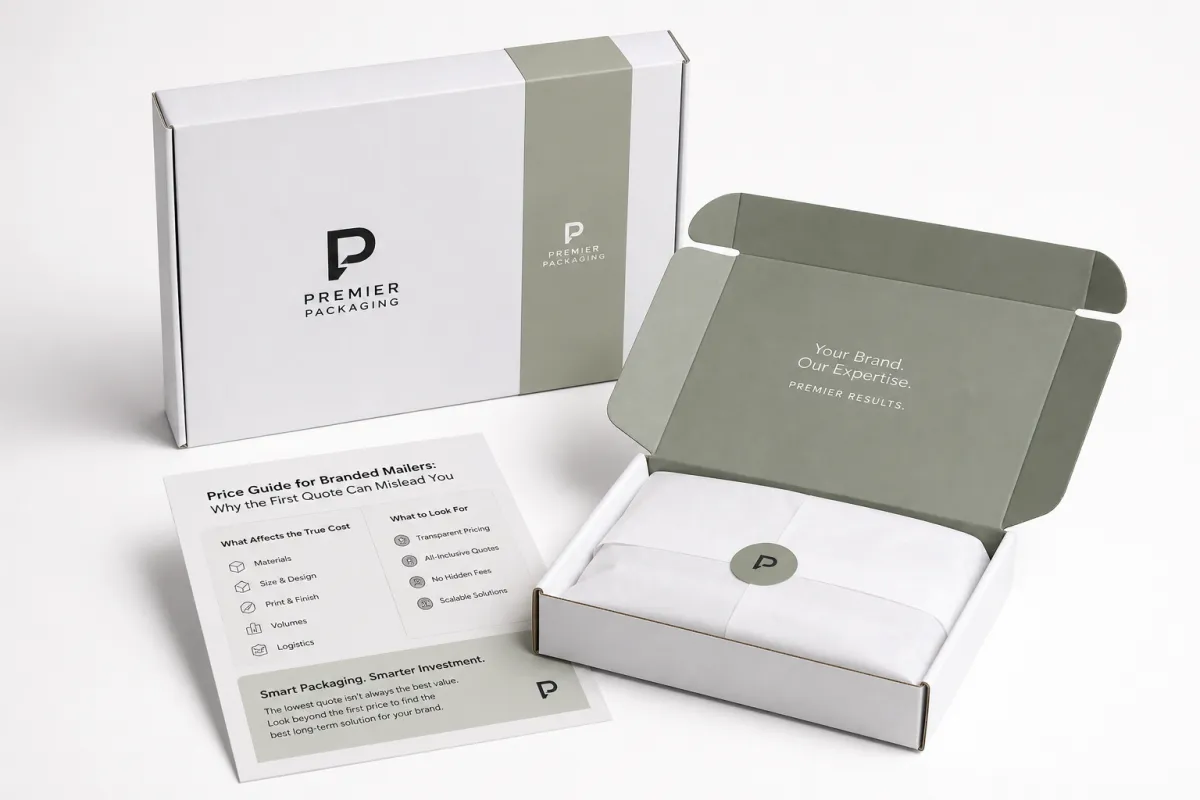
The first number you see is rarely the full story. A price guide for branded mailers starts with a basic truth: two mailers can share the same dimensions and still price very differently once production details are locked in. A 10 x 13 poly mailer with a single-color logo does not behave like a 10 x 13 paper mailer with a reinforced fold and full-face coverage, even if both solve the same shipping job.
Hidden cost drivers show up the moment artwork becomes a real production spec. Substrate choice is the biggest one. Poly film, kraft paper, padded paper, and specialty barrier materials all carry different raw-material costs and converting steps. Sheet format or roll format matters too. So do press setup, ink coverage, finishing, and carton packing configuration. A mailer packed in retail-ready bundles costs more to handle than one shipped in bulk cartons, and that labor has to land somewhere. A serious price guide for branded mailers should include packaging configuration, not just the bag itself.
Print method changes the economics just as much. Flexographic print often works well at scale, especially for repeat artwork with limited colors. Digital and hybrid methods suit shorter runs or more complex layouts, though they usually carry a higher unit cost. Full-bleed artwork adds another layer because the design has to hold register across the face of the mailer. Special inks, metallic effects, and white underprint on dark substrates add more cost because they require extra passes or extra materials.
The best price guide for branded mailers behaves like a comparison tool, not a promise. It should help you ask whether the quote includes proofing, setup, freight, and a proper production spec. If those pieces are missing, the number is partial at best and misleading at worst. A quote can look tidy on paper and still fall apart once the factory starts asking questions.
"The lowest quote is often the one with the most missing detail. Once freight, setup, and sample corrections are put back in, the bargain usually disappears."
This guide is for brands that need a mailer to do more than move a product from warehouse to doorstep. Cost matters. So do print consistency, product protection, and the first impression the parcel makes when it lands in a customer's hands. On a project I reviewed last year, the packaging cost looked higher until we compared damage claims over three months. The cheaper mailer was cheaper only until returns started piling up. For examples of packaging that carries both branding and protection well, our Case Studies page shows how different production challenges are handled in live programs.
Brand Message, Construction, and Print Options for Branded Mailers
Branded mailers are not all built on the same logic, and that is the point where the price guide for branded mailers becomes practical rather than abstract. Common formats include poly mailers, paper mailers, padded mailers, and specialty protective mailers. Poly mailers remain popular for apparel, soft goods, and other items that do not need heavy crush protection but do benefit from moisture resistance and a lower shipping weight. Paper mailers suit brands that want a fiber-based appearance and, in some markets, easier curbside recyclability. Padded mailers add cushioning for harder goods with vulnerable edges. Specialty protective mailers step in when a product needs puncture resistance, dust protection, or a tighter barrier against scuffing.
Branding can be applied in several ways, and each method affects both appearance and cost. Full-color process printing creates a richer field, though it usually demands tighter artwork control and can get expensive if the design covers a large surface. Spot color work is often more economical for bold logos or simple repeat patterns. Flood coverage changes the equation again because it asks the press to coat a much larger percentage of the substrate. Windowing, matte or gloss finish, and soft-touch effects all influence how the finished pack presents, yet each one adds a material layer or processing step that has to be priced properly.
Structural features matter just as much as graphics. Gussets change volume and can improve fit, though they also alter material usage. Tamper-evident seals add security and customer confidence, but they may increase film complexity. Peel-and-stick closures are a favorite in fulfillment because they reduce packing time. Tear strips improve the opening experience, yet they need precise placement to function cleanly. A careful price guide for branded mailers should show these options side by side, since a feature that looks cosmetic can change the production method underneath it.
Premium presentation earns its place in certain programs. Gift orders, subscription launches, high-margin retail drops, and influencer kits often benefit from a mailer that carries part of the marketing message. The unboxing moment is short, but it shapes the customer's judgment before the product is even touched. That is why many brands stop treating the mailer as a generic shipping shell and start treating it as part of the brand system. The difference is subtle on a spreadsheet and obvious in the hands of a customer.
If sustainability is part of the brief, ask for claims that can be verified rather than soft language that sounds nice in a pitch deck. A supplier should be able to speak clearly about recycled content, fiber sourcing, or recovery pathways. For fiber-based packaging, the FSC system is a useful reference point for chain-of-custody questions, while shipping and distribution decisions can be checked against the ISTA community when transit performance matters.
A strong price guide for branded mailers does more than list options. It explains which options match your product weight, your packing speed, and the way your customers open the parcel. That saves time at the start and prevents expensive corrections after production has already begun. It also keeps the conversation honest, which is half the battle in packaging procurement.
Specifications That Shape the Price Guide for Branded Mailers
The fastest route to a reliable quote starts with the spec, not the price request. A solid price guide for branded mailers should begin with the core fields: dimensions, material thickness, print area, color count, and case quantity. If those fields stay vague, the quote will stay vague too, and vague quotes are where budget surprises tend to hide.
Exact sizing matters more than many buyers expect. Oversized mailers waste material, create extra shipping air, and can look clumsy on the pack-out table. Undersized mailers cause another set of problems: stress points, crushed corners, and slower packing because workers have to fight the fit. Boxed products should be quoted with outer carton dimensions, not just product dimensions. Soft goods need folded profile information and the maximum stack or bundle thickness. A single missing measurement can change the quoted bag size and the material yield.
Material performance deserves the same level of attention. Puncture resistance, moisture protection, tear strength, and recycled content all affect price and suitability. Poly film behaves differently from coated paper, especially under humidity and abrasion. Paper mailers can be a strong brand-fit choice, but sharp-edged or pressure-sensitive products may need a reinforced structure. That is one reason a realistic price guide for branded mailers always talks about use case, not just finish. The spec should answer what the mailer has to survive, not only how it should look on camera.
Artwork readiness changes cost too. A clean dieline with bleed already built in makes prepress work simpler. A file that needs cleanup, font fixes, color corrections, or panel adjustments may trigger an extra charge or a longer proof cycle. That is not padding; it is labor. Ask whether the quote includes art review, digital proofing, and any plate or screen charges tied to the print method. If the art is not ready, the quote is gonna drift, plain and simple.
One detail many teams miss is the case pack. A mailer packed 200 per carton is not the same as one packed 500 per carton if warehouse handling and inbound freight are part of the decision. More cartons mean more pallet space and more receiving labor. If the order crosses multiple cartons or pallet builds, logistics belongs in the evaluation. The strongest price guide for branded mailers makes that visible. It should tell you where the cost sits, not bury it in a footnote.
For brands that want to cross-check a packaging spec against other options, a review of our Custom Poly Mailers page can help you see how thickness, seal type, and print setup affect the final recommendation. The goal is not to force one format over another. The goal is to match the product to the shipping reality, then choose the least complicated route that still protects the order.
Branded Mailers Pricing and MOQ: How to Read the Numbers
MOQ changes the economics quickly. In almost every price guide for branded mailers, smaller minimum quantities carry a higher unit cost because setup time, press calibration, and material waste are spread across fewer pieces. A 1,000-piece test run can be useful for validation, while a 5,000-piece run may cut the per-unit number enough to matter in a fulfillment budget. The smaller run is not wrong; it simply buys flexibility at a premium.
For budgeting, compare these variables side by side: material grade, size, print complexity, case pack, and shipping weight. A thicker film or heavier board can raise both manufacturing cost and freight cost. A multi-color design needs more setup than a single-color logo, and a mailer with a custom closure or tear strip brings extra converting work. If the supplier sends only a unit price, ask what is included and what is not. The clearest price guide for branded mailers separates factory price from landed cost.
Landed cost is where many budgets are quietly won or lost. Freight can erase a lot of apparent savings, especially if the quote is ex-works and the goods travel a long distance. Add import duty where relevant, then include local receiving and internal handling if you are comparing true budget impact. A quote that is two cents lower per unit can still be the more expensive option once pallets, cartons, and transit are counted. That part feels kinda boring until you are staring at a budget overrun. The habit that saves the most money is simple: compare every quote on the same basis.
Common quote traps are usually easy to spot once you know where to look. Hidden plate charges can appear after the first estimate. Repeat setup fees may show up if the order is split across dates or versions. Rush fees tend to appear when the production window narrows. Freight is sometimes omitted entirely, which makes the first number look cleaner than reality. Split-run surcharges also matter when a brand wants multiple sizes or designs in one order but the supplier prices each version separately. A disciplined price guide for branded mailers puts those charges on the table before approval, not after.
| Mailer Type | Typical MOQ Pressure | Approx. Unit Price Range | Best Fit | Main Cost Driver |
|---|---|---|---|---|
| Basic printed poly mailer | Lower to moderate | $0.12-$0.28 at volume | Apparel, light soft goods, ecommerce | Film gauge, print colors, case pack |
| Custom paper mailer | Moderate | $0.18-$0.40 at volume | Retail presentation, fiber-based branding | Board grade, coating, converting labor |
| Padded mailer | Moderate to higher | $0.22-$0.55 at volume | Accessories, books, small hard goods | Cushioning material, structure, size |
| Specialty protective mailer | Higher | $0.30-$0.75+ at volume | Fragile items, high-value shipments | Barrier layers, reinforcements, custom features |
Those ranges are directional, not universal. A well-specified order with stable art and a repeat size can land much better than a rushed one-off. A highly customized bag with unusual dimensions, flood print, and a small quantity can sit well above the top of that range. That is why a price guide for branded mailers works best as a planning tool rather than a promise. It helps you spot the slope of the cost curve before you climb it.
For teams working through a launch calendar, one smart habit is to quote multiple quantities at once, such as 1,000, 5,000, and 10,000. The MOQ conversation becomes obvious, and the buyer can see where the unit cost curve starts to flatten. That also reveals whether the selected mailer suits a trial program or a steady replenishment cycle. If the lower tier is wildly expensive, the math may be telling you to rethink the format entirely.
Process and Timeline From Artwork Approval to Delivery
A realistic schedule belongs in any usable price guide for branded mailers. The order flow usually starts with a quote request, then moves through spec confirmation, artwork review, proof approval, production, quality checks, packing, and shipment. Each step carries its own timing risk, and most delays happen before the press even starts running.
Artwork approval is the most common bottleneck. Files that arrive without a proper dieline, without bleed, or with unclear logo placement force the prepress team to stop and ask questions. Color revisions cause another delay, especially when the brand wants the new mailer to match an existing package or retail asset closely. The more information available up front, the steadier the schedule becomes. A good price guide for branded mailers makes this plain: fast jobs begin with prepared files.
Sampling can extend the timeline too. Some teams need a physical sample to confirm size, fit, and print appearance before full production, and that is a sensible safeguard. It is far better to catch a fit issue in one sample than after thousands of pieces are complete. Sampling still takes time, so it should be built into the launch plan instead of treated as a surprise. For orders that must survive parcel abuse, many buyers also think through test methods such as ISTA 3A or ASTM D4169, depending on the product and distribution path.
Custom mailers often run on a schedule of roughly 12 to 18 business days after proof approval for straightforward jobs, though larger volumes, specialty materials, or complicated artwork can stretch that window. Transit time sits on top of production time, and that matters when a drop date is fixed. Seasonal launches, subscription fulfillment dates, and retail promotions all need enough buffer to absorb a proof correction or a shipment delay. The most expensive schedule is the one that misses the launch.
One planning tip comes up again and again: do not wait until inventory is nearly gone. Mailers are easy to underestimate because they do not occupy as much space as finished product, yet the supply chain still needs room for approval, production, transit, and receiving. A well-timed order keeps operations calm, and calm operations usually cost less. Nobody needs a last-minute scramble at the dock.
If a supplier can explain the timeline clearly, they usually understand the production side clearly too. That is one of the quiet strengths of a dependable price guide for branded mailers: it shows what happens between sign-off and delivery, so the buyer can plan beyond the quote line. It also tells you whether the vendor has actually run the job before or is just guessing.
Why Choose Us for Branded Mailers That Hold Up in Fulfillment
Good packaging should look right and perform right. That is the standard behind our price guide for branded mailers approach. The goal is not to chase the cheapest number in the spreadsheet. The goal is to supply a mailer that survives real fulfillment conditions, where speed, handling, and transit abuse are part of the job. A mailer that tears at the seal, scuffs too easily, or prints unevenly does not save money. It creates a different kind of expense, and usually a mess you did not budget for.
Manufacturing knowledge matters most. Substrate behavior changes from material to material, and the press has to respect that. Poly film stretches differently from coated paper. Heavier board handles differently from a thin sleeve. Closure reliability matters because packing lines move fast, and anything that slows seal application affects labor. Print registration matters because inconsistent branding is obvious the moment the customer sees the parcel. A strong price guide for branded mailers links those technical realities to the budget instead of treating them as separate conversations.
We also keep spec guidance clear. That means helping align size, print method, MOQ, and shipping requirements before the order is locked in. It also means being direct about tradeoffs. If a small run is the right answer for a launch, we will say so. If a larger run creates a much better cost per piece and the inventory plan can support it, we will say that too. Straightforward quoting matters because it helps buyers decide with confidence rather than guessing at the fine print.
Brands ask for consistency, and they should. Repeatability is one of the most underrated parts of packaging procurement. A mailer that prints cleanly on the first order should print cleanly on the reorder, and the dimensions should stay stable enough that fulfillment teams do not have to relearn the pack. That matters even more for brands that run multiple replenishment cycles or seasonal updates. A practical price guide for branded mailers should never treat consistency as an afterthought.
There is also value in supporting different order sizes without changing the standard of care. A startup testing its first branded run deserves the same spec attention as a larger brand placing a replenishment order. That is how packaging relationships should work: enough flexibility to support a new launch, and enough discipline to keep production predictable. If you want to see how those conversations translate into real packaging programs, the examples in our Case Studies section are a helpful reference.
Most important, we focus on facts over hype. The mailer should fit the product, support the brand, and move cleanly through fulfillment. If those three things are true, the pricing conversation gets easier to read. That is the real value of a price guide for branded mailers: it helps you buy the right pack, not just the loudest one.
Next Steps to Get the Right Branded Mailer Quote
The easiest way to get a dependable quote is to prepare the right inputs before you ask. A practical price guide for branded mailers starts with exact dimensions, product weight or profile, target quantity, print colors, closure style, and any protection or sustainability requirements. If the product is fragile, sharp, moisture sensitive, or unusually shaped, say so up front. Those details influence both material choice and price.
Artwork should travel with the request whenever possible. Send print-ready files, a reference sample, or even a few photos of the current packaging so the supplier can see the real use case. That helps catch problems early, such as a logo sitting too close to the seal area or a layout that works on a screen but not on a real dieline. The faster the supplier sees the structure, the faster the quote becomes trustworthy. A thorough price guide for branded mailers always rewards clarity.
When the quotes come back, compare them on the same basis. Check the material, print method, MOQ, lead time, freight terms, proofing, and setup services. If one quote includes carton packing and another does not, the numbers do not match. If one supplier prices a heavier gauge and another offers a thinner version, the lower quote may simply be a lighter product. Do not let line-item ambiguity make the decision for you. The right price guide for branded mailers makes the comparison fair before anyone signs off.
A simple decision path works well for most buyers. First, choose the format that protects the product. Second, confirm the brand presentation you need. Third, choose the order volume you can realistically maintain without overbuying inventory. That sequence keeps the packaging aligned with the business, and that is usually where the best value sits. It is not flashy, but it works.
If you are ready to move from estimate to order, use the same disciplined approach every time. Review the specs, compare the landed cost, verify the timing, and confirm the print details. Done that way, a price guide for branded mailers becomes more than a pricing reference. It becomes a practical buying tool that helps protect margin, reduce waste, and keep the packing line moving.
What Affects the Price Guide for Branded Mailers Most?
Material type, size, print coverage, and order quantity usually drive the biggest swings. Setup, proofing, freight, and finishing can also move the final landed cost, so a useful price guide for branded mailers needs to show those items clearly before you approve anything. If a supplier skips those pieces, you are not getting a comparison; you are getting a teaser.
What affects the price guide for branded mailers most?
Material type, size, print coverage, and order quantity usually drive the biggest price changes. Setup, proofing, freight, and any special finishing can also move the final landed cost, so a useful price guide for branded mailers should show those items clearly.
Is a lower MOQ always better for branded mailers?
Not always, because small runs often have a higher unit cost due to fixed setup time. A lower MOQ can still be useful for launches, seasonal campaigns, or testing a new design, but the order should be judged against the full price guide for branded mailers picture, not just the entry point.
How do I compare branded mailer quotes fairly?
Compare the same size, material, print method, quantity, and packaging format across every quote. Make sure freight, setup fees, and sample charges are included so you are looking at true landed cost, which is the only comparison that gives a fair reading of the price guide for branded mailers.
How long does a custom branded mailer order usually take?
Timing depends on artwork approval, sampling needs, production load, and transit distance. The fastest schedules happen when specifications are finalized before quoting and files are print-ready, because every extra revision pushes the price guide for branded mailers conversation into schedule risk as well as cost.
What should I prepare before requesting a branded mailers quote?
Have dimensions, quantity, print colors, closure style, product type, and any protection requirements ready. Send artwork files or a reference sample so the supplier can confirm feasibility and pricing faster, which makes the price guide for branded mailers much easier to use in practice.