Buyer Fit Snapshot
| Best fit | Sustainable Mailers for Beauty Brands projects where brand print, material claims, artwork control, MOQ, and repeat-order consistency need to be specified before quoting. |
|---|---|
| Quote inputs | Share finished size, material target, print colors, finish, packing count, annual reorder estimate, ship-to region, and any compliance wording. |
| Proofing check | Approve dieline scale, logo placement, barcode or warning zones, color tolerance, closure strength, and carton packing before bulk production. |
| Main risk | Vague material claims, crowded artwork, missing packing details, or unclear freight terms can make a low unit price expensive after revisions. |
Fast answer: Sustainable Mailers for Beauty Brands: Film, Print, MOQ, and Carton Packing should be specified like a repeatable production item. The safest quote records material, print method, finish, artwork proof, packing count, and reorder notes in one written spec.
Production checks before approval
Compare the actual filled-product size with the drawing, then confirm tolerance on folds, seals, hang holes, label areas, and retail display edges. Reserve space for logos, QR codes, warning copy, and material claims before decorative graphics fill the panel.
Quote comparison points
Review material grade, print process, finish, sampling route, tooling charges, carton quantity, and freight assumptions side by side. A quote is only useful when the supplier can repeat the same color, closure quality, and packing count on the next order.
Sustainable Mailers for Beauty Brands: What to Know
I have watched sustainable mailers for beauty brands go from a nice branding note to a real procurement decision, and that shift makes perfect sense once you have spent enough time around packing benches in Los Angeles, New Jersey, or Manchester, watching how serum bottles, lip oils, and subscription kits actually behave between the warehouse and the customer’s door. I still remember one shipment of glass ampoules that came in with damp corners after a rainy cross-dock in Atlanta, one recycled carton that looked like it had been sat on by a forklift in a Chicago fulfillment center, and a stack of returns from a facial oil launch that cost $1,280 to repair because the mailers had been picked for appearance instead of transit performance. A premium skincare order can pick up three or four packaging layers before the customer even touches the product, and every layer adds material cost, labor, freight, and clutter. The right sustainable mailers for beauty brands lower waste, protect the order, and still feel deliberate in the hand.
What many teams miss is simple: a mailer is not only a shipping shell. It is a protection device, a brand signal, and an operations tool all at once, especially when the pack-out line is moving 900 to 1,500 units per shift. I have seen beauty teams obsess over a recycled-content badge while overlooking seal strength, and I have seen the opposite, where a heavy-duty mailer protected the product but looked like it came from the least glamorous corner of a warehouse in Newark, not the premium studio the brand had in mind. The strongest options sit in the middle, where sustainable mailers for beauty brands satisfy shipping, customer perception, and end-of-life handling without forcing a compromise that hurts the business. That balance is the whole trick, honestly.
At Custom Logo Things, that balance matters because the mailer often reaches the customer before anything else does. If the exterior looks flimsy, dull, or confusing to dispose of, the unboxing starts with hesitation on the kitchen table or the vanity at 7:00 p.m. If it arrives dented, wet, or torn, the brand pays twice: once for the replacement and again for the loss of trust. That is why sustainable mailers for beauty brands deserve the same scrutiny as the formula inside the box, from adhesive spec to carton compression test.
What Are Sustainable Mailers for Beauty Brands?
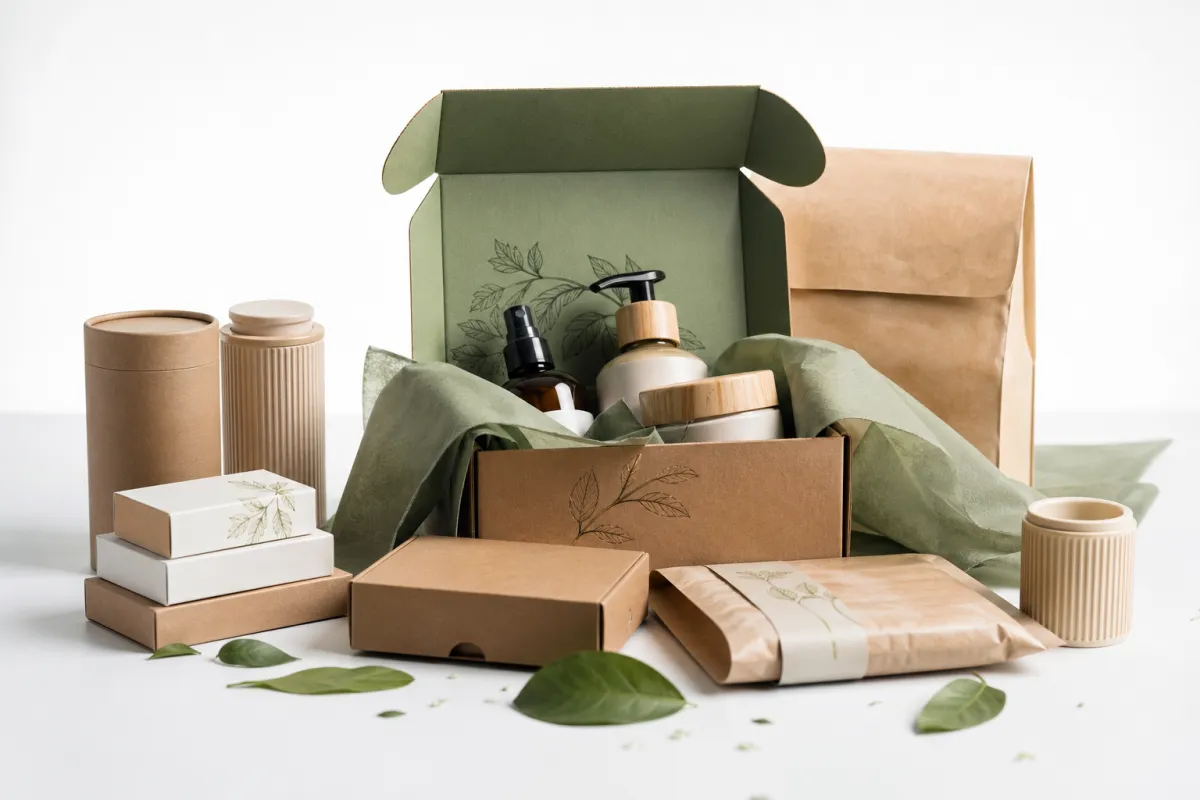
At a warehouse visit in New Jersey, I watched a fulfillment manager pack 1,200 skincare orders in a single morning using a standard poly mailer plus a separate paper sleeve because the brand wanted a premium look, but the process added 18 to 25 seconds per order and left behind a noticeable stack of extra waste. By 11:30 a.m., the packing table was covered with empty sleeves, tape trimmings, and one very tired supervisor doing the math on labor minutes instead of aesthetics. That is where sustainable mailers for beauty brands enter the conversation: not as a slogan, but as a way to reduce material layers without sacrificing delivery quality or the rhythm of the packing line.
In practical terms, sustainable mailers for beauty brands are mailers made from recycled, recyclable, compostable, reusable, or lower-impact fiber and film structures that still protect cosmetics, skincare, haircare, and fragrance during transit. That can mean a mailer with 30% post-consumer recycled content, a kraft exterior with a water-based coating, a hybrid structure that mixes paper and film for better puncture resistance, or a recycled poly film made with 50% PCR resin and sealed with a low-profile peel-and-seal strip. The category is broader than many buyers expect, and that is useful because a 30 ml serum bottle, a 4-piece haircare sampler, and a fragrance discovery set do not travel the same way.
Beauty is a special case because the product mix is unforgiving. A glass bottle can crack, an oil can seep, and a pressed powder can arrive shattered after a single rough drop from 36 inches onto concrete, which is why a box that looks beautiful on a desk still needs to survive a bad Tuesday in a sorting center. Premium expectations are unusually high as well. A lip balm brand may need a straightforward mailer, while a prestige serum brand may need a material that photographs cleanly, feels refined in the hand, and signals care in the first five seconds. That is why sustainable mailers for beauty brands have to solve for three things at once: protection, presentation, and practical disposal.
I also want to be direct about one misconception: sustainability is not one material choice. A compostable film is not automatically better than a recycled poly mailer, and a kraft mailer is not automatically the answer either, especially if the paper weakens at 68% humidity or the closure fails after 50 open-close cycles in a shipping simulation. The real question is how the mailer performs across source material, end-of-life path, durability, and shipping efficiency. I have seen a compostable mailer fail because it softened under humidity in Miami, while a recycled-content poly mailer passed parcel testing and reduced damage by 9% in one cosmetics account out of San Diego. That is the kind of tradeoff sustainable mailers for beauty brands force teams to examine honestly.
"The greener option only works if it survives the trip and still makes sense on the packing line." A brand director said that to me after a supplier review in Los Angeles, and it stuck because it is exactly how sustainable mailers for beauty brands should be judged, especially when the order volume is 5,000 pieces per month and every extra second has a labor cost attached.
For teams that want a broader packaging strategy, it helps to compare mailers alongside other formats in Custom Packaging Products and recent packaging examples in our Case Studies. A mailer never exists alone; it sits inside a whole system of carton sizes, inserts, void fill, and shipping labels, and the difference between a 6 x 9 mailer and an 8 x 10 mailer can change dimensional weight by half a pound on USPS Ground Advantage. The better that system works together, the easier sustainable mailers for beauty brands become to justify.
From an industry standpoint, I also look for standards rather than vague adjectives. If a supplier says "recyclable," I ask what stream, in which market, and under what conditions, because a package accepted in Portland may not be accepted in Phoenix or Birmingham. If they say "compostable," I ask whether the material aligns with ASTM D6400 or another recognized pathway, and whether local infrastructure actually supports it. For broader context on sustainable packaging choices, the guidance from the Sustainable Packaging Coalition and certification resources from FSC are useful reference points. That kind of due diligence belongs in any serious purchase of sustainable mailers for beauty brands.
How Sustainable Mailers for Beauty Brands Work
Structurally, sustainable mailers for beauty brands start with the outer layer, which may be paper fiber, recycled film, or a hybrid laminate designed to improve tear resistance. Then comes the seal architecture: pressure-sensitive adhesive, peel-and-seal closure, or a tamper-evident strip that shows if the package has been opened in transit. The best options use a closure that holds during compression but still opens cleanly for the customer. That detail matters because a weak adhesive turns into a customer service ticket, and a messy tear line can make a luxury brand feel careless. I have opened enough botched mailers to know that a bad tear feels petty for about three seconds, and then weirdly personal after that.
The next variable is thickness. A 2.5 mil recycled poly mailer behaves very differently from a 4 mil mailer with gussets, and that difference shows up during transit, not just on a spec sheet. The product inside matters too. A boxed serum set with two glass vials needs a different level of support than a flat sleeve of sheet masks or a 120-gram refill pouch. In my experience, sustainable mailers for beauty brands perform best when the structure is matched to the product family first and the branding second, because a mailer that works for cotton pads may fail for a weighted candle jar. That part is kinda boring until the returns hit the queue.
Here is how the shipping journey usually plays out. The order is packed, sealed, stacked, and then compressed during linehaul, cross-dock transfers, and final-mile handling. Moisture can enter at a sorting center in Memphis, a parcel may slide off a conveyor at 14 feet per second, or it may land under 20 pounds of other mail at a regional hub in Secaucus. If the mailer loses integrity in any one of those moments, the whole experience degrades. That is why I tell teams that sustainable mailers for beauty brands must survive the ugliest part of the route, not only the staged photo shoot in the marketing deck.
On a supplier negotiation in Shenzhen, I once reviewed three candidate mailers for a sunscreen brand with 5,000-piece minimums and a July launch. One was a lightweight kraft mailer that looked beautiful but tore at the corner after repeated edge impacts. The second was a recycled film option with better puncture resistance but weaker print opacity. The third was a hybrid design that cost $0.18 more per unit at 5,000 pieces, yet it saved the brand from adding an internal sleeve and reduced damage claims enough to justify the switch by the second month. That is the kind of math behind sustainable mailers for beauty brands: unit price matters, but system performance matters more.
Many beauty teams ask whether they can eliminate secondary packaging entirely. Sometimes yes, sometimes no. If a product ships in a rigid retail box, a good mailer may remove the need for an extra outer carton or unnecessary void fill, and the savings can reach 12% on labor alone. If the product is fragile or leaks easily, a simple mailer may still need a small internal barrier, such as a 350gsm C1S artboard insert or a molded pulp tray sized to the bottle neck. The main point is that sustainable mailers for beauty brands can lower material use when they are designed as part of a pack-out strategy rather than as a standalone component.
| Mailer Type | Typical Unit Price at 5,000 Units | Best For | Main Trade-Off |
|---|---|---|---|
| Recycled poly mailer | $0.14-$0.28 | Light to medium beauty orders, apparel-style pack-outs, moisture-prone routes | Less premium texture than paper, recycling rules vary by region |
| Kraft mailer | $0.18-$0.36 | Skincare sets, clean-beauty branding, matte unboxing looks | Can lose strength in humidity if coatings are not specified well |
| Compostable film mailer | $0.22-$0.45 | Brands with a verified composting story and controlled disposal guidance | Infrastructure is uneven, and performance can drop under stress |
| Hybrid paper-film mailer | $0.20-$0.40 | Premium beauty lines that need puncture resistance and a refined surface | More complex sourcing and sometimes harder end-of-life messaging |
Those numbers are directional, not universal, but they are close enough to frame a real buying conversation. The cheapest mailer is not always the lowest-cost option once you count damage rates, labor, and replacement orders, and a difference of $0.06 per unit can be erased quickly if returns rise by just 1.5%. That is why I keep returning to sustainable mailers for beauty brands as an operational decision, not only a sustainability statement.
For brands that want an incremental improvement before a full switch, a recycled-format option like Custom Poly Mailers can be a smart bridge. They often preserve the familiar feel of film-based fulfillment while lowering virgin resin use and keeping the pack-out process close to what the warehouse team already knows. In many cases, that is the fastest route into sustainable mailers for beauty brands without making the packing team invent a new routine on a Tuesday morning, which is usually when trouble starts.
One operations lead told me, after a 4-week pilot with 300 units per lane, "We were trying to fix the perception problem and the damage problem at the same time. The mailer solved both, but only after we ran drop tests, compression checks, and a real pack-out on the same bench the team uses every day."
Key Factors That Shape Cost, Protection, and Brand Fit
Price starts with material, but it does not end there. For sustainable mailers for beauty brands, the unit cost changes with recycled content percentage, substrate choice, print coverage, closure style, gusseting, and any certification work required for claims. A single-color flexographic print on a stock-size mailer may be simple. A full-bleed custom design on a textured paper mailer with a peel strip and tear notch is a different job entirely. I have seen brands save 12% by reducing print complexity, even before they touched the material spec, and another 4% by moving the artwork from six colors to two.
Total landed cost is the cleaner metric. If a slightly higher-priced mailer removes one insert, cuts packing labor by 8 seconds, and reduces breakage by 2%, it may beat the cheaper option by a wide margin. That is especially true for glass-heavy categories like fragrance, face oils, and ampoules. I often tell clients that sustainable mailers for beauty brands should be scored like a system, not a line item. That includes replacement costs, customer support time, and the shipping profile of the final package, from the warehouse in Dallas to the customer's porch in Raleigh.
Protection has to match the product. A 40-gram sheet mask set does not need the same build as a 300-gram gift box containing three full-size bottles, and a 500 ml shampoo refill needs puncture resistance that a serum sachet does not. If the item is liquid, the seal must resist edge stress and accidental pressure. If the item is boxed, the mailer needs enough dimensional stability to keep the carton from bending. If the item is a refill pouch, puncture resistance becomes the top concern. I have seen sustainable mailers for beauty brands fail because the buyer treated every product as if it had the same risk profile. That shortcut looks efficient in a spreadsheet and becomes expensive in real life.
Brand fit matters more than many procurement teams want to admit. The customer sees texture, color, print sharpness, and closure behavior before they ever test the product. A matte kraft finish can support a clean-beauty story beautifully. A recycled white film can feel crisp and modern. A dark-ink, minimalist mailer can read as premium with only two colors, while a busy full-wrap design can feel cheap if the substrate is wrong. In my view, sustainable mailers for beauty brands should look intentional, not merely eco-coded, whether the brand is sold through Sephora, a Shopify storefront, or a regional salon chain in Austin.
There is also a subtle efficiency angle. Better mailer design can improve pack-out speed because the team spends less time adding protective layers or fighting mismatched sizes. One contract packer I worked with trimmed 14% off their pack-station congestion by switching from oversize cartons to right-sized Mailers for Smaller skincare kits. That saved floor space, which is a bigger deal than many people realize when the line is moving 2,400 units per day. For beauty brands shipping 20,000 units a month, a 6-second improvement per order adds up fast, and sustainable mailers for beauty brands can be part of that gain.
To keep the decision grounded, I like to compare options across four variables: protection, brand experience, disposal clarity, and cost. The right mix depends on where the business is under pressure. If damage claims are high, durability comes first. If the brand is fighting customer perception, texture and print may matter more. If freight is expensive, dimensional efficiency may win. That is why sustainable mailers for beauty brands are not a one-size answer; they are a ranking exercise with real numbers, not a mood board exercise.
Here is a practical way to think about fit by product type:
- Lightweight sheet masks: A recycled or kraft mailer with moderate seal strength often works well, especially at 100 to 300 grams total ship weight.
- Glass serum bottles: Use a mailer with higher puncture resistance, and test with a boxed unit plus edge-drop checks under ISTA 3A methods.
- Fragrance sets: Focus on rigid support and a closure that does not pop open under compression.
- Refill pouches: Prioritize leak control and abrasion resistance, because a sharp edge can turn a minor issue into a return.
That framework is why a supplier conversation should always include specs, not just claims. Ask for basis weight, film gauge, recycled content percentage, adhesive type, tear propagation data, and print method. Ask whether the material can support your logo at two colors or four colors, and whether the substrate can hold a matte varnish without scuffing after 500 cycles of handling. Ask whether the supplier has tested against compression, vibration, or drop conditions. If they cannot answer clearly, the sustainable mailers for beauty brands conversation is not mature enough yet.
Step-by-Step Process and Timeline for Choosing the Right Mailer
The cleanest rollout starts with a packaging audit. Measure your current product sizes, average ship weights, monthly volume, and damage rate by SKU, then sort the list by revenue so you focus on the 20% of items driving 80% of shipments. If the brand ships 17 different skincare items, do not start with all 17. Start with the top three by volume and the top two by damage incidence. That kind of focus keeps sustainable mailers for beauty brands manageable and gives the team a clear baseline for comparison.
Next, define what success means. Is the main goal to reduce virgin plastic by 40%? Lower damage claims below 1.5%? Improve unboxing consistency across DTC and marketplace orders? A good spec sheet should name the priority rather than hiding behind vague "eco-friendly" language. I have sat in meetings where marketing wanted a refined matte finish, operations wanted a fast seal, and finance wanted a $0.20 cap. The brands that win are the ones that state the trade-offs openly, because sustainable mailers for beauty brands always involve a balancing act measured in dollars, seconds, and customer returns.
After that, shortlist materials and request samples. Ask for at least two thicknesses or two construction types, not just one. A recycled poly mailer at 2.5 mil may behave differently from the same design at 3.0 mil. A kraft mailer with a water-based coating may outperform a plain paper version by a large margin in humidity. If the sample is for a product that ships across climates, include moisture exposure and compression in your review. That is where sustainable mailers for beauty brands can surprise teams in a good or bad way, especially on routes from Portland to Houston.
I recommend a test phase with three checks: seal integrity, crush resistance, and return-shipment wear. For liquid or fragile products, add a simple vibration test or a small batch through an ISTA protocol. If you want a reference point, the International Safe Transit Association at ista.org publishes widely used test methods that packaging teams rely on when validating distribution performance. Those tests matter because sustainable mailers for beauty brands should be proven in transit, not assumed safe because they look sturdy.
One memorable factory-floor test in Guangdong taught me this the hard way. We had 500 sample mailers for a clean-skincare line, and the glossy version passed visual approval but failed at the seal after two humidity cycles in a basic back-room test that never went above 30 degrees Celsius. The matte hybrid replacement cost 8 cents more, yet it cut reopening issues by 100% in that pilot. I was frustrated enough to write down the spec in all caps, which is not my proudest moment, but it did make the point. That is why I keep saying sustainable mailers for beauty brands are a performance decision first and a design decision second.
Here is a realistic timeline for many custom projects:
- Week 1: Audit current pack-out, gather dimensions, and define the sustainability target.
- Week 2: Shortlist 2 to 4 material options and request printed or unprinted samples.
- Week 3: Review samples with operations, brand, and customer experience teams.
- Week 4: Run test shipments, drop tests, or compression checks with real SKUs.
- Weeks 5-6: Approve artwork, confirm supplier details, and lock the production spec.
- Weeks 7-10: Production and delivery, depending on order size, print complexity, and material availability.
- Typical lead time: 12-15 business days from proof approval for a standard run in Dongguan or Ningbo, and 18-25 business days if the order needs a custom coating, specialty adhesive, or FSC paper sourcing.
That timeline can move faster if you choose stock sizes and simple print. It can slow down if the artwork needs extensive proofing or if the supplier must source a specific recycled content level, a custom tear strip, or a 350gsm C1S artboard insert to support a heavier SKU. Either way, plan the launch around inventory and campaign dates. I have seen a promotion slip by 3 weeks because packaging approval started after the product landed in the warehouse. That is avoidable, and it is one more reason sustainable mailers for beauty brands should sit in the launch calendar early.
If you need a broader product map while planning the switch, our Custom Packaging Products page can help your team compare formats, while Case Studies show how other brands handled timing, print, and pack-out alignment. Those examples are especially helpful for brands deciding whether sustainable mailers for beauty brands should replace cartons, supplement them, or start as a hybrid transition for a 90-day pilot.
Common Mistakes When Buying Sustainable Mailers for Beauty Brands
The first mistake is chasing the greenest label without checking protection. I have seen buyers choose a compostable mailer because it sounded better on a slide deck, then watch it fail for a 90-gram lip gloss kit that shipped in humid conditions through the Southeast in August. If the mailer cannot survive two sorting hubs and a delivery truck, the sustainability story collapses fast. That is why sustainable mailers for beauty brands should be evaluated with real transit conditions, not just a marketing checklist.
The second mistake is vague claims. "Eco-friendly" means almost nothing unless the supplier can show recycled content, recyclable guidance, compostability certification, or reuse instructions. Even then, the claim needs context. Recyclable in what community? Compostable in which system? Reusable for how many cycles? The more specific the answer, the more trustworthy the sourcing decision. I think sustainable mailers for beauty brands fail most often at the claims stage because teams are rushed and do not ask the boring questions. The boring questions are usually the expensive ones, which is annoying but true.
The third mistake is under-sizing. A mailer that fits too tightly can create corner stress, seal strain, and abrasion on the product box. Over-padding can be just as bad because it increases weight and waste. I once reviewed a beauty subscription kit that used an oversized mailer plus extra paper fill, and the result was a parcel that cost 11% more to ship while still arriving with scuffed edges after a 600-mile route. A better fit would have solved both problems. That is the kind of detail that makes sustainable mailers for beauty brands worth the extra spec work.
The fourth mistake is skipping fulfillment testing. A sample can look perfect on a desk and still be a nuisance on the line. If the adhesive takes too much pressure, workers slow down. If the tear strip is awkward, customers struggle at unboxing. If the mailer curls in dry conditions, stacking becomes messy. I have seen a 2-minute sample review save a 2-week production headache and prevent a reprint of 8,000 pieces. That is why sustainable mailers for beauty brands need pack-out trials, not just approval emails.
The fifth mistake is ignoring disposal communication. Customers do not always know the difference between recyclable film, compostable fiber, or reusable mailers. If the brand wants responsible end-of-life behavior, it needs to say so plainly. A small note printed on the exterior or included on an insert can remove confusion and improve compliance. Without that, even the best sustainable mailers for beauty brands can end up in the wrong bin, especially when the customer is rushing through a 10 p.m. unboxing.
Here are the warning signs I look for during a supplier review:
- They cannot explain material composition in plain language.
- The test data only covers appearance, not transit performance.
- The print sample looks fine, but the closure feels weak or uneven.
- The end-of-life claim depends on assumptions the customer cannot verify.
- No one has checked how the mailer behaves at the actual fulfillment line speed.
Any one of those issues can undermine a rollout. Together, they can turn a promising idea into an expensive lesson. I would rather see a brand choose a simple, well-tested format than force a flashy solution that looks great for 2 weeks and then generates returns. That practical view is the difference between marketing-led packaging and smart packaging. For sustainable mailers for beauty brands, smart usually wins.
Expert Tips to Make Sustainable Mailers Perform Better
Start with the product, not the package. That sounds obvious, but many teams reverse the order. They fall in love with a material first and then try to make the product fit. A better approach is to measure the bottle, box, or pouch, identify the top failure mode, and build around that risk. In my experience, sustainable mailers for beauty brands perform better when the structure is designed from product physics upward, whether the line is shipping 2,000 lip treatments or 15,000 face masks a month.
If budget is tight, simplify the print setup. Fewer colors often reduce cost, reduce waste, and improve consistency. A restrained 1-color or 2-color design can feel more premium than a crowded full-wrap layout if the substrate is good. I learned that during a negotiation with a mid-sized skincare brand that wanted a metallic finish, then discovered the price jumped 27% once the printer added special inks and a second pass. We shifted to a cleaner matte black on recycled white film, and the mailer looked sharper while costing less. That is one of the more useful lessons I have seen in sustainable mailers for beauty brands.
Run a pilot before a full rollout. Even 300 to 500 units can tell you a lot about damage rates, packing speed, seal failures, and customer feedback. Track the numbers by SKU and route, not only by total volume. A West Coast lane with dry weather may behave differently from a humid East Coast route. The data can be messy, but it is still better than guessing. Pilot testing is often the fastest path to better sustainable mailers for beauty brands because it catches problems while the order quantity is still small.
Use the mailer as part of the brand story, but do not overload it. A clear disposal line, a small recycled-content note, or a simple printed message can do more good than dense sustainability copy. Customers usually care about clarity more than jargon. If the packaging says "Recycle where facilities exist" or "Reuse this mailer for your next return," that is easier to follow than a paragraph of claims. Good sustainable mailers for beauty brands should guide behavior in one glance, not ask the customer to decode a manifesto.
Think about freight and warehouse efficiency too. A mailer that lowers dimensional weight by even a small amount can save real money over 10,000 shipments. A flatter profile can improve carton fit on pallets. A better seal can reduce line interruptions. These operational wins are not glamorous, but they are the reason packaging decisions survive budget reviews. That is the practical side of sustainable mailers for beauty brands that executives tend to appreciate once the numbers are laid out in dollars per thousand units.
One of the cleanest strategies I have seen is a three-step filter:
- Does it protect? If not, stop there.
- Does it support the brand look? If not, adjust substrate or print.
- Does it simplify the process? If not, test another format.
If a mailer passes those three questions, it is usually worth deeper testing. If it fails two of them, the "sustainable" label is not enough to save it. That is the blunt truth behind sustainable mailers for beauty brands, and it is the kind of truth that saves brands money on reorders, refunds, and repack labor.
I also recommend asking suppliers for a disposal guide in plain language. If the mailer is recyclable, say which parts need to be separated. If it is reusable, show how many uses are realistic. If it is compostable, make sure the claim matches the market where the customer lives. Clear instructions increase the odds that the package's end-of-life story matches the brand's intent. That final step matters more than many buyers think, because sustainable mailers for beauty brands only earn trust when the customer can act on the promise.
Next Steps: Build a Sustainable Mailer Plan for Your Line
If I were helping a beauty brand build its packaging roadmap tomorrow morning, I would start with three numbers: average unit dimensions, monthly volume, and acceptable damage rate. Those figures tell you whether the priority is smaller size, stronger material, or better presentation. Once those numbers are on the table, sustainable mailers for beauty brands stop being abstract and start becoming measurable, right down to the cost per shipment lane from Ohio to Florida.
Then I would shortlist 2 or 3 materials and request samples with the actual artwork size, not mock artwork at a guessed scale. Real dimensions matter because small changes in logo placement or seal margin can affect how the mailer feels on arrival. A sample that is 0.5 inch off in width can mislead the whole review. That level of detail is tedious, yes, but it is also why sustainable mailers for beauty brands work better when the process is disciplined.
Assign owners early. Sourcing should own the supplier conversation, brand should own visual approval, and operations should own test shipments. If one person controls all three, the project can stall. If nobody owns them, the project drifts. I have watched a promising packaging switch lose 6 weeks because no one was clearly responsible for sample sign-off, and the warehouse in Toronto was left waiting on a spec that never got locked. Good sustainable mailers for beauty brands projects avoid that trap by making responsibilities explicit.
If you are moving from a standard film mailer to a more responsible option, document the change with real metrics: material weight, pack-out time, breakage rate, and customer feedback on unboxing. If the old design used 28 grams of film and the new one uses 22 grams, say that. If packing time drops from 41 seconds to 33 seconds, record it. That evidence helps you justify the switch internally and gives marketing a grounded story to tell. In many cases, the strongest argument for sustainable mailers for beauty brands is not philosophical. It is operational and financial.
Here is the short version I give clients after a long sample review: protect the product first, prove the claim second, and make the presentation feel like the brand third. That order matters. Every time I have seen the reverse, the brand pays for it later in reprints, returns, or confused customers. For beauty teams trying to modernize their pack-out, sustainable mailers for beauty brands are worth the work because they can improve all three layers at once when chosen carefully, especially if the final spec is locked 12-15 business days before launch.
And if you are comparing options right now, use a practical lens: request samples, test them under real conditions, compare total landed cost, and keep the customer's disposal experience in view. That is the path to sustainable mailers for beauty brands that do more than look responsible on paper. They actually hold up, ship well, and make sense for the people packing and unboxing them, whether the order ships from Edison, New Jersey, or a third-party warehouse in Southern California.
Frequently Asked Questions
Are sustainable mailers for beauty brands more expensive than standard poly mailers?
They can be, but not always in a meaningful way. A recycled-content or kraft option may add $0.03 to $0.15 per unit, yet the total packaging cost can fall if the mailer removes dunnage, lowers breakage, or trims labor by 5 to 10 seconds per order. For a 5,000-piece run, a $0.08 difference per unit is $400 before you even count returns. The real comparison for sustainable mailers for beauty brands should include replacements, customer support time, and packing speed, not just the unit price on the quote.
What is the best sustainable mailer for fragile beauty products?
There is no single best choice. A boxed serum, a glass fragrance vial, and a refill pouch each need a different balance of puncture resistance, seal strength, and moisture protection. For fragile items, I usually recommend testing recycled or hybrid mailers against ISTA-style transit conditions before committing, and I like to see at least 3 sample builds before anyone signs off. That is the safest way to choose sustainable mailers for beauty brands without guessing.
Can sustainable mailers for beauty brands be custom printed?
Yes. Most suppliers can print custom artwork, but the available inks, color counts, and finish options vary by substrate. Some eco-friendly materials hold crisp line art very well, while others absorb ink in a way that softens the image, especially on porous kraft stocks. Ask for printed samples early, because sustainable mailers for beauty brands can look very different on paper than they do after the first proof run in a facility in Dongguan or Ningbo.
How long does it take to switch to a new mailer?
A simple stock-size switch can happen in a few weeks if the sample is approved quickly and the art is already prepared. A fully custom program usually takes longer, especially if you need testing, proof revisions, or a specific recycled-content target. A realistic timeline is 12-15 business days from proof approval for a standard production run, plus shipping time. Build time into the launch calendar so sustainable mailers for beauty brands do not collide with a product drop or seasonal campaign.
How do customers know how to dispose of sustainable mailers?
Tell them directly on the mailer or in the insert. Do not assume customers know the difference between recyclable, compostable, and reusable packaging. A short instruction line, written in plain language, usually does more than a dense claims paragraph, especially when the package arrives with a lip oil or cleanser at $24 to $48 retail. Clear disposal guidance is part of what makes sustainable mailers for beauty brands credible and usable.