Buyer Fit Snapshot
| Best fit | price per unit luxury shoeboxes for packaging buyers comparing material specs, print proof, MOQ, unit cost, freight, and repeat-order risk where brand print, material, artwork control, and repeat-order consistency matter. |
|---|---|
| Quote inputs | Share finished size, material target, print colors, finish, packing count, annual reorder estimate, and delivery region. |
| Proofing check | Approve dieline scale, logo placement, barcode or warning zones, color tolerance, and any recyclable or compostable wording before bulk production. |
| Main risk | Vague material claims, crowded artwork, or missing packing details can create delays even when the unit price looks attractive. |
Fast answer: Price Per Unit Luxury Shoeboxes: Costs, Specs, and MOQ should be specified like a repeatable production item. The safest quote includes material, print method, finish, artwork proof, carton packing, and reorder notes in one written spec.
What to confirm before approving the packaging proof
Check the product dimensions against the actual filled item, not only the sales mockup. Ask for tolerance on folds, seals, hang holes, label areas, and retail display edges. If the package carries a logo, QR code, warning copy, or legal claim, reserve that space before decorative graphics fill the panel.
How to compare quotes without losing quality
Compare board or film grade, print process, finish, sampling route, tooling charges, carton quantity, and freight assumptions side by side. A lower quote is only useful if the supplier can repeat the same color, closure quality, and packing count on the next order.
price per unit luxury shoeboxes can look simple on paper, yet the quote usually changes the moment a buyer starts adding structure, finishes, and insert requirements. Two boxes may sit next to each other looking almost identical, but if one uses heavier greyboard, a tighter wrap tolerance, and a custom cradle, the unit cost can move a lot. That is because the real cost sits inside the box as much as on it.
A luxury shoebox has three jobs at once: it protects premium footwear, supports the unboxing moment, and signals that the brand paid attention before the customer even touches the product. A wrapped rigid box, a magnetic book-style box, and a shoulder box all create that premium impression in different ways, but they do not land at the same price per unit. The gap rarely comes from the logo alone. It comes from board grade, labor, finishing, and how many production steps the design asks for.
From a buyer’s point of view, the right box is the one that protects the shoe, fits the channel, and still leaves room for margin. That is the lens I use here, because price per unit luxury shoeboxes make a lot more sense once the discussion stays tied to actual production choices instead of vague style language. And honestly, that saves everybody a lot of back-and-forth.
A quote without dimensions is not a quote; it is a guess. That is especially true with price per unit luxury shoeboxes, where one structural change can shift the whole cost model.
Price Per Unit Luxury Shoeboxes: What Really Raises Value
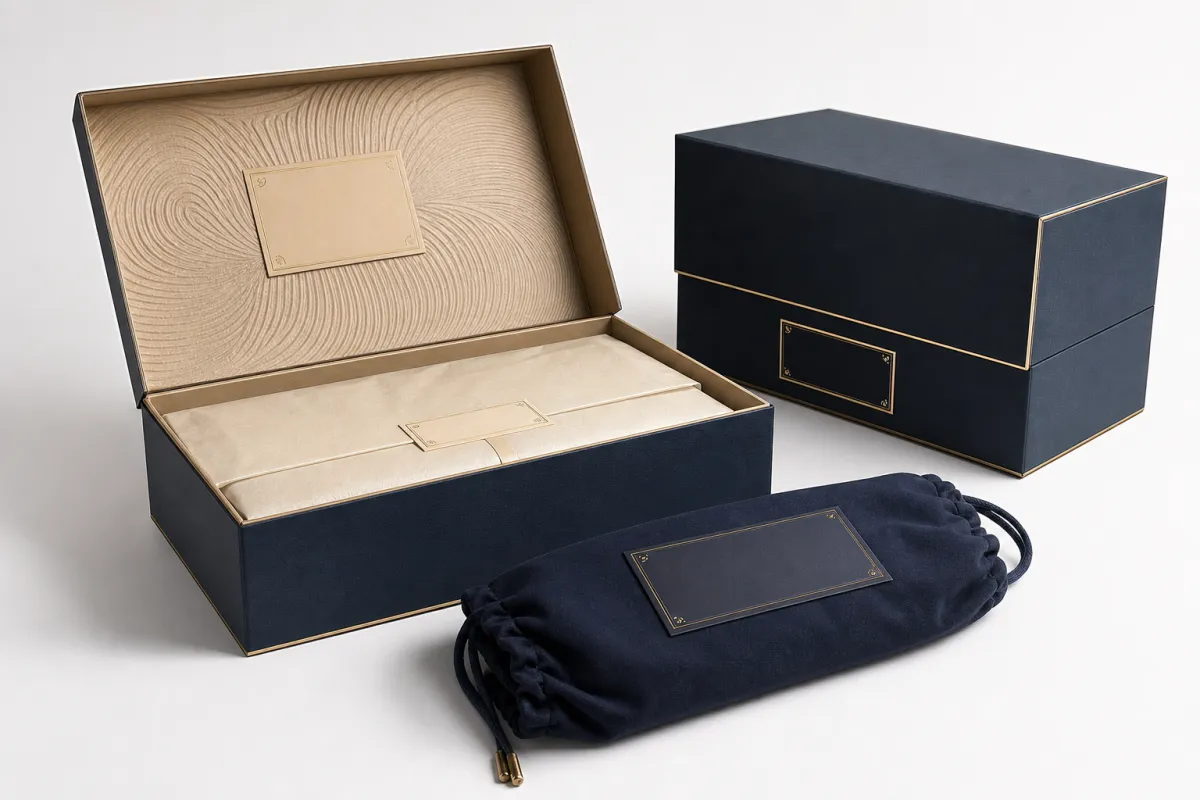
price per unit luxury shoeboxes rise when the box has to do more than hold a pair of shoes in storage. The moment the brief asks for a richer feel, stronger shipping performance, or a presentation that matches a high-ticket product line, the structure becomes part of the brand story. A rigid shoebox with a clean printed wrap is one thing; a box with a magnetic flap, custom insert, edge finishing, and a tactile exterior is another. Buyers feel that difference in the hand, and the factory feels it in setup time, materials, and finishing passes.
I see one mistake over and over: treating luxury packaging as if every premium box belongs in a single bucket. They do not. Price per unit luxury shoeboxes are shaped by the amount of hand work, the board selection, the printed coverage, and the number of finishing steps after the box leaves the press. A box that looks elegant in a photo can still be demanding to build if it needs tight wrapping tolerances, layered inserts, or specialty coatings that slow the line.
There is also a value point that gets missed. A luxury shoebox protects leather, suede, and shaped uppers better than a thin folding carton because the walls are stiffer and the corners resist crush. It also helps the brand feel complete before the product is even handled, which matters in retail displays, gifting programs, influencer kits, and direct-to-consumer shipments. That is why price per unit luxury shoeboxes should be judged against product value, not against the cheapest carton on a spreadsheet.
Picture a typical buying scenario. A retailer starts with a simple wrapped rigid lift-off lid and compares it with a magnetic closure book box using a molded EVA insert and foil-stamped logo. The second option costs more, but it also opens with more drama, holds the shoe more securely, and carries a stronger premium signal at the moment of unboxing. Price per unit luxury shoeboxes shift because the buyer is paying for structure, presentation, and protection together. If the shoe retails at a healthy margin, that extra packaging spend can make sense. If the margin is thin, the simpler box often wins because it still looks polished without eating too much of the landed cost.
When I review packaging specs, I usually ask three questions: does the box protect the shoe, does it match the brand promise, and can the final unit price still support the target margin? If the answer is yes, then price per unit luxury shoeboxes are doing their job. If the answer is no, the box is probably overspecified.
That perspective keeps the conversation grounded. A luxury shoebox is not valuable because it is complicated. It is valuable because it fits the shoe, the channel, and the budget in a way that feels intentional.
Luxury Shoebox Product Details That Change the Price Per Unit
price per unit luxury shoeboxes are built from a stack of choices, and every choice has a material or labor consequence. The core structure is usually rigid packaging, but the style can change the cost profile quickly. A lift-off lid is efficient and familiar. A drawer style adds a tray, a sleeve, and tighter fit requirements. A book-style magnetic closure needs magnets, alignment, and extra care during assembly. A shoulder box adds a stepped internal board that creates a premium reveal, but it also adds board, cutting complexity, and wrapping labor.
- Rigid lift-off lid: often the most efficient premium style, especially for clean presentation and repeat orders.
- Drawer style: uses more components and usually carries higher assembly labor, but it creates a strong reveal.
- Book-style magnetic closure: feels premium in hand and closes with a satisfying snap, yet magnets and alignment add cost.
- Shoulder box: gives a layered, elevated look and can support high-end footwear, but the internal shoulder increases material use.
The exterior wrap is another major driver. Printed paper over greyboard is often the baseline, while specialty textured paper, soft-touch lamination, and heavy coverage artwork push the unit price higher. Foil stamping, embossing, debossing, and spot UV each add a layer of finish work that looks good on a shelf but also requires tooling, setup, and in some cases slower throughput. Price per unit luxury shoeboxes change because decoration is not just decoration; it is a separate production step with its own tolerance and waste profile.
Insert design matters just as much. A simple paperboard cradle can keep a shoe centered without much added cost. EVA foam creates a more exact fit and can feel more upscale, but it is more expensive to cut and may need tighter die tolerances. Molded pulp is useful when sustainability is part of the brief, though the tool and mold strategy still matters. Fabric-lined supports or velvet-touch inserts create a polished presentation, yet they add both material and manual finishing. In many projects, the insert is the hidden reason price per unit luxury shoeboxes move up faster than expected.
Branding details add another layer. Edge painting, metallic hot foil, full-coverage custom print, and raised logo treatments all improve the look of the box, but they also require more control. A simple one-color logo on a white wrap is not in the same cost class as full-surface artwork with a matte lamination and foil brand mark. Buyers often ask for “just a little more premium,” and that phrase can mean a modest adjustment or a much larger one, depending on the finish combination.
There is also a sourcing angle. If the project needs FSC-certified board or paper, that should be identified early. Certification can be straightforward, but it still affects material selection and documentation. For buyers who want to understand transport durability, packaging decisions often align with testing standards such as ISTA, which helps define how a box should perform in distribution. If sustainability claims are part of the brand story, the chain of custody should be clear and traceable through the paper and board supply base, and resources from FSC are a useful reference point.
In short, price per unit luxury shoeboxes are not driven by one feature. They move because the box becomes more demanding to build, wrap, finish, inspect, and pack. The buyer who understands that usually gets a better quote and a better final result.
Luxury Shoebox Specifications Buyers Should Confirm
price per unit luxury shoeboxes become much easier to quote when the specification is complete. The first thing to lock down is inside dimensions. A shoe box is not sized only by the shoe length; it also has to account for toe shape, heel height, tissue wrap, dust bag space, and any insert or accessory compartment. A pointed-toe pump and a chunky sneaker may fit very different internal geometry even if the labeled size seems similar. If a buyer sends only a general shoe size, the quote will be less reliable than if the actual product sample or final measurement sheet is shared.
Board thickness is another detail that should be fixed early. Many rigid luxury shoeboxes use greyboard around 1.5 mm to 2.5 mm thick, with the final choice driven by size, stacking needs, and the desired hand feel. Thicker board improves stiffness, but it also increases cost, weight, and sometimes wrap difficulty. A smaller box can often use a lighter board successfully, while a larger or taller box may need more structure to avoid bowing. That relationship is one of the quiet factors behind price per unit luxury shoeboxes.
Paper stock and closure style should be confirmed before artwork is finalized. A matte coated wrap, textured specialty paper, soft-touch laminated art paper, or plain printed cover stock each behaves differently during wrapping and scoring. The closure matters too. A lift-off lid has different tolerances than a drawer or magnetic flap, and the lid fit can change how a package stacks on pallet or sits on shelf. If the box must open and close many times in a retail environment, that detail matters more than many buyers expect.
To keep the spec sheet useful, I usually recommend confirming these points before any final quote:
- Inside dimensions: length, width, and height measured against the actual shoe and any accessory pack.
- Board thickness: enough stiffness for the size, the channel, and the shipping route.
- Wrap material: printed paper, specialty texture, soft-touch lamination, or another finish.
- Closure style: lift-off lid, drawer, book-style magnetic closure, or shoulder box.
- Insert type: paperboard, EVA foam, molded pulp, or fabric-lined support.
- Artwork coverage: single panel, all-over print, foil, emboss, deboss, or spot coating.
Small tolerance variation is normal in rigid packaging, but the box still has to protect the shoe, stack cleanly, and look consistent from one carton to the next. That is where sample approval earns its keep. A physical sample shows whether the lid fit feels too loose, whether the print color reads correctly against the wrap, and whether the insert actually holds the shoe where it should sit. Price per unit luxury shoeboxes are more predictable when the buyer approves a prototype instead of trying to correct the design after production begins.
If the boxes will ride through parcel networks or mixed freight, transport durability should be discussed explicitly. Many brands use ISTA as a practical benchmark for distribution testing, especially when the packaging needs to survive vibration, compression, and drop exposure. That is not a guarantee, of course, but it gives the team a common language for performance. Price per unit luxury shoeboxes often look fine in a mockup and then behave differently under shipping stress, which is why testing or at least testing-minded design is worth the time.
One more point: do not skip the ship window. If the delivery date matters, the quote needs to reflect it. Tight schedules can affect whether sampling is possible, whether a finishing line can be reserved, and whether the order has to be split into smaller runs. The more complete the spec, the more trustworthy the pricing.
Price Per Unit Luxury Shoeboxes: Pricing, MOQ, and Quote Factors
price per unit luxury shoeboxes are easiest to understand when the quote is broken into clear drivers. Quantity is usually the first one. A higher order volume spreads setup, cutting, printing, and finishing labor across more pieces, which pulls the unit cost down. A lower quantity may still be possible, but the per-box price usually rises because the same setup work is amortized over fewer cartons. That is why buyers comparing 500, 1,000, and 5,000 units often see a meaningful drop at each step.
MOQ matters because rigid luxury packaging is setup-heavy. The line has to be prepared, tooling has to be mounted, wraps have to be approved, and often the insert must be cut separately. If a factory is building a custom box from scratch, the minimum order quantity is not arbitrary; it is tied to whether the job can run efficiently without waste becoming excessive. For that reason, price per unit luxury shoeboxes usually improve as the order size climbs, but only up to the point where storage and cash flow still make sense for the buyer.
Here is a practical pricing comparison that shows how the structure changes the unit cost. The ranges are directional, not universal, but they are useful for budgeting before a formal quote is issued.
| Box Style | Typical Spec | Indicative Unit Price | Best Fit |
|---|---|---|---|
| Wrapped rigid lift-off lid | 2.0 mm greyboard, printed wrap, 1-color logo | $1.15-$2.20 at 5,000 pieces | Retail programs that need a polished but efficient premium box |
| Drawer style | Rigid tray and sleeve, specialty wrap, paperboard insert | $1.85-$3.40 at 3,000 pieces | Brands that want a stronger reveal without going fully ornate |
| Book-style magnetic closure | Rigid shell, soft-touch lamination, foil logo, EVA insert | $2.60-$4.90 at 3,000 pieces | High-end footwear and gifting programs with strong presentation goals |
| Shoulder box | Layered rigid construction, premium paper, custom insert | $2.40-$5.20 at 2,000 pieces | Luxury launches that need a more elevated opening experience |
Those numbers move with board grade, print coverage, finish complexity, and packaging method. A plain wrapped box may price very differently from a foil-stamped box with a custom insert and specialty coating, even if both carry the same logo and hold the same shoe. Price per unit luxury shoeboxes are often judged too quickly by visual appearance alone, but two boxes can look similar and still have very different labor paths underneath.
The quote should also show what is included. Buyers Should Know whether the price covers the inner insert, the outer wrap, the decoration, the packing method, and the freight assumption. It is common to see a low headline price that does not include the insert or that assumes a large freight surcharge later. Apples-to-apples review only works if the same structure, same material, same finish, and same ship terms are being compared. Otherwise, price per unit luxury shoeboxes are being measured on different rules.
One of the clearest ways to tighten the quote is to send a full request package: box size, shoe model, target quantity, artwork files, preferred finish, insert needs, and ship date. If any of those items are missing, the supplier has to make assumptions. Some assumptions are safe. Others are not. That is where buyers get surprised. A well-built brief helps keep price per unit luxury shoeboxes aligned with the real project rather than a generic box estimate.
If the budget is tight, prioritize the one premium feature that matters most to the brand. A strong structure with a clean wrap can often outperform a crowded design that tries to use every finish in the catalog. The best unit price usually comes from a focused spec, not from cutting quality in ways that damage the look or protection of the box.
Process and Timeline for Custom Luxury Shoebox Orders
price per unit luxury shoeboxes do not come out of a quote form and ship the next day. A good order moves through a series of steps, and each one matters. The process usually starts with inquiry review, then moves into structural confirmation, artwork preparation, sample approval, production, inspection, and finally shipping. If the project is straightforward, the path can be fairly clean. If it needs custom tooling, special finishes, or a physical prototype, the timeline extends naturally.
A simple way to think about it is this: every custom box has two clocks, one for approval and one for production. The approval clock includes dieline review, color proofing, and sample sign-off. The production clock includes board cutting, wrapping, finishing, insert fabrication, and final packing. Price per unit luxury shoeboxes can look affordable in the quote stage and still become costly in timing if the team waits too long to finalize the spec or changes artwork after the proof is approved.
Common delay points are easy to spot once you have seen enough packaging jobs. Late artwork changes cause reproofs. Missing dimensions force the team to pause. Inconsistent color references make it hard to match the wrap. Revisions after sampling can add another cycle. None of that is unusual, but it does mean buyers should send final files early and keep decision makers available during the review window. The fastest orders are not the ones that skip steps; they are the ones that move through the steps without backtracking.
A typical timeline for price per unit luxury shoeboxes might look like this:
- Quote and spec review: 1-3 business days when the brief is complete.
- Dieline and artwork prep: 2-5 business days depending on layout complexity.
- Sample or prototype: 5-10 business days for many rigid box projects, longer if tooling is needed.
- Production: often 12-25 business days after approval, depending on finish and quantity.
- Inspection and shipping: final packing, palletization, and transit time based on the route.
That is only a working range, because finish choice and order size can push the calendar in either direction. A box with foil, embossing, and a custom insert will usually take longer than a plain wrapped structure. A run of 1,000 units may move faster than 10,000 units, but a smaller run can still be slowed by the same setup steps. The reality is that price per unit luxury shoeboxes and lead time move together more often than buyers expect: the more custom the box, the more coordination it needs.
Clear communication keeps the schedule predictable. Confirm the ship window before production starts. Approve proofs quickly. Decide whether a sample is required before tooling is released. And if the packaging is part of a seasonal launch, build in a little cushion rather than assuming every stage will land perfectly. Premium packaging takes coordination, but a disciplined process keeps the final box consistent and the shipment on track.
Fast approvals usually save more money than rushing production ever does, especially with price per unit luxury shoeboxes that depend on careful wrapping and finish control.
Why Choose Us for Price Per Unit Luxury Shoeboxes
price per unit luxury shoeboxes are easier to buy from a partner that understands both presentation and production realities. That is the real value here. A good packaging supplier does not just send a number; it helps the buyer match structure, materials, and finish to the shoe, the brand, and the margin. That means talking honestly about what a box can do, what it costs to build, and where a spec is drifting into unnecessary complexity.
At Custom Logo Things, the useful part is not hype. It is material and structural know-how: rigid board options, print-ready wraps, premium finish choices, and insert engineering that actually supports the footwear inside the box. If you are still mapping the wider packaging lineup, our Custom Packaging Products page gives a quick look at the categories available for branded presentation work. For buyers comparing product families, the same page can also help connect shoe boxes with other custom packaging products so the look stays consistent across launches.
Repeatability matters too. A first order can look good, but the test is whether the next order matches it. Consistent board, consistent wrap color, and consistent die cutting make the shelf presentation more reliable from one run to the next. That is especially valuable if a brand is shipping across seasons or reordering in waves. Price per unit luxury shoeboxes should not drift from one production run to another because the buyer needs a predictable brand look, not a different shade or fit every time the box is reordered.
Practical communication also helps. Clear specs, straightforward pricing, and realistic timelines save a lot of back-and-forth. If a project needs a fast adjustment, the value is in responding with a workable plan rather than pretending every option costs the same. Sometimes a buyer needs a premium magnetic closure. Sometimes a clean lift-off lid is the smarter choice. The right answer is the one that protects the shoe, supports the brand, and keeps price per unit luxury shoeboxes inside the target range.
That is the standard I trust: not the fanciest box on a sample table, but the right box for the product and the business.
Next Steps to Lock In Your Luxury Shoebox Quote
price per unit luxury shoeboxes are easiest to quote when the buyer sends the right information the first time. Start with the exact shoe size, the inside dimensions, the target quantity, the preferred closure style, the artwork files, and the finish you want on the wrap. If the box also needs a dust bag pocket, tissue space, or a molded insert, mention that up front. A clean brief removes a lot of guesswork and usually produces a much more reliable number.
Ask for an itemized quote so the cost of board, wrap, insert, and decoration is visible. That way the team can see whether the price moves because of the structural build, the finish package, or the packing method. It also makes it easier to compare a value-focused version against a premium version without mixing the two together. Price per unit luxury shoeboxes make more sense once the buyer can see where every dollar is going.
If color accuracy, tactile feel, or closure quality matters to the buying decision, request a sample or prototype. A physical sample is the best way to judge whether the soft-touch laminate feels right, whether the foil reads cleanly, and whether the lid closes with the right amount of resistance. That small step can prevent a much larger issue later.
Then compare at least two configurations: one that stays focused on value and one that pushes presentation further. Many buyers discover that the more restrained version is already strong enough for the brand. Others confirm that the premium version earns its place because the shoe line needs the added lift. Either way, the decision is easier when the quote is based on actual structure, not assumption. Price per unit luxury shoeboxes reward clear specs, and a clear spec sheet is the fastest path to an accurate quote.
The smartest move is to lock the structure first, then decide which finish actually earns its keep. That order keeps price per unit luxury shoeboxes under control and stops the project from drifting into extra cost that looks fancy but does not improve the box.
FAQ
What affects price per unit luxury shoeboxes the most?
The biggest drivers are quantity, box style, board thickness, wrap material, insert complexity, and premium finishes like foil, embossing, or spot UV. Custom printing across the full box surface usually costs more than a simpler single-color design because it adds setup and finishing work. A tighter unit price usually comes from clearer specs and a higher order volume, not from trimming quality in ways that hurt the presentation.
What MOQ should I expect for custom luxury shoeboxes?
MOQ depends on the structure and decoration, but rigid luxury boxes usually require a higher minimum than standard cartons because setup is more involved. Lower quantities are possible in some cases, yet the unit cost typically rises because production setup is spread across fewer boxes. The most practical approach is to share your target quantity early so the quote reflects a realistic production run and price per unit luxury shoeboxes are calculated against the right volume.
How does finish choice change the unit cost of luxury shoeboxes?
Special finishes such as soft-touch lamination, foil stamping, spot UV, embossing, and textured papers add material and labor cost. A simple wrapped box is usually more economical than a heavily decorated presentation box with multiple premium effects. If budget matters, it is usually smarter to choose one strong finish that supports the brand instead of stacking several decorative treatments that do not add much value to the buyer.
What details do you need to quote luxury shoeboxes accurately?
Send the inside dimensions, box style, quantity, shoe type, artwork, insert needs, and any required finish or coating. Include your target ship date and whether you need a sample first, because both affect lead time and scheduling. The more complete the specification, the more reliable the unit pricing and the fewer surprises later in the job, especially when price per unit luxury shoeboxes depend on the exact build.
How long is the turnaround for price per unit luxury shoeboxes?
Turnaround depends on whether the box is standard or fully custom, plus whether sampling, special finishing, or custom inserts are required. Artwork approval and sample approval are common checkpoints that can shorten or extend the schedule. A clear brief and fast feedback from the buyer are the easiest ways to keep the project moving, and they are usually the reason price per unit luxury shoeboxes stay within the target plan from quote to delivery.

