Supplement Pom Pom Beanies Unit Cost Review: Buy Smart starts with a simple problem that keeps showing up in sourcing. Two beanies can look almost identical in photos and still land at very different cost per piece once yarn, knit density, pom style, cuff size, decoration, and packaging are all defined. For supplement programs, that gap matters. Reorders need to match. Multiple SKUs need to stay consistent. And the quote has to hold up after sampling, not just on the first spreadsheet.
The fastest way to judge value is not by the sticker price alone. It is by what the supplier has actually priced, what they left out, and how much room exists for a reprice later. That is the real job of a beanie review. The rest is noise.
Why a Pom Pom Beanie Quote Can Change So Fast
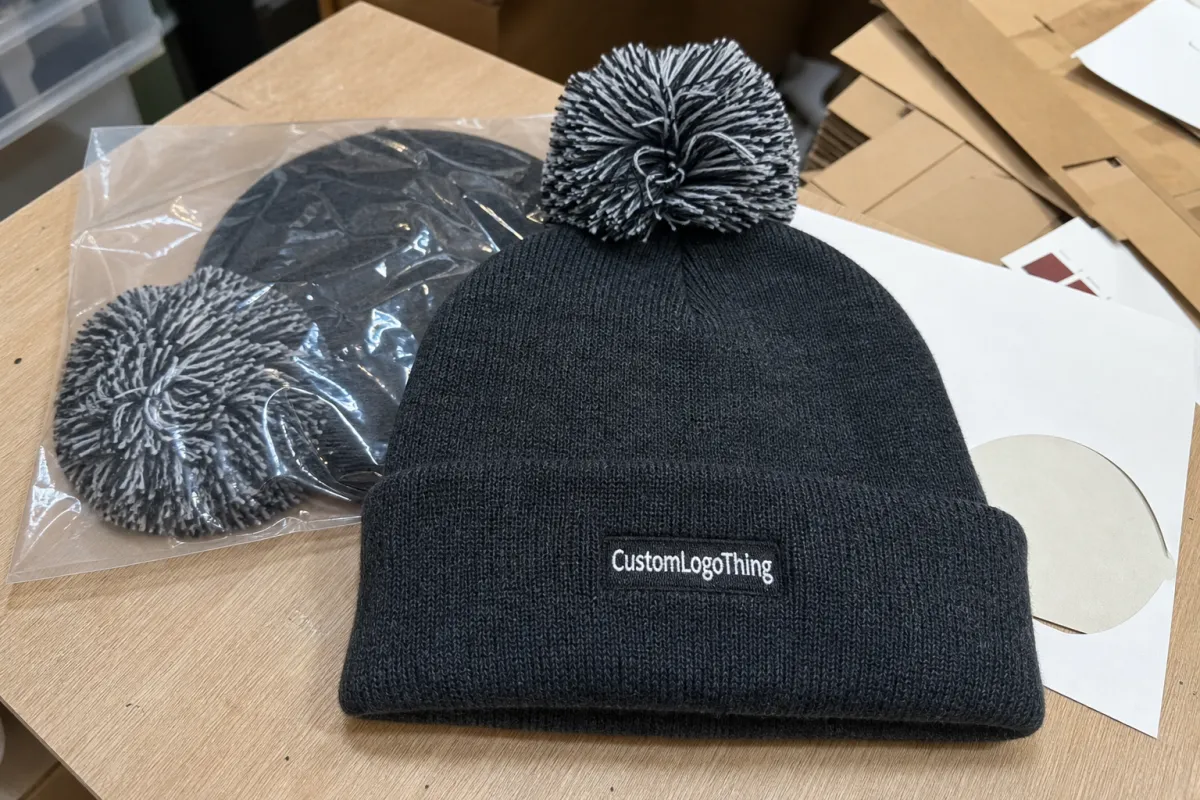
A pom pom beanie quote moves quickly because the product is a stack of small decisions disguised as a simple winter hat. The shape is only the starting point. Once you define yarn weight, gauge, cuff depth, pom size, logo method, fold style, and carton pack-out, the price can shift more than most buyers expect.
The expensive part is not always obvious. A tighter knit can take longer on the machine. A deeper cuff changes the pattern and the labor flow. A different label construction adds handling. Even packaging can change the number. Plain polybagging is one thing. Retail folding, insert cards, and size stickers are another.
That is why supplement orders can get messy fast. One beanie style may need to support multiple flavors, bundle sets, seasonal drops, or internal promo kits. The base look has to stay steady across every colorway. If the spec is loose, suppliers pad for uncertainty. If the spec is precise, the pricing gets cleaner and easier to compare.
These are the details that usually move a quote:
- Knit gauge - tighter gauge usually increases production time and helps the hat keep its shape.
- Pom construction - a dense, custom pom costs more than a light, loosely wound one.
- Label type - woven labels, faux leather patches, and embroidery price differently.
- Packaging - folding, bagging, sticker application, and carton labeling all add labor.
From a buyer's point of view, the best quote is not the lowest-looking one. It is the one that spells out exactly what is included, what is optional, and what would trigger a change later. That is how you avoid the classic headache: a quote that looks good until the sample is approved and the real number appears.
Pompom Construction, Yarn, and Feel Details That Matter
The feel of the hat starts with yarn, and yarn choice sets the tone for the whole program. Standard acrylic remains the most common option because it keeps costs controlled, holds color well, and works across a wide range of promotional and retail uses. Blends can improve softness or recovery. Recycled yarn can support sustainability goals if the brand wants a lower-impact material story without moving into premium territory.
Yarn thickness matters just as much. Heavier yarn creates a fuller look and fills the crown faster, but it can blur detail in the knit. Lighter yarn can give a cleaner finish and sharper edges, though it may need more attention to fit and structure. If the hat is going into retail, a welcome kit, or a supplement program that needs consistent shelf appearance, those details are not cosmetic. They affect how the final piece reads in hand.
The pom itself deserves a closer review. A stitched pom that is reinforced at the crown will usually hold up better than a loose attachment. Some styles use a loop, some are tied through the inside of the crown, and some are finished with a hidden tack or reinforced stitch. The attachment method matters once the product gets handled, packed, tossed into bags, or worn repeatedly.
Texture changes the story too. Smooth yarn reflects color more evenly and tends to show logos more cleanly. A fuzzier yarn may feel softer at first touch, but it can blur the edges of embroidery and make branding less crisp. That tradeoff is easy to miss if the only review is a screen photo. It becomes obvious as soon as a sample is in hand.
For supplement programs, the main goal is consistency. A multi-SKU line needs the hats to feel related, even when the colors change. That means choosing a yarn and pom style that hold up across repeats, not just on one sample piece that happened to come out well.
Fit, Cuff, and Decoration Specs to Lock Before Ordering
Fit is where a lot of custom hat orders drift. It sounds simple until the spec sheet starts saying things like “standard adult” without any real measurements behind it. That is usually how pricing and expectations get slippery.
Start by defining the user group. Adult, youth, and one-size styles are not interchangeable. Most adult promotional beanies are designed for roughly a 21.5 to 23.5 inch head circumference, but comfort depends on the crown height, stretch, and cuff fold. A hat that is technically the right size can still look wrong if the proportions are off.
The cuff changes the silhouette more than many buyers realize. Too shallow, and the hat looks underbuilt. Too deep, and it crowds the face. In practice, a 2.5 to 3.5 inch cuff is common for many adult styles, while crown height often lands around 8.5 to 9.5 inches before folding. Those dimensions are not decoration. They are production decisions that affect patterning, knitting time, and fit consistency.
Decoration should be locked early, before the quote turns into a moving target. Most buyers choose one of four approaches:
- Embroidery on the cuff for a durable, familiar branded look.
- Woven labels for cleaner branding and lower visual clutter.
- Faux leather or woven patches for a more premium appearance.
- Hangtags when the logo needs to stay separate from the knit surface.
Each route brings its own setup cost and tradeoff. Embroidery may require digitizing fees for the stitch file. Patches can involve a mold or die. Woven labels are often less expensive per piece, but they do not deliver the same front-facing impact as a stitched logo. There is no universal best choice. The right one depends on the artwork, the quantity, and how much visual weight the brand needs.
Color control is another place where orders go sideways. If the beanie needs to match an existing brand palette, ask for physical yarn references or approved swatches instead of relying on screen images. Monitors drift. Yarn cards do not. If the order will be kitted, retail displayed, or shipped Direct to Consumers, also define how the hat should arrive: folded flat, banded, polybagged, or boxed. That choice affects the workflow and the final unboxing experience.
Good spec sheets save money. When the supplier knows the exact fold, logo placement, and package format, there is less room for rework and fewer chances for the price to shift after approval.
Supplement pom pom beanies unit cost review: pricing, MOQ, and benchmarks
This is the part buyers usually care about first, and for good reason. A solid supplement Pom Pom Beanies Unit Cost review should separate the base hat cost from the decoration and finishing costs. Otherwise the numbers are useless for comparison. A blank knit beanie sits in one band. Add embroidery, custom poms, labels, and retail packing, and the quote starts climbing in layers.
At mid-sized quantities, a custom acrylic pom pom beanie often lands in the range of $3.20 to $5.10 per piece before freight, depending on how complex the spec is. That range is not a promise. It is a working benchmark. Smaller runs usually cost more per piece because setup, sampling, and changeover expenses are spread across fewer units. Larger runs generally improve bulk pricing, especially when decoration stays simple and the color count stays low.
MOQ is where a lot of programs get misread. Some suppliers quote per style. Some quote per color. Some quote per decoration method. A low MOQ can look appealing, but it often raises the unit cost because the fixed labor is divided over fewer hats. That is fine for a limited campaign. It is a mistake if the buyer expects warehouse pricing on a tiny order.
| Option | Typical Cost Impact | Best Use | Notes |
|---|---|---|---|
| Plain knit pom beanie | Lowest base unit cost | Large promo runs | Fewest setup charges; minimal branding |
| Embroidery on cuff | +$0.35-$1.10 per piece | Durable logo use | May include digitizing or tooling fees |
| Woven label | +$0.20-$0.55 per piece | Subtle branded look | Usually best for simpler artwork |
| Patch or appliqued logo | +$0.60-$1.50 per piece | Higher perceived value | Can raise labor and first-run setup costs |
| Custom pom color or mixed yarn | +$0.25-$0.80 per piece | Brand-matched programs | May extend lead time if yarn is special ordered |
Do not compare offers until you know whether freight is included, whether samples are billed, and whether the supplier is treating the first run as a fully tooled program or a near-standard blank with decoration added. A lower number can hide costs in shipping, sampling, or packaging. A higher number can actually be the safer option if it includes the exact finish you need.
If the spec sheet cannot answer yarn type, pom method, cuff depth, and logo placement, the quote is only a placeholder. Tighten those four details first, then compare cost per piece.
For many buyers, the right question is not which quote is cheapest. It is which quote gives the best repeatable result for the lowest real landed cost. That is the cleaner way to protect margin and avoid revision cycles that chew up time and attention.
Production Steps, Sampling, and Lead Time Expectations
Good production follows a sequence, and that sequence is what keeps the order on schedule. It usually starts with the spec sheet, then artwork confirmation, then yarn or color approval, then sample knitting, then preproduction sample signoff. Only after that does bulk knitting and decoration begin. Once the hats are finished, they move into trimming, inspection, folding, packing, and carton build-out.
Lead time depends on how much change is still happening. A straightforward run with available yarn and a simple logo can move faster than a project that needs custom color matching or a revised pom design. In many cases, sampling takes 7 to 14 business days, and bulk production takes roughly 15 to 30 business days after approval. That window can stretch if the order is large, the packaging is specific, or the materials are not already on hand.
Most delays happen in the same places. First, the artwork is still changing after the quote has already been accepted. Second, color matching drags because the brand wants a very specific tone and no one will sign off on a swatch. Third, sample revisions pile up. One revision is normal. Two can still be manageable. Three usually means the schedule is slipping and the cost is about to reflect it.
If the goal is a cleaner process, approve in sequence. Lock the base beanie first, then the decoration method, then the packaging. That order protects timing and unit cost. It also reduces the chance that a late-stage change forces the factory to re-order yarn or rebuild a trim step from scratch.
For transit expectations, the methods published by ISTA are useful when you want to think through drop, vibration, and compression during shipping. Broader packaging guidance at packaging.org can help teams align on pack-out and carton protection. Soft goods still need a carton that can survive a rough trip.
A practical schedule includes a sample approval window and a small cushion for freight booking. If the launch date is fixed, build backward from that date and leave room for one revision cycle. That is the difference between a controlled order and an expensive rush.
What Makes a Reliable Beanie Supplier Worth the Order
The best suppliers are not simply the cheapest. They are the ones who can explain what the spec means, where the cost comes from, and which detail will move the price if it changes. That level of clarity matters in supplement programs, wellness promotions, and merch drops that may repeat in waves.
Reliable suppliers treat sampling seriously. They do not rush past fit, color, or logo placement just to secure a deposit. They inspect stitch density, pom symmetry, and size consistency across the run. They also pack cartons in a way that keeps the beanies from being flattened or scuffed before they reach the buyer or the end customer.
A supplier worth working with should be able to answer these questions directly:
- What is included in the quoted unit cost?
- What triggers a setup charge or tooling fee?
- How many samples are included before bulk production?
- What are the packing and carton markings?
- How will reorders be handled if the first run goes well?
That last item matters more than many buyers expect. Supplement programs often return seasonally or in response to a launch, promotion, or restock. A supplier that keeps clean records on yarn codes, logo files, and approved samples makes repeat business much easier. The second order usually moves faster because the decisions have already been documented well.
Trust is built in the spec sheet. If the supplier is precise there, the rest of the order is usually easier to manage. If the spec sheet is vague, expect more back-and-forth, more assumptions, and less predictable output.
Next Steps to Request a Quote and Place the Order
If you are ready to request pricing, send the supplier a clean package of information. The faster the details arrive, the faster you get a useful quote instead of a guess. At minimum, include target quantity, size mix, color references, artwork files, decoration method, package format, and delivery location. If there is a launch date, put it in the first note, not the third follow-up.
Ask for both unit cost and landed cost. One number tells you the piece price. The other tells you what the order really costs once shipping, sample charges, and any setup fees are included. For a transactional purchase, that difference can be the difference between a comfortable margin and a budget miss.
Before bulk production begins, approve a preproduction sample if the order has any of these conditions:
- Brand color matching is critical.
- The logo is large or highly detailed.
- You need a retail-ready fold or carton presentation.
- The order will be split across multiple colorways or SKUs.
That sample is the last clean checkpoint. It confirms the fit, pom look, decoration placement, and overall finish before the full run is committed. Once bulk knitting starts, changes get expensive fast.
The real value of a supplement pom pom Beanies Unit Cost Review is not finding the cheapest line on a quote sheet. It is choosing the right spec for the quantity, the timeline, and the level of finish the program actually needs. Clear inputs, honest pricing, and a sample that matches the approved spec are what keep the order under control.
What drives supplement pom pom beanies unit cost the most?
Yarn content, knit density, pom attachment, and the decoration method usually have the biggest effect on price. Quantity matters too, because a higher MOQ typically lowers the cost per piece even when the spec stays the same.
What MOQ should I expect for custom pom pom beanies?
Most programs need a minimum quantity per style or per color, and the threshold depends on decoration and packaging. Lower MOQs are possible, but they usually raise the unit price and limit customization options.
Can I approve a sample before bulk production starts?
Yes, and that is usually the safest path. A preproduction sample lets you confirm fit, color, logo placement, and pom appearance before the full run begins, which protects both timing and budget.
How long does production usually take after approval?
Lead time depends on order size, decoration complexity, and yarn availability, but bulk work should start only after sample signoff and deposit. Build in extra time if you need color matching, custom packaging, or a revision to the first sample.
What should I send for the fastest quote response?
Send quantity, size mix, color references, artwork files, decoration choice, and the delivery ZIP or country. If you have a deadline, include it early so the supplier can quote the right production path and freight method.
How do I keep the quote from drifting later?
Lock the yarn type, fit, cuff depth, decoration method, and pack-out before approval. A careful supplement pom pom Beanies Unit Cost Review works best when the spec is complete, because then the factory can price the job without padding for uncertainty.

