Buyer Fit Snapshot
| Best fit | Printed Flat Paper Bags MOQ projects where brand print, material claims, artwork control, MOQ, and repeat-order consistency need to be specified before quoting. |
|---|---|
| Quote inputs | Share finished size, material target, print colors, finish, packing count, annual reorder estimate, ship-to region, and any compliance wording. |
| Proofing check | Approve dieline scale, logo placement, barcode or warning zones, color tolerance, closure strength, and carton packing before bulk production. |
| Main risk | Vague material claims, crowded artwork, missing packing details, or unclear freight terms can make a low unit price expensive after revisions. |
Fast answer: Printed Flat Paper Bags MOQ: Pricing, Specs, Lead Times should be specified like a repeatable production item. The safest quote records material, print method, finish, artwork proof, packing count, and reorder notes in one written spec.
Production checks before approval
Compare the actual filled-product size with the drawing, then confirm tolerance on folds, seals, hang holes, label areas, and retail display edges. Reserve space for logos, QR codes, warning copy, and material claims before decorative graphics fill the panel.
Quote comparison points
Review material grade, print process, finish, sampling route, tooling charges, carton quantity, and freight assumptions side by side. A quote is only useful when the supplier can repeat the same color, closure quality, and packing count on the next order.
printed flat paper bags MOQ is where packaging decisions stop being theoretical. The number looks tidy on a quote sheet, but the real story sits underneath it: setup work, paper stock, ink coverage, glue lines, cutting tolerances, carton counts, and the cost of asking a factory to make fewer bags while still holding the same standard. I have seen buyers focus on the minimum order and miss the more expensive part entirely, which is the unit cost that follows them through every reorder.
That matters because packaging rarely exists for its own sake. A seasonal product launch needs branded bags without tying up cash in inventory. A bakery test run needs presentation without a warehouse full of unused stock. A pharmacy or gift shop needs a bag that looks intentional, not improvised five minutes before opening. A printed flat paper bags MOQ only makes sense if it solves those practical problems without creating new ones.
At Custom Logo Things, the useful question is not how low the minimum can go. It is what order size gives you a fair landed cost, a print result that matches the proof, and a package you can reorder without rebuilding the job from scratch. That is a better buying standard than chasing the smallest number in the room.
printed flat paper bags MOQ: Why small runs can still make sense
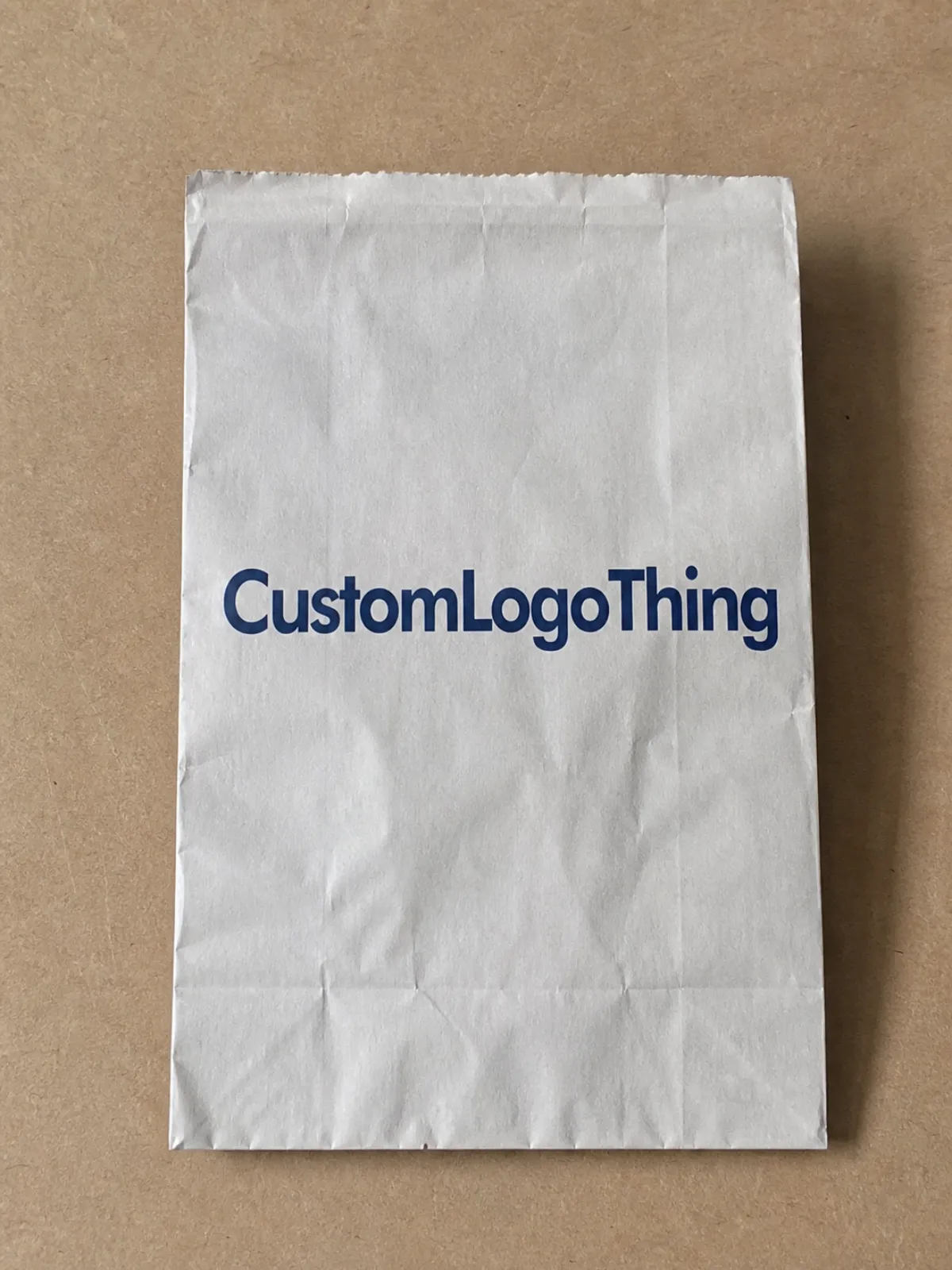
The first thing to understand is simple: printed flat paper bags MOQ is rarely the only number shaping the quote. Setup charges, plate costs, paper weight, and the number of colors often move the price more sharply than a few thousand bags either way. Buyers who focus only on the minimum sometimes end up with a higher piece price and call it control. It is not control. It is a smaller invoice hiding a worse result.
A modest printed flat paper bags MOQ makes sense when a brand is testing a new product, running a pop-up, or packaging a seasonal campaign with a known end date. It also fits bakeries, pharmacies, specialty grocers, and takeaway counters that need branded bags but do not want to sit on months of stock. Short runs are not a sign of weak demand. Often, they are the more rational choice when the design, size, or use case may still change.
The practical benefit is easy to overlook because it sounds ordinary. A manageable MOQ keeps cash flow steadier, leaves room for design changes after real feedback, and reduces the chance of ordering the wrong size because someone guessed instead of measuring. That last point matters more than suppliers usually admit. A bag that is slightly too small costs more than paper; it costs time, handling, and another production round.
In my experience, the fastest way to lose money on packaging is to buy for a forecast that has not been tested. The second fastest is to approve a bag that looks fine on screen but fails on the counter. Those two mistakes often happen together.
From a buyer’s perspective, the real question is not whether the printed flat paper bags MOQ is low enough. It is whether the order solves the actual problem without locking you into excess stock, hidden tooling fees, or a spec that only looks inexpensive while it is still a PDF. A supplier who cannot explain the tradeoff clearly is not saving you money. They are delaying the surprise.
A low MOQ is only useful if the bag still fits the shelf, the budget, and the print quality you approved. Otherwise it is just a smaller mistake.
There is one more wrinkle that often gets missed. The printed flat paper bags MOQ can change the moment the artwork, paper, or finish changes. A new color, a different kraft shade, or a coating that needs more handling can push the minimum higher or make the unit price harder to defend. The first step is not bargaining. It is defining the spec tightly enough that the quote means something.
printed flat paper bags MOQ: Product types and print choices
A flat paper bag looks straightforward on the surface. That simplicity is deceptive. In most buying conversations, printed flat paper bags MOQ refers to bags used for bakery items, inserts, light retail goods, pharmacy products, and takeaway packaging where a neat face and a clean stack matter more than a complex structure. Some are truly flat. Others have a small side gusset. Either way, they are built for speed, storage efficiency, and branding that does not fight the format.
Before asking for a printed flat paper bags MOQ quote, lock the dimensions. Width, height, and gusset depth, if applicable, should be written clearly in millimeters or inches. “Medium” is not a size. It is a guess wearing a label. If the bag needs a fold-over top, grease resistance, an open-top fill, or a specific stack height for packing lines, say so early. A quote can be technically correct and commercially useless at the same time.
Print choices move the economics faster than most buyers expect. A one-color logo on kraft paper usually keeps the printed flat paper bags MOQ easier to reach than full-bleed artwork with tight registration and multiple passes. A restrained logo placement, strong negative space, and a simple ink layout are friendlier to production. Heavy coverage, multiple ink colors, and gradients increase setup complexity because the press needs more control and more time.
Paper stock matters just as much. Kraft usually gives a natural, practical look and tends to behave well in production. White coated paper or brighter art stock can create a sharper retail presentation, but it may narrow the supplier pool and push the printed flat paper bags MOQ higher. If the bag is meant to feel premium on a shelf, that tradeoff may be worth it. If it is a bakery carry bag or a pharmacy insert, the extra expense often buys little.
Here is the blunt version: every additional color, every nonstandard size, and every special finish pushes the printed flat paper bags MOQ toward a less forgiving price. That is not a punishment. It is the math of printing. Buyers who accept that early get cleaner quotes and fewer arguments later.
For broader sourcing context, the Packaging School and the FSC site are useful references for material and sourcing standards. Customers ask where paper comes from sooner than many procurement teams expect, and they notice vague environmental claims even faster.
Think of product type as the frame around the MOQ. Once you know whether you need a flat bag, a side-gusset bag, a food-safe insert bag, or a plain retail carrier, the printed flat paper bags MOQ becomes much easier to estimate. Without that choice, every quote is a guess dressed up as a spreadsheet.
Material and specification checklist for flat paper bags
The cleanest printed flat paper bags MOQ quote begins with a proper spec sheet, not a rushed email. Minimum details should include paper weight, dimensions, print colors, bag style, packaging requirements, and the delivery location. Leave those out and the supplier will price in caution. That makes the quote look safe, but safety is not the same thing as accuracy.
Paper weight deserves real attention. Lighter stocks can work for inserts, short-life packaging, and dry goods that do not need much structure. Heavier kraft or coated stock suits bags that need a sturdier feel or a more polished shelf presence. Buyers often ask for a range, such as 60gsm to 100gsm for lighter paper bags, then discover the exact number depends on load, finish, and whether the bag has to survive a messy retail day without collapsing at the corners. Paper does not care about branding language. It cares about weight and handling.
Food-contact use needs more discipline. If the bag will touch unpackaged food, ask for food-safe materials and inks, and make sure the supplier states the limitation clearly. Not every printed flat paper bags MOQ is suitable for direct contact, even when the bag looks fine in a photo. That detail matters more than logo size. It matters more than color too.
Mechanical details are where production headaches usually hide. Fold quality affects stack neatness. Glue strength affects the damaged-bag rate. Carton size affects freight and warehouse handling. If the bags must feed into a packing line, the tolerance needs to be tighter than for hand-packed retail use. A bag can look perfect in proof form and still behave badly on the shop floor.
Vagueness produces vague pricing. That is especially true with printed flat paper bags MOQ orders because small-run economics react strongly to each production choice. A quote without exact size, artwork area, and paper weight is not a bargain. It is a placeholder dressed up as a number.
- Bag size: width, height, and gusset depth if applicable.
- Paper stock: kraft, coated, white, recycled, or food-safe grade.
- Print setup: one color, two color, full coverage, or spot logo.
- Finish: plain, matte, gloss, or uncoated.
- Pack format: bulk packed, carton count, or specific retail pack.
- Use case: retail, takeaway, bakery, pharmacy, or inserts.
For shipment handling and carton abuse, ISTA standards are worth a look if the bags are shipping beyond a local route. Packaging is not finished when it leaves the press. It is finished when it arrives intact and still stacks the way you approved.
If the request still feels fuzzy, compare your notes against our FAQ before you send anything to the factory. A few missing specs can change a printed flat paper bags MOQ quote more than most buyers expect.
printed flat paper bags MOQ: Pricing, MOQ, and unit cost
The pricing structure for printed flat paper bags MOQ is not mysterious once the moving parts are visible. Raw paper, printing setup, plates or tooling fees, labor, waste allowance, packaging, and freight all appear in the final number. The bag itself is only one piece of the bill. That surprises new buyers, yet it should not. A packaging quote is a chain, not a single line.
Smaller runs usually look expensive per unit because the setup charges are divided across fewer bags. Larger runs tend to lower the piece price because fixed costs are spread further. That does not make bigger automatically better. It means volume rewards planning, and the wrong quantity can waste money in a different direction. Overstock is just paper with storage costs attached.
Here is a practical reference point for printed flat paper bags MOQ conversations. These are factory-level ranges, not promises, and freight can shift the landed cost.
| Order profile | Typical MOQ | Print style | Typical factory cost per piece | Best fit |
|---|---|---|---|---|
| Test run | 3,000-5,000 | 1 color, standard size | $0.10-$0.22 | New launches, small retail trials, local events |
| Standard branded order | 5,000-10,000 | 1-2 colors, common paper stock | $0.06-$0.15 | Routine takeaway, bakery, pharmacy, and retail use |
| Higher volume rollout | 10,000-30,000+ | 2-4 colors or larger coverage | $0.04-$0.11 | Multi-location rollout, chain programs, repeat replenishment |
The final printed flat paper bags MOQ price still depends on what the factory has to do. Fewer colors usually simplify setup. Standard sizes help. Common kraft stock helps. A clean vector logo helps much more than a fuzzy file sent from a phone. The cheapest quote in the stack is often the one that quietly assumes less print complexity than your artwork actually requires.
Tooling fees are another line buyers underestimate. If the bag size is standard, tooling may be limited to print plates or basic setup. If the size is custom, or if the supplier needs special cutting or folding adjustments, the tooling fee can become a meaningful cost. That is not a supplier trying to be difficult. It is the cost of making sure the bag cuts, folds, and glues correctly. Packaging has a stubborn habit of refusing to assemble itself.
Rule of thumb: the more complex the artwork, the tighter the registration, and the more unusual the paper, the less forgiving the printed flat paper bags MOQ becomes. If a quote sounds unusually cheap, ask what was left out. The missing item is usually the one you will want later.
There comes a point where asking for the lowest possible MOQ stops being smart and starts being expensive. If your operation reorders every month, a slightly larger first run can lower unit cost enough to justify the inventory. If the design may still change, stay smaller. That is the tradeoff. No mystery. No magic number that works for everyone.
For many buyers, the right printed flat paper bags MOQ is the one that balances cost per piece, cash flow, and reorder flexibility. Not the smallest number on a spreadsheet.
If you want a cleaner comparison, ask for two or three quantity breaks in the same quote. A side-by-side printed flat paper bags MOQ quote makes the breakpoints visible and shows exactly when bulk pricing starts to help. That is more useful than staring at a single number and hoping it behaves.
That image belongs here because pricing is not abstract. It is a decision tree with a paper sample attached. The buyer who understands setup charges, tooling fees, and unit cost is the buyer who gets a quote that can be approved without a second round of guesswork.
printed flat paper bags MOQ: Production process and lead time
The production path for printed flat paper bags MOQ follows a predictable sequence: inquiry, spec confirmation, artwork review, proof approval, scheduling, printing, drying or curing, finishing, packing, and shipment. The sequence is ordinary. The delay usually is not. Delays appear when the logo is low-resolution, the dimensions are vague, or procurement sits on the proof while three people wait for one more opinion.
The front end causes most of the trouble. Missing dielines. Poor artwork files. Color changes after proofing. Unclear paper selection. That is where printed flat paper bags MOQ schedules slip. The factory cannot begin until it knows what to make, and “we will know it when we see it” is not a production brief. It is a delay with a logo.
Lead time usually shortens when the order is repeatable. Standard printed flat paper bags MOQ jobs with one-color branding and common paper stocks often move through production faster than custom sizes with multiple colors or special finishes. A useful working range is often 12-15 business days after artwork approval for straightforward runs, while more complex artwork or a busy factory calendar can stretch that window. Shipping time sits outside production time, and that distinction matters more than buyers like to admit.
One question should be asked before approval: when does the clock start? If the supplier says “from order confirmation,” that still leaves proof approval, artwork correction, and internal sign-off floating around as hidden time. If the supplier says “from final artwork approval,” the timeline is clearer. Good printed flat paper bags MOQ planning depends on those small definitions. The difference between a calm schedule and a missed launch is often one sentence.
Freight can also alter the calendar. Air moves faster and costs more. Sea is usually cheaper for larger runs and slower by design. If cartons need to survive export handling, ask for ship-ready packing and consider transit testing. For bigger distribution chains, ISTA-aligned carton testing helps prevent the classic disaster where the bags are perfect and the cartons arrive crushed. That is a very expensive way to discover packaging is a system, not a single item.
Here is the practical truth: printed flat paper bags MOQ production is rarely delayed by the press alone. It is delayed by decisions. Clear decisions. Early decisions. Files that are ready. When those are in place, the schedule stays manageable.
Before asking for timing, send the supplier a full spec. Include quantity, size, paper stock, color count, pack format, and destination. That turns the printed flat paper bags MOQ conversation into real production planning instead of a guessing game. Fast responses usually go to the buyer who makes quoting easy.
Why choose us for printed flat paper bags MOQ orders
The value proposition is simple: you want a supplier that tells you what the printed flat paper bags MOQ will actually cost, not what sounds pleasant in an email. At Custom Logo Things, the goal is clear specs, transparent pricing, and a production path that does not waste time on vague promises. That sounds basic because it is basic. Basic is useful when money is on the line.
Strong printed flat paper bags MOQ support begins with prepress checks. If the artwork needs adjustment, that should be visible before production starts. If the paper stock will soften the print or change the color appearance, that should be said upfront. If a lower MOQ means a higher cost per piece, that should be stated directly. Buyers do not need hype. They need numbers they can defend in a meeting.
Repeatability matters as much as the first run. A first order only matters if the next order can match it without rebuilding the specification from scratch. That means keeping records on paper weight, dimensions, print coverage, carton counts, and approval references. For recurring printed flat paper bags MOQ orders, that discipline saves more money than bargain hunting ever will. The first run is the test. The second run tells you whether the supplier is organized or simply fortunate.
A serious buyer should expect help comparing quantity breaks, understanding the tradeoff between bulk pricing and inventory risk, and spotting when custom artwork will increase tooling fees or setup charges. That is not a bonus service. It is the job. If a supplier seems surprised by basic cost drivers, the quote is not trustworthy enough yet.
Sampling is another useful signal. For tricky artwork, a printed proof or sample run is cheaper than discovering a color shift or layout mistake after thousands of bags are already in transit. If your brand color matters, treat the proof seriously. A retail counter does not forgive a bad shade just because procurement was trying to move quickly.
For buyers comparing vendors, the right supplier is not the one promising the lowest printed flat paper bags MOQ. It is the one that gives a quote you can budget, a timeline you can schedule, and a finished bag you can reorder without drama. That is the difference between a vendor and a partner. One sells paper. The other reduces avoidable mistakes.
If the basics are still being sorted, the FAQ can help narrow the spec before pricing starts. A better brief almost always leads to a better printed flat paper bags MOQ quote. The supplier does not need to read your mind, and frankly, they should not have to.
Next steps before you request a quote
Before requesting a printed flat paper bags MOQ quote, gather the exact inputs. Bag size, paper stock, print colors, artwork file, quantity target, shipping destination, and any food-contact or retail display requirements should be ready. Without those details, the quote becomes a rough estimate. Rough estimates are fine for early planning. They are not fine for buying packaging.
Compare at least two quantity breaks. A 5,000-piece printed flat paper bags MOQ can look reasonable until you see the 10,000-piece unit cost. If the larger run lowers the piece price enough, it may be worth the extra inventory. If the savings are thin, stay conservative and protect cash flow. There is no medal for buying more bags than you need just because the spreadsheet preferred a larger number.
If the artwork is complex, ask for a sample, proof, or previous production reference. Brand color matching is not a place for improvisation. The same is true for any printed flat paper bags MOQ with heavy ink coverage, white ink on kraft, or a logo that must sit in a precise position. A good proof saves money. A bad surprise costs far more than the proof ever did.
Be honest about the target budget. Buyers often hide the number and then wonder why the quote misses the mark. If the supplier knows the range, they can suggest a simpler paper stock, fewer colors, or a different size that keeps the printed flat paper bags MOQ inside a workable price band. That makes for a useful conversation. Pretending the budget does not exist does not.
Practical order checklist:
- Confirm the exact bag dimensions.
- Choose the paper weight and finish.
- Decide on one color, two colors, or more.
- Send a clean logo or print-ready file.
- State the quantity target and backup quantity break.
- Include the shipping destination and packing requirements.
Once those pieces are in place, the printed flat paper bags MOQ discussion gets much easier. Real numbers appear. Real lead times appear. Real quantity comparisons appear. That is the point. The right order is not the flashiest one. It is the one that arrives on time, looks right, and does not leave you paying for guesswork.
If you are still deciding between a very small test run and a slightly larger first order, use the sample result, the budget, and the reorder schedule together. Those three factors usually tell the truth faster than any minimum quoted in isolation.
FAQ
What is the usual printed flat paper bags MOQ?
Many factories begin around 5,000 to 10,000 bags per size and artwork version, but the real printed flat paper bags MOQ depends on print colors, paper stock, and finishing. A simple one-color job on a standard size usually opens the door to a lower minimum than a multi-color custom layout. If you need a small test run, expect the cost per piece to rise because the setup charges are spread across fewer bags.
Why does printed flat paper bags MOQ change the price so much?
Because setup costs do not disappear just because the order is smaller. Plates, press setup, prepress work, and any tooling fees still happen. When the run is short, those fixed costs are divided across fewer units, so the printed flat paper bags MOQ has a stronger impact on unit cost. More colors, tighter registration, and special paper stocks push the number up further.
Can I mix sizes or designs under one printed paper bag MOQ?
Sometimes, but only if the supplier allows shared materials and the print setup is compatible. Most buyers should expect each size or artwork version to have its own MOQ unless the factory explicitly combines them. Ask for a split-quantity quote before assuming the minimum can be shared across multiple printed flat paper bags MOQ line items.
How long is the lead time after artwork approval?
Standard runs often move in a few weeks, while custom specs or busy production schedules can extend that timeline. The clock usually starts after artwork, size, and colors are approved in writing. Shipping time is separate, so confirm whether the quote includes transit or only production. A clean printed flat paper bags MOQ brief usually shortens the wait.
What should I send to get an accurate printed flat paper bags MOQ quote?
Send the exact size, paper weight, print colors, quantity target, and a clean artwork file or logo. Add the delivery location and any packaging requirements so freight and carton costs are not guessed later. If you have a target budget, mention it. That helps narrow the spec before the printed flat paper bags MOQ quote goes off the rails.
The most reliable takeaway is straightforward: define the bag first, then price the minimum. Size, paper, print colors, and use case should all be settled before you compare quotes. That order keeps printed flat paper bags MOQ discussions grounded in production reality instead of wishful thinking.

