Printed Hang Tags for Jewelry Packaging Sustainable Material Options
Printed Hang Tags for jewelry packaging sustainable material options are not a side detail. They are the first physical proof that a brand understands its price point, presentation, and values. If the tag feels flimsy, the piece inside starts looking cheaper before anyone inspects the clasp, the stone, or the finish.
That matters more than most buyers want to admit. A hang tag sits at the intersection of package branding, retail packaging, and production reality. It has to carry SKU data, show the brand, survive handling, and still look intentional next to the box, pouch, or insert. If you already care about Custom Packaging Products or you are refining a jewelry line with Custom Labels & Tags, the hang tag should be judged with the same seriousness as the box.
Why printed hang tags get judged before the jewelry does
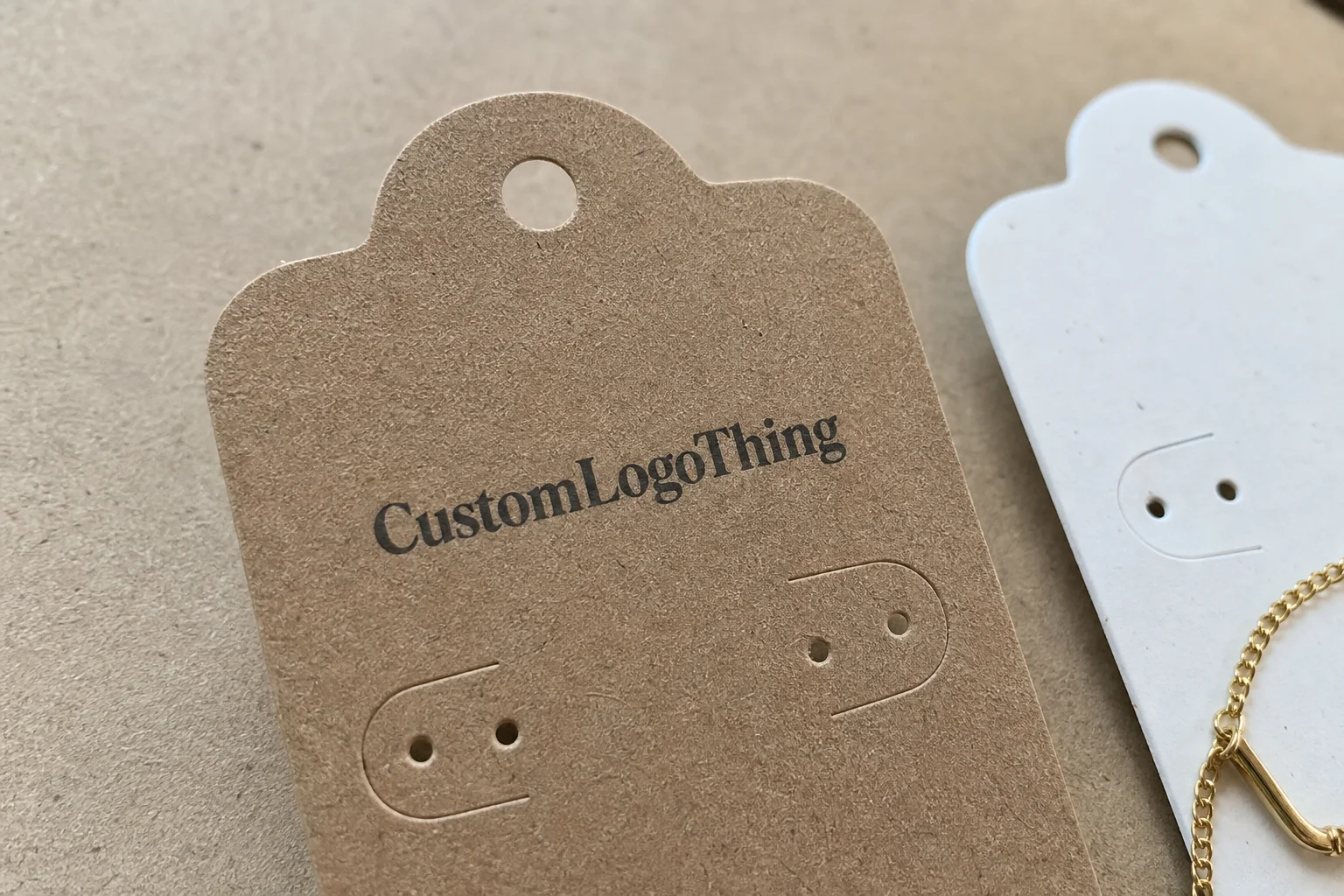
The tag is usually the first thing a buyer touches. That gives it outsized influence. A neat card can make a modest chain feel considered. A weak one can make premium earrings feel like clearance stock. People read quality fast, and they do it with their fingers as much as their eyes.
That is why material choice matters so much. The stock, finish, and way the tag hangs all send a signal before the product itself gets any attention. If your jewelry line already uses custom printed boxes, the tag should not look like an afterthought from a different supplier or a different decade.
From a buyer’s point of view, the tag is doing three jobs at once. It carries pricing or SKU details. It supports brand identity. It has to tolerate shipping, retail handling, and repeated touching without fraying, curling, or smudging. A low-cost stock can look fine on a screen and still fail in a display tray. That is why packaging design cannot stop at the box render.
“If the tag feels thin, the whole line feels cheaper.”
That line comes up in sample reviews more often than vendors like to hear. It is blunt, but it is accurate. For fine jewelry, bridal collections, and giftable pieces, the tag often needs to match the perceived value of the item. For handmade or earthy brands, it can be rougher and still feel premium. Context matters. A raw kraft tag on a polished solitaire ring can feel honest or mismatched depending on the rest of the branded packaging.
The smarter question is not, “What is the greenest option?” It is, “Which material gives the best balance of print quality, durability, disposal behavior, and cost for this specific jewelry line?” That is the real decision. Everything else is slogan material.
Printed hang tags for jewelry packaging sustainable material options
The main material families are recycled paper, kraft paper, cotton paper, bamboo or hemp blends, seed paper, and FSC-certified specialty stocks. Each one behaves differently under offset, digital, foil, and letterpress printing. That means the “best” choice depends on both the visual goal and how the tag needs to perform in production.
Recycled paper is the safest baseline. It prints cleanly, is easy to source in multiple weights, and usually keeps unit cost reasonable. For many brands, it is the practical answer because it stays close to standard product packaging workflows without adding odd production risk. It is also easier to quote, easier to proof, and easier to repeat across seasons.
Kraft paper gives an immediate eco signal because buyers recognize it instantly. It works well for natural, handmade, minimalist, or indie jewelry brands. The tradeoff is print contrast. Dark inks, tiny type, and delicate logos need testing. On brown kraft, pale gray text looks elegant in mockups and weak on press more often than people expect.
Cotton paper feels premium. It has a soft hand, a thick fiber look, and a quiet luxury tone that suits bridal, fine jewelry, and limited drops. It costs more, but it earns that cost in tactile value. If the rest of the package branding is clean and restrained, cotton stock can carry the whole presentation.
Bamboo and hemp blends sit in the middle. They are often chosen for a natural story without the rougher texture of heavy kraft. Availability varies by supplier, so these are better for planned runs than for rushed replenishment. They also need careful proofing because color can shift more than on standard coated paper.
Seed paper gets attention, and people do like the idea of a plantable tag. But it is not an automatic win. It is thicker, more textured, and less predictable for fine type, barcodes, or dense compliance text. Use it when the brand story genuinely benefits from a takeaway that can be planted after purchase. Use it less when legibility matters more than novelty.
FSC-certified stocks are worth asking for if you need documented fiber sourcing. If a supplier makes an FSC claim, ask for paperwork and verify the chain-of-custody details through FSC. Claims without documentation are just marketing with a better font.
The comparison below is a practical starting point. It is not a promise. It reflects typical production ranges for standard sizes, ordinary print coverage, and normal finishing. Add foil, custom die-cuts, or multiple ink passes, and the numbers move fast.
| Material | Look and feel | Typical use | Relative cost at 5,000 pcs | Print and durability notes |
|---|---|---|---|---|
| Recycled paper | Clean, versatile, familiar | Most jewelry lines | $0.14-$0.26 per tag | Good print clarity; easy to punch and finish |
| Kraft paper | Natural, earthy, casual | Handmade, artisan, minimalist branding | $0.16-$0.28 per tag | Needs strong contrast; fibers can show in print |
| Cotton paper | Soft, premium, tactile | Fine jewelry, bridal, giftable sets | $0.28-$0.55 per tag | Feels high-end; higher material cost and longer sourcing time |
| Seed paper | Textured, story-driven, unconventional | Eco-forward campaigns and special editions | $0.32-$0.70 per tag | Less suited to small type and dense artwork |
| Bamboo or hemp blend | Natural, slightly textured | Brands wanting a distinct fiber story | $0.24-$0.48 per tag | Can vary by supplier; confirm consistency before ordering |
If the broader package needs to tell the same story, connect the tag to the materials used in the box or mailer. That can mean recycled paper inserts, kraft sleeves, or a corrugated cardboard shipper that carries the same visual language. Consistency matters more than trying to make every item shout “sustainable” in a different accent.
For end-of-life guidance on paper recovery and recycling basics, the EPA has plain-language reference material that is useful when you are deciding how far to push coatings, inks, and mixed-material assemblies.
Key specs that change look, durability, and sustainability
Paper weight is the first spec to lock down. Very light stock can curl, punch poorly, and feel cheap. Too thick, and the tag starts acting like a rigid card instead of a hang tag. Most jewelry tags land in a middle range that balances stiffness and elegance, often around 300gsm to 450gsm depending on the stock and finish.
Finish changes perception more than the average buyer realizes. Uncoated stocks feel natural and photograph well. Coated finishes improve color pop and scuff resistance. If you want a lower-impact look, matte uncoated stock usually reads more honest than glossy lamination with green language layered on top. That is not anti-finish. It is just good judgment.
Die-cut shape affects both branding and yield. Simple rectangles are the cheapest and most efficient. Rounded corners are a small upgrade. Custom silhouettes can strengthen package branding, but they often reduce sheet efficiency and raise tooling cost. Fancy shapes can be smart for a signature line and silly for a test run. Sometimes the shape is worth the extra spend. Sometimes it is a logo-shaped mistake.
Ink coverage matters too. Heavy coverage uses more ink and can make recycling more complicated, especially if the design also uses laminate or foil. A restrained layout with one or two colors often performs better on eco stocks than a busy design loaded with effects. Minimalism is not automatically more sustainable, but it usually prints with less friction.
Barcodes, QR codes, pricing data, and size marks need special attention. Fine jewelry hang tags sometimes carry more information than they should. Keep the data legible. Use enough contrast. Test scan quality before the run. A tag that looks beautiful but fails at checkout is not premium. It is expensive confusion.
Attachment choices are part of the system, not an afterthought. Cotton string, paper twine, and recycled polyester loops all change the final footprint and the presentation. Cotton string fits natural branding. Paper twine suits kraft. Recycled polyester is often stronger for retail packaging that sees a lot of handling. If the attachment is weak, the tag becomes trash before the customer even leaves the store.
For buyers working across multiple categories, the same spec discipline should apply to Custom Packaging Products, not just the hang tag. If the box, insert, and tag all use incompatible materials, the finished set feels pieced together rather than designed.
The simple rule is this: choose the cheapest spec only after it passes the look test, the handling test, and the disposal test. Skip one of those and you are just moving cost somewhere else.
Cost, MOQ, and unit price: what drives the quote
The biggest pricing levers are stock choice, size, print method, finish, and quantity. Recycled paper and kraft usually keep costs lower. Cotton, seed, and textured specialty stocks push the quote up quickly. That does not make them wrong. It just means you should buy them with a clear reason, not because they looked nice in a sample book.
MOQ matters because setup costs get spread across the run. A brand ordering 500 tags is going to pay much more per unit than a brand ordering 5,000, even if the artwork is identical. That is normal. It is not a supplier trick. It is how press setup, cutting, and finishing work.
Custom shapes, foil stamping, embossing, and multi-step finishing all add labor and machine time. If the budget is tight, simplify the shape first. Then decide whether a foil logo is worth the jump. In most cases, a cleaner layout on a better stock beats an over-decorated tag on weak paper.
Multiple SKUs complicate pricing too. Mixed sizes can reduce design time, but they often create more production steps and more packing complexity. Standardizing tag sizes usually lowers waste and makes reorder pricing steadier. If you are managing several jewelry lines, a shared base format can save you more than a clever one-off shape ever will.
Here is a practical way to think about quote drivers:
- Lower cost: recycled paper, standard rectangle, one or two colors, no foil, standard punch
- Mid-range cost: kraft, soft-touch uncoated stock, rounded corners, simple custom sizing
- Higher cost: cotton paper, seed paper, custom die-cut, foil, embossing, stringing by hand
The cleanest quote request includes size, stock target, print colors, finish, attachment, and approximate annual volume. Vague requests get vague pricing. Clear specs get numbers you can actually use. If a vendor has to guess the caliper, the finish, and the print area, they will pad the quote to protect themselves. Fair enough.
For a rough benchmark, a simple recycled paper tag run in the 5,000-piece range often lands around $0.14-$0.26 per unit. A premium cotton or seed paper version with finishing can move into the $0.30-$0.70 range. Short runs can be much higher. That is why planning annual volume matters more than chasing the lowest first-order quote.
Production steps and lead time for sustainable tags
The process usually starts with artwork prep and dieline review. This is where the supplier checks size, bleed, punch placement, and barcode readability before anyone commits ink to stock. If the hole is too close to the edge or the type is too small, you want to hear that during proofing, not after a thousand tags have been cut.
After proof approval, the supplier confirms material availability and print setup. If the chosen stock is special-order, FSC-documented, or tied to a specific caliper, that can add a few days before the press even starts. Sustainable materials are not automatically slow. The delay usually comes from sourcing or custom finishing, not from the material being eco.
Printing, finishing, cutting, punching, and stringing happen in separate stages. Any one of them can become the bottleneck if the design is busy or the run includes foil, embossing, or unusual shapes. A straightforward recycled paper tag might move faster than a fancy stock with three finishes, even if both are green on the spec sheet.
Typical lead time for a simple run is often 8 to 12 business days after proof approval. Add 3 to 5 business days if the material is special-order. Add more if the job includes custom die tooling or hand-stringing. If a supplier promises everything in a hurry with no questions asked, that is not efficiency. That is how people get surprises.
Packaging and transit matter as well. A box of finished tags can get damaged if the packing is lazy. This is especially true for soft cotton stocks and seed paper, which can scuff or warp if they are packed too tightly. Good vendors treat the shipper as part of the product, not just the ride home. If you already care about corrugated cardboard for outer shipping, extend that same logic to the hang tag carton.
If the launch date is fixed, work backward from delivery instead of approval. Build buffer for proofing, material sourcing, and freight. Tight timeline plus custom materials is how people end up paying emergency charges for ordinary mistakes.
Common mistakes that make eco tags look cheap
The most common mistake is choosing a material for the label, not the brand. A raw kraft tag can be perfect for artisan silver pieces and completely wrong for polished bridal jewelry. A cotton tag can feel luxurious on one line and overdone on another. The stock has to fit the story.
Another mistake is cramming too much information onto a small tag. Tiny type, too many icons, and a stack of certification marks can make the design feel crowded. Sustainable does not mean cluttered. If anything, eco materials reward restraint because the texture already carries some visual interest.
Poor contrast is a silent killer. Light ink on brown kraft or pale gray type on creamy cotton stock can look elegant in a mockup and unreadable in real life. Test legibility under store lighting, not just on your monitor. Screens lie. Paper does not.
Brands also underestimate edges and holes. Rough cuts, tearing around the punch, or sloppy stringing make even premium stock feel careless. That is where production discipline shows. A clean edge and a clean hole do more for perceived quality than a second ink color most of the time.
Another problem is inconsistency across the full package. If the box is sharp and the hang tag feels loose, the set loses authority. If the tag says one thing and the insert says another, buyers notice. Strong packaging design means the tag, pouch, box, and insert all speak the same language.
Finally, do not overclaim sustainability. If the tag is recycled but the string is not, say exactly what is true. If the stock is FSC-certified, document it. If the tag is plantable, explain how it works. Buyers spot greenwashing fast, and that hurts trust more than a plain, honest tag ever will.
A tag does not need to shout “eco” to prove it is responsible. It needs to look deliberate and be accurate.
Expert tips and next steps before you request samples
Start by separating your jewelry lines into tiers. Everyday pieces, giftable sets, and premium collections usually need different tag stocks. One material rarely does all three jobs well without compromise. That is normal. The mistake is pretending otherwise.
Ask for samples on at least two stocks: one practical option and one upgraded option. Side-by-side comparison is the fastest way to see how type, texture, and color behave in real light. A boardroom mockup can hide a lot. A sample set cannot.
Write a short supplier brief with four things only: desired look, required durability, target quantity, and budget range. Keep it tight. The more the request wanders, the more the quote wanders with it. If you want better output, give better input.
If sustainability is a must-have, request proof of certification or material origin up front. FSC documentation, recycled content percentages, and fiber-source details should be documented, not implied. This is basic purchasing discipline, not nitpicking. Good vendors expect it.
Use the sample stage to test the whole system, not just the paper. Check punch size, string strength, barcode scanability, and how the tag hangs on the finished piece. A sample that looks good flat can behave badly on an actual necklace card or bracelet loop. That last test catches the dumb problems before they become expensive ones.
One more practical note: if your jewelry line also uses product packaging beyond hang tags, keep the material story aligned. A kraft insert inside a glossy box can work, but it should be a deliberate contrast, not a coincidence. A coherent branded packaging system makes the tag look stronger and the whole line feel more considered.
For brands refining custom printed boxes, product packaging, and retail packaging at the same time, printed Hang Tags for Jewelry Packaging sustainable material options deserve the same level of scrutiny as the box board, ink coverage, and finishing. The tag is small. The signal is not.
Frequently Asked Questions
What is the best sustainable material for jewelry hang tags?
Recycled paper is usually the safest default because it balances print quality, price, and availability. Cotton or premium uncoated stocks make more sense when the jewelry line needs a higher-end tactile feel. The right answer depends on the product tier and how much handling the tag will see.
Are kraft hang tags durable enough for jewelry packaging?
Yes, if the stock weight is high enough and the punch is clean. Kraft works best for brands that want a natural look and do not need ultra-fine print detail. It is durable enough for most retail use, but the design has to respect the stock.
How much do eco-friendly jewelry hang tags usually cost?
Cost depends on stock, quantity, finish, and shape. Recycled paper is usually the lowest-cost eco option, while premium fibers, seed paper, foil, and custom dies raise the unit price quickly. Small runs cost more per tag because setup costs are spread over fewer pieces.
What MOQ should I expect for printed hang tags for jewelry packaging?
Most suppliers price better at higher quantities because setup costs are spread across the run. Smaller MOQs are possible, but expect a higher unit cost and fewer finishing options. If you need a low first order, keep the spec simple.
How long does production take for sustainable hang tags?
Simple recycled paper or kraft runs are often faster than specialty materials with custom finishing. Add extra time for proofing, material sourcing, and any foil, die-cut, or stringing steps. If the launch date matters, build a buffer and treat it like a real deadline, not a hopeful suggestion.
For jewelry brands that care about presentation and cost control, the right hang tag is a small piece with an outsized effect. Pick the stock that fits the brand, verify the specs, and make the tag do its job without pretending paper can solve bad packaging decisions.