Buyer Fit Snapshot
| Best fit | Printed Mailer Cartons with Logo projects where brand print, material claims, artwork control, MOQ, and repeat-order consistency need to be specified before quoting. |
|---|---|
| Quote inputs | Share finished size, material target, print colors, finish, packing count, annual reorder estimate, ship-to region, and any compliance wording. |
| Proofing check | Approve dieline scale, logo placement, barcode or warning zones, color tolerance, closure strength, and carton packing before bulk production. |
| Main risk | Vague material claims, crowded artwork, missing packing details, or unclear freight terms can make a low unit price expensive after revisions. |
Fast answer: Printed Mailer Cartons with Logo: Film, Print, MOQ, and Carton Packing should be specified like a repeatable production item. The safest quote records material, print method, finish, artwork proof, packing count, and reorder notes in one written spec.
Production checks before approval
Compare the actual filled-product size with the drawing, then confirm tolerance on folds, seals, hang holes, label areas, and retail display edges. Reserve space for logos, QR codes, warning copy, and material claims before decorative graphics fill the panel.
Quote comparison points
Review material grade, print process, finish, sampling route, tooling charges, carton quantity, and freight assumptions side by side. A quote is only useful when the supplier can repeat the same color, closure quality, and packing count on the next order.
Printed mailer cartons with logo do more than carry a product from one place to another. They shape the first physical impression a customer gets before the box is even opened. I have seen a well-sized carton make a modest product feel considered, while a box that was off by a few millimeters made the entire shipment feel improvised. That difference is rarely dramatic on a spreadsheet, but it is obvious on a packing table.
The carton has two jobs, and both matter. It needs to protect the product, then present it cleanly. A good shipper can reduce the need for extra labels, cut down on loose inserts, and keep the unboxing experience tidy without adding clutter. The sections that follow break down how printed mailer cartons with logo function in transit, what shapes pricing, how long production tends to take, and which details separate a smart order from a costly redo.
Printed Mailer Cartons with Logo: Why They Stand Out
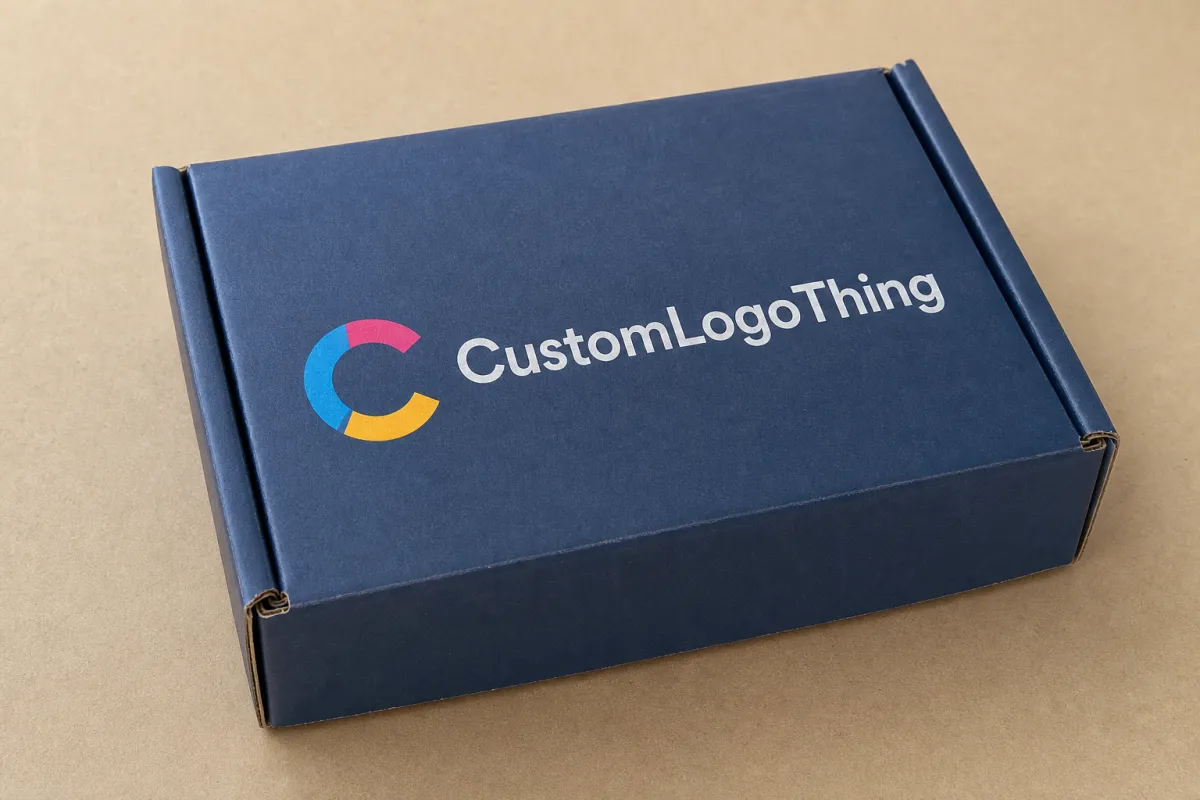
The artwork catches the eye, but the structure does the real work. Printed mailer cartons with logo are usually self-locking or folding cartons made from corrugated board or heavier paperboard, and the closure style deserves as much attention as the artwork. Give the box too much room and the contents slide. Make it too tight and the packer has to force the product in, which tends to show up later as bent corners or scuffed edges.
A mailer carton with logo can replace a few separate pieces that would otherwise do the same job. Instead of relying on a label, sleeve, or insert card to explain the brand, the outer shipper carries that message itself. That is part of why printed mailer cartons with logo show up so often in subscription kits, cosmetics, apparel accessories, books, and other light consumer goods that benefit from a cleaner arrival.
Printed surface area should be treated like working space, not wallpaper. A logo needs breathing room. Score lines need clearance. Text that sits too close to folds often distorts once the carton goes through converting and pressing. Respect the box and the result feels crisp. Ignore it and the carton starts to look crowded, even if the print file looked polished on screen.
There is also a logistics angle. A plain shipper can move product just fine, yet a branded mailer helps warehouse staff spot the right SKU faster, supports recognition during delivery, and can remove the need for a separate outer label in some workflows. For growing operations, that kind of small efficiency adds up. A one-step reduction at packing turns into hundreds or thousands of saved motions over a busy month.
Premium products usually benefit from a quiet exterior. Loud packaging often dates itself quickly. Clean edges, a tight closure, and a sharp logo do more work than a pile of decorative effects. Good cartons do not shout. They arrive, close properly, and leave the brand mark to carry the conversation.
How They Work in Shipping
A mailer carton is a sequence of flaps, scores, tuck closures, dust flaps, and locking tabs. Corrugated versions depend on flute direction and board thickness. Folding-carton styles rely more on paper caliper and crease quality. For printed mailer cartons with logo, the structure has to support both handling and visibility. A strong print job on a weak carton still fails the moment the box is stacked under load.
Printing method changes the path in a meaningful way. Flexographic printing is often the practical route for simple artwork, bold logos, and medium-to-large quantities because setup stays efficient and color fields stay solid on kraft or white linerboard. Digital printing works well for short runs, launch tests, and frequent artwork changes. Litho-lamination sits at the premium end of the scale, especially for photo-heavy graphics, sharp gradients, or retail-facing cartons where printed mailer cartons with logo need a display-level finish instead of a plain shipping look.
In the warehouse, the carton arrives flat, folds along the score lines, gets packed, and is sealed with tape or locking tabs depending on the structure. A box that opens quickly and stacks cleanly saves labor every day. That savings is not abstract. Once order volume rises, even a few seconds shaved from each packout can change how the line feels. Printed mailer cartons with logo should be designed with the packing table in mind, not just the mockup.
"If the carton fights the product, the warehouse feels it in every move: opening, loading, closing, and stacking."
Shipping reality is less graceful than a mockup. Drops happen. Compression happens. Conveyor vibration happens. A carton that looks sturdy on a desk can behave differently once it is under load, which is why structural choices should match the shipping route, the product weight, and the amount of time the carton may spend stacked in transit. A box that travels by parcel is not the same box that sits on a shelf for retail pickup.
The best packaging conversations usually begin with three questions: What is going inside? How will it travel? What should the customer feel on opening it? Once those answers are clear, printed mailer cartons with logo can be built to support the work instead of merely decorating the outside.
Printed Mailer Cartons with Logo: Cost, Pricing, and MOQ
The price of printed mailer cartons with logo usually moves with five practical variables: board grade, size, print coverage, finishing, and quantity. A small one-color mailer on standard E-flute can stay efficient. A larger carton with full-bleed art, specialty coatings, and tight color targets lands in a different price band entirely. Packaging quotes often look similar until those details start to stack up.
MOQ matters because setup costs do not disappear just because the order is small. Die-cut tooling, plates, proofing, and press setup all need to be covered somehow, which is why custom runs often carry higher minimums than stock mailers or label-based branding. For printed mailer cartons with logo, a 500-piece run may be possible with digital printing, but the unit cost usually reflects the convenience of that short run.
The table below gives a practical comparison. Real quotes will shift with board grade, carton size, print area, finishing, and freight, yet the ranges are useful for planning. They are planning numbers, not promises, and regional pricing can move with paper supply, fuel costs, and factory capacity.
| Option | Typical MOQ | Best For | Typical Unit Cost | Notes |
|---|---|---|---|---|
| One-color flexo on standard E-flute | 1,000-5,000 | Simple branding, subscription boxes, everyday ecommerce | $0.45-$1.05 at 5,000 units | Efficient for bold logos and limited ink coverage |
| Digital short-run mailer carton | 250-1,000 | Launches, seasonal promotions, artwork tests | $1.50-$3.50 at 500 units | Good for lower quantities, but setup cost spreads across fewer pieces |
| Litho-laminated full-color carton | 2,000-10,000 | Premium retail presentation, photo-heavy designs | $0.95-$2.50 at 5,000 units | Stronger visual impact, usually higher tooling and lead time |
| Stock mailer plus printed label | 50-500 | Urgent orders, small internal programs, temporary campaigns | $0.25-$0.80 plus label cost | Lowest upfront effort, but not a true custom carton solution |
Two quotes can sit close on paper and still finish far apart once tooling and freight are included. On printed mailer cartons with logo, I always tell buyers to ask whether the price includes the dieline, proofing, plates, and delivery to one location, because a low headline number can become expensive fast.
It also helps to compare carton pricing against other formats rather than judging it in isolation. If the product is light and the shipment is simple, a lighter structure such as Custom Poly Mailers may be the better economic fit. That comparison keeps the decision honest. Not every product needs the same level of structure or presentation.
For a wider look at packaging choices, the team at Custom Logo Things can help match structure to use case instead of forcing one format onto every product line. The right carton is the one that fits the product, the brand, and the budget at the same time.
Other cost drivers are easy to miss at first glance:
- Board grade: heavier linerboard or better flute quality raises material cost but can reduce damage risk.
- Print coverage: a centered logo costs less than full-coverage art with multiple ink zones.
- Finishing: aqueous coating, matte varnish, or soft-touch lamination can add both cost and lead time.
- Special colors: matched spot colors, metallics, or white ink on kraft usually increase setup complexity.
- Tooling and freight: die-cut charges, sample freight, and delivered freight can change the final number quickly.
If you are requesting quotes, ask suppliers to separate the recurring carton cost from one-time charges. That makes it easier to compare printed mailer cartons with logo from different vendors and decide whether a simple design or a premium finish is the stronger business move.
Printed Mailer Cartons with Logo: Process, Timeline, and Lead Time
The production path for printed mailer cartons with logo is usually straightforward, but it only stays that way if the brief is clear. The supplier needs finished dimensions, board preference, print method, closure style, and any insert or accessory that changes the fit. Once those pieces are set, the project moves through dieline selection, artwork setup, proof approval, printing, converting, packing, and shipment.
For standard structures with simple artwork, a realistic timeline is often 12-15 business days after proof approval. Digital short runs can move faster in some cases, while custom die-cut structures with specialty coatings, heavy ink coverage, or multi-step finishing can stretch into three to five weeks. Printed mailer cartons with logo that need structural testing, sample approval, or revised art should be scheduled with extra cushion, not squeezed against a product launch.
The main delays are usually ordinary, not dramatic: a wrong measurement, a logo file saved at low resolution, a board change after the proof is already in motion, or a last-minute coating request. None of those surprises are rare. All of them consume time. A clean brief helps printed mailer cartons with logo stay on schedule because the production team does not have to guess at missing details.
A good process usually looks like this:
- Define the product and packout: include the item, insert, wrapping, and any literature or accessory.
- Choose the structure: decide between corrugated mailer, folding carton, or another shipper style based on weight and handling.
- Approve the dieline: check folds, glue areas, tuck flaps, and logo placement before artwork is finalized.
- Review the proof: confirm color expectations, barcode placement, bleed, and any text that sits near an edge.
- Test the sample: build a few cartons, pack the actual product, and check assembly speed and stackability.
- Release to production: once the sample is approved, lock the spec and avoid changing it unless absolutely necessary.
That sequence sounds obvious, yet it is where many programs lose time. A packaging buyer who approves a clean sample and a complete spec sheet usually has a calmer run than the buyer who keeps adjusting the box after production has already started.
Lead time planning should also account for launch dates, warehouse inventory cycles, and freight windows. If cartons need to arrive before the product does, or before a promotion starts, build in enough margin for reproofs and transit delays. A simple rule helps: if the box is tied to a campaign date, do not plan the carton delivery date as if every step will go perfectly.
For teams managing multiple SKUs, it often helps to stage the work. Approve the structure first, then finish the art, then place the order. That keeps printed mailer cartons with logo from turning into a rushed back-and-forth between design and operations.
Key Factors That Affect Fit, Durability, and Branding
Fit starts with more than one number. The product matters, but so do inserts, wrap materials, clearance for easy packing, and the amount of movement that is acceptable during transit. For printed mailer cartons with logo, I usually want a small but deliberate amount of room: enough to assemble without strain, but not so much that the item rattles around and wears out the corners.
Board grade changes both the feel in hand and the resistance to crush. An E-flute corrugated mailer gives a smoother print surface and a tidy profile, while B-flute brings more rigidity for heavier contents. In folding-carton applications, 16 pt to 24 pt paperboard can work for lighter goods, but that depends on product weight and how the carton travels. For printed mailer cartons with logo, the board choice should match handling, not a sample swatch sitting under perfect lighting.
That is why printed mailer cartons with logo should be tested with the actual product load, not judged from a flat sample alone. A box can look polished in a mockup and still feel wrong once the real item, insert, and seal method are inside. A packout test usually reveals the truth faster than a design review ever will.
Branding also needs restraint. A strong logo placed on the top panel can carry the whole design, while too much small type near the folds disappears once the carton is assembled. If a shipment needs to survive repeated handling, a sample should be checked against real transit conditions and, where possible, against ISTA transit test methods. That kind of testing is not overkill; it is a low-cost way to find weakness before printed mailer cartons with logo are produced in volume.
Material sourcing matters too. If your brand asks for recycled content or certified fiber, ask whether the board can be sourced through FSC-certified supply chains. Certifications do not magically improve a carton, but they do give buyers a clearer paper trail and help teams line up packaging claims with actual material specs.
Operational details matter just as much as print quality. The best-looking carton in the room can still create problems if it stacks poorly on a pallet, jams during packout, or slows the pick-and-pack line. In a busy warehouse, a half-second of friction repeated thousands of times is not a small thing.
If you are comparing formats, think about how the carton will live in the workflow. Will it arrive flat? How many motions does assembly take? Does the closure need tape, or does it lock by design? A package that saves a little labor can be more valuable than one that looks slightly more elaborate but slows down every order.
Common Mistakes When Ordering Printed Mailer Cartons
The most expensive mistakes are usually the quiet ones. A carton can look sharp in the proof and still fail on the floor if the dimensions, fold lines, or print assumptions were never checked against the real product. Printed mailer cartons with logo are unforgiving of guesswork because every small mismatch shows up during packing, shipping, or unboxing.
- Measuring only the product: add room for inserts, wraps, finger clearance, and closing tolerances. A box that is technically the right size on paper may still be miserable to pack.
- Ignoring fold lines: important text, logos, and QR codes should stay away from scores, cuts, and tuck flaps so the final assembled carton still reads cleanly.
- Chasing a screen color: board absorbs ink differently than a monitor shows it. If color matters, approve a physical proof rather than trusting a digital image alone.
- Designing for looks only: a carton can be beautiful and still crush too easily if the flute, caliper, or closure style is wrong for the shipment.
- Choosing the cheapest quote: low unit price is not the same as low total cost if the cartons arrive late, require rework, or fail in transit.
Another common issue is leaving too much inventory risk in the final approval. Once printed mailer cartons with logo are in production, changes become expensive, so a prototype or pre-production sample is often the smartest insurance a buyer can buy.
There is also a communication problem that shows up in a lot of packaging programs: the buyer assumes the supplier understands the use case, while the supplier assumes the buyer wants the most standard version possible. That gap can produce a carton that is technically correct and practically wrong. It pays to spell out the weight, the shipping channel, the retail expectation, and the assembly style in plain language.
If you are working through revisions, keep the changes focused. Adjust the structure, the artwork, or the finish only when there is a real reason. Constantly moving all three at once makes it hard to know what actually improved the carton. In packaging, clarity saves money.
Printed Mailer Cartons with Logo: Expert Tips and Next Steps
The easiest way to get a clean result is to start with a spec sheet instead of a mood board. List the product dimensions, target packout method, insert details, shipping method, and whether the carton needs to feel premium, practical, or somewhere between the two. For printed mailer cartons with logo, that one sheet of information often prevents the back-and-forth that slows an order down.
If you are comparing packaging formats, it helps to place printed mailer cartons with logo next to lighter alternatives rather than judging them in isolation. A simpler shipper such as Custom Poly Mailers may be the better fit for low-weight goods, while a carton is the right call for products that need structure, insert support, or a stronger presentation.
Before you place the order, use this checklist:
- Measure the product and any insert together.
- Pick the print method that matches quantity and artwork complexity.
- Ask for a sample or prototype and test assembly speed.
- Confirm whether tooling, plates, and freight are included in the quote.
- Match the board grade to the shipping environment, not just the mockup.
That approach keeps the decision grounded. Packaging teams sometimes get pulled into cosmetic debates that do not change the actual shipping result. The more useful question is whether the carton will move through the line smoothly, protect the product through transit, and still look like part of the brand when the customer opens it.
For brands balancing presentation with operational reality, Custom Logo Things is the right place to compare the options against actual shipping requirements instead of defaulting to the same package for every SKU. A good spec, a realistic budget, and a proper sample usually produce a better outcome than chasing the lowest line item.
The practical next step is simple: gather measurements, confirm artwork, decide how much protection the product really needs, and request quotes that separate recurring carton cost from one-time setup charges. That gives you a real view of where printed mailer cartons with logo fit in the packout, the budget, and the launch schedule.
Frequently Asked Questions
Are printed mailer cartons with logo strong enough for ecommerce shipping?
Yes, if the board grade and structure match the product weight and carrier handling conditions. Strength comes from proper sizing, corner design, and flute choice, not just the printed exterior. For heavier or fragile items, test a sample with real packing materials before approving production.
What affects the cost of printed mailer cartons with logo the most?
The biggest drivers are carton size, print coverage, material grade, and order quantity. Special finishes, multiple ink colors, tooling, and freight can also raise the final price. Simple artwork on a standard structure is usually the most cost-efficient path.
How long does it take to produce printed mailer cartons with logo?
Lead time depends on artwork readiness, structural complexity, print method, and factory workload. Proof approval is often the main checkpoint that determines whether production stays on schedule. Plan extra time if you need samples, custom sizes, or special coatings.
Can printed mailer cartons with logo be made in small quantities?
Sometimes, but small runs usually cost more per carton because setup and tooling are spread across fewer units. Digital printing or simpler structures may make lower quantities more practical. Ask suppliers whether they offer short-run options or staged reorders.
What artwork works best for printed mailer cartons with logo?
Vector logo files and clean, high-contrast layouts usually print most reliably. Keep critical text away from folds, tuck flaps, and trim edges so it stays readable after assembly. A sample proof is the best way to verify color, placement, and overall impact.
Good packaging is rarely about one flashy feature; it is about fit, speed, protection, and a presentation that does not fight the product. If you treat printed mailer cartons with logo as a working part of the shipping system, not just a branding surface, you will make smarter choices on size, board, print method, and budget, and the result will usually be easier to pack and better to receive.


