Buyer Fit Snapshot
| Best fit | Printed Poly Mailers Custom Printed projects where brand print, material claims, artwork control, MOQ, and repeat-order consistency need to be specified before quoting. |
|---|---|
| Quote inputs | Share finished size, material target, print colors, finish, packing count, annual reorder estimate, ship-to region, and any compliance wording. |
| Proofing check | Approve dieline scale, logo placement, barcode or warning zones, color tolerance, closure strength, and carton packing before bulk production. |
| Main risk | Vague material claims, crowded artwork, missing packing details, or unclear freight terms can make a low unit price expensive after revisions. |
Fast answer: Printed Poly Mailers Custom Printed: Quote Scope, Sample Proof, MOQ, and Lead Time should be specified like a repeatable production item. The safest quote records material, print method, finish, artwork proof, packing count, and reorder notes in one written spec.
Production checks before approval
Compare the actual filled-product size with the drawing, then confirm tolerance on folds, seals, hang holes, label areas, and retail display edges. Reserve space for logos, QR codes, warning copy, and material claims before decorative graphics fill the panel.
Quote comparison points
Review material grade, print process, finish, sampling route, tooling charges, carton quantity, and freight assumptions side by side. A quote is only useful when the supplier can repeat the same color, closure quality, and packing count on the next order.
I still remember standing on a film line in Shenzhen, watching a 60-micron LDPE roll unwind for a DTC apparel brand that was shipping about 40,000 orders a month from warehouses in Guangdong and California. We changed one tiny ink choice that cost the client about $0.08 per bag at 10,000 pieces, and that small adjustment saved them thousands in brand perception because the mailer finally looked intentional instead of like a grocery bag with a logo slapped on it. Packaging does that. One color change. One cleaner edge. One better finish. And yes, Printed Poly Mailers custom printed do far more than carry a product from point A to point B.
If you’re buying Printed Poly Mailers custom printed, you’re usually balancing three things at once: cost, protection, and brand presentation. Get one wrong and you either overspend, damage products, or ship something that makes your brand look cheap. I’ve seen all three happen, sometimes in the same meeting in Los Angeles, sometimes in a sourcing call at 7:00 a.m. in Hong Kong. Honestly, that’s why this category gets underestimated so often. It looks simple until you’re explaining why a customer’s “premium” order arrived in a bag that felt closer to a warehouse liner than branded packaging. The good news is this format is one of the easiest ways to upgrade branded packaging without jumping straight into expensive Custom Packaging Products or full-scale custom printed boxes.
Printed Poly Mailers Custom Printed: What They Are and Why Brands Use Them
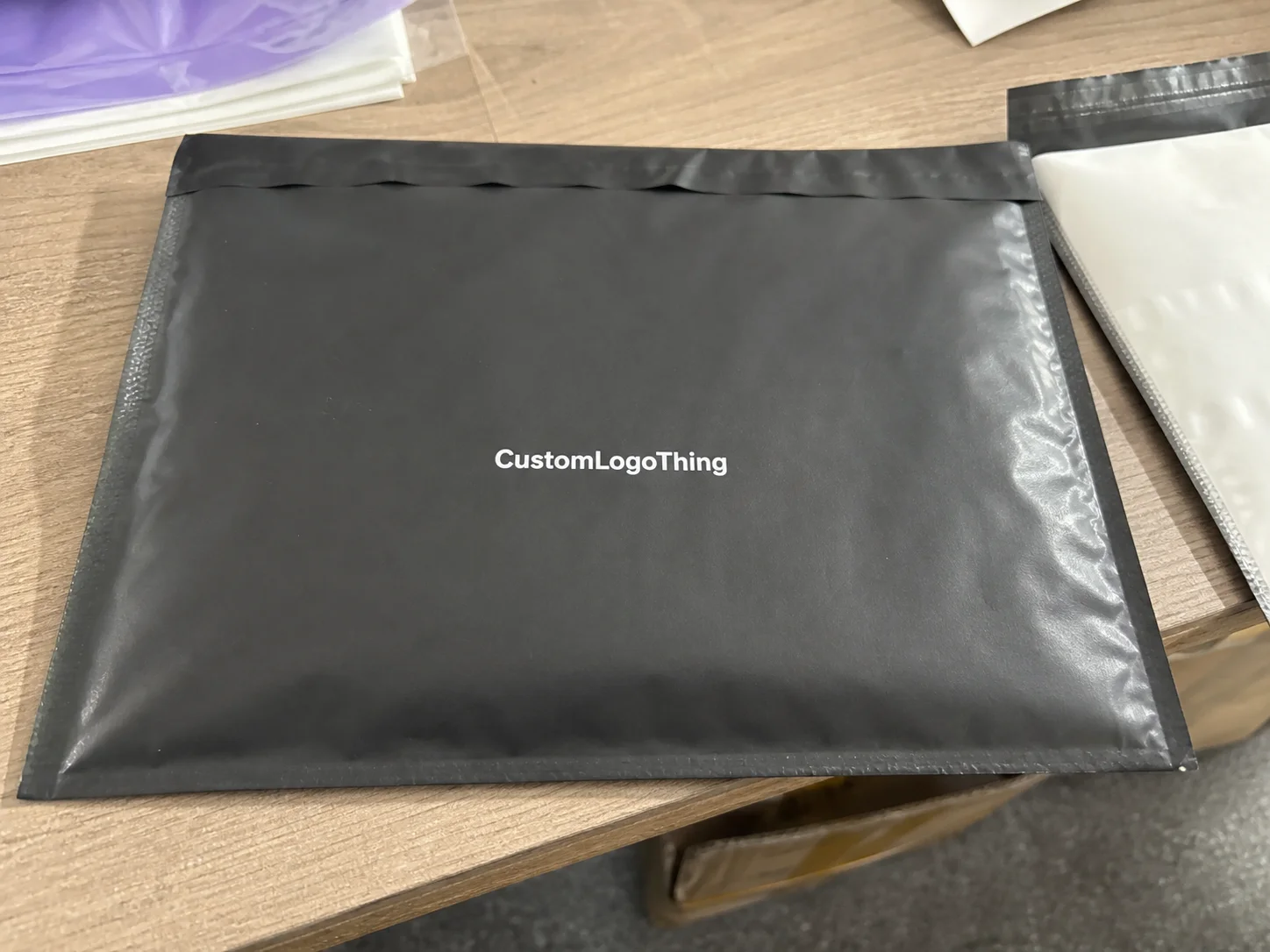
Printed Poly Mailers custom printed are lightweight plastic shipping mailers made from polyethylene film, usually LDPE, LLDPE, or a co-extruded PE blend, with custom graphics printed directly onto the surface. In plain English: they’re the soft, flexible shipping bags ecommerce brands use when they want packaging that is light, waterproof, and branded without adding much weight to the shipment. I’ve had clients call them “just a bag,” which always makes me laugh a little because that “just a bag” is often the first physical touchpoint your customer remembers after an order leaves a fulfillment center in Shenzhen, Ningbo, or Dongguan.
There’s a reason I keep recommending Printed Poly Mailers custom printed to apparel, beauty, subscription, and accessory brands. They ship light, they’re easy to pack, and they create a clean first impression the minute the customer sees the parcel. A plain gray bag gets the job done. A custom printed bag says somebody thought about the package branding, not just the label. That difference sounds tiny on paper. In real life, it can be the difference between “nice, they care” and “well, that was depressing.” At scale, even a $0.05 to $0.12 per unit packaging upgrade can change how a 5,000-piece launch feels to the buyer.
Here’s the difference buyers usually mix up:
- Stock mailers: pre-made bags in standard colors, no logo, no custom artwork, no real brand presence.
- Blank poly mailers: usually white, black, or gray bags with no print; sometimes used with stickers.
- Printed poly mailers custom printed: your logo, colors, messaging, and layout printed directly on the film.
I visited a mid-sized fulfillment operation in Ningbo where the client had been using plain black bags for 18 months. Their product packaging was decent inside the parcel, but the shipping mailer looked generic. We switched them to printed poly mailers custom printed with a two-color front print and a small return message on the flap. Their customer service team told me fewer people asked, “Did you send me the right order?” because the bag itself made the shipment feel deliberate. That kind of thing matters more than people admit in kickoff meetings in Shanghai, Chicago, or Rotterdam.
The main use cases are straightforward. Apparel brands use printed poly mailers custom printed for tees, leggings, and soft goods. Subscription brands use them for recurring shipments. Beauty brands like them for lightweight kits and promo packs. Accessories brands use them for hats, scarves, and small items. Ecommerce fulfillment teams like them because they’re faster to pack than cartons and usually cheaper than custom printed boxes for soft products. There’s a reason they show up in so many warehouse photos from Shenzhen to Los Angeles, usually right next to a label printer and a coffee cup that’s gone cold by 10:30 a.m.
Customization can be simple or detailed. A basic order might include a one-color logo and a return address panel. A more developed order can use full-coverage artwork, bold brand colors, QR codes, handling instructions, tamper-evident seals, or return messaging. I’ve even seen brands use a discreet “thank you” line on the flap and a promotion code on the back side. That’s smart use of space, not just decoration. It’s the packaging equivalent of a good handshake: quick, clear, memorable. If you want tactile appeal, some factories can also add a matte finish, soft-touch coating, or a 120-gauge film with stronger puncture resistance for heavier apparel.
If you already buy retail packaging or custom printed boxes for part of your line, printed poly mailers custom printed can fill the gap for soft goods and lower-cost shipments. That’s especially useful if your product packaging strategy needs different structures for different SKUs. Not everything needs a carton with a rigid insert and a bow. Sometimes a strong poly mailer is the correct tool. A 2.5 mil mailer for a cotton tee is usually more economical than a box, tissue, and void fill combination that costs 3 to 4 times more in material and packing time.
“Our logo finally looked like a brand, not an afterthought.” That was a client of mine after their first run of printed poly mailers custom printed. They were a little dramatic, but they were right. The job shipped out of Dongguan in 15 business days, and the customer photos looked better almost immediately.
How Printed Poly Mailers Custom Printed Actually Work
The production flow for printed poly mailers custom printed starts with material selection. A supplier chooses the film structure, thickness, and surface finish first, because print quality depends on what’s underneath the ink. If the film is too thin, the print can wrinkle, stretch, or look washed out once the bag is filled. If it’s too thick, you may get better durability but pay more per unit and sometimes lose a little flexibility. I’ve seen buyers ask for “the cheapest option” and then act surprised when the bag behaves like a grocery sack after a gym membership. A 2.0 mil film is not the same as a 3.5 mil film, even if the mockup on a screen looks identical.
In most factories I’ve worked with, the line goes like this: film extrusion or sourcing, corona treatment, printing, bag conversion, sealing, inspection, and packing. The exact sequence depends on whether the supplier is using stock film or making a custom run from raw pellets. For printed poly mailers custom printed, the printing method matters a lot more than buyers realize. It controls color accuracy, setup cost, speed, and what sort of artwork will look decent on a flexible bag. A supplier in Shenzhen may run a 6-color flexo line, while a plant in Foshan may keep digital units for smaller launch programs and sample runs.
Common printing methods
Flexographic printing is the workhorse for higher-volume printed poly mailers custom printed orders. It uses flexible plates and is efficient for one-color, two-color, or even multi-color designs. The upside is strong unit economics at scale. The downside is the plate cost, which means small orders can feel expensive. I’ve seen setup charges range from $150 to $600 per color, depending on supplier, plate size, and the number of side repeats. In practical terms, a 5,000-piece order in Vietnam or South China often prices much better than a 500-piece test run because the setup is spread across more units.
Gravure printing is usually reserved for very large runs and consistent, high-detail graphics. It can produce excellent print quality, but tooling is expensive. If you’re not ordering in serious volume, gravure can make your quote look like it swallowed a small mortgage. It’s great for repeat programs and major retail packaging accounts, not for “let’s test 3,000 bags and see what happens.” In many factories, gravure only makes sense once you’re talking 50,000 units or more and the artwork will not change for several months.
Digital printing is best for lower quantities, faster turnarounds, and designs with lots of variation. The upside is less tooling and more flexibility. The downside is unit cost can be higher, especially if you’re ordering larger volumes. For some buyers of printed poly mailers custom printed, digital is the only practical route because they need to test a launch or run several SKUs with different artwork. A digital sample can often be approved in 2 to 4 business days, which is useful when a marketing team in Austin or Berlin wants to launch before the weekend.
| Printing method | Best for | Typical strengths | Typical tradeoffs |
|---|---|---|---|
| Flexographic | Medium to large runs | Low unit cost at volume, good color consistency | Plate/setup fees, less ideal for tiny orders |
| Gravure | Very large, repeat programs | Excellent image quality, fast production at scale | High tooling cost, not friendly for low MOQ |
| Digital | Small to mid-size runs | No plates, faster proofing, flexible artwork | Higher unit cost on larger volume orders |
Artwork prep is where many first-time buyers stumble. You need the logo in vector format, usually AI, EPS, or PDF with outlined fonts. High-resolution raster files can work for proofing, but once you start pushing them through a print process on film, ugly edges show up fast. I’ve had buyers send a 400-pixel logo and ask why it looked fuzzy at 2,000 pieces. Because the bag isn’t magic. It prints what you gave it. That’s the part everyone hates hearing and nobody can argue with. If your supplier in Guangzhou asks for a 300 dpi artwork file at actual size, give them that, not a screenshot from a website header.
For printed poly mailers custom printed, your file should usually include bleed, safe margins, and clear color specs. If the supplier asks for Pantone references, give them Pantone references. If they’re matching CMYK, expect some variance unless the design is very simple. And if you want a crisp white logo on a dark film, be aware that white ink coverage can vary depending on the press, the substrate, and whether the plant is using single-pass or multi-pass printing. A white underprint can add $0.01 to $0.03 per unit, but it often protects logo clarity.
Material thickness and film type affect both clarity and shipping durability. Common thicknesses range from 2.0 mil to 3.5 mil, though some buyers go thicker for heavier products. A soft-touch matte film can make printed poly mailers custom printed feel premium, while a glossy film can make the colors pop more aggressively. Neither is “better” in a universal sense. It depends on your brand, your product, and how much abuse the package gets in transit. A 3.0 mil matte mailer for a heavy hoodie can be a better business choice than a thinner glossy option that tears in sorting.
Lead time usually follows a predictable path: inquiry, quote, file review, proofing, sample approval, production, transit, then warehouse delivery. For a standard order, I’d typically expect 12 to 15 business days from proof approval for production, plus shipping time. If the supplier is backlogged or you keep changing artwork every two days, that timeline gets longer. Miraculously, factories do not enjoy redesigning a bag five times. If your freight is moving from Shenzhen to a West Coast warehouse, add roughly 5 to 12 calendar days depending on air or ocean service.
For buyers who want structure around shipping standards, I like referencing sources like the ISTA testing framework for transit performance and the EPA for recycled-content and environmental guidance. Those sites won’t quote your bag, but they will keep your packaging decisions grounded in something besides vibes. If you’re comparing recycled LDPE or mono-material films, ask the supplier for a written material declaration, preferably with the exact resin percentage and factory location.
Key Factors That Affect Cost, Quality, and Performance
Pricing for printed poly mailers custom printed is a moving target because several variables stack on top of each other. Size, thickness, print colors, closure style, and quantity all matter. The same supplier can quote two jobs that look similar on paper and end up with a difference of $0.06 to $0.20 per unit because one is simple and the other is full of ink coverage, special sealing features, and custom sizing. That spread can wreck a budget if you weren’t watching closely. A 10,000-piece order in Dongguan may land at one figure; a 2,000-piece order with the same art can land 30% to 60% higher per unit.
The biggest cost drivers are usually these:
- MOQ: Smaller orders carry more setup burden per piece.
- Number of colors: Each added color can mean plates, setup time, and more press handling.
- Size: Larger bags use more film and more ink coverage.
- Thickness: A 3.0 mil bag costs more than a 2.5 mil bag, period.
- Extras: Adhesive strips, tamper seals, dual adhesive, tear strips, or return windows all add cost.
I once negotiated a quote for a beauty client who wanted a four-color full-coverage design on a 14 x 19 inch bag. Their first quote came back at nearly $0.41 per unit for 5,000 pieces, mostly because the artwork covered nearly the entire surface and needed extra plate work. We simplified the back panel, reduced one color, and dropped the unit cost to about $0.27 per unit. Same brand feel. Less money burned for no reason. That’s the sort of math buyers should obsess over, because packaging costs have a sneaky way of multiplying when nobody’s looking. On a 20,000-piece annual reorder, that difference can mean several thousand dollars in saved packaging spend.
Durability is the other half of the conversation. Buyers love pretty packaging until the mailer tears on a sharp corner or gets punctured by a hard accessory. Good printed poly mailers custom printed should offer decent puncture resistance, tear strength, and moisture protection. They won’t protect a glass bottle the way a box with inserts would, and anyone telling you otherwise is selling fairy tales. But for soft goods, they’re efficient and reliable. A seam seal tested at 1.5 to 2.0 pounds of pull resistance is usually a more useful benchmark than a glossy product photo.
Opacity matters too. If your product is visible through the film, that may hurt the unboxing feel. In other cases, transparent or semi-opaque styles work perfectly for certain logistics setups. Color consistency is another detail people ignore until the second reprint. I’ve seen a brand approve a charcoal gray, then receive a batch that looked almost blue under warehouse lights in Chicago. It was still usable, but not ideal. Always request a physical sample if color is a key part of your branded packaging. If possible, review the sample under D50 light, not just under phone flash.
Finish changes perception fast. Matte film usually feels more premium and hides scuffs better. Gloss makes color look punchier, but it can show fingerprints and shipping scratches more easily. For printed poly mailers custom printed, a smooth matte finish paired with a sharp logo can look more expensive than a louder, busier design. That’s one reason packaging design should support the product instead of screaming at it. In a pilot run of 3,000 bags, a matte surface can make a design look cleaner even when the artwork is identical.
Environmental considerations are getting more attention, and fair enough. Some suppliers offer recycled content film, and some can use mono-material structures that are more aligned with recycling pathways. But here’s the honest version: sustainability claims need to be checked carefully. “Recyclable” does not always mean curbside recyclable in every market. I’ve had buyers cite a green claim without checking local infrastructure, and that creates trouble later. If you plan to market eco-friendly package branding, make sure the material claim is accurate and supported. Ask for the exact recycled content percentage, such as 30% PCR or 50% PIR, rather than a vague “eco” label.
If you want to compare options for your broader packaging program, I’d also suggest looking at related formats like Custom Poly Mailers and other product packaging solutions that fit different SKUs or shipping methods. Not every order needs printed poly mailers custom printed, but many brands use them alongside cartons, inserts, and branded tissue to create a complete package branding system. That mix is especially common for apparel brands shipping from warehouses in Los Angeles, Dallas, or Miami.
Step-by-Step: How to Order Printed Poly Mailers Custom Printed
The cleanest way to order printed poly mailers custom printed is to stop thinking in vague terms like “We want something nice.” Nice is not a spec. Start with a sheet that includes size, thickness, closure type, colors, quantity, and must-have features. That one page can save you a week of back-and-forth and a quote that looks like it was written by three different people. I wish I were exaggerating. A clear brief also helps factories in Shenzhen, Ho Chi Minh City, or Ningbo quote faster and more accurately.
1. Choose the bag specs first
Decide whether you need a standard mailer, a gusseted format, a tamper-evident strip, a second adhesive strip for returns, or just a basic sealed bag. For soft apparel, a simple mailer often works well. For value-added retail packaging or brands with return-heavy categories, dual adhesive or return-friendly features can reduce friction. A 10 x 13 inch bag might fit a folded tee, while a 14 x 19 inch bag usually makes more sense for hoodies or sets.
I usually tell buyers to define the product dimensions, not just the bag size they “think” they need. A folded hoodie, a boxy cosmetic kit, and a stack of stickers behave very differently in printed poly mailers custom printed. Measure the actual packed item, not the dream version of it. Dreams are great. Shipping dimensions are better. If your product is 9 x 11 x 2 inches after folding, a 10 x 13 inch bag may be enough; if it’s bulkier, go up a size before you discover the problem in production.
2. Pick the print style based on budget and artwork
One-color logo print is often the best starting point. It keeps the design sharp and usually lowers setup complexity. Multi-color or full-coverage graphics can look amazing, but they need cleaner artwork and usually a bigger budget. If your design relies on tiny text, gradients, or intricate patterns, ask whether the supplier’s process can really hold that level of detail on film. In many cases, a clean Pantone 185 red or a solid black print will outperform a complicated six-color layout on a flexible substrate.
For many ecommerce brands, printed poly mailers custom printed with one bold logo and one brand message are enough. You do not need to print your life story on the mailer. Your customers are opening a shipping bag, not reading a novella. Nobody has ever sat in a kitchen and said, “If only this parcel had more adjectives.” A simple two-line layout often prints cleaner and costs less than a design trying to do the work of an entire homepage.
3. Prepare the files correctly
Send vector files where possible. Confirm the Pantone colors or CMYK builds. Ask the supplier for print area dimensions, bleed requirements, and safe zone measurements. If you’re using reverse printing, white underprint, or metallic ink, make that clear before the proof stage. A bad file can turn a decent quote into a disaster that costs you rework and another round of freight. If the supplier in Shanghai asks for a 3 mm bleed and a 5 mm safe margin, do not improvise.
I once had a brand send artwork with a thin gold line and tiny white text on a dark film. Looked elegant on screen. Printed like a ghost on a rainy window. We fixed it, but only after a physical proof showed the problem. That’s exactly why sampling exists. Use it. If you’re paying for 5,000 or 10,000 pieces, a one-time sample fee of $25 to $80 is cheap insurance compared with a reprint.
4. Request a digital proof or sample
Never skip the proof. A digital mockup is useful, but a physical sample is better because it shows how the film feels, how the print sits, and whether the closure works properly. Inspect the sample under normal indoor light and, if possible, under warehouse lighting too. What looks perfect on a monitor can be completely different in a packing room with harsh fluorescents. I’ve seen matte gray bags look nearly blue in a warehouse in New Jersey because the lighting was unforgiving.
This matters even more for printed poly mailers custom printed because the substrate is flexible. Flexible materials reveal weak artwork fast. If the logo is too thin, the edges can warp. If the background is too dark, small text can disappear. Ask for a full-size proof, not just a cropped image, so you can check the seal line, flap position, and barcode placement.
5. Approve quantity, lead time, and delivery terms
Get the final quantity in writing, not just a casual “about 10,000.” Confirm whether the supplier is quoting EXW, FOB, or DDP. Ask for an all-in landed cost if you want to avoid surprises. I’ve seen buyers celebrate a factory price of $1,900 only to find freight, customs, and domestic delivery pushed the landed total past $2,700. That is not a bargain. That is a spreadsheet prank. If the order ships from Shenzhen to Long Beach, ask whether sea freight, air freight, or courier service best fits your launch date.
If the supplier is quoting printed poly mailers custom printed for a promotion or seasonal launch, build in a buffer of at least 10% on timing. Delays happen in proof approval, film availability, or shipping congestion. If you wait until your warehouse is down to the last carton, you are already late. A buffer of 2,000 to 3,000 units on a 20,000-piece run can save you from emergency reorders and premium freight.
6. Lock in packaging format and storage plan
Ask how the mailers will be packed: by bundle, by carton count, palletized, or mixed. If you need warehouse-friendly cartons, say so. If your team uses automated packing or semi-automated fulfillment, make sure the mailer dimensions and stack behavior fit the workflow. Printed poly mailers custom printed should help operations, not slow them down because nobody measured the storage footprint. A carton count of 250 per case is common, but some factories can do 200 or 500 depending on thickness and size.
One practical note: if your brand uses other formats like custom printed boxes for premium orders and poly mailers for lower-tier shipping, keep the visual system aligned. Similar typography, similar colors, same logo placement logic. That’s how package branding starts to feel coherent instead of random. A customer who sees the same navy and white system from the bag to the insert to the box will usually read the brand as more organized, even if the product mix changes.
Common Mistakes Buyers Make With Printed Poly Mailers Custom Printed
The most common mistake is ordering the wrong size. People overestimate how much room they need, then end up with huge empty corners and an awkward, sloppy pack-out. Or they go too small and the mailer bulges, wrinkles, or tears at the seal. With printed poly mailers custom printed, a difference of one inch can change how the bag presents at the fulfillment table. A 12 x 15 inch bag and a 14 x 17 inch bag are not interchangeable when the SKU includes a folded sweatshirt.
Another mistake is putting too much detail into the artwork. Tiny copy, thin lines, and complex gradients may look beautiful on a monitor but can vanish on a moving, flexing surface. I’ve seen brands try to print their entire value proposition on the bag. Nobody needs six bullet points on a shipping mailer. Use the space well. Don’t wallpaper it with marketing. If the bag is leaving a warehouse in Indianapolis or Taipei, it should read fast and clean from a few feet away.
Setup fees surprise a lot of first-time buyers. If a supplier quotes plate costs, color matching fees, or tooling, that is not them being difficult. That is just how the process works. A buyer who only looks at the unit price without setup and freight is setting themselves up for a rude awakening. Printed poly mailers custom printed can be economical, but only if you understand the full order structure. On a 5,000-piece order, a $300 plate charge can matter a lot; on a 50,000-piece order, it matters less.
Cheap film can also create headaches. A low-cost mailer may stretch too much, tear at the seal, or accept print poorly. Then you spend more on replacements, complaints, and reorders than you saved upfront. I’d rather pay a few cents more for a better film than explain to a client why their order arrived in a torn bag. Been there, hated that conversation. A better film often means fewer damaged returns, especially for items with corners or hardware.
Skipping sample approval is a classic mistake. It usually happens when the buyer is in a rush and says, “We trust the factory.” That’s sweet. It’s also how you end up with a color that’s off, a logo that’s too small, or a return strip in the wrong place. For printed poly mailers custom printed, a sample is not extra. It’s insurance. If the sample takes 3 to 5 business days to ship by courier from China to the U.S., that delay is still cheaper than reprinting 8,000 bags.
Expert Tips From the Factory Floor
After enough factory visits, you start noticing the same pattern: the best orders are usually the simplest ones. Strong logo. Clear placement. One or two brand colors. Clean film choice. That’s it. With printed poly mailers custom printed, a bold graphic often performs better than a crowded design because it holds up through shipping, stacking, and handling. In a plant outside Foshan, I once saw a design go from five elements to two, and the final bag looked twice as expensive.
One of my favorite tricks is to place the logo where it stays visible when the mailer is folded or stacked in a carton. That means thinking about fulfillment, not just the mockup. If the important branding gets hidden under the seal or buried in the fold, you paid for print space nobody sees. Wasteful. A little annoying. Easy to avoid. I still remember a run where the logo sat right on the fold line and every packed bag looked like it was squinting. Not cute. Put the mark where the operator’s hands won’t crush it during packing in a warehouse in Dallas or Manchester.
Always ask for an all-in landed cost. I say this because I’ve watched too many buyers get seduced by a low factory quote from an overseas supplier, only to discover freight added $0.11 to $0.19 per bag once the shipment hit port and got trucked into the warehouse. That “cheap” quote can turn into an expensive lesson in real time. If the supplier is in Shenzhen and your warehouse is in Ohio, include port fees, customs brokerage, and inland trucking before you celebrate.
Plan your reorder point before you run low. If your lead time is 15 business days and your shipping takes another 7, you do not wait until you have 1,000 bags left to reorder 8,000. That’s how rush fees happen. That’s also how teams end up buying stock mailers just to survive the week, which defeats the whole point of printed poly mailers custom printed. A safer rule is to reorder when you have 4 to 6 weeks of inventory left, especially before Q4 shipping spikes.
Work with a supplier who can explain plate costs, print tolerances, and color matching without hiding behind jargon. I’ve sat through presentations where the vendor spoke for ten minutes and said nothing measurable. If they can’t tell you the material thickness, print method, and setup fees in plain language, keep looking. A supplier should feel like a partner, not a magician pulling excuses out of a hat. Ask for specifics like 2.5 mil film, 1-color flexo, and a 12 to 15 business day production window.
If you’re building a larger packaging system, keep your mailers consistent with your other branded packaging. Matching typography, repeatable color usage, and consistent logo sizing across mailers, inserts, and Custom Poly Mailers makes the whole product packaging experience look tighter. I’ve seen that consistency do more for brand trust than a fancy insert ever did. A brand that looks coherent across a bag, a box, and a thank-you card usually reads as more established, whether the fulfillment center is in Los Angeles or London.
What to Do Next Before You Place an Order
Before you order printed poly mailers custom printed, write a simple spec sheet. Include bag size, thickness, quantity, print colors, closure type, and any special features like dual adhesive or tear strip. Keep it on one page if possible. The goal is not to impress anyone with jargon. The goal is to get an accurate quote. A clean spec like 14 x 19 inches, 3.0 mil, matte finish, 1-color print, and 10,000 pieces is much easier for a factory in Shenzhen or Ho Chi Minh City to price correctly.
Get your logo in vector format and decide exactly what needs to appear on the front, back, and flap. If you want a QR code, test where it will lead. If you want a return message, confirm the exact wording. Small content decisions affect layout more than people think. A 20-character tagline behaves very differently from a 60-character one when printed on flexible packaging. If the code needs to work at launch, test it on at least two phones before the proof is approved.
Request quotes from at least two suppliers. Compare not just the unit price, but also setup fees, lead time, shipping terms, and whether they include proofing or samples. Sometimes the higher quote is cheaper in the end because the freight is better or the process is cleaner. Sometimes it isn’t. That’s why you compare landed cost, not just headline price. A quote of $0.18 per unit with DDP shipping may beat a $0.14 per unit EXW quote once you add freight and customs.
Ask for a sample or proof and inspect it in person. Look at the alignment. Check the seal. Read the smallest text. Feel the material. If the supplier claims recycled content or specific environmental attributes, ask for documentation or a clear explanation of what that claim means in practice. If you care about sustainability, you should care about specifics, not slogans. A real supplier should be able to tell you whether the film contains 30% PCR, where it was made, and which factory in Guangdong handled conversion.
Finally, build a reorder plan. Printed poly mailers custom printed are not the sort of packaging you want to order in panic mode. Keep a buffer, track usage by week, and know your lead time well enough to reorder before stock gets tight. That one habit will save you from rush fees, rush freight, and the humiliating experience of shipping your own branded products in random plain bags because the real ones ran out. If your demand is seasonal, add another 10% to the safety stock before peak months like November and December.
For brands ready to tighten up their packaging design, improve branded packaging consistency, and make product packaging do a little more selling, printed poly mailers custom printed are still one of the cleanest places to start. They’re practical. They’re visible. And if you spec them well, they make your business look more organized than it probably felt on Monday morning. A well-made mailer from a factory in Shenzhen or Ningbo can do more brand work than a whole stack of good intentions.
FAQ
How much do printed poly mailers custom printed usually cost?
Price depends on size, thickness, quantity, number of print colors, and whether setup plates or tooling are required. A simple one-color run might land around $0.12 to $0.22 per unit at moderate volume, while a more complex full-coverage job can climb much higher. For example, a 5,000-piece order in a 14 x 19 inch, 3.0 mil format may price at $0.15 per unit to $0.28 per unit depending on artwork and freight. Smaller runs cost more per piece because fixed setup charges get spread over fewer bags. Freight and duties can matter just as much as the factory quote, so always ask for landed cost.
What is the minimum order for custom printed poly mailers?
Minimums vary by supplier and printing method. Flexographic runs usually need higher quantities than digital printing because of plate and setup requirements. If you need a small test run, ask about stock-size mailers with custom print or shorter digital batches. Some factories in Shenzhen or Dongguan can produce digital test lots as low as 500 pieces, while flexo often starts at 3,000 to 5,000 pieces. Expect better unit pricing once you move into larger volume orders, especially if you’re consistent on size and artwork.
How long does it take to produce custom printed poly mailers?
Most orders take time for artwork proofing, plate setup, production, and shipping. Simple designs usually move faster than multi-color or full-coverage jobs. A typical timeline can be 12 to 15 business days from proof approval for production, plus transit time. If shipping is moving by air, delivery can be faster; if it’s ocean freight from South China to the U.S. West Coast, total transit is longer. Delays often happen when files are not print-ready or approval gets dragged out.
Can I print a logo on both sides of a poly mailer?
Yes, many suppliers can print front and back, but each added print area can increase cost and setup complexity. Two-sided printing works best when the artwork is simple and the brand message is clear. Check print alignment and folding position so the important design doesn’t get hidden in transit. A front-and-back layout on a 10 x 13 inch or 14 x 19 inch bag can work well if the supplier marks the safe zones clearly in the proof.
Are printed poly mailers better than plain mailers for branding?
Yes, printed mailers create a stronger unboxing moment and make the shipment feel more intentional. They also reduce the need for extra stickers or inserts to identify the brand. For high-volume ecommerce, custom print often looks cleaner and more professional than decorating plain bags one by one. That’s why so many brands use printed poly mailers custom printed as a core part of package branding instead of treating them like an afterthought. A well-designed mailer from a factory in Guangzhou or Ningbo can carry the brand identity before the box is even opened.