Buyer Fit Snapshot
| Best fit | Printed Poly Mailers for Launches projects where brand print, material claims, artwork control, MOQ, and repeat-order consistency need to be specified before quoting. |
|---|---|
| Quote inputs | Share finished size, material target, print colors, finish, packing count, annual reorder estimate, ship-to region, and any compliance wording. |
| Proofing check | Approve dieline scale, logo placement, barcode or warning zones, color tolerance, closure strength, and carton packing before bulk production. |
| Main risk | Vague material claims, crowded artwork, missing packing details, or unclear freight terms can make a low unit price expensive after revisions. |
Fast answer: Printed Poly Mailers for Launches: Film, Print, MOQ, and Carton Packing should be specified like a repeatable production item. The safest quote records material, print method, finish, artwork proof, packing count, and reorder notes in one written spec.
Production checks before approval
Compare the actual filled-product size with the drawing, then confirm tolerance on folds, seals, hang holes, label areas, and retail display edges. Reserve space for logos, QR codes, warning copy, and material claims before decorative graphics fill the panel.
Quote comparison points
Review material grade, print process, finish, sampling route, tooling charges, carton quantity, and freight assumptions side by side. A quote is only useful when the supplier can repeat the same color, closure quality, and packing count on the next order.
Printed Poly Mailers for Launches: A Practical Guide
A new product launch starts long before the first order lands on a doorstep. The package is often the first physical proof that the brand is real, ready, and paying attention to details a customer can actually feel in their hands. That is why Printed Poly Mailers for launches carry more weight than a plain shipping bag ever will. They protect the order, sure, but they also set the tone before the customer even touches the product, and that first impression can either strengthen the launch story or make it feel rushed.
In practical use, Printed Poly Mailers for launches are lightweight plastic shipping bags custom printed with logos, launch graphics, patterns, or a short message tied to the release. Used well, they help a small brand look organized and established while keeping freight costs under control. Used poorly, they can create a packaging bottleneck, confuse the fulfillment team, or look crowded and cheap in photos. That mix of marketing and operations is exactly why the decision deserves real thought.
The sections that follow cover sizing, production, pricing, timelines, and the mistakes that show up most often in launch packaging. If you are comparing printed poly mailers for launches against plain stock mailers, the goal is not decoration for its own sake. The goal is to choose a format that supports the shipment, keeps the line moving, and makes the launch feel deliberate from the very first parcel.
Printed Poly Mailers for Launches: Why First Shipments Matter
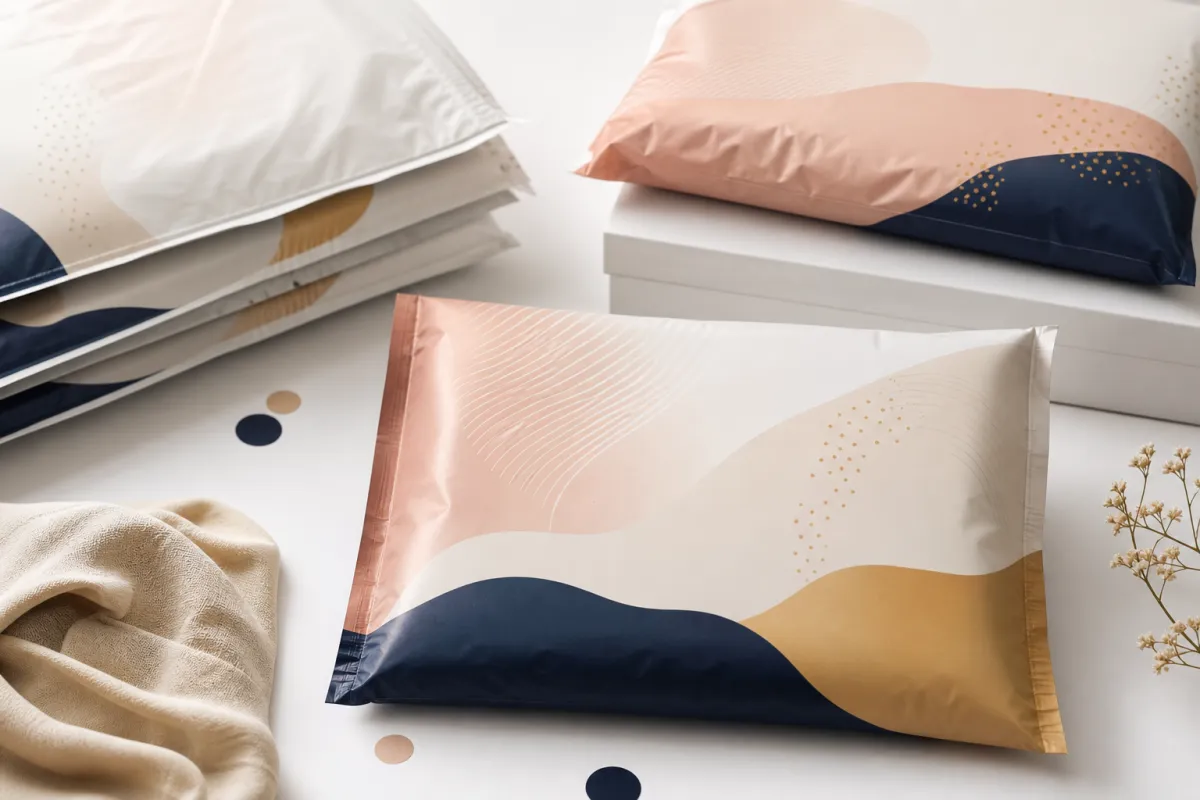
Launch day is not only a marketing event. It is also the first time a customer sees how the brand handles the physical side of the business, and that makes printed poly mailers for launches far more important than many teams expect at the start. A plain mailer gets the product out the door, while a branded mailer tells the customer that the company thought through the full experience, not just the product page.
Customers make fast judgments, and packaging feeds those judgments quickly. If the mailer looks sharp, the brand feels established. If the package arrives in a bag that is too large, too flimsy, or visually disconnected from the launch, the product can feel less valuable before it is even opened. I have seen buyers pay more for packaging when it helped support a premium price point, and I have also seen them regret the choice when the design became cluttered or the fulfillment team could not keep up. Printed poly mailers for launches sit right in the middle of that tension.
These are shipping bags made from polyethylene film, usually with an adhesive closure and sometimes a tear strip, tamper-evident seal, or dual adhesive strip for returns. The printing can stay simple or become highly detailed, but the purpose stays the same: use the outer shipper to carry the launch identity without adding much weight or much freight cost. For apparel, soft goods, accessories, supplements, and subscription-style products, printed poly mailers for launches are often the cleanest balance of branding and practicality.
Launch packaging differs from standard fulfillment packaging because of timing pressure. The branding has to be ready on time, the artwork has to hold up on a flexible surface, and the mailer size has to fit the actual packed product, not the rendered mockup. That is why printed poly mailers for launches should be treated as a launch input, not an afterthought. The earlier the packaging gets locked in, the easier it is to coordinate inventory, photos, inserts, and shipping labor.
There is also an emotional side that can be easy to underestimate. A launch often carries a story, and packaging helps turn that story into something tangible. A thoughtfully printed mailer can make the customer feel like they received something current, limited, and worth opening right away. That feeling is especially useful for small brands trying to look more mature, because printed poly mailers for launches can stretch the perceived value of a product without forcing the brand into expensive corrugated boxes.
From a packaging buyer's point of view, the question is not, "Can we print the bag?" A stronger question is, "Can the bag support the launch in a way that makes operations easier, not harder?" Once you frame it that way, printed poly mailers for launches become a practical branding tool instead of a decorative extra.
How Printed Poly Mailers for Launches Work in Real Production
To understand printed poly mailers for launches, it helps to look at what is actually happening in production. The bag itself is usually a film structure made from low-density polyethylene or a co-extruded blend that gives the mailer its strength, sealability, and moisture resistance. Common thicknesses range from about 2.5 mil to 4 mil, with heavier gauges used when the product is bulky, the route is rough, or the brand wants a stiffer feel. Thicker is not automatically better, but a mailer that is too thin can stretch, split, or look limp once packed.
The structure usually includes a peel-and-seal adhesive closure, and many mailers add a return adhesive strip or a second seal for re-use. Some include a perforated tear strip so the customer can open the package cleanly without scissors. Those details sound minor, yet they matter in the warehouse. A tear strip that rips too easily can fail in transit, while a closure that grabs too aggressively can slow pack-out. Good printed poly mailers for launches should support the line, not fight it.
Printing is where the branding layer comes in. Most suppliers use flexographic printing for repeatable production on film, though some projects lean on digital or gravure depending on quantity, artwork complexity, and the desired finish. The biggest production issue is not whether the logo is present. It is whether the artwork was designed for a flexible surface that bends, stretches, and wraps around folds. Fine type, low contrast, and tiny decorative lines can disappear faster on a mailer than they do on a screen. That is why printed poly mailers for launches usually perform best with bold shapes, strong contrast, and a layout that reads quickly at arm's length.
Artwork prep typically includes dielines, color matching, and proofing against the final bag size. If the design wraps across seams or closure zones, the printer needs to know that early. If the launch has more than one SKU, the brand should also confirm whether all versions will share the same base structure or whether each variant needs a different message, color band, or product cue. The more versions you introduce, the more important it becomes to manage the artwork carefully, because printed poly mailers for launches can get messy fast when every product variant is treated like a separate new project.
There is a fulfillment side too, and this is where the packaging either earns its keep or creates frustration. Mailers are usually packed flat in cartons, stored near the packing station, and pulled in batches during fulfillment. On a launch day, that means the team must be able to grab the right size quickly, insert the order, apply any internal labels or packing slips, and seal the bag without slowing down shipping. If the mailer is oversized, too slippery, or hard to organize, the launch volume can grind the station down. Good printed poly mailers for launches behave almost like a tool in the workflow.
For teams that want to validate parcel durability, industry testing standards can help. ISTA methods are commonly used to simulate parcel handling and distribution stress, and resources at ISTA can help buyers understand how shipping tests are framed. For brands that want to think through sustainability claims carefully, the EPA's recycling guidance at EPA recycling guidance is a useful reference point, especially if the launch includes paper inserts or mixed-material components. None of that replaces a practical pack-out test, but it does give the buyer a better frame for evaluating printed poly mailers for launches.
Cost and Pricing Factors for Printed Poly Mailers
Pricing is where many launch teams start, and that is understandable, because printed poly mailers for launches can vary a lot depending on size, quantity, and print setup. A plain stock mailer is usually the lowest-cost route, but once you add custom printing, the price begins to reflect artwork prep, plate setup, color count, and the production run itself. For small launches, the per-unit premium is noticeable. For larger runs, the branding cost gets spread out and becomes easier to justify.
Several factors drive the quote. Quantity is the biggest one, because larger runs generally reduce the unit cost. The number of print colors matters as well, since more colors usually means more setup and more passes through the press. Material thickness changes cost, too. A 2.5 mil mailer is usually less expensive than a 4 mil structure, but the heavier film may be worth it if the product is dense or if the brand wants a more substantial hand feel. Specialty finishes, matte textures, metallic ink, white ink underlays, and dual-adhesive return features all add cost. That is the reality of printed poly mailers for launches: every extra feature has a price tag attached.
Timing also matters. Rush jobs can raise the cost quickly because they compress proofing, production, and freight into a shorter window. If the launch needs split shipments to multiple locations, freight complexity can add another layer of cost. A brand that plans ahead can often get a much better outcome than one that asks for a last-minute turnaround. The money saved by ordering early usually outweighs the stress of trying to rescue a late order of printed poly mailers for launches.
Artwork complexity can quietly change the bill as well. If the launch includes multiple SKUs or seasonal artwork, each variation may need separate proofing, plate changes, or setup adjustments. A design that looks simple on a computer screen may still require extra work if it uses precise color matching or if the logo sits close to the seam. That is why buyers should ask how many revisions are included, whether there are art charges, and how much flexibility they have if the launch graphics change after approval. With printed poly mailers for launches, the details are rarely free.
There are also hidden costs that do not show up in the first quote. Storage matters if the order arrives early and needs to sit in inventory. Overages matter if the launch performs better than expected and the brand needs more units fast. Reprints matter if the artwork changes midstream. Compatibility matters if the mailer must work with insert cards, pack slips, or automated labeling equipment. Good buyers look beyond the quote and ask how the packaging will behave once it is in use. That is the point at which printed poly mailers for launches prove smart or prove expensive.
For a quick comparison, here is a practical way to think about common options.
| Option | Typical Unit Range | Best For | Tradeoffs |
|---|---|---|---|
| Plain stock mailer with label | $0.10-$0.18 | Very tight budgets, basic fulfillment | Lowest branding impact, less launch presence |
| Single-color printed mailer | $0.18-$0.28 | Simple logos, strong repeatability | Limited visual depth, still needs artwork setup |
| Full-color custom mailer | $0.28-$0.55 | Launch graphics, campaigns, retail-ready presentation | Higher setup cost, more proofing attention needed |
| Heavy-gauge or specialty finish mailer | $0.40-$0.80 | Premium launches, dense products, strong tactile feel | Higher spend, longer lead time, more testing recommended |
A useful rule of thumb is to compare the packaging cost against the value it adds to the first impression, not just the unit price alone. A launch that uses printed poly mailers for launches may cost more than a plain bag, but it can also make the product feel more intentional and better aligned with the brand's pricing. For many teams, that tradeoff is easy to defend once they see the finished shipment next to the product itself.
Step-by-Step Process and Timeline for Launch Orders
Printed poly mailers for launches work best when the process is mapped backward from the ship date. That sounds obvious, but in practice many teams start with artwork and only later realize that the mailer size, lead time, and freight window all need to fit around the launch schedule. A better approach is to lock the product dimensions first, then choose the bag size, then build the artwork around the actual pack-out.
The first step is sizing. Measure the finished product, not just the item before accessories, inserts, tissue, or folded elements are added. If the order includes more than one SKU, test the largest pack and the smallest pack before selecting the final mailer dimensions. That way you avoid a bag that is too tight for the biggest order or too loose for the smallest one. A well-sized bag makes printed poly mailers for launches feel neat, and it helps the packer work faster because the order slips in without forcing the film.
Next comes artwork. The design team should place the logo, product cue, and any launch message into the dieline early, then review legibility at print size rather than on a laptop screen. If the design includes gradients or delicate line work, ask the printer how those elements translate to film. A proof should show where seams, edges, and seal zones fall so there are no surprises after production starts. With printed poly mailers for launches, the proof is not just a formality; it is the last chance to catch a layout issue before the run is committed.
After proof approval, sample production or a pre-production strikeoff can help the team confirm color, clarity, and finish. This is the point where a launch team should also test the pack-out process. Can the product go in without catching? Does the label land on a flat enough surface for scanning? Does the closure hold through repeated handling? These are the questions that matter when the goal is to move units efficiently. Printed poly mailers for launches can look perfect in a mockup and still need small adjustments once the warehouse starts using them.
Typical production timelines vary, but many custom orders take roughly 12-15 business days from proof approval to completion, with freight added on top. Larger orders, specialty finishes, or heavy seasonal demand can stretch that window. That is why launch teams should not wait until the last minute to finalize packaging. If the release date is fixed, the smarter move is to have the mailers approved and in transit before the marketing campaign goes live. For printed poly mailers for launches, the safest rule is simple: build a buffer, then protect that buffer.
Here is a practical launch order sequence:
- Confirm product dimensions and insert count.
- Choose the mailer size and material thickness.
- Approve artwork and dieline placement.
- Review proof, color, and print coverage.
- Run a packing test with real inventory.
- Schedule production and freight with buffer time.
- Receive extra units for overage and launch-day backup.
Printed poly mailers for launches should also be coordinated with any other launch components. If the brand is pairing the mailer with branded tissue, insert cards, or shipper labels, those elements should be checked together. A cohesive pack-out plan makes the launch feel complete, while a mismatched mix of materials can make even a well-designed bag feel disconnected. If you are building the full package, it may help to review Custom Packaging Products alongside Custom Poly Mailers so the outer shipper and the inner components work as one system.
Common Mistakes That Hurt Printed Poly Mailers for Launches
Most problems with printed poly mailers for launches are not dramatic. They are small misses that compound. A bag is ordered too late. The artwork looks fine on screen but turns muddy on film. The size fits one SKU, but not the other three. None of that feels fatal at first, yet each mistake can slow the line, increase waste, or make the launch look less polished than it should.
The first common mistake is choosing the wrong size. A mailer that is too large leaves excessive empty space and looks loose, which can make a premium product feel underpacked. A mailer that is too small puts pressure on the seal, the seams, and the packer. That is especially risky when the order includes folded apparel, accessories, or a thick insert card. For printed poly mailers for launches, the size should fit the finished pack, not the theoretical product dimensions.
The second mistake is assuming the artwork will translate automatically. Flexible film changes how a design reads. Tiny text blurs, dark colors can absorb detail, and light artwork can disappear if the contrast is too weak. Seam placement matters too. If the logo gets split across folds or sits too close to a seal, the whole bag can feel awkward. A cleaner design usually performs better than a busy one because printed poly mailers for launches need to be understood quickly, whether the customer sees them on a doorstep, a social post, or a warehouse conveyor.
The third mistake is ordering too late. Launch packaging should not be one of the final tasks squeezed in after product photos, website updates, and ad scheduling. It has its own lead time, and that lead time can be unforgiving if proofs go back and forth more than expected. I have seen teams assume they could save time by waiting until the product was nearly finished, only to discover that printed poly mailers for launches needed artwork tweaks, production slots, and freight time that did not fit the calendar.
The fourth mistake is overbranding. More graphics are not always better. If the bag carries too many messages, the logo loses impact and the launch theme becomes hard to read. A single strong visual system usually works better: one clear logo treatment, one product or campaign cue, and maybe one short line that reinforces the launch moment. That kind of restraint gives printed poly mailers for launches a cleaner, more confident look.
The fifth mistake is underestimating transport conditions. Poly mailers are good at handling moisture and everyday abrasion, but they are still shipping bags, not armored containers. If the product is sharp, heavy, or likely to shift around inside, the internal pack needs to be secure before the outer mailer is sealed. Stack pressure, conveyor scuffing, and rough carrier handling can all show up before the customer ever opens the parcel. Good launch teams test for those realities instead of assuming the carrier will be gentle. That is where printed poly mailers for launches protect the experience or expose weak pack-out choices.
The best launch packaging is not the loudest one. It is the one that looks intentional, survives transit, and lets the product do the talking while the mailer quietly supports the brand.
If you want a deeper benchmark for pack-out resilience, testing against parcel stress methods, including the kinds of methods discussed by ISTA, can keep the team grounded in real shipping conditions. For many printed poly mailers for launches, that one bit of diligence saves a lot of rework later.
Expert Tips to Make the Launch Feel Bigger
There is a difference between a package that is decorated and a package that feels like part of the product story. The better printed poly mailers for launches usually do less, but they do it more deliberately. Strong packaging does not need to shout. It needs to read quickly, hold up under handling, and connect the shipment to the moment the customer has been waiting for.
My first tip is to simplify the visual system. Pick one focal