Buyer Fit Snapshot
| Best fit | Printed Poly Mailers Premium Quality projects where brand print, material claims, artwork control, MOQ, and repeat-order consistency need to be specified before quoting. |
|---|---|
| Quote inputs | Share finished size, material target, print colors, finish, packing count, annual reorder estimate, ship-to region, and any compliance wording. |
| Proofing check | Approve dieline scale, logo placement, barcode or warning zones, color tolerance, closure strength, and carton packing before bulk production. |
| Main risk | Vague material claims, crowded artwork, missing packing details, or unclear freight terms can make a low unit price expensive after revisions. |
Fast answer: Printed Poly Mailers Premium Quality: Material Claims, Seal Quality, and Freight Cost should be specified like a repeatable production item. The safest quote records material, print method, finish, artwork proof, packing count, and reorder notes in one written spec.
Production checks before approval
Compare the actual filled-product size with the drawing, then confirm tolerance on folds, seals, hang holes, label areas, and retail display edges. Reserve space for logos, QR codes, warning copy, and material claims before decorative graphics fill the panel.
Quote comparison points
Review material grade, print process, finish, sampling route, tooling charges, carton quantity, and freight assumptions side by side. A quote is only useful when the supplier can repeat the same color, closure quality, and packing count on the next order.
Most brands still treat mailers like disposable shipping shells. That mistake shows up fast. I’ve stood on warehouse floors in Dongguan and watched a flimsy bag fold, wrinkle, and scream “cheap” before it even left the pallet. Honestly, it’s a little painful to watch. The opposite is true too. Printed Poly Mailers premium quality can change how a customer feels before they touch the product, especially when the bag is made from a 2.5 mil co-extruded LDPE/LLDPE film with a clean matte finish and a strong adhesive strip.
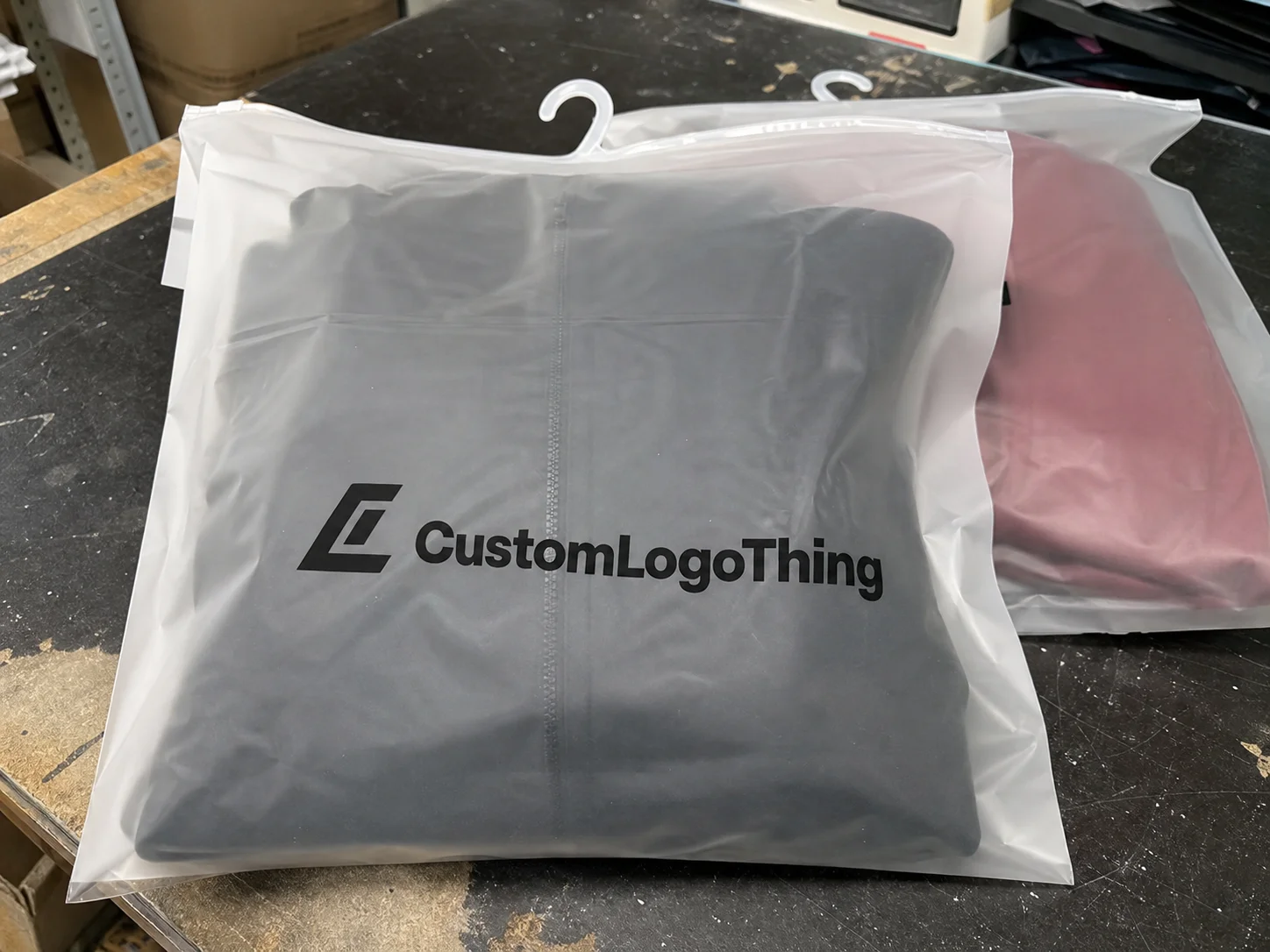
Printed Poly Mailers are lightweight shipping envelopes made from plastic film, usually used for apparel, soft goods, and other non-fragile items. Add a logo, a brand pattern, a return message, or a bold color block, and the mailer stops being just a shipping container. It becomes a brand signal. When the film is stronger, the seal cleaner, and the print sharper, you are looking at Printed Poly Mailers Premium quality, not the bargain-bin version that wrinkles, stretches, and looks tired after one trip through a parcel network. For most factories I’ve visited in Shenzhen and Foshan, the difference starts with the material spec, not the artwork.
I think a lot of buyers underestimate how much outer packaging shapes the whole unboxing mood. A customer may never think about a 2.5 mil co-extruded film or a 1-color flexo plate, but they absolutely notice a clean white-on-black print, a smooth adhesive strip, and a mailer that arrives without scuffs or split seams. That is the quiet power of Printed Poly Mailers premium quality. It does the job without making a speech about it, which is more than I can say for half the packaging samples I’ve rejected at a table in Guangzhou.
Printed Poly Mailers Premium Quality: Why They Stand Out
On paper, two mailers can look nearly identical. Same size. Same style. Same basic purpose. Then one gets tossed into a truck, stacked under cartons, and dragged across a sorting belt while the other returns with the logo still crisp and the seams still intact. That gap is where printed poly mailers premium quality earns its keep. On a 10,000-piece program, that gap can mean the difference between a $0.15-per-unit mailer and a $0.29-per-unit package that actually survives the trip from a warehouse in Yiwu to a customer in Texas.
When I visited a fulfillment operation in southern China, the operations manager showed me two sample batches side by side: one was a standard mono-layer mailer, the other a higher-grade co-extruded option with cleaner edge seals. The cheaper version had more surface waviness and slightly uneven opacity. The premium one looked calmer, if that makes sense. It lay flatter, printed better, and gave the impression that someone had cared about the details. I remember thinking, “Yep, this is the bag that gets picked first.” The line was running at about 6,000 units per shift, so there was no room for sloppy seals or sticky adhesive strips that failed in humid weather.
printed poly mailers premium quality usually means five things at once: stronger film, better seal integrity, sharper graphics, more consistent thickness, and a cleaner surface finish. In packaging, those traits are not cosmetic extras. They influence puncture resistance, tear resistance, brand presentation, and how likely a package is to survive rough handling without awkward failures. And by awkward failures, I mean the kind that end up in a customer service ticket with a photo and a very unhappy subject line. If your customer sees a split seam after a 14-day wait, nobody is talking about your logo anymore.
That matters because the mailer is often the first physical interaction a customer has with your company. Before the shirt, the sample kit, or the promotional insert, they see the outside. A premium mailer can make a $28 garment feel more intentional. A weak one can make a polished brand feel rushed. I’ve seen that exact contrast in client meetings in Los Angeles and Ningbo where one sample looked “wholesale” and the other looked “retail-ready.” Same product. Different perception. Same freight bill, too, which made the bad sample even more annoying.
For e-commerce brands shipping thousands of units, printed poly mailers premium quality also has operational value. Better film can reduce damage complaints, better seals can reduce returns caused by transit failures, and better print consistency can keep brand standards from drifting across reorder cycles. That mix of marketing value and functional value is why premium mailers punch above their weight. A well-made mailer can also speed packing by 10 to 15 seconds per order if the adhesive strip opens and closes cleanly, which sounds small until you multiply it across 8,000 shipments.
And no, premium does not always mean expensive in an absolute sense. It means better fit for purpose. A 2.75 mil mailer with a clean adhesive closure may save more money over a year than a cheaper 2.0 mil bag that splits on corners, triggers replacements, and creates customer service headaches. Packaging math has a way of surprising people. It also has a way of making “cheap” look very expensive after the third complaint email. I’ve watched buyers save $400 on the first order and lose $4,000 in replacements, freight, and repacking labor by month two.
How Printed Poly Mailers Premium Quality Is Made
printed poly mailers premium quality starts before the printing press ever turns on. The first step is usually film extrusion, where resin is melted and formed into a plastic sheet. Depending on the target performance, manufacturers may use LDPE, LLDPE, or a co-extruded structure with multiple layers. That layered construction is one reason premium mailers often feel stronger without becoming dramatically thicker. On a line I saw in Suzhou, the core layer handled toughness while the outer skin improved print adhesion and surface smoothness.
Here is the production flow I’ve seen on several packaging lines, including one facility where the operator kept a punch list taped to the machine frame:
- Film extrusion creates the base material.
- Layering improves toughness, opacity, or puncture resistance.
- Surface treatment prepares the film for ink adhesion.
- Printing applies logos, artwork, or messaging.
- Curing or drying locks the ink in place.
- Slitting and sealing form finished mailers.
- Final inspection checks color, seals, and dimensions.
The print method matters a lot. Flexographic printing is popular for efficiency on medium and large runs. Rotogravure is often used when a brand wants extremely consistent coverage, fine detail, and deeper color saturation. Digital printing is useful for shorter runs, more variable artwork, or test launches. Each path can produce printed poly mailers premium quality, but each brings different economics and tolerances. For example, a 5,000-piece flexo run in Guangzhou might land around $0.15 to $0.18 per unit, while a smaller digital pilot in a U.S. facility can push closer to $0.32 per unit because setup and ink usage spread across fewer bags.
I once sat through a supplier negotiation where a buyer insisted that digital printing would always look “more premium” than flexo. That is not automatically true. The result depends on the artwork, the film surface, and the press setup. A well-tuned flexo line can outperform a poorly managed digital job, especially if the customer wants spot colors, bold blocks, and high throughput. Process discipline matters more than slogans. Suppliers love a shortcut. Quality does not. On one job out of Dongguan, the supplier changed doctor blade pressure and fixed a hazy logo edge in under 20 minutes. That was not magic. That was competence.
Ink adhesion is another piece people skip over. If the film surface has not been treated correctly, ink can smear, rub, or haze after packing. Registration accuracy matters too, especially for logos with fine borders or small type. When a print drifts by even a millimeter or two, the mailer can start looking off-center, and that visual flaw is hard to unsee once it catches your eye. A 0.5 mm shift on a 10 x 14 inch mailer may not sound dramatic, but on a clean brand layout it looks like the whole design is leaning.
Surface treatment, corona treatment, and drying time all influence whether printed poly mailers premium quality actually holds up in the field. That is why premium quality is rarely just about the substrate or just about the print. It is the interaction between both. Strong film with weak print is disappointing. Great print on poor film is worse. You need both sides of the equation to cooperate, and you need a supplier who knows the difference between “looks fine in daylight” and “holds up after 72 hours in a hot trailer.”
For brands that care about packaging standards, it helps to look at broader testing and sustainability guidance too. Organizations such as ISTA and EPA publish useful frameworks for transport performance and material stewardship. Those are not mailer-only manuals, but they anchor good packaging decisions in real-world conditions rather than guesswork. If your packaging line ships 20,000 units a month, the test data matters more than the sales pitch.
Key Factors That Affect Printed Poly Mailers Premium Quality
Thickness gets discussed early in almost every buying conversation, and for good reason. Film thickness, often measured in mils, affects protection, feel, and cost. A 2.0 mil mailer may be enough for lightweight apparel. A 3.0 mil version may be better for heavier garments, sharp accessories, or products that get shoved into bins and carted around a facility all day. In printed poly mailers premium quality, thickness is not the only variable, but it is one of the easiest to compare. At one factory in Xiamen, I saw two nearly identical bags—same dimensions, same print—but the 3.0 mil version survived a corner-drop test the 2.0 mil bag failed on the first try.
That said, thicker is not always smarter. Add unnecessary film and you raise cost, slightly increase shipping weight, and can even make the mailer feel stiff in a way that works against the brand experience. I have seen buyers overcorrect after one damage incident and order much heavier film than they actually needed. The result was a more expensive package that did not deliver enough extra value. Balance matters. Overkill is still overkill, even if it has a nice logo on it. A 3.5 mil bag for a 180 gsm cotton tee is usually just paying for anxiety.
Seal quality is just as important. Side seams, bottom seals, and the top closure all need to hold during compression and transit. If the seal is weak, a beautiful printed surface will not save the package. On a factory floor in Guangdong, I watched an inspector pull random mailers from a batch and stretch-test the seams by hand before sending them to the lab for verification. That kind of scrutiny is one reason premium mailers often behave better in real shipping conditions. Most good suppliers will also run a peel test on adhesive strips and target a seal strength that holds through 25 to 30 pounds of compression.
printed poly mailers premium quality also depends on how well the artwork reproduces. Color accuracy, registration, ink density, and finish all shape perception. A crisp black logo on a matte white mailer feels different from a washed-out gray logo on a glossy surface. Thin fonts are a common problem. So are tiny QR codes that look fine on screen but fail once printed on a flexible plastic substrate that moves under pressure. If your QR code is smaller than 0.75 inches square, test it on actual film before approving the run. Screens lie. Plastic does not care.
Pricing changes with each of these choices. Here is a practical way to think about it:
| Option | Typical Effect on Cost | Typical Effect on Quality | Best For |
|---|---|---|---|
| 2-color flexo on standard film | Lower unit cost at 5,000+ pieces | Good for simple branding | Apparel, basic e-commerce orders |
| 4-color flexo on co-ex film | Moderate increase, often 10% to 25% more | Strong visuals and better durability | Growing brands with repeat orders |
| Gravure with specialty finish | Higher setup cost, best at larger runs | Very consistent image quality | Established brands, high-volume programs |
| Digital print for short runs | Higher per-unit cost on small quantities | Great for versions, prototypes, launches | Seasonal lines, limited drops |
For context, I’ve quoted standard branded mailers at around $0.18/unit for 5,000 pieces in a simple print format, while premium configurations with heavier film, more colors, and lower volume can move into the $0.24 to $0.38 range or higher depending on the structure. On one 10,000-piece order out of Ningbo, the buyer paid $0.15 per unit for a 2-color print on 2.5 mil film, but the same artwork on a 3.2 mil co-ex structure in a smaller 3,000-piece run came back at $0.31 per unit. Those numbers are not universal, of course. Artwork complexity, shipping destination, and supplier capacity can shift them quickly. But if a quote seems dramatically below that range, I start asking about ink coverage, film consistency, and seal testing. If the answer is vague, that’s usually your warning light flashing.
The other hidden factor is the tradeoff between presentation and shipping efficiency. A beautiful mailer still needs to be light enough to protect postage economics. That is why printed poly mailers premium quality is less about maxing out every spec and more about choosing the right combination of film, print, and closure for the products you ship. A mailer that costs $0.22 and saves one replacement shipment every few hundred orders is usually better than a $0.16 bag that only looks smart in a spreadsheet.
What Makes Printed Poly Mailers Premium Quality a Better Choice?
People ask me this all the time in supplier meetings, usually right after they’ve seen the price gap. Fair question. printed poly mailers premium quality can look like a small upgrade on a quote sheet, but it behaves like a much bigger upgrade once the order starts moving. Better film gives you puncture resistance. Cleaner sealing gives you fewer transit failures. Sharper print gives you stronger brand recognition. Put those together and you get packaging that pulls its weight instead of just occupying space.
I’ve seen a standard poly mailer fail on a corner edge, then watched the same product in a premium mailer survive a rough conveyor run without a scratch. That is not theory. That is the kind of thing you notice after enough factory visits to stop trusting sample photos. Better quality also helps with consistency across reorders. If a brand runs six batches a year, a stable spec keeps the mailer looking like the same mailer every time. That matters more than people think. Customers remember inconsistency faster than they remember the one nice batch.
There is also a labor angle. A well-made mailer opens at the seam cleanly, accepts the product without fighting back, and seals without extra effort. That can shave seconds off each packing cycle. Multiply that by thousands of orders and you have real savings in labor efficiency. A team in a busy fulfillment center does not need packaging that slows them down or makes them redo a seal because the adhesive strip curled or failed to grab. Nobody has time for packaging drama at 4 p.m. on a Friday.
printed poly mailers premium quality also supports better customer perception. A neat, professional mailer can make a basic garment feel more retail-ready. It can make a subscription box or sample shipment feel intentional. And if your brand lives on social media, packaging gets photographed. A decent outer bag may not win a prize, but a bad one can absolutely get noticed for the wrong reasons. The internet loves a packaging fail. Your customer service inbox loves it even less.
So yes, the better choice is often the one that looks a little more expensive on day one. But once you factor in transit survival, presentation, and packing speed, the premium option frequently makes more sense. Cheap mailers are cheap until they start teaching you why they were cheap.
Step-by-Step Process for Choosing Printed Poly Mailers Premium Quality
If you are selecting printed poly mailers premium quality for a brand or fulfillment program, start with the product, not the packaging trend. I know that sounds obvious. It still gets missed. I’ve seen buyers order a glossy mailer because it looked premium in a photo, only to discover that their matte black leggings picked up scuffs so easily that the outer bag started to look tired before it left the warehouse. Beautiful. Completely useless. Love that for everyone involved. A buyer in Seattle once told me she approved a silver mailer in 30 seconds and then spent two weeks reworking it because it showed fingerprints like a crime scene.
Step 1: Define your shipping needs
Start with product weight, shape, and fragility. A soft T-shirt with no hardware has a different risk profile than denim with rivets or a boxed item with sharp corners. Write down your average order size, your largest item, and the kinds of damage your team has actually seen. If you ship mostly garments, a lighter film may be enough. If you regularly ship multiple units or items with rigid edges, you may want stronger co-ex film and reinforced seals. A 250 gsm hoodie behaves differently from a single tee, and packaging should respect that difference.
Step 2: Match structure to protection
Choose film thickness and structure based on the risk, not the catalog photo. Co-extruded films often give better balance because one layer can provide toughness while another contributes printability or opacity. For printed poly mailers premium quality, that balance is usually more useful than just choosing the thickest option available. Ask for the exact mil reading, not just “heavy duty,” because the phrase can hide a lot of variation. I usually want the supplier to put the target at 2.5 mil, 3.0 mil, or 3.5 mil in writing, plus the tolerance range in black and white.
Step 3: Choose the print layout carefully
Brand artwork should be simple enough to reproduce cleanly on plastic film. Large logos, bold typography, and solid blocks tend to perform well. Fine lines, tiny legal text, and detailed gradients can be risky unless the supplier has excellent print control. I usually tell clients to think in terms of “warehouse visibility” and “customer perception” at the same time. If the mailer looks good from three feet away and still reads clearly in a hand inspection, you are on the right track. On a 14 x 19 inch mailer, one strong logo and one return-message line usually beats four crowded design elements every time.
Step 4: Request samples and stress-test them
Do not approve a mailer from a digital mockup alone. Request physical samples and test them under real conditions: stacking, tearing, scuffing, label adhesion, and closure performance. Put a sample through the same handling that your team uses every day. If you can, run it through a short shipping trial using Custom Poly Mailers with actual product loads. That is where weak seals and awkward sizing reveal themselves fast. A 1,000-piece pilot usually tells you more than six polished email revisions ever will.
Step 5: Confirm timeline, proofing, and reorder rhythm
Production timing matters because premium quality often includes more checkpoints. A normal sequence may be 2 to 4 days for artwork setup and proofing, 8 to 15 business days for production after proof approval, and then transit time depending on origin and destination. For a factory in Shenzhen shipping by sea to the U.S. West Coast, the full cycle can land around 20 to 35 calendar days. For air freight on a rush order, it can be much faster, but you will pay for it. If you are building a stable program, lock in reorder points so you do not end up placing a rush order that forces compromises.
A client once told me, after a late-season reprint scramble, that the “real cost” was not the higher unit price but the two days their team spent repacking orders because the first batch arrived with a closure issue. That is the kind of lesson only operational packaging teaches. Pretty mailers are nice. Reliable ones are nicer. A 12-business-day production window beats a 7-day miracle that arrives with bad seams and no one to blame but the purchase order.
Common Mistakes When Buying Printed Poly Mailers Premium Quality
The first mistake is choosing by price alone. I understand the temptation. Procurement teams feel pressure, and packaging often looks like an easy place to save money. But the lowest quote can hide thinner film, weaker sealing, poor print control, or a lower-grade adhesive strip. If you are buying printed poly mailers premium quality, the unit price should be evaluated alongside failure risk and brand impact. A quote of $0.12 per unit at 5,000 pieces can sound great until you learn the adhesive fails in humid warehouses in Miami or Singapore.
The second mistake is overdesigning the artwork. Too many small details, hairline fonts, or low-contrast colors can turn a polished concept into a muddy print. I saw this happen with a beauty brand that wanted eight brand elements, a slogan, a QR code, and a textured background on a small mailer. On the screen, it looked elegant. On the film, it looked crowded. We simplified it to two colors, a stronger logo lockup, and a clean message panel. The final result looked more expensive, not less. The supplier in Foshan thanked us, which is usually a good sign.
The third mistake is skipping sample review. Warehouse lighting is harsher than a design screen. So are transport conditions. What looks sharp in a PDF may look too dark, too glossy, or too busy when you hold the actual mailer. If a supplier cannot provide printed proofs and physical samples, that is a warning sign. Good suppliers expect you to check. Great ones practically insist on it. I like to inspect samples under 5000K lighting and again under the yellow warehouse bulbs that make everything look slightly guilty.
The fourth mistake is ordering the wrong size. A mailer that is too small may strain at the seams; one that is too large lets product shift around and looks sloppy on arrival. In both cases, the packaging works against the brand. With printed poly mailers premium quality, size fit is part of the premium feel. A proper fit signals control. A sloppy fit says someone guessed. A 12 x 15 inch mailer for a folded hoodie is one thing; using a 19 x 24 inch bag for the same item because someone wanted “extra room” is just waste dressed up as caution.
The fifth mistake is ignoring functional details like opacity, adhesive strip performance, and the product category. Some items need better privacy. Some need stronger closures. Some need packaging that can handle irregular shapes without ballooning. If the bag is used for products with sharp edges, a standard structure may not be enough. For some categories, you may need to check compliance expectations, recycling language, or retailer-specific standards. The packaging itself has to earn its place. I’ve seen Shopify brands get away with almost anything; department store vendors in Chicago or Munich usually do not.
There is also a smaller but costly mistake: not confirming tolerances in writing. A supplier may allow a slight variation in thickness, size, or color density. That is normal. What hurts is discovering those tolerances after the order is already in production. Clear specs reduce drama later. And fewer drama episodes is a lovely packaging strategy, frankly. I would rather spend 20 minutes writing a better spec than 20 hours arguing about why a darker blue is “close enough.”
Expert Tips to Maximize Printed Poly Mailers Premium Quality
If you want the best outcome, treat printed poly mailers premium quality like a controlled system, not a one-off purchase. The best results usually come from clear specs, disciplined sampling, and steady supplier communication. The buyers who get the most reliable packaging are rarely the ones shouting for the cheapest quote. They are the ones who know exactly what they want and can explain why. In my experience, the smartest procurement teams are the boring ones: they carry a spreadsheet, a sample swatch, and a list of questions that makes suppliers sweat a little.
Test a small production run before you scale. That matters especially if you have gradients, fine text, metallic-looking ink effects, or exact brand colors. Even small differences between screen and film can change the finished impression. One apparel client I advised ran a 1,000-piece pilot before moving to a 20,000-piece order. That pilot exposed a registration issue around the logo tail. Fixing it early saved them a far messier reprint later. Less chaos, fewer apologies, happier warehouse staff. Everyone wins. The pilot cost them about $320 in sample production and saved them close to $2,700 in rework and freight, which is a decent trade.
Use colors that still read as your brand if the batch variation shifts slightly. Packaging print is not like a perfectly controlled studio render. There will be minor differences between runs. Brands that choose flexible palettes and strong contrast usually fare better over time. That is especially true for printed poly mailers premium quality, where the surface is forgiving in some ways and unforgiving in others. A dark navy and a clean white logo usually travel better than a delicate beige gradient that disappears under warehouse LEDs.
Be precise with your supplier. Write down size, thickness, material, print colors, finish, closure type, tolerance limits, and target quantity. Clear communication is not a soft skill here; it is a cost-control tool. The best suppliers appreciate exact instructions because they know fewer assumptions mean fewer mistakes. I’ve had suppliers thank me for a painfully detailed spec sheet. That tells you everything you need to know. If the factory in Zhongshan knows the job is 14 x 19 inches, 3.0 mil, 2-color flexo, matte finish, and 12-15 business days from proof approval, the order usually runs smoother.
Storage matters too. Heat, humidity, and rough stacking can affect adhesive performance and the way the film looks before packing. I’ve seen mailers stored near loading bays come out with curled edges or closure strips that felt weaker than the same product stored in a climate-controlled room. If your warehouse runs hot or humid, build that into your handling plan. A batch stored for three weeks at 90°F in a trailer lot will not behave like one kept at 68°F in a clean pack room.
One more thing: if your packaging program is growing, make your supplier show you consistent documentation, not just nice samples. Ask for spec sheets, print approvals, and inspection notes. If you are building a broader packaging system, the product range at Custom Packaging Products can help you compare mailers with related formats before you commit. It is much easier to standardize when the paperwork is real and the dimensions are not a mystery.
For brands that care about recycled content, end-of-life handling, or supplier accountability, it is worth checking materials and sustainability claims against sources such as FSC when paper components are involved, even if your main mailer is plastic-based. Not every brand needs the same certifications, but strong documentation builds trust. If a supplier says “eco-friendly” and cannot tell you whether the film is 30% post-consumer recycled content or just a lighter gauge, keep asking until the answer is useful.
Action Steps to Order Printed Poly Mailers Premium Quality
Getting printed poly mailers premium quality ordered correctly is easier when you compress the decision into a practical checklist. I like a one-page spec sheet because it removes vague language from the process. Vague language is where quality drifts. If the buyer says “make it premium,” the factory hears “interpret this however you like,” and that is how problems are born in a warehouse outside Shenzhen.
Start with these details:
- Size in inches or millimeters, including usable interior space.
- Thickness in mils or microns, with a preferred range if you are still testing.
- Material structure such as LDPE, LLDPE, or co-ex film.
- Print colors, artwork placement, and any white ink requirements.
- Closure type, including adhesive strip performance and tamper-evident needs.
- Order quantity for the first run and the expected annual volume.
Then ask for pricing at multiple volumes. A quote for 3,000 units can look very different from one for 10,000. On premium jobs, setup fees, plate charges, and shipping all play a role. I usually recommend asking for at least three breakpoints so you can see how the unit cost moves as volume changes. That is the only way to make an informed comparison. For example, a supplier in Dongguan may quote $0.23 per unit at 3,000 pieces, $0.17 at 5,000 pieces, and $0.14 at 10,000 pieces if the artwork stays simple and the film spec does not change.
When samples arrive, review them with a short checklist. Does the seal hold after a hand tear test? Is the print crisp at normal reading distance? Does the bag remain opaque under bright warehouse lighting? Does the adhesive strip close cleanly without curling? Does the size work with the actual product load? If one of those answers is weak, do not talk yourself into “good enough.” “Good enough” is how reorders become headaches. I would rather delay a launch by three days than accept 20,000 bad bags and pretend the problem is temporary.
Set a reorder threshold early. If you wait until inventory is nearly gone, you may be forced into a rush order with fewer options and less room for quality control. That is how premium packaging becomes average packaging. The best programs keep enough buffer to protect both lead time and standards. A healthy buffer is usually 20% to 30% of your next quarter’s usage, depending on how hard it is to resupply from your factory in Shenzhen, Ningbo, or Ho Chi Minh City.
Finally, document what happened after the first order. Ask warehouse staff about packing speed, seal behavior, and damage rates. Ask customer service whether complaint patterns changed. Ask marketing whether the mailer supported repeat purchases or social sharing. Premium packaging should earn feedback, not just compliments. That feedback loop is what turns one successful order into a better long-term program. If your cost per unit is $0.16 and your complaint rate drops by 2%, the packaging just paid for itself faster than most people expect.
If you want a simple way to start, compare options inside Custom Poly Mailers, then cross-check them against your broader packaging needs through Custom Packaging Products. The right choice usually becomes obvious once the specs are laid out clearly. And if it still is not obvious, the supplier probably has not given you enough real numbers yet.
“A mailer is only a shipping bag if you let it be one. Once the customer sees your logo on that outer layer, it becomes part of the product story.”
That line came from a client meeting I had with a founder who had just moved from plain stock poly to a branded program in Austin. Three months later, she told me her team noticed fewer “cheap packaging” comments in post-purchase surveys. Was that entirely because of the mailer? Probably not. But the outer packaging helped shift the conversation, and that is often enough to justify the upgrade. She also said the reorder lead time of 12 to 15 business days from proof approval made planning much easier than the old scramble-based system.
FAQs
What makes printed poly mailers premium quality compared with standard ones?
printed poly mailers premium quality usually means stronger film, better sealing, cleaner print, and more consistent thickness. It also tends to mean a better customer-facing presentation, which can influence first impressions before the package is even opened. In practical terms, that could mean a 3.0 mil co-ex film, a tighter adhesive seal, and print that still looks sharp after 1,000 units have moved through a warehouse in Dallas or Hamburg.
Are printed poly mailers premium quality worth the higher price?
They can be worth it when brand image, product protection, and shipping reliability matter more than the lowest unit cost. The value is strongest for e-commerce brands that want packaging to support repeat purchases, social sharing, and fewer transit-related complaints. If a premium bag costs $0.18 instead of $0.13 but reduces reissues and returns by even a small margin, the math usually favors the better bag.
How do I choose the right thickness for printed poly mailers premium quality?
Choose thickness based on what you ship. Lightweight apparel may do fine with a thinner film, while heavier or sharper items usually need stronger construction. Ask suppliers for samples in different mil ranges and test them with real products before ordering. A 2.5 mil option may be fine for tees, but a 3.0 or 3.5 mil film is often safer for denim, jackets, or accessories with edges that can press through weaker material.
How long does production usually take for printed poly mailers premium quality?
Timeline depends on artwork approval, print method, order size, and supplier capacity. A typical process includes proofing, manufacturing, inspection, and shipping, so planning ahead matters if you want to avoid rush fees or compromise on details. In many factories, production is typically 12-15 business days from proof approval, with extra time for ocean freight from ports like Shenzhen or Ningbo if you are not shipping by air.
What should I check before placing an order for printed poly mailers premium quality?
Review sample print quality, seal strength, sizing, opacity, adhesive performance, and shipping fit. Also confirm pricing tiers, reorder minimums, and expected lead time for future orders. If the supplier cannot answer those questions clearly, keep looking. I would also ask for the exact factory location, the print method, and the tolerance on thickness, because “pretty close” is not a specification.
If I had to summarize the category in one sentence, I would say this: printed poly mailers premium quality is what happens when protection, print precision, and brand presentation all pull in the same direction. That is the standard worth aiming for. Not just because it looks better, but because it performs better where it counts—on the pack line, in transit, and in the customer’s hand. So the practical move is simple: define the product load, lock the spec in writing, test physical samples under real warehouse conditions, and only scale after the mailer proves it can handle the trip. That’s the cleanest way to buy once, buy right, and avoid paying for a cheaper mistake later.