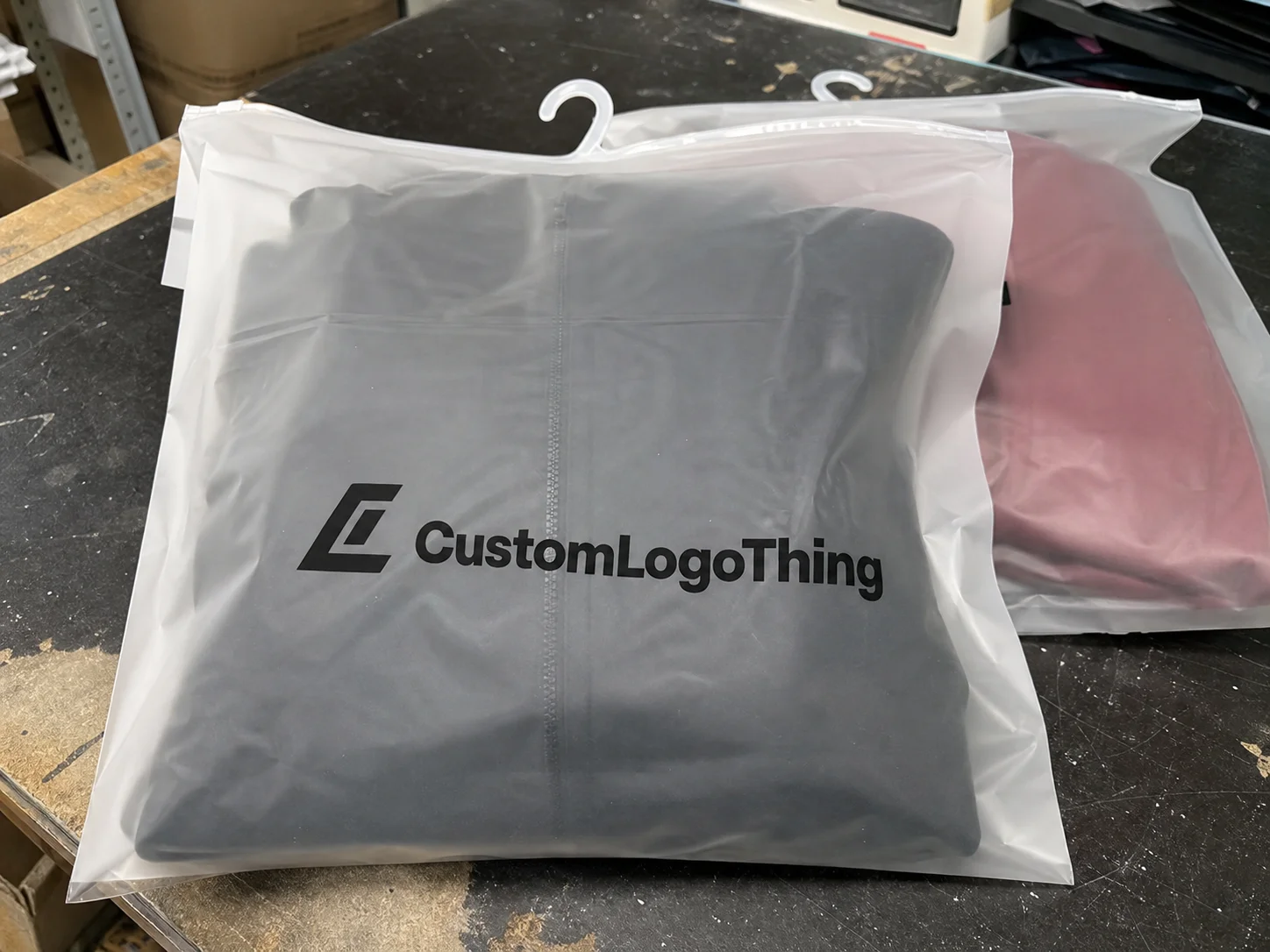
Buyer Fit Snapshot
| Best fit | Printed Poly Mailers Wholesale projects where brand print, material claims, artwork control, MOQ, and repeat-order consistency need to be specified before quoting. |
|---|---|
| Quote inputs | Share finished size, material target, print colors, finish, packing count, annual reorder estimate, ship-to region, and any compliance wording. |
| Proofing check | Approve dieline scale, logo placement, barcode or warning zones, color tolerance, closure strength, and carton packing before bulk production. |
| Main risk | Vague material claims, crowded artwork, missing packing details, or unclear freight terms can make a low unit price expensive after revisions. |
Fast answer: Printed Poly Mailers Wholesale: Specs, Pricing, MOQ should be specified like a repeatable production item. The safest quote records material, print method, finish, artwork proof, packing count, and reorder notes in one written spec.
Production checks before approval
Compare the actual filled-product size with the drawing, then confirm tolerance on folds, seals, hang holes, label areas, and retail display edges. Reserve space for logos, QR codes, warning copy, and material claims before decorative graphics fill the panel.
Quote comparison points
Review material grade, print process, finish, sampling route, tooling charges, carton quantity, and freight assumptions side by side. A quote is only useful when the supplier can repeat the same color, closure quality, and packing count on the next order.
I’ve watched Printed Poly Mailers wholesale go from a “nice branding touch” to one of those packaging decisions that quietly changes repeat purchase rates, freight costs, and complaint volume. I remember one apparel client meeting in Los Angeles where the owner kept waving around a plain white mailer like it was harmless. Cute. Except it was costing them more than they realized. Not in unit price. In the number of package photos customers posted with no logo, no color, and no reason to remember the brand. A mailer gets handled by the carrier, the receiving desk, and the customer before the product insert gets a single glance. That is a lot of impressions for one thin sheet of film, especially when the order ships from a warehouse in Shenzhen or Dongguan and lands on a doorstep in Chicago two weeks later.
Most businesses switch to printed Poly Mailers Wholesale for three practical reasons. They want stronger brand recall. They want lower shipping weight than boxes. They want a cleaner, more consistent presentation across every order channel. I’ve seen that play out in warehouse audits from Shenzhen to Chicago and in supplier meetings in Yiwu where a 2.5 mil mailer with a one-color logo beat a box on total landed cost by $0.24 per shipment. The numbers usually tell the same story. A lightweight polyethylene mailer can trim material and postage versus a corrugated shipper, while still giving you enough print area to put your logo, return instructions, QR code, or a short brand message where customers will actually see it. Honestly, I think that’s the part people underestimate: the package keeps marketing long after the ad budget has been spent.
There’s another angle that gets ignored in boardrooms. Printed mailers help operations as much as marketing. When the packout format is standardized, packing staff make fewer decisions, damage rates are easier to control, and the unboxing experience stops drifting all over the place. That matters if you ship 500 orders a week or 50,000. printed poly mailers wholesale is not just a branding buy; it is a packaging system choice. If you’re comparing options across Custom Poly Mailers, boxes, and paper mailers, the right answer usually comes down to the product, the postage class, and how much presentation control you actually need. For brands shipping from Atlanta, Dallas, or Ningbo, that decision can change labor by 10 to 20 seconds per order, which adds up fast at 8,000 units a month.
Printed Poly Mailers Wholesale: Why Brands Switch Fast
When I first started advising ecommerce brands, one owner in Portland called his mailers “invisible infrastructure.” He changed his mind after we reviewed customer emails and saw people describing the package, not the product, in social posts. That’s the part many teams miss. A mailer often becomes the first physical brand touchpoint. With printed poly mailers wholesale, you can put the logo, color system, and messaging directly into that touchpoint instead of hoping the invoice or insert does the heavy lifting. A bright magenta mailer with a black logo does more for recall than a generic bag ever will, especially when the buyer opens it three days after checkout and the only thing they remember is the brand mark.
Brands switch fast when plain packaging stops pulling its weight. A plain gray or milky-white mailer protects the product, sure, but it does very little for repeat purchase memory. I visited a fulfillment center in Guangzhou where two brands shipped almost identical accessories. One used unprinted polyethylene mailers. The other used printed poly mailers wholesale with a bold one-color logo and a return-address block. The second brand had fewer “what did I order?” support tickets, and their warehouse manager told me the pack line was easier to audit because the branded mailer was obvious at a glance. Also, nobody had to squint at a sad blank bag and guess whose order it was. Small win. Huge relief. The branded run cost only $0.03 more per unit on a 10,000-piece order, which is exactly the kind of difference that looks tiny until you multiply it by a quarter.
The appeal is practical. Printed polyethylene mailers are light, flexible, and generally cheaper to ship than corrugated boxes because they add less dead weight and less dimensional bulk. That matters in parcel networks where every ounce can affect cost. It matters in house too. A box needs more tape, more void fill, and usually more handling steps. A printed poly mailers wholesale program removes some of that friction while keeping branding consistent. For apparel, socks, cosmetics, accessories, and subscription kits with non-fragile contents, the format often makes more sense than a box that looks premium but costs you more in freight and labor. A 10 x 13-inch mailer at 2.5 mil can be the sweet spot for folded tees and light knitwear, while a 14 x 19-inch, 4 mil version is better for hoodies that weigh 1.5 to 2 pounds and need a little more abuse resistance.
“We stopped paying for blank packaging that nobody remembered,” a DTC apparel client told me after switching to branded mailers from a factory in Dongguan. “The logo went from the website to the doorstep, and our returns team noticed fewer mix-ups in the first week.”
That kind of result isn’t magic. It’s packaging alignment. If your product is soft, protected by its own structure, or already boxed internally, then the outer shipper is mostly carrying branding and transit protection. In that case, printed poly mailers wholesale can be the smarter buy because you’re paying for the actual job the package needs to do. I’ve seen that logic hold up in supplier negotiations where teams compare a 12-cent unprinted mailer to a custom print version that is a few cents higher, then realize the branded version pays back through lower marketing spend and better customer recall. One client in New Jersey moved from a plain mailer to a custom-printed one at $0.15 per unit for 5,000 pieces, and the next reorder came in with the same artwork because the warehouse team liked the faster sort-and-pack flow.
There’s also a consistency benefit across channels. Whether an order comes from Shopify, Amazon, a wholesale reorder, or a pop-up event, the outer pack should look like the same brand. Printed mailers help with that. They cut down the randomness that creeps in when teams use whatever plain stock is cheapest that week. If your brand wants a controlled presentation, printed poly mailers wholesale is one of the fastest ways to get it. I’ve seen brands in Miami and Melbourne use the same PMS 186 red across mailers, tissue, and inserts, and the whole shipment suddenly looked like someone actually planned it. Imagine that.
Product Details: What Printed Poly Mailers Are Made To Do
At a technical level, most printed poly mailers wholesale products are made from co-extruded polyethylene film. That sounds abstract, but it’s the reason the mailer can be tough on the outside and practical on the inside. Co-extrusion lets manufacturers tune opacity, stiffness, and puncture resistance layer by layer. A good mailer should resist tearing at the corners, seal cleanly with a self-adhesive strip, and keep the contents dry enough to survive normal parcel handling without drama. In factories around Shenzhen, I’ve seen outer layers spec’d for print holdout and inner layers spec’d for seal performance, which is the kind of detail buyers rarely ask about and later wish they had.
There’s a difference between stock printed mailers and fully custom programs. Stock versions usually start with standard sizes, standard film colors, and a limited print zone. Custom Printed Poly Mailers wholesale orders can go farther: more exact sizing, more precise color matching, full-front branding, inside printing, or special finishes like matte and gloss. On one factory floor walk-through in Ningbo, I watched a line printing a single-color black logo on bright pink film at a speed that would surprise most marketers. The artwork was simple, the result was sharp, and the buyer got a highly recognizable pack without paying for a full four-color visual circus they didn’t need. I still remember the operator grinning like, “See? Not everything needs fireworks.” The film spec on that run was 3 mil co-extruded polyethylene, and it held up better than the buyer’s last box order from Ohio.
Typical use cases are straightforward. Apparel ships well in these. So do scarves, socks, books, soft accessories, subscription refills, and many lightweight non-fragile items. If the product can flex without crushing and doesn’t need rigid corner protection, printed poly mailers wholesale usually makes sense. I would not use them for glass, delicate electronics, or high-breakage items unless there’s an inner protective structure and the transit tests support it. That’s not me being dramatic. That’s me having seen one too many “it should be fine” decisions turn into customer complaints. A ceramic mug in a mailer from a factory in Foshan is how people end up paying for returns, replacements, and one very annoyed review.
Performance-wise, polyethylene mailers are valued for moisture resistance, puncture resistance, and weight efficiency. They’re not the same as paper mailers. Paper mailers can work well for certain recycled-content goals, but they may not match plastic film on water resistance or tear behavior. Corrugated boxes still win when stacking strength and crush protection matter. So the question isn’t which package is “best” in theory. It’s which package protects the actual product at the lowest total cost. Printed poly mailers wholesale is often the right answer for products that are lightweight, non-fragile, and margin-sensitive. If a 2-ounce package can ship in a film mailer instead of a 200gsm paperboard box, the postage math usually favors the mailer by a visible margin.
Print options matter too. I’ve seen buyers overcomplicate mailer graphics because they think every square inch must sell the brand. Not always. A clean one-color logo, a web address, and a return line can outperform a busy design, especially when the mailer is handled in transit under poor lighting. For brands that want a stronger shelf-like presence in the mail stream, full-color graphics can work, but they require tighter file control and often a higher MOQ. The supplier should tell you whether they print with flexographic, gravure, or another method depending on volume and artwork needs. Flexo is common for 5,000 to 20,000-piece runs, while gravure usually makes more sense at higher quantities and sharper full-coverage graphics. For standards and packaging terminology, I often point clients toward industry resources like The Packaging School and packaging industry resources, which is a useful starting point for teams new to structural packaging decisions.
Common branding options buyers ask for
- One-color logo printing for clean, cost-controlled branding.
- Full-color print coverage for strong visual identity.
- Matte or gloss finishes depending on how premium the pack should feel.
- Inside printing when the unseal moment is part of the brand story.
- Return-address or QR code panels for customer service and repeat purchase flow.
If sustainability is part of the brief, ask for recycled-content polyethylene, recyclable film guidance, or supplier documentation. The answer depends on local collection infrastructure and the final material structure. For environmental claims, I advise clients to verify language carefully and avoid broad promises. The EPA recycling guidance is a sensible reference point when checking what can actually be collected where your customers live. In practice, a 30 percent post-consumer recycled film with a documented supplier declaration is a lot more useful than vague “eco-friendly” copy pulled from a sales deck in Guangdong.
Specifications Buyers Should Check Before Ordering
Buying printed poly mailers wholesale gets a lot easier when you look at the spec sheet the way a pack engineer does. First, check size in flat dimensions and usable internal space. A mailer listed as 14 x 19 inches is not the same thing as 14 x 19 inches of useful room for a folded garment bundle. Film gusset, seal flap, and product thickness all change fit. I learned this the hard way in a client sampling round in Dallas where a supposedly “standard” size swallowed one SKU perfectly and choked on another because the folded hoodie had a heavier cuff. The buyer looked at me like the mailer had personally insulted him. Fair reaction, honestly.
Thickness, usually shown in mils, deserves attention but not worship. Thicker isn’t automatically better. A 2.5 mil film may be ideal for a midweight apparel shipment, while a 4 mil heavy-duty mailer could be overkill and add unnecessary cost or stiffness. For a fragile or sharp-edged item, you may need the extra gauge. For a soft tee in a folded poly bag, the thinner option may protect enough while saving money and reducing material use. With printed poly mailers wholesale, matching film thickness to product profile is usually smarter than buying the thickest film available. A 3 mil film produced in Shenzhen often hits the sweet spot for most DTC apparel brands shipping 8 to 24 ounces per parcel.
Adhesive strength is another specification that sounds small until a flap fails in transit. Ask about seal width, adhesive type, and how the closure performs under temperature changes. A mailer that seals well in a climate-controlled warehouse can behave differently in a hot loading dock or during winter delivery. The flap should be long enough to allow a clean seal without crowding the contents. I’ve seen a batch of rushed mailers lose seal integrity simply because the flap geometry was too short for the way the packing team folded the product. A 1.5-inch adhesive strip might be fine for a light tee, while a 2-inch strip is safer when the pack line is moving fast and nobody wants to babysit every seal.
Print area and artwork setup can make or break the final result. Confirm bleed requirements, quiet zones, logo placement, and color limits before you approve production. Vector artwork is ideal because it keeps lines sharp. If your design has small type, gradients, or fine registration marks, ask the supplier for a proof on the actual substrate, not just a screen mockup. A digital proof is useful, but on a film mailer, ink behavior and opacity can change the look. That’s especially true with printed poly mailers wholesale orders using dark film or large solid color blocks. A 0.125-inch bleed and a 0.25-inch safe zone are common starting points, but the factory in Dongguan should confirm the exact requirement before you send final art.
| Mailer Option | Typical Use | Strengths | Trade-Offs |
|---|---|---|---|
| Poly mailer, 2.5 mil | Light apparel, soft goods | Lower cost, lighter weight, good branding surface | Less abuse tolerance than heavier film |
| Poly mailer, 4 mil | Heavier apparel bundles, rougher transit | Better puncture resistance, more premium feel | Higher material cost, more stiffness |
| Paper mailer | Brands prioritizing paper-based presentation | Paper feel, easy printability, different sustainability story | Lower water resistance, weaker against tearing in some cases |
| Corrugated box | Fragile or rigid items | Best crush protection, stacking strength | Higher postage, more labor, more void fill |
Compliance and sustainability documentation should also be on your checklist. Ask whether the supplier can provide recycled-content claims, resin details, or relevant material declarations. If your brand works with retail partners or larger marketplaces, that paperwork matters. For shipping performance testing, some buyers also ask whether the mailers have been evaluated against transit-related expectations informed by ISTA procedures. The ISTA standards site is useful when your logistics team wants to connect packaging choice to real transport risk rather than guesswork. A factory in Jiangsu that can show resin specs, thickness tolerances within ±0.2 mil, and lot traceability is worth more than a supplier who only knows how to say “quality okay.”
One more detail buyers often miss: opacity. If you are shipping apparel, gifts, or branded merchandise, the contents should not be visible through the film under normal light. Clear film can signal lower security and look unfinished. Opaque printed poly mailers wholesale options provide more privacy and a more controlled brand presentation. That isn’t cosmetic fluff. It reduces the chance that customers or handlers can see product shapes, and it keeps your packaging from looking inconsistent across SKUs. A milky white or solid-colored opaque film with a 70 to 85 percent opacity target is usually enough for most orders.
Printed Poly Mailers Wholesale Pricing and MOQ
Let’s talk numbers, because that’s where most purchasing decisions get real. The pricing for printed poly mailers wholesale usually depends on size, film thickness, print color count, coverage area, order quantity, and whether the design uses stock templates or fully custom artwork. A small one-color run in a standard size may land at a different cost structure than a full-coverage full-color piece. Setup costs matter too. In many plants, the press or plate setup is the biggest barrier on short runs, which is why 1,000 pieces can look expensive per unit while 10,000 pieces suddenly make sense. A 10 x 13-inch mailer with one-color print might quote at $0.15 per unit for 5,000 pieces, while a 14 x 19-inch mailer with full-front coverage may sit closer to $0.22 to $0.28 depending on freight from Shenzhen or Ningbo.
In practical terms, buyers often see wholesale pricing improve dramatically once they cross specific volume thresholds. I’ve seen prices move from roughly $0.18 to $0.11 per unit on a standard Custom Printed Mailer when the order shifted from 5,000 to 20,000 pieces, though the exact numbers depend on size, ink count, and freight. That spread isn’t just a supplier tactic. It reflects setup amortization, film purchasing, and production efficiency. If your brand reorders monthly, a slightly larger first buy can be smarter than repeated tiny runs. I know that sounds like the kind of thing procurement people say in meetings to sound clever, but it really does save money. A factory in Dongguan buying 15 metric tons of film at once is not the same cost structure as a rush order for 1,000 pieces pulled through a domestic converter in Texas.
MOQ, or minimum order quantity, also varies. For stock-based printed styles, you may find lower minimums because the film spec and print setup already exist. For fully Custom Printed Poly mailers wholesale programs, MOQ can be higher because the supplier needs to justify material and press setup. A realistic range for many programs starts around 3,000 to 5,000 pieces, then climbs from there for wider print coverage or more complex branding. That’s not a rule, just a common market pattern I see in supplier quotes. In some regions like Zhejiang or Guangdong, a 5,000-piece MOQ is common for one-color logo work, while a 10,000-piece threshold is more likely for full-coverage designs or custom film colors.
Comparing suppliers only on unit price is a mistake. A quote that looks cheaper may hide plate charges, proof fees, freight surcharges, or a slow lead time that costs you inventory stockouts. I always tell clients to compare total landed cost. That means the mailer price, the freight, the setup, and the cost of waiting. If the “cheap” quote takes 45 days longer and causes an emergency buy from a domestic backup, it isn’t cheap anymore. With printed poly mailers wholesale, the landed number is the number that matters. A buyer in New York once saved $0.02 per unit on paper and spent $1,800 more in air freight because the ocean shipment missed the window. That math is not cute.
- Size: larger mailers consume more film and shipping volume.
- Thickness: thicker film typically costs more per piece.
- Ink colors: more colors can increase setup and print complexity.
- Coverage: full-coverage designs are usually costlier than logo-only layouts.
- Order quantity: higher volumes usually lower unit cost.
Ask every supplier about hidden variables. Are plate charges included? Is the digital proof free? Is freight FOB or delivered? What happens if the artwork needs a second round of corrections? What is the reprint policy if the run arrives with a print defect? These questions can save real money. In one buyer negotiation I sat in on in Hong Kong, the supplier’s headline price was attractive, but the freight and proof revisions erased the savings. The final selection went to the supplier with the clearer quote, not the lower sticker number. That is often the right call with printed poly mailers wholesale.
For brands that need both packaging and broader supply support, it can help to review Wholesale Programs alongside your mailer quote. Some buyers bundle orders across categories to reduce admin time and simplify receiving. That is not always the cheapest route on paper, but it can lower internal friction enough to matter. A single purchase order for mailers, inserts, and cartons can save an accounts payable team 30 minutes per month, and that is real money in a company with a lean staff.
Process and Timeline for Printed Poly Mailers Wholesale Orders
The order process for printed poly mailers wholesale is usually straightforward if you give the supplier usable information up front. It starts with a quote request, then spec confirmation, then artwork submission, then proof approval, then production, then shipping. That sounds simple, yet I’ve watched projects stall for a week because the buyer sent a low-resolution logo in a JPG and expected print-ready output. The factory can only work as fast as the artwork allows, and no, “can you just make it look nicer” is not a file format. If the team is in Shenzhen and your designer is in Toronto, every extra email costs a day.
Typical timing depends on whether the order is a first run or a repeat. First-time custom orders often take longer because the supplier has to review files, create a proof, and confirm film and print settings. Repeat orders with unchanged artwork are faster, sometimes noticeably so. A practical expectation for many programs is 12 to 15 business days from proof approval to production completion, then transit time on top. If freight is ocean-based, add more. If the order needs custom ink matching or a complex layout, add more. With printed poly mailers wholesale, proof approval is usually the gate that controls the schedule. A standard run from proof approval in Ningbo to finished cartons on a pallet can be 12 business days if the film color is already in stock.
Proofing is where accuracy saves money. The proof should show size, logo position, color intent, and key notes like barcode placement or inside print. Don’t rush that step. A 15-minute review can prevent a 15,000-piece mistake. I once saw a brand approve a proof with the logo placed too low on the bag, which would have been hidden by the heat-seal area during packing. We caught it in time. That’s the kind of issue that looks minor on screen and major on a pallet. If the supplier sends a PDF proof on Tuesday and you approve Thursday, production usually starts Friday, which is exactly why slow approvals create slow orders.
Rush orders are possible in some cases, but only if the factory has material in stock and the artwork is simple. If the supplier has to source a special film color or open new print tooling, rush timelines become unrealistic fast. Reorders with unchanged artwork are the fastest path. Keep the approved file, proof record, and prior spec sheet in one place. That makes future printed poly mailers wholesale buys cleaner and cuts down on back-and-forth. I’ve seen a repeat order move from request to ship in 9 business days because the buyer reused the same artwork and the film spec from a prior run in Guangzhou.
What to expect from communication milestones
- Initial quote with size, quantity, thickness, and print assumptions clearly shown.
- Artwork review with a list of any file problems or print constraints.
- Proof approval with final dimensions, placement, and quantity confirmed.
- Production update with estimated ship date and packaging details.
- Freight confirmation with tracking or booking information.
In my experience, buyers get the best results when they assign one internal owner to packaging. Too many people reviewing artwork creates delay. One contact, one approval chain, one final signoff. That makes a noticeable difference. It also helps when the supplier asks for a quick response on a technical issue, because there’s no guessing about who can decide. I’ve seen a whole project sit still because three people thought someone else had approved the proof. Beautiful chaos. Very expensive chaos. A single owner in Austin or Amsterdam can cut the approval cycle from five days to one.
Why Choose Us for Printed Poly Mailers Wholesale
At Custom Logo Things, the job isn’t just to sell printed poly mailers wholesale. The job is to make sure the packaging fits the product, the budget, and the schedule. I’ve seen too many brands buy the wrong size because the quote was fast and the questions were weak. A better quote is one that asks for the folded product dimensions, monthly volume, logo file type, preferred finish, and shipping ZIP before anyone promises a price. That’s how you avoid surprise charges and avoidable reorders. A supplier in Guangdong who asks for the heaviest SKU first is usually going to save you more trouble than a rep who just says “yes, no problem” to everything.
We focus on measurable value. That means consistent print quality across reorders, dependable lead times, and packaging that protects margins instead of chewing them up. A good mailer should not create waste through failed seals, excessive oversizing, or confusing artwork. When our team reviews a request, we look at unit economics as well as appearance. If a slightly different size saves postage on a 9-ounce shipment, we’ll say so. If a heavier film adds cost without improving actual transit protection, we’ll say that too. Honestly, that kind of honesty is what clients remember. A 2.5 mil mailer might be enough for a 7-ounce tee bundle, and a 4 mil spec might just be expensive overkill.
File review matters more than many buyers expect. A vector logo, clear Pantone or CMYK targets, and properly placed bleed can prevent a slow chain of back-and-forth emails. I’ve sat through supplier negotiations where a single missing color code delayed the job by days. Our process tries to cut that friction out early. If you need help choosing between logo-only branding, full coverage, or a matte finish, we can point you toward the format that fits your order profile, not just the one that looks busiest on a sales sheet. A clean one-color layout in black on kraft or white film often prints better than a busy rainbow design and costs less to repeat.
We also understand that not every order needs the same structure. Sometimes a buyer needs a heavy-duty film for sharper-edged contents. Other times a lighter film is enough. Sometimes the best solution is a branded mailer; other times the better answer is a box from Custom Packaging Products. That consultative approach is useful because it reduces the chance of overbuying. In packaging, over-specification is just another form of waste. If a $0.19 mailer does the job of a $0.31 box, the box is just making your margin cry.
Sample availability and production visibility matter, too. A physical sample tells you more than a PDF when you’re comparing seal feel, opacity, and print contrast. If you need reassurance before a larger buy, ask for a sample or a close match from a prior run. For buyers who manage multiple SKUs, the ability to hold a sample against a garment bundle or accessory set is often what gives the team confidence to proceed with printed poly mailers wholesale. I’ve seen buyers in San Diego, London, and Singapore make the final call only after feeling the flap adhesive and checking the opacity under warehouse lighting at 4000K.
“The best packaging supplier is the one that tells you what not to buy,” a brand manager told me after reviewing three quotes. “That saved us from ordering a size that would have cost more in postage than it saved in film.”
That’s the standard we try to meet. Clear specs. Clear pricing. Clear lead time. No inflated promises. If the project needs a lighter touch, we say so. If it needs a sturdier film, we say that too. Printed poly mailers wholesale works best when the supplier is willing to be specific, whether the factory is in Dongguan, Ningbo, or a domestic facility in California.
How to Order Printed Poly Mailers Wholesale Without Delays
If you want printed poly mailers wholesale without delays, start with a clean brief. Choose the size based on the folded product dimensions, not the product name. Estimate your monthly volume with actual shipment data, not wishful thinking. Collect your logo files in vector format if possible. Then request a quote that includes size, thickness, quantity, print colors, finish, freight destination, and proofing assumptions. The more complete the brief, the better the quote. If your order ships to a ZIP code in New Jersey, say so. If your warehouse is in Phoenix, say that too. Freight pricing changes with distance, and pretending it doesn’t is how people burn money.
- Measure the product bundle in its shipping-ready state.
- Estimate order volume for the next 60 to 90 days.
- Prepare artwork in AI, EPS, or high-resolution PDF.
- Confirm print direction and logo placement.
- Request two or three quotes with freight included.
- Review the proof carefully before approving production.
- Save the final spec sheet for reorders.
Compare suppliers on proofing speed and reorder consistency, not just sticker price. One supplier may be a little higher but turn around repeat orders faster because the file is already approved and the specs are locked. Another may quote lower but need more revisions before production can begin. With printed poly mailers wholesale, a fast, accurate reorder can matter more than a tiny first-order savings. If a supplier in Shanghai can repeat the same job in 10 business days and a cheaper one in another region needs 21, the price difference starts looking like a trap.
Before you send a quote request, have these details ready: shipping ZIP, target quantity, number of print colors, preferred finish, expected use case, and whether you need recycled-content or recyclable-film documentation. That information allows the quote to reflect reality. If your product is an apparel bundle, mention the thickness and the folded dimensions of the heaviest SKU. If it’s a light accessory, say that too. A supplier can’t size a mailer well without knowing what must fit inside. A 12 x 15-inch mailer that works for a cotton tee will not necessarily work for a hoodie packed with tissue and a thank-you card.
One more practical tip from the factory floor: ask for the pack-out orientation. It sounds minor, but logo placement relative to the flap and seam can affect how the mailer looks when stacked, scanned, and handed to carriers. I’ve seen well-designed mailers look crooked simply because the artwork was oriented without considering the pack line. A good supplier will think through that with you before the order is locked. If your fulfillment team loads bags from the left side in a warehouse near Dallas or Rotterdam, the print orientation should match the actual human movement, not just the mockup.
Use the right next step: send your dimensions, artwork, and volume estimate for a custom quote, then compare options side by side before placing the order. If you’re ready to move, that’s the fastest way to get from concept to a usable shipment solution. For brands that want control over cost, appearance, and transit performance, printed poly mailers wholesale is a practical choice, and it works best when the buyer treats it like a specification decision rather than a generic purchase. A clear brief today usually beats a rushed revision tomorrow.
FAQs
What is the minimum order for printed poly mailers wholesale?
MOQ depends on size, print complexity, and whether the mailer is stock-based or fully custom. In many cases, short runs begin around 3,000 to 5,000 pieces, but that range can move depending on film color, number of print colors, and setup method. Ask for a quote that separates unit price, setup, and freight so you can compare suppliers accurately. A one-color 5,000-piece order in Guangdong will usually have a different MOQ and price structure than a full-color 10,000-piece program in Zhejiang.
How long does it take to produce printed poly mailers wholesale?
Timeline usually includes artwork proofing, approval, production, and transit. For many custom orders, 12 to 15 business days from proof approval is a realistic production window, though complex artwork or special materials can extend that. Delays most often come from artwork corrections or late approvals, not from the press run itself. Repeat orders with unchanged artwork are typically faster. If the supplier has your film spec, color match, and approved proof on file, a reorder can move several days faster than the first run.
What size printed poly mailer should I order?
Choose based on the folded product size, not just the item name. Leave room for thickness, but avoid oversized mailers that add excess material and postage cost. For apparel, compare the flat dimensions to your most common garment bundle and include any poly bag, tissue, or insert that ships with it. A size that works for one SKU may be wrong for another. For example, a 10 x 13-inch mailer may fit a single tee, while a 14 x 19-inch mailer may be needed for a hoodie shipped with a care card and insert.
Are printed poly mailers wholesale recyclable?
Many polyethylene mailers can be recycled through store-drop-off programs where available, but recyclability depends on local collection rules and whether the mailer includes mixed materials. If sustainability matters, ask for recycled-content options and supporting documentation. The best answer is always tied to your customer’s actual local collection options, not a generic claim on a sales sheet. A supplier in Shenzhen can provide resin data and recycled-content declarations, but your customer in Chicago or Phoenix still needs a collection point that actually accepts film.
How do I make sure my logo prints clearly on custom mailers?
Send vector artwork when possible so the lines stay sharp. Confirm print area, bleed, and color limits before approving the proof. Request a digital proof or sample if your logo has fine detail or very small type. On film, tiny design elements can disappear fast if the artwork is not prepared correctly, especially with dark substrate colors. A simple black logo on a white or pink 3 mil film often prints cleaner than a busy multicolor mark with thin strokes.
If you are comparing printed poly mailers wholesale options right now, the fastest way to protect time and budget is to bring exact specs to the quote stage. That means size, thickness, quantity, artwork, and freight destination. The right mailer should lower labor, keep the product protected, and make the brand easier to remember. When those three things line up, printed poly mailers wholesale is not just a packaging purchase. It is a cleaner way to ship, present, and repeat the sale. And yes, the supplier in Dongguan will appreciate it if you send the correct dimensions the first time.