Buyer Fit Snapshot
| Best fit | Printed Poly Mailers Affordable projects where brand print, material claims, artwork control, MOQ, and repeat-order consistency need to be specified before quoting. |
|---|---|
| Quote inputs | Share finished size, material target, print colors, finish, packing count, annual reorder estimate, ship-to region, and any compliance wording. |
| Proofing check | Approve dieline scale, logo placement, barcode or warning zones, color tolerance, closure strength, and carton packing before bulk production. |
| Main risk | Vague material claims, crowded artwork, missing packing details, or unclear freight terms can make a low unit price expensive after revisions. |
Fast answer: Printed Poly Mailers Affordable: Custom Shipping Bags should be specified like a repeatable production item. The safest quote records material, print method, finish, artwork proof, packing count, and reorder notes in one written spec.
Production checks before approval
Compare the actual filled-product size with the drawing, then confirm tolerance on folds, seals, hang holes, label areas, and retail display edges. Reserve space for logos, QR codes, warning copy, and material claims before decorative graphics fill the panel.
Quote comparison points
Review material grade, print process, finish, sampling route, tooling charges, carton quantity, and freight assumptions side by side. A quote is only useful when the supplier can repeat the same color, closure quality, and packing count on the next order.
For brands that ship soft goods, kits, and subscription orders every day, Printed Poly Mailers affordable is not a slogan; it is a purchasing strategy that can lower packing labor, protect margins, and still make a package look sharp the moment it lands on a porch or a retail backroom. I have stood on enough packing lines in Los Angeles, Dallas, and New Jersey to know that a mailer with the right film gauge, a clean seal, and a crisp logo can do the job of a much heavier carton while keeping freight bills in check. That is why printed poly mailers affordable keeps showing up in smart sourcing conversations. If you are comparing packaging formats for apparel, beauty, accessories, or promotional shipments, the math often surprises people, especially once you compare a $0.18 printed mailer against a $0.62 folding carton plus void fill.
I remember one client visit in a garment facility outside Los Angeles, near Vernon, where the operations manager had been using rigid folding cartons for every online order because he thought they looked more premium. After we timed a sample run, measured void fill use, and compared parcel rates on a 12-ounce hoodie shipment, the Printed Poly Mailers affordable option came out ahead by a wide margin: less material handling, lower dimensional weight, and faster packing at 18 units per minute instead of 9. He stared at the numbers for a second like they had insulted him personally. That is the practical side of printed poly mailers affordable, and it is why so many e-commerce teams now treat custom shipping bags as a branding asset, not just a shipping supply. On that line, the move from cartons to 2.5 mil co-ex mailers shaved about 14 seconds off each pack-out.
Why Printed Poly Mailers Affordable Still Look Premium
A lot of buyers assume that if a packaging format is affordable, it must look cheap. Honestly, I think that assumption comes from seeing low-grade, cloudy bags with weak seams and muddy printing. A properly made mailer is different. When the film extrusion is consistent, the print registration is clean, and the side seals are even from one bag to the next, Printed Poly Mailers affordable can present a very polished appearance without adding much cost per shipment. I have seen brands on Fashion District packing floors in Los Angeles use them for influencer kits, and the package still looked sharp enough for unboxing photos shot under 5000K warehouse LEDs.
The value proposition is straightforward. Poly mailers are lightweight, which means you are not paying to move extra board, empty space, or void fill through the parcel network. They pack quickly, too. A worker can drop in a folded garment, pull the adhesive strip, and send the bag down the conveyor in seconds. That speed matters. In one Ohio fulfillment center I visited in Columbus, the team cut average pack time by 22 seconds per order when they moved from cartons to mailers for soft, non-fragile SKUs, and that labor saving was bigger than the material savings in the first month. For brands trying to keep printed poly mailers affordable while still protecting margins, that kind of operational gain is hard to ignore.
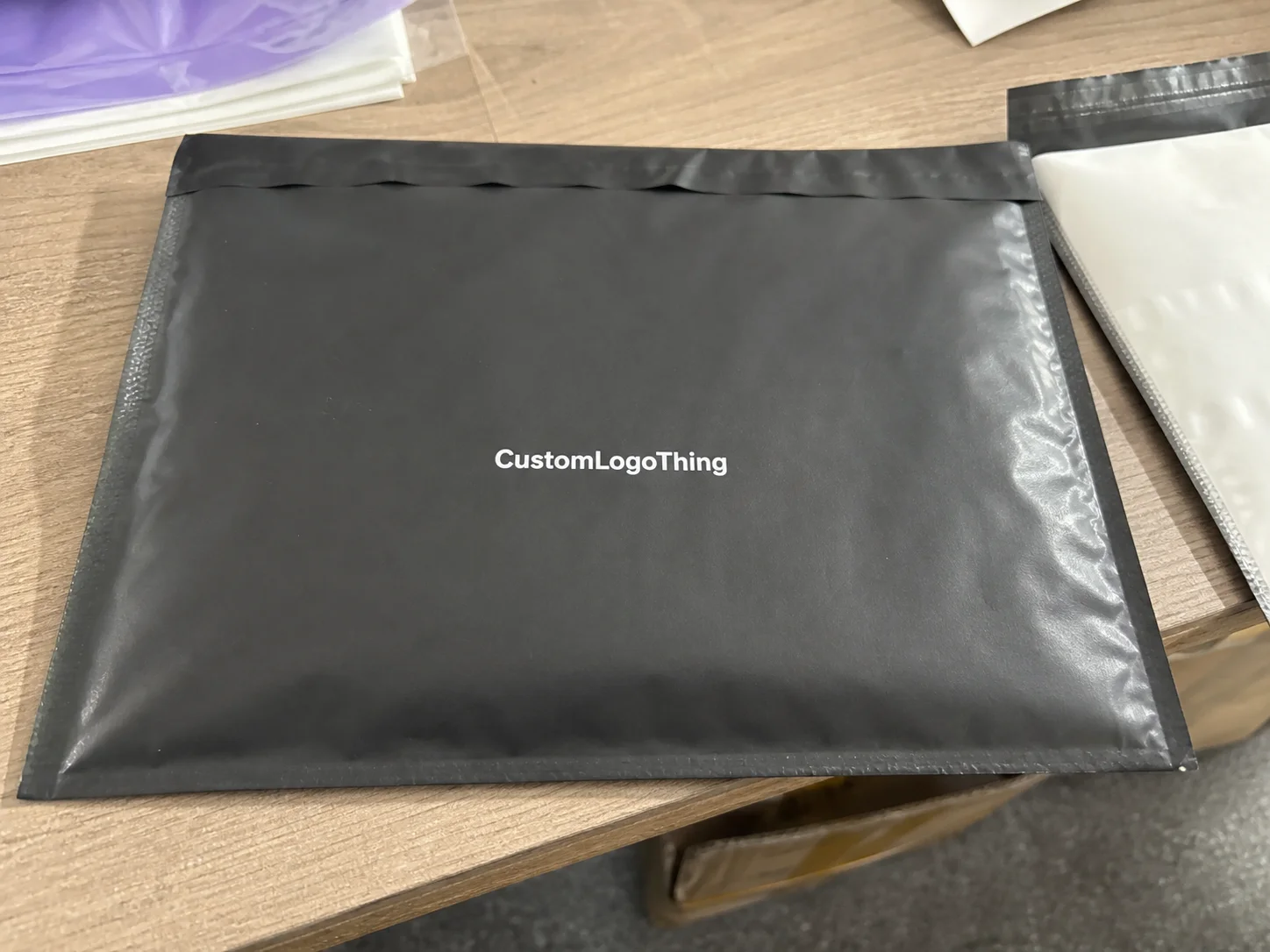
Brand visibility is the other piece people underestimate. A full-color exterior turns a plain shipping bag into a moving ad. That means every shipment carries a logo, a color palette, and a visual cue that helps customers remember the brand before they even open the parcel. For apparel, accessories, vitamins, and subscription boxes that ship as soft packs, printed poly mailers affordable can do more marketing work than many labels or inserts ever will. A one-color logo on a matte black 10 x 13 bag can look cleaner than a cluttered carton with three stickers fighting for attention. Related packaging terms such as custom shipping bags, branded mailers, and poly shipping bags often come up in the same sourcing conversation because they all point to the same thing: practical packaging that still looks intentional.
Here is what most people get wrong: affordable does not mean thin or flimsy. In a factory, cost is shaped by resin choice, gauge, print coverage, plate setup, and run length. A 2.5 mil co-extruded mailer with a 1.5-inch seal can outperform a cheaper-looking bag that is technically thinner but poorly formed. I have watched operators reject entire rolls because seal width wandered by just a few millimeters, and that tiny defect caused splits in shipping tests. If you want printed poly mailers affordable without headaches, the real question is not the sticker price alone; it is how the material, printing, and sealing process work together. A bag that saves $0.02 and fails one in every 500 shipments is not savings. That is a bill with bad manners.
“The mailer looked simple, but the right build saved us time on every single pack-out. Once we switched, the line ran cleaner and the bags held up better in transit.”
Printed Poly Mailers Affordable: Product Details That Matter
The first decision is film construction. Standard single-layer LDPE mailers are often the lowest-cost route, and they work well for many light apparel and accessory shipments. Co-extruded film is a common upgrade because it can improve strength and opacity without making the bag dramatically heavier. Recycled-content mailers are another option, especially for brands with sustainability targets or retail buyers who ask for recycled content documentation. When I am helping a buyer compare printed poly mailers affordable options, I usually start with the product mix, because a T-shirt order and a heavy knit sweater order do not need the same film structure. A 150 gsm fleece hoodie shipped from Portland needs a different build than a 4-ounce tote from Austin.
Self-seal adhesive strips are standard for most modern shipping bags, and they matter more than people think. A weak adhesive strip can fail in cold storage, humid warehouses, or dusty pack rooms, while a well-applied tamper-evident closure stays shut through transit. If your shipments move through summer trailers or cold dock doors, ask about adhesive performance by temperature range. I have seen a batch of cheaper bags fail after a temperature swing from 68°F to 94°F inside a truck moving through Phoenix, and that one issue cost the buyer more than the entire savings on the order. That is why buyers who need printed poly mailers affordable should ask about closure performance, not just print price. A strong adhesive strip should hold in the 35°F to 110°F range if you are shipping across the Midwest and the Southwest.
Print style also changes the conversation. A simple one-color logo on a standard-size bag will almost always be the least expensive route. Two-color branding adds cost, and full-edge graphics increase both ink usage and press setup complexity. Matte and gloss finishes can affect the final look, but they also influence unit cost and lead time. Matte usually feels more premium to the hand, while gloss tends to make the color pop a little more under warehouse lighting. For printed poly mailers affordable, many brands settle on one strong brand color, a clean logo, and a solid background film color that does most of the visual work. A single PMS 186 red logo on a white 2.2 mil bag is often enough to do the job without turning the quote into a small hostage situation.
Size selection is a bigger cost control lever than many teams realize. If the bag is too small, the seal area gets stressed and the adhesive line can fail. If the bag is too large, you pay for excess film and often lose the tight, neat presentation that makes the package look professional. When I was in a fulfillment meeting in Atlanta, a client showed me three different mailer sizes being used for the same hoodie line; two of them were oversized by more than 2 inches in both dimensions, and the extra material had inflated their cost per shipment and slowed packing. Choosing the Right dimensions is one of the easiest ways to keep printed poly mailers affordable without giving up presentation. A 12 x 15.5 bag for folded tees is usually a better fit than a 14 x 19 that slops around like it missed its shift.
Typical use cases include:
- E-commerce apparel such as tees, leggings, socks, and folded activewear.
- Beauty and personal care products, especially lightweight boxed items or samples.
- Promotional kits for events, press sends, and influencer drops.
- Accessories like belts, scarves, hats, and small soft goods.
- Marketplace orders that need a branded shipping presentation without carton expense.
For buyers comparing sourcing options, it can help to look at the difference between stock, semi-custom, and fully custom formats. The table below is a practical way to think about the tradeoffs when you want printed poly mailers affordable and still on brand.
| Option | Typical Use | Estimated Unit Cost | Pros | Tradeoff |
|---|---|---|---|---|
| Stock poly mailer | General shipping | $0.05 to $0.12 | Lowest entry cost, fast availability | No branding, less shelf impact |
| One-color printed mailer | Apparel, accessories | $0.12 to $0.22 | Strong brand presence, moderate setup cost | Requires artwork approval and plate setup |
| Multi-color custom mailer | Retail-ready shipments | $0.18 to $0.35 | High visual impact, better marketing value | Higher MOQ and longer setup |
| Recycled-content printed mailer | Sustainability-focused brands | $0.15 to $0.30 | Stronger environmental message, good story for buyers | Availability may vary by resin market |
Specifications to Compare Before You Order
Before you place an order, compare the specs that actually influence performance. Material thickness, usually shown in mil, is one of the first numbers I ask for. A 2.0 mil bag may be fine for light tees, but a 2.5 mil or 3.0 mil structure often makes more sense for heavier knitwear or items that might snag in a distribution center. Thickness affects cost, of course, but the cheapest bag is not always the cheapest shipment when you count damage, returns, and repacking labor. For buyers focused on printed poly mailers affordable, the goal is to pay for the right strength, not the highest number on the spec sheet. A 3.0 mil bag can be worth the extra $0.01 to $0.02 if your fulfillment center in Chicago is handling 2,000 units a week.
Bag width and length must match the product load. A folded garment stack that measures 10 inches by 13 inches needs enough room to slide into the bag without forcing the seam. Seal width matters too. A strong side seal and a reliable bottom seal help the bag resist bursting under conveyor handling and parcel compression. Opaque outer film is also useful because it keeps the contents hidden and gives the printed exterior a cleaner visual field. If you are sending branded kits, the opacity can make a low-cost bag look much more controlled and professional, which is part of why buyers keep searching for printed poly mailers affordable. A 50% opaque gray film can hide dark garments better than a clear film, even if both are technically the same gauge.
Resin choice can change pricing and positioning. Virgin LDPE is often the most predictable from a performance standpoint. Recycled-content film may support sustainability messaging, but the color tone, consistency, and supply availability can shift based on resin market conditions. A blended film can be a practical middle path. If a buyer tells me they need printed poly mailers affordable and a lighter environmental footprint, I usually ask how much recycled content they actually need, whether a claim is required for retail channels, and whether they are comfortable with minor visual variation in the film. A 30% PCR blend may be perfectly fine for a direct-to-consumer brand, while a wholesale buyer in New York might want something more consistent run to run.
In shipping environments, puncture resistance is a big deal. I have seen parcel sorters bruise a bag against sharp carton corners, pallet wrap tails, and metal conveyor edges. A good mailer distributes load reasonably well and holds shape through handling, which reduces scuffs and blowouts. That is why facilities that ship hundreds of cartons a day tend to test bags under real use, not just in a sample room. If you are sourcing printed poly mailers affordable, ask whether the bag has been evaluated for parcel handling and if the supplier can speak to basic testing methods such as ASTM-related packaging performance checks or internal drop tests. A 3-foot drop from a packing table in a Nashville warehouse tells you more than a glossy brochure ever will.
Artwork prep matters more than many buyers expect. Clean vector logos print better than compressed images, especially on large custom shipping bags. PMS color targets help if your logo has to match a specific brand red or navy. Bleed zones need to be set properly, and your printer may ask for a PDF, AI, or EPS file depending on the press method. Poorly prepared art can add days to a job. In one supplier review I attended in Shenzhen, the client lost a week because their logo was supplied as a low-resolution PNG, and the edges turned fuzzy at press size. If printed poly mailers affordable is your target, clean file prep keeps the process from getting more expensive than it needs to be.
For brands that want a quick reference, here is a simple spec checklist:
- Thickness: 2.0 mil, 2.5 mil, or 3.0 mil depending on product weight.
- Dimensions: sized to fit the folded product without overstuffing.
- Seal width: ideally consistent across the run for transit strength.
- Opacity: enough to hide contents and support the printed exterior.
- Print colors: one-color, two-color, or full-coverage graphics.
- Finish: matte or gloss, depending on the desired shelf look.
For those who want a broader packaging portfolio, our Custom Packaging Products page is a helpful place to compare related formats, and our Custom Poly Mailers page shows where different bag styles fit by product type and branding need.
If you want to compare standards and sustainability claims with outside references, the EPA has useful recycling and materials information, and the FSC site is a good reference point for fiber-based packaging systems, even though poly mailers themselves are plastic film products. For shipping performance and transit abuse testing, the ISTA organization is a practical industry reference.
Pricing and MOQ for Printed Poly Mailers Affordable
Price is driven by a handful of very specific factors: bag size, film gauge, number of print colors, ink coverage, adhesive type, recycled content, and order volume. If a brand asks me for printed poly mailers affordable, I usually say the same thing first: the lowest unit price comes from standardization. Standard size, simpler artwork, and a repeatable film structure create the best path to a sensible quote. If you choose a custom die size, full coverage artwork, and a specialty adhesive, the cost climbs because the factory has more setup and more material waste to manage. For example, a 12 x 15.5 one-color bag at 5,000 pieces can land around $0.15 per unit, while a 2-color custom size at 3,000 pieces can jump closer to $0.24 to $0.28 depending on resin and freight from Guangdong to the U.S. West Coast.
MOQ, or minimum order quantity, is the point where tooling, plate costs, setup time, and machine scheduling start to make economic sense. Small runs are possible, but the unit price is often noticeably higher because those fixed costs get spread across fewer bags. Larger orders push cost down fast. In my experience, once you move from a very small run into a more efficient production quantity, the price curve changes more quickly than most buyers expect. That is why printed poly mailers affordable is often less about finding the cheapest quote and more about choosing the right order size for your launch or replenishment plan. A 2,000-piece run can cost 20% to 35% more per bag than a 10,000-piece run with the same artwork and bag size.
Here is a practical pricing framework I have seen work across several factories:
- Standard one-color print on a common size: usually the most affordable setup for a new brand.
- Two-color logo with simple background: a good middle ground for retail and online brands.
- Full-coverage artwork: best for strong shelf presence, but setup and ink usage rise.
- Custom size plus custom print: ideal for specific product dimensions, though not always the lowest unit cost.
One negotiation I still remember was with a subscription box brand in Austin that wanted a fully printed exterior, a custom oversized format, and an upgraded recycled-content film, all at a very low unit target. I told them straight that the target was possible only if they were willing to accept a longer lead time and a higher initial run, because the tooling would have to be amortized over more units. They adjusted the quantity, kept the design to two colors, and landed a much better result. There was a dramatic pause on the call, the kind where everyone suddenly becomes fascinated by their water bottle. That is the kind of honest discussion that makes printed poly mailers affordable without setting the buyer up for disappointment. The final order worked because the buyer moved from 4,000 pieces to 8,000 pieces and accepted a standard 2.5 mil film instead of a custom heavier build.
Below is a simplified cost structure that many buyers find useful when reviewing quotes:
| Cost Component | What It Covers | Impact on Price |
|---|---|---|
| Tooling / setup | Plates, press setup, file prep | Higher on short runs |
| Material | LDPE, co-ex film, recycled content | Depends on gauge and resin market |
| Printing | Ink, registration, color count | More colors increase cost |
| Converting | Slitting, forming, sealing, trimming | Varies with size and bag style |
| Freight | Cartons, pallets, transit | Changes by destination and volume |
When quoting printed poly mailers affordable, factories typically build the price from the bottom up: tooling, material, printing, converting, then freight. That structure matters because a quote that looks cheap on the bag price alone may get expensive once packaging, palletization, and transit are added. I have seen buyers save a few cents on the bag, only to lose that margin in freight because the order was split across too many cartons or shipped too expensively for the launch schedule. A quote from Dongguan to Chicago can look very different from one to Houston once the pallet count and transit class are added.
Smart ways to reduce cost without lowering quality include standardizing sizes, limiting color count, using a common film structure, and aligning reorder cycles so each run is larger. If your brand ships several SKUs, I often recommend testing whether two bag sizes can cover most of the line instead of ordering five. That consolidation is one of the easiest ways to keep printed poly mailers affordable over time. A brand that trims from six SKUs to three bag sizes can often save $0.01 to $0.03 per unit and reduce inventory headaches at the same time.
Process and Timeline From Artwork to Delivery
The process usually starts with a quote request that includes size, quantity, material preference, print colors, and destination. After that, the artwork is reviewed and a proof is prepared. If the buyer needs exact color matching or is launching a premium line, sample approval may come next. Then production starts. That sequence sounds simple, but each step can add days if the details are not ready. For printed poly mailers affordable, having accurate bag dimensions and clean artwork at the beginning is one of the best ways to protect both schedule and price. A complete RFQ can shave 2 to 3 business days off the front end alone.
On the factory floor, the work after approval is very specific. Material is staged or extruded, print plates are mounted, the press is set for the correct repeat length, and the first sheets or rolls are checked for registration. After print, the film is cured or dried depending on the ink system, then it moves into bag forming, side sealing, bottom sealing, and trimming. Quality control checks are done for seal integrity, print consistency, and visual defects such as pinholes or smear marks. In a good plant, operators inspect every run for consistency, because a three-millimeter drift in seal width can cause major problems later. That is the kind of floor-level discipline that keeps printed poly mailers affordable and dependable. In one plant visit in Ningbo, I watched QC pull every 50th bag for a seal check, which is exactly the kind of boring discipline you want in a supplier.
Timelines vary by order complexity. A first order with custom artwork often takes longer because the proof cycle, plate work, and machine scheduling all have to line up. Repeat orders can move much faster because the artwork and setup are already on file. If you are planning a product launch, I always advise building in a buffer, especially if the shipment is tied to a marketing campaign or an influencer drop. One fashion client lost two days because they approved artwork on a Friday afternoon but did not account for a holiday pickup window. A little schedule padding is cheaper than a missed launch, even when the goal is printed poly mailers affordable. In practical terms, first orders typically take 12-15 business days from proof approval, while repeat runs can ship in 8-10 business days if the film and plates are already ready.
File readiness makes a real difference. Vector logos, proper bleed, and Pantone targets reduce back-and-forth. Low-resolution images, missing fonts, and unclear trim areas slow everything down. I have seen a production team spend half a day cleaning up artwork that should have been press-ready from the start. If you are trying to keep printed poly mailers affordable, the fastest path is to send files that the prepress team can approve on the first round. A PDF with embedded fonts, a 0.125-inch bleed, and a clear dieline usually gets through much faster than a flat JPEG someone saved on a desktop in a rush.
Once the bags are packed, they are cartonized and palletized for transit. That final stage matters more than people realize, because the way bags are packed can influence whether they arrive flat, creased, or dirty. A neat pallet load protects the finish and keeps the bags ready for immediate use. For high-volume buyers, that shipping discipline is part of the value, not just a logistics detail. In East Coast distribution, especially around Savannah and Elizabeth, a clean pallet can save an ugly repack at the dock.
Why Choose Custom Logo Things for Printed Poly Mailers
Custom Logo Things understands packaging the way factory people understand packaging: by looking at materials, process control, and end use together, not as separate talking points. That matters because a mailer that looks good in a mockup can still fail if the film is wrong, the seal is weak, or the print is not matched to the line speed. We work from real production realities, which is why buyers who need printed poly mailers affordable often appreciate practical advice instead of vague promises. A good packaging partner should be able to explain why a 2.5 mil co-ex bag made in Guangdong may be the better fit than a thicker but sloppier bag from a plant cutting corners.
In my experience, the best suppliers are the ones who can tell you where the tradeoff lives. Should you choose 2.5 mil or 3.0 mil? Should your logo be printed in one color or two? Can you standardize on one bag size and keep the rest of the line flexible? Those are the questions that affect both shipping performance and budget. Custom Logo Things helps buyers think through those choices with a packaging-maker’s eye, which is especially useful when printed poly mailers affordable is the goal and the order still needs to look polished. I would rather save a customer $0.03 per unit in the right place than pretend every upgrade is a must-have.
We also pay attention to repeat-order consistency. A brand that reorders six months later should not receive bags that feel noticeably different in hand or show a drift in print placement. That sort of consistency is built through disciplined setup, operator checks, and clear specs on the front end. I have watched brand teams breathe easier once they knew their packaging partner could hold the line from one production run to the next. That stability is part of what makes printed poly mailers affordable a reliable purchasing choice rather than a one-time bargain. The goal is not a cheap bag once. The goal is a bag that reorders at the same spec in month six and month twelve.
Communication matters too. We keep pricing transparent, discuss material options plainly, and explain where a lower quote may hide a compromise in seal strength, opacity, or print quality. I would rather tell a buyer, “Use this size and one-color layout and you will get a better result,” than sell them a cheaper-looking solution that costs more later in returns or repacking. That practical honesty is how we support brands that want printed poly mailers affordable and still expect professional results. No mystery math. No vague optimism. Just a bag that does its job and does not embarrass your logo.
“The best packaging partner is the one who can walk the line, point to the weak spot, and explain the fix in plain language.”
How affordable can printed poly mailers be for growing brands?
Printed poly mailers affordable options can be very cost-effective for growing brands if the packaging spec is kept practical. A standard size, one-color print, and a common film structure often create the best balance between appearance and price. If you try to make the bag do everything, your quote gets bloated fast. If you keep the spec sane, the unit economics usually work. That is the part people miss while chasing fancy mockups and forgetting the shipping bill. I have watched startups spend half their packaging budget on a design they could not actually pack at speed, which is a fancy way of saying they made life harder for themselves.
The sweet spot is usually boring, and that is fine. A 2.5 mil co-ex mailer, one clean logo, and a size that fits the product without excess air can keep costs in check while still giving customers a branded touchpoint. If a brand grows into more volume, the same spec can often be reordered with only minor changes, which keeps procurement simple and pricing predictable. That predictability matters when margins are tight and nobody wants surprises from the freight bill. A paper-padded envelope can look nice on a spreadsheet, but if your products are soft goods and not fragile, a poly mailer usually wins the cost conversation pretty quickly.
How to Get Started With Your Order
Getting a quote is easiest when you gather a few specific details first: bag dimensions, approximate quantity, product type, print color count, and your logo file. If you already know whether the order is for apparel, accessories, or a subscription kit, include that too. A 12-inch by 15-inch bag for folded tees is a very different build from a 10-inch by 13-inch bag for lightweight mailers, and that detail helps the factory quote accurately. The more precise your information, the easier it is to land on printed poly mailers affordable without backtracking. For the cleanest quote, send the target quantity, destination city, and whether you want a matte white or gloss pink finish.
Decide whether you need a stock-size mailer, a custom size, or custom print only. That choice affects both lead time and cost. If you need a fast replenishment, a stock dimension with custom graphics may be the better route. If the product load is unique, custom sizing may be worth it. Also confirm the finish, any recycled content preference, and the exact print colors before asking for pricing. Those decisions shape the quote more than many buyers expect, especially when the objective is printed poly mailers affordable and production-ready. A one-color layout on a stock 14 x 19 bag can often hit a much better price than a 3-color design on an odd-sized custom bag made for a single SKU.
If color accuracy matters, request a proof or a sample before full production. That is especially smart for retail programs, brand launches, or any shipment that will be photographed. A sample helps you check opacity, artwork placement, feel, and seal performance in hand. I have seen brands skip this step and later discover that a logo sat too close to the seal edge, which made the whole run look off-center. A sample protects you from that kind of avoidable mistake and keeps the path to printed poly mailers affordable much cleaner. A simple proof approval can save a 5,000-piece reprint, and that is not a tiny problem.
For teams ready to move quickly, send your file in a vector format if possible, along with your target quantity and preferred delivery window. If you have multiple SKUs, list the sizes separately so the quoting process is straightforward. The simplest orders tend to move fastest, and the fastest orders are usually the ones where the buyer has already decided what they need before asking for the price. That is the practical way to buy printed poly mailers affordable and still keep control over quality. If your reorder window is tight, a supplier can usually work faster when the art, size, and ship-to address are locked on day one.
Reach out with your specs, and we can help you compare options, review artwork, and choose a setup that matches your shipment profile. If you want a branded shipping bag that looks professional, packs quickly, and stays in budget, printed poly mailers affordable is an achievable target when the specs are chosen with care. The right combination is usually simpler than people expect: standard size, 2.5 mil film, one-color print, and a production schedule that does not require miracles. Start there, not with the fanciest mockup your design team can dream up.
FAQs
Are printed poly mailers affordable for small businesses?
Yes, especially when you use standard sizes, keep the design to one or two print colors, and choose a common film structure. Small businesses usually get the best value by starting with a practical MOQ that balances unit cost and cash flow. In many cases, printed poly mailers affordable becomes very realistic once the brand standardizes dimensions and avoids over-customizing the first order. A 3,000-piece run in a standard 10 x 13 or 12 x 15.5 bag is often a workable starting point for a shop shipping 200 to 400 orders a week.
What affects the price of printed poly mailers affordable options?
Price depends on size, thickness, print colors, ink coverage, adhesive type, recycled content, and total quantity. Setup costs matter more on lower volumes, while larger orders reduce the cost per bag. If you want printed poly mailers affordable, the most effective moves are usually fewer colors, standard sizing, and a film build that matches the product weight instead of overspecifying the material. A 2.5 mil one-color mailer at 10,000 pieces will usually price better than a 3.0 mil multi-color bag at 2,000 pieces, even if both look nice in the mockup.
What is the usual MOQ for custom printed poly mailers?
MOQ varies by factory and print method, but buyers should expect higher minimums for multi-color or fully custom sizes. Standard-size mailers with simpler artwork often have the most flexible entry quantities. If your plan is to keep printed poly mailers affordable from the first order, ask how MOQ changes when you simplify the design or choose a stock dimension. Many factories are more comfortable quoting 3,000 to 5,000 pieces for one-color work and 10,000 pieces or more for more complex custom builds.
How long does production take for printed poly mailers affordable orders?
First orders take longer because of proofing, plate setup, and production scheduling. Repeat orders are faster once the artwork, dimensions, and print setup are already approved. Lead time also depends on shipping destination and cartonization needs, so for printed poly mailers affordable orders tied to a launch, I always recommend building in a buffer rather than cutting the date too close. Typically, first orders ship in 12-15 business days from proof approval, while repeat orders can move in 8-10 business days if materials are in stock.
Can I get a sample before placing a full order?
Yes, and it is smart to request a proof or sample if color accuracy, seal strength, or sizing is important. A sample helps verify artwork placement, opacity, and overall feel before production begins. For brands serious about printed poly mailers affordable while protecting the customer experience, a sample is one of the best low-cost checks available. If the sample shows the logo too high or the seal too narrow, you catch it before committing to 5,000 bags and a headache.