Buyer Fit Snapshot
| Best fit | Printed Product Labels with Logo projects where brand print, material claims, artwork control, MOQ, and repeat-order consistency need to be specified before quoting. |
|---|---|
| Quote inputs | Share finished size, material target, print colors, finish, packing count, annual reorder estimate, ship-to region, and any compliance wording. |
| Proofing check | Approve dieline scale, logo placement, barcode or warning zones, color tolerance, closure strength, and carton packing before bulk production. |
| Main risk | Vague material claims, crowded artwork, missing packing details, or unclear freight terms can make a low unit price expensive after revisions. |
Fast answer: Printed Product Labels with Logo: Material, Adhesive, Artwork, and MOQ should be specified like a repeatable production item. The safest quote records material, print method, finish, artwork proof, packing count, and reorder notes in one written spec.
Production checks before approval
Compare the actual filled-product size with the drawing, then confirm tolerance on folds, seals, hang holes, label areas, and retail display edges. Reserve space for logos, QR codes, warning copy, and material claims before decorative graphics fill the panel.
Quote comparison points
Review material grade, print process, finish, sampling route, tooling charges, carton quantity, and freight assumptions side by side. A quote is only useful when the supplier can repeat the same color, closure quality, and packing count on the next order.
Printed product labels with logo do a lot more work than people give them credit for. They sit on the package, sure. But they also carry the first impression, the brand mark, the product facts, and the quiet little promise that the item inside is worth paying for. If the label looks cheap or falls apart, the product usually gets blamed first. Packaging always gets the bad end of that deal.
I have seen a beautiful launch get dragged down by a label that lifted at the corners after one day in a cold case. The product was fine. The packaging was not. That kind of mistake is avoidable, which is why printed product labels with logo should be treated as part of the product spec, not as an afterthought tacked on at the end.
A good label does more than decorate. It needs to stick, survive handling, stay readable, and make the brand look intentional. A bad one peels, smears, or curls, and suddenly the whole item feels a little suspect. That is not drama. It is retail reality.
Printed Product Labels with Logo: What They Are
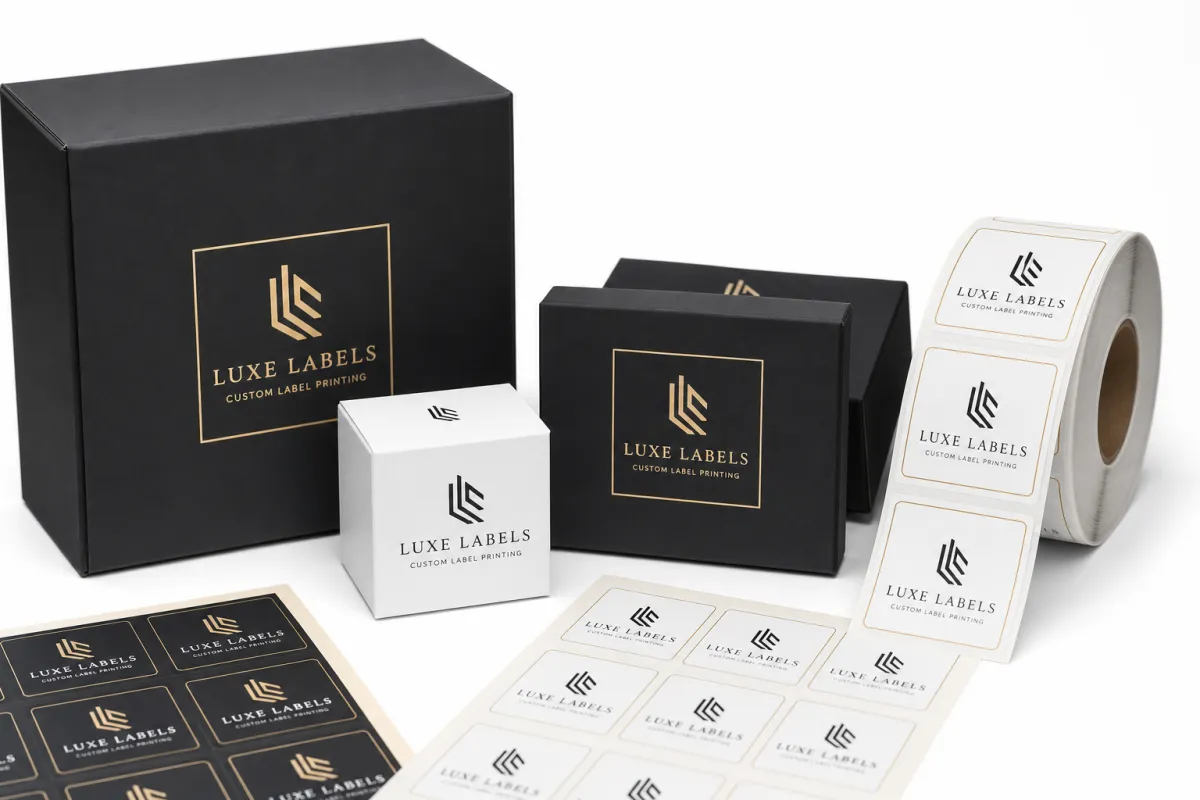
Printed product labels with logo are custom adhesive labels made to present a brand mark and the information a package needs to carry. That usually includes the product name, ingredients or usage details, barcode, lot code, warnings, or compliance copy. They can be simple or loaded with detail, but the point stays the same: the label has to look good and do its job.
You will see printed product labels with logo on bottles, jars, tubes, pouches, cartons, mailers, and inserts. They are common on glass and plastic because those surfaces accept labels cleanly when the adhesive is matched correctly. They also work well on paperboard and coated cartons, especially when the box itself is plain and the label carries the branding.
Brands often choose printed product labels with logo when they need flexibility. That can mean changing SKUs, seasonal versions, test runs, or products that are still being refined. A label is a lot easier to update than a full custom carton. If a flavor changes or legal copy shifts, you are not tearing up the entire packaging system. You are adjusting the label and moving on.
There is also a practical reason labels stay popular: they are fast to produce and easier to control. I have watched teams overspend on fancy packaging early, then scramble later when the product formula or claims changed. That is a painful way to learn that printed product labels with logo are often the smarter middle ground between plain packaging and fully custom boxes.
People sometimes assume a label is just a print job. It is not. Adhesion, surface texture, moisture, temperature, ink durability, and finish all matter. A label that looks polished on a PDF can still fail on the actual container. That is the part nobody puts in the mockup.
A label does not get praise for working. It just gets blamed when it fails. That is packaging for you.
If you are building a repeatable packaging system, printed product labels with logo are a good place to start. The Custom Labels & Tags page is useful if you want to compare formats before you lock a spec.
How Printed Product Labels with Logo Work
Every label has a structure. The face stock is the printable top layer. The adhesive bonds it to the package. The liner is the backing that gets removed during application. Then you have the print method and finish, which affect color, scuff resistance, and how the logo reads under real lighting. Get one of those parts wrong and printed product labels with logo can turn into a headache fast.
The production process usually starts with artwork review. The printer checks dimensions, bleed, safe areas, barcode sizing, and resolution. Then you get a proof. After approval, the job moves into print, cut, finish, pack, and ship. Straightforward on paper. A little less cute when the file is missing the dieline or someone exported the logo from a website screenshot.
For smaller runs, digital printing is usually the better fit. It handles lower quantities, faster turnaround, and multiple artwork versions without a huge setup burden. Flexographic printing tends to make more sense for larger runs where the design is stable and the unit cost matters more. The tradeoff is simple: flexo usually asks for more setup time, but the economics improve as volume climbs.
Finish changes the feel more than most buyers expect. Matte gives a calmer, more restrained look. Gloss pushes color and tends to wipe clean more easily. Soft-touch can make a package feel premium, though it is not right for every product. Lamination adds protection against abrasion and moisture. Foil and spot UV can highlight a logo, but use them with some discipline. Too much shine on a small label starts looking busy instead of elevated.
Surface fit matters just as much as design. Smooth glass is usually forgiving. Coated paperboard behaves differently. Curved jars, chilled bottles, textured cartons, and oily containers need more attention. I have seen labels that looked perfect on a flat sample sheet fail on a slightly curved bottle because the adhesive and stock were not matched to the package. Pretty file, wrong reality. Happens all the time.
If you are shipping product that gets handled hard, tested against temperature shifts, or moved through rough logistics, ask about peel adhesion, dwell time, moisture resistance, and temperature range. A label that stays put after a few seconds in the hand is not the same as one that stays put after a week in a fridge. For transport conditions, the ISTA testing framework is a solid reference. For paper sourcing and certified fiber claims, FSC is the usual baseline.
Printed Product Labels with Logo: Cost and Pricing Factors
Cost starts with quantity, then size, then stock, then finish, then shape. After that come ink coverage, special effects, and how much setup the printer needs to do. Printed product labels with logo can be affordable, but only if the spec is sane. The minute you add complex die-cuts, premium film, or heavy flood coverage, the number moves.
For ballpark budgeting, small runs usually cost more per label because setup and proofing are spread across fewer pieces. For a simple paper label in a short run, you might see pricing around $0.12-$0.35 per label, depending on size and quantity. On larger runs, simple builds can drop closer to $0.04-$0.12 per label. Waterproof film, metallic stock, and premium finishes push prices higher. That is normal. Material is not free, and neither is precision.
One thing buyers often miss is the cost of failure. A cheap label that peels on a curved bottle or smears after condensation is not cheap. It becomes a reprint, a replacement run, and a delay you did not budget for. Cost per label is useful. Cost per usable label is better.
| Label Option | Typical Price Range | Best For | Main Tradeoff |
|---|---|---|---|
| Paper labels | $0.04-$0.15 each in larger runs | Dry goods, cartons, inserts, low-touch products | Less resistance to moisture and abrasion |
| BOPP or film labels | $0.08-$0.22 each in larger runs | Bottles, jars, refrigerated items, higher-handling products | Higher material cost |
| Waterproof or durable labels | $0.12-$0.30 each | Cold storage, bath products, beverages, oils | More expensive stock and inks |
| Premium finish labels | $0.15-$0.40 each | Gift products, luxury retail, shelf-facing brands | Higher setup and finishing costs |
Shape matters too. Rectangles are easy. Rounded corners are still pretty manageable. Custom contours, tiny labels, and multi-panel layouts add die-cut complexity and waste risk. If you want foil or spot UV, make sure the effect earns its place. A small accent can look sharp. Turning the whole label into a shine festival usually does not.
Color coverage also affects price. Large dark backgrounds, full-bleed artwork, and heavy ink coverage can cost more than a cleaner design with more negative space. That does not mean the design should be bland. It just means printed product labels with logo should be built with the print method in mind, not only the screen mockup. A good packaging designer thinks about ink, not just pixels.
There are hidden costs too. Revisions after proof approval. Rush fees. Split shipments. Multiple SKUs. Reprints because the label was 1/16 inch off and now sits crooked on the bottle. That stuff adds up. If you expect repeat orders, it is worth setting up a consistent label spec so you are not starting from scratch every time. That is exactly where Custom Labels & Tags helps keep the system organized.
Printed Product Labels with Logo: Process and Timeline
The quickest label jobs usually start with a clean brief. Size, shape, stock, finish, quantity, application surface, and deadline should be spelled out before anyone asks for pricing. If the printer has to guess, the schedule gets messy. And yes, “roughly this big” is still useless. Kinda adorable, but useless.
A realistic timeline for printed product labels with logo might look like this: quote in one to two business days, artwork review in one to three business days, proof approval the same day if your team is responsive, then production in three to ten business days depending on method and complexity. Simple digital runs can move faster. Custom shapes, special finishes, or large flexo jobs take longer. Shipping time sits on top of all of it.
The biggest delays usually come from missing dielines, low-resolution logos, poor barcode setup, and vague color expectations. If the printer has to clean up the artwork, the timeline stretches. If the team is waiting for compliance copy, the timeline stretches again. If nobody knows whether the gold should be warm gold or cold gold, the timeline somehow stretches a third time. That is just how packaging projects behave.
Rush service can help, but only if the job is already in good shape. If the material is in stock and the artwork is ready, faster production may be possible. If the shape is custom, the file needs major changes, or the finish requires extra setup, the rush window narrows quickly. Printed product labels with logo are still subject to material availability and production queues. Fancy labels do not bend the laws of scheduling.
For launches, seasonal drops, and trade show packaging, leave yourself room. I would rather see a buyer approve a label a week early than spend launch week begging for overnight shipping. That is not planning. That is panic with tracking numbers.
Step-by-Step Guide to Ordering the Right Labels
The easiest way to order printed product labels with logo is to treat the job like a packaging spec. Start with the container, not the artwork. A jar, bottle, pouch, box, or insert all behave differently. The surface drives the adhesive choice. The environment drives the stock. The product use drives the finish.
- Measure the usable area. Do not guess. Measure the flat or wraparound space and note seams, curves, corners, and panel breaks.
- Record the environment. Is the product refrigerated, oily, wet, handled often, or sitting in bright retail light?
- Choose the material. Paper works for dry, low-touch products. Film is safer for moisture, oil, and abrasion.
- Check the artwork. Logo placement, barcode size, legal copy, and bleed all need to be correct before proof approval.
- Test before scaling. A small pilot run tells you more than a mockup ever will.
That last step matters a lot. Printed product labels with logo can look great on a screen and still fail on the package. Maybe the label is too rigid. Maybe the adhesive needs more dwell time. Maybe the curve is tighter than expected. Real testing catches that before it becomes an expensive return trip to the printer.
When you review a proof, check it like someone who has fixed too many packaging mistakes. Verify the logo placement. Scan the barcode. Read the compliance copy aloud. Compare the label size against the actual container, not against your monitor. If one detail feels off, fix it before production. A tiny shift in placement can look sloppy once the label is on a real bottle.
Plan for reorders while you are at it. Keep the same size code, stock, finish, and version history if you expect the line to continue. If the formula, naming, or legal copy may change, build the label around a format that can be updated without blowing up the whole spec. That is one reason brands keep returning to Custom Labels & Tags for long-term packaging programs.
Common Mistakes with Printed Product Labels with Logo
The first mistake is picking the wrong adhesive. Cold surfaces, wet surfaces, textured surfaces, and oily surfaces all behave differently. A label that sticks fine to a dry carton may fail on a chilled bottle or a jar that gets handled with greasy fingers. Printed product labels with logo should be matched to the actual package, not just to the artwork.
The second mistake is cramming too much into a small format. Logos that look crisp on a laptop can become unreadable when they are squeezed into a two-inch label. Thin serif fonts, tiny legal text, and too many colors can blur together. Strong branding is good. Crowded branding is just a loud way to prove nobody planned the layout.
The third mistake is using bad files. Low-resolution logos, unembedded fonts, and sloppy color profiles cause delays and reprints. If you want printed product labels with logo to look sharp, send print-ready art. Not a screenshot. Not a social post export. Not the file someone renamed “final-final-v7-really-final.” That file is almost never final.
The fourth mistake is ordering at the wrong time. Too few labels and you run out right when demand picks up. Too many labels and you are stuck with obsolete copy after the formula, weight, or compliance language changes. If the product is still moving around, smaller pilot runs are usually the safer call.
The fifth mistake is skipping real testing. Put the label on the actual package. Chill it. Wipe it. Handle it. See what happens. If the product is moving through rough shipping, the ISTA transit testing framework is useful for understanding how packaging gets abused in transit. If your material choice needs to support fiber-sourcing claims, the FSC certification system is the reference many teams use. Good printed product labels with logo should survive the conditions customers actually create, not the conditions in a quiet studio.
Another mistake is assuming every label stock behaves the same. It does not. A glossy paper label may be fine for a dry candle box, while a chilled beverage bottle needs a different structure entirely. If the label feels wrong on the package, the product feels wrong too. That is why sample review matters. A thumbprint and a shrug are not a review process.
Expert Tips and Next Steps for Printed Product Labels with Logo
Build a one-page spec before you ask for quotes. Include size, shape, material, finish, quantity, application surface, storage conditions, and any compliance copy that must appear on the label. That one page saves more time than a dozen vague emails about “something premium but clean.”
Compare samples side by side. A matte paper label, a gloss film label, and a laminated premium version can look completely different once they are wrapped around a bottle or pulled from cold storage. Printed product labels with logo often change character on the actual package. Flat art does not show that. Real samples do.
If the product line is likely to change, ask for a reorder-friendly setup. Keep the print spec stable and the layout flexible enough to absorb small changes. That way the next run is a reorder, not a rebuild. I have seen teams save real money that way, and I have seen teams waste real money because they kept making tiny packaging changes that forced new setup work every single time.
The simplest path is also the safest: test the label on the real container, verify the artwork, confirm the budget, then place a pilot order. That sequence catches fit problems, durability issues, and shelf-readability problems before they become expensive. It is not glamorous. It is just smart.
Printed product labels with logo are one of the fastest ways to make a product look finished, but only if the label matches the container and the use case. Get the adhesive right, get the stock right, get the timing right, and the package feels intentional instead of improvised. That is the whole trick. No magic. Just decent spec work and a little patience.
FAQ
How much do printed product labels with logo usually cost?
Pricing depends mostly on quantity, size, material, finish, and shape. Small runs cost more per label because setup and proofing get spread across fewer pieces. Simple paper labels may land around $0.12-$0.35 each in short runs and roughly $0.04-$0.12 each in larger runs. Waterproof or premium labels cost more. For budgeting, ask for quotes at 250, 1,000, and 5,000 pieces so you can see where the pricing curve actually drops.
What material is best for printed product labels with logo?
Paper works for dry products with light handling. BOPP or other film labels are better for moisture, oil, and abrasion, especially on bottles and jars. If the product lives in a fridge, shower, or shipping lane that tends to beat up packaging, a more durable stock is usually worth the extra cost. The best material is the one that fits the real environment, not the mockup.
How long does it take to get printed product labels with logo?
Simple digital jobs can move quickly if the artwork is ready and approved without revisions. Custom shapes, special finishes, and larger runs take longer because of setup and finishing steps. A realistic window is often a few business days for straightforward orders and longer for custom builds. Build in buffer time for proofing, shipping, and at least one round of corrections. That little cushion saves a lot of stress.
Will printed product labels with logo stick to curved or refrigerated surfaces?
Yes, if the adhesive and face stock are chosen for that surface and environment. Curved containers usually need a more flexible material, and refrigerated products need cold-compatible adhesive. The smart move is to test a sample on the real package before you commit to a full order. A label that looks fine in a studio can still fail in a cold room.
Can I order a small batch of printed product labels with logo?
Yes, short runs are common and often the best choice for launches, seasonal SKUs, or artwork testing. Small batches cost more per label, but they reduce waste if the product or design changes. Use a pilot order to confirm fit, durability, and shelf impact before scaling up. That way your printed product labels with logo support the launch instead of turning into a box of leftovers in the storage closet.


