Buyer Fit Snapshot
| Best fit | Printed Recycled Garment Bags Bulk for Brand Packaging projects where brand print, material claims, artwork control, MOQ, and repeat-order consistency need to be specified before quoting. |
|---|---|
| Quote inputs | Share finished size, material target, print colors, finish, packing count, annual reorder estimate, ship-to region, and any compliance wording. |
| Proofing check | Approve dieline scale, logo placement, barcode or warning zones, color tolerance, closure strength, and carton packing before bulk production. |
| Main risk | Vague material claims, crowded artwork, missing packing details, or unclear freight terms can make a low unit price expensive after revisions. |
Fast answer: Printed Recycled Garment Bags Bulk for Brand Packaging should be specified like a repeatable production item. The safest quote records material, print method, finish, artwork proof, packing count, and reorder notes in one written spec.
Production checks before approval
Compare the actual filled-product size with the drawing, then confirm tolerance on folds, seals, hang holes, label areas, and retail display edges. Reserve space for logos, QR codes, warning copy, and material claims before decorative graphics fill the panel.
Quote comparison points
Review material grade, print process, finish, sampling route, tooling charges, carton quantity, and freight assumptions side by side. A quote is only useful when the supplier can repeat the same color, closure quality, and packing count on the next order.
Apparel teams usually end up paying for protection, presentation, and branding as if each one needs a separate packaging decision. Printed recycled garment bags bulk bring those needs into one purchase, which is why they fit retail programs, warehouse packing, and finished-goods staging so well. Sized properly and printed with restraint, the bag keeps garments cleaner, cuts down on packaging clutter, and gives the product a finished feel before it ever reaches the floor or the customer.
Buyers usually care less about broad sustainability language than about what the bag actually does every day. Cleaner sorting in fulfillment, fewer packing errors, steadier brand presentation, and a material choice that is easier to defend in procurement meetings matter more than a polished claim on the carton. Printed recycled garment bags bulk are easiest to judge by the film spec, the print method, the dimensions, and the reorder pattern rather than by the wording on the front panel.
I have torn apart enough packaging specs over the years to know that the details people skip in the beginning are the ones that cause noise later. A bag can look fine in a mockup and still be awkward on the line, too slick to stack, or just a little too long for the garment it is supposed to hold. That is why this topic deserves a close read, not a glossy one.
The sections that follow stay close to the practical side of the job: material choices, sizing, pricing, timelines, and the everyday considerations that keep a packaging decision useful once it reaches production.
Why Printed Recycled Garment Bags Bulk Work Better Than Generic Poly
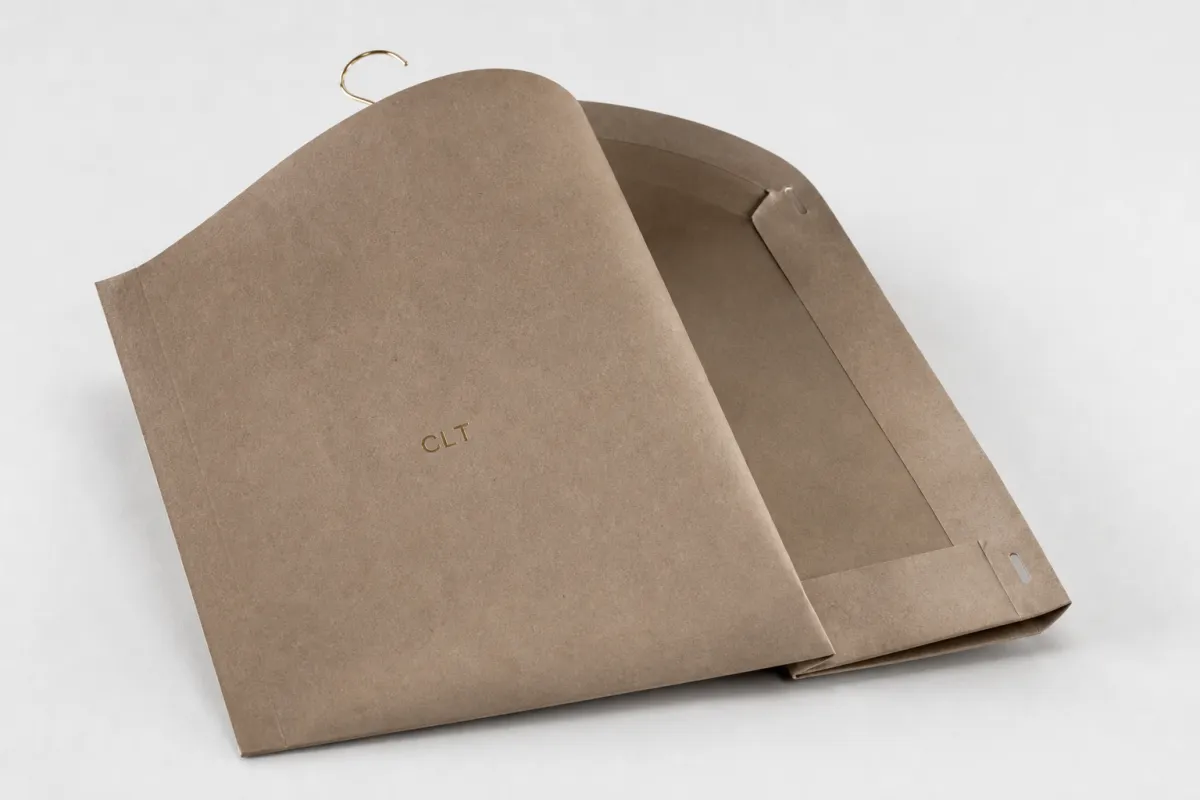
A plain disposable sleeve can keep dust off a garment, but it usually stops there. Printed recycled garment bags bulk do more for apparel brands because the same bag can protect the product, help staff sort it, and carry the brand mark without adding another layer of packaging. That matters on a busy packing line, where workers need to recognize size groups, style families, or retail destinations quickly and without second-guessing the label.
Generic poly bags also tend to read as temporary. They are often blank, uneven in clarity, and easy to ignore once the garment is sealed inside. A printed recycled option changes that experience in a small but meaningful way. The package looks more organized in retail, more polished in wholesale, and more deliberate during direct-to-consumer shipment. Printed recycled garment bags bulk give the product a finished presentation instead of an improvised one.
Recycled film has a practical business value beyond the material story. Using recycled content reduces reliance on virgin resin, which helps purchasing teams build a better case when operations, finance, or sustainability asks for justification. The useful questions are straightforward: is the material recycled LDPE or a related blend, how does it behave on the packing line, and does it still hold up against dust, handling, and short-term storage? Those are the details that matter.
Smaller operational gains add up quickly. Workers spend less time separating categories if the bag carries a size cue or style code. Fulfillment teams can keep like items grouped more cleanly. Store teams receive product that is easier to place and easier to merchandise. None of that sounds dramatic, yet those are the improvements that make a packing system feel orderly on an ordinary day. Printed recycled garment bags bulk earn their place by removing friction from the process.
There is also a simple truth that gets overlooked: a packaging piece can be sustainable on paper and still be a poor fit for the job. If it tears too easily, clouds the garment too much, or slows pack-out, the whole program starts to feel expensive in a hurry. The better approach is to ask what the bag has to do, then specify only what supports that job.
"A good garment bag should do its job quietly: protect the product, reduce confusion, and make the brand look organized before the customer even touches the garment."
That kind of purchase works best when the decision rests on specifics. Ask about the film, the gauge, the print setup, the size, and the quantity that supports the best landed cost. For buyers comparing broader sourcing options, the Wholesale Programs page is a practical starting point.
Printed Recycled Garment Bags Bulk Product Details and Material Options
Printed recycled garment bags bulk are made for different apparel workflows depending on how the bag is built. Some orders call for a flat sleeve that suits folded shirts. Others need a longer format for suits or outerwear. A gusseted style gives jackets and heavier garments more room and a better hang. The right format depends on the garment itself, the amount of handling it will see, and whether the bag stays in a warehouse, moves through a store, or travels in cartons.
Material selection usually begins with recycled LDPE or a similar film blend. That choice is common because it balances flexibility, sealability, and print performance in a way that works for apparel packaging. Some buyers want more clarity so the garment remains visible through the film. Others prefer a softer hand or a slightly firmer bag that keeps its shape better on a hanger. Printed recycled garment bags bulk can be tuned to those needs, but the spec should be set early since recycled content, thickness, and surface finish all affect the final result.
Buyers usually ask for a handful of formats:
- Flat bags for folded apparel, shirt sets, and simple pack-out lines.
- Side-gusset bags for jackets, coats, and bulkier garments that need more room.
- Perforated rolls for faster hand packing or semi-automated operations.
- Header-pack options where loose bags are pulled in batches at the packing station.
- Hanging formats with cutouts or holes that fit specific retail workflows.
Printing is usually straightforward, yet the details still deserve attention. A one-color logo can look clean and efficient on a recycled bag, while a multi-color layout may need tighter registration control and a more careful proof review. Some brands want a repeated pattern, some want a simple size identifier, and some need care or compliance text. Printed recycled garment bags bulk usually perform best when the print area stays useful rather than crowded, because the bag is first a working packaging piece and only second a branding surface.
For operations handling more than one channel, the bag should fit the workflow instead of only the garment. A warehouse team may want a format that stacks neatly in cartons and opens quickly at the bench. A retail replenishment group may care more about visibility and a tidy display on the rack. A dry cleaner may want a durable, low-cost option that runs consistently at high volume. The same product family can serve all of those settings, but the build should match the operation.
One useful question cuts through a lot of guesswork: what does the bag need to do every day? Once that answer is clear, printed recycled garment bags bulk are much easier to spec, quote, and reorder without surprises.
Specifications That Matter for Recycled Garment Bags
Size comes first. A shirt bag that runs too long wastes film and looks loose around the garment. A suit bag that is too narrow can pinch the item and make packing harder than it needs to be. Printed recycled garment bags bulk should be sized around the packed garment itself, not around a broad category name. A blouse, blazer, coat, and folded uniform set may all need different dimensions even if they move through the same warehouse.
Thickness comes next, and this is where buyers often pay for more than they need. More gauge does not automatically mean better performance. The bag should be thick enough to resist tearing during handling and protect against dust and minor abrasion, but not so heavy that it adds unnecessary cost or stiffness. In many apparel programs, a modest gauge increase improves handling without pushing the quote up sharply. Printed recycled garment bags bulk work best when thickness matches the real handling conditions rather than a habit formed by default.
Print and finish shape the final impression as well. A matte look can feel restrained and premium, while gloss can sharpen contrast and make the artwork stand out more clearly. Transparency matters too. Some brands want a clearer film so the garment remains visible. Others prefer a more opaque look for a cleaner reveal. Dense logos should be reviewed carefully, since heavy ink coverage on recycled film can behave differently than it would on virgin resin. That is normal, and it is one reason proofing matters.
Practical features should not be treated as minor extras. Vent holes can help airflow in some storage environments. Tear-off perforation makes batch use easier. Adhesive closures can hold the bag around the garment, while an open-top format may suit quick line packing better. Hanging holes or cutouts matter if the bag needs to move from warehouse packing to retail display without repacking. Printed recycled garment bags bulk should be judged by the handling path, not by appearance alone.
Quality control separates a dependable packaging program from one that creates avoidable headaches. Consistent gauge across the run, clean seals, correct print alignment, and reliable dimensions all affect the user experience. A recycled bag does not need to be fancy to perform well, but it does need to be consistent. Buyers should ask for the film spec, the tolerance range, and the print approval method before production begins.
Industry references can help frame the conversation. The EPA recycling guidance is useful for evaluating material responsibility, and the ISTA testing standards offer a solid reference point when packaging must survive transport. Those resources do not replace a product spec, but they help buyers ask sharper questions.
There is one more thing worth saying plainly: a recycled film can behave a little differently from a virgin film, especially in print coverage and surface feel. That does not make it worse. It just means you should proof the actual build rather than assuming the first sample will look exactly like the rendering. A little patience here saves a lot of rework later.
Printed Recycled Garment Bags Bulk Pricing and MOQ
Pricing for printed recycled garment bags bulk depends on the film type, bag size, thickness, print colors, bag style, packaging format, and total order quantity. That sounds straightforward, yet it is where quote comparisons often go off track. Two bags that appear similar on paper can land at very different prices once tooling, setup, ink coverage, and whether the product ships loose, on rolls, or in header bundles are included.
For apparel programs that buy in volume, MOQ usually follows the spec. A simple bag with a standard size and a one-color print may be available at a lower threshold than a larger custom format with full-coverage artwork. Smaller runs usually carry a higher unit cost because setup time gets spread across fewer pieces. Larger runs improve press efficiency and material purchasing, which is why printed recycled garment bags bulk become more attractive once a program settles into a repeat pattern.
Here is a practical comparison buyers can use during review:
| Option | Typical Use | Common Features | Typical Bulk Range |
|---|---|---|---|
| Flat recycled garment bag | Folded shirts, tops, light apparel | Simple cut, one-color logo, efficient packing | $0.10-$0.22 per unit at higher volumes |
| Gusseted recycled garment bag | Suits, jackets, coats | More room, better drape, stronger presence | $0.16-$0.32 per unit depending on gauge |
| Perforated roll format | Fast packing lines, replenishment centers | Roll-fed dispensing, line efficiency, reduced handling time | $0.14-$0.28 per unit based on spec |
| Custom printed premium format | Retail launches, branded presentation | Multi-color print, custom sizing, tighter proofing | $0.22-$0.45+ per unit depending on coverage |
Those figures are directional, not fixed. They are useful because they show how order shape affects the unit cost. Ask what the quote includes. Does it cover plates or setup? Is freight included or separate? Are samples and proofs part of the cost? Are the bags packed in cartons, on rolls, or in another format? Printed recycled garment bags bulk can look cheaper or more expensive depending on what sits inside the quote.
Procurement teams also benefit from standardizing the size where they can. If one garment bag can cover more than one product line, the business usually gains more from lower complexity than from chasing a tiny material savings. Fewer SKUs can mean simpler reordering, less risk of stocking the wrong size, and better volume pricing. That becomes especially useful for brands with seasonal assortment changes, because the packaging program stays steady even when the garment line shifts.
Bulk purchasing makes sense when the goal is repeatable replenishment and a lower landed cost per bag. It is less attractive if the bag is being treated as a one-time novelty. For steady apparel operations, printed recycled garment bags bulk often strike the right balance of cost control and presentation.
Process and Timeline for Printed Recycled Garment Bags Bulk
A clean production schedule starts with accurate information. The strongest orders for printed recycled garment bags bulk begin with the garment type, approximate dimensions, artwork files, target quantity, and any packing constraints. Once those pieces are in place, quoting, proofing, and production move more quickly because there are fewer assumptions to untangle later.
The workflow usually follows a familiar sequence:
- Spec gathering - confirm garment category, bag size, thickness, print colors, and packaging format.
- Artwork review - check logo placement, line weights, compliance copy, and print coverage.
- Proof approval - review a digital or physical proof to confirm layout and content.
- Production - film conversion, printing, sealing, and finishing based on the approved spec.
- Quality check - verify dimensions, gauge consistency, seal integrity, and print accuracy.
- Shipment - pack the order for freight or distribution to the receiving point.
Lead time depends on how complex the order is. A standard recycled film bag with simple print may move faster than a custom-sized gusseted bag with multiple colors or special handling needs. Material availability matters too, especially when a particular recycled blend or thickness is requested. For many bulk projects, a realistic planning window is often 12 to 20 business days after proof approval, though larger or more complex orders can take longer. That range is practical, not universal. Printed recycled garment bags bulk should always be scheduled with room for artwork review and freight.
The most common delay points are easy to spot. Incomplete artwork slows proofing. Unclear sizing creates back-and-forth on fit. Late copy changes force avoidable revisions. If compliance text needs to appear on the bag, that should be confirmed before production starts. The projects that move smoothly are the ones where the buyer has already settled the dimensions, print files, and package format before the purchase order goes out.
Fixed launch dates need breathing room for proofing and shipping. That matters even more if the order crosses regions or if the receiving team needs staggered delivery. A good supplier should help map the sequence in practical terms instead of promising speed without context. Printed recycled garment bags bulk are manageable orders, but they still respond well to disciplined planning.
I would rather tell a buyer to leave an extra few days in the schedule than watch a launch get squeezed because the artwork was still changing while the bags were already in motion. That kind of pressure always finds the weak spot, and packaging is usually the first place it shows up.
Why Choose Us for Printed Recycled Garment Bags Bulk Orders
Custom Logo Things is a practical partner for apparel packaging because the focus stays on how the bag performs in the real world. Printed recycled garment bags bulk are not just another branded item; they are part of the packing system. The recommendation should account for the garment, the shipping method, the retail environment, and the cost target together rather than treating each point as a separate box to check.
Experienced guidance helps buyers avoid common mistakes. Overspecifying thickness can increase cost without adding real value. Undersizing the bag can make the garment harder to pack and less attractive on arrival. Choosing a print style that looks strong on paper but runs poorly on recycled film can create quality issues that show up too late. The right supplier helps work through those tradeoffs before the order is locked in.
Clear proofs matter just as much as the material choice. A careful proof review catches size issues, print placement, and copy errors before the job reaches production. Responsive quoting matters too, especially for teams managing several apparel lines or recurring seasonal orders. When deadlines are tight, packaging should not become the part of the launch that introduces uncertainty. Printed recycled garment bags bulk should feel like a controlled part of the supply chain, not a scramble.
Communication is part of the value as well. Apparel buyers need direct answers about MOQ, Lead Time, freight, and packaging format. They also need candid feedback when the requested spec is likely to add unnecessary cost. That kind of conversation saves money and usually leads to a better finished product. If a buyer wants to compare standard packaging structures and reorder models, the Wholesale Programs page is a useful next stop.
Trust also comes from how the recommendation is made. The best supplier does not force a one-size-fits-all package. They look at the garment, the handling conditions, and the brand standard, then suggest the format that fits the job. That might mean a simpler bag for a high-volume replenishment program or a more branded option for a retail launch. Either way, printed recycled garment bags bulk should support appearance, protection, cost control, and material responsibility at the same time.
For teams balancing all of those priorities, the most useful partner is the one that can turn them into a clear spec without adding confusion. That kind of support is what buyers should expect before they commit to volume production.
Next Steps for Your Printed Recycled Garment Bags Bulk Order
The simplest path begins with four decisions: what garment the bag will hold, what size is needed, what recycled film spec makes sense, and what level of print is required. Once those points are set, printed recycled garment bags bulk are much easier to quote accurately. If the product will be used for shirts, suits, coats, folded sets, or hanging apparel, say that up front so the recommendation reflects the actual use case.
Artwork, quantity, and packaging constraints work best when they are sent together. A buyer who provides logo files, target order size, and notes about retail or warehouse handling usually gets a more precise quote on the first pass. If you need to compare fit, clarity, seal strength, or print appearance, ask for a sample or spec sheet before committing to full production. That small step can prevent a costly mismatch later.
Before placing the order, lock down the final decision points:
- MOQ and whether the quantity supports the best price break.
- Lead time from proof approval to shipment.
- Freight method and where the goods will be received.
- Reorder plan if the bag will be used on an ongoing schedule.
- Size and print approval so production starts from the correct spec.
For buyers who manage replenishment programs, the smartest move is to standardize the bag where it makes sense and avoid unnecessary variation. That keeps purchasing cleaner and makes future orders easier to place. It also lowers the chance of ordering the wrong format when several product lines are moving at once. Printed recycled garment bags bulk are simplest to order when size, artwork, and quantity are already finalized before the quote request.
If you are ready to compare options, request a quote with those details in hand, and include any packaging notes that could affect the build. That is the fastest path to an accurate recommendation and a price that reflects the real job rather than a generic estimate. It also keeps the conversation grounded in the actual garment, which is where the right answer usually lives.
FAQ
What recycled materials are used in printed recycled garment bags bulk orders?
Most orders use recycled film options such as recycled LDPE or related blends, selected for the right mix of strength, flexibility, and appearance. The exact material depends on whether the bags need more clarity, more stiffness, or a softer hand for apparel presentation. Ask for the material spec up front so the recycled content, film behavior, and print compatibility are clear before production starts. If you are sourcing printed recycled garment bags bulk for a retail or warehouse program, that spec should be part of the quote from the beginning.
Can printed recycled garment bags bulk be custom sized for different garments?
Yes, the bag can be sized for shirts, suits, coats, folded sets, or hanging garments, and the dimensions should match the packed garment rather than a generic template. Custom sizing reduces wasted film and helps the bag look cleaner on the garment rack or in a shipping carton. If you manage several apparel categories, ask whether one size can cover multiple SKUs before splitting into separate runs. That is often the most efficient way to buy printed recycled garment bags bulk.
What is the MOQ for recycled garment bags in bulk with print?
MOQ depends on the bag size, material, print complexity, and whether the order uses standard or custom tooling. Larger quantities usually lower the unit cost because setup and press time are spread across more bags. If volume is uncertain, request quotes at a few quantity levels so you can compare the cost break clearly. That comparison is especially useful when planning printed recycled garment bags bulk for recurring apparel orders.
How long does production usually take for printed recycled garment bags bulk?
Lead time depends on artwork approval, material availability, print setup, and the quantity being produced. The fastest projects are the ones where dimensions, artwork files, and quantity are approved before the order is released. If your launch date is fixed, build in time for proof review and freight so the schedule stays realistic. That is the safest way to plan printed recycled garment bags bulk without creating a packaging bottleneck.
Are recycled garment bags bulk orders durable enough for retail and shipping?
Yes, when the thickness and seal style are matched to the garment and handling conditions, they work well for retail presentation and short-to-medium transit. They protect against dust, scuffing, and everyday handling, but heavy abrasion or long-term compression may require a stronger specification. Share your use case so the bag construction can be matched to the actual packaging environment. That is the best way to make sure printed recycled garment bags bulk perform as expected.
If you want packaging that protects garments, keeps the line organized, and supports the brand without unnecessary waste, printed recycled garment bags bulk are a strong fit. The clearest takeaway is simple: lock the garment type, final size, recycled film spec, print details, and order quantity before you ask for pricing, because that is what turns a vague estimate into a usable production plan.

