Buyer Fit Snapshot
| Best fit | Printed Recycled Mailer Bags projects where brand print, material claims, artwork control, MOQ, and repeat-order consistency need to be specified before quoting. |
|---|---|
| Quote inputs | Share finished size, material target, print colors, finish, packing count, annual reorder estimate, ship-to region, and any compliance wording. |
| Proofing check | Approve dieline scale, logo placement, barcode or warning zones, color tolerance, closure strength, and carton packing before bulk production. |
| Main risk | Vague material claims, crowded artwork, missing packing details, or unclear freight terms can make a low unit price expensive after revisions. |
Fast answer: Printed Recycled Mailer Bags: Film, Print, MOQ, and Carton Packing should be specified like a repeatable production item. The safest quote records material, print method, finish, artwork proof, packing count, and reorder notes in one written spec.
Production checks before approval
Compare the actual filled-product size with the drawing, then confirm tolerance on folds, seals, hang holes, label areas, and retail display edges. Reserve space for logos, QR codes, warning copy, and material claims before decorative graphics fill the panel.
Quote comparison points
Review material grade, print process, finish, sampling route, tooling charges, carton quantity, and freight assumptions side by side. A quote is only useful when the supplier can repeat the same color, closure quality, and packing count on the next order.
Printed Recycled Mailer Bags: Costs, Specs, and Tips
Printed recycled mailer bags are not a medal for good intentions. They are a shipping tool, and the best ones do three things at once: hold up in transit, print cleanly, and keep the unit cost under control. A weak bag with a nice sustainability claim still ends up in a bin. A solid bag with a crisp logo does the job twice, once in the warehouse and again at the doorstep. If you are weighing printed recycled mailer bags against Custom Poly Mailers or another mailing format, the useful question is not which option sounds greener. It is which one fits the product, the budget, and the route it has to survive.
I have seen too many packaging decisions made from a spreadsheet alone. The mockup looks tidy, the price looks acceptable, and then the first carton arrives with a bag that feels thinner than expected or a seal that does not quite inspire confidence. That is usually where the frustration starts. Printed recycled mailer bags can be a smart choice, but only if the bag spec, the print method, and the actual shipment profile all line up. Packaging is not theoretical. It gets kicked, stacked, flexed, and sometimes left on a wet doorstep for a few hours. Kind of brutal, honestly.
Customer expectations have shifted too. Not every shopper examines the shipping layer, and not every shopper cares about resin content, but enough do that packaging now shapes the brand story. A heavy virgin-plastic mailer can make a small order feel careless. Printed recycled mailer bags offer a different signal. They reduce virgin material use, keep brand marks visible, and turn the first physical touchpoint into something more deliberate. That does not solve waste. It does not pretend to. It just makes one part of the shipment less awkward and a little more considered.
Printed Recycled Mailer Bags: why brands are switching
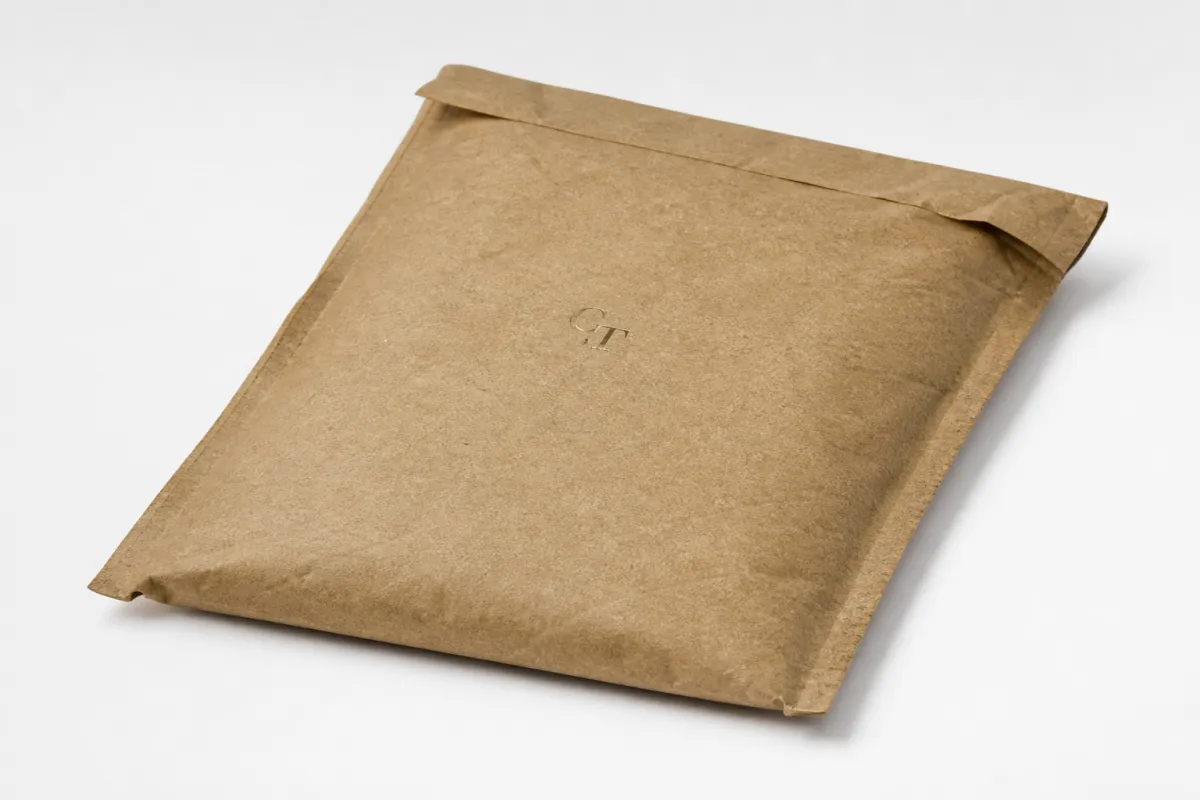
Brands move to printed recycled mailer bags for practical reasons before ideological ones. The first reason is material use. Recycled film can reduce the amount of virgin plastic in each shipment layer, which is useful when a company sends thousands of parcels a month and every gram matters. The second reason is presentation. A branded mailer keeps the order recognizable without forcing every SKU into a box. The third reason is clarity. Customers understand recycled content, custom branding, and lighter packaging in a single glance.
The visual side gets underestimated. A good printed recycled mailer bag can look more polished than a plain one because the print carries part of the design load. A simple mark, a disciplined color palette, and a clean layout often read as more premium than a crowded bag trying to say six things at once. The surface becomes part of the brand language. That matters because the mailer is usually the first object the customer touches after checkout, and first impressions are annoyingly durable.
Recycled film does not have to look coarse or inconsistent. The appearance depends on the recycled content blend, the quality of the base film, and the print process. Some bags feel surprisingly firm and smooth. Some cheap ones look tired before they ever reach the shipping lane. The difference is not philosophical. It is manufacturing discipline. Printed recycled mailer bags can be a better-looking option as well as a lower-virgin-material one, if the spec is handled with care.
A split seam, a smudged logo, or a bag that feels flimsy in the hand does not read as responsible packaging. It reads as a mistake.
Operationally, printed recycled mailer bags are also easy to move through a packing line. They are light, stack neatly, and do not add much to dimensional weight. That is useful for apparel, socks, scarves, small bundles, and folded soft goods. A box can make sense for fragile or bulky items. For a lot of everyday e-commerce orders, a bag is simply the more efficient shape.
The catch is straightforward. Printed recycled mailer bags perform well only when the spec is right. Too thin, and the seal becomes a weak point. Too busy, and the print starts to look muddy on recycled film. Too small, and the product pushes against the corners. Packaging wins are usually boring wins: correct size, correct thickness, correct closure, correct print method. The drama comes later if those pieces are wrong.
How printed recycled mailer bags are made
Printed recycled mailer bags usually begin as recycled plastic film. That recycled content can come from post-industrial scrap, post-consumer sources, or a blend of the two. Post-industrial feedstock tends to be more consistent because the stream is cleaner. Post-consumer material carries a stronger end-of-life story, but the film can vary more in color and texture. That difference shows up in stiffness, opacity, and how the bag accepts ink.
The manufacturing sequence is not complicated. Resin is prepared, melted, and extruded into film. The film is then converted into mailer bags with the correct dimensions, seams, and closure system. If the order requires printed recycled mailer bags, the artwork is usually applied during production through flexographic or gravure printing on larger runs. Short runs or frequent artwork changes may point to digital printing. The logic stays the same across factories: film first, print second, convert third, finish last.
Recycled content can change the visual result more than buyers expect. High post-consumer blends often bring slight tone variation or a softer matte look. That is not a defect by default. It is part of the material. A brand chasing an ultra-uniform luxury finish needs to plan for that. A brand shipping tees from a warehouse in Ohio or Manchester may decide the natural variation actually helps the bag look less sterile. Context matters. Packaging has a way of exposing that.
Common features on printed recycled mailer bags include:
- Self-seal strips for fast packing without added tape.
- Tear strips that make opening cleaner for the customer.
- Double adhesive lines for stronger closure and return use.
- Opaque layers that hide contents more effectively.
- Reinforced seams that reduce split risk at edges and corners.
Sample handling tells you more than a product page ever will. Hold the bag. Fold it. Pull the seal. Look at the logo across a crease. Check whether the corners feel crisp or mushy. Printed recycled mailer bags can look excellent on screen and still disappoint in the hand, which is why sample evaluation is not optional if the order affects customer perception.
A short checklist helps: print sharpness, seal strength, and film stiffness. Those three points usually expose whether the spec can scale. A bag that photographs well may still fail under warehouse pace. A sample that resists a quick tug and keeps the print legible after folding is worth more than a polished mockup.
Printed Recycled Mailer Bags cost, MOQ, and pricing drivers
Pricing for printed recycled mailer bags follows manufacturing logic, even when quotes arrive in a way that feels like an argument. The biggest drivers are bag size, film thickness, recycled content, print colors, closure type, and total quantity. Freight sits on top of that pile. A small order usually carries a higher unit cost because setup costs are spread across fewer bags. A larger run can lower the per-unit number, provided the spec stays simple and the artwork does not start asking for extra work at every turn.
Useful ranges are better than fake precision. For a basic recycled mailer bag with one-color print and a standard closure, a small run might land around $0.18-$0.38 per unit, depending on size and film choice. Mid-size runs often move lower, sometimes into the $0.12-$0.24 range. Larger repeat orders can dip further, especially when the artwork is simple and the size is standard. Add heavier film, more print coverage, specialty finishes, or a custom closure, and the price climbs fast. Not irrationally. Just fast.
MOQ matters because setup work does not shrink just because the order is smaller. Plates, artwork preparation, color matching, and machine setup still happen. Ordering too little inflates the unit cost. Ordering too much ties up storage and cash. Printed recycled mailer bags tend to reward the middle ground: enough volume to absorb setup, not so much that the back room starts holding half a year of dead stock.
| Option | Typical MOQ | Typical Unit Price | Best Fit | Main Tradeoff |
|---|---|---|---|---|
| Simple printed recycled mailer bags, 1 color, standard size | 2,000-5,000 pcs | $0.18-$0.38 | Apparel drops, starter brands, repeatable SKUs | Lower setup burden, but fewer design extras |
| Mid-tier printed recycled mailer bags, 2-3 colors, custom size | 5,000-10,000 pcs | $0.12-$0.24 | Growing e-commerce lines and seasonal launches | Better branding, more proofing and setup work |
| Heavy-duty printed recycled mailer bags, full coverage, upgraded closure | 10,000+ pcs | $0.10-$0.22 | Higher-volume fulfillment and stronger brand presentation | More protection and impact, but more upfront cash |
Those bands are practical, not sacred. Thicker film, stronger ink coverage, or a more complex closure can push an order outside them. Rush timing can do the same. The cleanest comparison comes from asking every vendor to quote the exact same size, thickness, recycled content target, print count, and delivery window. Anything else becomes a comparison of different products with the same label, which is a bad way to buy anything.
Comparing recycled mailers against Custom Poly Mailers can sharpen the decision. Sometimes the recycled version adds only a small premium. Sometimes the spread is noticeable. The gap depends on the resin market, the bag construction, and the print specification. If a supplier is vague about thickness or recycled percentage, the quote is not truly comparable, no matter how polished the spreadsheet looks.
Before approving price, ask for the exact thickness in microns or mils, the recycled content percentage, the print process, and the closure style. For light apparel, 50-70 micron film may be enough. For heavier soft goods, 75-90 micron or more often makes sense. If the supplier will not provide the numbers, treat the quote as a rough guess rather than a decision-ready proposal.
Key factors that affect quality, durability, and branding
Film thickness is the first lever worth watching. Thinner printed recycled mailer bags save material and can lower cost, but they also stretch more and feel less reassuring in the hand. A shirt packed into a flimsy bag might arrive intact, yet the customer still notices the difference. Warehouse staff notice it too. Slightly thicker film often costs a little more and prevents a lot of complaints. That is one of packaging’s oldest bargains.
Print durability comes next. Good ink adhesion, proper curing, and careful artwork preparation keep the logo from rubbing off or fading in transit. Recycled film can be less uniform than virgin film, so process control matters. Strong, clean layouts usually survive better than delicate gradients or microscopic reversed type. Printed recycled mailer bags do not reward cleverness that collapses under friction. They reward designs that print clearly and hold their shape after handling.
Opacity and color consistency matter more than many buyers expect. A higher recycled content blend can bring slight shade variation. A design that leaves a lot of pale background exposed tends to show that variation more clearly. Darker fields, limited color palettes, and confident logo placement usually look more intentional. That is why many of the strongest printed recycled mailer bags keep the palette tight instead of filling the bag with decorative noise.
Branding goes beyond a mockup. A matte surface feels different from gloss. Matte can read as restrained and modern; gloss can feel brighter and more promotional. Neither is universally correct. The right choice depends on the category, the brand voice, and the rest of the package system. A premium-looking logo on a bag that wrinkles at the seams creates a disconnect. Customers notice mismatches quickly, even if they never say the word out loud.
Operational fit matters as much as appearance. A bag that is too small strains the seal and bunches at the corners. A bag that is too large wastes film and looks untidy. Printed recycled mailer bags should match the product’s folded dimensions, the packing method, and the way the warehouse works. Folded tees, scarves, and accessories often need a clean-size bag with a dependable closure. Bulky items may need a different shipping format entirely.
Packaging testing gives this a useful frame. The ISTA test methods are a practical reference for drop, vibration, and handling checks. The EPA is a better source for recycling guidance than supplier marketing copy, which tends to blur the line between accurate and optimistic. Not every order needs a formal lab run, but the standards help you judge risk instead of guessing.
One more practical detail: the shipping route matters. A bag that works well for a regional parcel lane may not be ideal for longer transit, repeated sorting, or rough handling. That is why I usually ask buyers to think about the whole chain, not just the product weight. Printed recycled mailer bags are often judged on the bench, but they have to survive the conveyor, the truck, and the porch.
Printed Recycled Mailer Bags process, timeline, and lead time
The order flow for printed recycled mailer bags is predictable enough to plan around if the artwork is ready. It usually starts with a brief: dimensions, target product weight, recycled content preference, print colors, finish, and quantity. The artwork gets prepared, proofs are issued, and the buyer approves the visual and mechanical details. Sampling may follow. Then comes production, inspection, packing, and shipment. The sequence is simple. The interruptions usually come from human beings.
For a standard reorder, printed recycled mailer bags often move from approval to dispatch in about 10-15 business days, depending on factory schedule and shipping method. New custom jobs are slower, commonly 15-25 business days or more if the order involves multiple print colors, a new size, or a material adjustment. Large runs take longer because the machine time is longer. Very small rush orders can still wait if the line is already full. Factory capacity does not care about a product launch calendar.
Most delays come from a short list of causes:
- Artwork approval drags because the brand is still adjusting copy or logo scale.
- Color corrections happen after the first proof misses the intended shade.
- Sample revisions appear when the bag is too tight, too glossy, or too soft.
- Factory queue time stretches during peak season.
- Shipping delays arrive from the carrier rather than the production floor.
Realistic scheduling beats hopeful scheduling. If printed recycled mailer bags are tied to a launch, leave room for proofing and freight. A vendor saying they can finish in a week may mean only the production run, not the full cycle. It may also mean some part of the order was already in motion. That distinction matters a lot more than people think when a campaign date is fixed and the marketing team has already printed the banners.
The fastest orders are the ones with complete files, clear sizing, and a deadline that leaves air in the schedule. If you are deciding between printed recycled mailer bags and a standard plastic option for a tight launch, compare total lead time rather than unit price alone. A cheaper bag that misses the sale date costs more in the only way that matters.
For brands managing multiple SKUs, standardizing the spec can save a surprising amount of time. Reusing the same dimensions, thickness, and closure setup reduces approval friction and keeps the production line familiar. Once a printed recycled mailer bag works, keep it in rotation. Constant reinvention creates more work than value.
Common mistakes when ordering printed recycled mailer bags
The biggest mistake is choosing the lowest quote and treating that as procurement. Cheap printed recycled mailer bags can be perfectly fine, but only if the material, thickness, and seal quality are still acceptable. If the supplier will not specify those basics, the buyer is not making an informed decision. The buyer is hoping transit behaves politely.
Artwork is another place where people create trouble for themselves. Tiny text, thin lines, and weak color contrast can look muddy on recycled film. That is especially true when the material has natural variation. Simple layouts usually print better. A bold logo, clear brand mark, and limited palette often outperform a design that tries to prove how much Adobe exists in the world. Printed recycled mailer bags are shipping surfaces, not gallery walls.
Size errors are expensive in a very ordinary way. Too small, and the bag stretches at the seal or corners. Too large, and the product shifts, the mailer feels wasteful, and the shipping footprint grows. Buyers often estimate size from a mockup, then discover the real product bundle packs differently. Measure the folded item, allow for the seal zone, and leave enough slack for efficient packing without turning the mailer into a loose sack.
Proofing mistakes show up far too often. People approve a sample without checking logo placement, barcode readability, or how the color changes in different lighting. That shortcut can force a reprint. If printed recycled mailer bags will carry scannable information, test it. If the artwork crosses a fold, inspect it. If the finish is matte, make sure the print still has enough contrast to read well on the packing line and in the customer’s hand.
Customer handling matters too. A bag that is hard to open, seals too aggressively, or tears at the wrong point creates friction for the recipient. Packaging should not be a puzzle box. Printed recycled mailer bags ought to be easy enough for staff to pack and easy enough for customers to open without fighting the material. Anything else turns the shipping layer into a complaint mechanism.
If the packing team hates the bag, the customer will probably feel the same way. Friction is contagious in packaging.
One more mistake deserves attention: assuming recycled means automatically recyclable in every place. It does not. Film structure, adhesive components, and local collection rules all affect whether the bag can actually be recovered. Some printed recycled mailer bags are better candidates for recycling than others. Honest disposal guidance is more useful than a polished claim that breaks under basic scrutiny.
There is also a trust issue that brands sometimes overlook. If the recycled content claim is vague, inconsistent, or unsupported, customers and retailers notice faster than companies expect. Keep the claim specific. If you say post-consumer content is included, be able to explain the range. If the bag is recycled but not curbside recyclable everywhere, say that plainly. Credibility survives small truths much better than grand ones.
Expert tips for better printed recycled mailer bags
Keep the design restrained and deliberate. That sounds conservative until the print comes back clean and the bag looks better than the louder version. A strong logo, a clear message, and a limited color count usually print more reliably on printed recycled mailer bags and can lower setup complexity. Designs that depend on tiny type or airy gradients often look elegant in a file and fragile in real production.
Test before committing. A small pilot run tells you more than a long thread of approval emails. Check seal strength, print clarity, bag fit, and packing speed. If the sample feels a little thin or the adhesive grabs too quickly, fix it before the full order. Printed recycled mailer bags tend to fail in minor ways first. Minor is only comforting until the order scale multiplies it.
Ask for production photos or QC details when ordering remotely. Not every supplier offers the same visibility, but a competent one should be able to show seal checks, print registration, or stack samples from the run. That becomes more valuable as order size rises, because a small defect can scale fast. A supplier who cannot talk clearly about their own process is worth a closer look, and not in the flattering sense.
Match the spec to the product, not the mood board. Lightweight apparel does not need the same construction as denser soft goods. A bag for a single tee can often be lighter than one meant for a folded hoodie or a multi-item bundle. Printed recycled mailer bags should reflect the actual weight and handling load, not the one that looked nicest in a presentation deck.
Keep repeating the winning spec once it performs. That sounds obvious, but brands love to change details for the sake of novelty. If the current printed recycled mailer bags are working, keep the same dimensions, thickness, adhesive, and print setup. Small cosmetic changes often cost more than they return.
A simple packaging spec sheet helps too. Include size, film thickness, recycled content target, print colors, adhesive type, tear strip requirement, and acceptable unit cost. If you sell through multiple channels, compare the bag against a backup option such as Custom Poly Mailers so you can see where the recycled version makes sense and where it does not.
Accuracy matters in the sustainability story. Printed recycled mailer bags can reduce virgin plastic use and improve customer perception, but they are still a plastic shipping format. Say that plainly. Buyers trust a brand more when it speaks with care instead of claiming every package is a moral clean-up operation.
One detail I keep coming back to after years of reviewing packaging specs: the best orders are often the least dramatic ones. They are the result of a few clear decisions made early, not a rescue mission at the proof stage. That may sound dull, but dull is underrated in packaging. It usually means the warehouse gets what it needs and the customer never has to think about the bag at all.
Next steps for a smarter packaging order
If you are serious about ordering printed recycled mailer bags, start with the product data rather than the artwork. Define the item weight, folded dimensions, target bag size, print colors, recycled content goal, and monthly volume before you request quotes. That one move filters out a lot of noise. If a supplier cannot quote against a consistent spec, the pricing comparison is not worth much.
Build a comparison sheet next. Put every quote in the same rows so thickness, MOQ, unit price, lead time, and closure type can be compared without relying on memory. Sales language tends to blur the edges. A spec sheet does not. Printed recycled mailer bags should be bought like a controlled packaging component, not like a souvenir.
Request a physical sample or swatch if the order affects brand perception. Screens are excellent at lying politely. A sample shows the real hand feel, the true color tone, and the actual seal behavior. If it is close but not right, fix it before production. A small delay now costs less than a warehouse full of almost-right printed recycled mailer bags later.
Set approval deadlines and freight buffers before launch. That means artwork cutoff, proof approval date, production window, and shipping contingency. If the campaign depends on a fixed ship date, do not build the plan around the best-case scenario. Build it around the normal one. Printed recycled mailer bags are practical packaging, but they still need a calendar that respects reality.
The bottom line is plain. Printed recycled mailer bags can be a smart buy if cost, performance, and brand image are balanced instead of treated as separate problems. Choose the Right thickness, keep the design clean, check the seal, and compare quotes on the same spec. Do that, and printed recycled mailer bags become a packaging decision that earns its place in the workflow.
If you want the shortest path to a good order, use this rule: define the product, verify the material, and approve only after the sample feels right in the hand. That approach is slower than clicking the cheapest quote, but it avoids the expensive kind of surprise.
What are printed recycled mailer bags made from?
They are usually made from recycled plastic film, often with a mix of post-consumer and post-industrial material. The blend affects strength, finish, and color consistency, so the material spec matters more than the label alone. Some printed recycled mailer bags also use layered construction or additives to improve opacity, seal performance, or ink adhesion.
Are printed recycled mailer bags strong enough for shipping?
Yes, if the thickness, seal, and material quality match the product weight and transit conditions. Printed recycled mailer bags work well for apparel, accessories, soft goods, and other lightweight items. Test seal strength, tear resistance, and edge durability before placing a large order. A sample that survives a desk pull is useful. A sample that survives real packing is better.
What affects the cost of printed recycled mailer bags the most?
Bag size, thickness, print colors, recycled content, and order quantity have the biggest impact on unit cost. MOQ matters because setup costs get spread across fewer bags on small runs. Complex artwork and special finishes usually raise the quote quickly. For a clean comparison, make sure every supplier is quoting the same printed recycled mailer bag spec.
How long is the lead time for printed recycled mailer bags?
Lead time depends on artwork approval, sample revisions, production queue, and shipping method. Simple repeat orders are usually faster than new custom designs with multiple print colors. Many printed recycled mailer bags orders move in about 10-15 business days after approval for repeats, while new jobs often need 15-25 business days or more. Leave room in the launch plan so a delayed proof does not blow up the schedule.
Can printed recycled mailer bags be recycled again?
Sometimes, but the answer depends on local recycling systems and the exact film structure. Multi-layer films, heavy ink coverage, and adhesive components can limit recyclability in some areas. Check local guidance and communicate disposal instructions clearly to customers. Printed recycled mailer bags should not promise a recycling outcome that the local system cannot support.
Do printed recycled mailer bags look different from standard poly mailers?
Often, yes. Recycled film can show slight tone variation, a softer finish, or more surface texture than virgin plastic. That is not automatically a flaw. In many cases it makes the bag look more grounded and less sterile. The key is to design for the material instead of pretending the material does not matter.