Buyer Fit Snapshot
| Best fit | Printed Rigid Mailer Boxes projects where brand print, material claims, artwork control, MOQ, and repeat-order consistency need to be specified before quoting. |
|---|---|
| Quote inputs | Share finished size, material target, print colors, finish, packing count, annual reorder estimate, ship-to region, and any compliance wording. |
| Proofing check | Approve dieline scale, logo placement, barcode or warning zones, color tolerance, closure strength, and carton packing before bulk production. |
| Main risk | Vague material claims, crowded artwork, missing packing details, or unclear freight terms can make a low unit price expensive after revisions. |
Fast answer: Printed Rigid Mailer Boxes: Film, Print, MOQ, and Carton Packing should be specified like a repeatable production item. The safest quote records material, print method, finish, artwork proof, packing count, and reorder notes in one written spec.
Production checks before approval
Compare the actual filled-product size with the drawing, then confirm tolerance on folds, seals, hang holes, label areas, and retail display edges. Reserve space for logos, QR codes, warning copy, and material claims before decorative graphics fill the panel.
Quote comparison points
Review material grade, print process, finish, sampling route, tooling charges, carton quantity, and freight assumptions side by side. A quote is only useful when the supplier can repeat the same color, closure quality, and packing count on the next order.
Printed Rigid Mailer Boxes: Practical Shipping Guide
Printed rigid mailer boxes do one thing quickly and well: they make a shipment feel considered before the product is ever lifted out of the tray. They also let brands combine protection, presentation, and recognition in one structure, which is useful precisely because those three goals rarely cost the same amount. If you have ever opened a package that felt impressive before the product even appeared, you already know the effect these boxes are trying to create.
If you are comparing broader Custom Packaging Products or weighing a lighter structure such as Custom Poly Mailers, the real question stays simple: does the package need to sell the product at first touch, or does it only need to reach the doorstep intact? That decision shapes everything that follows, from board thickness to finish choice to the amount of freight you are gonna pay.
Printed Rigid Mailer Boxes: What They Are and Why They Stand Out
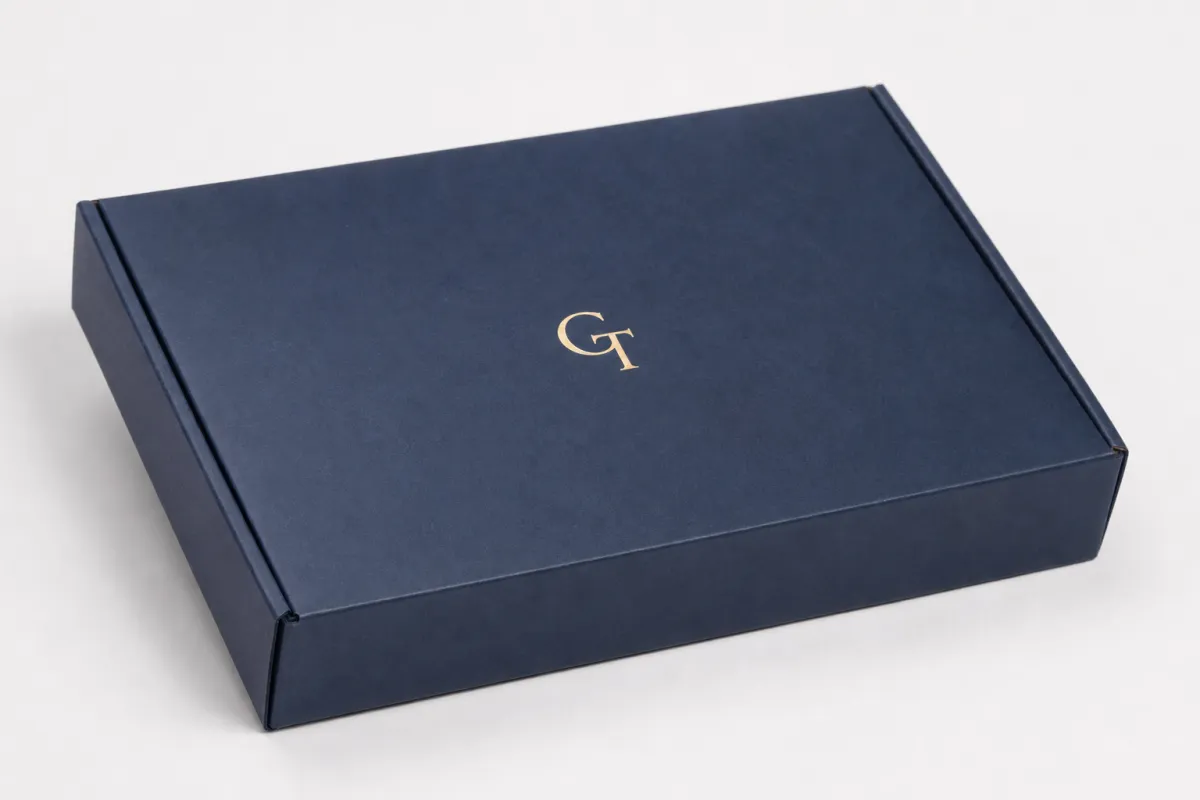
Printed rigid mailer boxes are a set-up board structure built to feel solid in the hand, wrapped in printed paper, and formed with a mailer-style closure that works for shipping and presentation. They are not flimsy folding cartons, and they are not ordinary corrugated mailers either. They sit between those two categories, which is why printed rigid mailer boxes appear so often in beauty, gifting, and premium direct-to-consumer launches.
The structure usually starts with greyboard in the 1.5 mm to 3 mm range, then gets wrapped with art paper or specialty paper that carries the printed design. That thickness gives printed rigid mailer boxes their weight and the crisp feeling people notice when the lid closes. It also creates a cleaner edge profile than a soft mailer, and that detail matters more than many buyers expect. Customers start judging the product before they read a single label, and packaging often decides that first impression.
Where do printed rigid mailer boxes make the most sense? Gifts, beauty kits, influencer sends, subscription boxes, and product bundles that need a little ceremony. Small, expensive, fragile, or visually strong products tend to benefit the most. A $40 serum or a $75 accessory set feels different in printed rigid mailer boxes than in a plain brown shipper. The box signals that the brand spent time on the experience, not just the postage.
- Best fit: beauty, jewelry, candles, gift sets, apparel accessories, PR kits
- Less ideal: low-margin commodity goods where shipping cost matters more than presentation
- Typical finish options: matte lamination, soft-touch film, foil, spot UV, satin paper wrap
Plain mailers are cheaper and faster to move through a supply chain. That works until a brand needs more than speed and cost control. Printed rigid mailer boxes bring stronger shelf impact, firmer edge protection, and a more deliberate unboxing moment. For launches, holiday kits, and retail-ready gifting, that difference is not decorative fluff. It is part of the product itself, and customers notice it immediately.
How Printed Rigid Mailer Boxes Work in Shipping
The shipping performance of printed rigid mailer boxes comes from the way the structure is built, not from the artwork alone. Board thickness, paper wrap, closure style, and insert design all need to work together. If one part is weak, the box can still photograph well and still arrive crushed. Packaging does have a way of punishing optimism.
Most printed rigid mailer boxes use a rigid base wrapped in printed paper, then a front flap or tuck-style closure that keeps the lid shut during handling. Some premium builds add a hidden magnetic catch, but most mailer-style structures rely on fit, board stiffness, and a clean locking tab. The exterior may be directly printed for simpler runs, though litho-lam and wrapped decoration are common when color accuracy and finish matter more. A wrapped exterior also hides board seams better, which gives the box a more refined edge.
Protection is where printed rigid mailer boxes earn their keep. The thick board reduces crush damage, especially on corners and lid edges. A well-fitted insert keeps the product from bouncing around when the package is dropped, stacked, or tossed across a conveyor. Without that restraint, even a beautiful box can arrive with scuffed product, broken glass, or a damaged presentation. A box should not behave like decorative luggage for a loose item.
There is a tradeoff, and Buyers Should Know it early. Printed rigid mailer boxes usually weigh more than a standard folding carton and can increase dimensional volume. That affects postage, freight, and storage. A compact 8 x 6 x 2.5 inch rigid mailer may still be easy to ship, but once the size grows, shipping cost climbs faster than many brands expect. That is why the full packaging system matters more than the mockup sitting in a presentation deck.
In practical terms, the strongest builds match the product closely. A 2 mm board with a well-fitted paper insert often does more for transit protection than a thicker box with empty space inside. For higher-risk shipping lanes, it helps to check parcel handling benchmarks such as ISTA drop and vibration standards so the packaging decision is tied to real shipment abuse rather than a sample on a desk.
Pretty mockups do not survive parcel networks. Fit, insert design, and corner strength are what keep printed rigid mailer boxes looking premium after the delivery scan.
Cost, Pricing, MOQ, and Unit Cost Factors
Pricing for printed rigid mailer boxes is driven by a handful of variables that move quickly: board grade, size, print coverage, finish complexity, insert design, and order volume. If a supplier gives you one neat number without asking about those details, they are not quoting your project. They are quoting a guess. Printed rigid mailer boxes take more labor than basic folding cartons, so the economics start from a different place.
These planning ranges are useful for budgeting, not for locking in a purchase order. Region, season, freight lane, and paper availability can shift the final number more than people expect. I have seen a sample run look affordable on paper and then jump once a foil pass, a tighter insert, and outbound freight were added. That is why the landed cost matters more than the box price alone.
Common MOQ ranges are usually higher than standard mailers. For simple printed rigid mailer boxes, 500 to 1,000 units can happen, but many production lines are more comfortable at 1,000 to 2,000 units. Once specialty finishes, custom inserts, or more involved structure work enter the picture, minimums often move to 2,000 to 5,000 units. That is not a random hurdle. It reflects setup, wrapping, assembly, and quality control labor.
| Build Option | Typical MOQ | Approx. Unit Cost | Best For | Main Tradeoff |
|---|---|---|---|---|
| Simple print, no insert | 500-1,000 | $1.10-$2.00 | Light products, small launches | Less protection and lower visual impact |
| Litho-lam finish with matte wrap | 1,000-3,000 | $1.80-$3.25 | Beauty, gifts, subscription kits | More setup time and tighter proofing |
| Premium finish with insert, foil, or spot UV | 2,000-5,000 | $2.75-$5.50 | PR boxes, luxury sets, seasonal gifts | Higher freight, more scuff sensitivity, more build steps |
At a buyer level, the smartest comparison is landed cost, not the box price by itself. A quote that looks cheap can become expensive once freight, customs, duties, inner packing, and local delivery enter the total. Printed rigid mailer boxes also take space in storage and shipping cartons, so the hidden cost is not only the factory line item. Ask for an all-in comparison at the same quantity and the same spec. Otherwise you are comparing apples to a box full of loose assumptions.
One more practical point: bigger runs usually reduce unit price, but not in a perfectly linear way. A 2,000-unit order may still cost meaningfully more per box than 5,000 units, even if the structure is identical. The tooling and setup costs spread out more evenly at scale. If demand is uncertain, a focused pilot can be a sensible start before a larger rollout.
For tighter budgets, keep the structure simple and put money into the detail customers actually notice. That might mean cleaner print, a better insert, or simply a closure that feels right in the hand. Printed rigid mailer boxes work best when the design choices are deliberate rather than crowded with extras that eat the margin for no real return.
Production Steps, Timeline, and Lead Time
Printed rigid mailer boxes follow a longer production path than many buyers expect. That is not because the process is mysterious. It is because the box has more parts, more wrapping, and more chances for a small mistake to become a costly re-run. The standard path starts with the dieline, moves into artwork, then proofing, sampling, production, die-cutting, wrapping, assembly, and final quality control.
- Dieline confirmation: verify product size, insert clearance, and closure fit.
- Artwork prep: set bleed, safe zones, color profiles, and finish callouts.
- Proofing: review digital mockups and confirm text, placement, and color expectations.
- Sampling: check structure, feel, print, and insert fit before the full run.
- Production: print, laminate or wrap, cut, glue, and assemble.
- Final QC: inspect corners, flap closure, scuffing, and consistency.
Typical sample time is often 7 to 14 days, though straightforward builds can move a little faster and complex builds can take longer. Full production commonly runs 3 to 6 weeks after approval, depending on quantity and finishing. If the run includes foil, embossing, specialty paper wraps, or custom inserts, add extra time. Printed rigid mailer boxes reward planning. They do not reward last-minute optimism.
The most common delays are ordinary in the way that only packaging delays can be. Artwork arrives late. The insert needs a second revision. Someone spots a typo after proof approval. A dark, rich print needs a second pass because the first proof looked different on screen than on paper. None of that is unusual, which is exactly why it should be scheduled for. If a launch date matters, add a buffer of at least 10 to 14 business days beyond the quoted lead time.
For brands shipping seasonal kits or influencer drops, it helps to lock the structure early and freeze copy before the final sampling round. That sounds obvious. People still miss it. Printed rigid mailer boxes are easier to get right when the packaging calendar is treated as part of the product launch, not a decoration task squeezed in on Friday afternoon.
Here is the practical rule: if the product has a public release date, the packaging order should be running ahead of marketing, not chasing it. That one habit saves a lot of panic and more than a few overnight freight invoices.
Key Factors That Decide Quality and Performance
Quality in printed rigid mailer boxes is not only about looking expensive. It is about whether the box feels solid, closes correctly, survives transit, and still looks presentable after handling. A box can have excellent colors and still be a poor box if the board is weak or the insert is careless. Buyers see that difference quickly once samples begin arriving.
Material choice is the first filter. A stiffer greyboard in the right thickness gives the box a firm body, while the wrap paper controls feel, scuff resistance, and visual quality. Common wrap papers range from coated art paper to textured specialty stocks. If sustainability matters, ask whether the wrap and board are sourced from FSC-certified materials. Certification does not answer every environmental question, but it gives you a cleaner paper trail than marketing adjectives do.
Print and finish matter just as much. Color accuracy, foil placement, edge wrapping, and lamination quality all affect how premium printed rigid mailer boxes look after shipping. Soft-touch lamination feels impressive in hand, but it can show scuffs faster than a harder matte film. Dark backgrounds look dramatic, and they also show scratches. That is the tradeoff. If the box will move through several hands, a slightly less dramatic finish may hold up better.
Fit and function are where good packaging earns repeat business. The box should match the product tightly enough to prevent movement, but not so tightly that packing turns into a slow wrestling match. If the fulfillment team has to force every item into the insert, the packaging spec is wrong. A good fit should reduce motion without slowing the line. That is true for printed rigid mailer boxes, and it is true for most premium mailer structures.
Durability tests are non-negotiable if the box ships in volume. After enough sample approvals, I have learned to check the corners under bright light, open and close the flap several times, and then ship a prototype through the same handling path the finished order will face. A useful benchmark is to use shipping profiles aligned with ISTA methods, especially for small parcel delivery. A pretty prototype is not enough. You want to know whether the box survives being stacked, dropped, and slid across a truck floor like it owes somebody money.
From a packaging buyer’s point of view, the best printed rigid mailer boxes are the ones that survive bad handling without needing a prayer and a refund policy.
Edge finishing deserves attention too. If the wrap pulls too tight at the corners, you get lift, white showing, or early wear. If the glue line is uneven, the closure can warp. Those flaws are easy to miss in photos and hard to forgive once a customer starts opening the box. The sample should be checked under bright light, pressed at the corners, and opened more than once. That work is not glamorous. It is still cheaper than replacing a run.
Common Mistakes When Ordering Printed Rigid Mailer Boxes
The biggest mistake with printed rigid mailer boxes is sizing them by guesswork. Too much empty space and the product rattles. Too little space and fulfillment slows down because every packer has to force the item into place. Either version creates problems. One damages the product, the other damages labor cost. Neither is charming.
Another frequent mistake is overdesigning the print. Heavy coverage, dark full-bleed backgrounds, foil on every panel, spot UV everywhere, and three different paper textures may look exciting on a mockup. On a factory floor, that same idea raises cost, extends lead time, and increases the chance of variation. Printed rigid mailer boxes do not need every possible finish to feel premium. Usually they need one or two finishes used with restraint.
- Bad sizing: loose fit or tight packing slows fulfillment and increases breakage risk.
- Too many finishes: more effects usually mean more setup, more cost, and more scuff risk.
- No insert: saving a little money up front can create damaged returns later.
- No prototype test: a live shipment test catches problems a digital proof cannot show.
The insert mistake deserves its own callout. Some brands skip inserts to save a few cents, then end up paying for damage, customer service time, and replacement product. If the product can move, tip, crack, or scratch, the insert is part of the packaging system, not an optional accessory. That is especially true for printed rigid mailer boxes carrying glass, cosmetics, candles, or multiple components bundled together.
There is also a temptation to approve the first sample because it looks good enough. Good enough is how you get annoyed later. A real test should include opening and closing the box several times, dropping it from a realistic shipping height, and packing a few real units through the fulfillment process. If the sample survives those checks, the design has a better chance in the real world. If it fails, the fix is still cheap enough to make sense.
Finally, do not ignore the buying conversation after the first quote. Ask what happens if the print coverage changes. Ask whether the insert is separate or built into the quoted unit price. Ask how freight is calculated. Printed rigid mailer boxes are simple to describe and annoyingly specific to produce. The more exact the spec, the fewer surprises later.
Next Steps for Printed Rigid Mailer Boxes
If you are ready to source printed rigid mailer boxes, start with a spec sheet instead of a mood board. The spec sheet should include product dimensions, target quantity, closure preference, finish preference, insert type, and destination market. A clear spec makes the supplier quote more useful and the comparison much cleaner. Without it, you are comparing opinions with postage attached.
- Write the size target: include product dimensions and any insert clearance.
- Define the look: matte, soft-touch, foil, spot UV, or a simpler print.
- Set the quantity: ask for pricing at two or three volume breaks.
- Request samples: verify fit, scuff resistance, and closure behavior.
- Test one real shipment: ship a prototype through the same handling path you expect in production.
Requesting quotes from multiple suppliers only works if the specs match. If one supplier quotes 2 mm board with a paper insert and another quotes 1.5 mm board with no insert, the lower price is not a deal. It is a different product. Ask for the same structure, same print method, same finish, and same shipping terms. Then compare lead time and landed cost side by side.
For brands still deciding between structure types, a simple rule helps: use printed rigid mailer boxes when the package itself matters to the customer, and use lighter formats when freight efficiency is the priority. There is no prize for forcing a premium build onto a low-margin item. That usually ends badly, then someone pretends the margin erosion was a marketing expense.
A small pilot order is a smart next move if demand is uncertain. It gives you data on assembly speed, scuffing, shipping damage, and customer response. If the pilot performs well, scale the order. If it does not, adjust the insert or finish before committing to a larger run. That is a calmer way to buy packaging than ordering a huge quantity and hoping quality control handles the rest.
In the right use case, printed rigid mailer boxes raise perceived value, protect the product, and make the brand look intentional from the first touch. That is a useful combination. It works best when the spec is disciplined, the timeline is realistic, and the buyer pays attention to the boring details first.
Final Takeaway for Printed Rigid Mailer Boxes
The cleanest way to choose printed rigid mailer boxes is to treat the box as part of the product, not as an afterthought. Lock the dimensions first, choose the lightest structure that still protects the item, and add only the finish work that earns its place. If the sample looks great but fails a real shipment test, the design is not ready yet. If it passes fit, handling, and scuff checks, you have a packaging system that can carry both the product and the brand story without pretending either one is free.
What are printed rigid mailer boxes used for?
They are used for products that need strong shipping protection and a premium unboxing moment. They work well for beauty, gifts, subscription kits, electronics accessories, and branded corporate mailers.
Are printed rigid mailer boxes better than standard mailers?
Yes, when presentation matters because rigid mailer boxes feel sturdier and more premium than regular corrugated mailers. No, if your only goal is the cheapest possible shipping box, because rigid structures cost more and usually weigh more.
How much do printed rigid mailer boxes usually cost?
Pricing depends on size, board thickness, print coverage, finishes, inserts, and quantity. The smartest comparison is landed cost per unit, not just the box price, because freight and setup fees can shift the total quickly.
What is the typical lead time for printed rigid mailer boxes?
Samples often take about 7-14 days, while production commonly takes 3-6 weeks. Special finishes, insert changes, or late artwork approvals can extend the timeline.
Do printed rigid mailer boxes need inserts?
Not always, but inserts are strongly recommended when the product can move, tip, or break in transit. A good insert improves protection, improves presentation, and reduces customer complaints from damaged goods; that is why I rarely recommend skipping inserts for printed rigid mailer boxes unless the product is very light and almost impossible to shift.