Buyer Fit Snapshot
| Best fit | Rigid Boxes Price per Unit projects where brand print, material claims, artwork control, MOQ, and repeat-order consistency need to be specified before quoting. |
|---|---|
| Quote inputs | Share finished size, material target, print colors, finish, packing count, annual reorder estimate, ship-to region, and any compliance wording. |
| Proofing check | Approve dieline scale, logo placement, barcode or warning zones, color tolerance, closure strength, and carton packing before bulk production. |
| Main risk | Vague material claims, crowded artwork, missing packing details, or unclear freight terms can make a low unit price expensive after revisions. |
Fast answer: Rigid Boxes Price per Unit: Board, Finish, Dieline, and Unit Cost should be specified like a repeatable production item. The safest quote records material, print method, finish, artwork proof, packing count, and reorder notes in one written spec.
Production checks before approval
Compare the actual filled-product size with the drawing, then confirm tolerance on folds, seals, hang holes, label areas, and retail display edges. Reserve space for logos, QR codes, warning copy, and material claims before decorative graphics fill the panel.
Quote comparison points
Review material grade, print process, finish, sampling route, tooling charges, carton quantity, and freight assumptions side by side. A quote is only useful when the supplier can repeat the same color, closure quality, and packing count on the next order.
Rigid boxes price per unit can look straightforward on paper and still catch experienced buyers off guard. Two boxes that appear nearly identical can land 15% to 30% apart once magnets, foil, a custom insert, or a tighter wrap specification enters the job. I have seen that gap show up even on projects where the drawings looked almost interchangeable, which is why the quote needs to be read as a spec sheet, not just a number.
Smart sourcing starts with structure, not surface appearance. A premium rigid box is really a stack of decisions: board grade, wrap paper, liner, closure, print coverage, insert design, and finishing. Shift one of those choices, and rigid boxes price per unit can move more than the box dimensions ever would. That is the part buyers sometimes miss when they are comparing samples in hand and assuming the cost should follow the same logic.
If you are comparing quotes for retail, cosmetics, electronics, or gift packaging, the point is not to hunt the lowest number and stop there. The point is to see which line items are pushing rigid boxes price per unit upward, which ones are doing real brand work, and which ones can be simplified without making the package feel cheap. A clean-looking box can still be cost-efficient, and honestly, that is often the better outcome.
“The cleanest rigid boxes price per unit usually comes from the cleanest spec sheet, not the loudest volume promise.”
The Surprising Truth About Rigid Boxes Price Per Unit
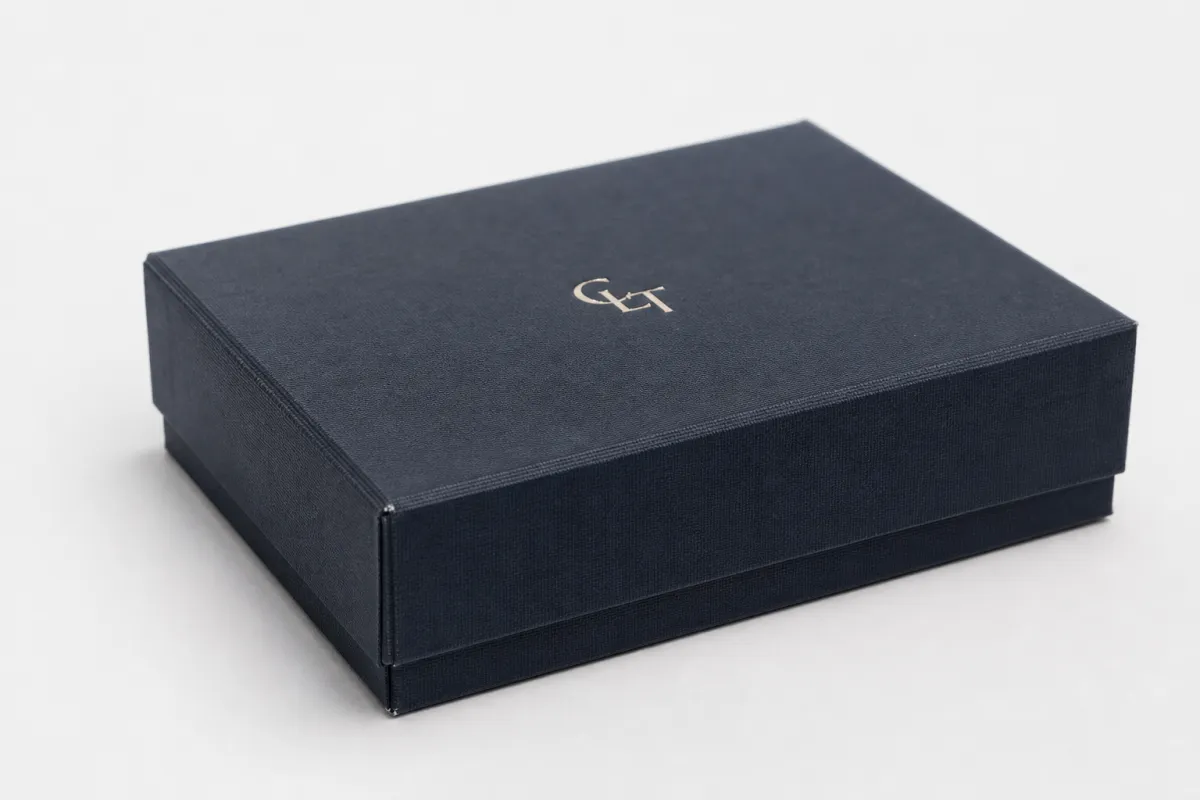
Rigid boxes price per unit is often shaped more by labor and setup than by exterior dimensions. Two boxes can share the same length, width, and height, yet still sit in very different price bands because one is a simple two-piece structure and the other includes a magnetic flap, a foam cavity, and a foil-stamped logo.
That difference matters because rigid packaging is not built like a folding carton. A rigid box usually starts with chipboard, then gets wrapped in printed or unprinted paper, then assembled by hand or with semi-manual steps, then finished with inserts and closures. Each added step takes time, and each added step creates another place where rigid boxes price per unit can rise. The work is precise, but it is still work, and labor does not disappear just because the box looks small.
From a packaging buyer's point of view, the biggest mistake is comparing size alone. Size matters, but it is not the main driver. A compact cosmetics box with specialty paper and debossing can cost more per unit than a larger but simpler mailer-style rigid carton. The market rewards discipline. Clean artwork, standard board thickness, and a repeatable insert help keep rigid boxes price per unit much more predictable.
Categories such as fragrance, premium skincare, headphones, jewelry, and corporate gifts tend to see the sharpest jumps. Why? Those programs often include magnets, ribbon pulls, spot UV, foil stamping, or nested trays. Each upgrade can be justified. All of them at once usually are not, unless the product and channel truly need that level of presentation.
A useful way to think about the quote is simple: ask, "What spec stack sits behind this number?" That question shows whether rigid boxes price per unit is being driven by real structural complexity or by avoidable decoration.
- Simple structure: two-piece lid-and-base boxes are usually easier to control.
- Standard board: common chipboard thicknesses tend to stay more stable than custom builds.
- Disciplined finish: one or two brand-led effects often beat a crowded decoration plan.
- Consistent insert: a standard paperboard or EVA insert can help keep rigid boxes price per unit in check.
There is also a brand perception trap. Buyers sometimes assume a more expensive-looking box must be the better one. That is not always true. A restrained rigid box with a precise wrap, sharp edges, and one well-placed foil mark can feel more premium than a box packed with effects. Rigid boxes price per unit and perceived value do not move in perfect lockstep, and that gives you room to spend where customers actually notice.
How Rigid Boxes Price Per Unit Changes by Material and Finish
The core structure of a rigid box is simple enough: a chipboard shell, a wrap material, an interior liner, and whatever insert or closure the product needs. The details are where rigid boxes price per unit starts to climb. A 2 mm board wrapped in standard art paper is a different job from a 3 mm board wrapped in textured paper with edge painting and a magnetic flap.
Wrap paper has a major effect. Standard art paper is usually the most economical and the easiest to print on. Kraft wrap can support a natural, eco-led look and often stays friendlier on cost than heavily textured specialty papers. Soft-touch laminated wraps create a richer feel, though they add finishing steps and a more delicate handling standard. When the buyer wants a tactile surface, rigid boxes price per unit usually reflects that added work.
Finishes deserve their own conversation. Spot UV needs setup and a separate pass. Hot foil adds tooling and careful registration. Embossing or debossing changes the plate work and can slow the line. Edge painting looks striking, yet it is labor-sensitive and works best where the edge detail genuinely supports the design story. Each choice can be worthwhile. Trouble starts when all of them land in one quote and rigid boxes price per unit jumps without a clear reason.
Internal supports are another quiet driver. Foam inserts, molded trays, and custom paperboard partitions all affect cost in different ways. Foam can create a snug premium fit, though it may be more expensive than a die-cut paperboard cradle for many applications. A molded tray may suit electronics protection, while a simpler die-cut insert can be more economical for cosmetics or gift sets. If the product does not need heavy shock protection, you may be paying for over-engineering rather than performance.
A practical middle ground works well: build the box with a standard structure, then add one signature feature. That might mean textured paper with foil only on the logo. Or a matte wrap with a small embossed emblem. Or a plain exterior with a custom insert that improves presentation. This approach protects brand value and keeps rigid boxes price per unit easier to forecast.
For buyers who want a broader benchmark for design and shipping considerations, the ISTA testing standards are a useful reference when transport durability matters, and the FSC certification system is worth reviewing when paper sourcing and sustainability claims are part of the brief. Those standards do not set your quote, but they do shape which material and construction choices make sense.
Common material choices and their price behavior
Art paper-wrapped rigid boxes are usually the baseline for many branded programs. Kraft wraps often land near that baseline if the print spec stays simple. Specialty textured papers raise rigid boxes price per unit because they are less forgiving in production and often demand more careful wrapping. Laminated finishes, especially soft-touch, tend to push the quote upward again because they add another coating process and a more demanding hand-feel standard.
If the budget is tight, do not begin by stripping the branding away. Start by deciding which finish carries the most weight. One strong finish usually beats three minor ones. If the box already carries brand equity, you are probably gonna get more mileage from a single clean effect than from a crowded stack of treatments. That kind of tradeoff keeps rigid boxes price per unit under control without flattening the presentation.
Specifications That Influence Quote Accuracy and Unit Cost
Clear specs are the fastest way to reduce pricing noise. If you want a reliable answer on rigid boxes price per unit, your RFQ should include exact dimensions, board thickness, wrap type, print coverage, insert style, closure type, and expected order quantity. Leaving any of those vague forces the supplier to guess. Guessing leads to padded quotes, and padded quotes make rigid boxes price per unit harder to compare.
Tolerances matter more than many buyers expect. A box that needs a tight fit for a glass bottle or a precision device may require tighter production control, especially if the insert is custom cut. Even small changes in internal dimension can affect nesting efficiency, board yield, and assembly effort across the run. That is one reason rigid boxes price per unit can differ between two projects that look similar on a drawing but are not identical in production reality.
Structural style also affects quote accuracy. A telescoping box, a book-style box, a shoulder neck box, and a magnetic rigid box each carry different assembly demands. A shoulder neck box can feel highly elevated, but it is usually more complex than a standard two-piece design. Magnetic rigid boxes often cost more because the closure system adds material and alignment time. If you want a premium feel without a premium mechanism, ask whether the visual result can be reached through print, wrap, and insert design instead.
Artwork complexity is another lever. Full-bleed wraps, multiple PMS color matches, metallic inks, and tight registration all raise the risk of rework. If the design includes reverse type, narrow borders, or exact color standards, the supplier may add allowance for proofing and rejection risk. That allowance shows up in rigid boxes price per unit. It is not always a hidden fee; often it is simply the cost of precision.
Here is the cleaner RFQ checklist I suggest:
- Exact external and internal dimensions.
- Target quantity and any tiered quantity targets.
- Board thickness and preferred wrap material.
- Print method, coverage, and color requirements.
- Finish selection, including foil, UV, embossing, or lamination.
- Insert type, product weight, and any retention needs.
- Closure style, ribbon, magnet, sleeve, or none.
- Shipping destination and whether freight should be included.
The sharper the spec sheet, the sharper the quote. That is not theory. It is one of the simplest ways to stabilize rigid boxes price per unit before a supplier ever sends pricing back.
Rigid Boxes Price Per Unit: Cost, MOQ, and Quote Drivers
MOQ has a direct effect on rigid boxes price per unit. Fixed costs do not disappear just because the order is small. Artwork setup, cutting tools, proofing, assembly prep, and quality checks all have to be absorbed somewhere. If only 250 boxes are produced, those costs are spread across 250 units. If 2,000 boxes are produced, the same setup burden is diluted much more efficiently.
That is why short runs often look expensive on a per-unit basis. It is not because suppliers are trying to inflate the number. The job simply carries the same labor and setup weight across a smaller order. In many rigid box programs, the drop from 250 to 500 units can noticeably improve rigid boxes price per unit. Another improvement often appears again at 1,000 or 3,000 units, especially if the structure is standard and the print spec is simple.
Below is a practical comparison. These are illustrative ranges for a standard custom rigid box with ordinary print coverage; actual rigid boxes price per unit will change with size, finish, insert complexity, and freight assumptions.
| Order volume | Typical spec profile | Illustrative rigid boxes price per unit | What usually drives the number |
|---|---|---|---|
| 250 units | Two-piece rigid box, basic wrap, simple print | $2.25-$4.50 | Setup costs and low-run handling |
| 500 units | Two-piece or book-style box, one finish | $1.55-$3.20 | Better spread of tooling and labor |
| 1,000 units | Standard premium rigid box, limited effects | $1.10-$2.40 | Material efficiency and steadier production flow |
| 3,000 units | Higher-volume branded box, moderate finishing | $0.85-$1.85 | Economies of scale begin to show clearly |
| 5,000 units | Repeatable design, standardized insert | $0.70-$1.55 | Lower setup impact and better material utilization |
Those ranges help only if the quotes are truly comparable. A low base price can look attractive until the supplier adds custom inserts, specialty paper, foil plates, rush labor, or higher freight due to dimensional weight. That is the point where rigid boxes price per unit stops acting like a clean figure and starts behaving like a bundle of assumptions.
For example, a quote for a magnetic rigid box with EVA insert, soft-touch wrap, and foil logo can appear only slightly higher than a standard two-piece box at first glance. Then the add-ons show up line by line. A transparent supplier should tell you where the cost sits: materials, tooling, finishing, assembly, inspection, and shipping. If the quote is not broken out, ask for the split. Better yet, ask for a line-item version before comparing rigid boxes price per unit across suppliers.
There is a second pricing trap: bundling hidden charges into one neat figure. Sample fees, die charges, plate costs, inspection charges, and export freight can be folded into the final number. That is not automatically bad, but it makes comparison difficult. A quote that looks higher may actually be more honest. A quote that looks low may simply be undercounting the work. In packaging procurement, that difference is expensive.
One more point: expensive does not always mean inefficient. If the box needs to protect a high-value product or support a premium retail launch, a slightly higher rigid boxes price per unit can be justified by stronger presentation, lower damage risk, and fewer customer complaints. The right question is not only, "What is the number?" It is, "What is the number buying me?"
Process and Timeline: From Spec Sheet to Delivery
Most rigid box projects follow a familiar path: inquiry, spec review, quotation, dieline confirmation, sampling or proofing, mass production, and shipping. The sequence sounds simple. The friction usually sits in the handoffs. A delayed artwork file, a missing measurement, or an unclear finish choice can push the whole timeline back, which in turn affects rigid boxes price per unit if rush labor or priority scheduling enters the job.
For a standard run, the timeline often looks something like this:
- Day 1-2: inquiry and initial spec review.
- Day 2-4: quote and revision round if the spec needs clarification.
- Day 4-7: dieline confirmation and artwork fit checks.
- Day 7-12: sample or proof approval, depending on complexity.
- Day 12-25: production, assembly, and inspection.
- Final stage: packing, freight booking, and delivery.
That range can shrink or stretch. A simple order with a standard structure may move faster. A highly finished magnetic box with custom inserts may need more coordination. If a launch date is fixed, build approval time into the schedule early. The best way to keep rigid boxes price per unit from rising under pressure is to avoid rush decisions. Rush decisions create waste, and waste costs money.
Rush orders do happen, of course. They usually cost more because the supplier may need to prioritize line time, reschedule other work, or split shipping methods. If you need speed, ask where the time savings will come from. Sometimes a simplified finish saves more time than paying for expedited freight. Sometimes a standard insert avoids a tooling delay. A careful supplier can usually point out the fastest path without hurting box quality.
For products that will ship long distances or face warehouse handling, testing is worth discussing. A box intended for ecommerce or multi-stop logistics may benefit from compression, drop, or vibration testing aligned with a recognized standard such as ISTA procedures. That does not automatically increase rigid boxes price per unit, but it can prevent a much larger downstream cost if the package fails in transit.
Clients often underestimate the value of a clean approval process. One approval round with accurate artwork can save days. Two revisions on dimensions can trigger new samples. Three shifts in finish can reset the schedule entirely. The smoother the front-end approval, the more stable the production window and the more stable rigid boxes price per unit tends to be.
How to Lower Rigid Boxes Price Per Unit Without Cutting Quality
The best savings usually begin with structure. If the design does not require magnets, leave them out. If the insert can be standard board instead of foam, do not over-spec it. If the product already looks premium, the box does not need every available finish layered on top. That is how rigid boxes price per unit gets reduced without making the package feel budget.
Start with size. A tighter fit can reduce board waste and sometimes cut freight volume. Oversized rigid boxes may look generous, but they often inflate material usage and shipping cost. A compact pack is also easier to store and stack. If the design team is working from a mockup rather than an actual product sample, verify product dimensions before locking the dieline. Size errors are one of the fastest ways to distort rigid boxes price per unit.
Then review the finish stack. A single accent foil or one clean brand color can carry more visual weight than a busy surface treatment. On a shelf, clarity beats clutter more often than buyers expect. A matte or natural wrap with precise typography may look more expensive than a crowded high-gloss layout. That is especially true for brands that want a restrained luxury position rather than a loud promotional feel.
Use standard components where possible. Standard closures, common board thicknesses, and repeatable inserts usually lower friction. Custom mechanisms are attractive, but they are not always necessary. If a product only needs secure positioning and visual appeal, a paperboard insert may do the job at a lower rigid boxes price per unit than a molded or foam solution.
Here is a practical tradeoff list:
- Replace full-coverage foil with a small logo stamp.
- Swap soft-touch lamination for a well-chosen textured paper.
- Use a standard insert instead of a custom foam layout.
- Keep artwork simple to reduce proofing and registration risk.
- Confirm dimensions early so material yield stays efficient.
There is another angle buyers sometimes miss: reuse potential. If the box can serve more than one product line with a minor insert change, the design may justify a higher upfront tooling cost because future rigid boxes price per unit drops as the format repeats. Procurement and brand teams need to talk to each other here. A box that only looks expensive may actually be the lowest-cost option over several launches.
If you are building a broader packaging program, browse the Custom Packaging Products catalog to see where rigid formats sit beside other structures. Comparing them side by side often shows which details truly move rigid boxes price per unit and which ones are just visual noise.
One last caution: do not save money by weakening the packaging function. A box that crushes, scuffs, or opens too easily costs more in returns, replacements, and reputation damage. The right goal is not the absolute lowest rigid boxes price per unit. The right goal is the best unit economics for the product and channel.
What to Prepare Before You Request a Quote
Good quotes begin with good inputs. If you want useful pricing on rigid boxes price per unit, gather the basics before you contact a supplier: exact dimensions, target quantity, product weight, shipping destination, and the type of rigid box you want. Those five items alone prevent a lot of back-and-forth.
Then add the creative details. Send artwork files, brand colors, finish preferences, and any image references that show the visual direction. If the box needs a custom insert, include the product drawing or a sample unit. The more the supplier understands up front, the less likely rigid boxes price per unit will shift after review.
For complex structures or high-stakes launches, request a sample or pre-production proof. That is especially useful for magnetic closures, shoulder neck boxes, or packaging with tight tolerances. A prototype is not only a check on appearance. It also checks fit, closure, and assembly logic. Spending a little on proofing often saves a lot on rework, and rework is one of the fastest ways for rigid boxes price per unit to rise unexpectedly.
When comparing suppliers, match the same spec, the same quantity, and the same service scope. One vendor may quote FOB factory. Another may include freight. One may include assembly. Another may charge separately. If you do not align those assumptions, the quotes are not comparable, even if the rigid boxes price per unit looks close.
Use this pre-quote checklist before you send an RFQ:
- Box style, dimensions, and board thickness.
- Quantity target and acceptable MOQ range.
- Wrap material, print method, and finish selection.
- Insert style and product protection needs.
- Closure type and any decorative extras.
- Approval timeline and target delivery date.
- Shipping destination and whether duties or freight should be quoted.
If the supplier comes back with questions, answer them fully and quickly. Partial answers usually lead to re-quotes. Re-quotes slow everything down. Slowdowns can alter the schedule, and schedule pressure can push rigid boxes price per unit upward. The cleanest buying process is the one that removes uncertainty before production starts.
Once those details are ready, Compare Rigid Boxes price per unit on a true like-for-like basis and choose the quote that fits budget, timing, and presentation goals. If you have to make a decision this week, lock the structure, finish stack, and insert type first, then compare only the suppliers quoting that same build. That is the simplest way to keep the number honest and the result worth shipping.
Frequently Asked Questions
What drives rigid boxes price per unit the most?
The biggest drivers are usually labor, setup, finishing, and insert complexity rather than outer size alone. Material choice matters, but special effects such as foil, embossing, and custom insert work often move rigid boxes price per unit more than an extra millimeter or two of box length.
How does MOQ affect rigid boxes price per unit?
A higher MOQ usually lowers rigid boxes price per unit because setup costs are spread across more boxes. Small orders can look manageable at first, but the unit price rises quickly once tooling, assembly prep, and inspection are divided across fewer pieces. If budget is tight, ask for tiered pricing at 250, 500, and 1,000 units.
Are magnetic rigid boxes more expensive per unit?
Usually yes. Magnets add material cost and require extra assembly steps, alignment, and quality checks. The exact impact on rigid boxes price per unit depends on the box size, magnet placement, and whether the design also includes inserts, sleeves, or multiple finishing passes.
How can I lower rigid boxes price per unit without changing the look too much?
Reduce expensive finishes first, such as full-coverage foil, heavy embossing, or layered coating combinations. Keep the structure simple and use one strong brand color or one accent finish instead of several upgrades. Fit the box tightly to the product so waste and shipping volume stay under control.
What should I ask for in a rigid box quote?
Ask for a line-item quote that shows materials, printing, finishing, inserts, tooling, and shipping separately. Confirm MOQ, Lead Time, sample policy, and any rework charges before approval. If you want the most accurate comparison, insist that every supplier quote the same spec so rigid boxes price per unit can be judged on equal terms.
Once those points are clear, rigid boxes price per unit becomes far easier to manage, because the number is tied to a real spec instead of an assumption. The practical next step is simple: write the build you actually want, line by line, and only then ask suppliers to price that exact package.


