Buyer Fit Snapshot
| Best fit | Printed Shipping Labels Recycled Paper projects where brand print, material claims, artwork control, MOQ, and repeat-order consistency need to be specified before quoting. |
|---|---|
| Quote inputs | Share finished size, material target, print colors, finish, packing count, annual reorder estimate, ship-to region, and any compliance wording. |
| Proofing check | Approve dieline scale, logo placement, barcode or warning zones, color tolerance, closure strength, and carton packing before bulk production. |
| Main risk | Vague material claims, crowded artwork, missing packing details, or unclear freight terms can make a low unit price expensive after revisions. |
Fast answer: Printed Shipping Labels Recycled Paper: Material, Adhesive, Artwork, and MOQ should be specified like a repeatable production item. The safest quote records material, print method, finish, artwork proof, packing count, and reorder notes in one written spec.
Production checks before approval
Compare the actual filled-product size with the drawing, then confirm tolerance on folds, seals, hang holes, label areas, and retail display edges. Reserve space for logos, QR codes, warning copy, and material claims before decorative graphics fill the panel.
Quote comparison points
Review material grade, print process, finish, sampling route, tooling charges, carton quantity, and freight assumptions side by side. A quote is only useful when the supplier can repeat the same color, closure quality, and packing count on the next order.
Printed Shipping Labels recycled paper have moved well past the point of being a niche eco choice. For a lot of ecommerce teams, they are now a plain practical packaging decision that affects waste volume, print quality, scanner performance, and the way a brand shows up at the packing bench. A label looks small on a carton, but it multiplies fast across a fulfillment operation, turning into a steady material stream, a recurring purchase, and a visible sustainability signal. That is where the real test begins: printed shipping labels recycled paper still have to do the ordinary work well, meaning they need to feed cleanly, print clearly, stick properly, and scan on the first pass.
The tension is easy to understand. Buyers want packaging that lowers impact without creating jams, reprints, customer complaints, or problems with package protection. Can printed shipping labels recycled paper do that? Yes, in many cases, but the answer depends less on the recycled claim alone and more on the full build: face stock, coating, adhesive, liner, printer compatibility, and the shipping conditions your team actually sees day to day.
The smartest way to evaluate the option is the same way packaging teams usually approach any other shipping material. Look at how printed shipping labels recycled paper behave during production, what they cost in real volume, where lead times tend to slip, and which mistakes create expensive surprises. For broader context on recycling basics, the EPA’s guidance at epa.gov/recycle and the FSC material framework at fsc.org are both useful references while you compare suppliers.
Printed Shipping Labels Recycled Paper: Why It Matters
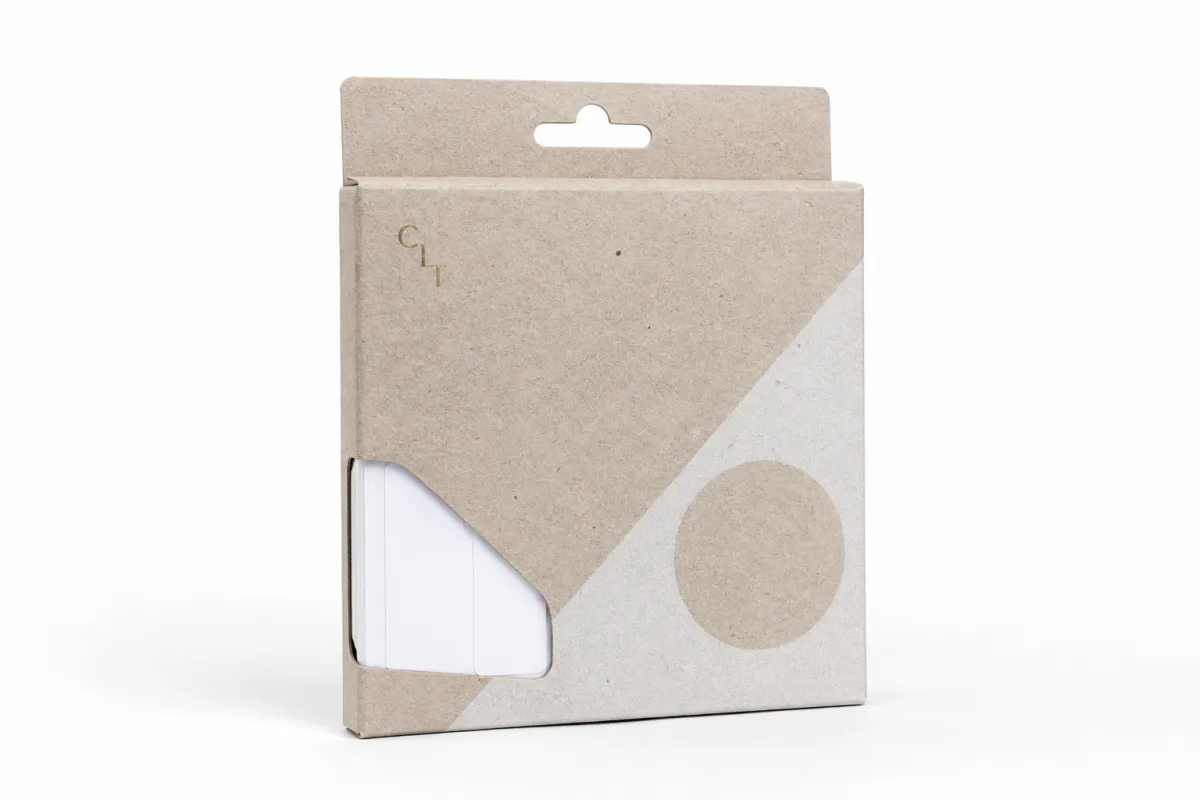
Printed shipping labels recycled paper matter because they sit right where waste, fulfillment, and brand perception meet. A shipping label may be small, but it is one of the few packaging components almost every customer sees, touches, and sometimes removes. That makes it a visible part of the package in a way that an inner wrap or carton seam rarely is.
There is also a scale effect that gets overlooked. Labels are bought in high volume, used quickly, and replaced often. A modest change in material choice can influence a meaningful amount of shipping material over a year. A fulfillment center shipping 50,000 parcels each month is dealing with 600,000 label touchpoints annually. That is why printed shipping labels recycled paper are not only about image or messaging. They can affect procurement, inventory storage, waste handling, and customer experience all at once.
At the material level, recycled-paper shipping labels use recovered fiber in the facestock. That facestock is paired with adhesive and liner, and those supporting layers matter almost as much as the paper itself. Buyers often focus on recycled content percentage, but the full label only works when the construction fits the printer, the carton surface, and the transit conditions. High recycled content with weak adhesion is not a win. It is a reprint waiting to happen.
Printed shipping labels recycled paper also encourage a more disciplined sourcing conversation. Instead of asking only whether a label is sustainable, the better question is what the label needs to do in actual ecommerce shipping. That means readable barcodes, consistent peel force, no curl in storage, and enough abrasion resistance to make it through transit. The answer sounds simple, but many teams approve labels based on a proof image, then discover scan rates drop once the line speeds up. I have seen that happen more than once, especially during seasonal rushes when nobody wants to slow the line down.
For buyers comparing transit packaging options, the label decision is often more tied to operational quality than expected. A label that feeds cleanly through the printer supports throughput. A label that stays flat reduces waste. A label that scans the first time reduces carrier exceptions. Those are direct impacts on labor, customer service, and shipping reliability.
Used well, printed shipping labels recycled paper are a strong fit when the goal is balance. They are not the best choice for every environment, and they are not the most durable option for every shipment, but they work well for cartons, paper mailers, and secondary packaging where speed and readability matter more than chemical resistance. That is one reason they now appear alongside other sustainable shipping materials such as paper mailers and recycled corrugate.
A good way to think about the label is as a service component, not just a printed surface. The label serves the warehouse, the carrier, and the customer. When the material is chosen well, printed shipping labels recycled paper can lower waste without slowing the team down. When it is chosen poorly, sustainability becomes the reason for friction. That helps nobody.
A label that looks eco-friendly but fails a scan is not a sustainability win; it is rework with better branding.
That leads to the more practical question: how do these labels behave under real use, on real equipment, with real shipping pressure?
How Printed Shipping Labels Recycled Paper Perform in Real Use
Printed shipping labels recycled paper can perform very well, but the details matter more than the label description. Surface texture, coating level, and fiber consistency all affect barcode contrast, print sharpness, and the look of the die-cut edge after conversion. On a good stock, the text is crisp and the bars read cleanly. On a rougher stock, the print can soften a little, especially at smaller point sizes or with low-resolution artwork. That is not a failure of recycled paper itself; it is usually a sign that the spec needs to be tuned more carefully.
That does not mean recycled paper is weak. It means the stock should be judged by performance criteria, not by a generic sustainability label. If the label needs to carry a shipping address, a service code, and a barcode, contrast and scannability matter more than a perfect matte finish. In many order fulfillment programs, printed shipping labels recycled paper are entirely suitable because they are built for short- to medium-life use on cartons and mailers, not for harsh outdoor exposure.
Compare that with a film label. A plastic film can be a better choice if the package will face oil, condensation, or repeated abrasion. Film changes the waste profile, though, and may not fit a paper-first packing line. That is the trade-off: paper often improves fiber recovery potential, while films often improve resistance. The right answer depends on the package and the shipping path, not the slogan.
The shipping environment is where the label gets tested. Cold chain shipments can create condensation. Humid warehouses can soften some adhesive systems. Long transit lanes expose labels to scuffing from conveyor contact, manual handling, and bagging. Returns add another layer, because a label may need to remain legible after the first leg and then survive a second scan on the way back. Printed shipping labels recycled paper can handle many of these conditions if the coating and adhesive are selected correctly, but they are not automatically the right answer for all of them.
A practical way to evaluate the option is to score the label against three operational questions:
- Does it print clearly on the exact printer model used in the facility?
- Does it stay bonded on the carton or mailer surface in use?
- Does it survive the full transit window without lifting, smudging, or fading?
If the answer is yes to all three, printed shipping labels recycled paper are doing the job. If the answer is no to any of them, the problem is not sustainability. The problem is specification quality.
One useful comparison helps frame the decision. Standard uncoated paper labels are usually fine for short-life indoor shipping, but they can show wear faster. Coated recycled paper labels usually offer better abrasion resistance and cleaner print results. FSC-certified paper options can help when documentation matters for broader sourcing goals. For buyers who want a quick view, the table below often works better than a marketing page.
| Option | Typical Use | Performance Notes | Relative Cost |
|---|---|---|---|
| Uncoated recycled paper | Standard cartons, low-risk domestic parcels | Good for basic printability, less resistant to scuffing and humidity | Lowest |
| Coated recycled paper | Higher-volume ecommerce shipping, longer transit windows | Cleaner barcodes, better abrasion resistance, more consistent finish | Moderate |
| FSC-certified recycled paper | Programs with documented sourcing goals | Useful for traceability, still needs adhesive and printer testing | Moderate to slightly higher |
| Film label alternative | Moisture, oil, cold storage, outdoor exposure | Stronger durability, less paper recovery alignment | Higher in many cases |
For anyone managing packaging and package protection together, the main point is simple: printed shipping labels recycled paper should be evaluated like any other shipping material. Test it under the conditions that matter. If a label passes on a clean desktop but fails on a dusty carton line, that is not success. It is an incomplete test.
For a broader packaging perspective, the transit-testing discipline used by organizations such as ista.org is a useful reminder that packaging should be validated under stress, not admired in isolation.
Cost, Pricing, and MOQ for Recycled Paper Labels
Cost is where printed shipping labels recycled paper usually shift from a sustainability discussion into a procurement discussion. The good news is that the premium over commodity stock is often modest. The less good news is that the final number depends on a stack of variables: face stock grade, coating, adhesive type, liner choice, die-cut size, roll count, and whether the job is custom printed or supplied blank. A quote that looks low at first glance may not be low once the full spec is matched.
In many custom label programs, a recycled-paper label might land roughly in the $0.02 to $0.08 per unit range, depending on size, print coverage, and order volume. Smaller or more heavily branded labels can sit above that. Simpler repeat runs can sit below it. If you are comparing printed shipping labels recycled paper across vendors, request pricing in a common unit such as per thousand labels, not only a total order cost. That makes hidden differences easier to spot.
MOQ matters because setup costs do not disappear just because the order is small. Proofing, conversion, press setup, and any die creation have to be spread across the run. If you order 2,000 labels instead of 20,000, the unit cost usually rises. That is normal. It is also why smaller businesses often feel that recycled paper labels are expensive when the real issue is the economics of short runs. Printed shipping labels recycled paper are often more cost-effective at scale, especially when the order is planned around stable artwork and a repeatable spec.
There are also hidden costs that do not appear on the quote sheet but show up in operations. A label with poor curl behavior can create printer misfeeds. A weak adhesive can cause rework at the packing station. A scannability issue can trigger a manual exception or a reshipment. When those costs are included, the cheapest label is not always the lowest-cost option. For a business with high-volume order fulfillment, one extra reprint every few hundred parcels can erase the savings quickly.
It helps to compare suppliers on the same basis. Ask for:
- Price per thousand labels.
- Label size and roll count.
- Recycled content percentage in the facestock.
- Adhesive type and application temperature range.
- Shipping terms and expected turnaround.
This is the point where sustainability and economics line up. If printed shipping labels recycled paper reduce waste, lower reprints, and support stable production, the total cost of ownership can improve even when unit price is slightly higher than commodity paper. That is a better way to judge a packaging decision than chasing the absolute lowest line item.
Here is a comparison many buyers find useful when sorting through quotes:
| Quote Factor | Why It Changes Price | What to Ask For |
|---|---|---|
| Face stock grade | Higher recycled content or coated stocks can cost more | Material spec sheet and recycled content breakdown |
| Adhesive formulation | Permanent, freezer, and removable adhesives behave differently | Application surface and temperature guidance |
| Format and size | Larger labels use more material and more press time | Exact dimensions and roll orientation |
| Print coverage | Heavy branding can increase ink or toner use | Artwork mockup with coverage assumptions |
| Order quantity | Setup cost spreads better over larger runs | Pricing at multiple volume tiers |
For packaging teams building a broader sourcing plan, labels are only one part of the picture. If you are also evaluating Custom Labels & Tags, Custom Poly Mailers, or Custom Shipping Boxes, it is usually smarter to coordinate the specs rather than treat each item as a one-off purchase. That reduces duplication and helps standardize shipping materials across the line.
My practical view is simple: do not choose printed shipping labels recycled paper only on unit price. Choose them on unit price plus waste, plus production stability, plus shipping success. That is the number that actually matters.
Production Process, Timeline, and Lead Time
The production path for printed shipping labels recycled paper is simple on paper and easy to delay in practice. It usually starts with material selection, then artwork review, proof approval, any needed die creation, conversion, printing, quality checks, and final shipment. Every stage is normal. Every stage can also become a bottleneck if the spec is incomplete.
Lead time depends on whether the order is a stock build or a custom program. Off-the-shelf sizes with existing tooling may move quickly. Custom sizes, brand colors, specialty adhesives, or certification requests can add days or even weeks. If your team needs printed shipping labels recycled paper for a launch or seasonal peak, the real planning question is not how fast the supplier can print. It is how many decision points can delay the print.
One common delay starts before the press ever runs: artwork. Barcode placement, contrast, quiet zones, line thickness, and variable data fields all need to be correct. A label can fail approval because the barcode is too close to a fold line, the text is too small, or the artwork leaves no room for compliance information. If the label is custom printed, a clean proof cycle saves more time than pushing for a rush run that later needs correction. That is true for all shipping materials, and especially for printed shipping labels recycled paper where the print surface is doing double duty as a sustainability claim and an operational surface.
Another delay comes from missing usage details. A supplier cannot recommend the right adhesive if they do not know the carton surface, storage temperature, application temperature, and transit duration. A label meant for room-temperature corrugate is a different spec from one meant for chilled pack-outs. If you are using printed shipping labels recycled paper on recycled mailers or textured cartons, surface energy and tack performance should be discussed early, not after the proof is approved.
A practical timeline for a custom order often includes some version of the following:
- 1 to 3 business days for spec review and proof setup.
- 1 to 2 rounds of artwork or barcode revisions, if needed.
- 5 to 10 business days for production on many standard runs.
- Extra time for specialty materials, larger volumes, or third-party documentation.
That is not a promise. It is a planning range. Smaller suppliers may be faster on repeat jobs and slower on new specs. Larger suppliers may be more consistent on repeatability and less flexible on changes. Either way, the safest approach is to build a buffer. Printed shipping labels recycled paper only help if they arrive before the stockout, not after.
From a process perspective, the best suppliers are usually the ones who can answer these questions without hesitation:
- Do you stock the base material or source it for each run?
- Can you support the exact printer format we use?
- Will repeat orders match the approved sample closely enough to avoid requalification?
- Can you document recycled content or FSC status if needed?
If the answer is vague, expect delays later. If the answer is clear, printed shipping labels recycled paper become much easier to manage as a recurring procurement item rather than a special project. That matters because label programs work best when they are stable, boring, and repeatable. Packaging professionals tend to appreciate boring for a reason: boring means fewer surprises, fewer interruptions, and fewer headaches on the floor.
Common Mistakes When Ordering Printed Shipping Labels Recycled Paper
The first mistake is assuming recycled content automatically means the label is fully recyclable or fully sustainable. It does not. printed shipping labels recycled paper still include adhesive, liner, and often coating layers, and those components affect end-of-life behavior. The full construction matters. Buyers should ask what the label is made of, how it should be disposed of, and whether the supplier is describing recycled content in the face stock only or in the full build.
The second mistake is approving the label by appearance alone. A label can look tidy on a proof and still fail in the warehouse. The barcode can be low contrast. The print can feather at the edges. The label can curl just enough to disrupt feeding. In ecommerce shipping, a 99 percent good label is still a problem if the 1 percent failure rate creates manual intervention on thousands of parcels. printed shipping labels recycled paper need to be judged by scan success, not just by aesthetics.
The third mistake is choosing the wrong adhesive. This matters more than many buyers expect. A label that sticks well to a smooth corrugated carton may fail on a recycled paper mailer, a dusty box, a freezer pack, or a rough recycled surface. The adhesive has to match the application temperature and the package surface. That is true for almost every label program, but it becomes more visible with printed shipping labels recycled paper because the buyer often pays more attention to the face stock than to the adhesive system.
The fourth mistake is ignoring label size and carton dimensions together. If a team picks a label that is too large for the carton face, it may overlap seams or crease edges. Too small, and there is no room for routing data, branding, or compliance text. A label that is technically printable may still be operationally wrong if it interferes with package protection or carrier handling. Size should be chosen with the package, not in isolation.
The fifth mistake is skipping the pilot run. Bench samples are useful, but they are not the same as production. Your printer, your line speed, your carton stock, your warehouse humidity, and your application method all change the result. That is why a live test matters. Run printed shipping labels recycled paper on actual shipments, not just on a clean workbench, then track reprints, peel failures, and scan errors over a meaningful sample size.
Two other errors show up often enough to mention. One is over-specifying the label, which adds cost and complexity without improving outcomes. The other is under-communicating with the supplier, which creates a label that is technically recycled-paper based but functionally mismatched to the job. Both are avoidable.
There is also a habits problem. Many teams think in terms of packaging components one by one. Better teams think in systems. If the label is part of a larger shipping setup that includes Custom Packaging Products, the right question is how the label works with the box, mailer, tape, and fulfillment workflow as a unit. That systems view is where printed shipping labels recycled paper add the most value.
One quick field test can reveal a lot: apply the label to the actual carton surface, let it dwell for the same amount of time you use in production, then rub the corner, scan the barcode, and watch what happens after a short humidity exposure. It is not a full lab test, but it catches many problems before they become costly.
Expert Tips for Better Sustainability and Better Labels
If you want printed shipping labels recycled paper to work well, start by choosing the lightest spec that still passes the use case. Over-engineering the label can erase some of the sustainability benefit through extra coating, extra material, or unnecessary performance features. The label should be strong enough for the shipment, not stronger than the shipment needs. That sounds fussy, but it is kinda the whole ballgame in packaging.
Ask for full material disclosure. That means face stock composition, recycled content percentage, adhesive type, liner type, and any third-party certification data. FSC can be useful if your sourcing goals are tied to certified fiber pathways, but FSC status does not replace functional testing. A certified label that fails in use is still a bad label. printed shipping labels recycled paper should carry both documentation and performance data.
Test against the actual use case. Use the same printer model, the same carton or mailer surface, the same application speed, and the same transit assumptions. If your line runs hot or fast, test there. If your shipments go through cold storage, test there. If your team uses different label sizes for different products, test each one. The biggest mistake is assuming one successful sample validates the whole program.
Standardization is underrated. Fewer label sizes mean fewer storage locations, fewer reorder mistakes, and fewer chances of approving the wrong stock. The same is true for adhesive variants. When procurement, operations, and design agree on a stable label family, printed shipping labels recycled paper become easier to buy and easier to replenish. That simplicity often lowers waste more effectively than a small material tweak does.
Supplier data matters more than marketing language. Ask for technical sheets, recommended storage conditions, acceptable application temperatures, and limitations. If a supplier cannot tell you where the label performs best, that is a signal. Good vendors usually talk in ranges, not slogans. They can tell you whether the label is suited to dry corrugate, refrigerated shipments, or high-abrasion transit packaging. That level of detail saves time later.
There is also a brand point here that is easy to miss. Labels are a small touchpoint, but they are a very public one. Customers see them, carriers touch them, and warehouse teams handle them. When printed shipping labels recycled paper are chosen well, they show operational discipline. Not flashy discipline. Better than flashy. They show that the brand understands sustainability should work inside the process, not sit on top of it as decoration.
For teams already refining fulfillment across package types, consistency helps. If your cartons, mailers, and labels all use a similar sourcing logic, your packaging story gets easier to explain and easier to defend. That is especially true when you are balancing package protection with material reduction. A label may be only one component, but the best programs treat it as part of a larger shipping system rather than a separate purchase.
Honestly, that is where the strongest buyer decisions happen: not in finding the greenest-sounding option, but in finding the option that works repeatedly, is documentable, and does not create hidden waste. That is the practical value of printed shipping labels recycled paper.
What To Do Next: Test, Approve, and Roll Out
If you are ready to move forward, start with a quick audit. List your current label stock, printer type, average monthly volume, and the shipping environments where failures happen most often. Many teams discover they have never written these basics down in one place. That is usually where problems begin. Once you know the baseline, printed shipping labels recycled paper become much easier to compare against the status quo.
Next, shortlist two or three options and compare them on the same criteria: adhesion, scan rate, print clarity, price per thousand, lead time, and recycled content documentation. Do not let one supplier quote a coated stock while another quotes an uncoated one and then call the comparison fair. It is not. Apples-to-apples matters. So does matching the label to the package type and the actual shipping materials in your operation.
Run a live pilot before you place the full order. Use real cartons or mailers. Use the real line speed. Use the real carrier labels and data fields. Track reprints, rejects, and any customer-facing issues that show up in the first few hundred shipments. That small pilot usually reveals more than a week of desk review. If the sample passes, then printed shipping labels recycled paper can move into regular use with much less risk.
Build a checklist for approval and replenishment. It should confirm size, artwork, barcode standards, recycled-content claims, adhesive requirements, and reorder timing. For many teams, the failure point is not the label spec itself; it is the handoff between design, purchasing, and operations. A checklist closes that gap. It also makes it easier to support repeat orders without starting over every time.
Finally, set a reorder trigger based on usage plus lead time. That sounds simple, but it prevents the scramble that leads to rushed substitutions. A rushed substitute often costs more, performs worse, and weakens the sustainability story you were trying to build in the first place. printed shipping labels recycled paper only do their job when they are in stock, approved, and ready before the warehouse needs them.
For brands refining the rest of their transit packaging, labels work best when they fit into a broader system of Custom Shipping Boxes, Custom Poly Mailers, and other coordinated Custom Packaging Products. That alignment is where the operational gains start to compound.
The practical conclusion is simple: move forward only if the label passes performance, cost, and workflow checks together. printed shipping labels recycled paper can reduce waste and support a cleaner packaging story, but only when the label is built for real use, not just for a brochure.
Are printed shipping labels recycled paper durable enough for everyday shipping?
Yes, if the facestock, coating, and adhesive are matched to the shipping environment and carton surface. printed shipping labels recycled paper are usually strong enough for standard parcel shipping, but moisture, abrasion, and cold storage can call for a more specific build. A live sample test on real shipments is the best way to confirm durability before you commit to a full order.
Can printed shipping labels recycled paper work with thermal printers?
Often yes, but only if the label construction is designed for the printer type and heat settings you use. Direct thermal and thermal transfer systems have different requirements, so the wrong face stock can lead to fading or poor print clarity. Ask for printer compatibility data and test on the exact device model before approving production.
What adhesive should I choose for printed shipping labels recycled paper?
Choose the adhesive based on the carton surface, temperature, and transit length rather than on label material alone. A general-purpose permanent adhesive works for many corrugated shipments, but chilled, textured, or recycled surfaces may need a stronger formulation. If the label must be removable or repositionable, specify that up front because it changes the performance profile.
How do printed shipping labels recycled paper affect unit cost?
Unit cost depends on stock grade, coating, adhesive, roll count, and whether the label is custom printed or blank. The premium versus standard paper is often modest, but the real cost picture includes waste, reprints, and line downtime. Request pricing per thousand labels so you can compare suppliers on equal terms.
How can I verify sustainability claims for printed shipping labels recycled paper?
Ask for recycled content documentation, technical data sheets, and any third-party certifications tied to the base material. Check whether the full label structure, including liner and adhesive, aligns with your sustainability goals. Avoid vague claims and confirm exactly what percentage of the face stock is recycled and how the label should be disposed of.


