Buyer Fit Snapshot
| Best fit | Printed Shipping Pouches Wholesale for Reliable Fulfillment projects where brand print, material claims, artwork control, MOQ, and repeat-order consistency need to be specified before quoting. |
|---|---|
| Quote inputs | Share finished size, material target, print colors, finish, packing count, annual reorder estimate, ship-to region, and any compliance wording. |
| Proofing check | Approve dieline scale, logo placement, barcode or warning zones, color tolerance, closure strength, and carton packing before bulk production. |
| Main risk | Vague material claims, crowded artwork, missing packing details, or unclear freight terms can make a low unit price expensive after revisions. |
Fast answer: Printed Shipping Pouches Wholesale for Reliable Fulfillment should be specified like a repeatable production item. The safest quote records material, print method, finish, artwork proof, packing count, and reorder notes in one written spec.
Production checks before approval
Compare the actual filled-product size with the drawing, then confirm tolerance on folds, seals, hang holes, label areas, and retail display edges. Reserve space for logos, QR codes, warning copy, and material claims before decorative graphics fill the panel.
Quote comparison points
Review material grade, print process, finish, sampling route, tooling charges, carton quantity, and freight assumptions side by side. A quote is only useful when the supplier can repeat the same color, closure quality, and packing count on the next order.
Printed Shipping Pouches Wholesale for Reliable Fulfillment
For fulfillment teams that watch labor minutes, carton cube, and shipping weight as closely as they watch print quality, printed shipping pouches wholesale solves a very practical problem. Empty space is expensive. So is filler that does little more than occupy volume. So is the extra handling that comes from moving a product into a carton that was built for a different shape. A well-sized pouch trims wasted air, cuts down the materials a packer has to reach for, and gives the order a cleaner branded finish without forcing the operation into a box-heavy workflow.
From the buyer’s side, the strongest case for printed shipping pouches wholesale is repeatability. Once the size, artwork, closure, and carton count are set, reorders become easier to manage, storage stays tidier, and fulfillment planning gets clearer across warehouses or third-party logistics partners. The best decisions usually come down to numbers a team can actually measure: pack speed, package protection, storage density, and consistency from one run to the next.
For apparel, accessories, subscription kits, and other soft goods, this format deserves real consideration. Printed shipping pouches wholesale can support a wide range of transit packaging needs while keeping the pack line orderly and the finished order light. It will not fit every SKU, and that matters, but for many products the total cost is better than buyers expect once labor, waste, and dimensional weight are counted together.
Why printed shipping pouches wholesale can cut packout waste
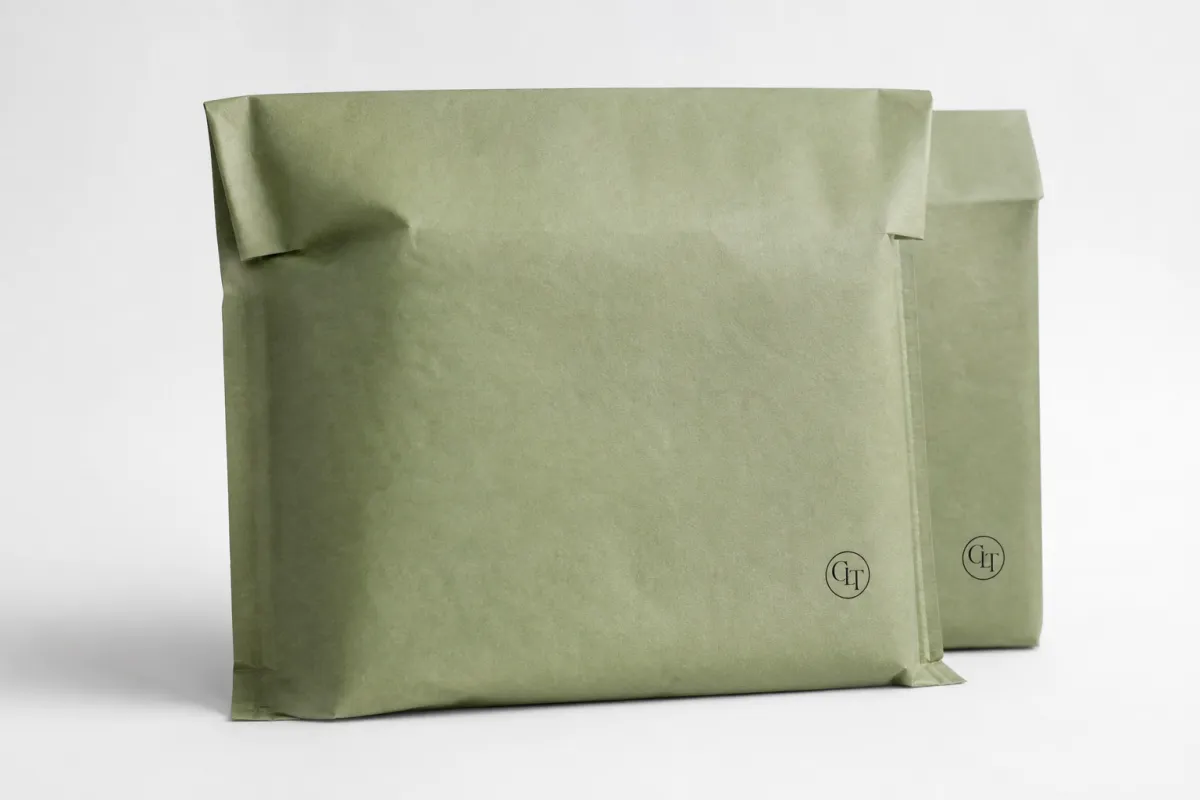
Many teams discover, after a few weeks of measuring the line, that they spend more on the empty volume around the product than on the pouch itself. Oversized packaging carries a long list of hidden costs: filler, tape, extra handling, and often a higher shipping bracket. Printed shipping pouches wholesale shifts that equation by matching the shipper to the product instead of forcing the product into a carton made for something else.
That matters even more in ecommerce shipping, where order volume and speed are always in the background. A pouch has fewer components to stage, fewer folds to manage, and fewer opportunities for a packer to make a mistake. When the shipment is folded clothing, compact accessories, soft kits, or promotional sets, printed shipping pouches wholesale can tighten the workflow while still producing a branded result that looks intentional.
There is a transit packaging benefit that gets missed because it is not as visible as print color or logo placement. Smaller, flatter packages often leave less void space behind, which can help lower dimensional weight charges across many carrier networks. Not every parcel becomes cheaper, yet the package is more likely to price on the actual product volume rather than an oversized footprint. In day-to-day terms, printed shipping pouches wholesale can make shipping materials work harder on behalf of the operation.
Wholesale matters because repeat shipments reward standardization. The first run is where dimensions, artwork, and closure style are chosen. The second and third runs are where the gains start to show: faster reorders, cleaner receiving, less training time, and fewer questions about whether one lot behaves like the next. Buyers who ask for printed shipping pouches wholesale are usually asking for predictability, even if they describe it in different words.
That predictability matters even more when fulfillment is split across several locations. If each site packs from the same specification, the risk of one warehouse using a slightly different pouch drops fast. Seal performance stays closer to target, pack speed remains steadier, and package presentation feels the same from one region to another. For brands that want package protection and presentation to stay aligned, printed shipping pouches wholesale is often a cleaner operating choice than buying shipping materials in fragments as the product mix changes.
“A pouch that trims two seconds at the bench sounds small until that time is multiplied across a full shift and every carton moves through the same hands.”
- Lower packout waste: less filler, fewer oversized cartons, and less empty space.
- Better throughput: one-piece packing is usually faster than building and sealing a box.
- Cleaner presentation: branding is visible without adding a separate label or insert.
- More consistent reorders: once the spec is approved, repeat buying gets easier.
That is why printed shipping pouches wholesale should be judged with actual operating numbers, not only with artwork mockups. If a few seconds come out of packout and a little dead space disappears from each parcel, the savings tend to show up in labor, freight, and fewer repacks. For buyers comparing Wholesale Programs, that is the kind of detail that matters most.
Product Details: materials, closures, and branding options
Material choice for printed shipping pouches wholesale usually begins with polyethylene film, since it is light, flexible, and strong enough for many soft goods. Depending on the application, a buyer may choose a single-layer film for simplicity or a coextruded structure for better puncture resistance, more predictable seal behavior, or a firmer feel in the hand. Transparent and semi-transparent film work well when product visibility matters; opaque builds make more sense when privacy or a cleaner outer appearance is the priority.
Closure style influences the work as much as the film does. A self-seal adhesive flap speeds up fulfillment because the packer closes the pouch in one motion, which is one reason printed shipping pouches wholesale remains popular in high-volume operations. Reseal or zip-style closures help when customers need to reopen the pouch for returns or exchanges. Tamper-evident sealing gives a visible opening point and can be a better fit for certain retail or controlled-distribution programs.
Branding is more than color count. A one-color print is often enough for a logo mark, a handling instruction, or a routing field. Multi-color graphics can create a more retail-ready look when the pouch goes straight to the customer. Some programs use a dedicated label zone or variable data area for SKUs, lot codes, or carrier routing. That kind of flexibility is one reason printed shipping pouches wholesale works across so many order fulfillment setups.
Small finishing details carry more weight than many buyers expect. Hang holes help when pouches need to be displayed before use. Tear notches give the customer a more predictable opening point. Gussets change how the pouch loads and how it sits in storage. Matte and gloss finishes each have a place: matte reduces glare and fingerprints, while gloss often gives the surface a sharper branded look. A serious printed shipping pouches wholesale spec sheet should spell those details out rather than leaving them open to interpretation.
If your operation is comparing several transit packaging formats, it helps to look at the full system instead of only the pouch. Sometimes a pouch is the right fit, and sometimes a different format makes more sense for stackability or crush resistance. In those cases, reviewing Custom Packaging Products alongside Custom Poly Mailers keeps the decision grounded in actual use rather than assumptions.
Common material and feature combinations
In real programs, printed shipping pouches wholesale is often ordered in a few familiar combinations. Lightweight apparel shipments may use a standard polyethylene pouch with an adhesive flap. A thicker coextruded build may be chosen for products that need more puncture resistance or a firmer feel during sortation and transport. Return-friendly programs often add a reseal feature, while privacy-sensitive shipments usually call for opaque film, a secure seal, and a clean print panel.
When a paper-based component is needed, buyers sometimes ask whether FSC-certified paper inserts or labels are relevant. They can be, especially when the brand wants a documented fiber sourcing path. For broader packaging material guidance, the FSC site is a useful reference point, and for transport validation many teams also look at the distribution testing approach published by ISTA.
Printed shipping pouches wholesale specifications that matter
Good spec discipline removes a lot of buyer frustration. Before you quote printed shipping pouches wholesale, confirm finished width, finished length, gauge or thickness, seal strength target, print coverage, and the actual product type the pouch must hold. A flat apparel fold, a bundled accessory set, and a bulkier soft good all behave differently inside the same pouch size, and that difference shows up in loading speed as well as final presentation.
Tolerances matter because even a small size drift changes the way the pouch stacks, fills, and seals. If the pouch runs short, packers may fight the opening or compress the product harder than planned. If it runs large, the storage density advantage that made printed shipping pouches wholesale attractive can disappear. Across thousands of units, a few millimeters become a workflow issue rather than a small detail.
Performance should be tested with the job in mind. Buyers should ask about scuff resistance, moisture protection, seam integrity, and whether the print area can survive the normal path from pack line to carrier sortation. If privacy is required, opacity matters. If the pouch is expected to move through a rougher transit lane, puncture resistance matters more. That is why printed shipping pouches wholesale should never be specified by price alone.
A clean approval format keeps the process moving. At minimum, a spec sheet should list material, size, color count, print area, closure type, pack count per carton, carton dimensions, and any special labeling or compliance notes. If the pouch will be used in multiple regions or by multiple fulfillment partners, note that too. A well-documented printed shipping pouches wholesale order is easier to reorder and easier to audit later.
Sample validation catches assumptions before they get expensive. A physical sample lets the buyer test print placement, loading speed, seal behavior, and the way the pouch feels when it is pulled from the carton and filled at pace. If the product carries a logo that has to look crisp on camera or on arrival, a sample is not optional. For many brands, printed shipping pouches wholesale becomes much safer once the people who will use the pouch every day have handled the actual piece.
What to test before approving a run
- Fit: the pouch should hold the product without forcing excess compression.
- Seal: adhesive or closure performance should match the packing pace.
- Print: logo placement, color accuracy, and line sharpness should be checked on the real film.
- Handling: the pouch should open cleanly and stack efficiently at the bench.
- Transit behavior: test for scuffing, leakage risk, and surface abrasion during normal shipping.
Teams that want a more technical validation path often borrow from ISTA distribution testing logic and pair it with internal quality checks that look at seals, tensile behavior, and puncture resistance. That approach helps when printed shipping pouches wholesale has to survive a mixed carrier network or a long handoff chain. For general material stewardship and recycling guidance, the EPA recycling basics page is also worth keeping close for reference.
Cost, pricing, MOQ, and quote basics for wholesale orders
Pricing for printed shipping pouches wholesale depends on several levers: pouch size, film grade, print complexity, order quantity, finishing features, and whether the artwork needs setup work or color matching. A simple one-color run on a standard size will usually price very differently from a multi-color pouch with special finish requirements. Freight matters too, especially when cartons are large but light enough to add cube without much weight.
MOQ is not usually arbitrary. It reflects press setup, material yield, and the labor required to package finished goods in an efficient way. When a supplier gives a minimum quantity on printed shipping pouches wholesale, that minimum often protects run economics on both sides. If the order is a pilot or a new SKU launch, it is reasonable to ask whether a smaller test quantity is possible before scaling into a larger replenishment run.
Unit pricing improves as quantity rises because setup cost gets spread across more pouches and the same film width, print plates, and carton configuration can be reused. The improvement is usually noticeable once the order reaches a volume where the press is running steadily and the packaging line can hold a stable rhythm. For many buyers, printed shipping pouches wholesale becomes most attractive when repeat demand lets the same spec carry forward with only minor adjustments.
Always ask for a quote breakdown. A clear quotation should separate product cost, print setup, freight, sample charges, and any proof or plate costs. That makes comparisons accurate. Without that breakdown, one quote can look cheaper while quietly carrying costs somewhere else. In real procurement work, printed shipping pouches wholesale should be compared on landed value, not just the lowest line item.
The smartest buyers also price the effect on operations. A slightly higher-spec pouch may reduce spoilage, rework, or damage enough to beat a lower-cost option over the full life of the program. That is true in package protection and true in distribution. A pouch that saves a few cents but creates repeated rework is not automatically the better choice.
| Pouch Option | Typical Use | Approx. Unit Cost at 5,000 pcs | Notes |
|---|---|---|---|
| Standard one-color polyethylene pouch | Apparel, accessories, basic order fulfillment | $0.12-$0.18 | Good for simple branding and fast packout |
| Coextruded pouch with adhesive flap | Heavier soft goods, more puncture exposure | $0.16-$0.24 | Stronger feel, better handling in transit packaging |
| Multi-color retail-ready pouch | Consumer-facing ecommerce shipping | $0.22-$0.38 | More print setup, stronger shelf and unboxing impact |
| Reseal or return-friendly pouch | Programs with frequent exchanges | $0.20-$0.34 | Useful when customer reuse matters |
Those ranges are only starting points, but they help keep the buying conversation honest. If the product needs extra opacity, a special closure, or a tight registration target for branding, the cost will move. That does not make printed shipping pouches wholesale expensive; it makes the spec real. If your program also needs a different format, our Custom Shipping Boxes may be a better fit for rigid or crush-sensitive items.
Process and timeline: from artwork to delivery
A clean order flow keeps printed shipping pouches wholesale on schedule. The process usually starts with discovery and spec confirmation, moves to artwork review, then proof approval, material scheduling, printing, finishing, inspection, and shipment. Each step sounds ordinary, yet most delays start because one of the first three steps was not fully locked down before production planning began.
Lead time depends on print complexity, raw film availability, proof turnaround, and whether the order is a first run or a repeat. A first-time order can take longer because the approval cycle is doing more work, while a repeat run can move faster if the spec and artwork were archived cleanly. For planning purposes, many printed shipping pouches wholesale projects are often quoted in the range of 12-15 business days from proof approval, though that can shift with volume, finish, and schedule load.
Most slowdowns are predictable. Incomplete artwork creates extra back-and-forth. Late sign-off pushes the production slot. Vague size information leads to questions at the proof stage. Changes after the job is scheduled can force a reset. If you want printed shipping pouches wholesale to move with less friction, one internal decision maker and one final spec sheet usually work better than a committee of opinions.
It helps to build in buffer time for transit, receiving, and any internal QA checks when the pouches must arrive before a peak shipping window. A good production schedule can still be disrupted by freight timing or a delayed proof. When the order is tied to a product launch or seasonal surge, printed shipping pouches wholesale belongs on the critical path rather than in the background.
Artwork should go in early, even if it is only a draft. That gives the supplier time to flag font size, bleed, color count, and placement issues before pricing is finalized. Vector files are usually preferred because they scale cleanly on flexible film and keep logos sharp. If the file is rough, send it anyway. In production, printed shipping pouches wholesale runs better when design and operations talk before the press schedule is fixed.
A practical approval workflow
- Confirm size, material, and closure based on the real product.
- Review the artwork for print area, contrast, and any label zones.
- Approve a sample or proof with one final internal decision maker.
- Lock the order and schedule the production slot.
- Plan receiving time before the launch or replenishment date.
That sequence keeps printed shipping pouches wholesale from turning into a chain of avoidable email threads. It is plain operational discipline, but it saves real money when fulfillment volume is high.
Why choose us for wholesale shipping pouches
At Custom Logo Things, the goal is not to inflate what the pouch can do. The goal is to help buyers Choose the Right material, size, closure, and print method for the way they actually ship. That is the right standard for printed shipping pouches wholesale, because the best result is not the flashiest mockup; it is the package that runs cleanly on the line, looks right on arrival, and stays consistent from reorder to reorder.
Consistency matters. Fulfillment teams notice when carton counts drift, print color shifts, or pouch dimensions vary enough to change loading behavior. A good wholesale partner should keep records, preserve spec history, and make the reorder path simple. That is especially useful for printed shipping pouches wholesale, where the buyer often needs the same configuration again and again without rebuilding the project from zero.
Direct technical communication matters too. If a requested film thickness may add cost without improving package protection, that should be said clearly. If a closure style will slow the line or complicate returns, that should be explained before the order is placed. Buyers do not need hype; they need facts, ranges, and practical tradeoffs. That is where printed shipping pouches wholesale support should feel useful rather than theatrical.
It helps to work with a supplier that understands how shipping materials behave under real operating pressure. A pouch that looks fine in a mockup can still fail if the seal is weak, the print area is too small, or the film is too slippery for the pack line. Good guidance protects the buyer from those mistakes. In a wholesale program, printed shipping pouches wholesale should make the whole order flow easier, not just the purchase order.
If you are comparing multiple packaging formats, our Wholesale Programs page and our Custom Packaging Products catalog can help you match the structure to the job. Sometimes a pouch is the right answer. Sometimes a mailer or box fits better. The point is to align the package with the product, the carrier network, and the customer experience rather than forcing one format to do every job.
And if your program needs a flatter, more flexible format than a pouch, Custom Poly Mailers can be a strong comparison point. For rigid or crush-sensitive products, boxes may still win. That honesty matters in the buying conversation, and it is one reason printed shipping pouches wholesale works best when the supplier is willing to talk through tradeoffs instead of pushing a one-size answer.
Next steps to place a practical wholesale order
If you are ready to move, gather three things first: pouch dimensions, performance needs, and the number of units you expect for the first run. Those three inputs are enough to start a real quote for printed shipping pouches wholesale without wasting time on vague assumptions. If you already know the product weight, fold style, or return requirement, include that too.
Send artwork early, even if it is not final. A rough file still helps because it lets the print team check font size, bleed, color count, and logo placement before pricing is finalized. For printed shipping pouches wholesale, that early review often prevents avoidable redesigns and keeps the order from stalling in proof review.
Order a sample or proof if the pouch will carry retail-facing branding or if the pack line depends on fast, repeatable loading. A physical check confirms fit, seal behavior, and print appearance far better than a screen mockup. That is especially true when the order affects order fulfillment, ecommerce shipping, or any line that has to maintain a steady rhythm across multiple shifts. With printed shipping pouches wholesale, the sample is cheap insurance.
From there, compare the quoted specs side by side, approve the sample, lock the reorder plan, and schedule the delivery window with enough buffer for receiving and QA. If the numbers, timing, and performance line up, move forward with confidence. That is how printed shipping pouches wholesale becomes a practical part of your packaging system rather than just another procurement item.
When the spec is clear and the buying cycle is disciplined, printed shipping pouches wholesale can reduce packout waste, improve package protection, and keep transit packaging simpler for the people who touch it every day. For many brands, that combination is exactly what reliable fulfillment looks like.
Frequently Asked Questions
What is the usual MOQ for printed shipping pouches wholesale?
MOQ varies by size, film type, and print method, but wholesale runs are usually set to cover press setup and efficient material usage. For printed shipping pouches wholesale, the minimum often becomes more flexible if you simplify the print, reuse an existing pouch size, or combine similar SKUs in one run. If you are testing a new shipping format, ask for the lowest viable quantity for a pilot before scaling to a full replenishment order.
How do I compare pricing for printed shipping pouches wholesale?
Compare like for like: same dimensions, same material thickness, same closure, same number of print colors, and the same carton pack count. Include freight, sample charges, and any setup or plate costs so the quote reflects true landed cost, not only the unit price. With printed shipping pouches wholesale, a lower number on the page is not always the better value if the pouch slows packout or underperforms in transit.
What artwork files are best for printed shipping pouches wholesale?
Vector files are usually preferred because they scale cleanly and keep text and logos sharp on flexible film. Provide outlined fonts, correct bleed, and clear color references so the production team can proof the design accurately. If you only have a rough layout, send it anyway; for printed shipping pouches wholesale, the printer can often help translate it into a production-ready file.
Are printed shipping pouches wholesale good for apparel and soft goods?
Yes, they are often a strong fit for apparel, accessories, and other flexible items that do not need rigid carton protection. Choose the size and gauge based on the product weight, fold count, and whether the customer expects a retail-style presentation. If returns are common, consider a reseal feature or another format that supports easier reopening and repacking within your printed shipping pouches wholesale program.
How long does production take for printed shipping pouches wholesale?
Production time depends on artwork approval, material availability, print complexity, and the current schedule on the line. First-time orders usually take longer than repeat runs because proofs, setup, and sign-off need to be completed first. Build in extra time if the pouches must arrive before a peak shipping period or a product launch, because printed shipping pouches wholesale works best when the timeline has a little breathing room.


