Buyer Fit Snapshot
| Best fit | Printed Shipping Sleeves for Boxes projects where brand print, material claims, artwork control, MOQ, and repeat-order consistency need to be specified before quoting. |
|---|---|
| Quote inputs | Share finished size, material target, print colors, finish, packing count, annual reorder estimate, ship-to region, and any compliance wording. |
| Proofing check | Approve dieline scale, logo placement, barcode or warning zones, color tolerance, closure strength, and carton packing before bulk production. |
| Main risk | Vague material claims, crowded artwork, missing packing details, or unclear freight terms can make a low unit price expensive after revisions. |
Fast answer: Printed Shipping Sleeves for Boxes: Uses, Costs, and Fit should be specified like a repeatable production item. The safest quote records material, print method, finish, artwork proof, packing count, and reorder notes in one written spec.
Production checks before approval
Compare the actual filled-product size with the drawing, then confirm tolerance on folds, seals, hang holes, label areas, and retail display edges. Reserve space for logos, QR codes, warning copy, and material claims before decorative graphics fill the panel.
Quote comparison points
Review material grade, print process, finish, sampling route, tooling charges, carton quantity, and freight assumptions side by side. A quote is only useful when the supplier can repeat the same color, closure quality, and packing count on the next order.
Plain corrugated cartons get the job done. Quietly. Which is fine if your brand wants to disappear into a warehouse shelf and never be remembered. Printed shipping sleeves for boxes do the opposite. One wraparound printed piece can turn a standard shipper into a branded touchpoint, a product explainer, and a better opening moment without forcing a new carton structure.
For packaging teams, that matters because the pressures are practical, not poetic. Fulfillment needs speed. Ecommerce shipping needs package protection. Finance wants control over shipping materials spend and dimensional weight. Printed shipping sleeves for boxes sit in the middle of all that, which is why they show up in programs that need presentation without turning the pack line into a mess.
If you're comparing sleeves with other branded formats, it helps to look at Custom Packaging Products, Custom Shipping Boxes, and Custom Poly Mailers side by side. The fanciest option is not always the smartest one. Sometimes the best move is the boring one that keeps carton sizes stable, protects the product, and lets the brand message change without creating inventory chaos.
That tradeoff is the real story behind printed shipping sleeves for boxes. A sleeve is not just decoration. Fit, stock choice, seam placement, and print layout all affect how quickly it runs on a line, how well it holds up under shipping stress, and how polished it looks when the customer opens the carton.
I’ve seen sleeves look perfect in a proof and then get chewed up by the first real warehouse run. The box was fine. The sleeve was the problem. That’s why this format deserves an operations review, not just a design review.
What Printed Shipping Sleeves for Boxes Are and Why They Matter
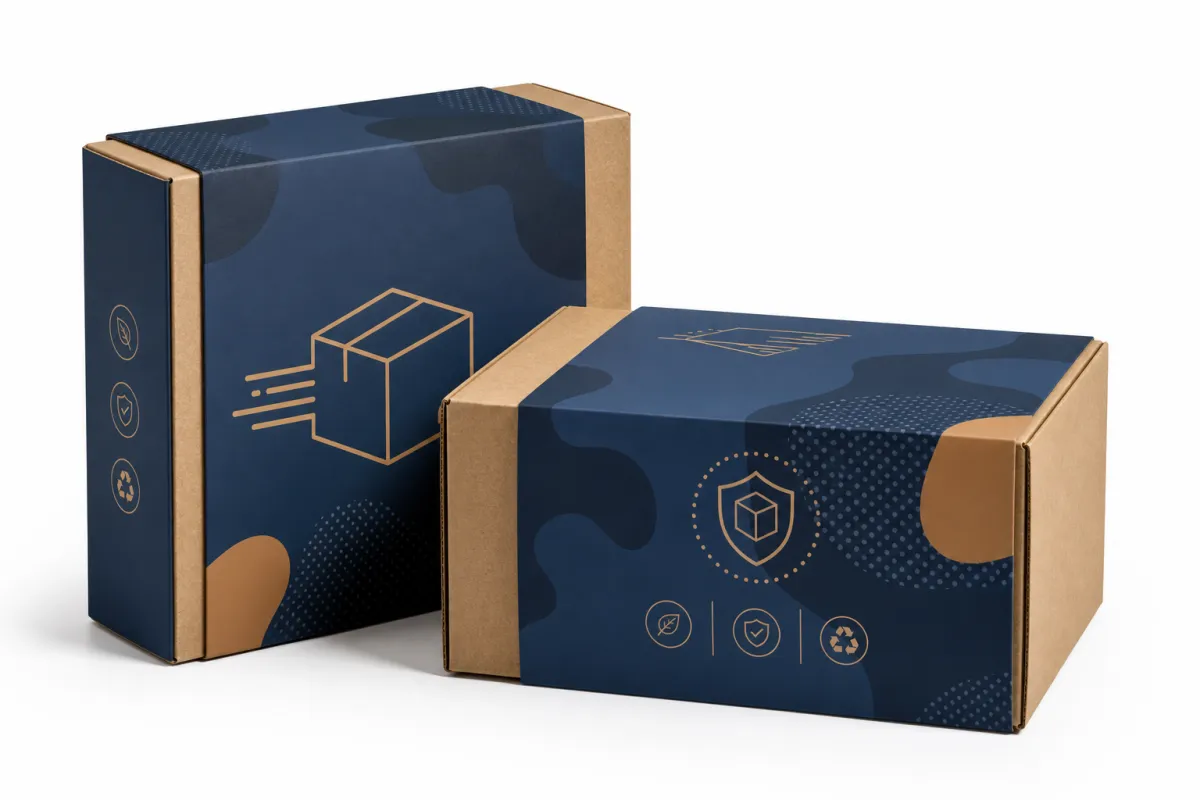
At the simplest level, printed shipping sleeves for boxes are wraparound printed pieces that slide over or around a carton to add branding, instructions, product information, or campaign messaging. They can cover one face, three faces, or most of the visible exterior, depending on the design and the box format. Unlike a fully custom carton, the base box stays standard. That sounds small. In practice, it changes the economics and the workload.
Here is the usual buyer scenario. A brand already has a plain corrugated box that works well for size, protection, and fulfillment. The packaging looks fine, but it does not say much about the product inside. A printed sleeve fixes that in seconds. The carton still handles the structure, while the sleeve handles the storytelling. That split is why printed shipping sleeves for boxes are common in subscription, ecommerce shipping, seasonal promotions, and retail-ready packs.
The commercial logic is easy to see. If a custom-printed carton requires new board specs, new inventory, and a longer replenishment cycle, a sleeve can deliver much of the same shelf or opening impact with less structural baggage. It also lets brands keep one carton size in stock while changing artwork for campaigns, SKU launches, or limited editions. For teams with multiple pack configurations, printed shipping sleeves for boxes can reduce the number of carton SKUs without flattening the presentation.
That said, sleeves are not a magic fix. A poorly sized sleeve can slow packing, wrinkle during application, or shift in transit. A glossy stock might look clean on screen and still scuff when stacked against other shipping materials. So the decision is not only visual. Printed shipping sleeves for boxes are a fit, process, and handling choice as much as a branding choice.
A sleeve that looks excellent in a proof can still fail on the line if the overlap is too tight, the score is off by a few millimeters, or the finish rubs under warehouse handling.
From a packaging buyer's point of view, the real question is not whether sleeves look good. It is whether they support package protection, keep the line moving, and improve perceived value enough to justify the extra step. That is the lens that separates a useful packaging upgrade from a pretty but impractical one.
One more honest point: a sleeve does not add meaningful crush strength. It is a branding layer, not armor. If the product needs real transit protection, the carton, internal fit, and void fill still have to do the heavy lifting.
How Printed Shipping Sleeves for Boxes Work in Real Operations
In production, printed shipping sleeves for boxes are usually printed flat, converted to the correct dimensions, and delivered stacked for manual or semi-manual application. Some teams wrap them around the carton after the box is packed. Others apply the sleeve before product insertion when the sleeve is acting more like a branded carton band than a post-pack wrap. The exact workflow depends on the product, the order profile, and how much line time the packaging can spare.
Fit is where the process gets interesting. A sleeve may rely on friction fit, a tuck-style closure, or a light adhesive point, depending on how much movement the carton sees during handling. If the fit is too loose, the printed shipping sleeves for boxes can drift and look sloppy. Too tight, and the assembly team starts fighting the material. That is not a small issue. One extra second per pack becomes real labor cost at volume.
Some brands prefer printed shipping sleeves for boxes because they can be applied only when needed. That matters for seasonal runs, regional promotions, and programs with multiple SKUs sharing the same base carton. Instead of dedicating each box to one printed design, the brand keeps the carton stable and swaps the sleeve. It is a clean way to keep inventory simpler while still letting the outer package change with the campaign.
Operationally, though, sleeves add a step. A simple label can be peeled and placed quickly. A sleeve needs alignment. A tuck needs checking. If the pack station already handles kitting, inserts, void fill, and quality checks, that extra motion can affect throughput. Good teams test printed shipping sleeves for boxes on the actual line, not just in a mockup room, because the real world is where small inefficiencies turn into labor costs.
That is also why printed shipping sleeves for boxes work best in programs where presentation matters and the box itself is not the whole brand system. Ecommerce gift sets, subscriber kits, cosmetics, specialty food, tech accessories, and DTC launches are common fits. The sleeve can carry the first impression, while the carton preserves order fulfillment efficiency and package protection.
One useful comparison is between a sleeve and a fully printed carton. A custom carton is more integrated, but it can lock you into one visual format and one box size. Printed shipping sleeves for boxes offer more flexibility. The tradeoff is the extra handling step. For many teams, that is still the better bargain.
There is also a timing advantage. If a campaign changes late, sleeves are easier to update than a full carton program. That flexibility is handy, and kinda underrated, for brands that run multiple launches in a quarter and do not want dead inventory sitting around with the wrong message on it.
Key Factors That Decide Fit, Print, and Performance
The first check is measurement, and it needs more care than many teams expect. Length, width, and height are only the start. You also need to account for board caliper, compression during packing, and the actual visible panels the sleeve should cover. A box that looks like 10 x 8 x 4 on paper may behave more like 10.06 x 8.12 x 4.04 in the warehouse. Printed shipping sleeves for boxes should be spec'd against real cartons, not just catalog dimensions.
Material choice is the next lever. Paperboard, SBS, kraft, and coated stocks each bring a different feel and different production behavior. Kraft can signal a natural, utilitarian look, while SBS often gives cleaner color and sharper type. Heavier stock tends to hold structure better, but it may also resist folding or create more friction during application. For printed shipping sleeves for boxes, the substrate has to support the artwork and the line process at the same time.
Print decisions affect performance more than many buyers realize. High ink coverage can look bold, but it may increase rub risk if the sleeve sits against other cartons or shipping materials during transit. Soft-touch or matte finishes can feel premium, yet they can also show scuffing in rougher channels. If the carton will go through mixed handling, it pays to test printed shipping sleeves for boxes under the same conditions the shipment will actually face.
Structural details matter too. Score lines control how neatly the sleeve folds. Seams determine where the eye lands. Grip points can help with fast application. Window cutouts add visibility but can weaken rigidity if they are placed poorly. The best printed shipping sleeves for boxes are designed so the visual elements and the physical geometry work together instead of competing.
There is also a standards angle. If the product is sensitive, fragile, or exposed to long transit routes, it makes sense to evaluate sleeve performance alongside common transit profiles such as those used in ISTA testing. That does not mean every sleeve needs lab certification. It does mean the design should respect the same rough handling assumptions that the package will face in the field.
Warehouse conditions can matter just as much as artwork. Humidity can soften some stocks. Dry, cold environments can affect folding memory. Long routes through mixed carriers can expose printed shipping sleeves for boxes to abrasion that would never show up in a short local run. That is where many projects go sideways: the spec looked good in a warm office, then failed in a real distribution center.
If sustainability is part of the brief, material sourcing matters too. FSC-certified paperboard can be a meaningful signal for brands that want a more responsible paper supply chain. For teams comparing options, the FSC certification framework gives a clearer reference point than vague green claims. The good part is that FSC-aligned stocks can still deliver a premium look without turning the packaging into a technical compromise.
Printed shipping sleeves for boxes also need to be matched to the box surface itself. A rough corrugated face, a coated carton, and a glossy printed box each interact with a sleeve differently. That is why a design that works on one carton style may not translate directly to another. The difference can be a clean fit or a sleeve that drifts, bows, or pops under compression.
From a practical standpoint, the strongest projects start with one question: what has to stay fixed, and what can change? If the answer is "the carton stays fixed and the branding changes," then printed shipping sleeves for boxes are often a strong fit. If the answer is "everything must be one integrated package," then a custom carton may be the better route.
A detail teams miss all the time: ink coverage and finish should be reviewed against the shipping route, not just the proof. A sleeve that looks gorgeous in a light booth can still pick up ugly rub marks after a cross-country trip. That kind of wear is not a theory. It shows up fast.
| Option | Typical Unit Cost at 5,000 Units | Best Use Case | Main Tradeoff |
|---|---|---|---|
| Plain carton + label | $0.03-$0.12 | Basic branding, simple SKU ID, low-friction fulfillment | Limited visual impact and less premium opening experience |
| Printed shipping sleeves for boxes | $0.18-$0.55 | Campaigns, seasonal sets, flexible branding over standard cartons | Extra application step and tighter fit requirements |
| Fully custom printed carton | $0.45-$1.20+ | Always-on branded shipping with fully integrated exterior graphics | Higher inventory commitment and less flexibility |
Printed Shipping Sleeves for Boxes: Cost and Pricing Drivers
Cost is rarely one number. It is a stack of choices. Material grade, sleeve size, print coverage, finishing, converting method, and order quantity all push the final price up or down. Printed shipping sleeves for boxes that use a heavier stock, more color coverage, or specialty finishes like foil or soft-touch lamination will usually land higher than a simple one-color kraft sleeve.
Short runs often look expensive because setup and proofing are spread across fewer pieces. That is true for many packaging formats, but it shows up sharply with printed shipping sleeves for boxes because the sleeve itself can be a relatively simple shape. A buyer may look at the blank substrate and assume the unit price should be tiny. Then the proofing, die cutting, scoring, and packing fees arrive. The real cost picture becomes clear fast.
Volume matters, but not in a straight line. The jump from 1,000 to 5,000 units can reduce the per-piece cost dramatically. The jump from 5,000 to 20,000 often reduces it again, though not always by the same percentage. At the same time, holding more inventory means more storage, more cash tied up in shipping materials, and more risk if the carton size changes later. Printed shipping sleeves for boxes can be economical, but only if the order quantity matches the actual run rate.
There are also hidden costs that buyers sometimes miss on the first pass. Artwork revisions can add time and expense. Freight can matter a lot if the sleeves ship separately from the cartons. Warehousing can become a real line item if you're holding multiple versions for a campaign calendar. Application labor is another one. A sleeve that saves a dime on print but adds four seconds on the line may not be cheap at all.
Dimensional weight can also affect the bigger packaging economics. If a sleeve allows a brand to keep using a carton that is already optimized for size, the total shipping cost can stay more stable than with a larger or more decorative box format. That is a subtle advantage, but it matters in ecommerce shipping where parcel rates, carrier surcharges, and package protection all feed into the final margin.
Here is a practical way to think about value. Suppose a sleeve costs $0.28 per unit at 5,000 pieces, while a fully printed carton costs $0.74. The sleeve is not just cheaper by $0.46. It also lets the team keep a shared carton inventory, change graphics without reworking the box, and avoid a more expensive board spec. That difference can be meaningful in a program with three seasonal launches and tight replenishment windows.
On the flip side, sleeves are not always the lowest-cost branded solution. If a simple label delivers the needed brand cue and the box is already attractive, a sleeve may be more packaging than the job requires. The smartest teams compare printed shipping sleeves for boxes against labels, printed cartons, and even inserts before deciding. That keeps the choice grounded in business value instead of visual habit.
If you are building a budget, ask suppliers to quote several variables at once: stock type, print coverage, finishing, and quantity breaks. A clear quote should also identify whether tooling, proofing, and freight are included. That gives you a cleaner comparison across printed shipping sleeves for boxes and other packaging options.
One reason brands get tripped up is that the sleeve often feels like a small add-on. It isn't. Once you include kitting, scrap, and receiving, the total can move in a pretty noticeable way. Not always huge. Just enough to matter if margins are tight.
Printed Shipping Sleeves for Boxes: Process and Timeline
The ordering sequence is straightforward, but the details matter. It usually starts with a brief, then carton measurements, then a dieline or template review. Artwork follows. After that comes proofing, production, and delivery scheduling. For printed shipping sleeves for boxes, every one of those steps can affect fit and launch timing, so the process should be handled with the same discipline as the product launch itself.
Simple projects can move quickly if the box spec is stable and the artwork is finalized early. More complex runs often take longer because print approval, color matching, and structural revisions add review cycles. A realistic timeline for many printed shipping sleeves for boxes is often 12-15 business days from proof approval for standard production, but larger runs, specialty finishing, or rush freight can change that. The important part is not the number alone. It is whether the team has time for revision and fit testing before the campaign goes live.
Delays usually come from avoidable issues. A carton measurement is off by a few millimeters. Bleed was forgotten. Text sits too close to a fold. Someone changes the logo after proof approval. Those are not rare edge cases; they are the everyday reasons printed shipping sleeves for boxes slip. Clear input from the brand side saves more time than almost any production promise.
Warehouse planning matters just as much as production planning. A great sleeve arriving two days before launch is still a problem if the receiving dock is full or the pack line is booked solid. Campaign dates, retailer windows, and order fulfillment schedules should be locked early. That way printed shipping sleeves for boxes can be staged with the cartons, inserts, and label stock instead of showing up as a last-minute interruption.
A pilot run is often the smartest way to reduce risk. It gives the team a chance to check fit, confirm print quality, and observe how the sleeve behaves during assembly. That one small test can reveal whether the seam catches, whether the finish scuffs, or whether the application time is acceptable. For printed shipping sleeves for boxes, a pilot is usually cheaper than discovering the problem after thousands of units are already in motion.
It also helps to compare the sleeve against the full packaging stack. If the carton, void fill, and outer shipper are already doing their jobs, the sleeve only needs to add presentation and basic alignment. If not, the sleeve may need to carry more messaging or help orient the product. In that case, the timeline should include extra art review because the sleeve becomes a more active part of the transit packaging story.
My rule of thumb: if no one has held a sample, folded it, and put it on a real carton, the project is still theoretical. Packaging people love theory until a packer has to touch the thing 2,000 times a shift.
Common Mistakes to Avoid with Printed Shipping Sleeves for Boxes
The first mistake is measuring only the nominal box size. Real cartons have tolerances. Board thickness changes the outside dimensions. Compression changes the way a sleeve sits. If the spec ignores those variables, printed shipping sleeves for boxes may arrive looking fine on paper and awkward in production. That is a classic packaging trap.
Another common issue is artwork that ignores folds and seams. Text can disappear into a score line. A brand mark can split across the wrong panel. A decorative pattern can make the sleeve look crooked if the wrap point is not planned correctly. Printed shipping sleeves for boxes need art direction with structure in mind, not artwork that was simply scaled down from a flyer or web banner.
Operational mistakes are just as costly. A sleeve that looks elegant but takes too long to assemble can slow the pack line enough to erase its value. A sleeve that slips on the carton can create rework, rejected packs, or a loose presentation in transit. If the line team has to fight the packaging, the program is probably mis-specified. Good printed shipping sleeves for boxes should support the workflow, not interrupt it.
Inventory planning is another place where teams get burned. Ordering too many sleeves before confirming the final carton spec can leave you with obsolete stock if the box changes. That is especially risky in programs where product dimensions may shift or where the packaging team is still tuning the shipper size. Printed shipping sleeves for boxes are flexible, but only if the underlying carton remains stable.
Skipping physical samples is a mistake that feels efficient right up until it is not. A printed proof can confirm color and layout. It cannot show you how the sleeve behaves when a packer is moving at normal speed. It cannot tell you whether the paper stock curls in a humid warehouse. For printed shipping sleeves for boxes, a physical fit test is the real check, and it is worth the time.
One more issue deserves mention: chasing visual impact without considering the shipping environment. A sleeve that looks excellent in a showroom can still rub, crush, or warp in ecommerce shipping. If the package will travel through multiple touchpoints, the spec should reflect the roughest likely condition rather than the nicest one. That is where a practical packaging mindset pays off.
The strongest sleeve projects are usually the ones that look a little boring in the planning phase. The dimensions are tight. The overlap is clean. The finish is chosen for durability rather than hype. Then the finished piece lands well because it works in the real world. That is the quiet advantage of printed shipping sleeves for boxes done properly.
And yes, that usually means someone has to say no to a fancy finish that would look great on a mood board and get wrecked in transit. Packaging is rude like that. It does not care about mood boards.
Next Steps: Test Printed Shipping Sleeves for Boxes in a Pilot Run
The best next move is simple: pick one carton size, one product line, and one measurable goal. Maybe the goal is faster setup. Maybe it is a better opening response. Maybe it is stronger seasonal branding without changing the base box. Printed shipping sleeves for boxes are easiest to evaluate when the test is narrow enough to measure without guesswork.
Build a scorecard before the sample arrives. Track fit, assembly time, freight damage, customer feedback, and cost per shipped order. If the team already measures fulfillment metrics, add the sleeve data into the same report. That makes printed shipping sleeves for boxes easier to compare against existing packaging instead of treating them like a separate art project.
Ask for a sample sleeve or a short production run, then use the same warehouse conditions and pack speed that the live order will face. If the real line runs at 300 units per hour, do not test at 40. If the cartons are stored in a humid zone, test there. Printed shipping sleeves for boxes are only as useful as the conditions they survive.
From there, compare the sleeve against a few alternatives. A sticker may be cheaper. A direct-printed carton may be cleaner. A different format, such as a branded shipper or a mailer, may fit better for certain SKUs. The point is not to default to sleeves. The point is to see where printed shipping sleeves for boxes deliver the best balance of branding, cost, and operational control.
If the pilot works, the next step is usually refinement rather than reinvention. Tighten the dieline. Simplify the artwork if needed. Adjust the stock for scuff resistance or fold memory. Small changes often produce the biggest gains. That is one reason printed shipping sleeves for boxes remain popular: they let brands improve presentation without locking themselves into a fragile packaging system.
And if the pilot exposes friction, that is still useful. A sleeve that slows order fulfillment too much, rubs too easily, or creates too much setup complexity may not be the right answer for that SKU. Better to learn that with 100 samples than with 10,000 finished units. The packaging budget always looks better when the test comes before the scale-up.
Once the pilot is running, make one person own the feedback loop. Not a committee. A single owner who can collect the line notes, review the damaged samples, and decide whether the sleeve spec needs another pass. That keeps the project from drifting into endless opinions and no action.
How much do printed shipping sleeves for boxes usually cost?
Pricing depends on size, stock, print coverage, finishing, and order quantity, so there is no single standard rate. For many runs, printed shipping sleeves for boxes can land around $0.18-$0.55 per unit at 5,000 pieces, though the range shifts with artwork complexity and substrate choice.
Short runs usually cost more per piece because setup and proofing are spread across fewer sleeves. Larger orders bring the unit cost down, but shipping, storage, and application labor still affect the total.
Are printed shipping sleeves for boxes better than custom-printed cartons?
They are usually better when you want branding flexibility without replacing your base carton inventory. Printed shipping sleeves for boxes let you keep one stable shipper and change the outer message for campaigns, launches, or seasonal programs.
Custom-printed cartons are the stronger choice when the entire box needs graphics or when sleeve application would slow fulfillment too much. Many brands use sleeves for promotions and keep standard cartons for everyday shipping.
What measurements do I need before ordering printed shipping sleeves for boxes?
Provide the exact finished dimensions of the box, including any material variance or compression allowance. You should also confirm where the sleeve must wrap, whether it needs a tuck or overlap, and how much visible panel area must remain open.
If the same carton is used for more than one SKU, share the full size range. That helps the supplier decide whether one sleeve spec can work or whether separate printed shipping sleeves for boxes are safer.
How long does it take to produce printed shipping sleeves for boxes?
Simple projects can move quickly if the dieline is ready and the artwork is final. Most delays come from proof revisions, missing specs, or color changes after the first sample.
For many orders, 12-15 business days from proof approval is a realistic production window, but specialty finishes, structural changes, and freight timing can extend that. Build in time for fit testing before the launch date.
Can printed shipping sleeves for boxes work for different box sizes?
Yes, but only if the size range is narrow enough that the sleeve still fits securely and looks aligned. A modular approach can work for related carton sizes, though each version may need its own dieline or artwork adjustment.
If the size spread is wide, separate specs are usually safer than one universal design. That keeps printed shipping sleeves for boxes from becoming loose, crooked, or hard to apply.
For brands that need a flexible branded layer without rebuilding the whole packaging system, printed shipping sleeves for boxes are still one of the most practical options on the table. The trick is treating them like production packaging, not just print collateral. Fit, cost, and line speed decide whether the result feels polished or fussy, and that is why the pilot run matters so much.
If you want the shortest path to a decision, use this rule: start with one carton, one SKU, and one pilot run of printed shipping sleeves for boxes. If the sleeve stays aligned, survives your warehouse conditions, and adds less than a second to pack time, it is probably worth scaling. If it misses any of those marks, fix the spec Before You Buy more. That is the cleanest way to keep the branding sharp and the operations sane.


