Buyer Fit Snapshot
| Best fit | Printed Tamper Evident Mailers projects where brand print, material claims, artwork control, MOQ, and repeat-order consistency need to be specified before quoting. |
|---|---|
| Quote inputs | Share finished size, material target, print colors, finish, packing count, annual reorder estimate, ship-to region, and any compliance wording. |
| Proofing check | Approve dieline scale, logo placement, barcode or warning zones, color tolerance, closure strength, and carton packing before bulk production. |
| Main risk | Vague material claims, crowded artwork, missing packing details, or unclear freight terms can make a low unit price expensive after revisions. |
Fast answer: Printed Tamper Evident Mailers: Film, Print, MOQ, and Carton Packing should be specified like a repeatable production item. The safest quote records material, print method, finish, artwork proof, packing count, and reorder notes in one written spec.
Production checks before approval
Compare the actual filled-product size with the drawing, then confirm tolerance on folds, seals, hang holes, label areas, and retail display edges. Reserve space for logos, QR codes, warning copy, and material claims before decorative graphics fill the panel.
Quote comparison points
Review material grade, print process, finish, sampling route, tooling charges, carton quantity, and freight assumptions side by side. A quote is only useful when the supplier can repeat the same color, closure quality, and packing count on the next order.
Printed tamper evident mailers do two jobs at once: they carry branding out to the customer, and they make it obvious if someone tried to open the shipment and close it again. That sounds simple. In practice, it is closer to packaging, process control, and customer reassurance bundled into one object. A soft-goods order can sit on a dock cart looking ordinary, then the customer spots a branded outer bag with a visible tamper feature and the package starts communicating before it is even opened.
That first impression matters more than many buyers expect. A plain poly mailer can keep apparel or accessories away from dirt and moisture, but a printed tamper evident mailer adds a security cue the eye catches quickly. Returns, subscription kits, medical supplies, documents, and higher-value direct-to-consumer orders all benefit from that visible signal. The outer bag becomes part of the trust story, not just the shipping wrapper.
A packaging buyer has a harder question than "Does it look good in a product photo?" The real test is whether the material, print, and closure match the way the team packs, seals, ships, and handles claims. Spec that combination well and the mailer saves time later. Spec it poorly and the weak point shows up on the floor, not in the mockup.
Printed Tamper Evident Mailers: The Security Signal Buyers Notice First
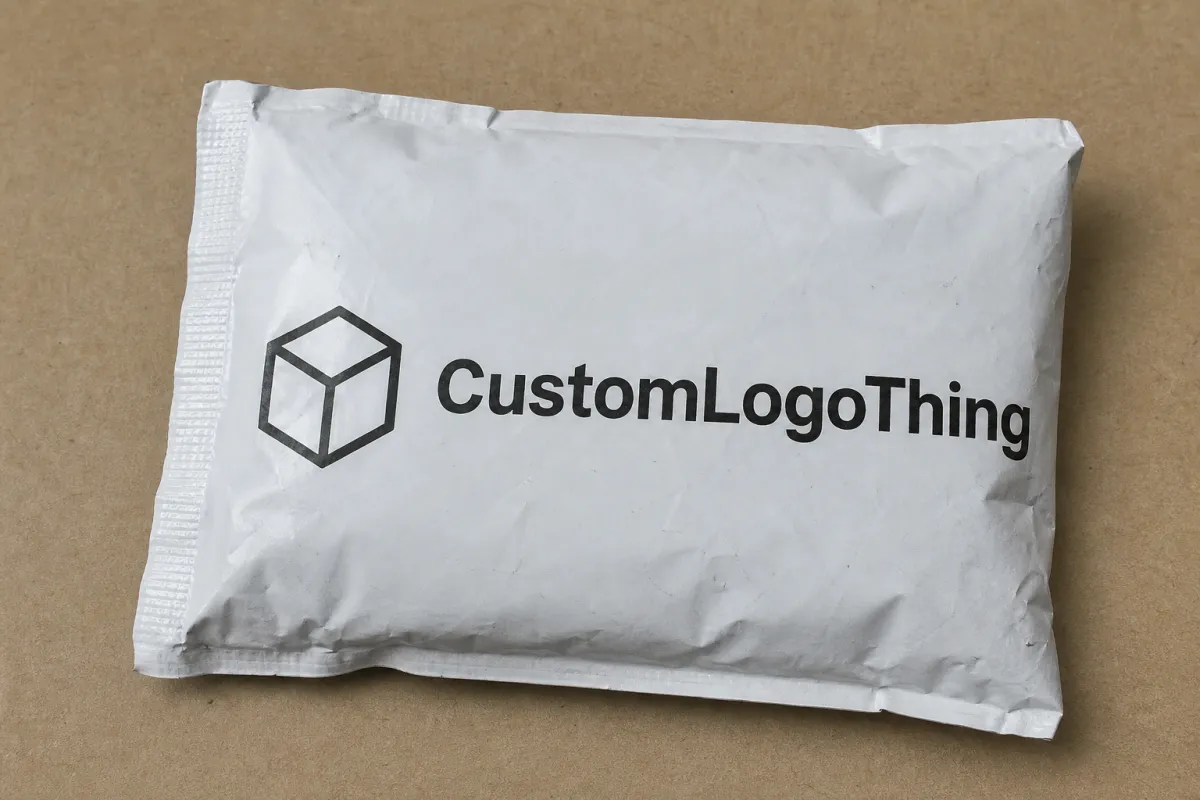
Picture a customer receiving a folded apparel order or a subscription refill in a clean, printed outer bag. They see the logo, a handling message, and the closure design before they touch the product itself. If the bag is meant to stay sealed from dock to doorstep, the package should say so in a way that leaves no guesswork. A clear message reduces confusion and makes the shipment feel planned rather than improvised.
The print does its work before anyone tests the seal. Branding tells the customer the item came from a real program with a real standard. The tamper-evident feature tells them the package should not be opened and resealed without visible evidence. Those signals work as a pair. The outer appearance builds confidence; the closure design protects the chain of custody.
A plain Printed Poly Mailer and a printed tamper evident mailer are not doing the same job. A standard poly bag may use a simple peel-and-seal strip, but careful reopening can be hard to spot. A tamper-evident structure is built to leave visible signs of disturbance, such as tearing, stretching, residue, or a closure line that does not return to its original shape. That matters for returns processing, subscription fulfillment, and any order where the receiving side needs to know whether the shipment was disturbed.
For a packaging buyer, the question is not only "Does it protect the contents?" It is also "Does it say the right thing at the right moment?" The outer print can carry branding, return instructions, lot cues, or a simple security message. The structure can back up that message by making unauthorized opening obvious. Put both pieces together and the mailer becomes part packaging, part evidence, part workflow control.
"A package should tell the handler three things fast: what it is, how it closes, and whether it has been opened already."
Garments, beauty samples, supplements, replacement parts, and documents all benefit from that clarity. Fulfillment teams benefit too. A bag that is obvious to close and obvious to inspect is easier to train around. Good programs do not rely on memory. They make the correct handling path visible.
There is another reason printed tamper evident mailers have become more common. Many shipping operations now live in a mixed environment: some orders are touchless, some are hand-packed, some pass through automated sorting, and some travel through multiple internal handoffs before they ever leave the building. Every extra handoff adds uncertainty. A visible tamper cue compresses that uncertainty into one quick glance.
How Printed Tamper Evident Mailers Work
Most tamper-evident mailers use a closure feature that changes permanently after opening. In plain language, the adhesive strip seals the flap, and opening that seal usually leaves a visible tear, a distorted seam, or adhesive residue that does not disappear when someone presses the flap back down. The idea is simple: if the package was opened, the evidence should stay easy to see.
Construction details vary, and those details shape both the user experience and the security signal. A co-extruded polyethylene film can deliver good strength and a clean print surface, while a pressure-sensitive adhesive strip can create a dependable closure. Some designs add a tear feature or a second adhesive path so the opened bag shows a clear disturbance pattern. Others use a tinted inner layer, which hides contents and makes opening damage easier to spot once the bag has been handled.
Print can reinforce the message in a few direct ways. A bold closure line, a short security statement, serial cues, or a repeat pattern around the seal can help the customer notice tampering faster. The goal is not decoration for its own sake. It is to make the important area easy to recognize at a glance, especially when the package is being handled quickly in a receiving area or at a front door.
There is a sharp difference between looking secure and being secure. A well-designed outer bag should pass a basic reality check: the seal should close cleanly, it should hold during transit, and it should show clear evidence of opening without requiring guesswork. If your supplier can provide seal-strength data from ASTM F88-style testing, or a similar internal method, that helps. If the shipment will travel through a tougher distribution path, asking about ISTA-style transit testing makes sense as well.
Helpful references from the packaging field keep the discussion grounded. The International Safe Transit Association focuses on distribution testing, while packaging.org offers broader packaging education and industry context that can help teams compare structures with more confidence.
Real-world testing still matters most. Pack the product, seal the bag, move it through your normal handling process, then inspect what happens after opening and resealing attempts. If the evidence is hard to miss, the design needs work. If the bag opens cleanly, seals predictably, and shows a clear tamper pattern, the structure is doing its job.
One point deserves a plain disclaimer. No mailer is tamper proof. What buyers can specify is tamper evident, meaning the package should make interference visible enough that a receiving person, customer, or returns team can see it without a lab. That is a meaningful difference, and it is often enough for retail, ecommerce, and many controlled distribution programs.
Printed Tamper Evident Mailers: Cost, MOQ, and Quote Factors
Price on printed tamper evident mailers depends on more than bag size. Film gauge, print coverage, closure style, color count, and the complexity of the security feature all affect cost. A lightweight two-color run with a standard seal sits in a different category from a full-coverage mailer with custom security cues, heavy ink coverage, and a specialty adhesive strip.
Minimum order quantity matters just as much. Smaller runs usually carry a higher unit price because setup, artwork prep, and production changeovers are spread across fewer pieces. Larger runs reduce the per-unit weight of those fixed costs, but only when the design is stable enough to justify the quantity. Buyers often learn that the lowest unit price is not the lowest total packaging cost once freight, storage, waste, and reorders enter the picture.
When you compare quotes, ask exactly what is included. Does the price cover press setup? Are plates or cylinders extra? Is freight built in or quoted separately? Are samples included, and if so, how many? Is the unit price based on finished bags packed into cartons, or on an unboxed production count? Those details change the real number faster than a small material difference ever will.
| Option | Typical MOQ | Indicative Unit Price | Best Fit | Common Tradeoff |
|---|---|---|---|---|
| Stock tamper evident mailer | 1,000-2,500 | $0.12-$0.25 | Fast programs, limited branding needs | Less control over print and sizing |
| 1-2 color printed tamper evident mailer | 5,000-10,000 | $0.18-$0.32 | Ecommerce, apparel, subscription use | Setup costs matter more on small runs |
| Full-coverage custom printed version | 10,000+ | $0.25-$0.55 | Premium branding, stronger visual impact | Higher print prep and longer lead time |
| Special security feature build | 10,000+ | $0.30-$0.70 | Sensitive goods, documents, higher-risk shipments | More proofing and testing before release |
Those ranges are directional, not universal. A smaller bag with simple graphics may price lower than a larger one with fewer colors but a more demanding material spec. Print coverage, adhesive type, and carton pack-out can each nudge the number up or down. If the project needs an internal approval sample, that can affect timing and cost too.
One practical way to compare quotes is to break them into three questions:
- What is fixed? Tooling, setup, proofing, and sample costs should be identified clearly.
- What changes with volume? Unit price, freight efficiency, and carton configuration often improve as the order grows.
- What changes the experience? Closure style, bag stiffness, print legibility, and opening evidence all affect how the mailer performs on the shipping floor and in the customer's hands.
If you are still comparing formats, a broader view of Custom Packaging Products can help you weigh outer mailers against cartons, inserts, and other presentation pieces. For programs that only need a branded outer bag without a tamper-evident closure, Custom Poly Mailers are worth reviewing as a baseline.
Freight deserves its own line item in the mental math. A low per-unit price can be misleading if the order ships in small cartons, arrives in multiple drops, or requires rushed replenishment because the MOQ was too conservative. Packaging buyers who watch landed cost, not just quoted price, usually make calmer decisions later.
Production Steps and Timeline for Printed Tamper Evident Mailers
A good production plan starts with the product, not the artwork. Size, gauge, and closure style should follow the item being shipped. A mailer that is too large wastes material and creates loose pack-out; a mailer that is too small stresses the closure and makes sealing inconsistent. Once the size is locked, the artwork and security details can be built around it with far fewer surprises.
The production path is direct, though each step can add time if the front end is messy. First comes specification review. Then artwork setup and proofing. After that, the supplier sources the film, prepares the print configuration, and runs the converting process that turns the film into finished bags. If the design includes a specialty tamper feature, that feature needs to be integrated and verified before final packing.
Delays usually show up in familiar places. Artwork cleanup is common, especially if logos are low resolution or print files were built for a different bag dimension. Color matching can slow things down too when the brand expects a specific shade on a film substrate that behaves differently from paper. Security features can add proofing time because the supplier may want a physical sample approved before full production begins.
Lead time depends on complexity and volume, but a practical planning window is often 12-20 business days from proof approval for simpler custom jobs, with first-time projects sometimes running longer if revisions are needed. Larger orders, specialty inks, multi-step security construction, or tight carton configurations can stretch that timeline. If the launch date matters, the safest move is to build in sample review time before the production clock starts.
A sensible approval sequence looks like this:
- Confirm the size, material gauge, and closure style.
- Review artwork proofs on the actual bag template.
- Approve a physical sample if the design is new or security-sensitive.
- Release production only after internal stakeholders sign off.
- Book receiving time so cartons do not sit unattended at the dock.
That last point is easy to miss. Even the right packaging can become a bottleneck if it arrives late or lands with no one ready to inspect it. Planning a small buffer keeps the shipping line from waiting on a critical consumable, and it gives the team time to sort any artwork or conversion issue before the first live pack-out.
For regulated items, timing also has a compliance angle. A tamper-evident outer bag does not replace the need for documented chain-of-custody controls, temperature handling, or any industry-specific labeling. It is one layer in the system, not the system itself. Buyers who separate those responsibilities tend to avoid overpromising what packaging can do.
Step-by-Step Guide to Choosing the Right Mailer
The cleanest way to choose a mailer is to start with the item inside it. Measure the product after folding or staging it the way it is actually packed. Note the weight, any sharp edges, and whether the contents can shift inside the bag. Moisture sensitivity matters too. A soft-goods program may only need a light barrier, while documents or sensitive kits may need a more controlled closure and better opacity.
Next, match the closure to the shipping environment. A lightweight apparel order that moves through a low-risk parcel stream has different needs than a return-prone accessory or a refill kit that may be handled multiple times. The more important the "was this opened?" question becomes, the more value a true tamper-evident design brings.
After that, choose the print strategy based on what the mailer must say. Some programs need strong branding and a short handling line. Others need a prominent tamper warning, return instruction, lot cue, or order identification. If the design is crowded with barcodes, legal copy, and graphics, the security message can get buried. Keep the most important instruction visible after the shipping label is applied.
A practical selection process usually works better than a theoretical one:
- Size the bag to the product. Leave enough room to seal cleanly, but not so much that the item shifts around.
- Choose the film strength. Match the gauge to the weight and handling risk, not to the lowest price on the quote sheet.
- Decide what the print must communicate. Branding, opening cue, return path, and handling note all need different emphasis.
- Request samples. Real handling beats guesswork every time, especially if the bag will pass through automated sorting or repeated hand packing.
- Test the package in the real flow. Apply the label, move it through the pack line, and inspect how the tamper feature holds up after normal handling.
That sample stage is where many buyers gain the most clarity. A bag can look perfect on a spec sheet and still feel awkward in a live pack-out. It may be too slippery to handle quickly, too stiff to fold cleanly, or too opaque to let the team verify contents before sealing. None of those problems shows up on a quote, but all of them show up on the floor.
If your operation is still deciding between outer formats, compare the mailer against your current fulfillment rhythm. High-volume apparel programs may prefer a light printed bag with a strong visual identity. A more sensitive shipment may justify extra security cues, even if the print becomes simpler. The right answer is the one that protects the product, supports the team, and does not create avoidable labor.
There is a useful comparison here. Printed tamper evident mailers are a bit like a receipt and an alarm in one object. The receipt is the branding and handling information. The alarm is the visible disturbance if someone interferes with the package. That dual role is exactly why the format deserves a real spec review rather than a quick reorder off a past invoice.
Common Mistakes with Printed Tamper Evident Mailers
The most common mistake is choosing a mailer that looks secure but does not show tampering clearly enough in practice. If the seal can be peeled and pressed back into place without an obvious trace, the package is not really doing the job the buyer thinks it is doing. A security feature should not depend on wishful thinking.
Another common issue is burying the important message under too much design. A nice graphic is not helpful if it hides the closure line or gets covered by a label panel. The tamper cue needs to survive the real shipping environment, which means it should still be easy to see after barcode placement, carrier labels, and a little wear from handling.
Sizing mistakes create a surprising number of problems. Too much empty space inside the mailer allows movement, which can stress the seal and make the package feel sloppy. Too little space forces the closure to work harder than it should, and that can lead to puckering, poor adhesion, or an overstuffed unboxing experience. Neither outcome helps the brand.
Skipping sample testing is a bigger risk than many teams expect. A package can look fine on a proof, but the real-world behavior changes after packing, stacking, and line handling. Bags can slide differently on a table, tear more easily at the corner, or seal less consistently when an operator is moving fast. The only safe way to know is to test with the real product and the real process.
- Do not rely on appearance alone. A bag that looks secure may still be easy to manipulate.
- Do not hide the seal area. Your tamper message needs to stay visible after labeling.
- Do not overstuff the bag. Stress around the closure can weaken performance.
- Do not approve without a live test. Packing-floor behavior is different from a proof sheet.
If a customer can close the bag again without noticing, the packaging has not earned the word "tamper evident."
There is also a documentation mistake worth calling out. Some teams accept a quote without confirming the adhesive type, film gauge, or print coverage, then discover later that the delivered bag is not the same as the sample they approved. A clean spec sheet prevents that problem. So does a physical sample signed off by the people who actually pack the order.
One more failure mode shows up in launches. Marketing approves the design for the shelf, but operations has to live with it on the line. If the closure is awkward to handle, the team will compensate in ways that hurt consistency. A mailer that slows pack-out by even a few seconds can become expensive at scale. That is why the floor test matters more than the presentation deck.
Expert Tips and Next Steps for Smarter Shipping
Start with the failure point you see most often. Is it weak adhesion? Is it unclear opening evidence? Is it a bag that looks good but slows down the fulfillment line? Fix the most frequent issue first, because the best packaging upgrades are usually the ones that remove friction from daily work instead of adding another decision for the team.
Ask for samples that match your actual load. A mailer that feels fine with a light garment may behave very differently with a heavier item or a bundle that has sharp corners. Have the same people who pack the order open, fill, seal, and inspect the sample. Their feedback is usually more useful than a general opinion from someone who only sees the finished product in a conference room.
Prepare artwork with the shipping floor in mind. Keep branding clear, but reserve space for the opening cue and any handling message that needs to stay visible. If the tamper line disappears under a shipping label or a dense graphic panel, the package loses part of its value. Good artwork supports the process instead of crowding it.
A pilot run is often the smartest next step. Run a modest quantity, track damage complaints, record any tamper concerns, and ask the fulfillment team what slowed them down. That feedback helps you adjust the spec before you commit to a larger production run. In many cases, a small change in size or closure style saves more money over time than squeezing another cent out of the unit price.
For teams that want to compare transit performance in a more formal way, testing references from groups like the International Safe Transit Association are useful because they remind everyone that real shipping is a distribution problem, not just a material problem. If your broader packaging program includes paper components or sustainability goals, a resource such as EPA recycling guidance can help frame the downstream waste conversation in a practical way.
As a buying habit, it helps to remember one simple rule: choose the material, print, and seal design together, not one piece at a time. A strong-looking graphic cannot compensate for a weak closure, and a clever security feature cannot rescue a bag that is the wrong size. The best printed tamper evident mailers are the ones your team can seal quickly, your customer can trust immediately, and your carrier can move without mystery. The next practical step is straightforward: sample the exact structure, pack the real product, and check whether the tamper cue still reads clearly after normal handling.
FAQ
How do printed tamper evident mailers differ from standard printed poly mailers?
Standard Printed Poly Mailers focus on branding and basic protection, while tamper evident versions add a closure or tear feature that shows if the package was opened. If the shipment carries sensitive, high-value, or return-prone items, the visible evidence of opening can matter just as much as the printed design. That is the practical difference buyers are paying for.
What should I ask for when requesting a quote on printed tamper evident mailers?
Ask for the exact size, material gauge, print coverage, closure style, MOQ, sample cost, and whether freight is included in the unit price. Also confirm lead time, artwork requirements, and whether the quote changes if you need special security features or additional packaging inserts. If the supplier can name the film structure and adhesive type, even better.
Can printed tamper evident mailers be used for subscriptions or ecommerce orders?
Yes, they are a strong fit for subscription boxes, apparel, accessories, supplements, and other direct-to-consumer shipments that benefit from a clear unopened appearance. They are especially useful when you want the outside package to reinforce brand trust while still showing whether the contents were disturbed in transit. That combination is hard to fake with a standard bag.
What size and material are best for printed tamper evident mailers?
The best size is usually the smallest one that fits the product without excessive movement, because empty space can stress seals and create sloppy packing. Material choice depends on the item, but many shippers start with a durable polyethylene construction and then test seal strength, tear visibility, and handling feel. If the item has sharp corners or a heavy insert, the film spec should move up accordingly.
How far in advance should I plan production for printed tamper evident mailers?
Plan early enough to allow for artwork proofing, sample review, and a pilot run, especially if the order needs custom print or a specialized closure. If you are tied to a launch date, build in extra time for revisions so the finished printed tamper evident mailers arrive before the packing line needs them. For first-time programs, a larger buffer is safer than a tighter promise.


