Why private label woven labels bulk order makes sense for busy brands
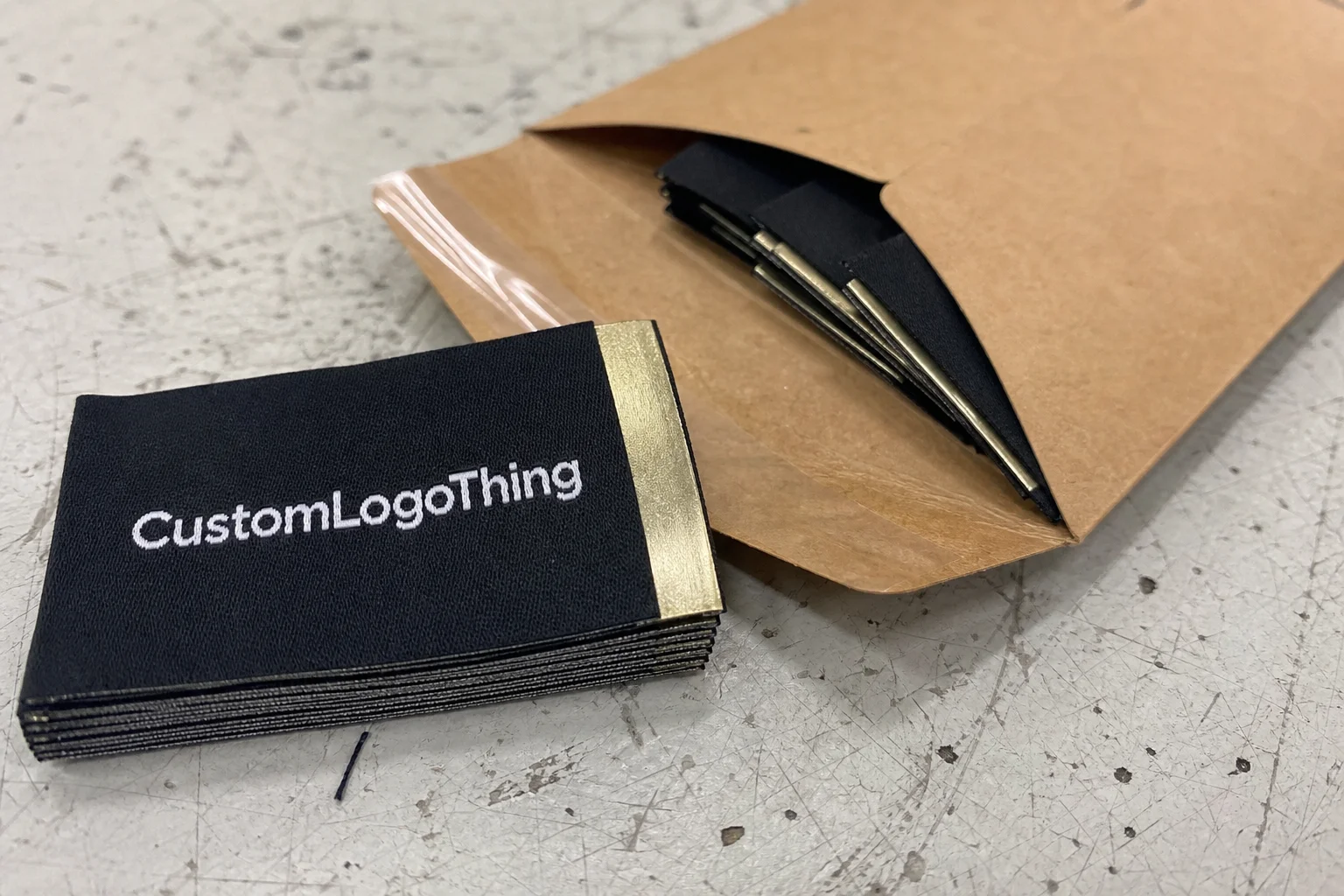
A garment can look premium or bargain-bin cheap in one glance. Labels do a lot of that work. A private label Woven Labels Bulk order is not just a trim purchase; it is a repeatability decision. You are paying for consistent branding, fewer approval cycles, and less risk that the next shipment arrives with a label that looks almost right but not quite.
That “almost” is expensive. A small mismatch in shade, size, or fold can force rework, delay packing, or create a launch inconsistency that customers notice before your team does. Bulk ordering reduces that risk because one approved specification can be reused across replenishment runs instead of being rebuilt each time procurement changes suppliers or rushes a reorder.
There is also a simple pricing reality. Setup costs do not disappear just because the order is small. When the same design is spread over 500 pieces, the unit price carries more of the setup burden than it would at 5,000 pieces. That is why brands with stable branding often move to larger runs once the design is approved and production has proven itself.
Operationally, bulk ordering makes more sense than many first-time buyers expect. A reliable trim stock keeps production moving, especially for seasonal drops and core products that need the same neck label, side seam label, or hem tag again and again. If the label spec is locked, your team spends less time managing artwork and more time managing inventory.
“The best label order is the one nobody has to chase. Clean spec, clear proof, same result next run.”
Labels are also one of the few brand elements customers physically touch on every unit. If the material feels rough, the weaving is fuzzy, or the fold sits awkwardly in the seam, the product starts with friction. A good woven label does the opposite: it disappears into the garment experience while still doing the branding job.
Woven label styles, folds, and backings that survive wear
Not every label build works for every placement. Buyers often ask for the cheapest option first, then discover the label is too stiff for a neck seam or too thin to survive repeated wash cycles. That mismatch is avoidable if you match the construction to the use case rather than to the lowest quote.
Damask is the most common choice for detailed branding because the tighter weave produces cleaner text and sharper edges. It is usually preferred for logos with thin strokes, small type, or high-contrast layout. Taffeta is lighter and lower cost, but it is also less refined. It can be fine for simpler marks or internal trim, yet it usually feels and looks more basic than damask.
There is a practical difference between the two beyond appearance. Damask is better when a buyer expects close viewing or repeated handling. Taffeta can work when the brand mark is straightforward and the order needs to stay price-sensitive. If the label includes a lot of text, damask usually pays for itself by reducing the risk of blurred copy.
Fold choice matters just as much as weave type. A label can be woven correctly and still fail in production if the fold does not fit the seam or application.
- End fold works well for side seams, hems, and sewn edges where the label needs a clean finish.
- Center fold is common for neck labels or tags that fold over a seam.
- Loop fold suits wraparound or hanging placements and is useful when both sides of the label need to remain visible.
- Straight cut is used when the label will be sewn on all sides or applied as a patch-style piece.
Backing is another place where buyers should be specific. Sew-in remains the most durable option for apparel because stitching survives laundering and abrasion better than temporary attachment methods. Heat-seal and iron-on choices can work for sample work or certain specialty applications. Adhesive backing is useful for temporary positioning or packaging-related use, but it should not be treated as a substitute for long-term garment attachment.
Comfort matters too. A neck label can irritate the wearer if it is too thick or has rough edges. An exterior label, by contrast, can tolerate more structure and contrast. The same spec can work beautifully on a tote bag and feel wrong on a T-shirt. The buyer’s job is to think about placement, not just artwork.
| Label option | Best use | Typical pros | Watch-outs |
|---|---|---|---|
| Damask, sew-in, end fold | Apparel neck or side seam labels | Sharp detail, durable, clean finish | Costs more than basic taffeta |
| Taffeta, sew-in, straight cut | Simple branding or internal use | Lower price, lighter feel | Less crisp for small text |
| Damask, iron-on | Short-run applications or sample work | Fast application, no stitching needed | Long-term wash durability can vary |
| Loop fold, sew-in | Hanging tag style or specialty placement | Flexible placement, strong attachment | Needs clear sizing and fold instructions |
Artwork specs that prevent fuzzy logos and color drift
The cleanest production starts with clean artwork. Vector files are preferred because they keep edges sharp and let the supplier scale the design without guessing. Send exact dimensions, the logo orientation, the text you want on the label, and any notes about fold direction. If the label is 20 mm by 60 mm, say that. If a font must stay small but readable, say that too.
Many label problems begin with assumptions. Tiny type gets mushy. Thin lines disappear. Gradients are a poor fit for woven construction because thread does not behave like ink. If the design depends on photographic detail, soft shading, or very fine linework, simplify it before quoting. That usually improves both the final result and the price.
Color needs special care. Thread colors can come close to brand intent, but they are not printed inks and they are not always a perfect match to a screen file. For a private label Woven Labels Bulk order, ask for a proof that shows the color arrangement clearly. If the brand is sensitive about navy, red, black, or off-white, request a physical swatch reference or compare against a previously approved sample.
Size affects legibility more than many buyers expect. A logo that looks crisp at full screen can collapse into a blur when reduced to 25 mm wide. Before approving the order, view the artwork at final size. If the brand name stops reading cleanly, simplify the layout. Labels should carry identity, not visual clutter.
It also helps to specify thread count expectations where possible. Higher weave density usually improves detail, but there is a point where very dense builds become less economical without adding much practical value. Buyers who want fine text should ask whether the design can be cleanly woven at the intended size instead of assuming every detail will survive the shrink from artboard to fabric.
Cost, MOQ, and unit pricing for bulk label runs
Pricing for woven labels is driven by a few concrete variables: size, weave density, number of colors, fold style, backing, and total quantity. Bigger, tighter, and more complex usually costs more. Simpler specs and higher volumes usually reduce the unit cost. There is no mystery in the formula, although different suppliers package those costs in different ways.
MOQ, or minimum order quantity, depends on the spec. Many standard woven label runs start around 500 to 1,000 pieces per design. Custom folds, unusual dimensions, extra colors, or specialty backing can push minimums higher. Lower minimums do exist, but they usually carry a higher unit price because setup is spread across fewer pieces. That is not a trap; it is a manufacturing reality.
For buyers comparing quotes, the true cost is not only the number printed beside each unit. It is the total cost of repeated small orders versus one larger order that covers several production cycles. If the design is stable and already approved, a larger run often pays back quickly in reduced reordering work and lower per-piece pricing. A run of 5,000 or 10,000 pieces may look large on paper, but once the loom setup is complete, the per-thousand cost usually drops noticeably.
A useful quote should show multiple quantity tiers. One price point tells you very little. Ask for 500, 1,000, 3,000, 5,000, and, if relevant, 10,000 pieces. That makes the breakpoints visible and helps you decide whether a modest increase in quantity brings the price down enough to justify the extra inventory. For many brands, the best price is not the lowest quantity. It is the quantity that keeps the reorder cycle efficient without overstocking trim.
| Quantity tier | Typical unit pricing range | What usually improves | What to watch |
|---|---|---|---|
| 500 pieces | $0.20-$0.45 each | Entry-level testing, lower commitment | Higher setup cost per label |
| 1,000-3,000 pieces | $0.10-$0.24 each | Better per-unit value, stable replenishment | Still sensitive to color count and fold type |
| 5,000+ pieces | $0.05-$0.16 each | Best pricing for repeatable specs | More inventory on hand |
Those ranges are not universal, but they are realistic enough to keep a buyer grounded. A narrow one-color label with standard sew-in construction will sit at the low end. A dense multi-color damask label with specialty folding will move upward fast. Shipping, sampling, and any compliance-related rework are separate costs and should be treated that way from the start.
Process and turnaround from proof to shipment
The production flow is usually straightforward: artwork review, spec confirmation, digital proof, approval, weaving, finishing, quality check, packing, and shipment. If the supplier is organized, the first proof can return in 1-3 business days once all inputs are complete. The actual production schedule then depends on quantity, complexity, and current line load.
For a standard private label woven labels bulk order, production often runs about 7 to 15 business days after approval. That is a common window, not a promise. Larger orders, more color changes, denser weaving, special backing, or a difficult fold can extend the timeline. Shipping is separate, and international freight, customs checks, or holiday congestion can move the delivery date even if production finishes on time.
Delays usually come from incomplete information. Missing dimensions. No fold direction. Vague color notes. A proof returned with “looks fine” when the buyer actually wanted a revision. That sort of ambiguity can add days, sometimes a full week, because production cannot safely guess at intent once the loom has been set.
If the design is new, request a digital proof or sample before full production begins. That is especially useful when the label has small text, multi-color artwork, or a finish that needs close inspection. Ten minutes spent checking a proof is much cheaper than ten days explaining a reprint.
One practical buyer habit is to approve labels against the actual garment, not only against a PDF. The same woven label can look right on screen and still fail once you see the seam allowance, the stitch line, or the orientation on a finished product. Production teams need clear instructions, but they cannot fix a placement problem that was never communicated.
Quality checks and compliance details buyers should not skip
Good labels do more than look neat. They need to hold up. That means checking edge cleanliness, stitch consistency, color accuracy, final size tolerance, and text legibility at production scale. A label that looks acceptable in a digital proof but curls after washing or frays at the edges is not a finished solution.
Buyers should also inspect how the weave handles contrast. Dark thread on a dark background can look elegant in theory and muddy in practice. Likewise, ultra-fine text can vanish once the label is cut and folded. That is why quality checks should include actual samples when the design is highly detailed or the brand cannot tolerate visible defects.
Compliance is another area where assumptions get expensive. If the woven label is part of the garment’s required labeling system, make sure the package includes the correct fiber content, country of origin, and care information where required. Standards vary by market, so do not guess. For broader distribution testing context, ISTA is a useful reference. If your packaging program involves certified paper components, FSC can help guide those choices. For packaging and labeling practice guidance, packaging.org is also worth reviewing.
Consistency across reorders matters more than one good batch. The objective is not to get one nice shipment. The objective is to make sure the next shipment matches the approved standard so the customer never notices a change. That means keeping a master spec sheet with dimensions, fold type, thread colors, backing, and approved artwork version.
Buyers should also check finished dimensions against sewing allowances. A label that is technically correct on paper may sit differently once it is sewn into a neck seam or side seam. If the garment style changes later, the label may need a different fold or cut length. Small trim details have a habit of revealing larger production problems.
You can also review broader trim and packaging options through Custom Labels & Tags and compare volume programs through Wholesale Programs if your label order is tied to repeated product launches.
What makes a supplier worth reordering from
Repeat buyers do not just want the cheapest quote. They want a supplier who can reproduce the same spec without forcing the team to rebuild the job each time. That means stable color matching, clean proofing, consistent naming, and a record of what was approved. If every reorder starts from scratch, procurement ends up doing extra admin work that never shows up on the invoice.
Reliability appears in details that are easy to ignore until something goes wrong. Does the supplier confirm dimensions back to you? Do they flag an impossible fold before production starts? Do they keep the file name, invoice, and proof version consistent? Those habits matter because label orders usually sit inside a larger production schedule. If trim slips, cutting, sewing, packing, and fulfillment can all slip with it.
Cheap sourcing can still be costly if it creates mismatched labels, delayed communication, or a reprint. One bad trim run can hold up a launch and cost more than the labels themselves. So the real question is not who is cheapest. It is who can deliver the same spec several times in a row without surprises.
The strongest reordering relationship is built on clarity, not persuasion. Once a supplier understands your standard label size, fold type, weave preference, and thread palette, future orders become faster and less risky. That is why a clean spec sheet and a clean approval record are worth keeping. They remove ambiguity from the process, which is usually where the trouble starts.
There is also value in suppliers who understand reasonable limits. If a label is too detailed for the chosen size, a good supplier should say so instead of promising a result that will not hold up in production. That kind of pushback is useful. It keeps the order usable instead of merely possible.
Next steps to place a bulk order without delays
If you want to move a private label woven labels bulk order into production without dragging it through revisions, prepare the basics before you Request a Quote:
- Label size in millimeters or inches.
- Fold type and placement.
- Quantity tier, plus any backup quantity target.
- Artwork file, preferably vector.
- Exact text, spelling, and punctuation.
- Color preference or thread references.
- Backing choice, if needed.
- Target ship date and any launch deadline.
If your label has tiny type, an unusual fold, or a brand color that needs to sit close to a reference, ask for a sample or digital proof. Guessing is not a strategy. It is a delay with extra steps. The most efficient orders are usually the ones where the buyer supplies enough detail up front that the supplier can approve the spec without interpretive work.
Then create one master spec sheet and keep it for future reorders. That document should hold the approved artwork version, size, fold, thread colors, backing, and any placement notes. Six months later, no one wants to rediscover which side was meant to be the front. A single reference file can prevent that kind of slow-motion mistake.
For teams building a trim system around repeated product launches, the real advantage of a bulk woven label order is not only price. It is predictability. Better pricing matters, but so do lower revision counts, less launch risk, and a more consistent brand presentation from one run to the next. That is the practical value of getting the specification right the first time.
What is the MOQ for a private label woven labels bulk order?
MOQ usually depends on size, fold type, and number of colors, but many runs start around 500 to 1,000 pieces per design. Standard specs often allow lower minimums than highly customized labels with extra colors or special backing.
How much do private label woven labels cost in bulk?
Unit cost is driven by quantity, label size, weave density, fold style, and backing choice. Pricing drops at higher tiers, so compare quotes at multiple quantities before you lock the order.
How long does production take for woven label bulk orders?
Proofing can move quickly if the artwork is clean, while production commonly takes about 7 to 15 business days after approval. Shipping time is separate, and rush changes almost always slow the schedule.
Can I order woven labels with small text and fine details?
Yes, but only if the artwork is simplified enough for the weave to hold the detail at the final label size. Very thin lines and tiny text should be reviewed before production because they can blur or disappear.
What do you need to start a private label woven labels bulk order?
Send the artwork, exact label dimensions, fold style, color preference, quantity, and any backing requirement. If you have placement or compliance notes, include those up front so the proof matches the final use.


