If you are comparing a Recyclable Poly Bags Wholesale manufacturer, the first question is not whether the packaging sounds sustainable. It is whether the bag protects the product, runs cleanly through your packing process, and can be reordered without surprises. That sounds plain, but procurement decisions usually live or die on plain things: fit, seal strength, print accuracy, and freight.
Recyclable polyethylene bags have become a practical option for brands that want lighter packaging without giving up presentation. In bulk, they can reduce cube, lower shipping weight, and take up less storage space than heavier alternatives. Those savings matter more as order volumes rise. A few cents less per unit does not sound dramatic until a program moves tens of thousands of pieces a month.
There is also a less obvious point. Many buyers assume a greener package must be more expensive or more fragile. That is not always true. The better comparison is performance per gram of material, and in that comparison a well-made poly bag often looks stronger than its reputation.
Why recyclable poly bags can outperform heavier packaging
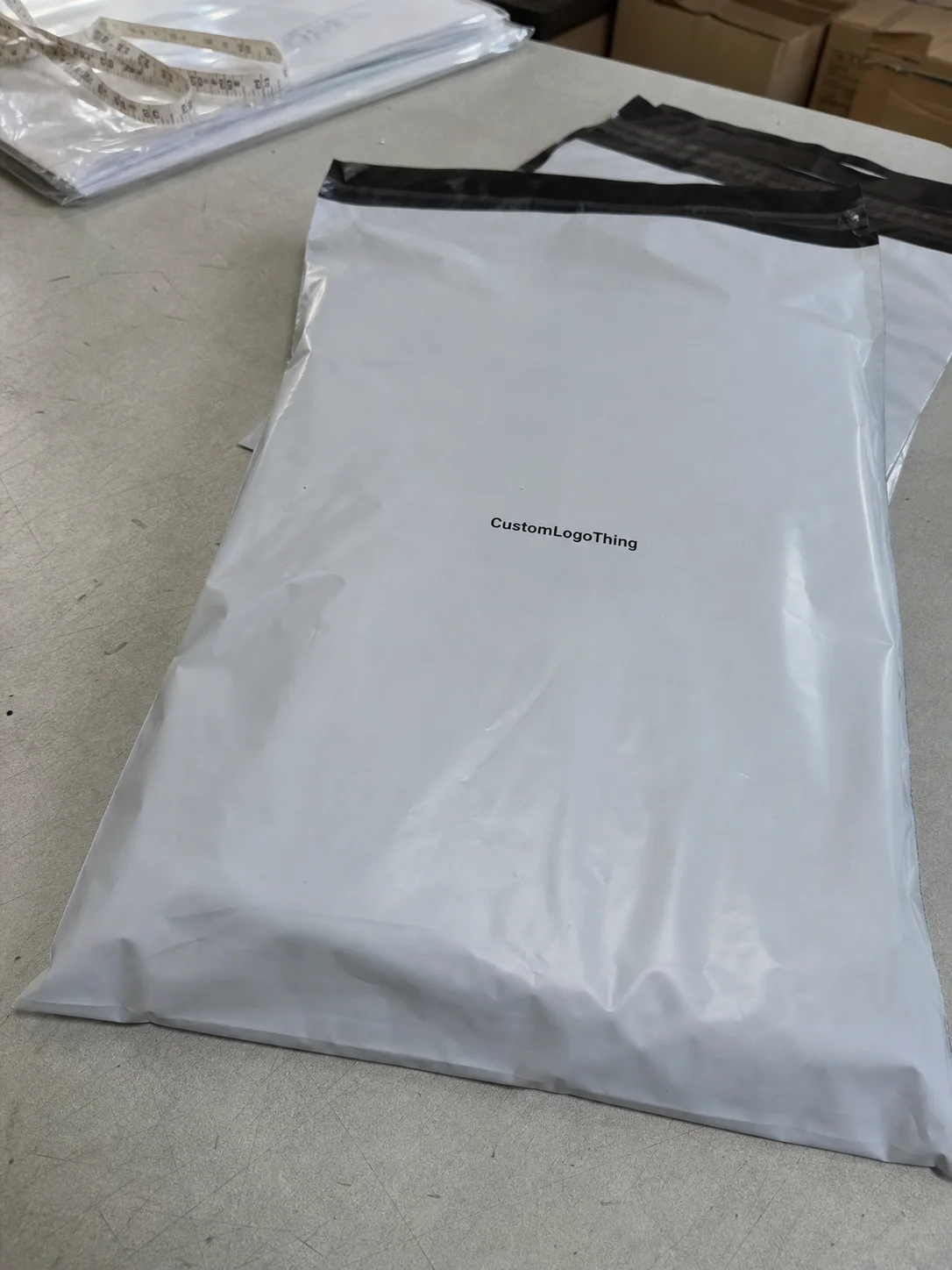
Polyethylene bags are widely used because they are simple, predictable, and easy to customize. A clear or translucent recyclable bag can show the product better than paper, while still weighing far less. For apparel, accessories, small components, and inserts, that difference can cut freight cost and reduce strain on warehouse handling. It can also improve pack speed. A bag that opens cleanly and seals consistently saves labor in a way that is easy to overlook when teams focus only on unit price.
There is a tradeoff, though. Recyclability is not the same as universal recyclability. Whether a bag belongs in a store-drop-off stream or curbside stream depends on resin type, local collection rules, and the labeling used on the package. If a supplier makes a recyclability claim, ask for the exact resin, the intended recycling pathway, and written support for the claim. The U.S. EPA’s recycling resources are a useful starting point for understanding how packaging claims should align with actual collection systems: EPA recycling resources.
For buyers, the practical question is more useful than the marketing question. Will this bag survive handling, stay visually clean, and arrive in the right condition to be packed again and again? If the answer is yes, the format may be more efficient than a heavier package that looks premium but wastes space and raises shipping costs.
A packaging buyer does not need hype. They need a bag that fits the product, holds up under handling, and can be reordered without changing the spec every few weeks.
The best wholesale programs are built around repeatability. If the resin, print, and dimensions stay stable, the order becomes easier to forecast, easier to inspect, and easier to replenish. That matters whether you sell retail goods, fulfillment items, or private-label products with strict presentation standards.
What to check before you request a sample
Start with the product itself. A bag that works for soft goods may fail for sharp hardware. A style that looks clean on a flat insert may be awkward on a rounded object or a product with edges. Use case drives the spec more than appearance does, and that is where first-time buyers often miss the mark.
Before sampling, define the bag format. Flat bags are common for apparel, inserts, and lightweight retail items. Gusseted bags allow more room for bulkier products. Resealable options are useful when the item will be handled multiple times. Hang-hole versions are better for display. If the product ships directly to consumers, a custom-printed mailer-style bag may make more sense than a plain pouch because it combines branding and protection in one package.
Then check what the sample is actually telling you. A quote can show dimensions and film thickness, but it cannot tell you how the bag will behave once the product is inside. The opening may feel too narrow, the bottom seal may sit awkwardly, or the film may show scuffing under light. Those details matter because shelf appearance and packing speed are both affected by them.
When you test samples, use the real item, not a placeholder. The most useful checks are simple:
- Seal integrity under normal handling and carton movement
- Tear resistance near the opening and stress points
- Clarity after the product is inserted
- Static behavior if the product attracts dust or cling
- Puncture resistance for sharper or irregular items
If the product is going into retail display, look at the sample under the lighting conditions it will actually face. Clear film can look excellent on a desk and dull under store lighting. Printed bags can look premium in a proof and crowded once the product is inside. Those differences are small until they start affecting sell-through.
Specifications that affect performance and price
The technical sheet is where a quote becomes real. Compare dimensions, film thickness, resin composition, seal type, print coverage, and pack-out format. Thickness is usually listed in mil or micron, and it affects more than durability. It changes hand feel, clarity, and the amount of raw material used per unit. That means thickness can move both price and shipping weight.
For many buyers, a range of 0.0015" to 0.004" covers the common spectrum, but the right choice depends on the product. Thin film can be adequate for lightweight goods and inner packaging. Heavier or sharper items usually need more material and stronger seals. Choosing by price alone is a common mistake. A thinner bag that fails in transit costs more than a better-specified bag that works the first time.
Print specifications deserve the same attention. A one-color logo is not the same as a full-surface print. Each additional color adds setup complexity and can affect registration. If the bag will be used in retail or e-commerce fulfillment, ask for print tolerances. A small shift in logo placement may not matter on paper, but it is visible on a finished package. If the artwork includes fine type, barcode space, or warning text, that margin becomes even more important.
Resin selection matters for both performance and recyclability claims. Most recyclable poly bags are polyethylene-based, but not every “recyclable” plastic is the same in practice. Ask what stream the bag is designed for and whether the supplier can explain the basis for the claim. If the packaging is intended for a specific recycling path, the documentation should say so plainly.
Pack-out is another area buyers ignore until the cartons reach the dock. Bags supplied in rolls, cartons, or palletized packs affect warehouse flow in different ways. Roll stock can be efficient for automated or semi-automated packing. Flat-packed cartons are easier for manual picking. Palletized shipments reduce handling at scale. A supplier that thinks about pack-out usually understands the rest of the process too.
| Spec item | Typical choice | Why it matters | Common buyer mistake |
|---|---|---|---|
| Film thickness | 0.0015" to 0.004" depending on use | Controls durability, clarity, and material use | Picking thickness by price alone |
| Bag format | Flat, gusseted, resealable, hang-hole | Affects fit and merchandising | Choosing a style that does not match the product |
| Print coverage | 1-color logo to full-surface print | Changes branding impact and unit cost | Underestimating artwork and setup fees |
| Resin type | Polyethylene-based recyclable film | Drives recyclability and performance claims | Assuming all recyclable plastics behave the same |
| Pack-out | Carton, roll, or pallet | Impacts storage and warehouse efficiency | Ignoring how the order arrives at the dock |
For teams that want a more formal check on packaging performance, the International Safe Transit Association is a useful reference point for transport testing and handling expectations: ISTA packaging standards. Not every bag needs a full transit protocol, but the same principle applies. If it cannot survive the trip, it is not a good spec no matter how good the proof looks.
Pricing, MOQ, and what actually changes the quote
Pricing on Custom Recyclable Poly bags usually moves with five variables: resin market conditions, bag size, film thickness, print colors, and order volume. Custom tooling or special sealing can add more cost. Buyers often compare only unit price and miss the rest of the picture. That is how a quote that looks inexpensive at first ends up expensive once freight, artwork, setup, and rework are included.
Minimum order quantity affects the quote more than many teams expect. Lower quantities usually carry higher unit prices because setup and inspection costs are spread across fewer pieces. If you need a test run, that is normal. Just do not compare a 1,000-piece quote against a 10,000-piece quote and assume the pricing difference is only margin. It is usually setup economics.
Use broad benchmarks, not promises. Exact figures depend on the spec, but a useful working range looks like this:
| Order profile | Typical unit price range | What usually drives cost | Best fit |
|---|---|---|---|
| Small test order | $0.18-$0.32 per unit | Setup spread across fewer bags | New product launches, sampling |
| Mid-volume run | $0.10-$0.22 per unit | Moderate economies of scale | Seasonal replenishment, retail programs |
| Large wholesale order | $0.06-$0.15 per unit | Higher volume, lower setup burden | Recurring demand, national rollout |
Those figures shift with thickness, decoration, and tolerances. A plain clear bag with one-color printing will not cost the same as a custom-size, heavier-gauge bag with full coverage and tighter print registration. Stronger seals and better dimensional control usually raise the price, but they can reduce damage, rejects, and repacking costs later. That tradeoff is often worth more than the savings on the quote.
Ask for tiered pricing at multiple quantities, such as 5,000, 10,000, and 25,000 units. That shows where the savings begin and gives you a better idea of future reorder economics. If the product will be ordered again, stability matters. A repeatable spec can shorten approval time on future runs and reduce the chance of a mismatch between batches.
Timeline from artwork approval to delivery
The workflow is straightforward: inquiry, spec confirmation, artwork review, proofing or sampling, production, inspection, packing, and shipment. The fastest orders usually come from buyers who already know their dimensions, film target, print files, and delivery date. Vague specs slow everything down. So do late changes.
What speeds up the schedule? Final dimensions, print-ready files, quick proof approval, and a confirmed ship-to location. What slows it down? Reworking artwork after the proof has been approved, changing material requirements midway through the order, or adding compliance questions at the last minute. That kind of drift can be expensive if the packaging supports a launch or seasonal reset.
Typical lead time often falls in the 12-15 business day range after proof approval for standard custom orders, though larger volumes or more complex print jobs can take longer. Transit time is separate. Buyers should confirm both production and shipping windows in writing. If a supplier offers rush production, ask what it changes. Rush work can increase cost, narrow freight choices, or both.
Digital proofs help confirm layout, text placement, and overall appearance, but they cannot fully predict how the final film will fold, seal, or stack. That is why sample approval still matters. It is a small step compared with the cost of correcting a large production run.
How to evaluate a supplier before you place an order
Capability proof matters more than polished sales language. Ask for material data, print examples, and samples of similar bag sizes or decoration complexity. If the supplier can explain resin type, thickness, seal method, and pack-out in clear terms, that is a good sign. If answers stay vague, treat that as a warning. Fuzzy specs usually create avoidable scrap later.
Communication quality is also a real signal. A supplier that summarizes your requirements accurately, replies on time, and catches conflicts before production is usually easier to work with once the order is live. That does not guarantee perfection, but it does tell you something about how the operation is run.
Quality control should be visible, not implied. Ask whether the manufacturer performs incoming material checks, in-process inspection, final carton verification, and lot traceability. Those controls are practical, not decorative. They help catch problems early and make it easier to isolate issues if something goes out of spec.
A supplier worth working with should also help you avoid the usual failures:
- Incorrect bag sizing that leaves too much slack or a tight fit
- Weak seals that split during handling
- Recyclability claims that do not match the resin or collection stream
- Print placement errors that hurt retail presentation
- Spec changes that quietly increase cost after the quote
One practical test is how the supplier handles questions that complicate the order. If you ask about thickness tolerance, barcode placement, or pack-out format, do you get a real answer or a sales answer? Experienced buyers notice the difference quickly.
How to prepare for a wholesale order
The smoothest way to Request a Quote is to send a simple spec sheet. Include bag dimensions, thickness target, resin preference, print colors, quantity range, and the required delivery date. If you have product samples or exact product dimensions, include those too. Fit is easier to confirm before quoting than after production starts.
Ask for a line-item quote. Unit cost, setup, artwork, freight, and any optional upgrades should be separated. A single all-in number can be convenient, but it hides where the money is going. A broken-out quote makes supplier comparisons much more honest.
Request a sample or digital proof and check it with the real product inside before approval. Look at fit, print placement, seal behavior, and how the bag presents under light. If the packaging will go through retail or e-commerce, that final check is not optional. It is how you catch a problem before it reaches inventory.
Then confirm the production window, shipping method, and reorder procedure. If repeat demand is likely, keep the approved spec on file. A stable record cuts down on back-and-forth and reduces the risk of subtle batch differences later. That is one of the quiet advantages of working with a recyclable poly bags wholesale manufacturer that understands wholesale production, not just printing.
The best purchase decisions are usually the least dramatic. They come from clear specs, honest testing, and a supplier that can repeat the same result on the next order. Packaging rarely gets credit when it works. It gets noticed only when it fails.
FAQ
What should I ask a recyclable poly bags wholesale manufacturer before ordering?
Ask about resin type, recyclability claims, minimum order quantity, print options, tolerances, and whether samples match the final production spec. Also ask how the bags will be packed for shipment, because roll, carton, and pallet pack-out affect warehouse handling.
How do I compare pricing on recyclable poly bags wholesale orders?
Compare unit cost, setup charges, artwork fees, freight, and spec differences such as thickness, print colors, and bag size. A lower quote is not always a better quote if it excludes freight or uses a thinner film that fails in use.
What MOQ is typical for custom recyclable poly bags?
MOQ varies by size, print complexity, and resin, but lower volumes usually carry a higher unit cost than larger repeat orders. If you need a short run for a launch, ask for tiered pricing so you can see the breakpoints clearly.
How long does production usually take for recyclable poly bags?
Timeline depends on proof approval, customization level, and factory schedule; buyers should confirm Lead Time Before approving artwork. Standard custom jobs often fall around 12-15 business days after proof approval, but shipping time is separate.
Are recyclable poly bags suitable for retail packaging and shipping?
Yes, if the film thickness, seal strength, and bag format match the product; request samples with real items to verify fit and performance. For heavier or sharper items, test puncture resistance and seal integrity before committing to a full wholesale order.


