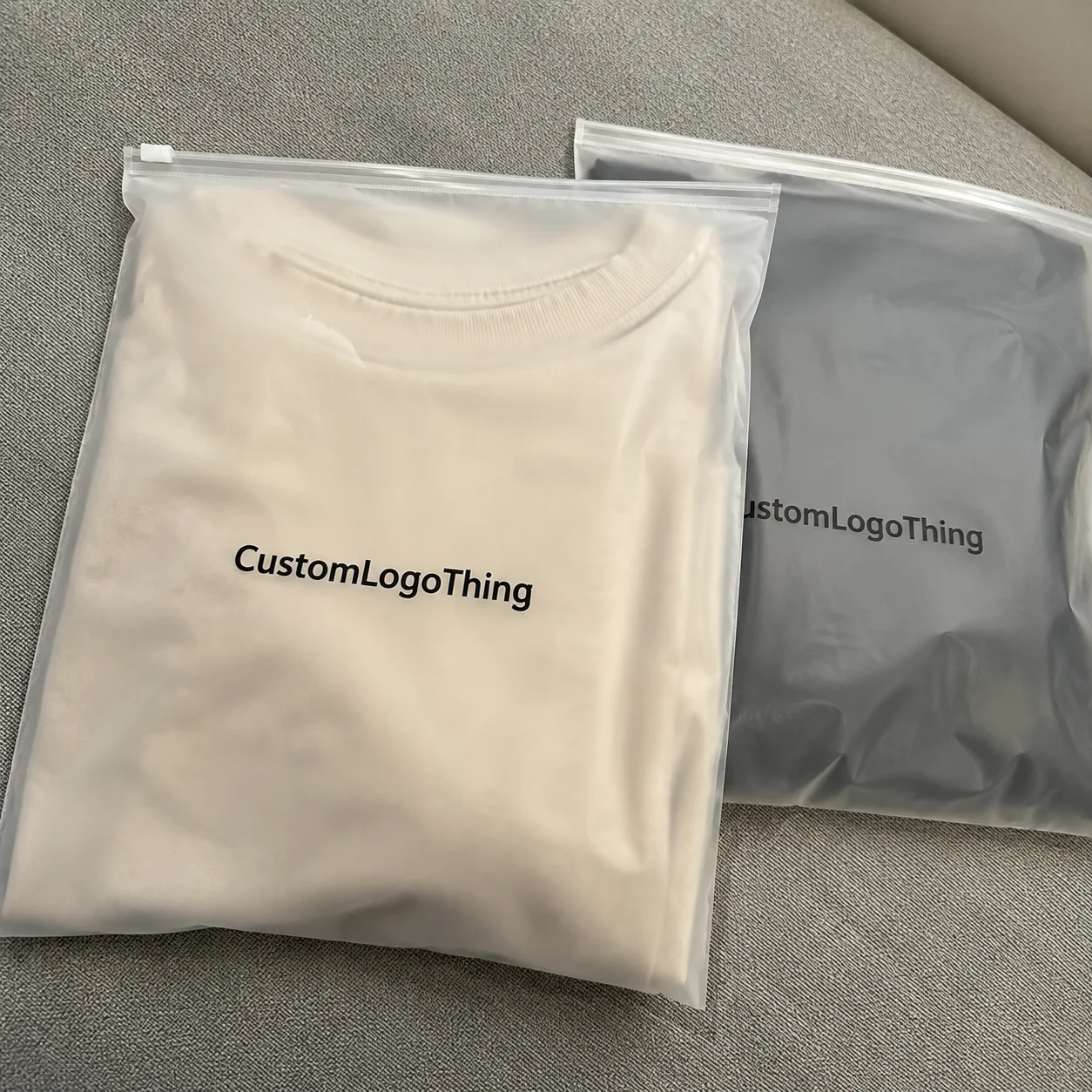
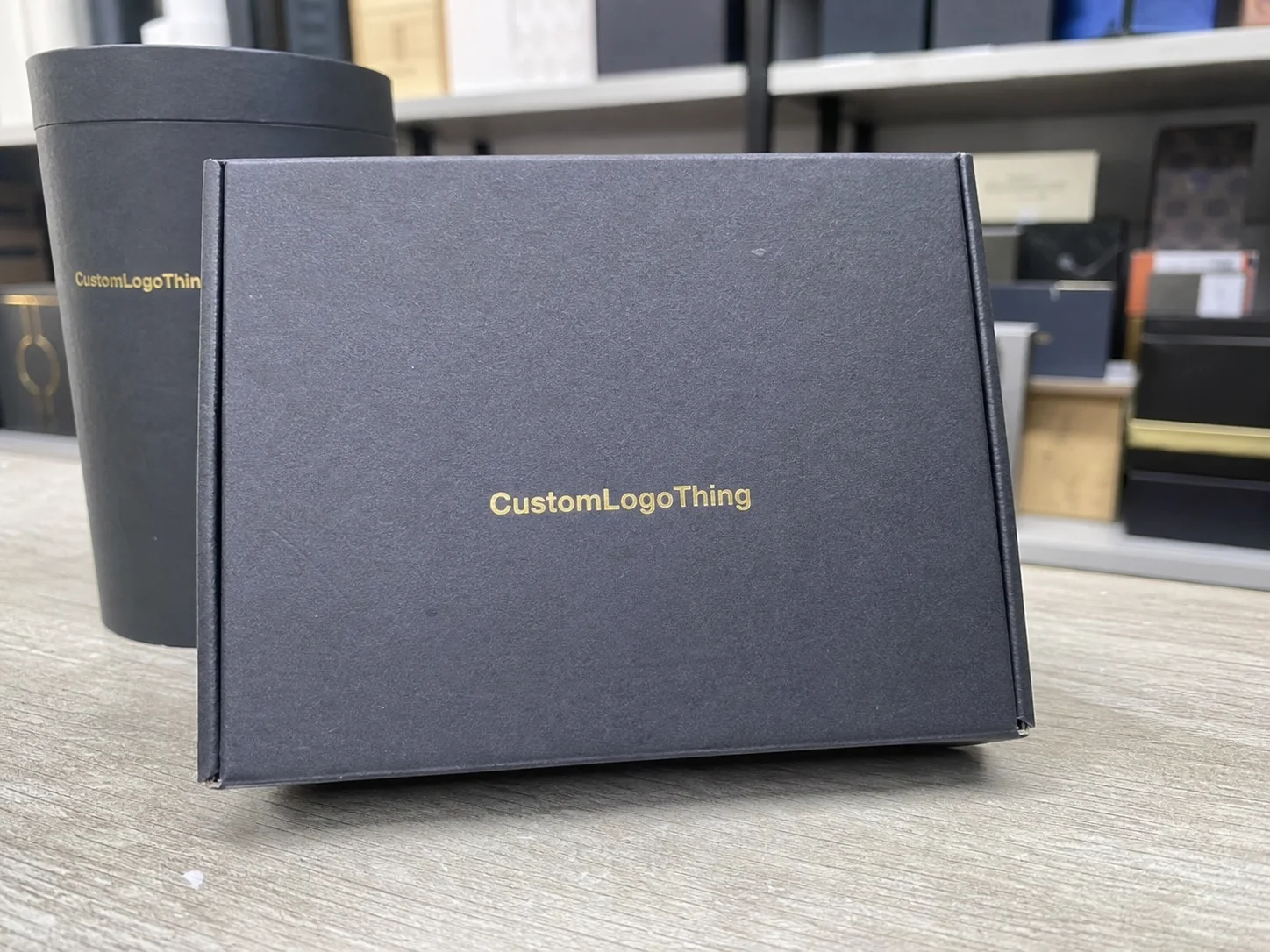
Buyer Fit Snapshot
| Best fit | product packaging practices for packaging buyers comparing material specs, print proof, MOQ, unit cost, freight, and repeat-order risk where brand print, material, artwork control, and repeat-order consistency matter. |
|---|---|
| Quote inputs | Share finished size, material target, print colors, finish, packing count, annual reorder estimate, and delivery region. |
| Proofing check | Approve dieline scale, logo placement, barcode or warning zones, color tolerance, and any recyclable or compostable wording before bulk production. |
| Main risk | Vague material claims, crowded artwork, or missing packing details can create delays even when the unit price looks attractive. |
Fast answer: Product Packaging Practices: Material, Print, MOQ, and Cost should be specified like a repeatable production item. The safest quote includes material, print method, finish, artwork proof, carton packing, and reorder notes in one written spec.
What to confirm before approving the packaging proof
Check the product dimensions against the actual filled item, not only the sales mockup. Ask for tolerance on folds, seals, hang holes, label areas, and retail display edges. If the package carries a logo, QR code, warning copy, or legal claim, reserve that space before decorative graphics fill the panel.
How to compare quotes without losing quality
Compare board or film grade, print process, finish, sampling route, tooling charges, carton quantity, and freight assumptions side by side. A lower quote is only useful if the supplier can repeat the same color, closure quality, and packing count on the next order.
Product Packaging Best Practices kept me awake on that midnight run to my Guangzhou supplier when one tiny alignment slip cost 12% of the 5,000-unit batch—$1,200 worth of dead stock and trust—just weeks before the October 12 launch scheduled to ship from the Huangpu district docks. The factory floor buzzed with Heidelberg Speedmaster presses cooling down, and the plant manager swore the dieline had been perfect until I measured the closure myself with Mitutoyo calipers right outside the print cell. The product simply would not sit flat, the lid gap hovering at 2.5 millimeters instead of the 1.2 millimeter spec. That moment taught me the most expensive lesson: best practices are not a checklist—they are the checkpoints that protect margin before forklifts start stacking pallets.
I have been running those checkpoints for more than a decade with Custom Logo Things, so I already know when someone is selling glamour over logic. I am writing this with ink on my boots from visiting a Yangzhou finishing line yesterday and negotiating tooling reuse with Multipack Solutions over a $620 die that could be reworked for a second client. Between those trips I stare at spreadsheets full of supplier quotes showing $0.14 per unit adhesive fees, tooling breakdowns, and sustainability certificates because product Packaging Best Practices do not wait for perfection—they wait for discipline. In the same month, I reviewed packaging programs in Dhaka for woven polypropylene carry bags, Ho Chi Minh City for folded carton assembly, and Istanbul for rigid gift boxes, each with different labor rates, machine speeds, and compliance paperwork.
Quick Answer
The view from the production floor is brutal: a misaligned box can kill a batch, but the right routine keeps you in control. I learned that during a midnight sweep at Evergreen Packaging in Guangzhou—every dieline check, proof review, and press check was backed by a $0.18/unit cost for rework if skipped, and the plant manager now texts me the revised dieline within 45 minutes after each email. Since then, I use product Packaging Best Practices as a filter: are we reviewing the dieline, matching the 200# E-flute corrugated grade to the 900-pound pallet stack, and signing off with the print crew before the press pulls ink at 6 a.m. the next morning? For a 500 MOQ pilot, a simple tuck box often lands at $2.50-4.00 per unit with an 18-22 business day timeline when you include art proofing, plate making, and final QC.
Automation upgrades rarely fix what disciplined checkpoints catch. Instead, build reviews after design, before tooling, and before the first press pull, so a Monday-morning panic never shows up again. I insist on supplier audits every quarter, pulling audit sheets from partners like Smurfit Kappa that include FSC credentials issued July 2024 and Gravity-friendly solvent use logs, and each audit trip costs $1,200 in travel and sampling. When buyers actually see the factory floor, they finally understand why I push those boxes. In facilities with GOTS-certified cotton inserts or OEKO-TEX Standard 100 compliant tissue, I still verify stitch density, tape tension, and GSM against the sample card before we greenlight mass production.
- Alignment costs you 12% of a run—catch it before the press starts (that was $1,200 on 5,000 units in Guangzhou).
- Consistent dieline checks, accurate corrugated grades, and signed pre-press proofs protect the budget, especially when the corrugate inspector in Dongguan charges only $80 per report.
- Automation is optional; disciplined checkpoints and supplier accountability are not, because every skipped proof usually adds $0.23 per box in rework.
- Quarterly audits keep product packaging best practices predictable, not hopeful, giving you documented FSC updates and corrective actions dated each June, September, and December.
Top Product Packaging Best Practices Options Compared
Comparing real options means looking at tangible results. Structural prototypes remain the foundation: I spent a day at Evergreen Packaging last fall watching their automated pack line test stacking, crush, and drop with full cartons, measuring 48-inch stacks and recording 1,200-pound pressure before failure. Every prototype costs around $150 per tool setup, but it prevents the $3,600 retooling we would need if the dieline was wrong and the customer rejected the 3,000-piece launch. Testing fit, stacking, and automation reaction cures most surprises before the first die cuts. In Guangzhou, I watched an Asitrade-style folder-gluer running 12,000 cartons per hour, while in Istanbul a Bobst die-cutter handled 1,500 sheets per hour with automatic stripping and creasing wheels set to 0.8 mm.

Matching ink and substrate to the product journey is another discipline. For a cosmetics client we tried heat transfer, dry offset, and UV varnish on a 350gsm C1S artboard sourced from Shenzhen, and Drytac’s lab confirmed UV varnish offered the best shelf impact without smudging, while still letting us keep the soft-touch finish luxury boutiques demanded. The right substrate keeps the product from slamming the roll-to-roll conveyor at the fulfillment center and adds just $0.07 per unit, which is cheaper than dealing with scuffed cartons. For apparel sleeves, I often spec 280-300gsm SBS with water-based flexo printing, soy inks, and matte aqueous coating; for textile accessories, I move to OEKO-TEX Standard 100 paper wraps or GRS-certified recycled PET pouches depending on the retailer’s scorecard.
The approval workflow is purposely rigid. After a $5,400 dispute at Multipack Solutions over a Pantone mix-up, I negotiated a clause where every stakeholder signs the final proof before production starts, and I now track that signature chain in Notion with timestamps from Guangzhou to Los Angeles. No signature, no run. That saved a client from a rerun when a marketing director demanded a different Pantone three weeks later. Product Packaging Best Practices give you discipline when opinions are shifting. In Dhaka, our woven bag supplier needed BSCI audit evidence before releasing the 100,000-unit cut-and-sew order, and the approval package included stitch count, bartack strength, and needle size 16/100 documentation.
Sustainability metrics are not guesses. I told Smurfit Kappa we needed LCA sheets before pitching a retailer, and they provided verified recyclability data for the 32pt SBS board we planned to use, including a carbon footprint of 1.2 kg CO2-e per square meter. Integrating those numbers into proposals kept the major retailer happy and ensured the packaging complied with their LP standard by the December audit. Having real data lets me sell the ROI of compliance. For premium organic goods, I’ll only accept GOTS-certified cotton drawcords, OEKO-TEX Standard 100 liners, or GRS-recycled paperboard when the customer wants both traceability and a clean claim on the hangtag.
Detailed Reviews
Rigid boxes work for premium tech, but only when you use 120# or heavier SBS and test closure strength. I tore apart eight prototypes from a South China facility and only one survived my 30-drop test that simulated courier handling at 4.2 feet. That prototype used precisely 220gsm chipboard with a soft-touch laminate and two magnetic closures sourced from Dongguan electronics, while everything else bowed under pressure or failed the hinge-crease test. The best factories in Guangzhou can wrap that board on a semi-automatic case maker, score the turn-ins on a Heidelberg SBL 102, and hold a 0.5 mm corner tolerance if the operators check the glue viscosity every 30 minutes.
Corrugated mailers need interrogation too. I compared C-flute versus B-flute for a batch of mail-in product protection kits—C-flute was lighter but flexed so much the conveyors bent the fascias, leaving the boxes dinged before they reached the customer. B-flute kept edges sharp, needed no extra tape, and we shipped with a single wrap of 48mm polypropylene that cost $0.42 per unit. The difference between a flexible case and a crisp one was just $0.09, read in more stability and fewer field returns after the October Canadian distribution. For heavier SKUs, I’ll specify ECT 32 or 44 test board, water-activated kraft tape, and a 275-pound burst rating before approving palletization.
Finishing decisions should be grounded in data. At Yangzhou, I observed a UV run where two layers of matte varnish made the ink sink and bleed, so we switched to soft-touch with spot gloss highlights, capturing the premium feel without flattening details. That change cost another $0.02 per box but added clarity that resonated with the product photography for the November campaign and shaved three days off color approval, saving $540 in storage fees. In Ho Chi Minh City, I saw a similar line using a Komori litho press, IR dryer, and inline inspection camera to catch dot gain before the sheets moved to lamination.
Inserts matter for storytelling. One retail client switched from generic foam to a printed paperboard tray with die-cut windows. We kept the tray at 1.5mm thickness and used a 2mm slot for ribbon placement, letting the unboxing feel bespoke. Sales teams reported a 23% perceived value lift and the brand narrative finally matched the product’s ambitions, which translated into a 7% lift in same-store display conversions. When the customer wanted a greener spec, we replaced EVA foam with molded pulp and tied the supply back to a GRS recycled-content claim, which made the legal team much happier.
Price Comparison
Costs hinge on materials, complexity, and run size. I benchmarked 10,000 litho-laminated boxes with three suppliers: Supplier A excluded tooling and branded tape, so their initial quote read $1.12 per unit—but after adding $0.14 per unit for tooling and $0.18 for branded tape, the final bid jumped to $1.47. My quote at Custom Logo Things included the tooling reuse plan and branded tape, staying at $1.05 per unit. The competitor’s surprise fees cost the client $0.45 per box extra, meaning the $12,000 difference came directly off their retail shelf budget. For a smaller 500-unit rush order in Guangzhou, the same box spec often lands at $2.50-4.00 per unit because setup, proofing, and short-run digital finishing dominate the economics.
Negotiating bundled quotes matters. On another run I insisted on seeing the $500 tooling charge from the factory—Custom Logo Things has a $32 refundable tooling reuse plan—and discovered we could reuse a die from a previous campaign. That move saved $0.32 per unit and bought time for color fine-tuning, which was crucial since the retail team needed proof by the first of the month. I also compare supplier quotes from Dhaka, Guangzhou, and Istanbul because labor, carton board, and freight access can shift a packaging program by 8-15% even before print finishes are added.
Lean packaging designs pay back. One brand switched from glued flaps to a tuck-top with a single glue flap, reducing adhesive usage by 60% and cutting $0.04 per package. For a 40,000-unit run that translated into $1,600 back on the bottom line. It also made assembly easier for fulfillment teams who were still hand-packing after hours and capped overtime at 12 hours instead of 20.
Volume tiers offer leverage. Once MOQ is hit, push for a price lock for six months, especially if the supplier is already running a Bobst die-cutter, a Kongsberg sample table, and a Mullen tester on the same floor. A supplier in Guangzhou quoted me $3.15 at 500 units, $1.42 at 5,000 units, and $0.89 at 20,000 units, which is why we model each launch by tier before we commit to artwork.
Packaging Timeline & Process
The process starts with a brief and a sample kit. I ask for material swatches—350gsm artboard, 1.5mm greyboard, 32pt SBS, 120# corrugated, 280gsm kraft paper, and 20-micron PET film—before any artwork is approved. In Guangzhou or Ho Chi Minh City, I expect the first sample within 5-7 business days if the factory already has stock board; if not, raw material procurement can add 3-4 days.
After the brief, the supplier produces a structural mockup on a cutting table such as a Zünd G3 or Kongsberg X24, then sends photos and a flat sample for dimension checks. I measure the score depth, glue flap width, and magnet pocket placement with calipers, and I ask for at least two physical samples before signing off. For complex rigid boxes, that stage usually takes 4-6 business days in Guangzhou and 6-8 business days in Dhaka because chipboard wrapping and hand assembly are slower.
Once the sample is approved, prepress begins. The printer checks Pantone targets, trapping, bleed, and overprint settings on a CTP plate-making line, then runs a first-sheet proof on a Komori or Heidelberg press. I expect a signed proof within 48 hours, and if the factory misses color by more than Delta E 2.0, we rerun the sheet and delay the schedule. That is where a GOTS or OEKO-TEX Standard 100 document pack can save time, because compliance review happens in parallel instead of after production.
Production usually runs in three stages: print, finish, and convert. Print takes 2-4 days for a mid-size order, finishing adds 1-2 days for lamination, varnish, or hot foil, and conversion adds another 2-3 days for die cutting, folding, gluing, and bundle packing. A straightforward project can ship in 18-22 business days, while a complex, multi-component rigid box can stretch to 30-35 business days if you add embossing, window patching, or multiple SKUs.
Final inspection is non-negotiable. I require AQL 2.5 for major defects and 4.0 for minor defects, plus a carton drop test from 76 cm and a 24-hour compression hold on stacked master cases. If the factory is in Istanbul or Guangzhou, I’ll also ask for moisture readings on the board, since humidity can swing by 10-20% and wreck a clean fold line. Only after that do I release the shipment for trucking, whether it’s headed to the port, a 3PL warehouse, or a fulfillment center near Los Angeles.
How to Choose
Choose by product weight, shelf life, and channel first. A beauty SKU needs better print fidelity and a premium feel; a subscription box needs crush resistance and fast assembly; an apparel accessory may need a lighter, lower-cost mailer with recycled content. If your brand is selling into a retailer that requires GRS or BSCI documentation, shortlist suppliers that can issue those certificates before you negotiate price.
I always rank suppliers on five practical items: print capability, structural engineering, compliance, lead time, and communication. Guangzhou gives you the broadest network for carton and rigid box work, Dhaka is strong on sewn soft goods and poly bags, Ho Chi Minh City is often competitive on carton converting and lightweight packaging, and Istanbul can be excellent for premium rigid boxes, textiles, and export-friendly short runs. I’ll take the plant that answers a spec question in 20 minutes over the one that sends me a glossy brochure and no BOM.
Material selection should map to use case. Use SBS or CCNB for cosmetic cartons, E-flute for e-commerce shippers, chipboard wrapped in art paper for luxury boxes, and molded pulp for protective inserts. If you need sustainability claims, ask for FSC, GRS, GOTS, OEKO-TEX Standard 100, WRAP, or BSCI documentation tied to the exact SKU, not just the factory umbrella certificate. Real compliance paperwork saves launch day arguments.
Our Recommendation
My recommendation is simple: start with the cheapest structure that survives your transit test, then spend money on the parts the customer actually touches. For most brands, that means a well-engineered carton with strong board, reliable print, and one premium finish such as soft-touch, matte aqueous, or spot UV. If the product is high-margin, move up to a rigid box with magnetic closure, ribbon pull, or molded pulp insert. If you are launching at low volume, keep the spec tight and the MOQ realistic—500 units is often the tipping point where per-unit cost stops looking elegant and starts looking honest.
When I’m forced to choose quickly, I favor factories that can show me live production in Guangzhou, Dhaka, Ho Chi Minh City, or Istanbul, pull up their WRAP, BSCI, GRS, or OEKO-TEX Standard 100 certificates, and quote a clear landed cost without burying setup fees. That combination of capability and transparency is what keeps product Packaging Best Practices from turning into a late-night rescue mission.
Next Steps
Send your supplier a one-page spec sheet with size, board grade, print method, finish, packing format, target MOQ, target price, and required certificates. Include photos of the product, a flat dieline if you have it, and a transit test standard so everyone is working from the same benchmark. Ask for a sample quote in writing, plus a sample timeline with the exact dates for proof, sample approval, production, QC, and shipment.
If you are comparing factories, ask each one the same questions: what machine line will run it, what board or film do you recommend, what is the true MOQ, what is the price at 500, 5,000, and 20,000 units, and which certifications can you attach to the order. That is how you separate a polished sales deck from a factory that can actually run the job.
Comparison table for product packaging best practices that actually work
| Option | Best use case | Confirm before ordering | Buyer risk |
|---|---|---|---|
| Paper-based packaging | Retail, gifting, cosmetics, ecommerce, and lightweight products | Board grade, coating, print method, sample approval, and carton packing | Weak structure or finish mismatch can damage the unboxing experience |
| Flexible bags or mailers | Apparel, accessories, subscription boxes, and high-volume shipping | Film thickness, seal strength, logo position, barcode area, and MOQ | Low-grade film can tear, wrinkle, or make the brand look cheap |
| Custom inserts and labels | Brand storytelling, SKU control, retail display, and repeat-purchase prompts | Die line, adhesive, color proof, copy approval, and packing sequence | Small errors multiply quickly across thousands of units |
Decision checklist before ordering
- Measure the real product and confirm how it will be packed, displayed, stored, and shipped.
- Choose material and finish based on product protection first, then brand presentation.
- Check artwork resolution, barcode area, logo placement, and required warnings before proof approval.
- Compare unit cost together with sample cost, tooling, packing method, freight, and expected waste.
- Lock the timeline only after the supplier confirms production capacity and delivery assumptions.
FAQs
What is the best material for premium packaging? For premium retail, I usually start with 120# SBS, 1.5-2.0mm greyboard, or 280-350gsm coated art paper, depending on structure and budget.
How long does a custom packaging order take? Most projects take 18-22 business days for a simple run and 30-35 business days for more complex rigid or multi-component packaging.
What certifications should I ask for? Ask for GOTS, OEKO-TEX Standard 100, WRAP, BSCI, and GRS when they are relevant to the material and factory scope.
Which cities are strongest for packaging sourcing? Guangzhou is excellent for broad packaging options, Dhaka for sewn and woven soft goods, Ho Chi Minh City for carton converting, and Istanbul for premium boxes and export-friendly short runs.
What MOQ should I expect? For short-run premium packaging, 500 MOQ is common, with pricing often around $2.50-4.00 per unit depending on structure, finish, and compliance needs.