Most bad bucket hat orders do not blow up because of one dramatic factory disaster. They go sideways because someone approved a nice-looking mockup, skipped the physical checks, and treated the sample like a formality.
Mockups lie politely. A flat image can make a logo look centered, a brim look balanced, and a crown look wearable. Then the sample arrives and the brim curls like a potato chip, the embroidery puckers, and the crown sits so shallow it feels like a toddler costume hat. Annoying? Yes. Preventable? Usually.
A practical bucket hats Sample Approval Checklist protects the order before bulk cutting, stitching, decoration, packing, and shipping begin. It forces the buyer and supplier to agree on the actual hat, not the idea of the hat.
What a Bucket Hats Sample Approval Checklist Actually Prevents
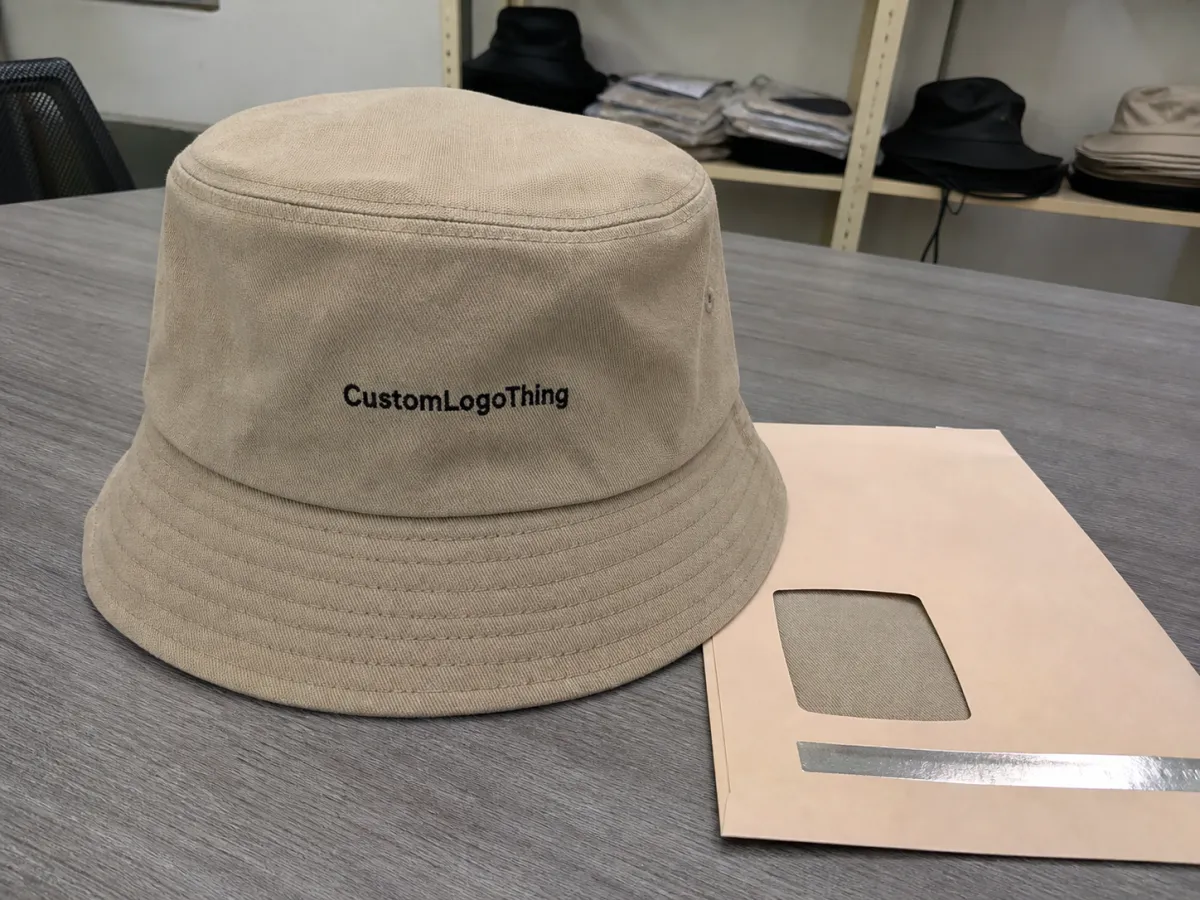
A Sample Approval Checklist is not office paperwork for people who enjoy slowing down orders. It is a risk-control tool. It helps buyers confirm the physical product before 500, 2,000, or 10,000 units turn into a very expensive lesson.
Sample approval means reviewing one pre-production hat for fit, construction, decoration, color, trims, packaging, and compliance details. The goal is not perfection for fun. The goal is repeatability. If the supplier cannot make one correct hat with everyone watching, bulk production deserves a harder look.
This matters for merch managers, fashion startups, event teams, breweries, outdoor brands, golf clubs, tourism retailers, cannabis brands, music festivals, beach resorts, and anyone ordering Custom Bucket Hats in volume. If customers will wear it, post it, resell it, gift it, or complain about it, inspect the sample like someone who has to stand behind every unit.
The risk often hides in small details. A brim that curls too aggressively changes the whole look. Embroidery that puckers makes a clean logo feel cheap. A crown that sits too shallow creates sizing complaints. A crooked woven label looks sloppy. A weak drawcord makes an outdoor hat feel like bargain-bin filler.
Simple rule: if the sample has a problem and you approve it anyway, do not act shocked when the bulk order repeats that problem beautifully.
From a retail or packaging buyer's point of view, the hat is only part of the product. Hangtags, care labels, barcode stickers, polybags, carton packing, and folding method all affect how the order arrives and sells. A useful checklist keeps those details from being treated like decorative side quests.
It also reduces arguments. A written approval record is much cleaner than a scattered thread of screenshots, voice notes, and “I thought we changed that” messages. Production teams need final instructions, not archaeological evidence.
How Sample Approval Works Before Bulk Hat Production
The approval process starts before the sample is made. The buyer confirms artwork, hat style, fabric, decoration method, size specs, color references, trims, and packaging requirements. Then the supplier turns those notes into factory-ready instructions: logo file, stitch file, patch specs, thread colors, label placement, carton marks, and folding method.
Not all samples mean the same thing. Buyers mix these up constantly, then wonder why the final result feels different from what they thought they approved.
| Sample Type | What It Shows | Typical Use | Buyer Risk |
|---|---|---|---|
| Virtual mockup | Logo placement, rough color, basic layout | Early design approval | Does not prove fit, fabric, or stitching quality |
| Blank sample | Hat shape, fabric feel, sizing, brim structure | Checking base style before decoration | No proof that the logo method works |
| Decoration sample | Embroidery, patch, print, or heat transfer quality | Testing logo execution | May not use final hat body or packaging |
| Fit sample | Crown depth, head circumference, brim width | Wearability review | Can skip branding and retail trims |
| Pre-production sample | Final hat, logo, labels, trims, and packaging | Final approval before bulk production | Should be treated as the control standard |
For small, low-risk promo runs, photos and videos may be enough. For retail launches, influencer drops, higher-end merch, or anything with custom fabric, get a physical sample. Texture, brim stiffness, sweatband comfort, and stitching quality do not travel well through a screen. Screens are charming little liars.
Approval language should be plain and final. Use one of three decisions: approved as is, approved with changes, or rejected and resample required. Avoid vague notes like “make it nicer” or “fix the shape.” Production teams are not mind readers, and that phrase is useless even to a very patient one.
Agree on tolerances before bulk production. Common ranges might include plus or minus 0.25 inch on brim width, plus or minus 0.5 inch on head circumference, 1/8 to 1/4 inch on logo placement, and reasonable shade variation for dyed fabric. Exact tolerances depend on construction, material, and supplier capability.
Never approve a sample while assuming the supplier will “know what you mean” later. They will produce what you approved, not what you imagined.
Fit, Fabric, Brim, and Logo Details to Inspect
Start with fit. Bucket hats live or die on shape. Check crown depth, head circumference, panel symmetry, brim width, brim angle, brim stiffness, and whether the hat collapses in a decent way or turns into a sad pancake.
Do not judge sizing only on your own head. One person's “fits great” is another person's refund request. Compare the sample against the approved spec sheet. A common adult bucket hat may land around 22 to 23.5 inches in head circumference, with crown depth around 3 to 3.75 inches and brim width around 2 to 2.75 inches. Fashion styles, golf hats, kids' hats, and outdoor sun hats can fall outside those ranges, so the spec sheet wins.
Fabric changes everything. Cotton twill feels familiar and merch-friendly. Washed cotton gives a softer, broken-in look. Canvas adds structure but can feel heavier. Denim has personality, though it can create thicker seams. Polyester and nylon are common for outdoor or water-resistant styles. Corduroy looks rich but needs careful nap direction. Recycled fabrics can work well, but ask for composition details and test hand feel before assuming they match virgin material.
Check fabric weight, shrinkage risk, color consistency, and surface texture. A 100% cotton hat may shrink more after washing than polyester. A pigment-dyed or garment-washed hat may have natural shade variation. That is not always a flaw. But if your brand color must match a store fixture, campaign graphic, or uniform program, use Pantone references or approved physical swatches.
Construction deserves actual attention. Seams should be even. Panels should align. The sweatband should lie flat. Brim stitch rows should be consistent, not wandering around like they were sewn during an earthquake. Loose threads, uneven bartacks, twisted binding, and puckered seams tell you what bulk production may repeat.
Now inspect the decoration. Embroidery density should suit the fabric. Too dense on soft cotton can pucker. Too light and the logo looks thin. Woven patches should have clean edges and readable small text. Printed logos need opacity and clean registration. Heat transfers need proper adhesion; rub the edge lightly and flex the fabric. If it lifts during sampling, it will not become more loyal after shipping.
Logo placement should match the approved artwork. Measure it. Center front might be 2.25 inches above the brim seam on one style and 1.75 inches on another, depending on crown depth. Write the approved measurement down. “Looks centered” is not a production spec.
Labels are part of the product, not clutter. Check care content, fiber composition, country of origin, size label, brand label, and any required warning or compliance language for the sales channel. If the hat is sold at retail, missing or incorrect labels can create bigger problems than a slightly imperfect stitch row.
Packaging checks belong in the same review. Confirm hangtag stock, string type, care label content, barcode label position, polybag size, carton quantity, and folding method. If the hat ships flat, ask whether the brim will crease. If it ships nested, check whether the crown holds shape. For packaging performance references, the International Safe Transit Association publishes test procedures that help frame transit risk, especially for retail-ready shipments.
Photograph every approved detail: front, back, sides, inside label, brim stitching, logo close-up, hangtag, polybag, carton label, and folding method. A clear approval record beats a scattered chat thread every time.
Timeline and Lead Time for Sample Approval
Basic blank or stock-style bucket hat samples often take about 5 to 10 business days before shipping. More custom work can push sampling to 2 to 4 weeks, especially if the order includes custom-dyed fabric, specialty patches, garment washing, private labels, custom lining, or retail packaging.
The timeline usually runs like this: quote approval, artwork setup, material sourcing, sample production, internal factory QC, shipping, buyer review, revision notes, and final approval. Every step can move quickly if the details are complete. Every step can crawl if the buyer sends a low-resolution logo and says, “Use the red from our website.” Great. Very scientific.
Delays often come from unclear artwork, missing Pantone codes, late packaging details, custom trim sourcing, embroidery file edits, and slow buyer feedback. Yes, the buyer can be the bottleneck. Frequently. A supplier cannot finalize a woven label if the label content is still being debated by five people in a group chat.
One correction round may add several days to two weeks. A minor thread color change can be handled quickly if the thread is stocked. A structural change, such as adjusting brim width from 2 inches to 2.75 inches or increasing crown depth by 0.5 inch, may require a revised pattern and a new sample.
Shipping changes the schedule too. Photos can speed early decisions, but physical sample shipping adds transit time. Domestic shipping might add 2 to 5 business days. International express shipping may add 3 to 7 business days, depending on customs and location. Slower freight can be cheaper, but sampling is usually not the place to save $20 and lose a week.
Build a buffer if the hats are tied to a festival, retail drop, golf outing, brewery release, tourism season, or paid campaign. Finalize sample specs before taking pre-orders or announcing launch dates. Production calendars do not care about your Instagram teaser.
Cost, Pricing, MOQ, and Revision Tradeoffs
Sample costs vary because “custom bucket hat” can mean wildly different things. A stock hat with one front embroidery is one project. A fully custom hat with dyed cotton twill, a woven patch, contrast lining, private care label, hangtag, barcode sticker, and retail polybag is another animal.
Basic decorated samples may fall around $30 to $100 each. Complex custom samples can run $100 to $300 or more, especially when new materials, special trims, patch development, dyeing, or pattern work are involved. Some suppliers credit sample fees toward bulk production after the order is placed. Others treat sampling as a separate development cost. Ask before assuming.
Separate the sample fee from setup charges. You may also pay for embroidery digitizing, woven patch setup, rubber patch mold charges, label weaving, custom fabric dyeing, or special packaging. A digitizing fee might be $25 to $75 for simple embroidery. Custom patch setup can range from $50 to $150 or more, depending on size and construction.
MOQ affects unit cost. Lower minimum order quantities usually mean higher prices because setup time, decoration preparation, and material sourcing are spread across fewer hats. A 100-piece run might cost $8 to $18 per hat for a basic decorated style. A 1,000-piece run might drop into the $4 to $9 range, depending on fabric, logo method, and freight. Premium custom builds can sit higher. Treat those as planning ranges, not gospel.
Unit cost drivers include fabric type, hat construction, stitch count, logo size, number of decoration locations, patch style, custom labels, packaging, QC level, freight method, and defect allowance. FSC-certified paper hangtags or recycled polybags may add cost, but they can support a sustainability claim if documented properly. For paper-based packaging and hangtags, the Forest Stewardship Council is a useful reference for responsible sourcing claims.
Revision tradeoffs are real. Approving a flawed sample saves time now and costs more later. Requesting endless tiny changes can also burn schedule and budget. Pick your battles, but pick the right ones. Fit, fabric, color accuracy, logo quality, safety labeling, and retail packaging are worth fighting for. Moving a hangtag string from natural to slightly-more-natural beige may not deserve a two-week delay. I said what I said.
The cheapest sample process is not cheap if the bulk hats arrive unsellable. Judge pricing against risk, not just the line item on the quote.
Common Approval Mistakes That Create Bad Bulk Orders
The biggest mistake is approving photos only when fit, fabric, and structure matter. Photos are useful for checking logo placement, general color, and obvious construction problems. They hide weight, stiffness, comfort, fabric hand feel, true shade, and how the hat sits on a real head.
Another classic mistake: buyers zoom in on the front logo and ignore the rest of the hat. Embroidery gets inspected like a museum piece while crooked inside labels, rough sweatbands, uneven brim stitching, poor folding, and weak packaging slip through. Customers notice those details, especially on retail or premium merch.
Vague feedback creates vague production. “Make premium” does not mean anything on a production floor. Use measurements, marked-up photos, reference samples, Pantone codes, stitch counts, trim materials, and exact placement notes. If the brim needs to be wider, write “increase brim width from 2.25 inches to 2.5 inches.” If the patch sits too high, write “move patch down 0.25 inch.” Boring? Yes. Useful? Also yes.
Color assumptions cause plenty of fights. Screen colors are not production colors. A logo that looks navy on your laptop may stitch closer to royal blue under daylight. Use Pantone references, thread cards, lab dips, fabric swatches, or an approved physical reference when brand color matters. Review color under normal lighting too, not under one weird office bulb that makes everything look like soup.
Decoration mismatches are common. A flat mockup does not prove embroidery will behave on a curved, soft crown. Dense embroidery can pucker. Oversized patches can distort the front panel. Screen print can crack if the fabric coating is wrong. Heat transfers can peel if adhesion is poor. Decoration has physics. Annoying, but true.
Ignoring packaging is another expensive habit. Crushed brims, wrong hangtags, missing barcodes, incorrect carton counts, and poor polybag sizing can hurt retail readiness even if the hat itself looks good. For a store launch, barcode placement and carton labeling may matter as much as the logo. For an event, carton sorting by color or size can save hours on site.
Approval records matter. Verbal approvals and scattered chat messages create disputes. Keep one final approved spec sheet, sample photos, artwork file, packaging instruction, and written signoff. Your sample approval checklist should live with the purchase order so nobody has to hunt for the final answer later.
Harsh but useful rule: if you approve it, expect to receive it.
Next Steps Before You Sign Off on the Sample
Before you approve the sample, slow down for 20 minutes and inspect it like inventory you already paid for. Measure the sample, photograph all sides, compare against the spec sheet, test the logo decoration, check comfort, inspect packaging, and write clear approval notes.
A simple pass/fail table works better than a long emotional email. Include fit, fabric, color, decoration, stitching, labels, packaging, and carton requirements. This prevents the classic “I thought someone checked that” problem. Someone did not. That someone was apparently everyone.
| Checkpoint | What to Verify | Pass/Fail Standard |
|---|---|---|
| Fit | Head circumference, crown depth, brim width | Matches approved spec within agreed tolerance |
| Fabric | Material, weight, hand feel, color consistency | Matches approved swatch or sample reference |
| Logo | Placement, size, color, stitch quality, patch edge | Matches approved artwork and placement measurements |
| Construction | Panel alignment, sweatband, brim rows, loose threads | No visible defects beyond agreed defect standard |
| Packaging | Hangtag, care label, polybag, barcode, carton marks | Ready for sales channel or event handling |
Separate must-fix issues from nice-to-have changes. Must-fix issues affect wearability, brand accuracy, safety, retail readiness, or repeatability. Nice-to-have changes are preferences that may not justify another sample round. A crooked label is a must-fix. A slightly different hangtag string texture may be a preference unless your retail program specifies it.
Ask the supplier for bulk production tolerances before approval. Confirm measurement tolerance, color tolerance, decoration placement tolerance, and acceptable defect rate. For custom hats, buyers often discuss AQL inspection levels for larger orders, especially if the goods are going to retail, distributors, or multiple event locations.
Save one approved sample as the production control sample. If possible, both buyer and factory should keep matching references. That physical control sample is useful if the bulk order drifts in shape, fabric shade, stitching, or packaging. Photos help. The real sample helps more.
Confirm final paperwork before the supplier starts bulk work: purchase order, approved artwork, approved sample photos, packaging specs, MOQ, unit cost, lead time, shipping terms, and inspection requirements. Before bulk cutting, stitching, and decoration begin, use the Bucket Hats Sample approval checklist as the final gate so the factory has no excuse to guess.
FAQ
What should be on a bucket hat sample approval checklist?
Include fit, crown depth, brim width, fabric weight, color, logo placement, embroidery or patch quality, stitching, labels, packaging, carton details, and final approved photos. Add measurable specs, not just opinions: dimensions, Pantone references, thread colors, trim materials, and acceptable tolerances.
Do I need a physical sample before approving custom bucket hats?
For simple reorders or very low-risk promo hats, detailed photos may be enough. For retail, event merchandise, influencer drops, premium brand orders, or custom fabric projects, get a physical sample. A physical sample lets you check fit, fabric hand feel, brim structure, comfort, and true decoration quality.
How long does bucket hat sample approval usually take?
Basic samples often take about 5 to 10 business days before shipping. More custom samples can take 2 to 4 weeks depending on fabric, dyeing, patches, labels, and packaging. Add time for shipping, buyer review, revision notes, and any resampling.
How much does a custom bucket hat sample cost?
Basic decorated samples may cost around $30 to $100. Highly custom samples with special fabric, dyeing, private labels, patches, or packaging may run $100 to $300 or more. Ask whether the sample fee, digitizing fee, or development charge can be credited toward the bulk order.
Can I approve a bucket hat sample with small changes?
Yes, if the changes are clear, minor, and documented in writing. Examples include changing thread color, moving a logo slightly, or correcting a label position. Do not approve with changes if the issue affects fit, structure, fabric, or major decoration quality. Those usually deserve a revised sample before bulk production.