Buyer Fit Snapshot
| Best fit | Recyclable Paper Mailer Bags Supplier projects where brand print, material claims, artwork control, MOQ, and repeat-order consistency need to be specified before quoting. |
|---|---|
| Quote inputs | Share finished size, material target, print colors, finish, packing count, annual reorder estimate, ship-to region, and any compliance wording. |
| Proofing check | Approve dieline scale, logo placement, barcode or warning zones, color tolerance, closure strength, and carton packing before bulk production. |
| Main risk | Vague material claims, crowded artwork, missing packing details, or unclear freight terms can make a low unit price expensive after revisions. |
Fast answer: Recyclable Paper Mailer Bags Supplier: Film, Print, MOQ, and Carton Packing should be specified like a repeatable production item. The safest quote records material, print method, finish, artwork proof, packing count, and reorder notes in one written spec.
Production checks before approval
Compare the actual filled-product size with the drawing, then confirm tolerance on folds, seals, hang holes, label areas, and retail display edges. Reserve space for logos, QR codes, warning copy, and material claims before decorative graphics fill the panel.
Quote comparison points
Review material grade, print process, finish, sampling route, tooling charges, carton quantity, and freight assumptions side by side. A quote is only useful when the supplier can repeat the same color, closure quality, and packing count on the next order.
A recyclable paper mailer bags supplier can look like a small line in a packaging spreadsheet and end up shaping the whole shipment. I have seen enough packaging specs to know the sample on a desk rarely tells the full story. A mailer can feel crisp in the hand, then wrinkle under pressure, split at a fold, or rub thin at a corner once it moves through sorting belts, truck loading, and repeated handling. That is when the hidden costs start showing up: returns, replacements, extra labor in the pack line, and customers who remember the damaged parcel more than the product inside it.
That is why a recyclable paper mailer bags supplier is more than a source for paper envelopes. The right partner brings material guidance, size planning, closure options, print support, and clear documentation around recycling claims. For teams working with Custom Logo Things, the real decision is seldom whether paper mailers exist. It is whether the mailer fits the product, the route, and the budget without forcing a compromise that shows up later in damage rates or fulfillment headaches.
Paper alone does not make a package a good shipping format. A mailer can be made from recyclable fiber and still be too soft for dense products, too loose for flat goods, or too heavily coated to support a clean recycling story. The better recyclable paper mailer bags supplier will explain those trade-offs in plain language and tie them to actual transit conditions instead of leaning on broad sustainability language that sounds nice but says very little.
That distinction matters because packaging carries three jobs at once: protection, presentation, and brand signal. A thin mailer feels temporary. A well-built one feels deliberate. You can see that difference before the customer even opens the parcel, and it usually shows up again in repeat-order behavior and damage rates. A serious recyclable paper mailer bags supplier helps a brand balance those outcomes without turning the conversation into slogans.
Why a recyclable paper mailer bags supplier matters more than you think
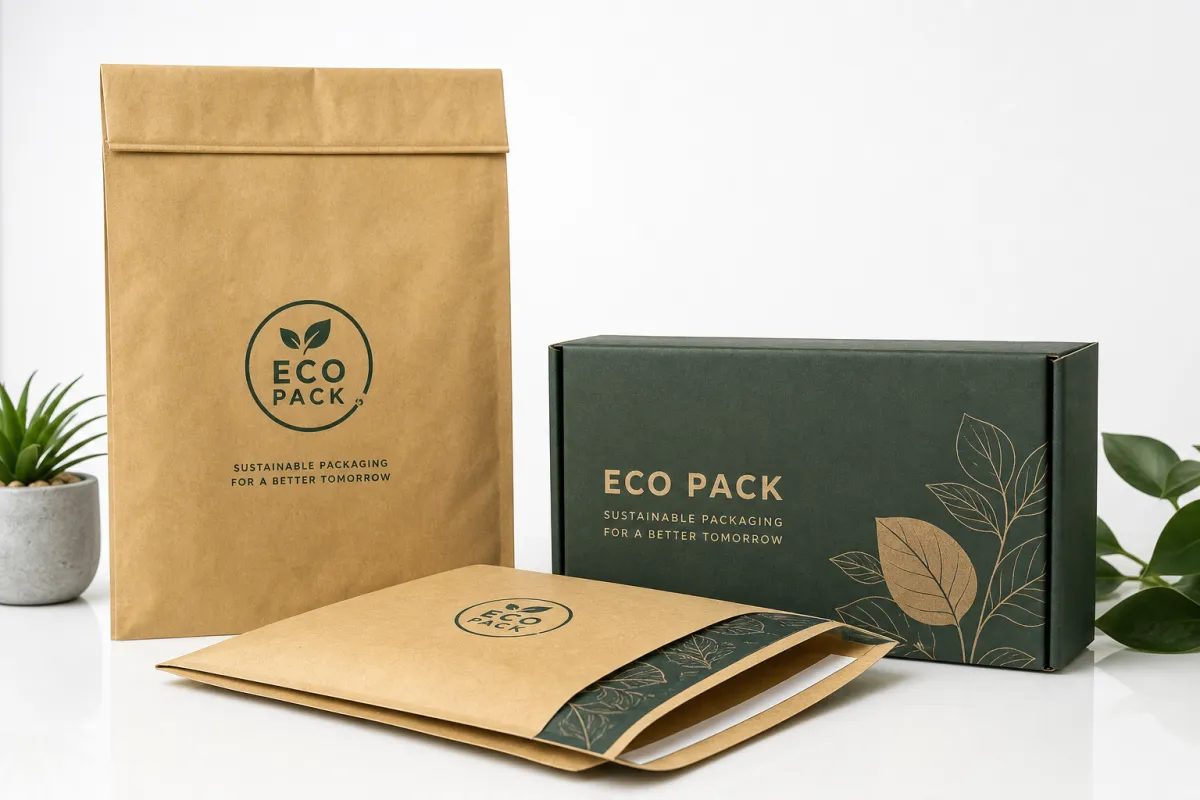
The phrase recyclable paper mailer bags supplier sounds narrow, but the job is broader than many buyers expect. A capable supplier should be able to walk through paper grade, pouch structure, closure type, print method, and the materials sitting behind a recyclability claim. A weak supplier usually starts and ends with the words “eco-friendly,” which is fine for a brochure and not much help if the bag has to survive a real shipment or fit a specific fulfillment workflow.
For packaging buyers, the supplier sits between the brand promise and the warehouse floor. If the bag is too soft, it crushes. If the seal is too weak, it opens in transit. If the size is off, the product shifts around and scuffs at the edges. A recyclable paper mailer bags supplier is therefore shaping more than the packaging spec. They influence damage rates, packing speed, customer perception, and the amount of rework a team has to absorb after launch.
At minimum, a competent recyclable paper mailer bags supplier should be ready to discuss:
- Paper grade such as kraft weight, basis weight, or layered construction.
- Dimensions for apparel, books, flat goods, and low-profile accessories.
- Closure type including peel-and-seal, fold-and-stick, and tamper-evident systems.
- Print capabilities like one-color branding, limited coverage, or full-panel art.
- Recyclability details covering coatings, inks, adhesives, and any barrier material.
- Sampling and proofing so the buyer can check fit, feel, and closure strength before committing.
A paper mailer can be recyclable and still be a poor shipping choice if it fails in transit. Packaging is judged on the route, not on the mockup.
Claims deserve care as well. FSC certification can help show that the fiber was sourced responsibly, and the FSC site explains the standard clearly, but certification does not automatically prove the finished mailer is recyclable in every local system. That is an easy distinction to blur, especially in sales copy. A good recyclable paper mailer bags supplier should be willing to separate fiber sourcing from end-of-life behavior and explain both without hand-waving.
In practice, the right supplier lowers uncertainty. They help a brand avoid the expensive version of a sustainability mistake: a package that looks greener, yet creates higher damage rates, more freight loss, or more customer confusion. A dependable recyclable paper mailer bags supplier makes that trade-off visible before the order is placed, not after the first replenishment cycle.
Brands comparing paper against film-based formats can also review Custom Poly Mailers alongside paper options. That side-by-side look often makes it easier to separate the SKUs that truly belong in paper from the ones that need a different structure.
How a recyclable paper mailer bags supplier builds a usable mailer
A strong recyclable paper mailer bags supplier usually starts with structure, not graphics. The build is simple on paper, yet the details decide whether the mailer actually performs. Kraft paper in the range of about 120gsm to 170gsm is common, with the final choice depending on product weight, shipping distance, and how much handling the parcel will see. Heavier items need more stiffness. Lightweight apparel can often use less, provided the seal and fold geometry hold up well.
Seam construction matters more than many buyers realize. A paper mailer can be beautifully printed and still fail if the folds are weak or the glue line is inconsistent. Closure design matters too. Some bags use pressure-sensitive adhesive, some use a peel-and-stick strip, and some add a tamper-evident tear feature. A thoughtful recyclable paper mailer bags supplier will explain which parts are paper, which parts are adhesive, and whether any liner or coating changes the recycling story.
There is a practical trade-off here that deserves honest wording. Full recyclability and top-tier durability do not always rise together in a neat line. The better route is to choose fiber weight, fold design, and seam placement that improve strength without layering on extra material. In my experience, that is where a lot of packaging programs get a little too optimistic. A supplier with real packaging experience will show where the bag can absorb shock, resist corner wear, and stay recyclable at the same time.
Test data should be part of that conversation. A solid recyclable paper mailer bags supplier should be able to talk through compression resistance, drop tests, and closure strength in terms that match real shipment conditions. If they reference ISTA testing, that is useful, because ISTA methods push the discussion toward distribution hazards instead of guesswork. A drop sequence, a compression check, or a vibration-style evaluation tells you more than a polished claim ever will.
Branding belongs in the build, but it should not control it. Water-based inks, restrained coverage, and careful placement usually preserve the feel of the paper better than heavy saturation across every panel. A capable recyclable paper mailer bags supplier will flag choices that add complexity, lengthen production, or create waste without improving the package.
One detail that often gets missed is the way a mailer behaves once it is filled. A sample in the hand can feel crisp and stable, then soften at the corners after a garment, insert, or folded box is added. That is why the best recyclable paper mailer bags supplier will sample against the actual product dimensions instead of relying on a generic size chart. That sounds basic, but it is exactly the kind of thing that saves a brand from a not-so-fun surprise later.
- For books and flat goods, stiffness and corner integrity carry the most weight.
- For lightweight apparel, closure quality and wrinkle tolerance matter more.
- For multi-piece orders, internal movement inside the bag becomes the main risk.
When a supplier can explain those differences without drifting into sales language, that usually points to a real packaging partner. If they cannot, the phrase recyclable paper mailer bags supplier may be doing more work than the product itself.
Cost, pricing, MOQ, and what changes the quote
The first quote from a recyclable paper mailer bags supplier rarely tells the whole story. Pricing shifts with paper grade, dimensions, print coverage, closure style, volume, and whether the item is stock or fully custom. Freight can move the comparison too. A unit price that looks attractive on paper may end up higher once shipping, packaging configuration, sample approvals, and revision rounds are added in.
At lower volumes, paper mailers often cost more per unit than film-based formats. That is normal. As order quantities rise, setup charges spread out and the unit cost can soften. A reliable recyclable paper mailer bags supplier should be able to show where that curve starts to flatten instead of pretending every order behaves the same way.
MOQ matters in the same way. A custom size, a special seal, or multiple print colors can raise the minimum order. Some suppliers are comfortable with smaller pilot runs if the build is close to an existing format. Others need a larger commitment because tooling, paper sourcing, and press setup all carry fixed cost. If a recyclable paper mailer bags supplier stays vague about MOQ, the quote may be less certain than it appears.
The table below gives a practical comparison point. It is not a universal rate card, and anyone promising one of those is probably oversimplifying, but it reflects the kind of ranges many buyers see once size, print, and volume begin to shape the order.
| Option | Typical MOQ | Unit price range | Best for | Main trade-off |
|---|---|---|---|---|
| Stock paper mailer | 1,000-2,000 units | $0.18-$0.32 | Fast launch, smaller test runs | Less size control and limited branding |
| Semi-custom paper mailer | 3,000-5,000 units | $0.24-$0.42 | Brands that need custom print and fit | Higher setup cost, longer approval cycle |
| Fully custom paper mailer | 5,000-10,000 units | $0.28-$0.55 | Scaled programs and tighter brand control | Tooling, samples, and longer lead time |
A useful quote from a recyclable paper mailer bags supplier should show more than a unit price. Ask for sample fees, plate or tooling charges, packaging configuration, carton counts, delivery terms, and any cost tied to revision rounds. Two offers can look close at first glance, then diverge sharply once freight and setup are included. That is the kind of thing that tends to get missed in a hurry.
Land cost matters more than ex-factory cost. A lower unit price can disappear if the ship date slips and rush freight becomes necessary. A practical recyclable paper mailer bags supplier will make those terms clear before the order moves forward.
The most useful number is often not the cheapest one. It is the price point where the mailer still meets the required performance standard at the intended order size. That figure keeps the program honest, and it is the figure a serious recyclable paper mailer bags supplier should help you find.
Process, timeline, and lead time from brief to delivery
The workflow with a recyclable paper mailer bags supplier is usually predictable, provided the buyer gives clear inputs early. Most projects move through discovery, spec collection, sample development, proof approval, production, quality review, and shipment. The path sounds tidy. In practice, one artwork change or one dimensional adjustment can send the work back a step, which is why tidy timelines on paper should always be treated with a little caution.
Lead time depends on whether the order is stock or custom. A stock order may move in roughly 7-12 business days after payment and approval, depending on inventory and destination. A custom order often needs 12-20 business days after proof sign-off, and that does not include transit time. A dependable recyclable paper mailer bags supplier should separate those phases instead of blending them into a single fuzzy estimate.
Delays tend to appear in the same places: artwork revisions, paper sourcing, sample changes, and late dimensional edits. The most common buyer-side issue is approving a proof before the product has been measured in hand. If the dimensions are off by even a small amount, the new bag can fit beautifully in theory and poorly in the warehouse. A disciplined recyclable paper mailer bags supplier will push back on that kind of shortcut rather than nodding along just to keep the deal moving.
Seasonality matters too. Holiday peaks, promotional launches, and inventory resets all tighten production schedules. If the timeline is tight, work backward from the date the mailers must arrive at the fulfillment center, not from the date the marketing team wants to announce the launch. That habit keeps the recyclable paper mailer bags supplier aligned with the actual risk window.
Here is a practical way to map the timeline:
- Week 1: confirm product dimensions, print needs, and target quantity.
- Week 2: review the sample or dieline, then approve the final spec.
- Weeks 3-4: produce the pre-production sample or first run.
- Weeks 4-6: full production, quality review, and freight booking.
- Final step: receive cartons, inspect a sample, and release to fulfillment.
If the supplier can point out the likely pinch points before commitment, that is a strong sign. A good recyclable paper mailer bags supplier does more than sell packaging. They help the buyer plan around real time constraints.
Step-by-step: how to compare suppliers without guessing
The cleanest way to compare one recyclable paper mailer bags supplier against another is to make sure each one answers the same questions. If one quotes a 150gsm kraft bag with water-based ink and the other quotes a lighter stock bag with different closure hardware, the comparison is already tilted. That is not a true side-by-side review. It is a set of mismatched assumptions, and those usually create trouble later.
Start with a requirements list. Include product weight, folded dimensions, shipping distance, desired recyclability claim, artwork coverage, expected monthly volume, and a budget ceiling. Then give that same list to every recyclable paper mailer bags supplier on the shortlist. Uniform inputs create meaningful comparisons. Anything less creates noise.
Then evaluate the samples with the actual product inside the bag. Feel is subjective, yet it still tells you something useful. Stiffness, seal strength, print clarity, tear behavior, and corner durability can all be checked by hand. Fill the bag, shake it lightly, and handle it the way a picker or packer would. A capable recyclable paper mailer bags supplier should welcome that kind of testing because it proves the bag can survive the route.
Documentation is the next filter. Ask for written recyclability details, component breakdowns, and anything that clarifies whether inks, adhesives, or coatings affect the claim. A supplier who can explain the build in plain language is usually easier to work with later. If the only proof is a polished brochure, the recyclable paper mailer bags supplier is asking you to trust presentation instead of evidence.
A simple scorecard keeps the process objective:
- Recyclability documentation and clarity of the claim.
- Print quality, including color consistency and alignment.
- Price stability across sample, pilot, and repeat orders.
- Communication speed during proofs and revisions.
- Lead time reliability from approval to shipment.
Responsiveness deserves attention too. A supplier that answers quickly during quoting is more likely to stay organized once the order is live. That does not guarantee perfect execution, yet it lowers the risk of surprises. In packaging, surprises usually cost money. The best recyclable paper mailer bags supplier makes the boring parts easy: specs, confirmations, and follow-through.
It also helps to separate must-haves from nice-to-haves. Must-haves might include recyclable fiber, a specific size tolerance, and a minimum seal strength. Nice-to-haves might include matte finish or a custom interior message. That distinction keeps the recyclable paper mailer bags supplier conversation focused on performance first and decoration second.
Common mistakes when choosing a paper mailer partner
The biggest mistake is assuming that “recyclable” means the same thing everywhere. It does not. Local guidance varies, and the exact structure of the mailer matters. A careful recyclable paper mailer bags supplier avoids absolute promises and explains how paper, adhesive, and coating interact with common recycling pathways. That honesty is more useful than a confident claim that turns out to be too broad.
Another mistake is choosing the lowest quote without checking the spec behind it. Cheap paper can tear faster. Weak seals can pop in transit. Oversized bags can let product slide around and abrade the corners. The smallest line item can create the biggest hidden cost. A serious recyclable paper mailer bags supplier should help you see that before the first shipment leaves the dock.
Moisture is easy to underestimate. Corner wear is too. Ecommerce parcels move across hubs, sit on docks, and stack beside other cartons. Paper mailers can absolutely work, but they need the right structure for the route they will travel. A good recyclable paper mailer bags supplier will ask about the products you ship, not just the logo you want printed.
Buyer-side inputs can cause just as much trouble. Vague artwork files, unclear bleed zones, last-minute size changes, and missing approval steps can make a supplier look slow when the issue started earlier in the chain. The more precise the brief, the cleaner the project. A well-run recyclable paper mailer bags supplier process depends on that precision.
Some teams also confuse certification with finish-line proof. FSC shows responsible fiber sourcing, but it does not automatically solve every recyclability or performance question. Tests, local stream guidance, and material structure still matter. That is why a careful recyclable paper mailer bags supplier should be able to talk about both sourcing and end-of-life behavior.
One last mistake is skipping the use-case split. A mailer that works well for a lightweight T-shirt may not suit hardcover books or multi-item orders. If the assortment is mixed, separate the requirements by SKU class. That is also where alternatives such as Custom Poly Mailers can still make sense for certain products, even if paper is the preferred format elsewhere.
The bad decision is often quiet rather than dramatic. It is a mismatch between the product, the route, and the package structure. A disciplined recyclable paper mailer bags supplier helps prevent that mismatch, which is more valuable than a low headline price.
Expert tips and next steps for working with a recyclable paper mailer bags supplier
The best starting point is a pilot run, not a full rollout. A modest test order gives you a chance to check fit, fill speed, print quality, damage rates, and customer reaction before the budget is committed at scale. A thoughtful recyclable paper mailer bags supplier should support that plan because it reduces the chance of expensive corrections later.
Build a supplier scorecard around the things that matter most to your operation. For many brands, a useful mix looks like this: 30% performance and durability, 25% recyclability documentation, 20% price stability, 15% communication quality, and 10% lead time reliability. The percentages can change, but the logic stays the same. A recyclable paper mailer bags supplier should be measured on both output and process.
Ask for two items every time: a standard spec sheet and a production sample. The gap between a mockup and the finished bag can be wider than expected. A sample lets you feel the paper, test the seal, and judge the print under real handling. A strong recyclable paper mailer bags supplier will not mind the request. They should encourage it.
It also helps to be direct about uncertainty. If you are unsure whether a moisture barrier is necessary, say so. If the right size tolerance is still open, say that too. Honest uncertainty leads to better engineering. The right recyclable paper mailer bags supplier will turn that uncertainty into a clear spec instead of guessing on your behalf. That kind of back-and-forth is normal, and it is a lot better than discovering a problem after production has started.
Here is the short version of the buying path:
- Shortlist two or three vendors with comparable capabilities.
- Send the same brief to each recyclable paper mailer bags supplier.
- Compare quotes line by line, not by headline price alone.
- Order samples and test them in live fulfillment.
- Launch with a controlled quantity, then review damage and feedback.
For brands that want to move quickly without getting sloppy, that process is usually enough. It is not flashy. It is reliable. And in packaging, reliability tends to matter more than cleverness. A good recyclable paper mailer bags supplier gives you a packaging lane that is predictable enough to build around.
Here is the practical conclusion: choose the supplier that can explain the structure, defend the claim, quote clearly, and survive testing. If they can do those four things, they are probably not just selling you a mailer; they are helping you build a shipping standard. That is the real value of a recyclable paper mailer bags supplier, and it is what separates a packaging trend from a program that holds up under pressure.
What should I ask a recyclable paper mailer bags supplier before ordering?
Ask what paper grade, closure type, and print process they use, then request the recyclability details in writing. Confirm MOQ, lead time, sample cost, and shipping terms before you approve anything. A credible recyclable paper mailer bags supplier should answer those questions clearly and without sidestepping.
How do recyclable paper mailer bags compare with poly mailers on cost?
At lower volumes, paper mailers usually cost more per unit than film-based options. As quantities rise, the gap can narrow, especially if the supplier is already tooled for your size. Damage reduction and brand value can offset part of the difference, but a recyclable paper mailer bags supplier should still show the full landed cost.
What proof should a supplier provide for recyclable claims?
Look for a material breakdown, component details, and written clarity on whether inks, coatings, or adhesives affect recyclability. A good supplier should also explain whether the bag aligns with local recycling guidance in your market. If the proof is vague, treat the recyclable paper mailer bags supplier claim as incomplete.
How long does custom paper mailer production usually take?
Simple stock orders move faster than fully custom builds, and artwork approval is often the biggest timing variable. A realistic schedule usually separates proofing, production, and freight. Ask the recyclable paper mailer bags supplier for a timeline that names each step instead of one broad estimate.
What is a good MOQ for testing a recyclable paper mailer supplier?
A good test MOQ lets you validate shipping performance without tying up too much inventory. Use the smallest quantity that still reflects real production conditions. If the supplier cannot support a pilot, ask whether a stock format or a more standard size is available first. That is often the cleanest way to judge a recyclable paper mailer bags supplier before scaling up.
For most brands, the right first order is the one that teaches you something useful. That is the simplest way to work with a recyclable paper mailer bags supplier without taking on unnecessary risk.

